

Selecting the Best Cancer Surgeons and Hospitals in India for Australian Patients
Ten criteria, weighted — but first, a question almost nobody asks before the others: does this situation call for a surgeon in India at all, or is it a second opinion that could be arranged without ever booking a flight?
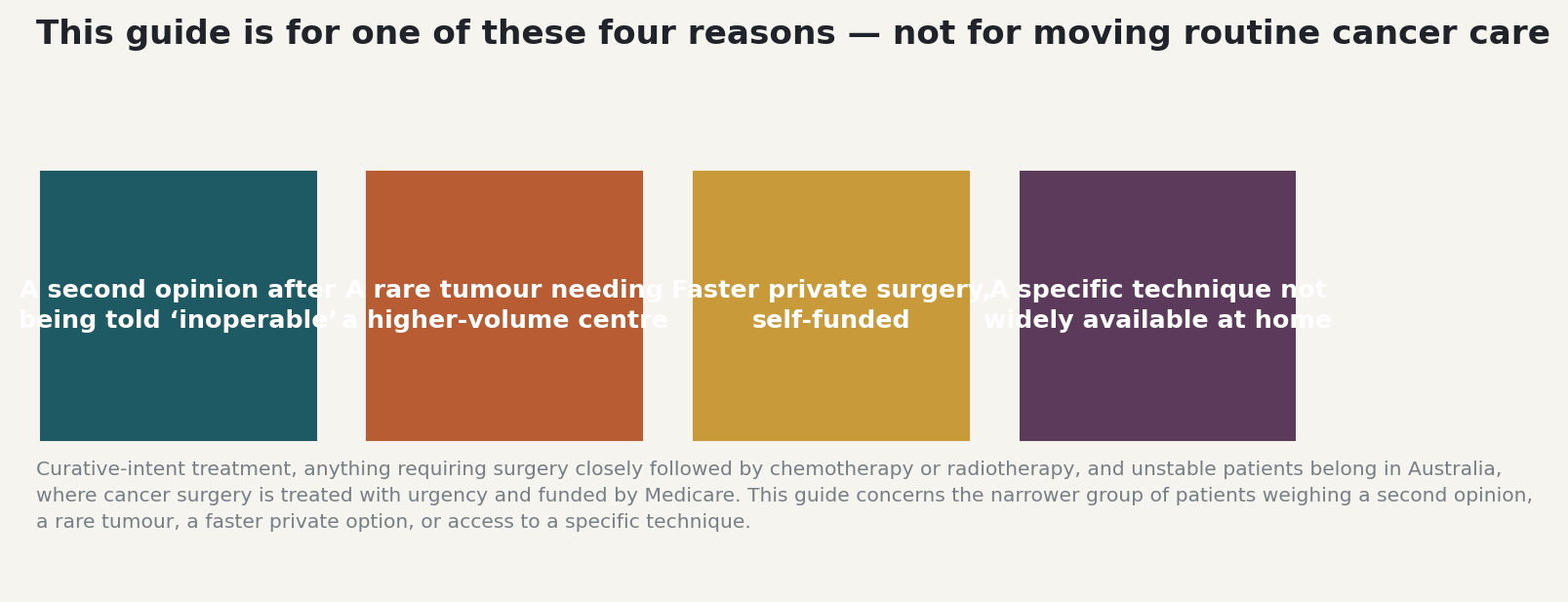
Most Australians should never need this guide, and I want to say that plainly before anything else. Australian cancer care is close to free at the point of use and treated with real urgency, and moving primary curative treatment overseas is rarely the right answer. This guide exists for a narrower group — and it is worth being precise about who that is before a single criterion is discussed. In 24 years of guiding international patients into Indian hospitals, I have turned away more Australians with cancer than from any other specialty, and I would do it again tomorrow. If none of the four reasons above describes your situation, the right next step is a conversation with your Australian oncology team, not this document.
Healing Journeys of Australian Patients


Key Takeaways
- Australian patients considering cancer surgery in India should first establish an accurate tissue diagnosis, cancer stage and, where relevant, molecular profile in Australia before making decisions about overseas treatment.
- The guide is intended for a narrower group of Australian patients, particularly those seeking a second opinion after being told a tumour is inoperable, treatment for a rare tumour requiring higher-volume expertise, faster self-funded private surgery, or a specific technique not widely available at home.
- When selecting a cancer surgeon in India, experience with the exact tumour type and stage is more meaningful than general cancer surgery experience. Patients should ask how many comparable procedures the surgeon personally performed during the previous year.
- Specialist qualifications are important. The guide identifies MCh (Surgical Oncology) or DrNB (Surgical Oncology) as the core specialist qualifications and recommends looking for additional organ-specific fellowship training for complex procedures.
- Cancer treatment decisions should ideally be reviewed by a multidisciplinary tumour board involving surgical oncology, medical oncology, radiation oncology, radiology and pathology rather than relying on one surgeon's opinion.
- Hospital selection should consider in-house pathology capabilities, including immunohistochemistry and, where relevant, molecular or genomic testing, as well as access to medical oncology, radiation oncology and appropriate critical care facilities.
- For major cancer resections such as a Whipple procedure, oesophagectomy or extensive debulking surgery, patients should confirm that appropriate surgical or oncological ICU support is available.
- Australian patients should arrange continuity of oncology care before travelling and return home with the complete operative note, final pathology report, margin and staging information, and written recommendations for any further treatment.
Quick Facts
- Conditions/Health Factors Covered
- Complex cancers requiring surgical treatment, rare tumours, potentially operable cancers, and cases requiring specialist or second-opinion assessment
- Procedures Mentioned
- Whipple procedure, oesophagectomy, complex liver resection, advanced ovarian debulking, sarcoma resection, mastectomy and other tumour-specific cancer resections
- Target Audience
- Australian patients considering cancer surgery, specialist cancer consultation or a second opinion in India
- Author/Advisor
- Dr. Dheeraj Bojwani, Independent Medical Travel Advisor, 24 years of experience guiding international patients
- Surgeon & Oncology Team Selection Highlights
- Tumour-specific surgical volume, MCh/DrNB Surgical Oncology qualifications, organ-specific fellowship training, multidisciplinary tumour board review, R0 resection-rate discussion, complication transparency and direct surgeon consultation
- Hospital Selection Highlights
- In-house immunohistochemistry, molecular and genomic testing where relevant, medical and radiation oncology under one roof, JCI or NABH accreditation, critical care facilities and comprehensive medical records for Australian follow-up
- Specialist Qualifications Discussed
- MCh/DrNB Surgical Oncology, DM Medical Oncology and DM Radiation Oncology, with additional organ-specific fellowships where applicable
- Diagnostic Requirements
- Tissue diagnosis, staging scans and relevant genomic testing should ideally be completed in Australia first. Actual pathology blocks or slides should be available for re-review rather than relying only on a typed report.
- Tumour Board
- The guide recommends multidisciplinary review involving surgical oncology, medical oncology, radiation oncology, radiology and pathology.
- Typical Stay in India
- A specific standard duration is not stated in the guide and will depend on the cancer type, procedure and individual clinical circumstances.
- Hospital Stay
- Not specifically stated in the guide.
- Medical Travel Considerations
- Indian e-medical visa, e-medical attendant visa where applicable, hospital invitation letter, Australian oncology coordination and planning for postoperative treatment
- Accreditation Discussed
- JCI and NABH
- Partner Hospital Cities
- Specific partner hospital cities are not listed in the guide and therefore should not be added as source-derived information.
In Brief
Australian patients considering cancer surgery in India should evaluate the surgeon, multidisciplinary oncology team and hospital together rather than choosing on reputation or price alone. The guide prioritises surgeon volume in the patient's exact tumour type and stage, specialist surgical oncology qualifications, multidisciplinary tumour board review, pathology capabilities, access to medical and radiation oncology, critical care support and independently verifiable hospital accreditation. Patients should complete their diagnostic workup in Australia first and arrange ongoing Australian oncology care before travelling so that postoperative treatment can continue without unnecessary disruption.
Before you choose anyone: get the diagnosis pinned down at home
Every criterion below depends on one thing being settled first: an accurate tissue diagnosis, stage and molecular profile, obtained in Australia, where Medicare pays for it. A surgeon anywhere in the world can only be as good as the diagnosis he is working from, and a disturbing share of the disappointment I see in this specialty traces back to a plan built on an incomplete workup rather than a poorly performed operation.
Get your biopsy, your staging scans and, where relevant, genomic testing done in Australia first. Then carry the actual pathology — blocks or slides, not a typed report — into every conversation that follows.
This matters more here than in any other specialty in this series, because tumour type and grade are genuinely matters of interpretation, not fixed facts read off a slide. A pathology re-read at a high-volume centre occasionally changes the diagnosis, and a changed diagnosis changes the operation. Settling this first is not a bureaucratic step; it is the foundation everything else in this guide is built on.
Part one: judging the surgeon and the oncology team
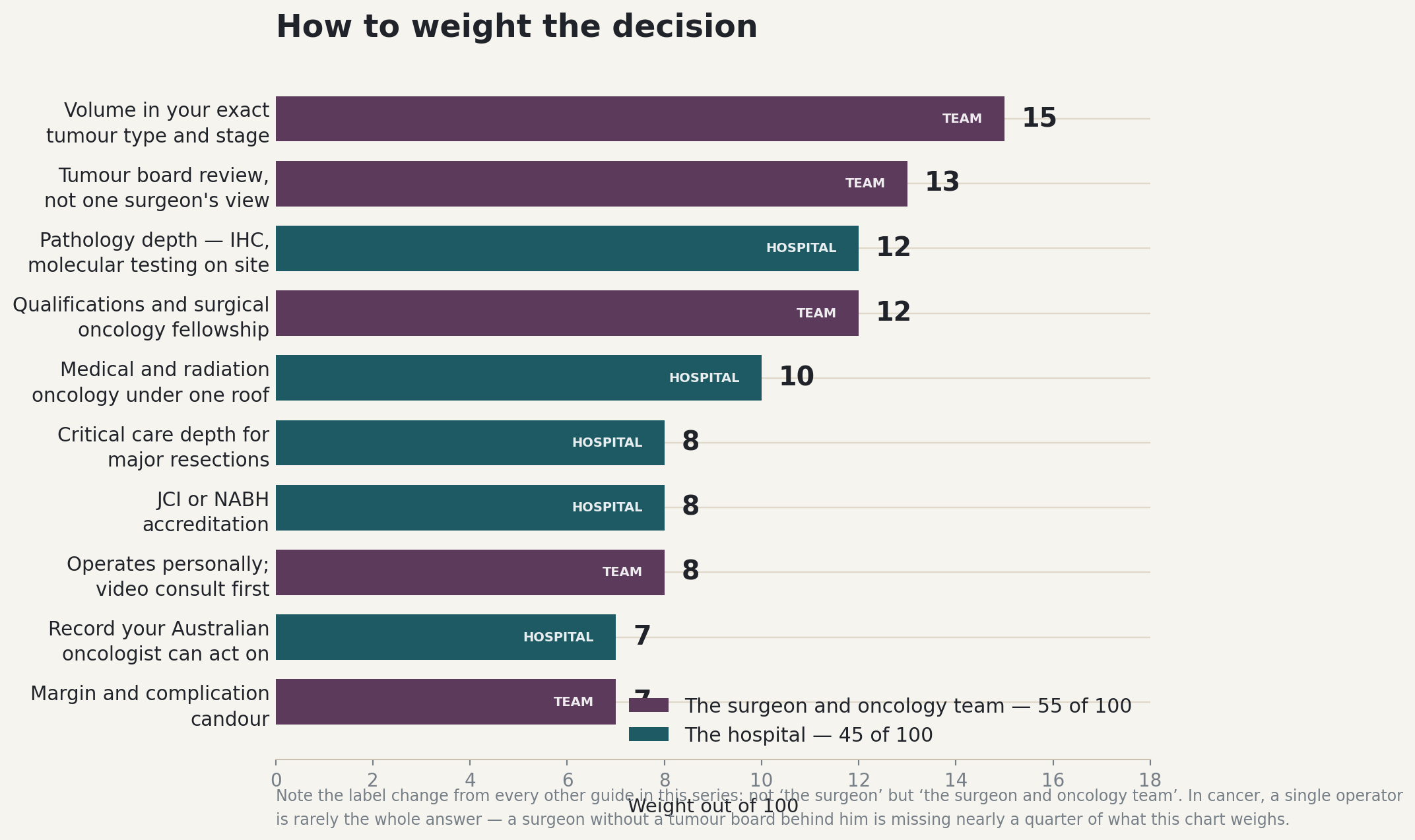
1. Volume in your exact tumour type and stage. Not general oncological surgery, not cancer surgery in aggregate — the number of operations he personally performed last year on your specific tumour, at a comparable stage. For complex resections this is the single most consequential number in the entire process.
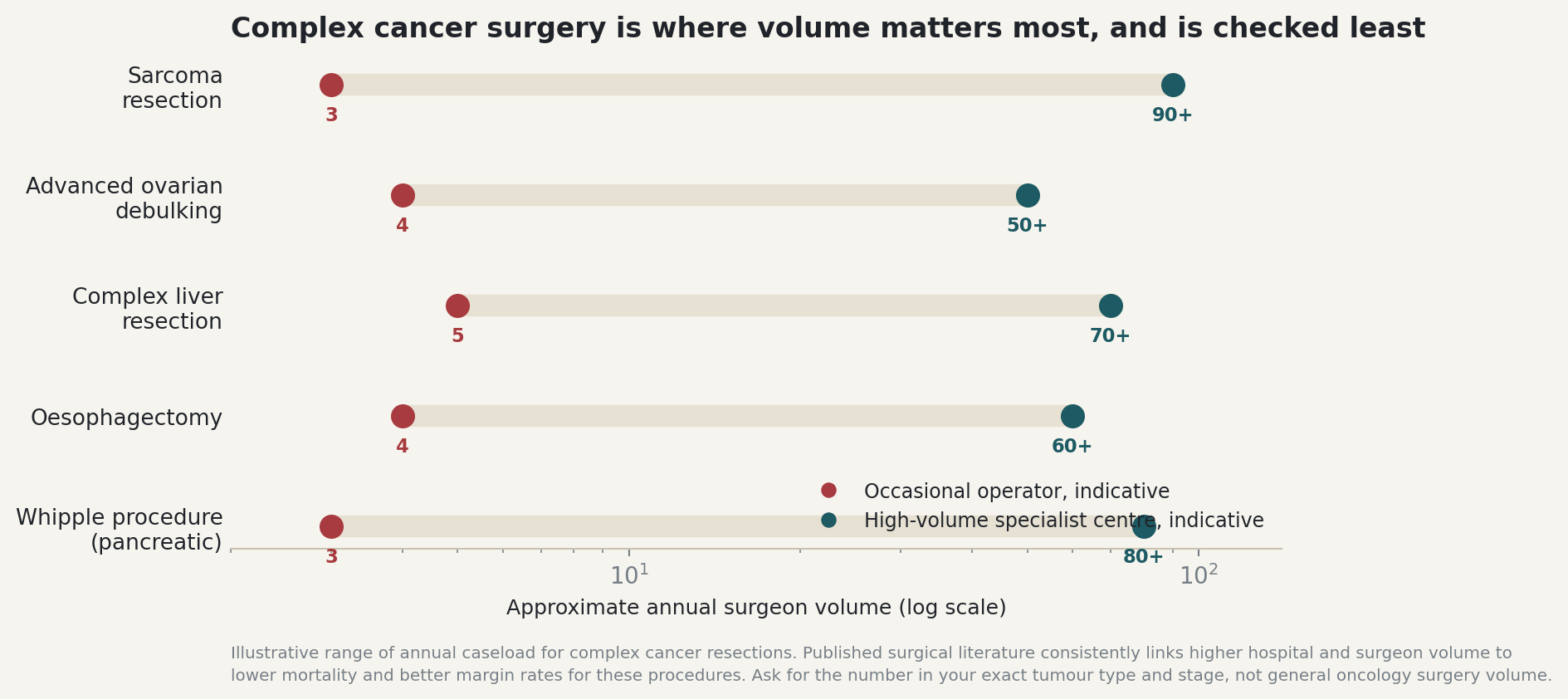
The published surgical literature is consistent on this point across pancreatic, oesophageal, hepatobiliary, gynaecological and sarcoma surgery: higher hospital and surgeon volume tracks with lower mortality and better margin rates. Ask for the figure in writing, and ask it of three units rather than one before you commit to any of them.
Be precise about what you are asking for. “Extensive experience in GI oncology” is not an answer to this question; a specific number, for a specific procedure, in the last twelve months, is. A surgeon who can produce that figure immediately is telling you something different from one who reaches instead for general reassurance.
2. Qualifications and surgical oncology fellowship. India runs a distinct specialist pathway for this field. A general surgeon who occasionally operates on cancer is not the same as a fellowship-trained surgical oncologist, and the difference is legible once you know what to look for.
| Qualification | Length | What it actually means |
|---|---|---|
| MBBS | 5½ years | The basic medical degree. A licence to practise, not a specialist qualification. |
| MS (General Surgery) DNB (General Surgery) | or 3 years | Completed general surgical training. The gateway into surgical oncology, but not the specialist qualification itself. |
| MCh (Surgical Oncology) or DrNB (Surgical Oncology) | 3 years, after MS/DNB | This is the one that matters. Completed specialist training in cancer surgery specifically, with the National Medical Commission treating the university-awarded MCh and the National Board’s DrNB as equivalent. |
| Organ-specific fellowship — hepatobiliary, upper GI, gynaecological oncology, surgical breast oncology | 1–2 years, after MCh/DrNB | What determines genuine fit for a specific complex resection. A Whipple procedure and a mastectomy are both “cancer surgery”; the surgeons who do them well are rarely the same person. |
On the medical and radiation side, the equivalent specialist qualifications are DM (Medical Oncology) and DM (Radiation Oncology) , each typically three years after MD (General Medicine). Ask which of these three — surgical, medical, radiation — is actually leading your recommendation, because in cancer, unlike in orthopaedics, the answer is often more than one person.
Read the years-of-experience figure with the same care you would apply anywhere else in this series. A headline number counted from MBBS quietly folds in the better part of a decade spent in training. Ask instead for the year the MCh or DrNB was completed, the year any organ-specific fellowship was finished, and how long the surgeon has operated independently on your specific tumour type.
3. Tumour board review, not one surgeon’s opinion. This is weighted almost as heavily as volume, and for good reason. Ask specifically whether your case will go before a multidisciplinary tumour board — surgical oncology, medical oncology, radiation oncology, radiology and pathology together — and ask for that recommendation in writing before you travel. A unit offering only a single surgeon’s view on a cancer case is telling you how it actually makes decisions, and it is not how serious cancer centres work anywhere in the world.
4. Whether he operates personally, and speaks to you first. Insist on a video consultation with the surgeon who will actually operate, not a coordinator, before any deposit moves. Ask directly whether he performs the operation himself and who assists if the anatomy proves more complex than the imaging suggested.
Ask too what proportion of his practice is genuinely sub-specialised in your tumour type, as against general surgical oncology carrying occasional complex cases. There is no single correct answer, but a surgeon who cannot describe his practice pattern confidently is telling you your operation is one of several things he does, rather than the thing he does.
5. Margin and complication candour. Ask for his R0 resection rate — clear margins — for your specific tumour type, his major complication rate, and what happens if intraoperative findings differ from the working stage. A surgeon who discusses this without defensiveness has enough of a practice to have seen it and enough security to talk about it plainly.
Part two: judging the hospital
6. Pathology depth — immunohistochemistry and molecular testing on site. A cancer hospital is only as good as its pathology department. Ask whether immunohistochemistry, and where relevant molecular and genomic testing, are performed in-house or sent externally, and what the turnaround time is. A unit that cannot answer this precisely is not equipped to manage a complex case.
7. Medical and radiation oncology under one roof, not referred elsewhere. If your treatment plan may include chemotherapy or radiotherapy, confirm both are delivered at the same institution with genuine coordination, rather than a surgical unit that refers elsewhere for everything beyond the operation itself. Fragmented care is where cancer patients lose momentum.
8. Accreditation you can verify yourself. JCI is the international arm of the body accrediting hospitals across the United States; NABH is India’s national equivalent, recognised by the same global standards authority. Check either on the accrediting body’s own site rather than accepting the logo on the hospital’s.
9. Critical care depth for major resections. A Whipple procedure, an oesophagectomy or extensive debulking surgery carries real perioperative risk. Ask whether a dedicated surgical or oncological ICU is available on site and who manages medical complications if they arise.
10. A record your Australian oncologist can act on. Before you leave you should hold the full operative note, the final pathology report with margins and staging clearly stated, and a written recommendation for any further treatment. This is the document that determines whether your Australian team can pick up your care confidently, and it is far easier to obtain in person than to chase by email afterwards.
What the quote should say, and what it usually omits
In 24 years I have found that disputes almost never concern the quoted price. They concern what the quote silently omitted.
Insist on a written, itemised figure that states what happens if intraoperative findings change the plan — a more extensive resection, an unexpected metastasis — and what that would cost. Ask what the hospital covers if a complication requires a return to theatre or an extended ICU stay. Ask whether pathology processing, including any send-out molecular testing, is included in the figure or billed separately.
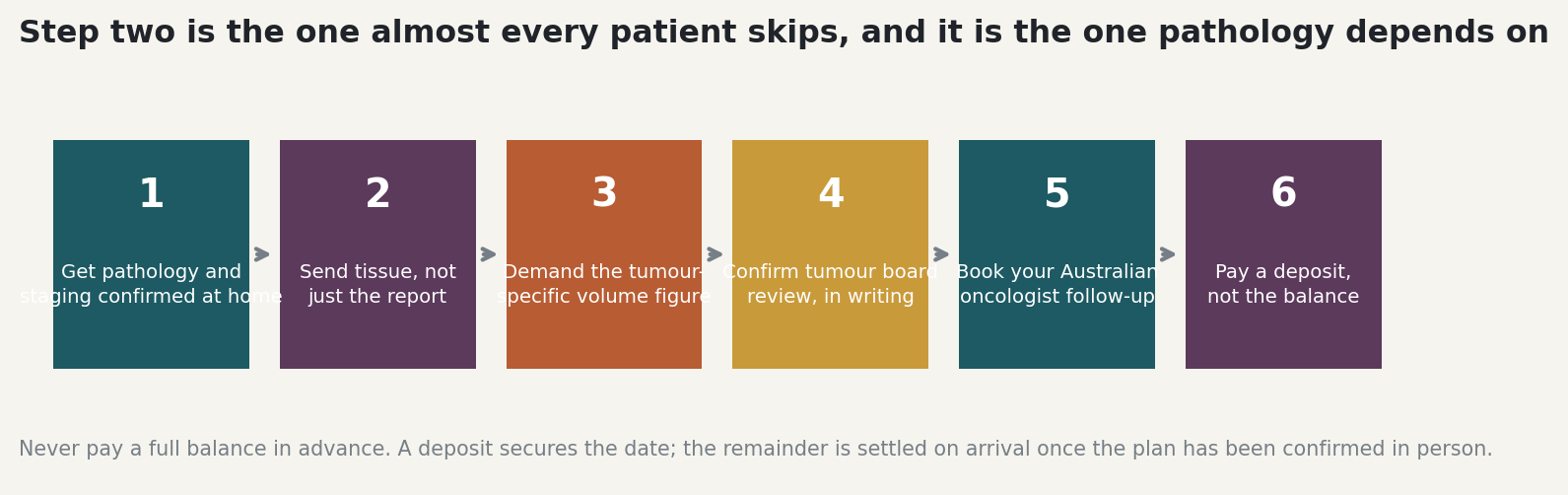
Understand what does not travel with you. Medicare pays nothing for treatment received overseas, your health fund rebate applies to Australian admissions, and standard travel insurance excludes planned surgery and its complications. One rule is not negotiable: pay a deposit to secure the date, never the full balance in advance. The remainder is settled on arrival, once the surgeon and the tumour board have confirmed the plan in person.
Four Signals that Should Make You Pause
1. A price quoted before your pathology has been reviewed. Nobody can price cancer surgery they have not seen the tissue for. A number arriving within an hour of your first email is a marketing figure, not a quote.
2. A single surgeon’s opinion with no tumour board offered. Complex cancer deserves more than one clinician’s view. A unit that does not raise multidisciplinary review unprompted is telling you how it actually operates.
3. Vagueness about volume in your specific tumour type. General reassurance about “extensive cancer surgery experience” is not an answer. Hesitation on the specific number is itself information.
4. Any claim of a cure your Australian oncologist has not heard of. Legitimate cancer surgery has no need to oversell itself. Unproven adjuncts marketed alongside a genuine operation are a warning sign about the whole institution.
Australia-specific considerations most patients miss
Tell your Australian oncology team early, not after the fact. Most are more sympathetic to a second opinion or an overseas consultation than patients expect, and a team that has been informed from the outset is far better placed to pick up your care afterwards than one presented with a decision already made.
Arrange your ongoing oncology care before you leave. If chemotherapy or radiotherapy may follow surgery, confirm your Australian medical or radiation oncologist is willing to deliver it based on the overseas surgical findings, and give them the dates in advance. This is not a detail to sort out after the operation.
Send the tissue, not just the report. A pathology re-read or a second surgical opinion requires the actual blocks or slides. A typed summary alone will simply generate a request for the material itself, costing you time you may not have.
Ask about the Medical Treatment Overseas Program. Where a specific technology or technique is genuinely unavailable in Australia, this Commonwealth programme can in some circumstances fund treatment abroad. Ask your specialist whether you might qualify before assuming the whole cost falls on you.
Apply for both visas together. Australian passport holders are eligible for India’s electronic medical visa, issued against an invitation letter from the treating hospital, with an e-medical attendant visa for whoever travels with you.
Ask what happens if the diagnosis changes after surgery. Establish before you travel what the plan becomes if intraoperative or final pathology findings differ from expectation, who tells you, and what it costs. Ask an Australian oncologist the parallel question: would they take over care based on findings from surgery performed overseas? Both answers, taken together, tell you how comfortable this decision should feel.
| The Questions, in the Order You Should Ask Them | |
|---|---|
| Of the surgeon and team | Of the hospital |
| 1. How many operations on my exact tumour type and stage did you perform last year? | 1. Is immunohistochemistry and molecular testing performed on site? |
| 2. Did you complete a fellowship specific to this organ or tumour type? | 2. Are medical and radiation oncology delivered here, or referred elsewhere? |
| 3. Will my case go before a tumour board, and may I see that in writing? | 3. Which accreditation do you hold, and when was it last inspected? |
| 4. What is your R0 resection rate for this tumour type? | 4. Is a dedicated ICU available for major resections? |
| 5. What happens if the intraoperative findings differ from the stage we expect? | 5. What does the final pathology and operative record include? |
| 6. Which specialists — surgical, medical, radiation — are actually leading this plan? | 6. What is covered if a complication requires further surgery? |
A closing word
Cancer surgery rewards precision more than almost any other decision in this series, because the stakes of getting it wrong are higher and the window to correct course is often narrower. If your situation is a second opinion, a rare tumour, a faster private option or a specific technique — verify the diagnosis first, weight the tumour board as heavily as the surgeon, and check the volume in your exact tumour type before anything else. If you would like a second opinion on your pathology and imaging, or a review of a quote you are already holding, send them and I will look at it properly — including telling you that your case should stay in Australia, which for cancer is an answer I give more often than the alternative.
Sources
- 🌐 Published surgical oncology literature on hospital and surgeon volume and outcomes in pancreatic, oesophageal, hepatobiliary and gynaecological cancer surgery
- 🌐 National Medical Commission, recognised postgraduate medical qualifications in surgical oncology, medical oncology and radiation oncology
- 🌐 Australian Government Medical Treatment Overseas Program, eligibility criteria
- 🌐 Australian private hospital and health fund published procedure costs, 2026
- 🌐 Joint Commission International and National Accreditation Board for Hospitals and Healthcare Providers, accreditation registers
- 🌐 High Commission of India, e-Visa categories and eligibility
Frequently Asked Questions by Australians about Cancer Surgeons and Hospitals in India
How should Australian patients choose the best cancer surgeon in India?
Australian patients should focus on the surgeon’s experience with their exact tumour type and stage, rather than general cancer surgery experience. The guide recommends asking how many comparable operations the surgeon personally performed in the previous 12 months and reviewing specialist surgical oncology and organ-specific fellowship qualifications.
Should Australian cancer patients get a second opinion in India before travelling for surgery?
Yes, a second opinion can be obtained before committing to travel. The guide specifically identifies a second opinion after being told a cancer is “inoperable” as one situation in which an Indian specialist opinion may be considered. Patients should provide their imaging and actual pathology material, including blocks or slides where required.
What qualifications should Australian patients look for in a cancer surgeon in India?
The guide identifies MCh (Surgical Oncology) or DrNB (Surgical Oncology) as important specialist qualifications. For complex cancer surgery, patients should also investigate whether the surgeon has completed an organ-specific fellowship in areas such as hepatobiliary, upper GI, gynaecological oncology or surgical breast oncology.
Why is tumour board review important before cancer surgery in India?
Cancer treatment often requires input from several specialties. The guide recommends multidisciplinary tumour board review involving surgical oncology, medical oncology, radiation oncology, radiology and pathology, with the treatment recommendation provided in writing before the patient travels.
What diagnostic tests should Australian patients complete before considering cancer surgery in India?
The guide recommends establishing an accurate tissue diagnosis, cancer stage and molecular profile where relevant in Australia first. This can include biopsy, staging scans and appropriate genomic testing. Patients should also retain their actual pathology blocks or slides for potential re-review.
What hospital facilities should Australians check before choosing a cancer hospital in India?
Patients should assess whether the hospital provides immunohistochemistry and relevant molecular or genomic testing, medical and radiation oncology services, appropriate critical care facilities, and independently verifiable JCI or NABH accreditation. Major cancer resections may also require dedicated surgical or oncological ICU support.
How much does cancer surgery in India cost for Australian patients?
The guide does not provide a standard cancer surgery cost, because treatment varies considerably according to tumour type, stage and the operation required. It recommends obtaining a written, itemised quotation after pathology review and asking whether additional resection, extended ICU care, complications and molecular testing would involve extra charges.
Can Australian patients continue chemotherapy or radiotherapy at home after cancer surgery in India?
Potentially, but this should be arranged before travelling. If chemotherapy or radiotherapy may be required after surgery, the guide recommends confirming that the patient's Australian medical or radiation oncologist is willing to continue treatment based on the findings from surgery performed overseas.
What warning signs should Australian patients watch for when selecting a cancer surgeon or hospital in India?
The guide identifies four major warning signs: receiving a price before pathology has been reviewed, being offered only one surgeon’s opinion without tumour board review, vague answers about experience with the specific tumour type, and claims about cures or treatments that the patient's Australian oncologist does not recognise.
What medical records should Australian patients bring home after cancer surgery in India?
Patients should return with the complete operative note, final pathology report with margins and staging clearly documented, and written recommendations for further treatment. These records are particularly important when an Australian oncology team will manage chemotherapy, radiotherapy or ongoing surveillance after the patient returns home.
Page Summary
This guide explains how Australian patients should evaluate cancer surgeons, multidisciplinary oncology teams and hospitals in India when considering overseas cancer surgery or a specialist second opinion. It emphasises completing the diagnosis, staging and relevant molecular workup in Australia before travelling and assessing surgeons according to their experience with the patient's exact tumour type and stage. The guide also covers surgical oncology qualifications, organ-specific fellowships, tumour board review, pathology capabilities, medical and radiation oncology services, critical care facilities, accreditation and postoperative documentation. Particular attention is given to maintaining continuity with the patient's Australian oncology team and ensuring that any chemotherapy, radiotherapy or other treatment required after surgery is arranged before leaving Australia.
Citation Block
| Topic | Information |
|---|---|
| Topic Information | Selecting the Best Cancer Surgeons and Hospitals in India for Australian Patients |
| Procedure | Cancer Surgery / Surgical Oncology |
| Country | India |
| Intended Audience | Australian Patients |
| Conditions Covered | Complex Cancers, Rare Tumours and Cancers Requiring Specialist Surgical Assessment |
| Procedures | Whipple Procedure, Oesophagectomy, Complex Liver Resection, Advanced Ovarian Debulking, Sarcoma Resection, Mastectomy and Other Tumour-Specific Cancer Resections |
| Typical Stay | Not Specifically Stated; Depends on Cancer Type, Procedure and Individual Clinical Circumstances |
| Hospital Stay | Not Specifically Stated in the Guide |
| Recovery | No Single Recovery Period Specified; Varies According to Cancer Type and Surgical Procedure |
| Average Cost | Not Specifically Stated in the Guide |
| Author | Dr. Dheeraj Bojwani |
| Experience | 24 Years Guiding International Patients |


Our Mission Statement
Our mission is to place patients at the centre of every healthcare decision by providing trustworthy, evidence-based, and unbiased medical information. We believe that informed patients make better decisions. Backed by personalised guidance from our experienced advisory team, we help patients understand their treatment options, compare them objectively, and confidently choose the path that best suits their medical needs and personal circumstances.
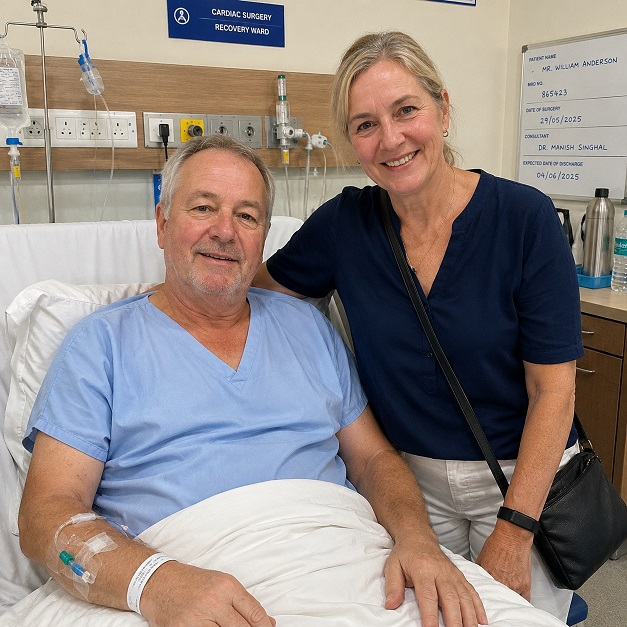
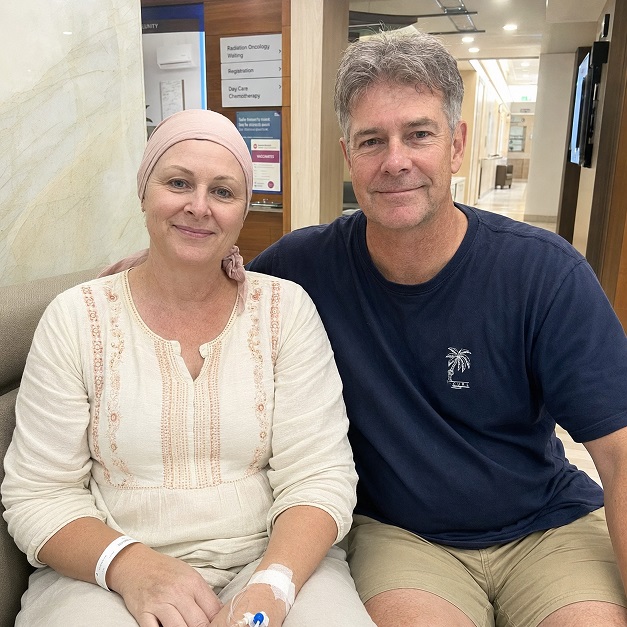
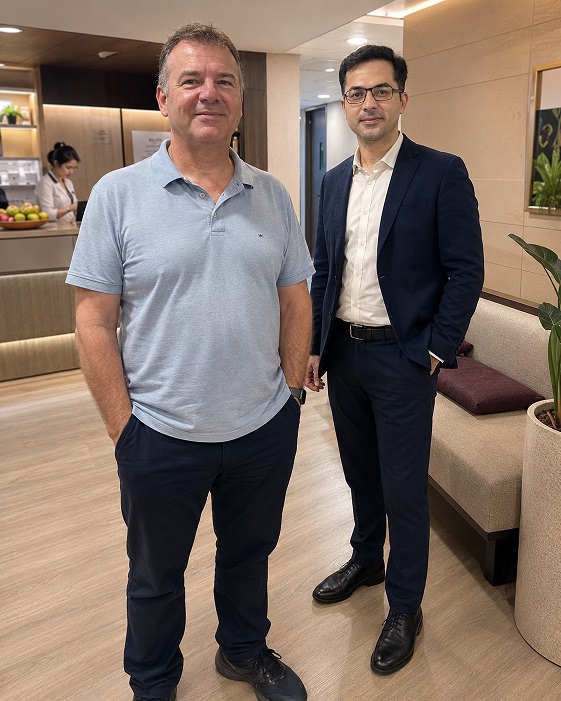
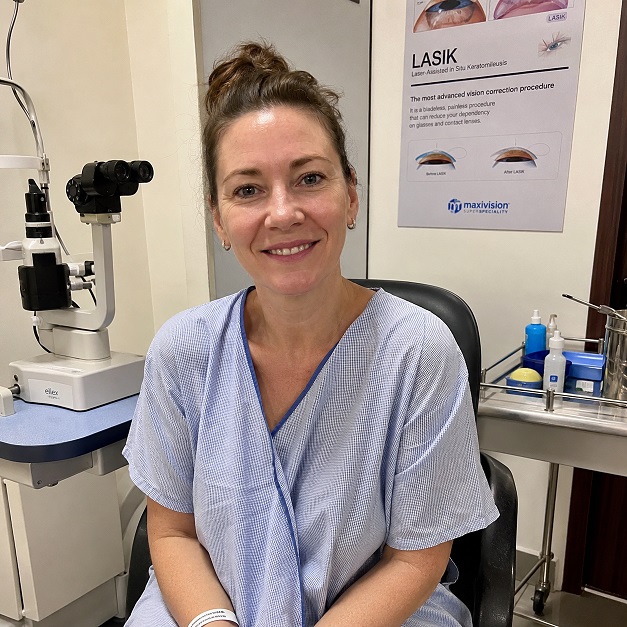
Patient Testimonials from Australia

Ready to Take the First Step?
Share your Medical Reports with our Healthcare Managers Today and Get a FREE CONSULTATION, a Personalized Treatment Plan, and Complete Support from Arrival to Recovery.
Get Your Free ConsultationAreas We Serve
This resource has been thoughtfully prepared for patients from Australia who are considering medical treatment in India. We also welcome patients from the wider region in the countries mentioned below-
We regularly assist patients from:
- Fiji
- Vanuatu
- Samoa
- Tonga
- Kiribati
- Nauru
- Tuvalu
- New Zealand
- Solomon Islands
- Papua New Guinea
Many of the insights, treatment pathways, hospital recommendations, travel guidance, and patient support services described here are equally relevant and may be used as a reference when planning treatment in India.
From Australia to India: Your Complete Patient Support Guide
- Cancer Treatment in India for Australian Patients: PBS Gap & Drug Costs
- Cardiac Surgery in India for Australian Patients: TAVI Access & Costs
- Dental Treatment & Surgery in India for Australian Patients
- Hip Surgery in India for Australian Patients: Costs, Waits & Implant Choice
- Knee Surgery in India for Australian Patients: Costs, Waits & Implants
- Neurosurgery in India for Australian Patients: Volume, Costs & When Not to Travel
- Spine Surgery in India for Australian Patients: Costs, Indications & Second Opinions (2026)
- Best Bariatric & Weight Loss Surgeons in India for Australian Patients
- Best Cancer Surgeons & Hospitals in India for Australian Patients
- Best Cardiac Surgeons & Hospitals in India for Australian Patients
- Best Cosmetic Surgeons & Hospitals in India for Australian Patients
- Best Dental Surgeons & Clinics in India for Australian Patients
- Best Hip Surgeons & Hospitals in India for Australian Patients
- Best Knee Surgeons & Hospitals in India for Australian Patients
- Best Scoliosis Surgeons & Hospitals in India for Australian Patients
- Best Spine Surgeons & Hospitals in India for Australian Patients
- Selecting the Best Urosurgery and Reconstructive Urology Centres in India for Australian Patients
- Selecting the Best Bone Marrow Transplant Centres in India for Australian Patients