

Cancer Treatment in India for Australian Patients
You do not need to leave Australia to be treated well. You may need to look elsewhere to afford the one medicine that is keeping you here.
Most of what follows will be an argument against travelling. That is not a strange way to open a document like this — it is the only honest way, because Australia treats cancer about as well as any country on earth, and I am not going to pretend otherwise to win a booking. But there is a gap in the Australian system that is real, that widens every month, and that almost nobody writes about plainly. This briefing is about that gap, and about the narrow set of circumstances in which India solves it.
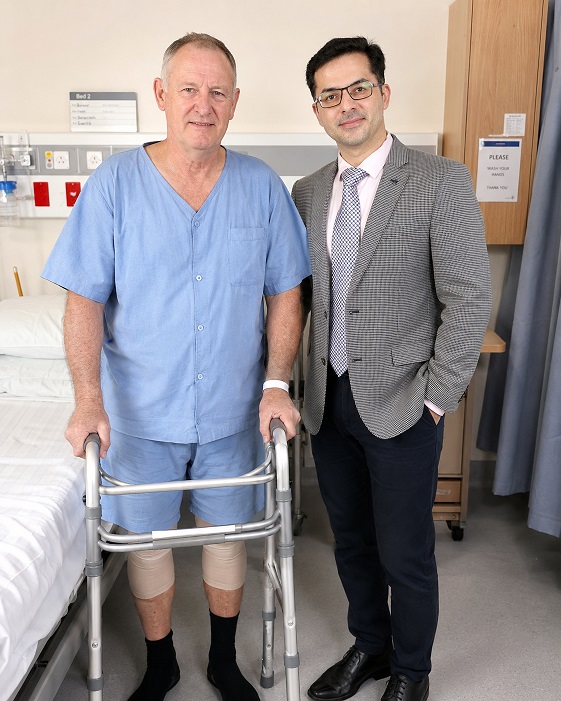
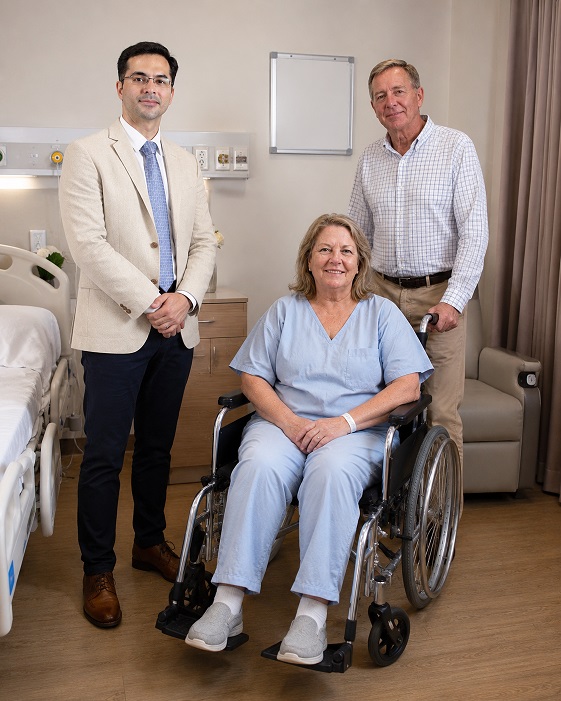
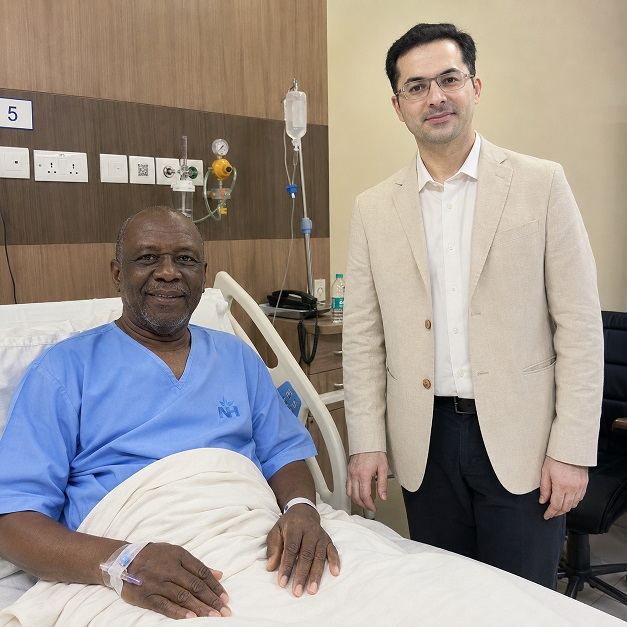
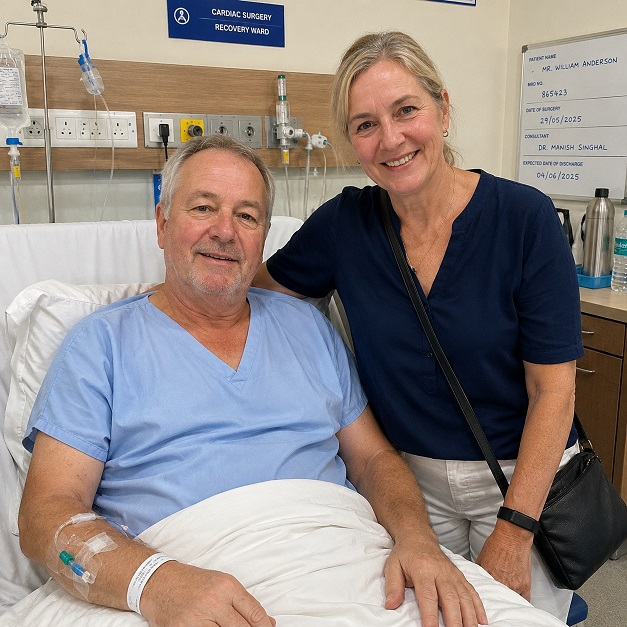
Healing Journeys of Australian Patients


Key Takeaways
- Australia provides high-quality cancer care through Medicare and the Pharmaceutical Benefits Scheme (PBS), so most newly diagnosed patients should generally continue surgery, chemotherapy and radiotherapy within their Australian treatment system.
- The main issue addressed in this briefing is the gap between TGA approval and PBS subsidy, where an oncologist may recommend a cancer medicine that is available in Australia but not PBS-funded for that patient's specific indication.
- For Australians paying privately for non-PBS cancer medicines, the briefing describes typical costs of Approximately $4,000–$8,000 per month, creating significant financial pressure during long-term treatment.
- India may offer established generic or biosimilar versions of certain cancer medicines at substantially lower hospital-pharmacy prices, provided medicines come through legitimate, licensed channels.
- India may also be considered for comprehensive genomic profiling, pathology re-review, multidisciplinary second opinions, and selected technologies with limited Australian capacity.
- Patients should never pause or abandon effective Australian cancer treatment simply to arrange care or medicines overseas.
- The briefing recommends maintaining the Australian oncologist as the primary treating and supervising specialist whenever India is being used to solve one specific component of care.
- Patients should avoid unproven cancer treatments, clinics making cure claims, medicines sold through unverified online sources, and providers issuing treatment quotations before reviewing pathology.
Quick Facts
- Conditions covered
- Cancer requiring systemic therapy, long-term maintenance treatment, rare cancers, selected tumours requiring molecular profiling or specialist review
- Treatment areas mentioned
- Cancer medicines, maintenance therapy, pathology review, genomic profiling, second opinions, proton therapy, selected radioisotope therapies, specialised cancer surgery
- Target audience
- Australian cancer patients considering India for a specific component of their oncology care
- Author/Advisor
- Dr. Dheeraj Bojwani, Independent Medical Travel Advisor, 24+ years of experience
- Primary treatment principle
- Keep core cancer care in Australia whenever appropriate and use India only for a clearly defined component where there is a genuine clinical, financial or access reason
- Australian PBS issue
- Some TGA-approved cancer medicines may not yet be PBS-funded for a particular indication
- Typical private non-PBS medicine cost
- Approximately $4,000–$8,000 per month, according to the briefing
- India medicine advantage
- Certain established generic and biosimilar medicines may be available through Indian hospital pharmacies at substantially lower prices
- Other services considered
- Comprehensive genomic profiling, pathology re-read, multidisciplinary tumour-board second opinion, selected technologies with limited Australian availability
- Typical stay in India
- Approximately 5–7 days for consultation, tumour-board review and dispensing; treatment delivered in India depends on the individual regimen
- Australian care retained
- Diagnosis, staging, primary treatment plan, treating oncologist, routine surgery/chemotherapy/radiotherapy where appropriate, blood tests, surveillance, emergency care and management of complications
- Medicine documentation
- Manufacturer information, batch documentation and proper pharmacy invoice should be obtained and shared with the Australian oncologist
- Important safety warning
- Patients should not pause effective Australian treatment, purchase cancer medicines from unverified online sellers, or pursue unproven therapies.
- Follow-up
- The Australian oncologist should remain involved in prescribing, monitoring and long-term cancer care whenever possible.
In Brief
For most Australian patients, India should not replace established cancer treatment in Australia. The specific problem addressed in this briefing is the financial gap that can arise when a cancer medicine is approved but is not PBS-funded for a patient's particular indication. In these circumstances, private Australian prescriptions may cost thousands of dollars each month. India may provide access to established generic and biosimilar medicines through hospital pharmacies at substantially lower prices, while the patient's Australian oncologist continues prescribing, monitoring and supervising care. India may also provide second opinions, pathology review, genomic profiling and access to selected specialised technologies.
Should you leave Australia for cancer treatment?
Almost certainly not, if what you mean is surgery, chemotherapy or radiotherapy for a new diagnosis.
Your surgery is covered. Your chemotherapy is covered. Your radiotherapy is covered. Your PBS medicines cost you at most twenty-five dollars a script, and less with a concession card. Your survival odds sit among the best in the world. And oncology, more than any other field of medicine, is a relay rather than a single operation — a surgeon, a medical oncologist, a radiation oncologist and a pathologist passing the same patient between them for years. Distance breaks relays.
In 24 years of guiding international patients into Indian hospitals, I have turned away more Australians with cancer than from any other specialty, and I would do it again tomorrow. If you have been newly diagnosed and your oncologist has a plan, stay. Finish it. Nothing below should change that.
This holds most firmly for the situations where time and coordination matter most: any cancer being treated with curative intent, anything requiring surgery followed closely by chemotherapy or radiotherapy, acute leukaemias, and any patient who is unwell rather than stable. In those circumstances the value of being fifteen minutes from your treating hospital, with your records in one system and your oncologist reachable, is worth more than any saving on this planet.
So where is the actual problem?
It is in the space between what medicine can do for you and what the Pharmaceutical Benefits Scheme currently pays for.
A drug is approved by the TGA. Then it goes to the Pharmaceutical Benefits Advisory Committee, which decides whether the taxpayer will fund it and at what price. That negotiation can take a very long time, and it sometimes fails. Australia has historically been slower than most comparable countries to move a new cancer medicine from approval to subsidy, and some drugs are subsidised only for one narrow indication while your indication waits.
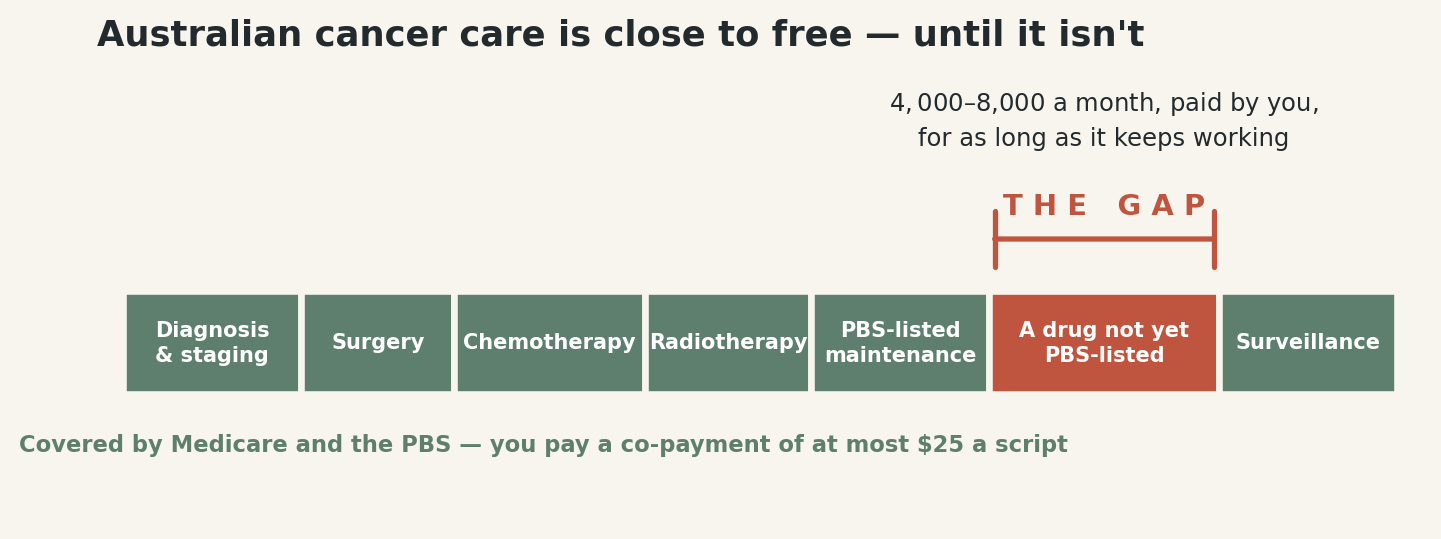
If your oncologist recommends a drug that is not listed for your situation, you can have it — on a private script, at full price, and it does not count towards the PBS Safety Net. That is the gap. It is not a failure of your doctors and it is not a scandal. It is a rationing decision, made for defensible reasons, that lands on individual patients with extraordinary force.
How big is the gap, in dollars?
Between four and eight thousand dollars a month, typically, for the drugs Australians most often find themselves paying for privately.
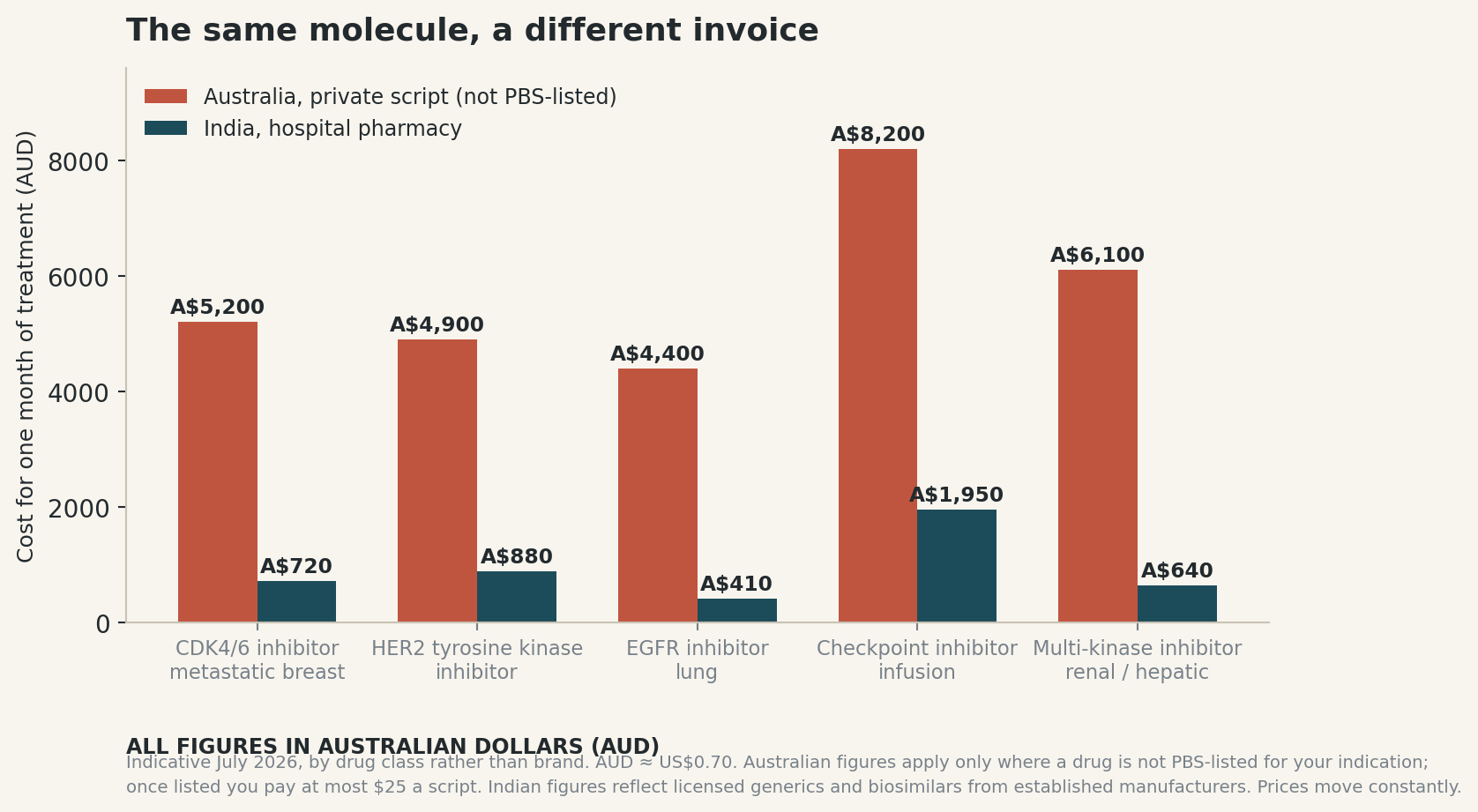
India manufactures a very large share of the world’s generic and biosimilar medicines, including for the major multinational originators, and the same molecules are dispensed there at a fraction of the Australian private price. That is not a quality compromise when the product comes from an established manufacturer through a hospital pharmacy. It is a pricing difference produced by patent status, market size and regulation.
The number that matters, though, is not the monthly one. It is what happens when the months
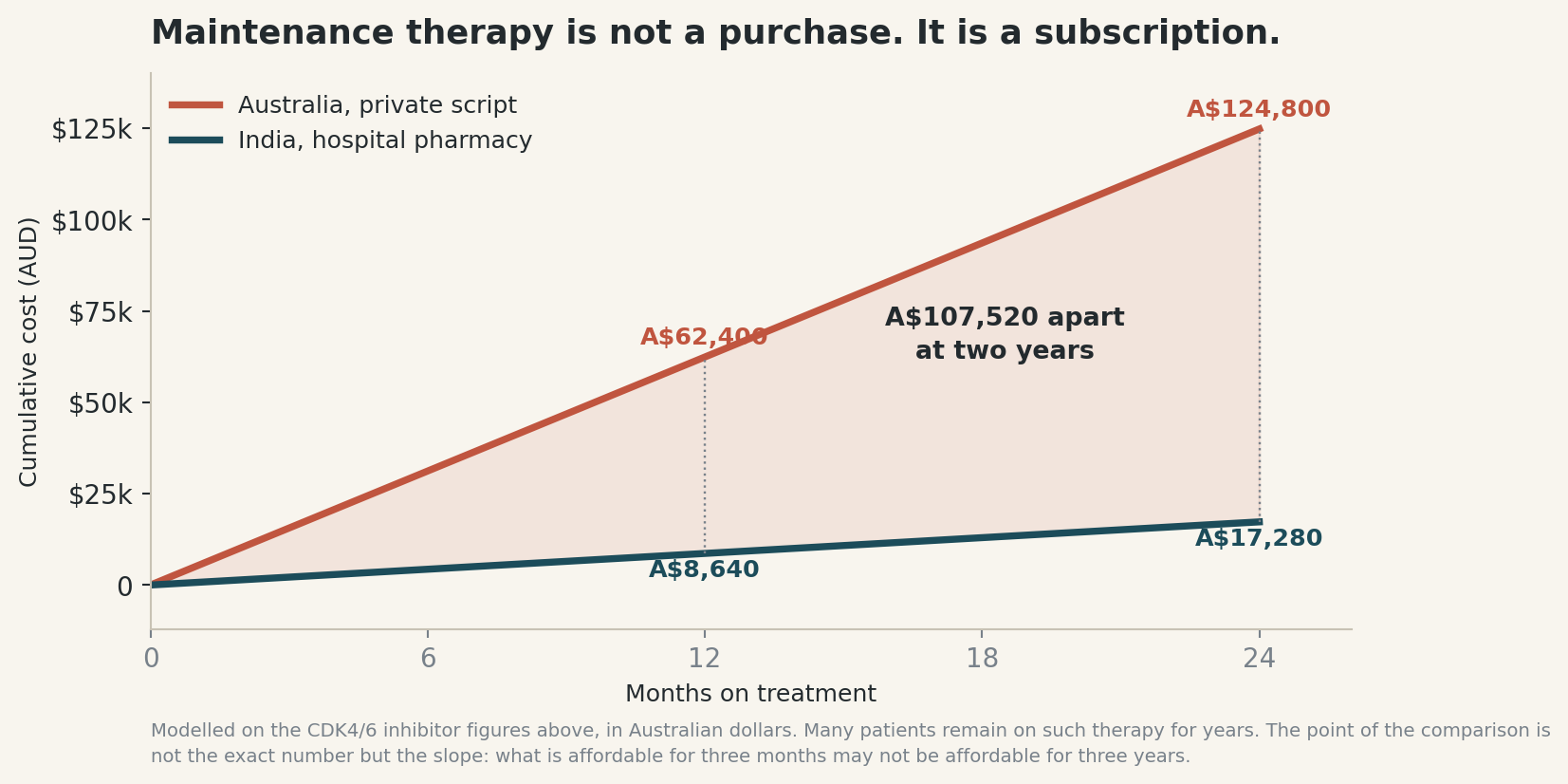
accumulate.
Maintenance therapy is not a purchase. It is a subscription, and people stay on these drugs for years when they work. Families who can absorb four months of private scripts often cannot absorb four years, and the decision that follows — quietly stopping a drug that is working — is the one I most want to help Australians avoid.
Oncologists have a term for this. They call it financial toxicity, and they mean it literally: a treatment’s cost is a side effect, and like any side effect it causes people to stop taking the drug. Australians mortgage houses over this, and rarely mention it at the clinic until the money has already gone.
Which situations genuinely justify the trip?
01. A drug your oncologist wants, that the PBS will not fund for you
The commonest case by far, and the clearest. Your Australian oncologist prescribes and supervises. The medicine is sourced at a sustainable price. Nothing about your clinical care changes.
02. Long-term maintenance you cannot sustain at Australian prices
You started privately, it is working, and the arithmetic has caught up with you. This is the situation where travelling converts an impossible bill into a manageable one, and it is worth acting on before you are forced into a decision by money.
03. Comprehensive genomic profiling and molecular testing
Broad tumour sequencing can open trial eligibility and targeted options, and privately in Australia it is expensive. In India it is routine and comparatively cheap. Occasionally it changes everything; often it changes nothing. Both outcomes are worth knowing.
04. A second opinion on the plan, or a re-read of the pathology
Tumour type and grade are matters of interpretation more often than patients realise, and a changed diagnosis changes the treatment. A review by a high-volume tumour board costs very little and can be done without anyone boarding a plane.
05. A specific technology with limited Australian capacity
Proton therapy, certain radioisotope therapies and some highly specialised surgery are concentrated in very few Australian centres or not yet available at all. Ask first whether the Medical Treatment Overseas Program applies to you — where it does, the Commonwealth may fund the trip.
Four things that should make you walk away immediately
Any clinic promising a cure that your Australian oncologist has not heard of. Cancer attracts the worst actors in medical tourism. Unproven immune therapies, stem cell infusions, ozone, high-dose vitamin C sold as treatment, proprietary “protocols” — these take money from frightened people and give nothing back. Every legitimate treatment in oncology has published trial data with a name you can look up.
Anyone who suggests pausing or abandoning your Australian treatment. A responsible unit works alongside your oncologist, never around them.
Medicines bought online, or from anywhere other than a hospital or licensed pharmacy. Counterfeit oncology drugs exist. This is the one place where saving another few per cent can cost you everything.
A quote that arrives before a pathology report has been read. Nobody can price your treatment before they know precisely what you have.
Is the treatment itself actually any good?
At the major Indian cancer centres, yes — and the reasons are worth stating precisely rather than in brochure language.
These are high-volume institutions. The largest see more patients with a given tumour type in a month than some Australian units see in a year, and in oncology, as in surgery, pattern recognition is built from repetition. Their senior medical oncologists are frequently trained in the United Kingdom, the United States or Australia. Cases go before multidisciplinary tumour boards as a matter of routine, not as a favour. Linear accelerators, PET-CT and modern radiotherapy planning are standard at the accredited centres, and the whole medical record is produced in English, so your Australian oncologist can read every word of it without a translator.
There is also a point about rare disease worth making, because it cuts the other way from what most Australians assume. Australia has 27 million people, and for an uncommon tumour that means a small national caseload spread thinly. India’s major centres draw from a population of well over a billion, which produces genuine sub-specialisation — oncologists who treat one disease group and nothing else, and pathologists who see the unusual variant regularly rather than once a career. For a common breast or bowel cancer this counts for little, because Australian volumes are ample. For a rare sarcoma, an unusual lymphoma or a paediatric tumour, it counts for a great deal.
Accreditation is worth understanding rather than accepting. JCI is the international arm of the body that accredits hospitals across the United States; NABH is India’s national equivalent, recognised by the same global standards authority. Either one means an external inspector has audited infection control, medication safety and record-keeping against a published standard, and you can verify it yourself before you go.
In 24 years I have never argued that Indian oncology outperforms Australian oncology. I argue something narrower: for a specific, well-defined problem — usually the price of a medicine — it solves what Australia has not.
How do I choose where to go?
By asking a small number of unglamorous questions, and paying attention to who answers them without hesitating.
Ask how many patients with your tumour type and stage the unit treated last year. A confident cancer centre has that number and gives it. Vagueness here is the most reliable warning sign in this entire field.
Ask whether your case will go before a multidisciplinary tumour board, with a medical oncologist, a radiation oncologist, a surgeon and a pathologist in the room, and ask for the recommendation in writing afterwards. A single doctor’s opinion on a cancer plan is not a plan.
Ask what the hospital does with your Australian records. The right answer involves reading them carefully and asking for more; the wrong answer is a quote within an hour.
Ask who supplies the medicines and whether you will receive batch documentation. Any reputable hospital pharmacy provides this without being asked twice.
Check the accreditation yourself rather than accepting the logo on the website, and ask whether the oncologists hold international fellowships and where.
And notice the shape of the conversation. A unit that spends the first call asking about your pathology, your prior lines of treatment and your Australian team is behaving like a cancer centre. A unit that spends it describing airport pickup and hotel packages is behaving like a travel agency, and you are not booking a holiday.
What does this look like in practice?
Less dramatic than you might expect. In most cases you are not moving your cancer care to India. You are solving one component of it there and keeping everything else exactly where it is.
| What stays in Australia | What India can supply |
|---|---|
| Your diagnosis, staging and treatment plan | A second opinion on that plan, and a pathology re-read |
| Your oncologist, who continues to prescribe and supervise | Medicines at a fraction of the private Australian price |
| Surgery, chemotherapy and radiotherapy funded by Medicare | Comprehensive genomic profiling at a workable cost |
| Blood tests, scans and surveillance imaging | Specific technologies with limited Australian capacity |
| Every emergency, every admission, every complication | A written treatment summary your oncologist can act on |
All dollar figures in this briefing are Australian dollars. This is a division of labour, not a transfer of care.
Two practical notes. Australia permits individuals to import limited quantities of medicine for personal use under specific conditions — ask your oncologist and check the current Therapeutic Goods Administration rules before you rely on it, because the conditions matter and they change. And before you spend anything, ask whether a compassionate access or patient access programme exists for your drug. Manufacturers run them, they are often unadvertised, and they occasionally make this entire discussion unnecessary.
What do I say to my oncologist?
Tell them the truth, early, and in that order.
The conversation that goes badly is the one where a patient quietly sources a medicine and mentions it three months later. The conversation that goes well starts with something like: I can’t
Most Australian oncologists have had this conversation before and are more sympathetic than patients expect, because they see the financial toxicity of their own prescriptions every week. Some will have specific concerns about a particular product or supplier, and those concerns are worth more than any reassurance I can offer. Ask them to write down what they want to see: manufacturer, formulation, batch documentation. Then bring back exactly that.
And what do I tell my family?
That you are not going anywhere for your cancer treatment — you are going somewhere to afford part of it.
That distinction settles most of the anxiety, because what frightens families is the image of a relative abandoning Australian medicine for something unknown. Name the hospital and its accreditation and invite them to check it. Tell them your oncologist knows and agrees. Tell them the manufacturer of the medicine, which is often a name they recognise. And if the trip is a real one rather than a paperwork exercise, bring someone with you — the attendant visa exists for this, and nobody should sit through an oncology consultation alone.
The practical detail
Australian passport holders are eligible for India’s electronic medical visa, issued against an invitation letter from the treating hospital, with an e-medical attendant visa applied for in the same batch. Send the actual imaging studies rather than the radiologist’s reports, and for any pathology review send the tissue blocks or slides, not the typed result — a re-read requires the material itself. Bring a written summary of every treatment you have already received, with drug names, doses and dates, because your Indian team will ask and guesswork helps nobody.
Before you come home, collect a treatment summary naming every drug, dose and cycle, all pathology and imaging reports, the manufacturer and batch details of any medicine supplied, and a written statement of the recommended plan and follow-up schedule. Hand that to your oncologist at your next appointment. It is the document that keeps you inside the Australian system rather than beside it.
A closing word
If you take one thing from this, let it be that the Australian cancer system is worth staying inside. It will treat you well, and it will treat you for very little. But if you are sitting with a private script you cannot sustain, deciding between a medicine that is working and your family’s security, that is a solvable problem and you should not solve it by stopping the drug. Send me the pathology report, the current prescription and what you are being charged, and I will tell you honestly whether there is a better route — including telling you that there is not, or that you should wait for a PBS decision, which is an answer I give more often than the alternative.
Sources
- 🌐 Breast Cancer Network Australia on access to non-PBS medicines and patient access programmes
- 🌐 Cancer Council Australia on private prescriptions and the PBS Safety Net
- 🌐 Australian Prescriber on the cost of contemporary cancer therapies
- 🌐 Therapeutic Goods Administration, Personal Importation Scheme
- 🌐 Australian Government Medical Treatment Overseas Program
- 🌐 High Commission of India, e-Visa categories and eligibility
Frequently Asked Questions by Australian Patients about Cancer Treatment in India
Should Australian patients travel to India for cancer treatment?
For most newly diagnosed patients, the briefing recommends continuing surgery, chemotherapy and radiotherapy in Australia. India is presented mainly as an option for solving specific problems such as unaffordable non-PBS medicines, genomic profiling, pathology review, second opinions or access to certain specialised technologies.
Why might an Australian cancer patient consider India for cancer medicines?
Some TGA-approved cancer medicines may not be PBS-funded for a patient's particular indication. The briefing states that private prescriptions for relevant non-PBS medicines can cost approximately Approximately $4,000–$8,000 per month, while certain established generic or biosimilar medicines may be available at substantially lower prices through Indian hospital pharmacies.
Are generic cancer medicines from India the same as Australian medicines?
The briefing states that medicines from an established manufacturer and licensed pharmacy contain the same active molecule to the required standard. Patients are advised to obtain manufacturer details, batch documentation and a proper invoice and share these with their Australian oncologist.
Should I stop my Australian cancer treatment while arranging treatment or medicines in India?
No. The briefing explicitly states that patients should not pause effective Australian treatment while considering overseas options. Any provider recommending that a patient abandon or interrupt treatment prescribed by their Australian oncology team is identified as a major warning sign.
What cancer-related services can Australian patients access in India?
The briefing discusses more affordable cancer medicines, comprehensive genomic profiling, pathology re-review, multidisciplinary second opinions and selected technologies such as proton therapy and certain radioisotope therapies. Some highly specialised surgical procedures may also have limited capacity in Australia.
Do Australian patients always need to travel to India?
No. Second opinions, pathology reviews and genomic profiling can often be arranged by sending scans, pathology material and medical records. Travel generally becomes necessary when treatment or another service requiring the patient's physical presence is being delivered.
How long might an Australian cancer patient need to stay in India?
For consultation, tumour-board review and medicine dispensing, the briefing states that five to seven days is usually sufficient. If treatment is delivered in India, the required stay depends entirely on the treatment regimen and the patient's medical condition.
What should patients check before choosing an Indian cancer centre?
Patients should ask about the centre's experience with their specific tumour type and stage, multidisciplinary tumour-board review, hospital accreditation, medicine supply and batch documentation, and how thoroughly the team reviews Australian pathology, imaging and previous treatment records.
Will Medicare or private health insurance reimburse cancer treatment in India?
The briefing states that Medicare does not cover overseas treatment and Australian health-fund benefits apply to Australian admissions. It recommends investigating the Medical Treatment Overseas Program when medically necessary treatment is genuinely unavailable in Australia.
What cancer-treatment warning signs should Australian patients avoid?
Patients should avoid clinics promising unsupported cures, providers recommending abandonment of Australian treatment, unproven therapies, cancer medicines purchased from unverified online sellers, and treatment quotations issued before the patient's pathology has been properly reviewed.
Are Indian generic cancer drugs the same as the Australian originals?
Where they come from an established manufacturer and a licensed pharmacy, they contain the same active molecule to the same standard. Ask for the manufacturer, the batch documentation and a proper invoice, and give all three to your oncologist. Avoid online sellers entirely.
Should I stop my Australian treatment while I sort this out?
No. Nothing in this briefing is a reason to pause effective treatment, and any provider who suggests otherwise should lose your confidence immediately.
Do I have to travel at all?
Often not. Second opinions, pathology review and genomic profiling can be arranged with samples and scans rather than a passenger. Travel becomes necessary when treatment is being delivered rather than advised.
Will Medicare or my health fund reimburse any of this?
No. Medicare does not cover treatment overseas and fund benefits apply to Australian admissions. The exception worth investigating is the Medical Treatment Overseas Program, which can fund treatment genuinely unavailable in Australia — ask your specialist whether you might qualify.
My drug might be listed on the PBS soon. Should I wait?
Ask your oncologist to check the PBAC outcomes and current listing status, because the answer changes month to month and a listing would make all of this unnecessary. Do not wait in the dark, and do not go without treatment while waiting.
Can my Australian oncologist refuse to supervise me if I source medicine overseas?
They can decline anything they are not comfortable with, which is their professional right. In practice most will continue prescribing and monitoring once they know the manufacturer and can see the documentation. Raise it early and in person, and ask what they need to see rather than presenting them with a decision already made.
How long would I need to be in India?
For a consultation, tumour board review and dispensing, usually five to seven days. For a course of treatment delivered there, it depends entirely on the regimen. Many patients never travel at all, because samples and scans travel instead.
Is it safe to fly during chemotherapy?
It depends on your counts, your infection risk and where you are in the cycle. This is a question for your treating team, and the answer should be specific to your bloods rather than general.
Page Summary
This guide explains when cancer treatment-related care in India may be relevant for Australian patients, while Australia's own cancer system should remain the foundation of care for most people. Rather than overseas surgery, chemotherapy or radiotherapy for newly diagnosed patients, it focuses on the PBS funding gap, where non-PBS-funded medicines can cost Approximately $4,000–$8,000 per month privately. India may help with specific components — affordable generic or biosimilar medicines, genomic profiling, pathology re-review and second opinions — provided continuity with the Australian oncologist is maintained. Patients are warned against unproven treatments, cure claims, counterfeit medicines and stopping effective Australian treatment.
Citation Block
| Topic | Information |
|---|---|
| Topic Information | Details |
| Procedure | Cancer Treatment & Oncology Support |
| Country | India |
| Intended Audience | Australian Patients |
| Conditions Covered | Cancer Requiring Systemic Therapy, Maintenance Treatment, Molecular Testing or Specialist Review |
| Services/Procedures | Cancer Medicines, Second Opinion, Pathology Review, Genomic Profiling, Selected Specialised Technologies |
| Primary Issue | TGA Approval to PBS Funding Gap |
| Typical Private Drug Cost | Approximately $4,000–$8,000 Per Month for Relevant Non-PBS Medicines |
| Typical Stay | Approximately 5–7 Days for Consultation, Tumour Board Review & Dispensing |
| Treatment Stay | Depends Entirely on the Treatment Regimen |
| Primary Oncology Care | Generally Remains in Australia |
| Medicine Safety | Licensed Hospital/Pharmacy Supply with Manufacturer & Batch Documentation |
| Author | Dr. Dheeraj Bojwani |
| Experience | 24+ Years as a Medical Travel Advisor |


Our Mission Statement
Our mission is to place patients at the centre of every healthcare decision by providing trustworthy, evidence-based, and unbiased medical information. We believe that informed patients make better decisions. Backed by personalised guidance from our experienced advisory team, we help patients understand their treatment options, compare them objectively, and confidently choose the path that best suits their medical needs and personal circumstances.
Patient Testimonials from Australia


Ready to Take the First Step?
Share your Medical Reports with our Healthcare Managers Today and Get a FREE CONSULTATION, a Personalized Treatment Plan, and Complete Support from Arrival to Recovery.
Get Your Free ConsultationAreas We Serve
This resource has been thoughtfully prepared for patients from Australia who are considering medical treatment in India. We also welcome patients from the wider region in the countries mentioned below-
We regularly assist patients from:
- Fiji
- Vanuatu
- Samoa
- Tonga
- Kiribati
- Nauru
- Tuvalu
- New Zealand
- Solomon Islands
- Papua New Guinea
Many of the insights, treatment pathways, hospital recommendations, travel guidance, and patient support services described here are equally relevant and may be used as a reference when planning treatment in India.
From Australia to India: Your Complete Patient Support Guide
- Cancer Treatment in India for Australian Patients: PBS Gap & Drug Costs
- Cardiac Surgery in India for Australian Patients: TAVI Access & Costs
- Dental Treatment & Surgery in India for Australian Patients
- Hip Surgery in India for Australian Patients: Costs, Waits & Implant Choice
- Knee Surgery in India for Australian Patients: Costs, Waits & Implants
- Neurosurgery in India for Australian Patients: Volume, Costs & When Not to Travel
- Spine Surgery in India for Australian Patients: Costs, Indications & Second Opinions (2026)
- Best Bariatric & Weight Loss Surgeons in India for Australian Patients
- Best Cancer Surgeons & Hospitals in India for Australian Patients
- Best Cardiac Surgeons & Hospitals in India for Australian Patients
- Best Cosmetic Surgeons & Hospitals in India for Australian Patients
- Best Dental Surgeons & Clinics in India for Australian Patients
- Best Hip Surgeons & Hospitals in India for Australian Patients
- Best Knee Surgeons & Hospitals in India for Australian Patients
- Best Scoliosis Surgeons & Hospitals in India for Australian Patients
- Best Spine Surgeons & Hospitals in India for Australian Patients
- Selecting the Best Urosurgery and Reconstructive Urology Centres in India for Australian Patients
- Selecting the Best Bone Marrow Transplant Centres in India for Australian Patients