

Selecting the Best Cosmetic Surgeons and Hospitals in India for Australian Patients
Australia just spent three years, and one very public reckoning, learning to ask a simple question before trusting anyone with the word “surgeon” in their title. This guide shows you how to ask exactly that question in India — and what a genuinely excellent answer looks like.
You already know how to ask this question, because Australia made you learn it. In 2023, after years in which any registered doctor could advertise as a “cosmetic surgeon” with no specialist training at all, the law changed: the word “surgeon” became protected, reserved for practitioners who actually hold a surgical specialty. It was a hard-won piece of consumer protection, and it exists because the old system genuinely hurt people.
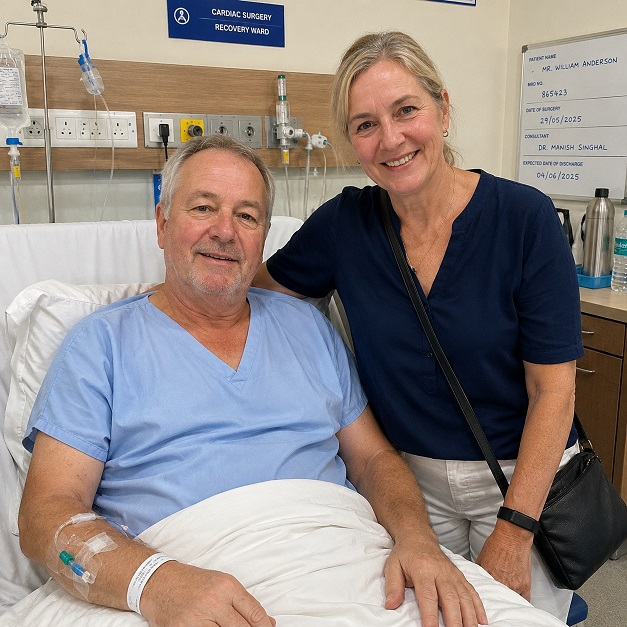
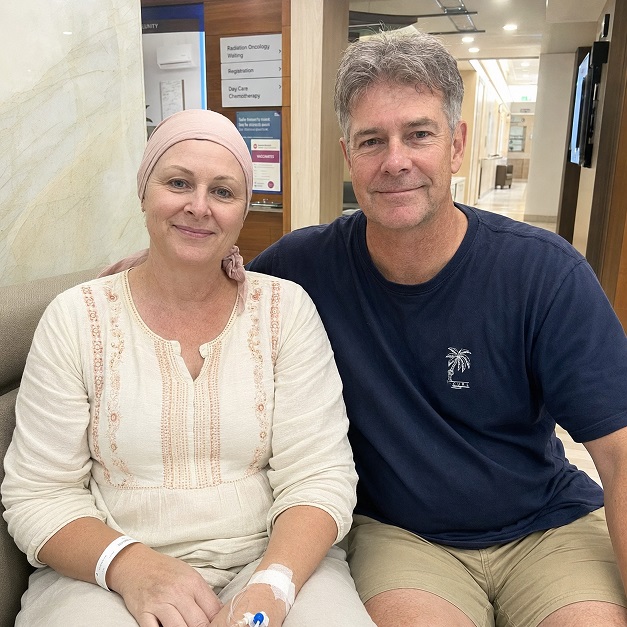
Healing Journeys of Australian Patients


Key Takeaways
- Australian patients considering cosmetic surgery in India should first verify that the doctor is a genuinely qualified plastic surgeon, rather than relying on the marketing title “cosmetic surgeon.”
- The guide identifies MCh (Plastic Surgery) or DNB (Plastic Surgery) as the specialist qualifications that matter most, with aesthetic surgery fellowships providing additional procedure-focused training.
- Surgeon selection should focus on experience in the exact cosmetic procedure required. A surgeon with extensive rhinoplasty experience, for example, should not automatically be assumed to have equivalent expertise in facelift or body-contouring surgery.
- Patients should ask to see a substantial procedure-specific portfolio, discuss revision rates and complications openly, and confirm through a video consultation that the surgeon they speak with will personally perform the operation.
- A surgeon’s willingness to say that a requested result is unrealistic for the patient's anatomy can be an important quality signal. The guide cautions against surgeons who agree enthusiastically to every request without qualification.
- Cosmetic procedures should be performed in a fully licensed hospital or surgical facility with a registered operating theatre, rather than a converted clinic or beauty-treatment room.
- For procedures beyond the most minor interventions, patients should confirm that a qualified specialist anaesthetist will manage anaesthesia and that appropriate overnight nursing observation is available.
- Hospital or facility accreditation should be independently verified through JCI or NABH, rather than relying solely on accreditation logos displayed on a facility's website.
- The guide uses rhinoplasty as an indicative cost example, showing approximately Approximately $7,200 all-in for India, including surgery, flights and a three-week stay. The figure is illustrative and actual costs vary by surgeon seniority and procedure complexity.
- Australian patients should generally plan approximately two to three weeks in India, depending on the procedure, and should not fly until they receive specific medical clearance.
Quick Facts
- Conditions/Treatment Areas Covered
- Elective cosmetic and aesthetic concerns requiring surgical correction or enhancement
- Procedures Mentioned
- Rhinoplasty, facelift, breast augmentation, abdominoplasty, body contouring after major weight loss and other aesthetic plastic surgery procedures
- Target Audience
- Australian patients considering elective cosmetic or aesthetic surgery in India
- Author/Advisor
- Dr. Dheeraj Bojwani, Independent Medical Travel Advisor, 24 years of experience guiding international patients
- Surgeon Selection Highlights
- MCh/DNB Plastic Surgery qualification, Association of Plastic Surgeons of India membership, aesthetic surgery fellowship where applicable, procedure-specific annual volume, procedure-specific portfolio, revision-rate transparency, complication candour and direct consultation with the operating surgeon
- Qualification Pathway Discussed
- MBBS → MS (General Surgery) → MCh/DNB (Plastic Surgery), with an aesthetic surgery fellowship or international fellowship providing additional specialised training
- Facility Selection Highlights
- Fully licensed surgical facility, registered operating theatre, specialist anaesthetist, overnight nursing observation, independently verified accreditation, written revision policy and comprehensive discharge documentation
- Accreditation Discussed
- JCI and NABH
- Indicative Cost Example
- Approximately $7,200 all-in for rhinoplasty in India, including surgery, flights and a three-week stay. The guide identifies this as an indicative July 2026 example rather than a guaranteed price.
- Typical Stay in India
- Approximately 2–3 weeks depending on the cosmetic procedure
- Hospital Stay
- No single standard hospital stay is specified. For anything beyond the most minor procedures, the guide recommends confirming whether overnight admission with nursing observation will be provided.
- Medical Travel Considerations
- Indian e-medical visa, e-medical attendant visa for a companion where applicable, adequate recovery time, medical clearance before flying and advance planning for Australian postoperative support
- Aftercare Considerations
- Compression garments, scar management, follow-up photography and a written aftercare protocol extending over weeks rather than only the immediate postoperative period
- Partner Hospital Cities
- Specific partner hospital cities are not listed in this guide and therefore should not be added as source-derived information.
In Brief
Australian patients considering cosmetic surgery in India should apply the same qualification-focused scrutiny encouraged by Australia's recent cosmetic surgery reforms. The guide recommends first confirming MCh or DNB Plastic Surgery qualifications, then evaluating the surgeon's annual experience and portfolio in the exact procedure required. Hospital selection should include a licensed surgical facility, qualified specialist anaesthesia, appropriate overnight observation, independently verifiable JCI or NABH accreditation and a written revision policy. Australian patients should also arrange GP awareness before travelling, allow sufficient recovery time in India and return home with detailed operative and aftercare documentation.
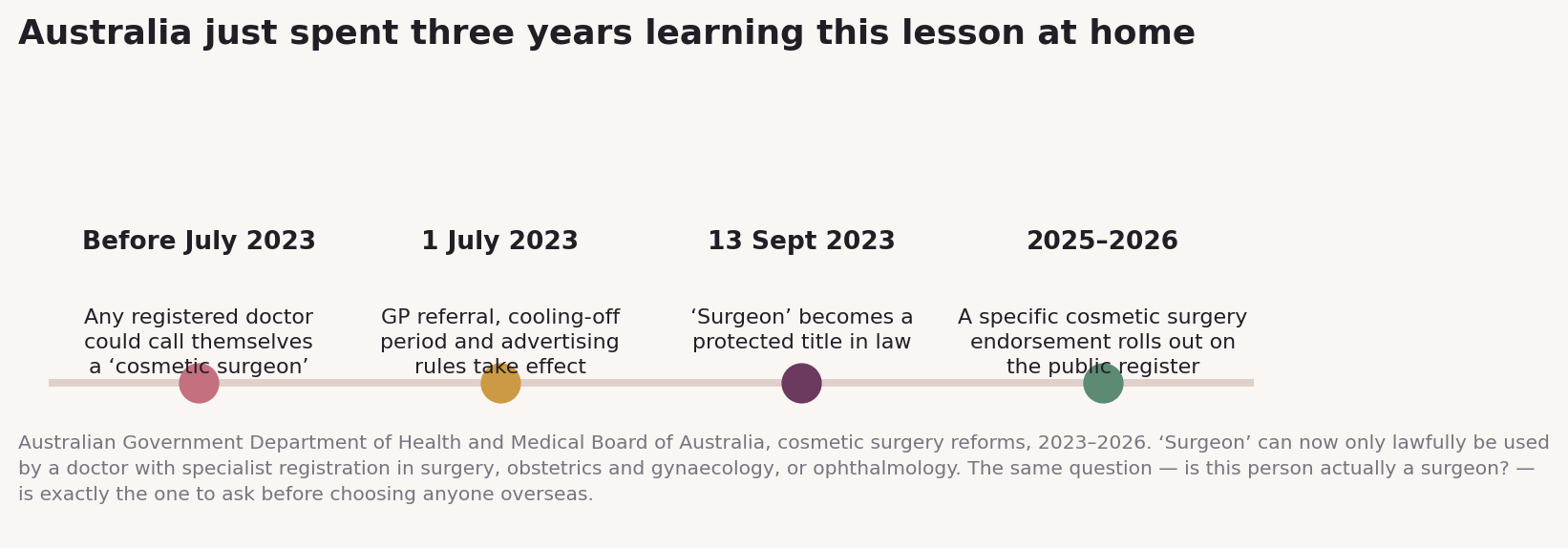
Here is the useful part: the same question — is this person actually a surgeon, by qualification, not by marketing — is exactly the one to bring with you when you look overseas. Nobody has to teach you this instinct. You already have it. This guide simply shows you where to point it in India.
It is worth being honest about why the Australian reform happened at all. It followed years of media investigations into serious, sometimes fatal, complications at the hands of doctors using the title “cosmetic surgeon” with no accredited surgical training behind it — general practitioners performing major procedures under sedation, in facilities never built for it. That history is precisely why the criteria in this guide are not decoration. They are the difference between an excellent outcome and a preventable one, wherever in the world the operation happens.
Why look at all, and what this can genuinely give you
Cosmetic surgery is one of the very few procedures in this entire series with no Medicare benefit and, in almost every case, no private health fund rebate — which puts Australia and India on the same financial footing as every other destination you might be weighing, from Sydney to Seoul. What makes India worth serious consideration is not a funding gap. It is genuine depth: high-volume specialist units, senior plastic surgeons often trained in Australia, the United Kingdom or the United States, and modern accredited facilities, at a fraction of the Australian price.
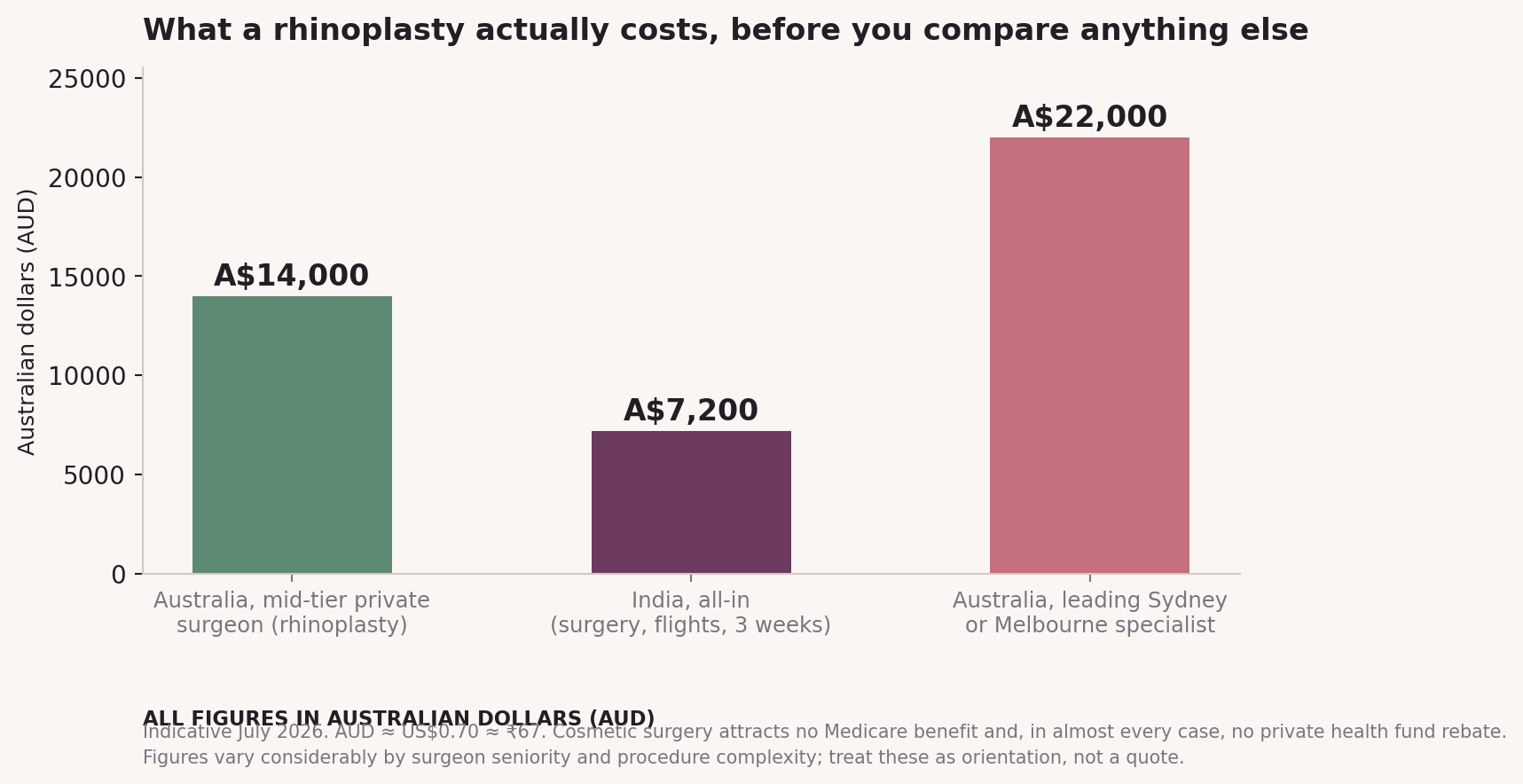
Done well, this is one of the most genuinely rewarding categories in this whole series — a considered, well-researched decision that changes how someone feels in their own skin, at a price that makes the decision easier rather than harder. Done poorly, it is also the category with the least room for a second attempt. That combination is exactly why the criteria below deserve real attention rather than a quick scroll past.
There is also a genuine depth argument worth making plainly. Indian aesthetic surgery draws on an enormous domestic caseload, which means the senior surgeons at serious units perform some procedures — rhinoplasty on a wide range of nasal anatomies in particular — at a volume and variety few individual Australian practices can match. That is not a reason to skip the vetting process. It is the reason the vetting process is worth doing properly, because the depth genuinely exists if you find it.
Part one: judging the surgeon
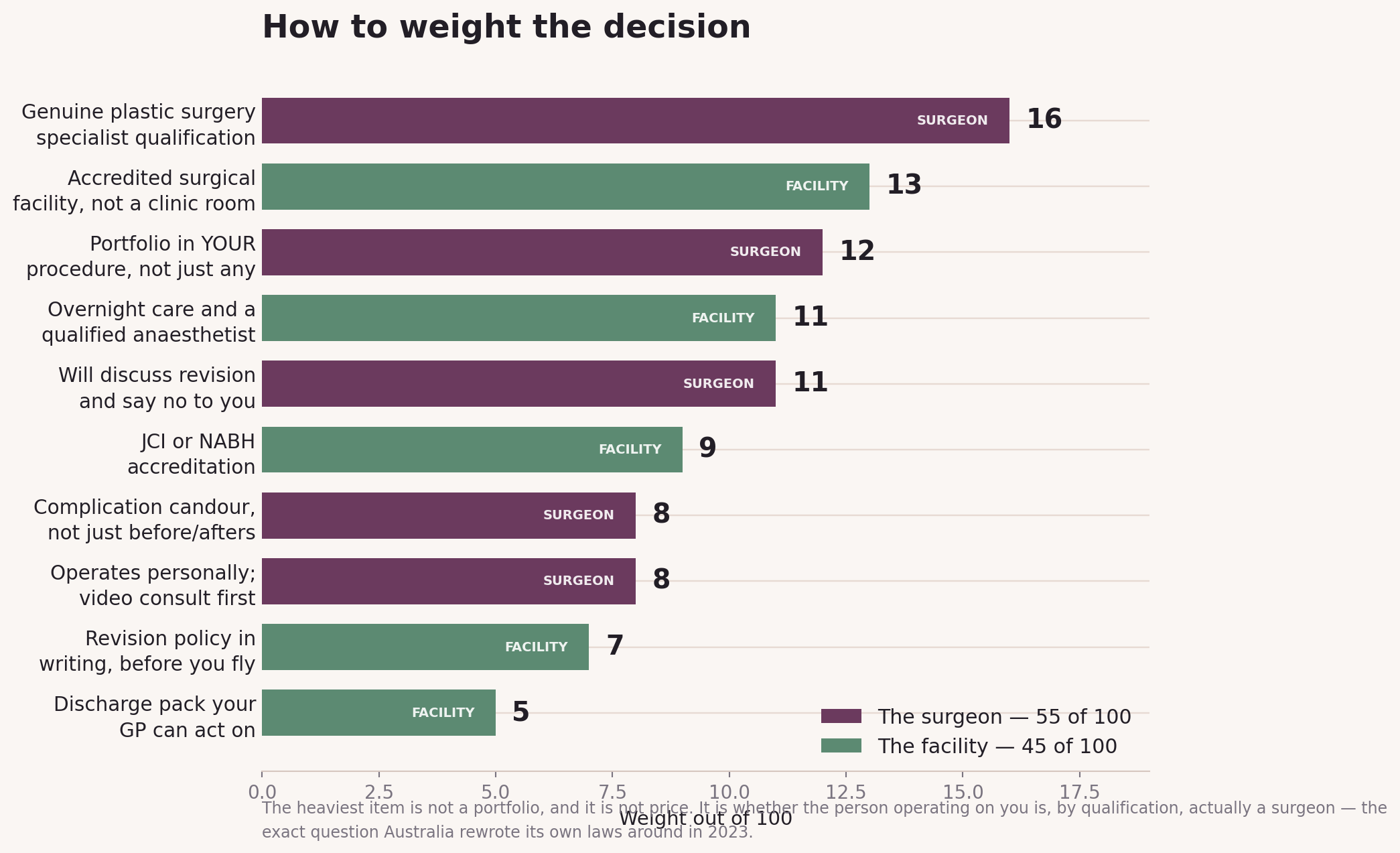
1. A genuine plastic surgery specialist qualification — not a title, a credential. This is the single heaviest criterion in the guide, and it is the direct Indian equivalent of the question Australia just spent three years legislating around.
| Qualification | Length | What it actually means |
|---|---|---|
| MBBS | 5½ years | The basic medical degree. A licence to practise, not a specialist qualification, and not a licence to perform surgery. |
| MS (General Surgery) | 3 years | General surgical training. The gateway into plastic surgery, but not the specialist qualification itself. |
| MCh (Plastic Surgery) or DNB (Plastic Surgery) | 3 years, after MS | This is the one that matters. India’s genuine specialist qualification in plastic and reconstructive surgery, with the National Medical Commission treating the university-awarded MCh and the National Board’s DNB as equivalent. Just as Australian law now reserves “surgeon” for specialists, India has no recognised medical specialty called “cosmetic surgeon” either — the qualification you are actually checking for is this one. |
| Aesthetic surgery fellowship | 1–2 years, after MCh/DNB | Sub-specialty training focused specifically on aesthetic, as against purely reconstructive, procedures. What separates a plastic surgeon who occasionally does aesthetic work from one whose practice is built around it. |
| FRCS (Plast) or an overseas fellowship | Varies | International training, common among senior Indian aesthetic surgeons and worth asking about — though current practice pattern matters more than where he trained fifteen years ago. |
Ask, in one message: is he a member of the Association of Plastic Surgeons of India, and does he hold MCh or DNB in Plastic Surgery specifically? A confident, specific answer arrives immediately. Vagueness, or a pivot to before-and-after photographs instead of a direct answer, is the same red flag Australians have just learned to recognise at home.
Do this before you fall in love with a portfolio. It is tempting to find a result you like online and work backwards to the surgeon; do it the other way round. Confirm the qualification first, and only then look seriously at the work, because a beautiful photograph tells you nothing about training, and a great many photographs online are not even independently verifiable as belonging to the clinic presenting them.
2. A portfolio in your exact procedure, not just any procedure. A rhinoplasty specialist and a facelift specialist are not interchangeable, and a large general portfolio can quietly conceal a thin one in the operation you actually want.
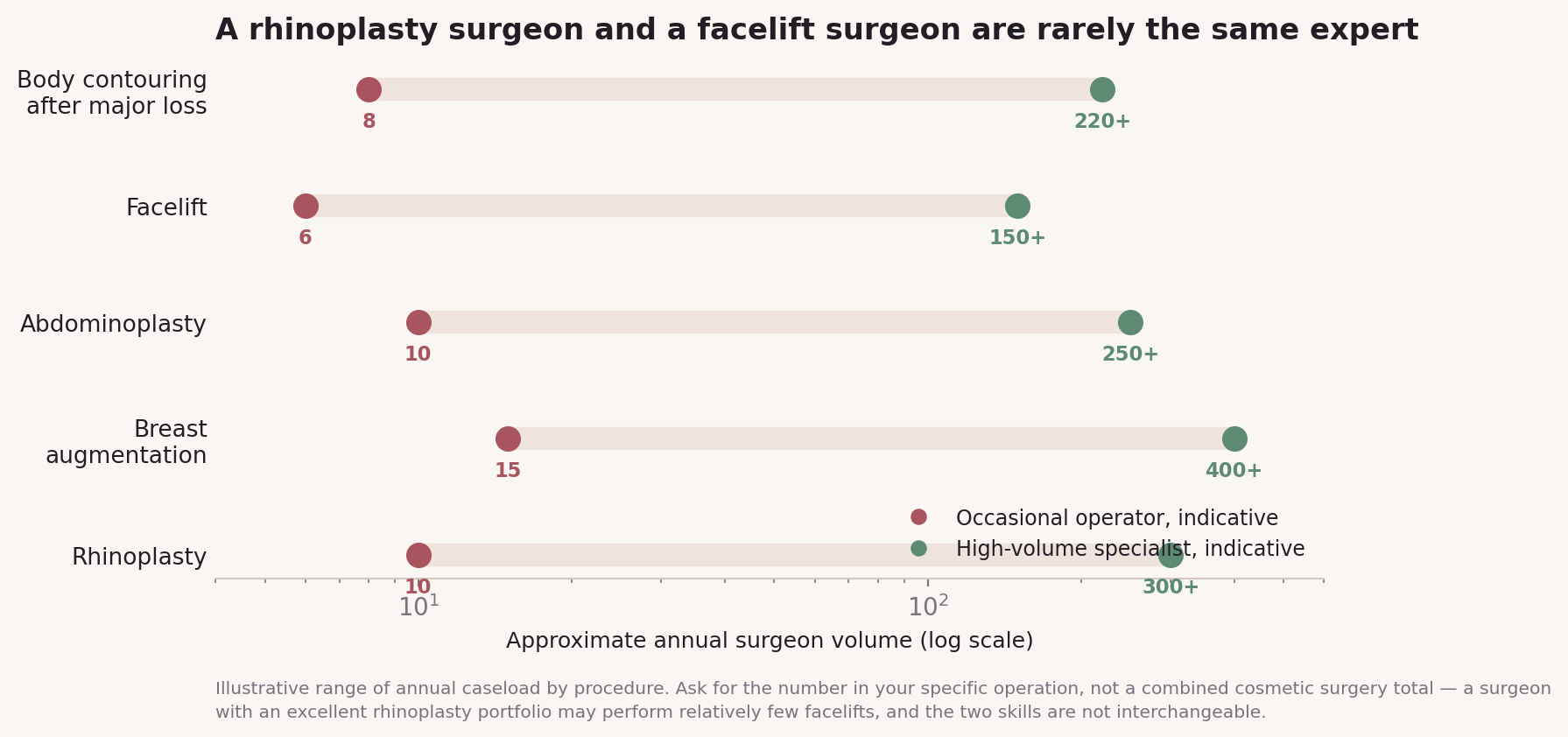
Ask for his annual volume in your specific procedure, and ask to see a substantial portfolio in that procedure alone — not a mixed gallery. Pay attention to consistency of style and outcome across many cases rather than being swayed by two or three exceptional results, which any surgeon of any skill level can occasionally produce.
3. Whether he will discuss revision honestly, and say no to you. Ask what proportion of his cases need a revision, and ask him directly whether your specific request is realistic for your anatomy. A surgeon who gently declines part of what you are asking for, or proposes something more conservative, is very often the one you want. One who agrees enthusiastically to everything is not demonstrating skill; he is demonstrating a sales instinct.
4. Whether he operates personally, and speaks to you first. Insist on a video consultation with the surgeon who will actually operate, not a coordinator or a patient liaison. Ask directly whether he performs the entire procedure himself.
5. Complication candour, not just a gallery of successes. Ask what his most common complication is for your procedure, and how he manages it. Every surgeon, everywhere, has had complications; the question is whether he discusses them plainly or only shows you the outcomes that went perfectly.
Ask too what proportion of his practice is genuinely aesthetic, as against reconstructive work carrying occasional cosmetic cases. There is no single correct answer, but a surgeon who cannot describe his practice pattern confidently is telling you that aesthetic surgery is one of several things he does, rather than the thing he has built his skill around.
Part two: judging the facility
6. An accredited surgical facility, not a converted clinic room. This is the heaviest hospital-side criterion, because it is where the least scrupulous end of aesthetic tourism cuts corners. Ask specifically whether your procedure is performed in a fully licensed hospital or surgical facility with a registered operating theatre, not a beauty clinic offering surgery as an add-on. Ask what would happen if you needed to be transferred urgently during the procedure — a serious facility has an immediate, specific answer.
7. Overnight care and a qualified anaesthetist. For anything beyond the most minor procedures, ask whether you will be admitted overnight with nursing observation, and confirm a specialist anaesthetist — not the surgeon doubling as both — will manage your sedation or general anaesthesia. This single question filters out a large share of the operators worth avoiding.
8. Accreditation you can verify yourself. JCI is the international arm of the body accrediting hospitals across the United States; NABH is India’s national equivalent, recognised by the same global standards authority. Check either on the accrediting body’s own site rather than accepting the logo on a clinic’s website.
9. A revision policy in writing, before you fly. Ask what happens if you are unhappy with the result, or if a complication requires further surgery: is a revision included, partly covered, or full price, and within what timeframe. Get the answer in writing before any deposit moves, not as a verbal reassurance during your consultation.
10. A discharge pack your Australian GP could act on. Before you leave you should hold the operative note, details of any implant used with its brand and serial number, post-operative care instructions, and a clear sign of when to seek help. This is the document that lets an Australian doctor pick up your aftercare confidently if anything needs attention once you are home.
Four Signals that Should Make You Pause
1. Any hesitation confirming MCh or DNB in Plastic Surgery, specifically. This is the entire lesson from Australia’s own reforms, applied abroad. If the answer is unclear, stop there.
2. A quote before a proper consultation, or before your medical history has been reviewed. A meaningful assessment cannot happen in a five-minute exchange with no questions asked about you.
3. A surgeon who agrees to everything you propose without qualification. Genuine expertise includes the willingness to say a request is unrealistic for your anatomy.
4. Pressure to book quickly, discounts tied to an immediate decision, or a package sold alongside sightseeing. A serious surgical decision should never be marketed like a holiday special.
Australia-specific considerations most patients miss
Tell your GP before you go, not only if something goes wrong afterwards. Many Australian GPs are willing to provide sensible pre-travel advice and a post-operative check once informed in advance; presented with a complication out of nowhere, the same conversation is harder for everyone. A referral is not required for elective cosmetic surgery abroad, but a GP who already knows your plan is a considerably better resource than one meeting you for the first time in a crisis.
Understand that some Australian cosmetic and plastic surgeons are reluctant to manage complications from overseas surgery. This is a real and reported pattern, not a rumour, and it is worth knowing before you travel rather than discovering it afterwards. Ask any prospective Indian surgeon directly what support exists if you need review after you are home, and consider asking an Australian plastic surgeon in advance, hypothetically, whether they would see a patient in this situation.
Plan the recovery window properly. Book two to three weeks in India depending on the procedure, avoid flying until you have specific medical clearance, and do not schedule surgery around a trip whose length is dictated by annual leave rather than by healing.
Apply for both visas together. Australian passport holders are eligible for India’s electronic medical visa, issued against an invitation letter from the treating facility, with an e-medical attendant visa for whoever travels with you — and for anything beyond the most minor procedure, travelling with someone is a genuinely good idea rather than an optional extra.
Ask about compression garments, scar management and follow-up photography. Serious units provide a written aftercare protocol covering weeks, not days, because outcomes in cosmetic surgery are made as much in the following months as on the operating table.
Give yourself time to decide, deliberately. Australia now imposes a mandatory cooling-off period on domestic cosmetic surgery for exactly this reason: a good decision survives a week of reflection, and a decision that cannot survive that week was rarely the right one to rush. Apply the same discipline to a decision made overseas, even though no law requires it there.
| The Questions, in the Order You Should Ask Them | |
|---|---|
| Of the surgeon | Of the facility |
| 1. Do you hold MCh or DNB in Plastic Surgery, and are you a member of the Association of Plastic Surgeons of India? | 1. Is this a licensed surgical facility with a registered operating theatre? |
| 2. How many of my exact procedure did you perform last year, and may I see that portfolio alone? | 2. Will a specialist anaesthetist manage my sedation or anaesthesia? |
| 3. What is your revision rate for this procedure? | 3. Will I be admitted overnight with nursing observation? |
| 4. Will you perform the entire procedure yourself? | 4. Which accreditation do you hold, and when was it last inspected? |
| 5. What is your most common complication, and how do you manage it? | 5. What is your written revision policy, and within what timeframe? |
| 6. Is my specific request realistic for my anatomy — and if not, what would you suggest instead? | 6. What does the discharge pack include? |
A closing word
Cosmetic surgery is one of the most personal decisions in this entire series, and it deserves to be made with the same rigour Australia now insists on at home — not because India cannot meet that standard, but because so many excellent Indian plastic surgeons plainly do, and the criteria above are simply how you find them rather than the ones who do not. Check the qualification first. Check the facility second. Get the revision policy in writing before anything else. If you would like a second opinion on a treatment plan, or a review of a quote you are already holding, send it to me and I will look at it properly — including telling you if I think the request itself needs reconsidering.
Sources
- 🌐 Australian Government Department of Health, Disability and Ageing, Cosmetic surgery reforms , 2023–2026
- 🌐 Medical Board of Australia and AHPRA, Independent review of the regulation of medical practitioners who perform cosmetic surgery , 2022, and subsequent guidelines
- 🌐 National Medical Commission, recognised postgraduate medical qualifications in plastic surgery
- 🌐 Association of Plastic Surgeons of India, membership register
- 🌐 Joint Commission International and National Accreditation Board for Hospitals and Healthcare Providers, accreditation registers
- 🌐 High Commission of India, e-Visa categories and eligibility
Frequently Asked Questions by Australians about Cosmetic Surgeons and Hospitals in India
How should Australian patients choose the best cosmetic surgeon in India?
Australian patients should first confirm that the doctor holds a genuine MCh or DNB in Plastic Surgery, rather than relying on the title “cosmetic surgeon.” The guide also recommends checking Association of Plastic Surgeons of India membership, procedure-specific experience and relevant aesthetic fellowship training before assessing portfolios or prices.
What qualifications should Australians look for in a plastic surgeon in India?
The guide identifies MCh (Plastic Surgery) or DNB (Plastic Surgery) as the specialist qualifications that matter most. An aesthetic surgery fellowship completed after specialist plastic surgery training can provide additional focused experience, while international qualifications or fellowships may also be relevant.
What cosmetic surgery procedures can Australian patients consider in India?
The guide discusses procedures including rhinoplasty, facelift, breast augmentation, abdominoplasty and body contouring after major weight loss. Patients should choose a surgeon with substantial experience and a consistent portfolio in their exact procedure rather than relying on a general cosmetic surgery portfolio.
How much does cosmetic surgery in India cost for Australian patients?
The guide uses rhinoplasty as an indicative example, showing approximately Approximately $7,200 all-in in India, including surgery, flights and a three-week stay. This is an illustrative July 2026 figure rather than a guaranteed price, and actual costs vary according to surgeon seniority and procedure complexity.
How can Australian patients check a cosmetic surgeon's experience before travelling to India?
Patients should ask how many of their exact procedure the surgeon performed during the previous year and request a substantial portfolio limited to that procedure. The guide recommends assessing consistency across multiple cases rather than making a decision based on two or three impressive results.
What safety facilities should Australians look for when having cosmetic surgery in India?
The procedure should be performed in a fully licensed hospital or surgical facility with a registered operating theatre, rather than a converted clinic room. For anything beyond minor procedures, patients should also confirm that a specialist anaesthetist will manage the anaesthesia and appropriate overnight nursing observation is available.
How long should Australian patients stay in India after cosmetic surgery?
The guide recommends planning approximately two to three weeks in India, depending on the procedure. Patients should not schedule their return solely around annual leave or travel convenience and should avoid flying until they have received specific medical clearance.
What should Australian patients ask about revision surgery before having cosmetic surgery in India?
Patients should obtain the facility's revision policy in writing before paying a deposit. It should explain what happens if the patient is unhappy with the result or requires further surgery, whether revision treatment is included, partly covered or charged at full price, and the timeframe in which the policy applies.
What warning signs should Australian patients watch for when choosing a cosmetic surgeon in India?
The guide identifies four major warning signs: hesitation about confirming MCh or DNB Plastic Surgery qualifications, providing a quote before a proper consultation or medical-history review, agreeing to every cosmetic request without discussing anatomical limitations, and pressure to book quickly through discounts or packages linked with sightseeing.
What aftercare should Australian patients arrange after cosmetic surgery in India?
Patients should inform their Australian GP before travelling and discuss potential postoperative care in advance. Before returning home, they should obtain their operative note, implant information where applicable, postoperative instructions and guidance on when to seek medical attention. The guide also recommends written protocols covering compression garments, scar management and follow-up photography.
Page Summary
This guide explains how Australian patients can evaluate cosmetic surgeons and surgical facilities in India using qualification, procedure-specific experience, safety and aftercare criteria. Drawing on the lessons of Australia's 2023–2026 cosmetic surgery regulatory reforms, it places particular importance on confirming that the doctor holds a genuine MCh or DNB Plastic Surgery qualification rather than relying on the title “cosmetic surgeon.” The guide also covers procedure-specific portfolios and surgical volumes, realistic consultation, revision rates, complication transparency, licensed operating facilities, specialist anaesthesia, overnight observation, JCI or NABH accreditation and written revision policies. Australian patients are advised to involve their GP before travelling, allow approximately two to three weeks in India depending on the procedure, obtain medical clearance before flying and return with comprehensive operative and aftercare documentation.
Citation Block
| Topic | Information |
|---|---|
| Topic Information | Selecting the Best Cosmetic Surgeons and Hospitals in India for Australian Patients |
| Procedure | Cosmetic & Aesthetic Plastic Surgery |
| Country | India |
| Intended Audience | Australian Patients |
| Treatment Areas Covered | Elective Cosmetic and Aesthetic Concerns Requiring Surgical Correction or Enhancement |
| Procedures | Rhinoplasty, Facelift, Breast Augmentation, Abdominoplasty, Body Contouring and Other Aesthetic Plastic Surgery Procedures |
| Typical Stay | Approximately 2–3 Weeks, Depending on the Procedure |
| Hospital Stay | No Standard Duration Specified; Overnight Nursing Observation Recommended for Procedures Beyond the Most Minor |
| Recovery | Procedure-Dependent; Medical Clearance Recommended Before Return Flight |
| Indicative Cost Example | Approximately $7,200 All-In for Rhinoplasty in India, Including Surgery, Flights and a 3-Week Stay |
| Author | Dr. Dheeraj Bojwani |
| Experience | 24 Years Guiding International Patients |


Our Mission Statement
Our mission is to place patients at the centre of every healthcare decision by providing trustworthy, evidence-based, and unbiased medical information. We believe that informed patients make better decisions. Backed by personalised guidance from our experienced advisory team, we help patients understand their treatment options, compare them objectively, and confidently choose the path that best suits their medical needs and personal circumstances.
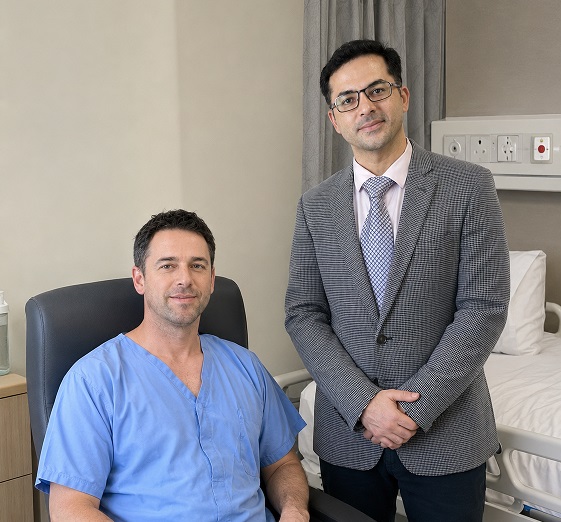
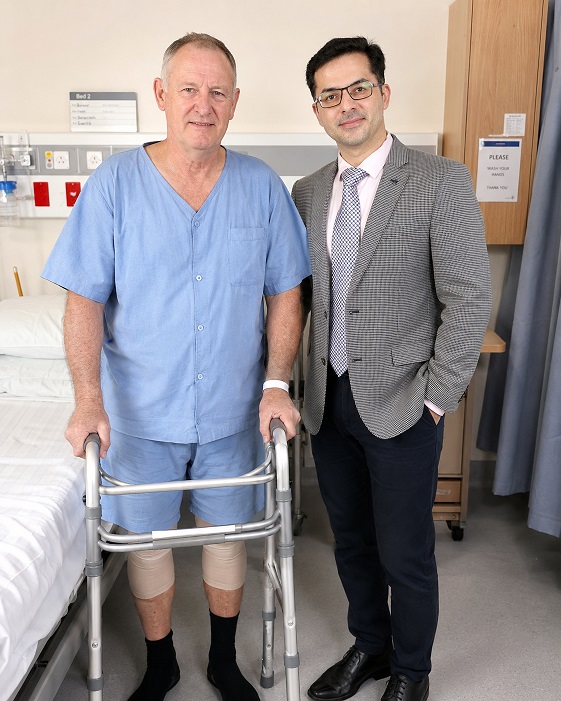
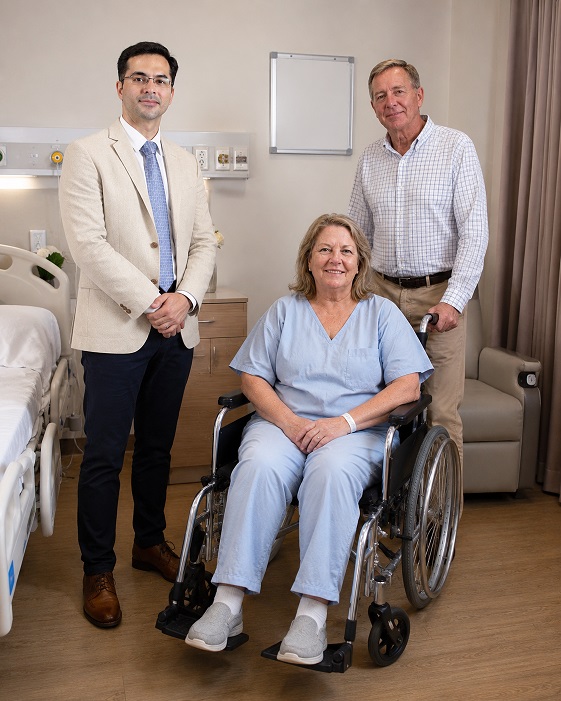
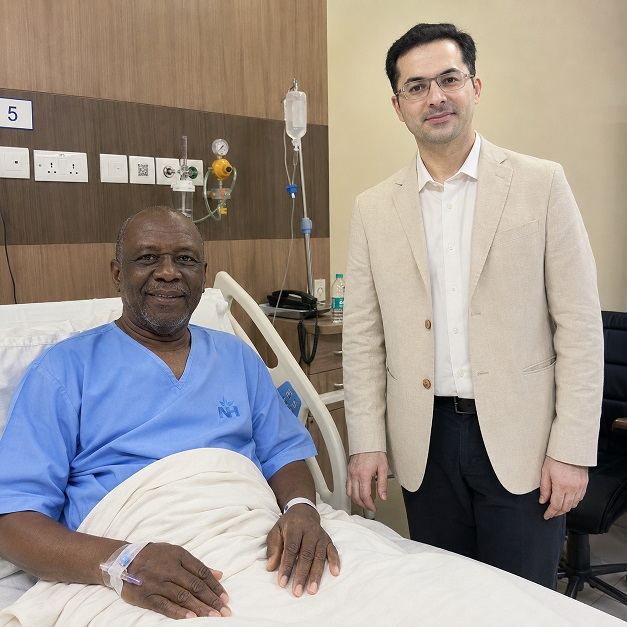
Patient Testimonials from Australia




Ready to Take the First Step?
Share your Medical Reports with our Healthcare Managers Today and Get a FREE CONSULTATION, a Personalized Treatment Plan, and Complete Support from Arrival to Recovery.
Get Your Free ConsultationAreas We Serve
This resource has been thoughtfully prepared for patients from Australia who are considering medical treatment in India. We also welcome patients from the wider region in the countries mentioned below-
We regularly assist patients from:
- Fiji
- Vanuatu
- Samoa
- Tonga
- Kiribati
- Nauru
- Tuvalu
- New Zealand
- Solomon Islands
- Papua New Guinea
Many of the insights, treatment pathways, hospital recommendations, travel guidance, and patient support services described here are equally relevant and may be used as a reference when planning treatment in India.
From Australia to India: Your Complete Patient Support Guide
- Cancer Treatment in India for Australian Patients: PBS Gap & Drug Costs
- Cardiac Surgery in India for Australian Patients: TAVI Access & Costs
- Dental Treatment & Surgery in India for Australian Patients
- Hip Surgery in India for Australian Patients: Costs, Waits & Implant Choice
- Knee Surgery in India for Australian Patients: Costs, Waits & Implants
- Neurosurgery in India for Australian Patients: Volume, Costs & When Not to Travel
- Spine Surgery in India for Australian Patients: Costs, Indications & Second Opinions (2026)
- Best Bariatric & Weight Loss Surgeons in India for Australian Patients
- Best Cancer Surgeons & Hospitals in India for Australian Patients
- Best Cardiac Surgeons & Hospitals in India for Australian Patients
- Best Cosmetic Surgeons & Hospitals in India for Australian Patients
- Best Dental Surgeons & Clinics in India for Australian Patients
- Best Hip Surgeons & Hospitals in India for Australian Patients
- Best Knee Surgeons & Hospitals in India for Australian Patients
- Best Scoliosis Surgeons & Hospitals in India for Australian Patients
- Best Spine Surgeons & Hospitals in India for Australian Patients
- Selecting the Best Urosurgery and Reconstructive Urology Centres in India for Australian Patients
- Selecting the Best Bone Marrow Transplant Centres in India for Australian Patients