

Selecting the Best Colorectal Cancer Surgeons and Hospitals in India for Australian Patients
Ten criteria, weighted — but first, the real, published wait Australians face after a positive bowel screen, and why that matters more than it used to.
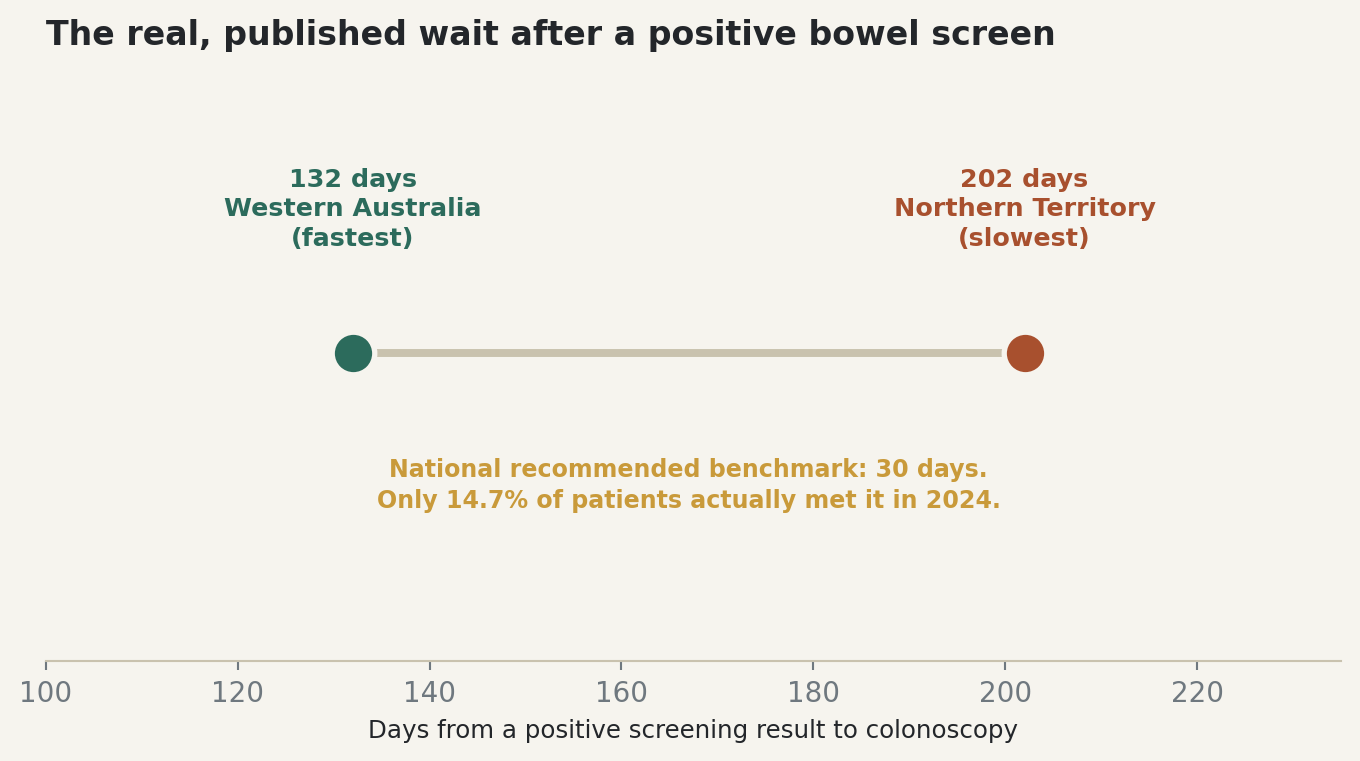
Australia's National Bowel Cancer Screening Program is genuinely effective and has meaningfully cut mortality since 2006. This guide exists for a specific group: patients who have received a diagnosis and are weighing where to have surgery, particularly given how variable the path from screening to treatment has become. In 24 years of guiding international patients into Indian hospitals, this is one of the more striking, well-documented gaps I've seen in a screening program that otherwise works well. The recommended benchmark for colonoscopy after a positive result is 30 days; the 2026 national monitoring report shows only 14.7% of patients actually met it.
Healing Journeys of Australian Patients


Key Takeaways
- The guide explains why Australian patients considering colorectal cancer surgery should first confirm their diagnosis, pathology and staging before comparing surgeons or hospitals.
- The page 1 visual highlights the reported variation in time from a positive bowel screening result to colonoscopy, from 132 days in Western Australia to 202 days in the Northern Territory, compared with a recommended 30-day benchmark.
- Bowel cancer is increasingly affecting younger Australians, with the share of cases occurring under age 50 rising from 8% in 2000 to 13% in 2024.
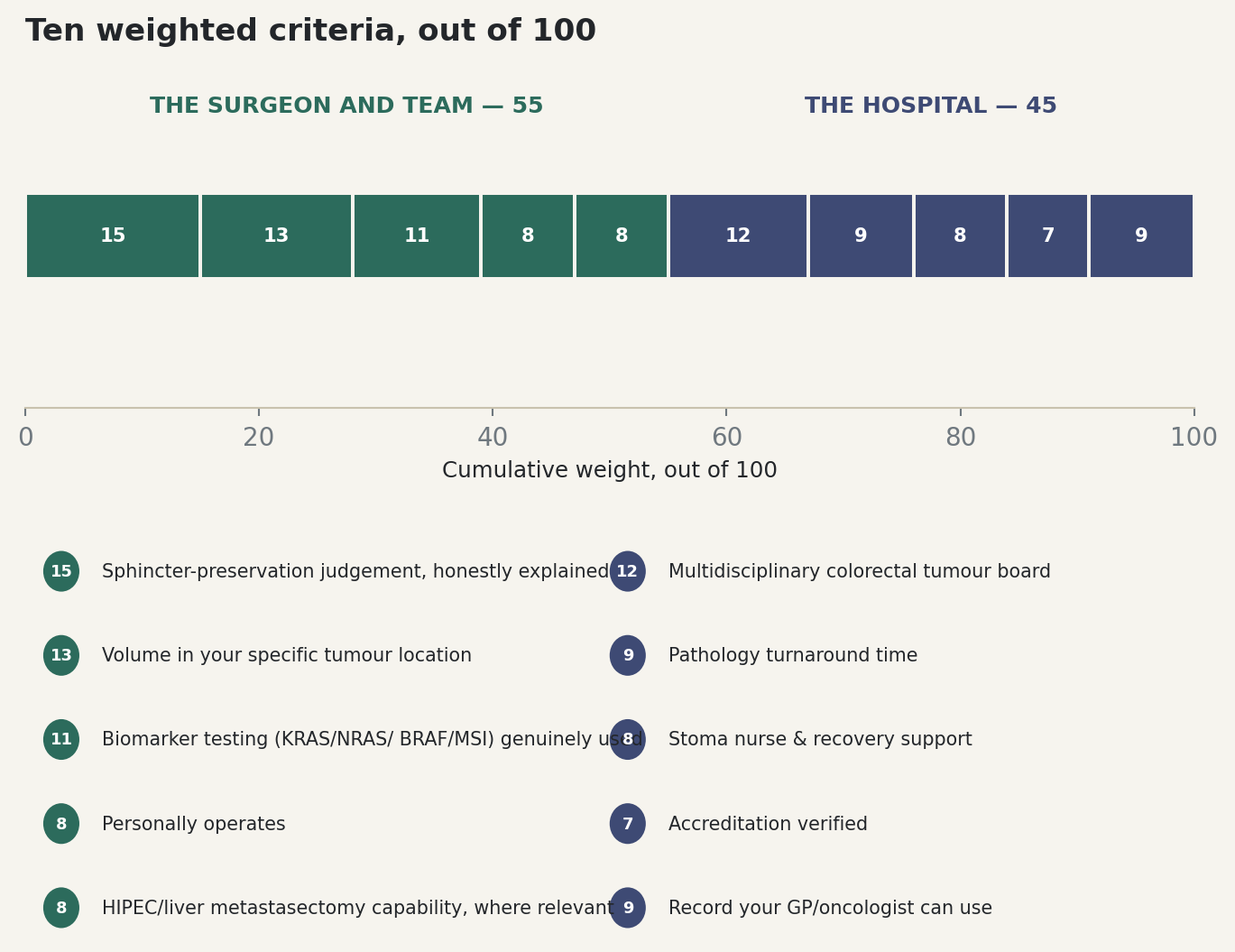
- The weighted selection criteria give the highest importance to honest sphincter-preservation judgement (15/100), followed by tumour-location-specific surgical volume (13) and genuine biomarker testing (11).
- The guide recommends checking whether the surgeon has completed MCh Surgical Oncology or a colorectal fellowship, with HIPEC and liver-metastasectomy experience considered important when disease has spread.
- Biomarker testing such as KRAS, NRAS, BRAF and MSI should not merely be available; the guide recommends confirming that the results are actually used to guide the patient's treatment plan.
- Hospital selection should include a multidisciplinary colorectal tumour board, pathology turnaround time, stoma nurse support, accreditation and complete postoperative records.
- Four warning signs include a permanent stoma recommendation without a genuine preservation discussion, a price quoted before pathology review, unclear biomarker testing and no discussion of HIPEC or liver metastasectomy when relevant.
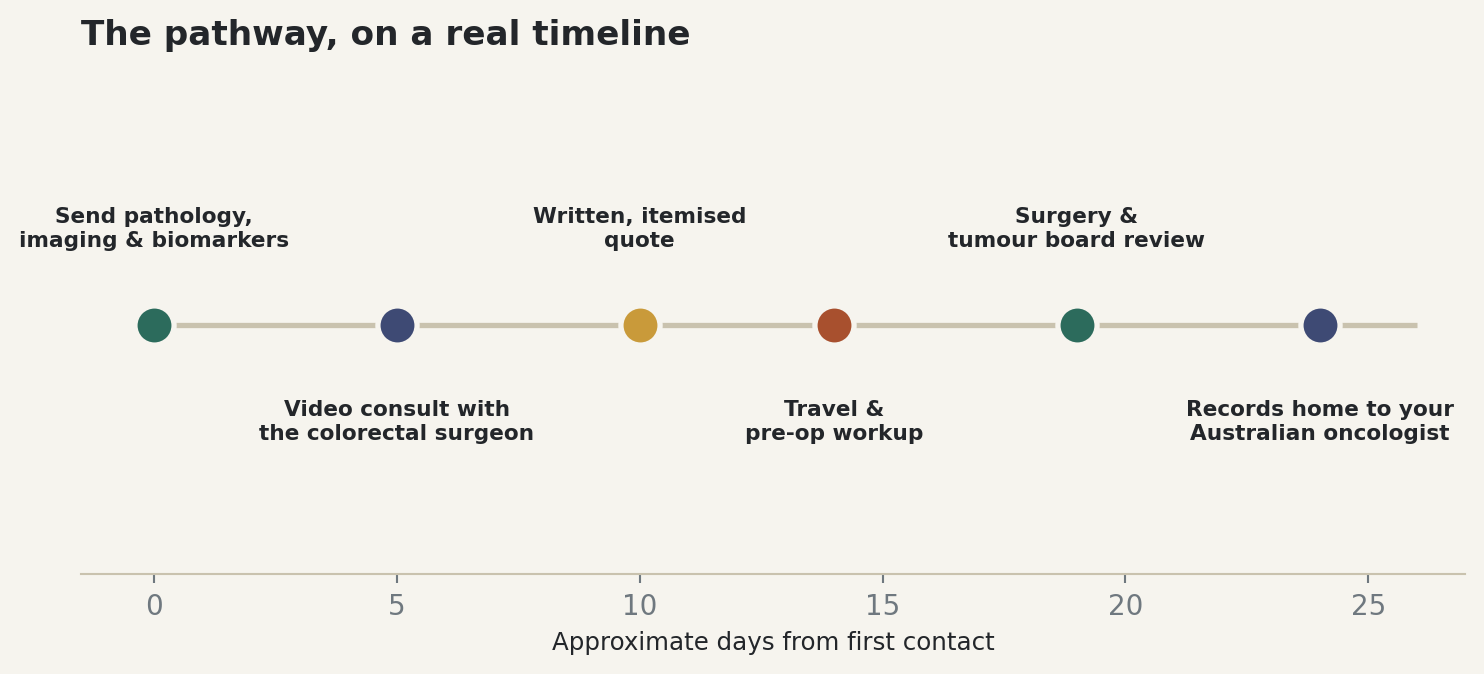
- The treatment pathway moves from pathology, imaging and biomarkers → surgeon consultation → itemised quotation → travel and pre-operative workup → surgery and tumour-board review → records sent to the Australian oncologist.
- Australian patients aged 45–49 should know that the screening kit is not automatically sent; the guide advises requesting it through the National Cancer Screening Register or GP.
- The guide also recommends arranging Australian oncology follow-up before travelling and checking whether the Medical Treatment Overseas Program could apply when a specific technique is genuinely unavailable in Australia.
Quick Facts
- Treatment
- Colorectal Cancer Surgery
- Country
- India
- Patients
- Australian Patients
- Main Conditions
- Colon and Rectal Cancer
- Key Surgical Consideration
- Sphincter Preservation
- Top Selection Criterion
- Honest Sphincter-Preservation Judgement
- Important Experience
- Tumour-Location-Specific Surgical Volume
- Biomarkers
- KRAS, NRAS, BRAF and MSI
- Advanced Procedures
- HIPEC and Liver Metastasectomy, where relevant
- Key Specialist
- Colorectal / Surgical Oncologist
- Hospital Requirement
- Multidisciplinary Colorectal Tumour Board
- Support
- Stoma Nurse and Recovery Support
- Accreditation
- JCI or NABH can be independently verified
- Required Records
- Pathology, Imaging, Biomarkers and Staging
- Follow-Up
- Australian Oncologist
- Pre-Travel Check
- Confirm surgical plan and itemised quotation
- Important Financial Check
- Clarify stoma-related changes and exclusions in the quotation
- Visa
- Indian Medical e-Visa and E-Medical Attendant Visa options
- Author
- Dr. Dheeraj Bojwani
- Experience
- 24+ Years
In Brief
For Australian patients considering colorectal cancer surgery in India, the guide places the emphasis on the individual tumour rather than simply the hospital's overall reputation. Patients should confirm pathology, staging and biomarkers before discussing surgery, and should ask whether sphincter-preserving surgery is realistically possible for their tumour. Surgeon selection should consider experience with the exact tumour location, colorectal fellowship training and relevant HIPEC or liver-metastasectomy capability. Hospital assessment should include multidisciplinary tumour-board review, biomarker and pathology turnaround, stoma support and accreditation. The guide also stresses early communication with the Australian surgical and oncology teams so that follow-up can continue after treatment in India.
Before you choose anyone: know that this is genuinely a younger person's disease too
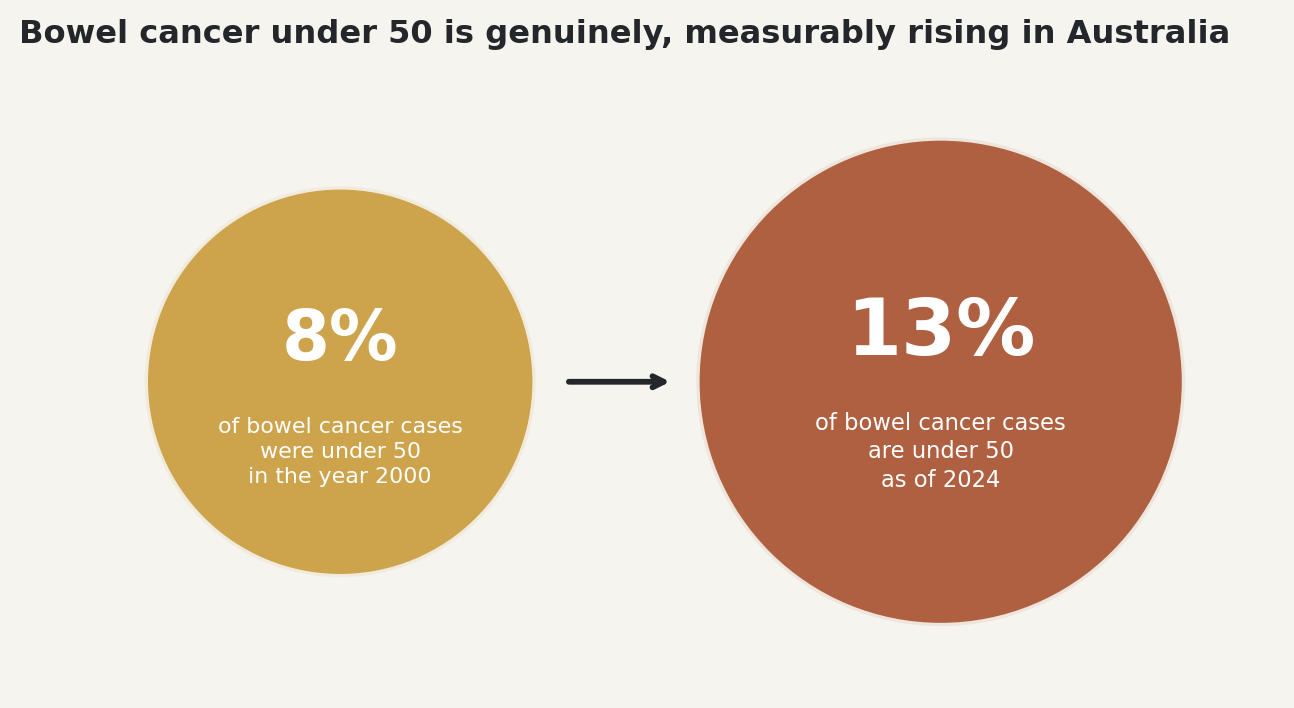
Screening became available to people aged 45 to 49 from July 2024, but it requires actively requesting a kit, and uptake in that age band remains low, particularly outside major cities. If you're under 50 with persistent bowel symptoms, don't assume screening applies to you automatically or that age rules you out — ask your GP directly, and get your full pathology and staging imaging together before any second opinion conversation.
Part one: judging the surgeon and the team
1. Sphincter-preservation judgement, honestly explained. This is the single heaviest criterion in this guide. Ask directly whether sphincter-preserving surgery is achievable for your specific tumour, and if not, exactly why not.
| Qualification | Length | What it actually means |
|---|---|---|
| MBBS | 5½ years | The basic medical degree. A licence to practise, not a specialist qualification. |
| MS (General Surgery) | 3 years | The gateway into surgical oncology or colorectal fellowship, not the specialist qualification itself. |
| MCh (Surgical Oncology) or Colorectal Fellowship | 1–3 years further | The base specialist qualification for this field. Completed specialist training in colorectal cancer surgery. |
| HIPEC/liver metastasectomy experience | Ongoing, post-qualification | Relevant if your disease has spread to the peritoneum or liver; ask directly whether this capability exists if applicable to your case. |
2. Volume in your specific tumour location. Rectal, sigmoid and right-sided colon cancers involve genuinely different surgical approaches. Ask for the surgeon's volume in your exact location.
3. Biomarker testing genuinely used. Ask whether KRAS, NRAS, BRAF and MSI testing are performed and used to guide your treatment plan, not simply mentioned as available.
4. Personally operates. Insist on a video consultation with the surgeon who will actually operate, not a coordinator, before any deposit moves.
5. HIPEC/liver metastasectomy capability, where relevant. If your disease has spread beyond the primary site, ask directly whether the centre offers these specific procedures, and the surgeon's volume in them.
Part two: judging the hospital
6. Multidisciplinary colorectal tumour board. Ask whether your case is reviewed by a genuine team, including medical oncology and radiology, before the plan is finalised.
7. Pathology turnaround time. Ask how quickly biomarker and margin results are available, since this affects both surgical planning and any subsequent chemotherapy decisions.
8. Stoma nurse and recovery support. If a stoma is planned, even temporarily, ask what dedicated nursing and education support is built into your care.
9. Accreditation you can verify yourself. JCI is the international arm of the body accrediting hospitals across the United States; NABH is India's national equivalent, recognised by the same global standards authority.
10. A record your GP or oncologist can use. Before you leave you should hold the full operative note, pathology with margins and biomarker results, and a specific follow-up plan.
What the quote should say, and what it usually omits
In 24 years I have found that disputes almost never concern the quoted price. They concern what the quote silently omitted.
Insist on a written, itemised figure that states what happens if intraoperative findings mean a stoma is needed when it wasn't originally planned, or vice versa. Understand what does not travel with you: Medicare pays nothing for treatment overseas, your health fund rebate applies to Australian admissions, and standard travel insurance excludes planned surgery. Pay a deposit to secure the date, never the full balance in advance.
Four Signals that Should Make You Pause
1. A permanent stoma proposed without a genuine sphincter-preservation discussion. Ask directly why preservation isn't possible for your specific tumour.
2. A price quoted before your pathology has been reviewed. Nobody can price this surgery without seeing your specific case.
3. Vagueness about biomarker testing. This should be standard, documented practice, not an afterthought.
4. No mention of HIPEC or liver metastasectomy capability, if your disease has spread. Ask directly rather than assuming it isn't relevant.
Australia-specific considerations most patients miss
If you're 45–49, request a free screening kit directly. It isn't sent automatically; ask the National Cancer Screening Register or your GP.
Tell your Australian surgical team early, not after the fact. Most are more sympathetic to a second opinion than patients expect.
Arrange your ongoing oncology care before you leave. Confirm your Australian oncologist is willing to continue follow-up based on overseas surgical findings.
Ask about the Medical Treatment Overseas Program. Where a specific technique is genuinely unavailable in Australia, this Commonwealth programme can in some circumstances fund treatment abroad.
Apply for both visas together. Australian passport holders are eligible for India's electronic medical visa, with an e-medical attendant visa for whoever travels with you.
The Questions, in the Order You Should Ask Them
| Of the surgeon and team | Of the hospital |
|---|---|
| Is sphincter-preserving surgery achievable for my tumour? | Does a multidisciplinary tumour board review my case? |
| How many operations at my exact tumour location did you perform last year? | What is your pathology and biomarker turnaround time? |
| Is biomarker testing performed and used to guide my plan? | What stoma nurse and recovery support is included? |
| Will you personally operate? | Which accreditation do you hold, and when was it last inspected? |
| Do you offer HIPEC or liver metastasectomy, if relevant? | What does the final pathology and operative record include? |
A closing word
Colorectal cancer surgery rewards precision, and the sphincter-preservation question deserves a specific, honest answer before anything else in this guide. If a long colonoscopy wait or a diagnosis under 50 has brought you here, verify the diagnosis first, weight the preservation judgement as heavily as anything else, and ask about biomarker testing directly. If you would like a second opinion on your pathology, send it and I will look at it properly.
Frequently Asked Questions by Australians about Colorectal Cancer Surgeons and Hospitals in India
Why is sphincter preservation important for Australian patients having rectal cancer surgery in India?
Australian patients with rectal cancer should specifically ask whether sphincter-preserving surgery is achievable for their tumour. The guide makes this the highest-weighted selection criterion and recommends asking why preservation may or may not be possible.
How should Australian patients compare colorectal surgeons in India for their specific cancer?
They should ask how many operations the surgeon performed at their exact tumour location, such as rectal, sigmoid or right-sided colon cancer. The guide explains that these locations can require different surgical approaches.
What colorectal cancer biomarker tests should Australian patients ask about in India?
The guide specifically recommends asking about KRAS, NRAS, BRAF and MSI testing and whether the results are actually used to guide the patient's treatment plan rather than simply being listed as available.
Should Australian patients have a video consultation with the actual colorectal surgeon before travelling to India?
Yes. The guide recommends a direct video consultation with the surgeon who will personally operate, rather than relying solely on a coordinator before paying a deposit.
When should Australian colorectal cancer patients ask about HIPEC or liver metastasectomy in India?
If the cancer has spread to the peritoneum or liver, Australian patients should specifically ask whether the Indian centre offers HIPEC or liver metastasectomy and how much relevant experience the surgeon has with these procedures.
What hospital facilities should Australian patients check before colorectal cancer surgery in India?
Patients should verify that their case will be reviewed by a multidisciplinary colorectal tumour board, including relevant oncology and radiology specialists. They should also ask about pathology turnaround and dedicated stoma and recovery support.
What should Australian patients check if a permanent stoma is recommended in India?
They should ask for a clear explanation of why sphincter preservation is not possible for their specific tumour. The guide identifies a permanent stoma recommendation without a genuine preservation discussion as an important warning sign.
Should Australian patients accept a colorectal cancer surgery price before the Indian team reviews their pathology?
No. The guide identifies a quotation made before reviewing the patient's pathology as a warning sign because the surgical plan depends on the specific disease characteristics.
How should Australian patients arrange follow-up after colorectal cancer surgery in India?
Australian patients should arrange ongoing oncology care before leaving Australia and confirm that their Australian oncologist is willing to continue follow-up using the overseas surgical and pathology findings.
What records should Australian colorectal cancer patients bring back from India?
Patients should return with the complete operative note, final pathology including margins and biomarker results, and a specific follow-up plan that can be used by their Australian GP or oncologist.
Sources
- Australian Institute of Health and Welfare, National Bowel Cancer Screening Program Monitoring Report 2026 — aihw.gov.au
- Cancer Council Australia, Bowel Cancer Screening — cancer.org.au
- National Medical Commission — nmc.org.in
- Australian Government Medical Treatment Overseas Program — health.gov.au
- High Commission of India, e-Visa — indianvisaonline.gov.in
Page Summary
This guide helps Australian patients understand how to evaluate colorectal cancer surgeons and hospitals in India after confirming their diagnosis and staging. It highlights the importance of tumour-specific surgical experience and honest assessment of sphincter-preserving options. The guide also explains the role of KRAS, NRAS, BRAF and MSI biomarker testing in treatment planning. Hospital selection includes multidisciplinary tumour-board review, pathology turnaround, stoma support and accreditation. It identifies four warning signs that Australian patients should consider before accepting a surgical recommendation or quotation. The final sections cover the treatment pathway, Australian follow-up planning, screening considerations and possible overseas-treatment support.
Citation Block
| Field | Information |
|---|---|
| Topic Information | Selecting the Best Colorectal Cancer Surgeons and Hospitals in India for Australian Patients |
| Treatment | Colorectal Cancer Surgery |
| Country | India |
| Intended Audience | Australian Patients |
| Main Conditions | Colon and Rectal Cancer |
| Top Selection Criterion | Sphincter-Preservation Judgement |
| Specific Experience | Tumour-location-specific surgical volume |
| Biomarker Testing | KRAS, NRAS, BRAF and MSI |
| Advanced Procedures | HIPEC and Liver Metastasectomy, where relevant |
| Key Specialist Training | MCh Surgical Oncology or Colorectal Fellowship |
| Hospital Review | Multidisciplinary Colorectal Tumour Board |
| Pathology | Biomarker and margin turnaround should be confirmed |
| Patient Support | Stoma Nurse and Recovery Support |
| Accreditation | JCI or NABH |
| Initial Records | Pathology, Imaging, Biomarkers and Staging |
| Treatment Pathway | Records → Consultation → Quote → Workup → Surgery → Follow-Up |
| Important Warning | Avoid pricing before pathology review |
| Follow-Up | Australian GP / Oncologist |
| Australian Screening Point | Ages 45–49 can request a screening kit directly |
| Overseas Treatment Support | Medical Treatment Overseas Program may apply in specific circumstances |
| Final Documentation | Operative Note, Pathology, Margins, Biomarkers and Follow-Up Plan |


Our Mission Statement
Our mission is to place patients at the centre of every healthcare decision by providing trustworthy, evidence-based, and unbiased medical information. We believe that informed patients make better decisions. Backed by personalised guidance from our experienced advisory team, we help patients understand their treatment options, compare them objectively, and confidently choose the path that best suits their medical needs and personal circumstances.
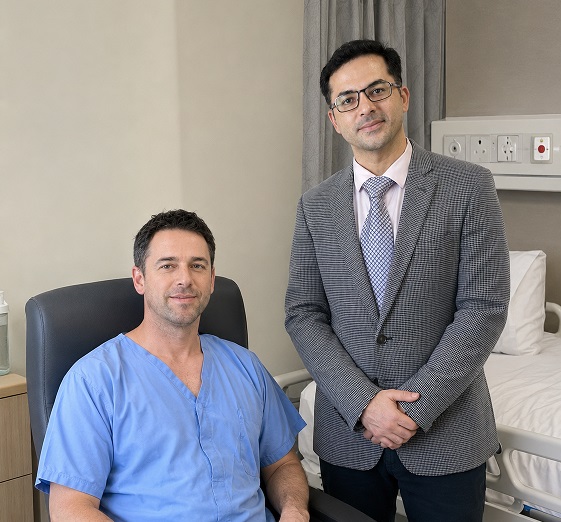
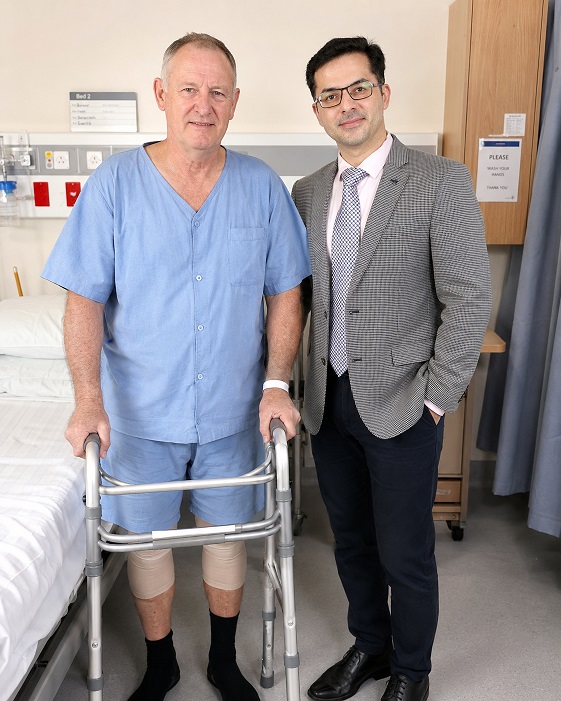
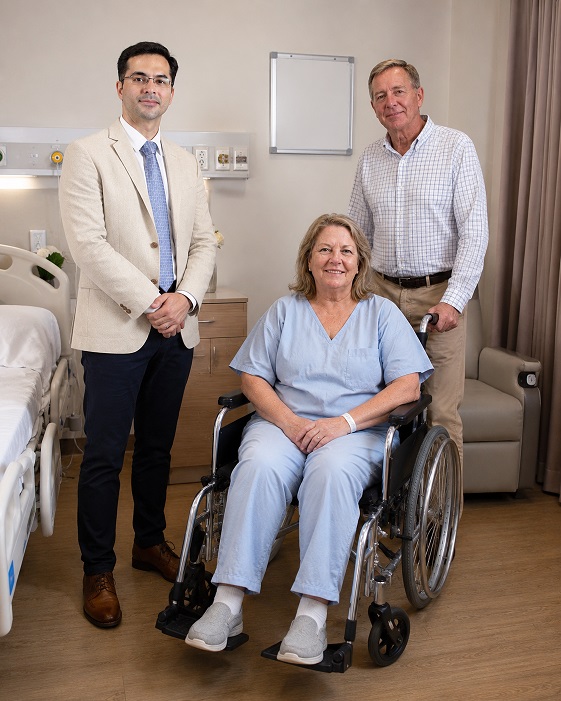
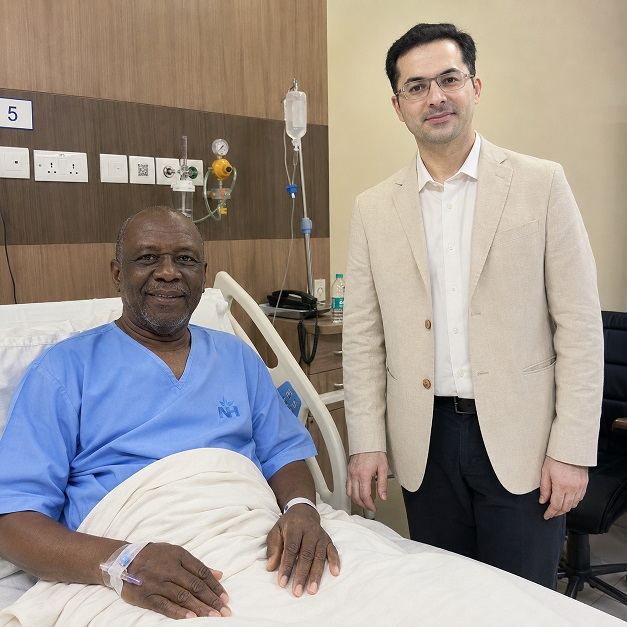
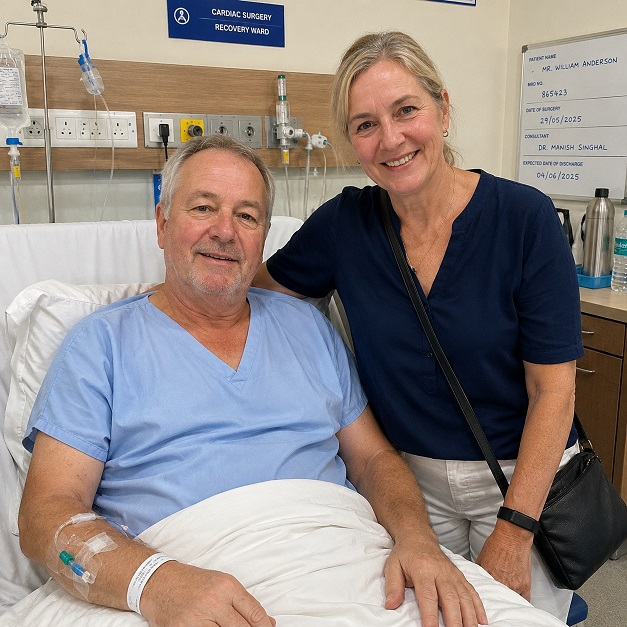
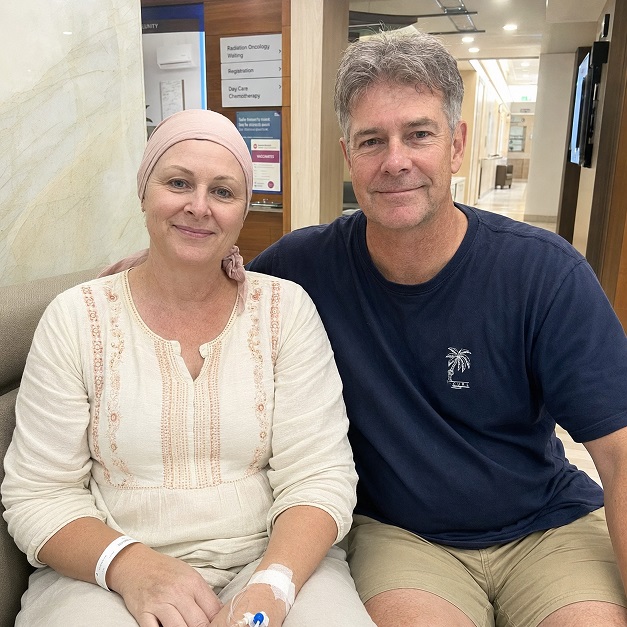
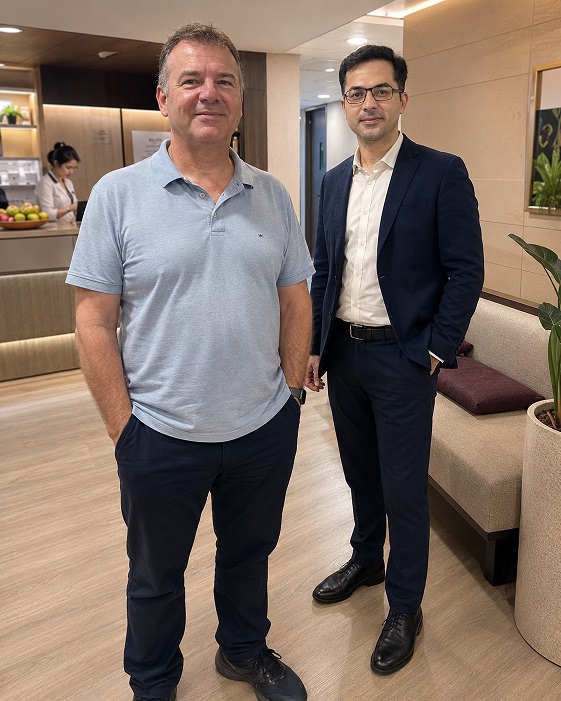
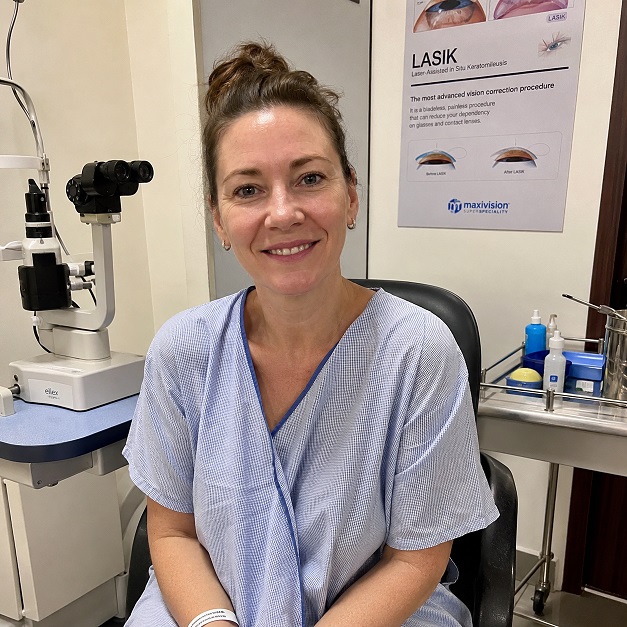
Patient Testimonials from Australia

Ready to Take the First Step?
Share your Medical Reports with our Healthcare Managers Today and Get a FREE CONSULTATION, a Personalized Treatment Plan, and Complete Support from Arrival to Recovery.
Get Your Free ConsultationAreas We Serve
This resource has been thoughtfully prepared for patients from Australia who are considering medical treatment in India. We also welcome patients from the wider region in the countries mentioned below-
We regularly assist patients from:
- Fiji
- Vanuatu
- Samoa
- Tonga
- Kiribati
- Nauru
- Tuvalu
- New Zealand
- Solomon Islands
- Papua New Guinea
Many of the insights, treatment pathways, hospital recommendations, travel guidance, and patient support services described here are equally relevant and may be used as a reference when planning treatment in India.
From Australia to India: Your Complete Patient Support Guide
- Cancer Treatment in India for Australian Patients: PBS Gap & Drug Costs
- Cardiac Surgery in India for Australian Patients: TAVI Access & Costs
- Dental Treatment & Surgery in India for Australian Patients
- Hip Surgery in India for Australian Patients: Costs, Waits & Implant Choice
- Knee Surgery in India for Australian Patients: Costs, Waits & Implants
- Neurosurgery in India for Australian Patients: Volume, Costs & When Not to Travel
- Spine Surgery in India for Australian Patients: Costs, Indications & Second Opinions (2026)
- Best Bariatric & Weight Loss Surgeons in India for Australian Patients
- Best Cancer Surgeons & Hospitals in India for Australian Patients
- Best Cardiac Surgeons & Hospitals in India for Australian Patients
- Best Cosmetic Surgeons & Hospitals in India for Australian Patients
- Best Dental Surgeons & Clinics in India for Australian Patients
- Best Hip Surgeons & Hospitals in India for Australian Patients
- Best Knee Surgeons & Hospitals in India for Australian Patients
- Best Scoliosis Surgeons & Hospitals in India for Australian Patients
- Best Spine Surgeons & Hospitals in India for Australian Patients
- Selecting the Best Urosurgery and Reconstructive Urology Centres in India for Australian Patients
- Selecting the Best Bone Marrow Transplant Centres in India for Australian Patients