

Selecting the Best Cornea Transplant and Advanced Eye Surgery Centres in India for Australian Patients
Ten criteria, weighted — but first, the genuine scale of the global shortage this field is built around, and proof that the access gap is solvable.
Corneal transplant is one of the most successful transplant procedures in all of medicine, and Australia's own Lions Eye Bank network is generally well-organised. This guide is written for patients weighing options where demand has outpaced local supply, or seeking a specific technique. In 24 years of guiding international patients into Indian hospitals, corneal transplant is a field where India's major eye institutes are internationally recognised, high-volume tissue providers in their own right, named alongside Australia's own Lions network among the world's leading eye banking organisations.
Healing Journeys of Australian Patients


Key Takeaways
- The guide explains that corneal transplantation is a highly successful transplant procedure, while access to donor tissue remains limited globally.
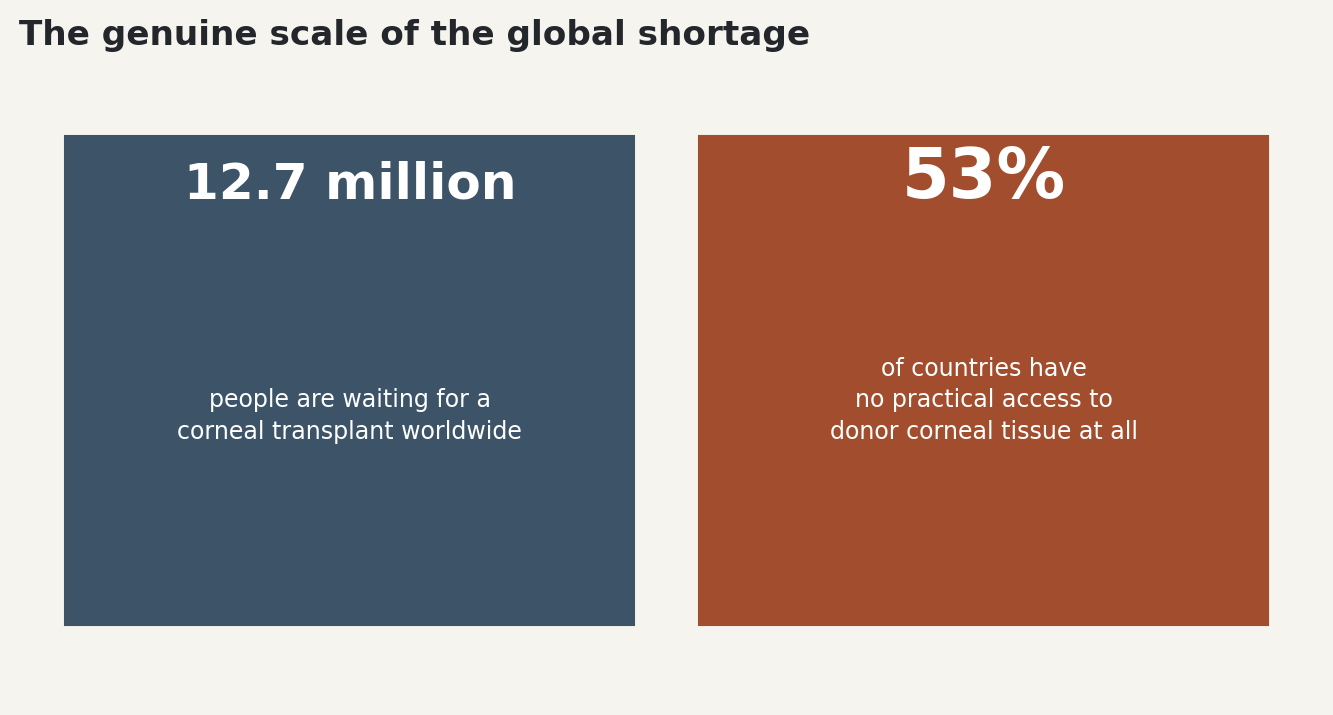
- An estimated 12.7 million people are waiting for corneal transplantation worldwide, with 53% of countries having no practical access to donor corneal tissue.
- A change to organ-culture corneal storage reduced one Australian eye-bank wait list by 77%, demonstrating that access constraints can be improved through better tissue-management systems.
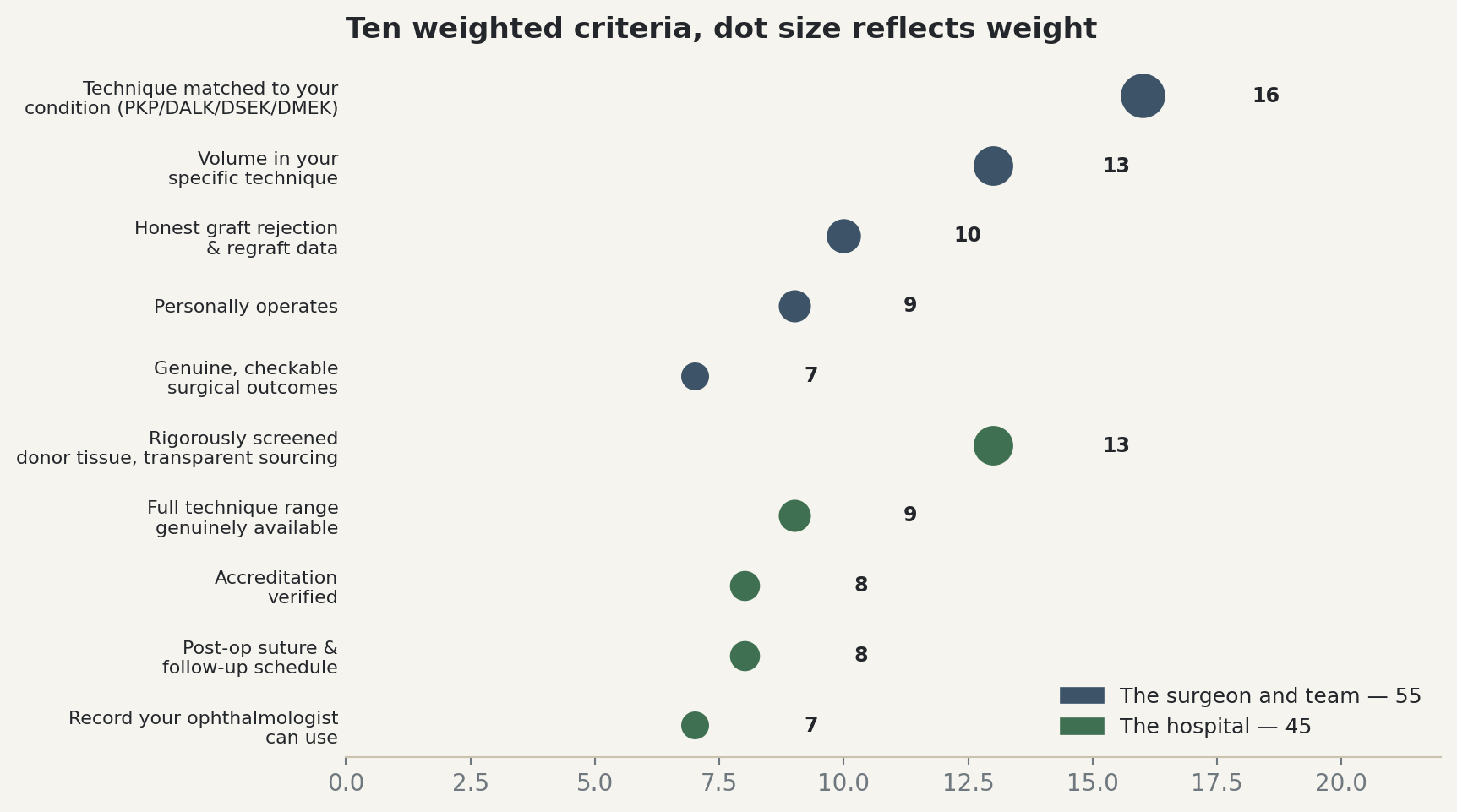
- The most heavily weighted selection criterion is matching the surgical technique to the patient's condition (16/100), followed by volume in the exact technique (13) and transparent donor-tissue screening and sourcing (13).
- Patients should ask whether penetrating keratoplasty, DALK, DSEK or DMEK is appropriate for their specific corneal condition rather than accepting a centre's default procedure.
- The guide recommends checking the surgeon's specific technique volume, graft-rejection and regraft rates and documented surgical outcomes, rather than relying only on general ophthalmology experience.
- Hospital selection should include rigorously screened donor tissue, transparent sourcing, the full range of modern corneal techniques, accreditation and a clear post-operative suture-removal and follow-up schedule.
- Australian patients should share their actual corneal imaging and measurements, arrange follow-up with their Australian ophthalmologist before travelling and return with complete surgical records.
Quick Facts
- Treatment
- Cornea Transplant and Advanced Eye Surgery
- Country
- India
- Patients
- Australian Patients
- Main Techniques
- Penetrating Keratoplasty, DALK, DSEK and DMEK
- Top Selection Criterion
- Technique Matched to the Corneal Condition
- Key Specialist
- Cornea and Anterior Segment Surgeon
- Important Qualification
- Fellowship in Cornea and Anterior Segment Surgery
- Key Experience
- Volume in the Exact Surgical Technique
- Outcome Checks
- Graft Rejection, Regraft and Documented Results
- Donor Tissue
- Screening and Transparent Sourcing
- Hospital Requirement
- Full Range of Modern Corneal Techniques
- Follow-Up
- Suture Removal and Ongoing Eye Monitoring
- Accreditation
- JCI or NABH can be independently verified
- Required Records
- Corneal Imaging, Measurements and Surgical Records
- Follow-Up Provider
- Australian Ophthalmologist
- Pre-Travel Check
- Confirm Technique and Follow-Up Schedule
- Visa
- Indian Medical e-Visa and E-Medical Attendant Visa Options
- Author
- Dr. Dheeraj Bojwani
- Experience
- 24+ Years
In Brief
For Australian patients considering cornea transplantation in India, the guide places greatest emphasis on matching the specific surgical technique to the patient's corneal condition. Patients should compare surgeons based on their experience with the exact procedure, graft rejection and regraft data and documented outcomes. Donor tissue sourcing and screening should be transparent, while the hospital should offer the appropriate range of modern techniques. Australian patients should also establish post-operative care and suture-removal arrangements with their Australian ophthalmologist before travelling.
Before you choose anyone: know that this specific gap is genuinely solvable
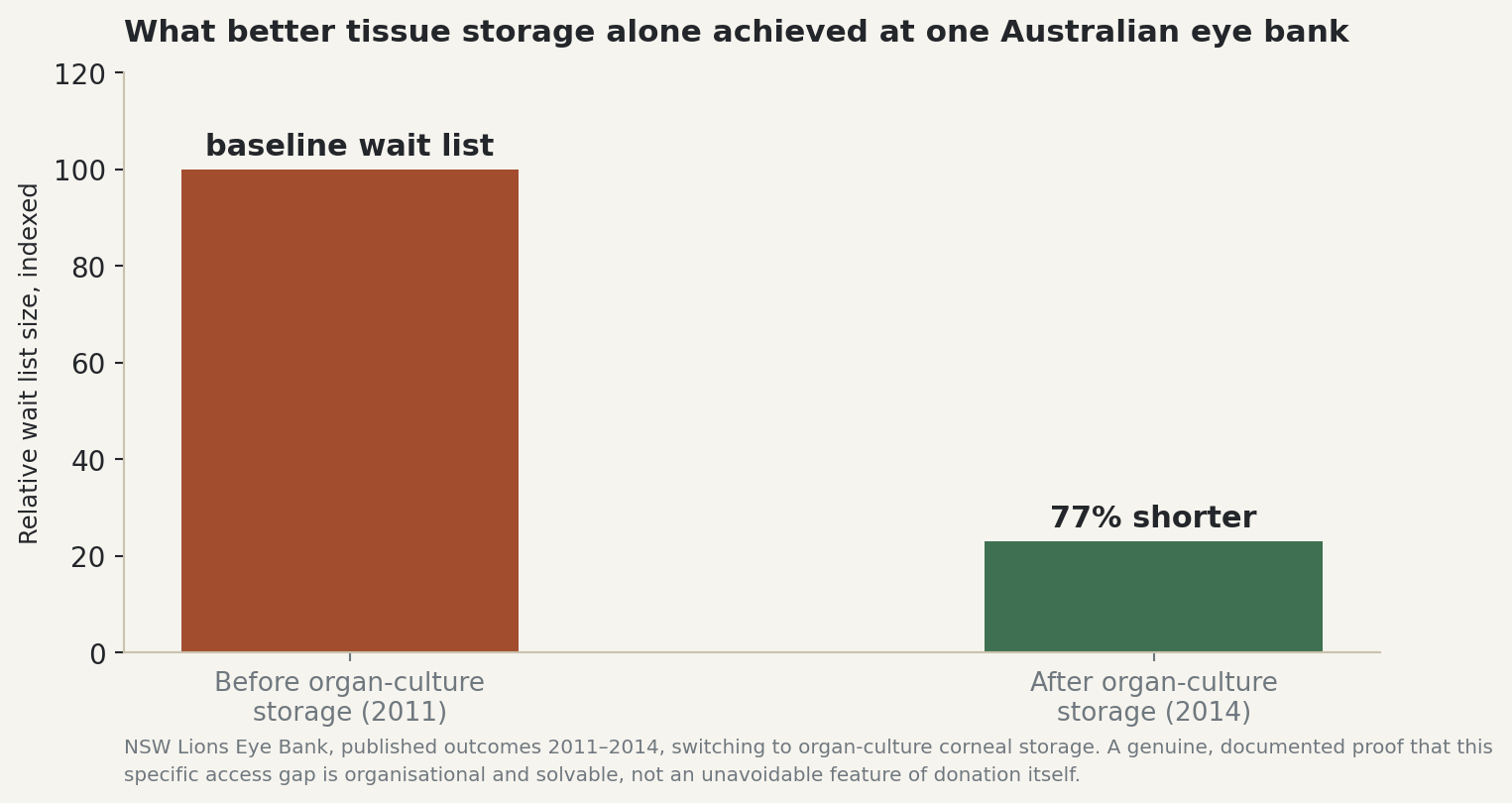
This is worth understanding clearly, because it reframes the whole conversation. A documented, published change in tissue storage method alone cut one Australian eye bank's wait list by more than three-quarters. Demand for corneas is genuinely rising in parts of Australia, and this proves the constraint is organisational, not an unavoidable ceiling on how many transplants can be performed.
Part one: judging the surgeon and the team
1. Technique matched to your condition. This is the single heaviest criterion in this guide. Penetrating keratoplasty, DALK, DSEK and DMEK all serve different corneal conditions. Ask directly which technique suits your specific diagnosis, and why.
| Qualification | Length | What it actually means |
|---|---|---|
| MBBS | 5½ years | The basic medical degree. A licence to practise, not a specialist qualification. |
| MS/DNB (Ophthalmology) | 3 years | The base specialist qualification. Completed specialist training in eye surgery. |
| Fellowship in cornea and anterior segment surgery | 1–2 years, after MS/DNB | This is what matters most here. Dedicated further training specifically in corneal transplant technique. |
2. Volume in your specific technique. Not general ophthalmology, not corneal surgery broadly — the number of procedures performed last year in your exact technique.
3. Honest graft rejection and regraft data. Ask for the surgeon's own rejection and regraft rates for your specific technique.
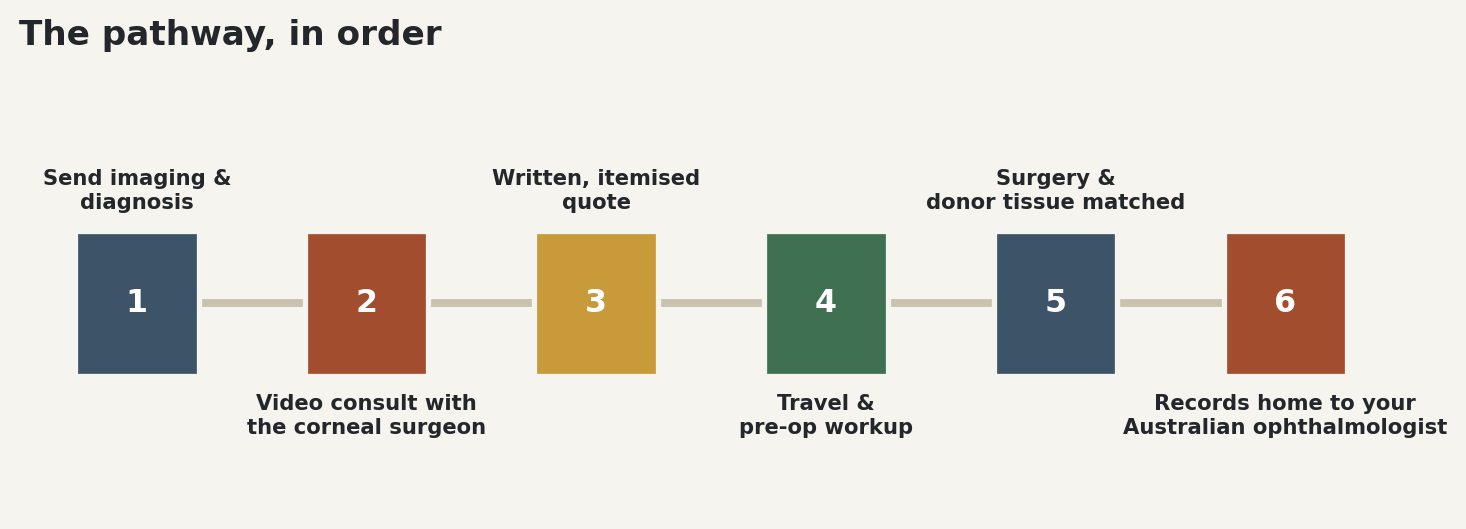
4. Personally operates. Insist on a video consultation with the surgeon who will actually operate, not a coordinator, before any deposit moves.
5. Genuine, checkable surgical outcomes. Ask for published or documented outcome data, not just verbal reassurance.
Part two: judging the hospital
6. Rigorously screened donor tissue, transparent sourcing. Ask directly how donor tissue is sourced and screened, and expect a clear, specific answer.
7. Full technique range genuinely available. Ask whether the centre performs the full range of modern techniques, not just the one they default to.
8. Accreditation you can verify yourself. JCI is the international arm of the body accrediting hospitals across the United States; NABH is India's national equivalent, recognised by the same global standards authority.
9. Post-op suture and follow-up schedule. Ask for the specific suture removal and monitoring schedule, since this varies by technique and affects your travel planning.
10. A record your ophthalmologist can use. Before you leave you should hold the full surgical record and a specific follow-up plan.
What the quote should say, and what it usually omits
In 24 years I have found that disputes almost never concern the quoted price. They concern what the quote silently omitted.
Insist on a written, itemised figure that states what happens if donor tissue quality assessment changes the plan. Understand what does not travel with you: Medicare pays nothing for treatment overseas, your health fund rebate applies to Australian admissions, and standard travel insurance excludes planned surgery. Pay a deposit to secure the date, never the full balance in advance.
Four Signals that Should Make You Pause
1. Only one technique offered regardless of condition. A genuinely capable centre matches technique to diagnosis, not the reverse.
2. A price quoted before your corneal imaging has been reviewed. Nobody can price this surgery, or confirm technique, without seeing your specific case.
3. Vagueness about donor tissue sourcing. This should be a transparent, specific answer.
4. No mention of a specific follow-up and suture removal schedule. This affects your travel planning directly.
Australia-specific considerations most patients miss
Tell your Australian ophthalmologist early, not after the fact. Most are more sympathetic to exploring options than patients expect.
Arrange your ongoing eye care before you leave. Confirm your Australian ophthalmologist is willing to manage suture removal and follow-up based on overseas surgery.
Send the imaging, not just a summary. A genuine technique recommendation requires your actual corneal measurements.
Apply for both visas together. Australian passport holders are eligible for India's electronic medical visa, with an e-medical attendant visa for whoever travels with you.
The Questions, in the Order You Should Ask Them
| Of the surgeon and team | Of the hospital |
|---|---|
| Which technique suits my specific corneal condition? | How is donor tissue sourced and screened? |
| How many procedures in this exact technique did you perform last year? | Do you offer the full range of modern techniques? |
| What is your graft rejection and regraft rate? | Which accreditation do you hold, and when was it last inspected? |
| Will you personally operate? | What is my specific suture removal and follow-up schedule? |
| Can you share documented outcome data? | What does the final surgical record include? |
A closing word
Corneal transplantation is one of medicine's genuine success stories, and matching technique to your specific condition matters more than any other single factor. Verify the technique recommendation, weight surgeon volume in that exact technique heavily, and the rest follows. If you would like a second opinion on your imaging, send it and I will look at it properly.
Frequently Asked Questions by Australians about Cornea Transplant and Advanced Eye Surgery Centres in India
Which cornea transplant technique should Australian patients consider in India?
Australian patients should ask the Indian cornea specialist which technique best matches their specific corneal condition. The guide discusses penetrating keratoplasty, DALK, DSEK and DMEK and stresses that the procedure should be diagnosis-driven.
How should Australian patients compare cornea surgeons in India?
They should ask how many procedures the surgeon performed in the exact corneal transplant technique during the previous year. General ophthalmology or broad corneal-surgery volume is not considered sufficient for comparison.
What qualification should Australian patients look for in an Indian cornea surgeon?
The guide highlights MS/DNB Ophthalmology followed by a fellowship in cornea and anterior segment surgery. This additional training is particularly relevant to corneal transplant techniques.
What graft outcome information should Australian patients request?
Australian patients should ask for the surgeon's graft rejection and regraft rates for their specific technique. They should also request documented or published surgical outcome data rather than relying only on verbal claims.
What should Australian patients ask about donor corneal tissue in India?
They should ask exactly where the donor tissue comes from and how it is screened. The guide considers transparent donor-tissue sourcing and rigorous screening an important hospital-selection criterion.
Should Australian patients choose a centre that offers only one corneal transplant technique?
The guide advises caution if a centre recommends the same technique regardless of the patient's condition. Australian patients should look for a centre capable of offering the appropriate range of modern corneal techniques.
What should Australian patients ask about follow-up after cornea transplant in India?
They should request a specific suture-removal and follow-up schedule before travelling because monitoring requirements vary by technique and directly affect the length and planning of their stay.
Should Australian patients send actual corneal imaging before travelling to India?
Yes. The guide specifically recommends sending the actual imaging and corneal measurements, rather than only a written summary, because an appropriate technique recommendation requires review of the patient's specific eye findings.
Can an Australian ophthalmologist continue follow-up after cornea surgery in India?
The guide recommends arranging this before travelling. Australian patients should confirm that their ophthalmologist is willing to manage follow-up and suture removal based on the overseas surgical records.
What should Australian patients verify before paying for cornea transplant surgery in India?
They should confirm the recommended technique, surgeon's exact-technique experience, donor tissue sourcing, itemised quotation and follow-up schedule. The guide also advises paying a deposit to secure the date rather than the full balance in advance.
Sources
- International Agency for the Prevention of Blindness, global corneal tissue access data — iapb.org
- Lions NSW Eye Bank, published organ-culture storage outcomes — pubmed.ncbi.nlm.nih.gov/27142497
- National Medical Commission — nmc.org.in
- National Accreditation Board for Hospitals & Healthcare Providers — nabh.co
- High Commission of India, e-Visa — indianvisaonline.gov.in
Page Summary
This guide helps Australian patients understand how to select a cornea transplant or advanced eye surgery centre in India. It highlights the importance of matching the surgical technique to the patient's specific corneal condition. The guide compares DALK, DSEK, DMEK and penetrating keratoplasty and stresses technique-specific surgeon experience. It also covers donor tissue sourcing, graft outcomes, accreditation and post-operative follow-up. Four warning signs help patients identify centres that do not provide adequate technique or tissue information. The final sections explain the treatment pathway and planning for continued eye care with an Australian ophthalmologist.
Citation Block
| Field | Information |
|---|---|
| Topic Information | Selecting the Best Cornea Transplant and Advanced Eye Surgery Centres in India for Australian Patients |
| Treatment | Cornea Transplant and Advanced Eye Surgery |
| Country | India |
| Intended Audience | Australian Patients |
| Main Techniques | Penetrating Keratoplasty, DALK, DSEK and DMEK |
| Top Selection Criterion | Technique Matched to Condition |
| Key Specialist | Cornea and Anterior Segment Surgeon |
| Key Qualification | Fellowship in Cornea and Anterior Segment Surgery |
| Important Experience | Volume in the Exact Technique |
| Outcome Data | Graft Rejection, Regraft and Documented Results |
| Donor Tissue | Screening and Transparent Sourcing |
| Hospital Capability | Full Modern Technique Range |
| Accreditation | JCI or NABH |
| Follow-Up | Suture Removal and Eye Monitoring |
| Required Records | Imaging, Corneal Measurements and Surgical Records |
| Australian Follow-Up | Australian Ophthalmologist |
| Pre-Travel Check | Confirm Technique and Follow-Up Schedule |


Our Mission Statement
Our mission is to place patients at the centre of every healthcare decision by providing trustworthy, evidence-based, and unbiased medical information. We believe that informed patients make better decisions. Backed by personalised guidance from our experienced advisory team, we help patients understand their treatment options, compare them objectively, and confidently choose the path that best suits their medical needs and personal circumstances.
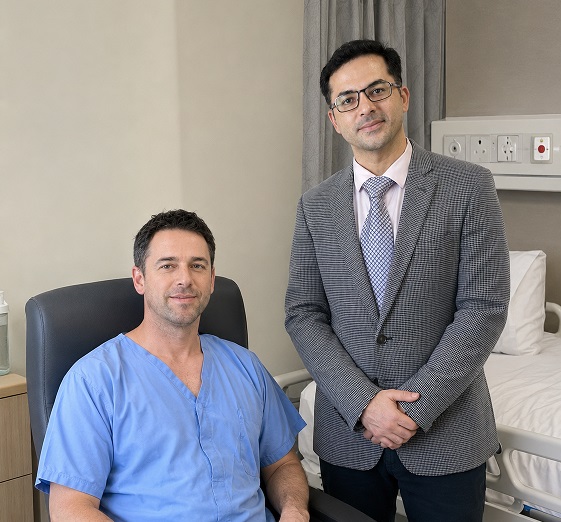
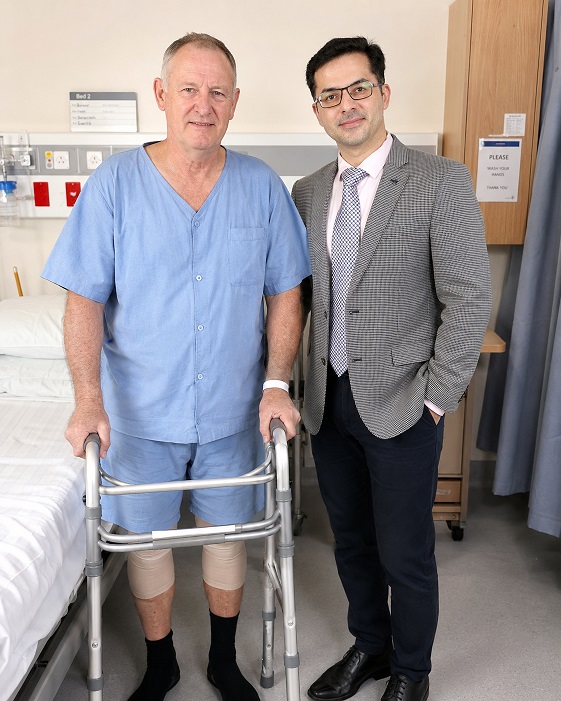
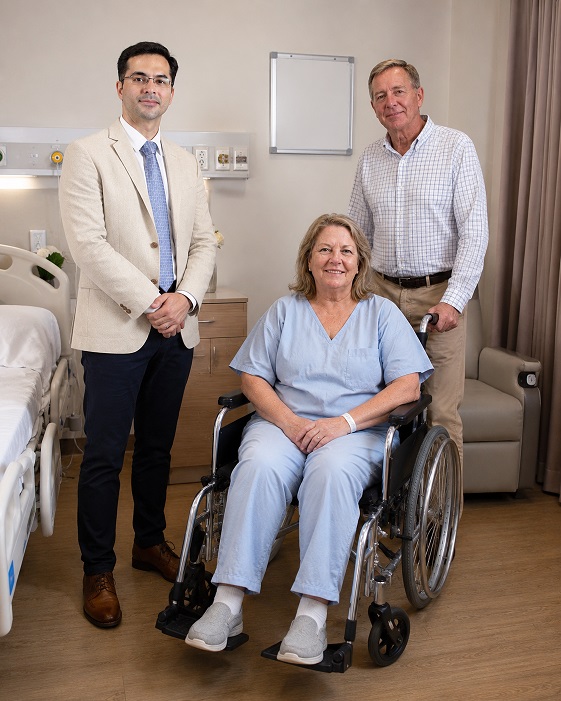
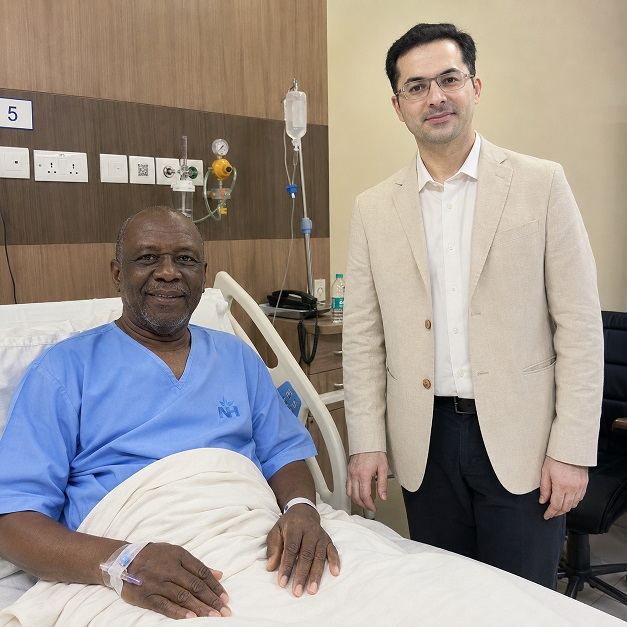
Patient Testimonials from Australia


Ready to Take the First Step?
Share your Medical Reports with our Healthcare Managers Today and Get a FREE CONSULTATION, a Personalized Treatment Plan, and Complete Support from Arrival to Recovery.
Get Your Free ConsultationAreas We Serve
This resource has been thoughtfully prepared for patients from Australia who are considering medical treatment in India. We also welcome patients from the wider region in the countries mentioned below-
We regularly assist patients from:
- Fiji
- Vanuatu
- Samoa
- Tonga
- Kiribati
- Nauru
- Tuvalu
- New Zealand
- Solomon Islands
- Papua New Guinea
Many of the insights, treatment pathways, hospital recommendations, travel guidance, and patient support services described here are equally relevant and may be used as a reference when planning treatment in India.
From Australia to India: Your Complete Patient Support Guide
- Cancer Treatment in India for Australian Patients: PBS Gap & Drug Costs
- Cardiac Surgery in India for Australian Patients: TAVI Access & Costs
- Dental Treatment & Surgery in India for Australian Patients
- Hip Surgery in India for Australian Patients: Costs, Waits & Implant Choice
- Knee Surgery in India for Australian Patients: Costs, Waits & Implants
- Neurosurgery in India for Australian Patients: Volume, Costs & When Not to Travel
- Spine Surgery in India for Australian Patients: Costs, Indications & Second Opinions (2026)
- Best Bariatric & Weight Loss Surgeons in India for Australian Patients
- Best Cancer Surgeons & Hospitals in India for Australian Patients
- Best Cardiac Surgeons & Hospitals in India for Australian Patients
- Best Cosmetic Surgeons & Hospitals in India for Australian Patients
- Best Dental Surgeons & Clinics in India for Australian Patients
- Best Hip Surgeons & Hospitals in India for Australian Patients
- Best Knee Surgeons & Hospitals in India for Australian Patients
- Best Scoliosis Surgeons & Hospitals in India for Australian Patients
- Best Spine Surgeons & Hospitals in India for Australian Patients
- Selecting the Best Urosurgery and Reconstructive Urology Centres in India for Australian Patients
- Selecting the Best Bone Marrow Transplant Centres in India for Australian Patients