

Selecting the Best IVF and Fertility Treatment Centres in India for Australian Patients
Ten criteria, weighted — but first, the real arithmetic of what Medicare covers, and what it genuinely leaves you to pay.
Australia's Medicare system genuinely supports fertility treatment more than many other elective procedures in this series, and that's worth saying plainly. This guide exists for patients weighing the real, remaining out-of-pocket cost, particularly across the multiple cycles many people need. In 24 years of guiding international patients into Indian hospitals, IVF is one of the more genuinely balanced comparisons in this whole series — Australia's system helps considerably, and the gap that remains is real and worth understanding clearly before making any decision.
Healing Journeys of Australian Patients


Key Takeaways
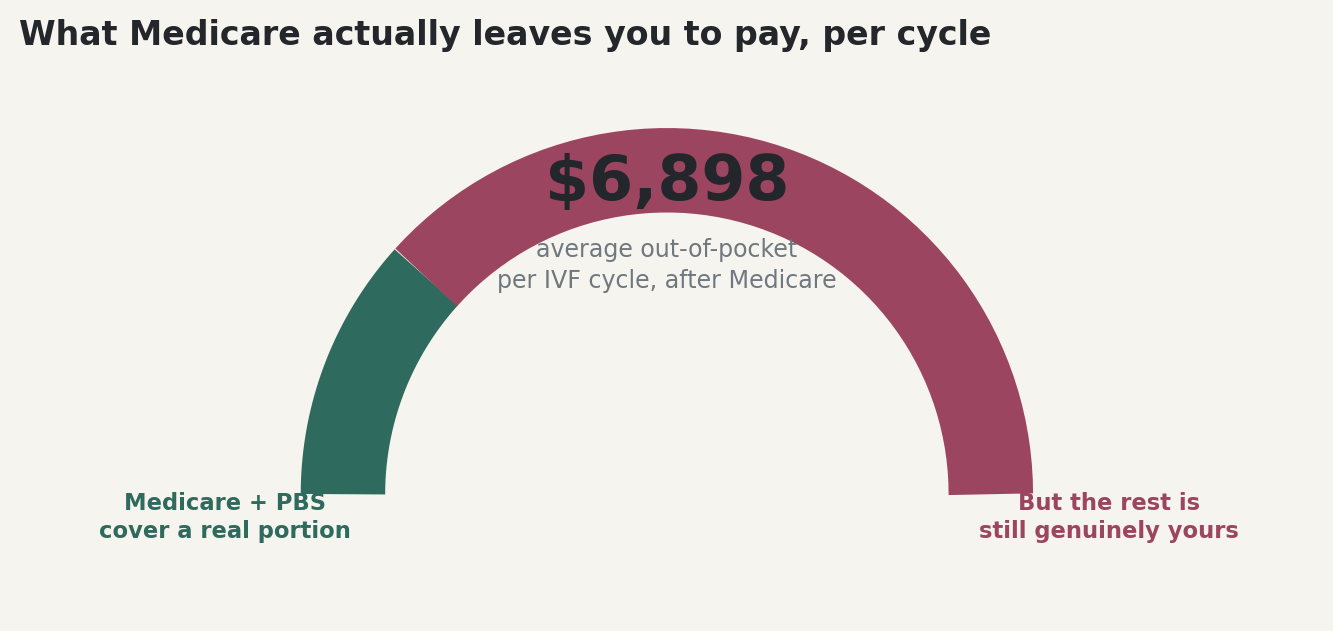
- The guide explains that Australia's Medicare system provides meaningful support for fertility treatment, but patients may still face substantial out-of-pocket costs, particularly when multiple IVF cycles are required. The guide's opening visual illustrates an average out-of-pocket figure of AUD 6,898 per IVF cycle after Medicare, while stressing that actual costs and rebates vary.
- The guide highlights that many patients may require two to three cycles to achieve pregnancy, making the total cost considerably higher than a single-cycle quotation suggests. The cumulative cost graphic illustrates approximately AUD 6,898 after cycle one, AUD 12,000 after cycle two and AUD 16,500 after cycle three, while clearly noting that the number of cycles required varies by age and diagnosis.
- The most heavily weighted selection criterion is honest, transparent success rates by age and diagnosis. Rather than relying on one blended clinic success figure, patients are advised to ask for results relevant to their own age group and diagnosis.
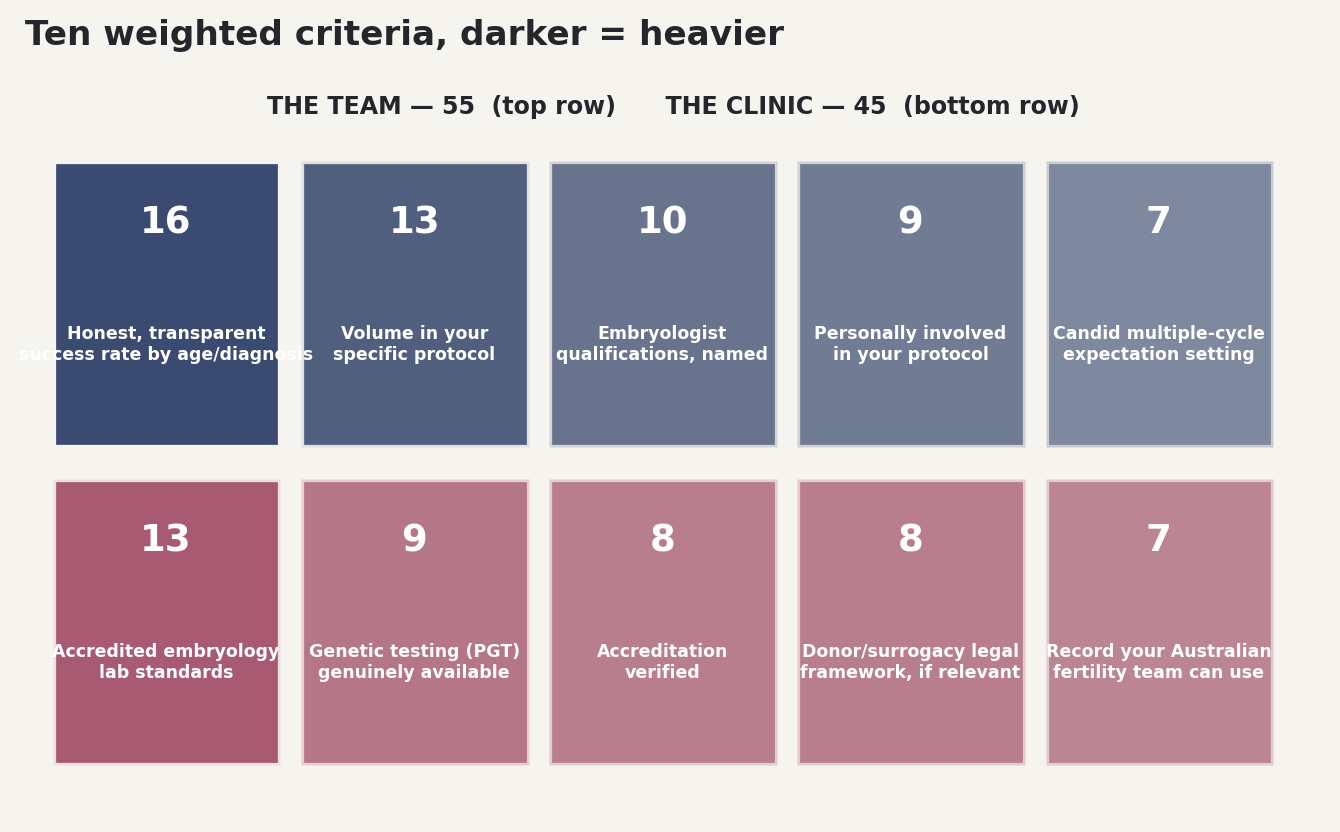
- The specialist and team account for 55 out of 100 points, while the clinic accounts for 45 points. Team criteria include experience with the patient's specific IVF or ICSI protocol, named embryologist qualifications, personal involvement in treatment planning and realistic expectations about the number of cycles that may be required.
- Clinic criteria focus on accredited embryology laboratory standards, genuine availability of preimplantation genetic testing where relevant, verifiable hospital accreditation, the legal framework for donor or surrogacy arrangements and complete treatment records that can be used by the patient's Australian fertility team.
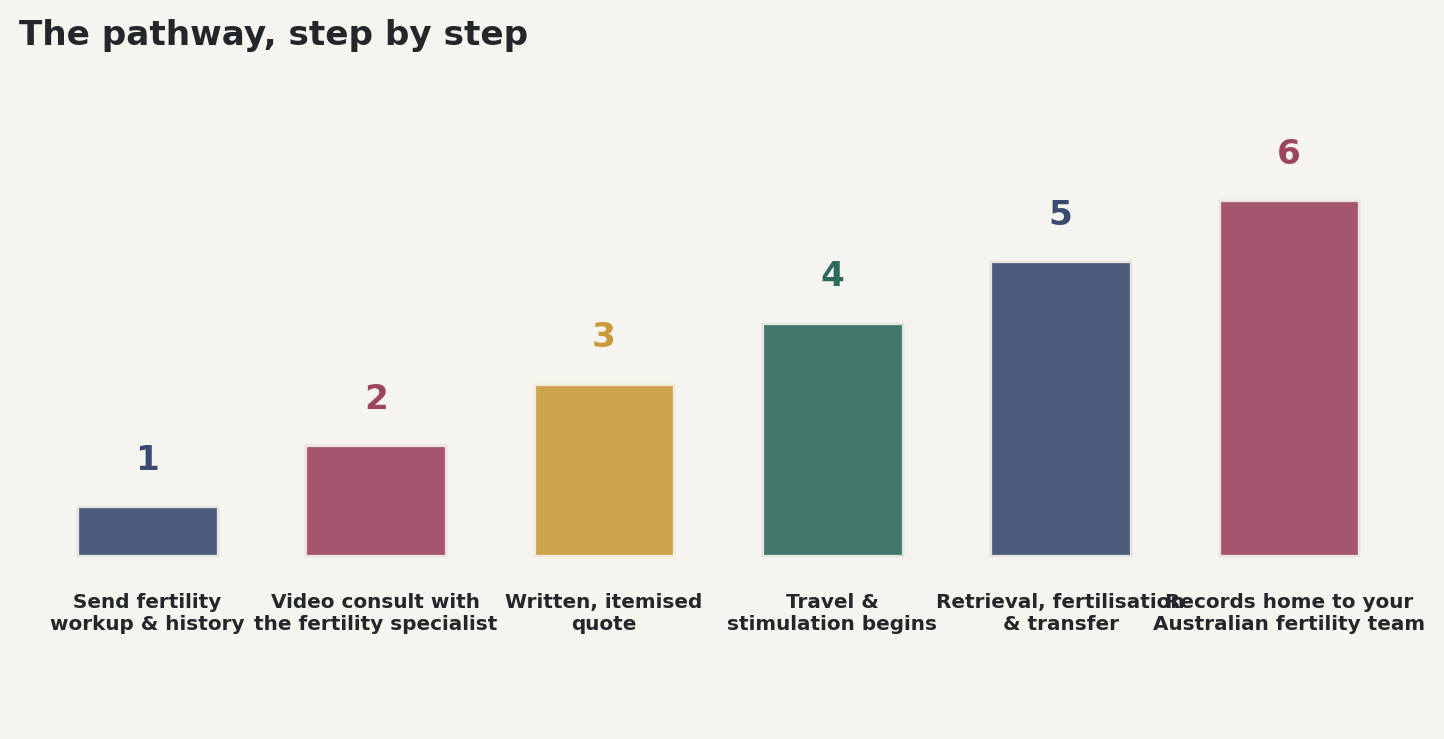
- The guide also stresses careful financial planning. Patients should request a written, itemised quotation explaining whether medications are included and what happens if additional cycles are needed. It advises using available Medicare and PBS entitlements before considering overseas treatment and arranging ongoing pregnancy or fertility care in Australia before travelling.
Quick Facts
- Treatment
- IVF and Fertility Treatment
- Country
- India
- Patients
- Australian Patients
- Main Options
- IVF and ICSI
- Key Decision
- Age- and Diagnosis-Specific Success Rates
- Selection Criteria
- 10 Weighted Criteria
- Specialist & Team Weight
- 55 out of 100
- Clinic Weight
- 45 out of 100
- Key Specialist
- Fertility / Reproductive Medicine Specialist
- Important Laboratory Role
- Embryologist
- Key Assessment
- Specific Treatment Protocol Experience
- Important Technology
- PGT Where Relevant
- Clinic Standard
- Accredited Embryology Laboratory
- Legal Consideration
- Donor / Surrogacy Framework
- Key Check
- Multiple-Cycle Expectations
- Warning Signs
- Blended Success Rates or Unclear Embryologist Qualifications
- Follow-Up
- Australian Fertility / Obstetric Team
- Required Records
- Protocol Details and Treatment Records
- Author
- Dr. Dheeraj Bojwani
- Experience
- 24+ Years
In Brief
For Australian patients considering IVF or fertility treatment in India, the guide recommends first understanding the likely number of cycles and the actual out-of-pocket cost rather than comparing single-cycle prices alone. Patients should evaluate age- and diagnosis-specific success rates, experience with their particular protocol, the qualifications of the embryologist and whether the fertility specialist will personally design and oversee treatment. Clinic assessment should include embryology laboratory accreditation, PGT availability where relevant, hospital accreditation and the legal framework for donor or surrogacy treatment. Before travelling, patients should use applicable Australian Medicare and PBS entitlements where possible and arrange continued fertility or pregnancy care with their Australian team.
Before you choose anyone: understand why the real total adds up fast
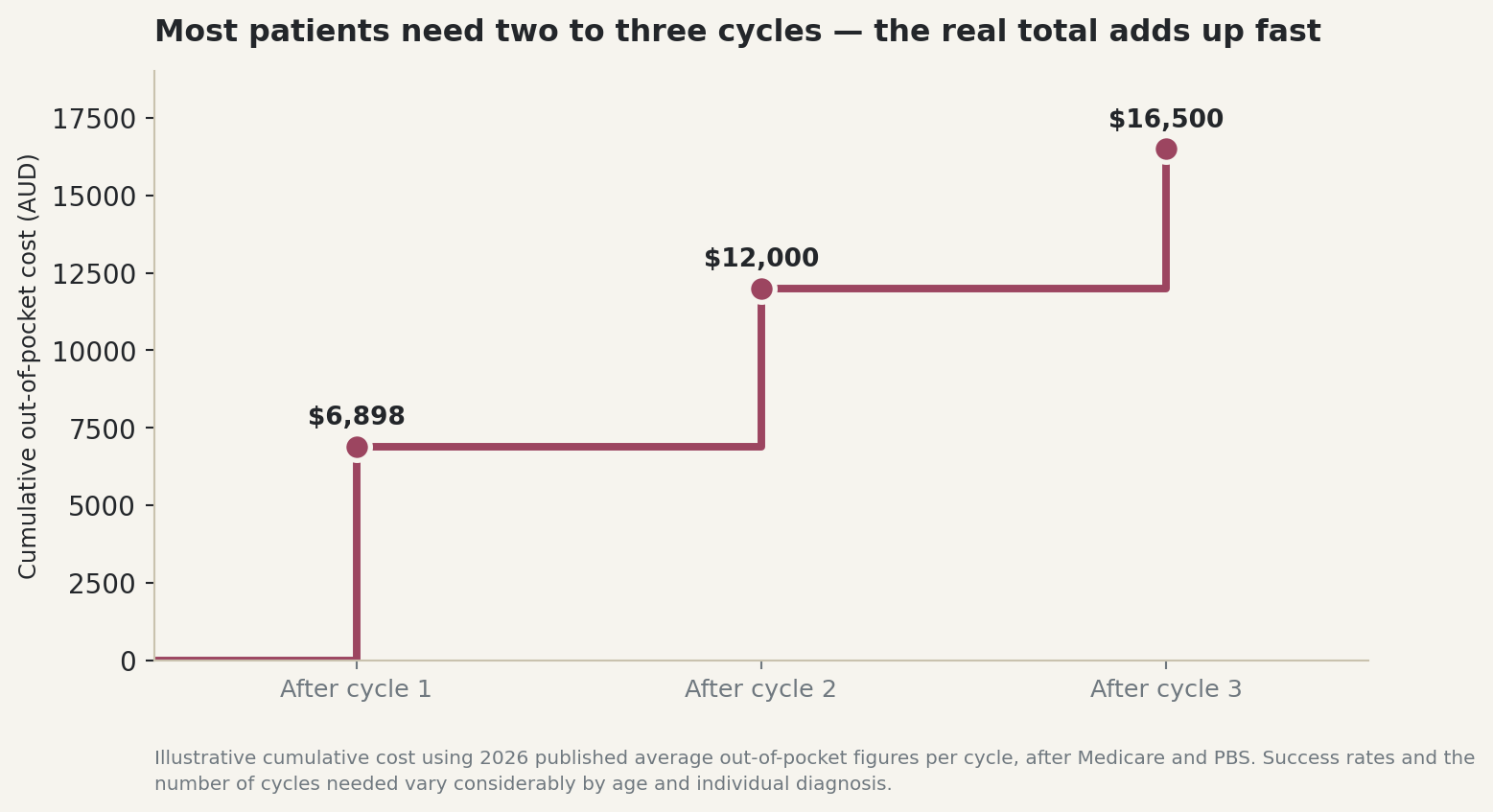
Most patients need two to three cycles to achieve a pregnancy, and this is the honest reason the true cost of IVF is often higher than a single quoted figure suggests. Get your full fertility workup, prior cycle outcomes if any, and partner testing results together before your first overseas conversation, since a genuine assessment of your realistic chances needs the complete picture.
Part one: judging the fertility specialist and team
1. Honest, transparent success rate by age and diagnosis. This is the single heaviest criterion in this guide. Ask for success rates broken down specifically by your age group and diagnosis, not a single blended headline figure.
| Qualification | Length | What it actually means |
|---|---|---|
| MBBS | 5½ years | The basic medical degree. A licence to practise, not a specialist qualification. |
| MD/DNB (Obstetrics and Gynaecology) | 3 years | The gateway into reproductive medicine, not the specialist qualification itself. |
| Fellowship in Reproductive Medicine | 1–2 years, after MD/DNB | This is what matters most here. Dedicated further training in fertility treatment specifically. |
2. Volume in your specific protocol. Ask about the centre's experience with your specific situation, whether that's standard IVF, ICSI, or a more complex protocol.
3. Named embryologist qualifications. Ask specifically who oversees the laboratory work, since embryologist skill directly affects outcomes.
4. Personally involved in your protocol. Insist on a video consultation with the specialist who will actually design your treatment plan.
5. Candid multiple-cycle expectation setting. Ask directly, based on your specific profile, how many cycles are realistically likely to be needed.
Part two: judging the clinic
6. Accredited embryology lab standards. Ask what specific accreditation the laboratory holds, since this is where the most delicate part of the process happens.
7. Genetic testing (PGT) genuinely available. If relevant to your situation, ask whether preimplantation genetic testing is performed on site.
8. Accreditation you can verify yourself. JCI is the international arm of the body accrediting hospitals across the United States; NABH is India's national equivalent, recognised by the same global standards authority.
9. Donor or surrogacy legal framework, if relevant. If your treatment involves donor gametes or surrogacy, ask specifically about the legal framework governing this in India, which differs meaningfully from Australia.
10. A record your Australian fertility team can use. Before you leave you should hold the complete treatment record, including protocol details and any embryos or samples in storage.
What the quote should say, and what it usually omits
In 24 years I have found that disputes almost never concern the quoted price. They concern what the quote silently omitted.
Insist on a written, itemised figure that states what happens if additional cycles are needed, and whether medication costs are included. Understand what does not travel with you: Medicare pays nothing for treatment overseas, and standard travel insurance excludes planned treatment. Pay a deposit to secure the date, never the full balance in advance.
Four Signals that Should Make You Pause
1. A single, blended success rate quoted without age or diagnosis breakdown. This figure means little without knowing where you specifically fall.
2. Vagueness about the embryologist's qualifications. This is central to your outcome and deserves a specific answer.
3. No genuine discussion of how many cycles you might realistically need. A responsible clinic sets honest expectations early.
4. Pressure toward donor or surrogacy arrangements without a clear legal explanation. This deserves careful, transparent guidance.
Australia-specific considerations most patients miss
Use your Medicare and PBS entitlements for as many cycles as possible before considering travel. The Extended Medicare Safety Net becomes more valuable within the same calendar year, so timing multiple cycles carefully can genuinely reduce your overall cost.
Tell your Australian fertility specialist early, not after the fact. Most are more sympathetic to exploring every option than patients expect.
Arrange your ongoing pregnancy care before you leave. Confirm your Australian obstetrician is willing to take over care based on overseas fertility treatment.
Apply for both visas together. Australian passport holders are eligible for India's electronic medical visa, with an e-medical attendant visa for whoever travels with you.
The Questions, in the Order You Should Ask Them
| Of the specialist and team | Of the clinic |
|---|---|
| What is your success rate for my specific age and diagnosis? | What accreditation does your embryology lab hold? |
| What is your experience with my specific protocol? | Is genetic testing (PGT) available if relevant to me? |
| Who is the named embryologist overseeing my case? | Which hospital accreditation do you hold? |
| Will you personally design and oversee my protocol? | What is the legal framework for donor or surrogacy arrangements? |
| How many cycles do you realistically expect I might need? | What does my complete treatment record include? |
A closing word
IVF is a well-established, increasingly well-supported path to parenthood in Australia, and the genuine gap sits in the multiple cycles many patients need beyond what any single rebate covers. Weight honest, age-specific success rates as heavily as anything else, and use every Medicare entitlement available to you first. If you would like to talk through your specific situation, send the details and I will look at it properly.
Frequently Asked Questions by Australians about IVF and Fertility Treatment Centres in India
Should Australian patients consider IVF treatment in India?
The guide is intended for Australian patients comparing the real remaining cost and treatment options after considering Australia's Medicare and PBS support. It recommends understanding the financial and clinical differences before making an overseas decision.
Why is the number of IVF cycles important?
The guide explains that many patients may need two to three cycles, so the overall cost can be substantially higher than the price of one cycle. Individual success and cycle requirements vary by age and diagnosis.
What IVF success rate should Australian patients ask for?
Patients should request success rates broken down by their specific age group and diagnosis rather than accepting one blended headline percentage from the clinic.
What qualifications should an IVF specialist have?
The guide distinguishes basic medical and obstetrics/gynaecology qualifications from dedicated reproductive medicine training. It identifies a fellowship in reproductive medicine as the specific additional training that matters most for fertility treatment.
Why is the embryologist important in IVF?
The guide considers embryologist expertise central because laboratory work directly affects IVF outcomes. Patients are advised to ask for the name and qualifications of the embryologist overseeing their case.
Should patients ask whether the clinic has experience with their specific IVF protocol?
Yes. Patients should ask about the centre's experience with their particular situation, whether it involves standard IVF, ICSI or a more complex protocol.
Is PGT available at Indian IVF centres?
The guide recommends asking whether preimplantation genetic testing (PGT) is genuinely available on site when it is relevant to the patient's situation.
What should an IVF quotation include?
Patients should request a written, itemised quotation stating what happens if additional cycles are required and whether medication costs are included. The guide recommends paying a deposit rather than the full balance in advance.
What are the warning signs when choosing an IVF clinic?
The guide identifies a single blended success rate without age or diagnosis breakdown, vague embryologist qualifications, no realistic discussion of the number of cycles required and pressure toward donor or surrogacy arrangements without clear legal explanation as warning signs.
What should Australian patients arrange before travelling for IVF?
The guide recommends using applicable Medicare and PBS entitlements where possible, informing the Australian fertility specialist early and arranging ongoing pregnancy care before leaving Australia.
Sources
- Medicare Benefits Schedule Online, IVF item numbers — mbsonline.gov.au
- Australian and New Zealand Assisted Reproduction Database (ANZARD) — anzard.org
- National Medical Commission — nmc.org.in
- National Accreditation Board for Hospitals & Healthcare Providers — nabh.co
- High Commission of India, e-Visa — indianvisaonline.gov.in
Page Summary
This guide helps Australian patients evaluate IVF and fertility treatment centres in India while first understanding the real financial impact of multiple treatment cycles. It explains why age- and diagnosis-specific success rates are more useful than a single blended clinic figure. The guide uses 10 weighted criteria covering specialist expertise, protocol-specific experience, embryologist qualifications, personal treatment involvement, cycle expectations, laboratory standards, PGT, accreditation, donor or surrogacy regulations and treatment records. It also covers quotations, medication costs, Medicare and PBS considerations, warning signs and ongoing care in Australia.
Citation Block
| Field | Information |
|---|---|
| Topic | IVF and Fertility Treatment Centres in India |
| Treatment | IVF & Fertility Treatment |
| Country | India |
| Patients | Australian Patients |
| Main Options | IVF & ICSI |
| Key Assessment | Age- & Diagnosis-Specific Success Rates |
| Selection Criteria | 10 Weighted Criteria |
| Specialist & Team Weight | 55 out of 100 |
| Clinic Weight | 45 out of 100 |
| Key Specialist | Fertility / Reproductive Medicine Specialist |
| Laboratory Expert | Embryologist |
| Important Check | Specific Protocol Experience |
| Laboratory Standard | Accredited Embryology Lab |
| Genetic Testing | PGT Where Relevant |
| Legal Consideration | Donor / Surrogacy Framework |
| Warning Signs | Blended Success Rates or Unclear Qualifications |
| Follow-Up | Australian Fertility Team |


Our Mission Statement
Our mission is to place patients at the centre of every healthcare decision by providing trustworthy, evidence-based, and unbiased medical information. We believe that informed patients make better decisions. Backed by personalised guidance from our experienced advisory team, we help patients understand their treatment options, compare them objectively, and confidently choose the path that best suits their medical needs and personal circumstances.
Patient Testimonials from Australia




Ready to Take the First Step?
Share your Medical Reports with our Healthcare Managers Today and Get a FREE CONSULTATION, a Personalized Treatment Plan, and Complete Support from Arrival to Recovery.
Get Your Free ConsultationAreas We Serve
This resource has been thoughtfully prepared for patients from Australia who are considering medical treatment in India. We also welcome patients from the wider region in the countries mentioned below-
We regularly assist patients from:
- Fiji
- Vanuatu
- Samoa
- Tonga
- Kiribati
- Nauru
- Tuvalu
- New Zealand
- Solomon Islands
- Papua New Guinea
Many of the insights, treatment pathways, hospital recommendations, travel guidance, and patient support services described here are equally relevant and may be used as a reference when planning treatment in India.
From Australia to India: Your Complete Patient Support Guide
- Cancer Treatment in India for Australian Patients: PBS Gap & Drug Costs
- Cardiac Surgery in India for Australian Patients: TAVI Access & Costs
- Dental Treatment & Surgery in India for Australian Patients
- Hip Surgery in India for Australian Patients: Costs, Waits & Implant Choice
- Knee Surgery in India for Australian Patients: Costs, Waits & Implants
- Neurosurgery in India for Australian Patients: Volume, Costs & When Not to Travel
- Spine Surgery in India for Australian Patients: Costs, Indications & Second Opinions (2026)
- Best Bariatric & Weight Loss Surgeons in India for Australian Patients
- Best Cancer Surgeons & Hospitals in India for Australian Patients
- Best Cardiac Surgeons & Hospitals in India for Australian Patients
- Best Cosmetic Surgeons & Hospitals in India for Australian Patients
- Best Dental Surgeons & Clinics in India for Australian Patients
- Best Hip Surgeons & Hospitals in India for Australian Patients
- Best Knee Surgeons & Hospitals in India for Australian Patients
- Best Scoliosis Surgeons & Hospitals in India for Australian Patients
- Best Spine Surgeons & Hospitals in India for Australian Patients
- Selecting the Best Urosurgery and Reconstructive Urology Centres in India for Australian Patients
- Selecting the Best Bone Marrow Transplant Centres in India for Australian Patients