

Brain Tumour Surgery in India: A Decision Briefing for Australian Patients
A real, documented public neurosurgery wait, a genuine breadth of what this field treats, and why India's leading neurosurgical centres offer a faster, credible path to the same modern standard of care.
A brain tumour diagnosis is frightening, and the first thing worth knowing is that most brain tumours are treatable, many are benign, and Australian neurosurgery handles the majority of cases well. This briefing exists for a specific, narrower group: patients facing a long public wait, wanting a second opinion, or weighing genuine cost pressure for private treatment.
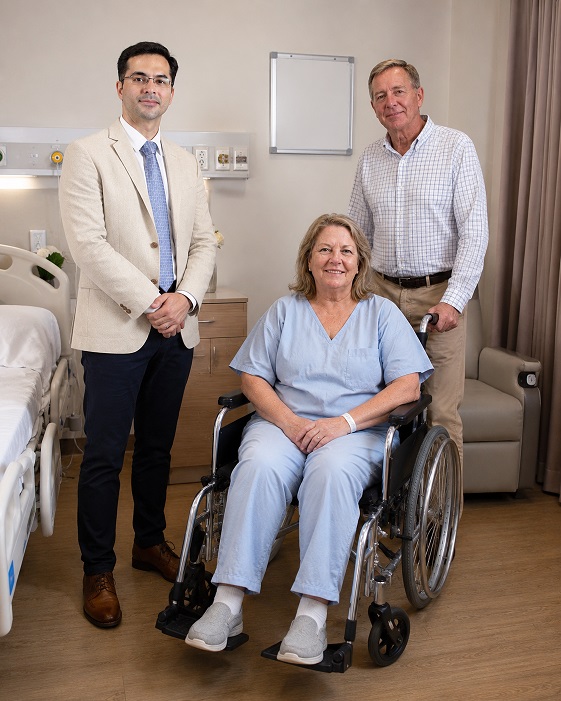
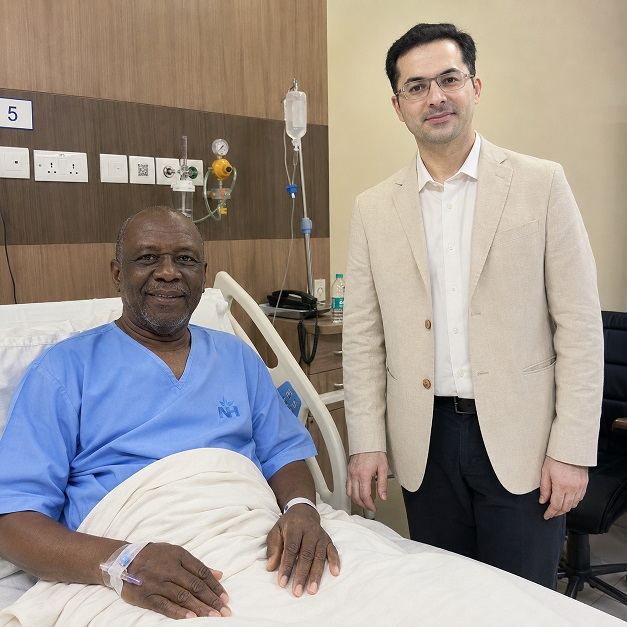
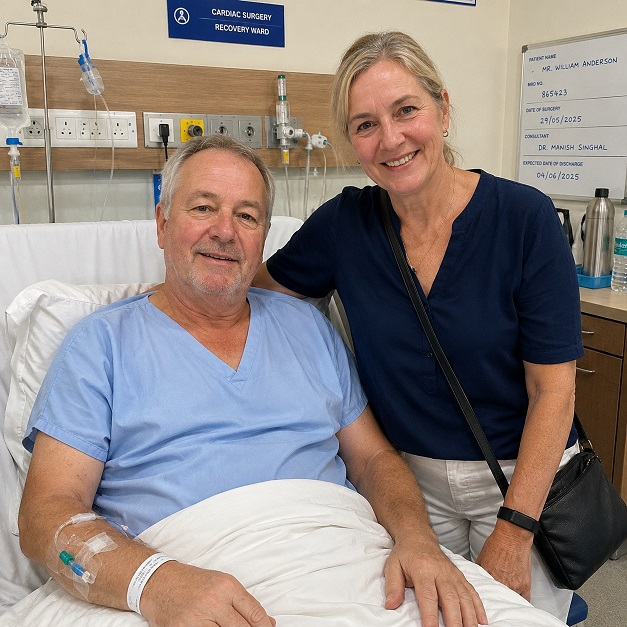
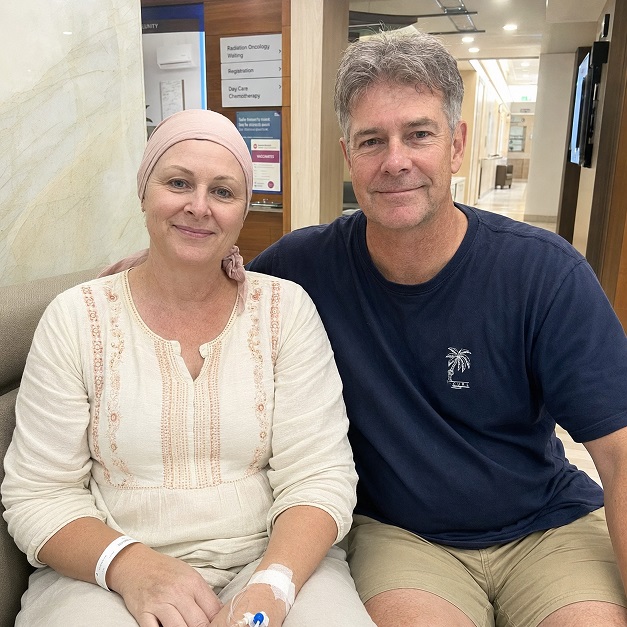
Healing Journeys of Australian Patients


Key Takeaways
- The briefing is aimed specifically at Australian patients who have already discussed their diagnosis and treatment options with an Australian neurosurgical team and are considering a second opinion, a faster private pathway or treatment because of cost pressures. It highlights a documented 400-day public neurosurgery wait as an example of the delays some Australian patients may face.
- Brain tumours cover a wide range of conditions. Meningiomas, pituitary adenomas and acoustic neuromas may often have favourable treatment pathways, while gliomas and metastatic tumours can require more complex surgery and multidisciplinary management.
- India's leading neurosurgical centres are presented as having high-volume fellowship-trained specialists, modern surgical technology and internationally accredited hospitals. Fluorescence-guided resection, intraoperative MRI and real-time neuronavigation are described as technologies used routinely for appropriate complex tumour cases.
- The cost chart gives illustrative private costs of approximately AUD $9,000 in India versus AUD $42,000 in Australia, with higher figures shown for the United States, Singapore and Thailand. Costs vary by tumour type, complexity and hospital stay, so patients should obtain an individualised, itemised quotation.
- Good care is linked to fellowship-trained neuro-oncology or skull-base expertise, appropriate use of modern surgical technology, molecular pathology, multidisciplinary tumour-board review and transparent pricing. The briefing also warns against treatment being priced before imaging is reviewed or surgery being declared operable by a single surgeon without multidisciplinary assessment.
- Australian patients should send their actual imaging rather than only the radiology report, inform their Australian neurosurgical team early, arrange follow-up care before travelling and clarify whether further radiotherapy or oncology treatment will be managed in Australia. The document also mentions the Medical Treatment Overseas Program and Indian medical and attendant visas.
Quick Facts
- Treatment
- Brain Tumour Surgery / Neurosurgery
- Country
- India
- Patients
- Patients from Australia
- Key Specialist
- Neurosurgeon / Neuro-Oncology Specialist
- Common Tumours
- Meningioma, pituitary adenoma, acoustic neuroma, glioma and metastases
- Key Technologies
- Fluorescence guidance, neuronavigation and intraoperative MRI
- India Illustrative Cost
- Approximately AUD $9,000
- Australia Illustrative Cost
- Approximately AUD $42,000
- Key Assessment
- Actual imaging, diagnosis and tumour characteristics
- Specialist Check
- Fellowship training and tumour-specific surgical volume
- Hospital Check
- Multidisciplinary tumour board and molecular pathology
- Follow-Up
- Australian neurosurgical / oncology team
- Pre-Travel Requirement
- Actual imaging and medical records
- Visa
- Indian medical visa and medical-attendant visa
- Author
- Dr. Dheeraj Bojwani
- Experience
- 24+ Years
In Brief
For Australian patients considering brain tumour surgery in India after discussing their diagnosis with an Australian neurosurgical team, the briefing highlights India's high-volume neurosurgical centres, fellowship-trained specialists, modern technologies such as fluorescence guidance and neuronavigation, and internationally accredited hospitals. It gives an illustrative private cost of approximately AUD $9,000 in India compared with AUD $42,000 in Australia, while emphasising that the actual price depends on tumour type and complexity. Patients are advised to send their imaging for review, obtain multidisciplinary assessment, secure a written itemised quote and arrange Australian follow-up before travelling.
It's worth being precise about who this briefing is genuinely for. If you've just received a diagnosis and are still absorbing the news, the right first step is always a conversation with your Australian neurosurgical team, not a decision about travel. This document is written for the point after that conversation, when you understand your diagnosis, your Australian options, and are weighing whether a second opinion or a faster private pathway genuinely makes sense for your specific situation. For that group, the case for looking seriously at India is a strong one: internationally accredited hospitals, fellowship-trained neurosurgeons operating at genuinely high volume, modern surgical technology in routine daily use rather than occasional showcase equipment, and treatment that can begin in weeks rather than the better part of a year, all at a fraction of the private cost at home.
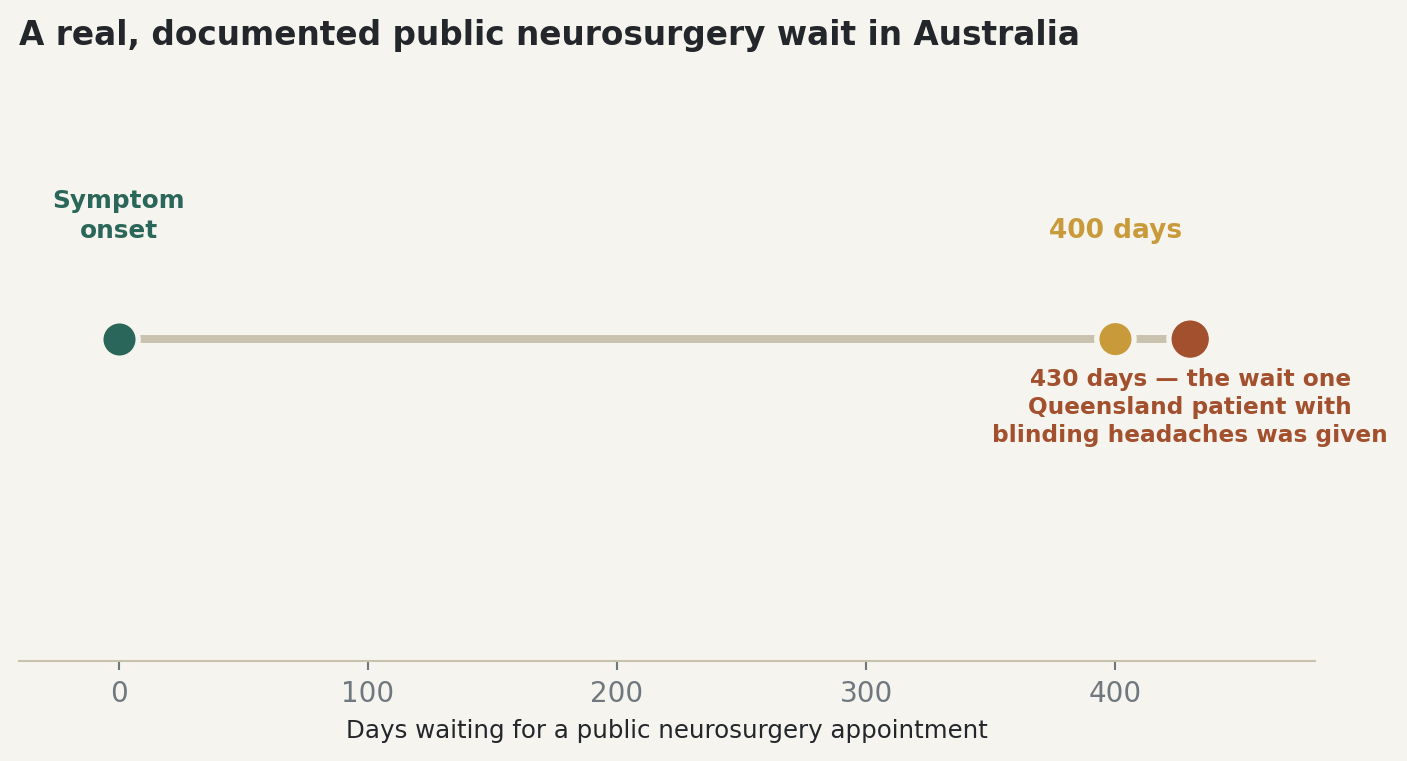
In 24 years of guiding international patients into Indian hospitals, this documented case, reported by the Australian Medical Association of Queensland, reflects a genuine pattern I hear about directly from Australian families: real pain, real delay, and a system working hard but genuinely stretched in parts of the country.
Understand the genuine breadth of this field before anything else
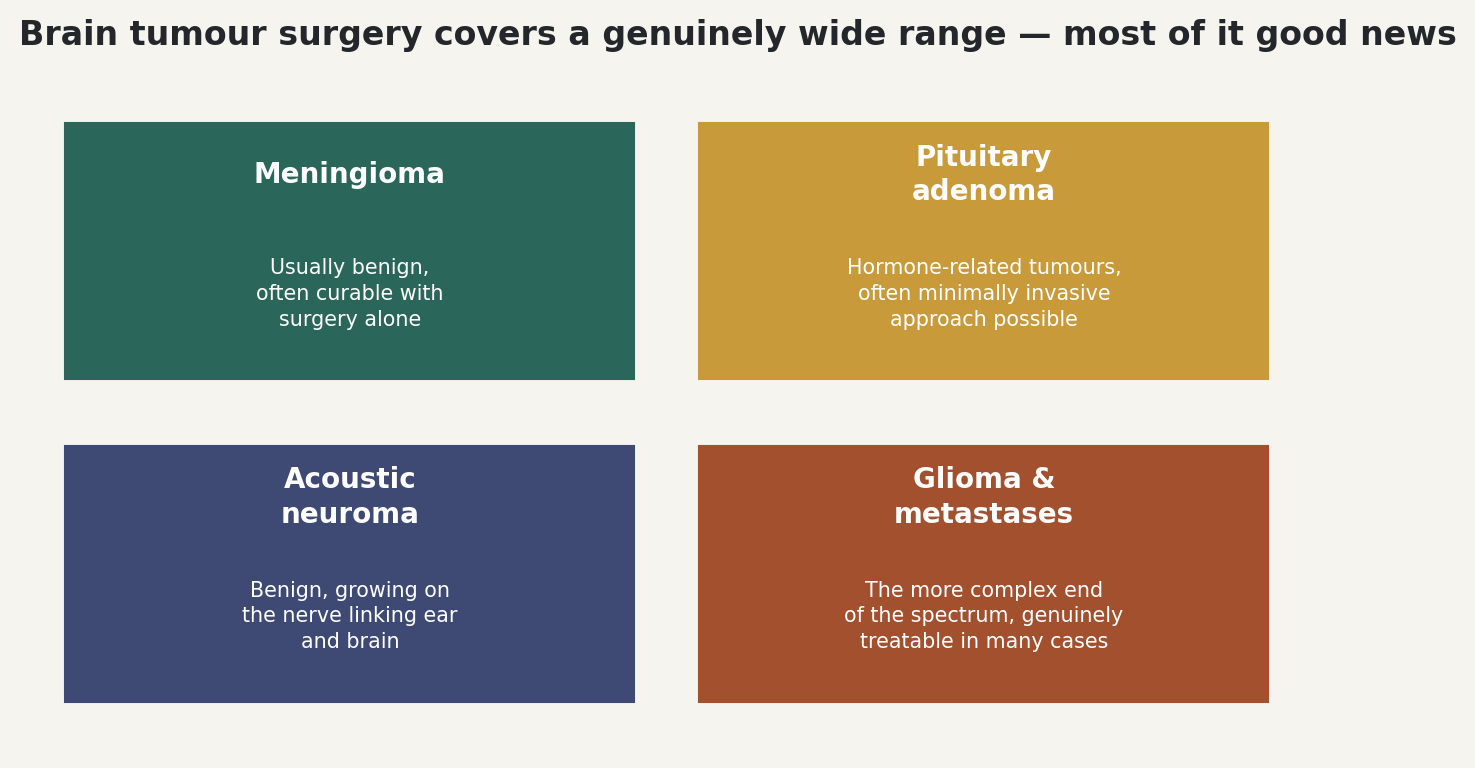
This matters because the phrase “brain tumour” covers an enormous range, and most of what falls under it is genuinely good news. Meningiomas, the most common type, are usually benign and often cured with surgery alone. Pituitary adenomas can often be removed through the nose, without opening the skull at all, using an endoscopic approach that avoids a traditional craniotomy entirely. Acoustic neuromas grow slowly on the nerve connecting the ear to the brain, and many can be monitored for years before intervention is needed, or removed with hearing preservation as a genuine surgical goal.
Even for the more complex end of the spectrum, glioma and metastatic disease, modern surgical technique has changed what's achievable considerably over the past decade. Fluorescence-guided resection uses a compound taken before surgery that causes high-grade tumour tissue to glow under specific light, letting a surgeon see margins invisible to the naked eye. Real-time neuronavigation tracks instruments against pre-operative imaging to sub-millimetre accuracy, functioning like GPS for the surgical field. Together, these tools have measurably improved how completely tumours can be safely removed, which is why asking whether they'll genuinely be used for your specific case, not just whether a hospital owns the equipment, is one of the most important questions you can ask any surgical team, in Australia or overseas.
Why India specifically, not just "overseas"
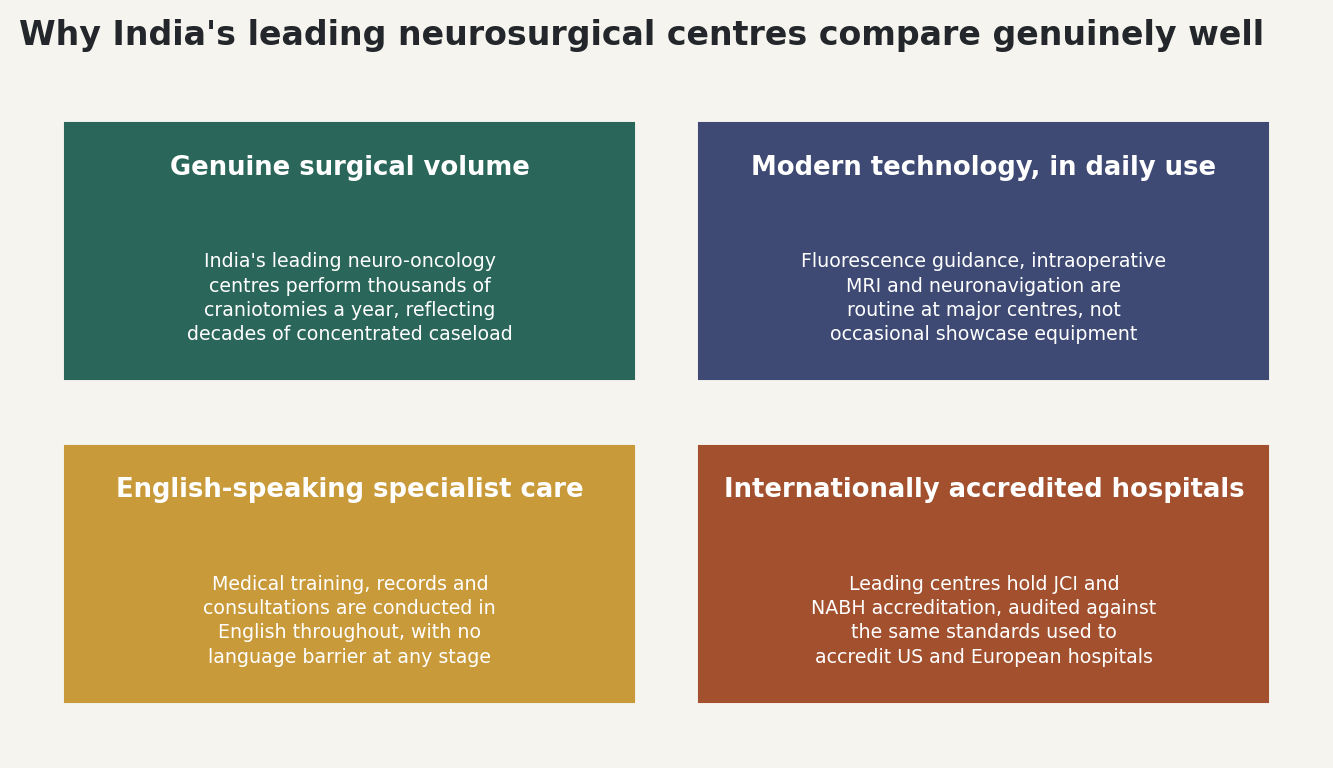
This is worth spelling out plainly, because “medical travel” can sound vague until you see what it actually means in practice. India's leading neuro-oncology centres perform a volume of complex cranial surgery that reflects the scale of the population they serve, giving surgical teams a depth of case experience that is difficult to match in a smaller health system. Fluorescence-guided resection, intraoperative MRI and real-time neuronavigation are not rare, specially arranged extras at these centres; they are the routine standard for complex tumour surgery.
Every consultation, medical record, consent discussion and follow-up letter happens in English, conducted by specialists who trained in programs recognised internationally, many with fellowship experience in the UK, US or Australia themselves. Leading hospitals hold Joint Commission International accreditation, the same international standard used to accredit hospitals in the United States, alongside India's own National Accreditation Board for Hospitals certification. Put together, this is not a compromise on quality in exchange for cost and speed; for the right case, it is genuinely comparable neurosurgical care, available sooner and at a fraction of the price.
An honest cost comparison
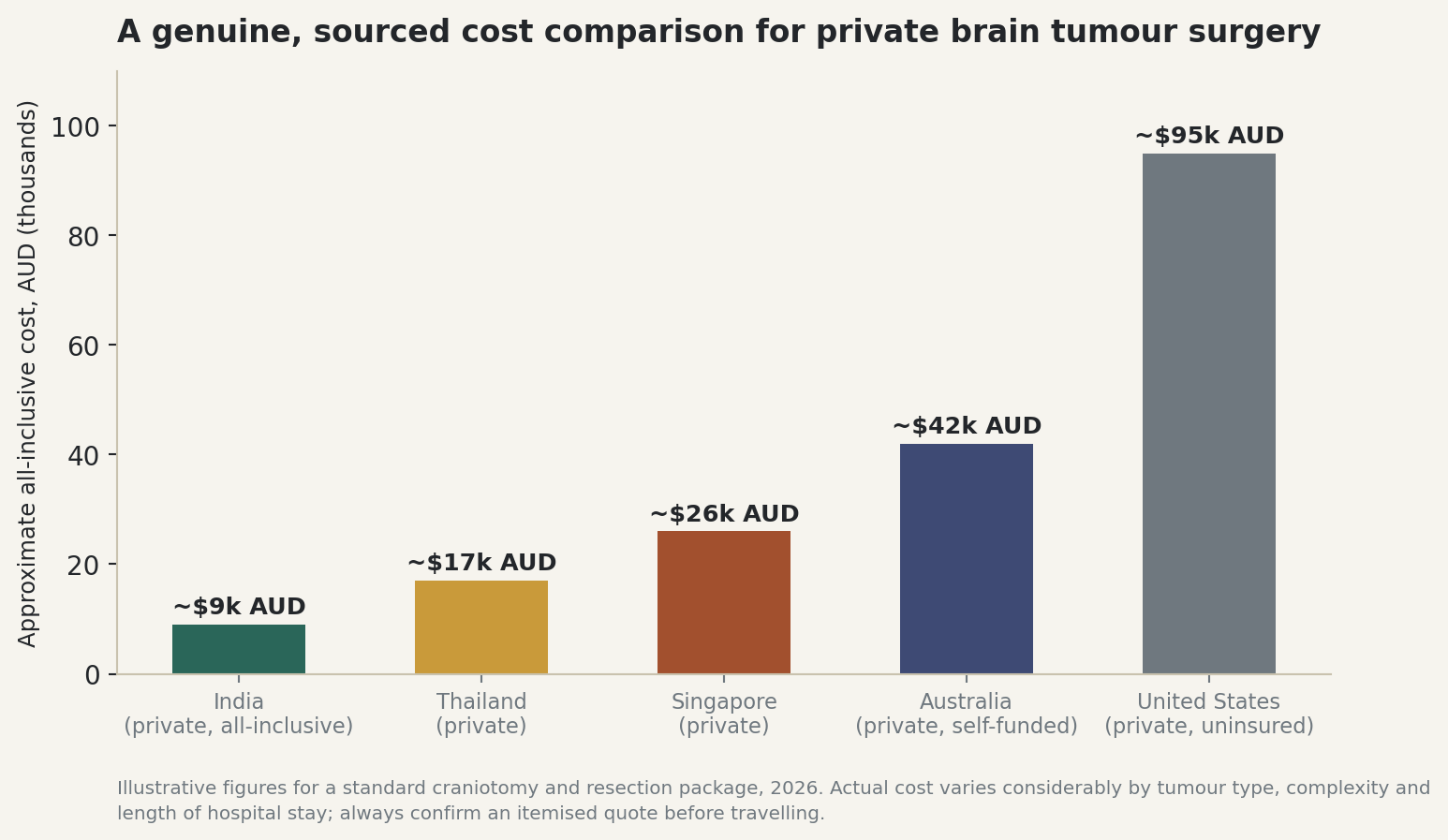
These figures are illustrative and vary considerably by tumour type, complexity and length of stay, but the pattern holds consistently: private brain tumour surgery in India runs at a fraction of the equivalent private cost in Australia, without the multi-hundred-day public wait some patients face. This isn't a comment on the quality of Australian neurosurgery, which remains genuinely excellent; it reflects differences in the underlying cost structure of care, including facility overheads, staffing costs and how private health systems are funded in each country.
Always insist on a written, itemised quote for your specific case before making any decision, and understand exactly what it includes: the surgeon's fee, hospital and theatre charges, ICU time if needed, imaging, and any planned follow-up. A quote that seems unusually low compared to others you've received is worth double-checking carefully, particularly around what happens if your case turns out to be more complex than initially assessed.
What Genuinely Good Care Looks Like, Wherever You Have Surgery
- Fellowship-trained neurosurgical expertise. Ask specifically about training in neuro-oncology or skull-base surgery beyond general neurosurgery.
- Modern surgical technology genuinely used. Fluorescence guidance and neuronavigation change outcomes for many tumour types; ask whether they'll be used for your specific case, not just whether the hospital owns the equipment.
- Molecular pathology on site. IDH, MGMT and 1p/19q testing are central to accurate modern diagnosis and treatment planning for gliomas specifically.
- A multidisciplinary tumour board. Your case should be reviewed by a genuine team, not decided by one surgeon's individual read of your scan.
- A clear, itemised quote before you travel. Confirm what happens if intraoperative findings change the surgical plan, and what that would cost.
Signals worth taking seriously, wherever you're considering treatment
A few patterns are worth watching for, regardless of which country or hospital you're evaluating. A price quoted before your imaging has been properly reviewed should give you pause; nobody can meaningfully assess a brain tumour, let alone price the surgery, without having seen the actual scans. A firm operability verdict delivered without a multidisciplinary review is another signal worth questioning, since this decision should never rest on a single surgeon's individual read of a scan. Vagueness about a surgical team's volume in your specific tumour type, rather than a confident, specific number, often tells you more than the answer itself. And any claim of a cure your Australian neurosurgeon hasn't heard of deserves real scepticism; legitimate neurosurgery has no need to oversell itself.
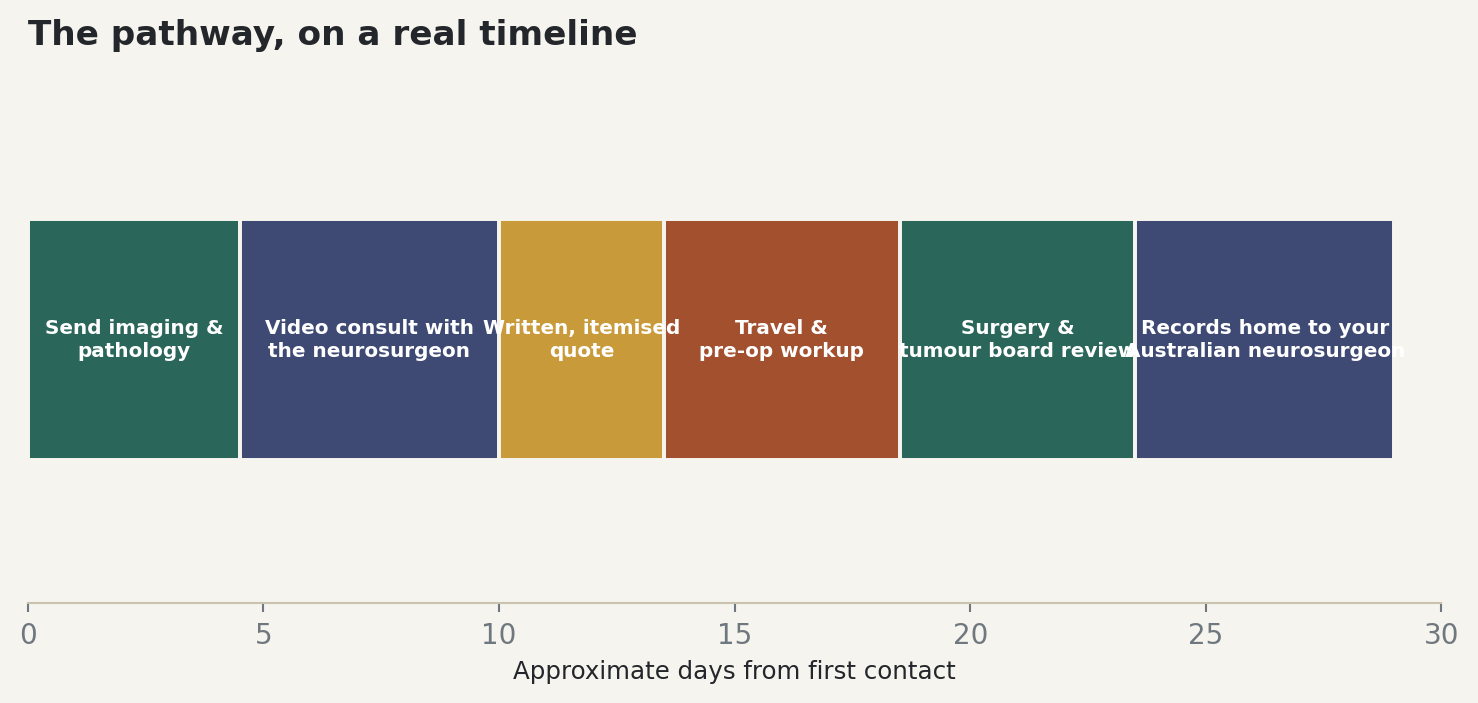
None of this is unique to overseas care. The same questions are worth asking of an Australian private surgeon too. What changes when you're evaluating a hospital overseas is simply that you have fewer easy ways to verify answers informally, which is exactly why insisting on things in writing, and on a proper video consultation with the surgeon who will actually operate, matters more than it might at home.
Australia-specific considerations most patients miss
Tell your Australian neurosurgical team early, not after the fact. Most are more sympathetic to a second opinion than patients expect, and a team informed from the outset is better placed to pick up your care afterward.
Arrange your ongoing care before you leave. If radiotherapy or further oncology treatment may follow, confirm your Australian team is willing to deliver it based on overseas surgical findings.
Send the imaging, not just the report. A second opinion requires the actual scans, not a typed summary.
Ask about the Medical Treatment Overseas Program. Where a specific technique is genuinely unavailable in Australia, this Commonwealth programme can in some circumstances fund treatment abroad.
Apply for both visas together. Australian passport holders are eligible for India's electronic medical visa, with an e-medical attendant visa for whoever travels with you.
THE QUESTIONS WORTH ASKING BEFORE YOU DECIDE
- Is my tumour genuinely urgent, or is there time to plan carefully?
- What is the surgeon's fellowship training, and specific volume in my tumour type?
- Will fluorescence guidance and neuronavigation be used for my case?
- Will my case go before a multidisciplinary tumour board, in writing?
- What does the itemised quote include, and what happens if the plan changes?
- Who will manage my follow-up care once I'm home?
A closing word
Most brain tumours are treatable, and Australian neurosurgery handles the great majority of cases well. This briefing exists for the narrower group facing a long wait, wanting a second opinion, or weighing genuine cost pressure for private care. The breadth of this field is worth remembering throughout: a brain tumour diagnosis covers everything from a small, benign, watchable lesion through to genuinely complex disease, and the right path depends entirely on which end of that spectrum your specific case falls into. For patients in that narrower group, the case for India is a genuinely strong one, not a fallback. A documented 400-day public wait is real, and so is a neurosurgical system in India built around high-volume, fellowship-trained specialists, internationally accredited hospitals, and modern technology used as a matter of routine rather than exception. Treatment that might otherwise be delayed for the better part of a year can typically begin within two to three weeks of that first video consultation, at private-hospital quality and a fraction of the equivalent Australian cost. In 24 years of helping families navigate exactly this decision, the pattern is consistent: patients who look closely at what India's leading centres actually offer, rather than assuming distance means compromise, generally come away reassured rather than anxious. Verify the diagnosis and urgency first, insist on modern technique and a genuine multidisciplinary team, and travel with a written, itemised quote in hand — and for most patients in this position, that combination points clearly toward moving forward. If you would like a second opinion on your imaging, send it and I will look at it properly — including telling you that your case should stay in Australia, which is an answer I give often.
Frequently Asked Questions by Australian Patients about Brain Tumour Surgery in India
Why might Australian patients consider brain tumour surgery in India?
Australian patients may consider India when seeking a second opinion, a faster private treatment pathway or an alternative to significant private treatment costs. The briefing highlights India's high-volume neurosurgical centres and modern surgical capabilities.
What should Australian patients do before seeking treatment in India?
They should first discuss the diagnosis with their Australian neurosurgical team and determine whether the tumour is urgent. The actual imaging, diagnosis and relevant medical records should then be prepared for overseas review.
Can Australian patients get a second opinion from an Indian neurosurgeon?
Yes. The briefing specifically recommends sending the actual scans rather than only the written report so the Indian neurosurgeon can assess the tumour and surgical options directly.
What types of brain tumours are treated in India?
The briefing discusses meningiomas, pituitary adenomas, acoustic neuromas, gliomas and metastatic brain disease, with treatment depending on the tumour type, location and individual clinical circumstances.
What advanced technology should Australian patients ask about?
Patients should ask whether technologies such as fluorescence-guided surgery, neuronavigation and intraoperative MRI are appropriate for and will actually be used in their specific case.
How much does brain tumour surgery cost in India for Australian patients?
The briefing gives an illustrative private cost of approximately AUD $9,000 in India, compared with approximately AUD $42,000 in Australia. Actual costs vary according to tumour type, complexity and length of hospital stay.
How should Australians choose a brain tumour surgeon in India?
They should ask about fellowship training, neuro-oncology or skull-base expertise and specific experience with their tumour type, rather than relying only on a hospital's general reputation.
What should Australian patients check about the hospital?
They should confirm access to multidisciplinary tumour-board review, molecular pathology where relevant, modern surgical technology and appropriate specialist facilities before deciding on treatment.
How should follow-up be arranged after brain tumour surgery in India?
Australian patients should arrange follow-up with their Australian neurosurgical or oncology team before travelling, particularly if radiotherapy or additional treatment may be required after surgery.
What are warning signs when choosing brain tumour surgery in India?
Patients should be cautious about a price given before their imaging is reviewed, a firm operability decision made by only one surgeon, vague claims about tumour-specific experience or unsupported claims of a cure.
Sources
- Australian Medical Association of Queensland, Reducing Neurosurgery Wait Lists Requires Complex Response — amaq.com.au
- Cabrini Health, Neurosurgery and Brain Cancer Services — cabrini.com.au
- National Medical Commission — nmc.org.in
- National Accreditation Board for Hospitals & Healthcare Providers — nabh.co
- Australian Government Medical Treatment Overseas Program — health.gov.au
- High Commission of India, e-Visa — indianvisaonline.gov.in
Page Summary
This seven-page decision briefing examines brain tumour surgery in India for Australian patients, focusing on patients seeking a second opinion, faster treatment or an alternative private pathway. It covers different tumour types, modern surgical technologies, India's neurosurgical expertise, illustrative treatment costs, hospital-selection criteria, warning signs and multidisciplinary care. It also addresses Australian follow-up, imaging requirements, overseas-treatment funding, visas and the practical questions patients should ask before travelling.
Citation Block
| Field | Information |
|---|---|
| Topic | Brain Tumour Surgery in India for Australian Patients |
| Treatment | Brain Tumour Surgery / Neurosurgery |
| Patients | Australian Patients |
| Specialist | Neurosurgeon / Neuro-Oncology Specialist |
| Tumour Types | Meningioma, pituitary adenoma, acoustic neuroma, glioma and metastases |
| Key Technologies | Fluorescence guidance, neuronavigation and intraoperative MRI |
| Specialist Check | Fellowship training and tumour-specific surgical volume |
| Hospital Check | Multidisciplinary tumour board and molecular pathology |
| India Cost | Approx. AUD $9,000 |
| Australia Cost | Approx. AUD $42,000 |
| Quote Requirement | Written, itemised quotation |
| Pre-Travel Records | Actual imaging, diagnosis and medical records |
| Follow-Up | Australian neurosurgical / oncology care |
| Warning Signs | Pricing before imaging review, single-surgeon assessment and unsupported cure claims |
| Patient Journey | Imaging → consultation → quote → pre-operative work-up → surgery → Australian follow-up |
| Decision Principle | Assess tumour-specific expertise, technology, multidisciplinary care and follow-up rather than cost alone |

Our Mission Statement
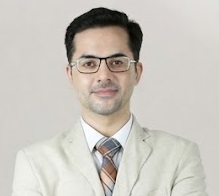
Our mission is to place patients at the centre of every healthcare decision by providing trustworthy, evidence-based, and unbiased medical information. We believe that informed patients make better decisions. Backed by personalised guidance from our experienced advisory team, we help patients understand their treatment options, compare them objectively, and confidently choose the path that best suits their medical needs and personal circumstances.
Patient Testimonials from Australia

Ready to Take the First Step?
Share your Medical Reports with our Healthcare Managers Today and Get a FREE CONSULTATION, a Personalized Treatment Plan, and Complete Support from Arrival to Recovery.
Get Your Free ConsultationAreas We Serve
This resource has been thoughtfully prepared for patients from Australia who are considering medical treatment in India. We also welcome patients from the wider region in the countries mentioned below-
We regularly assist patients from:
- Fiji
- Vanuatu
- Samoa
- Tonga
- Kiribati
- Nauru
- Tuvalu
- New Zealand
- Solomon Islands
- Papua New Guinea
Many of the insights, treatment pathways, hospital recommendations, travel guidance, and patient support services described here are equally relevant and may be used as a reference when planning treatment in India.
From Australia to India: Your Complete Patient Support Guide
- Cancer Treatment in India for Australian Patients: PBS Gap & Drug Costs
- Cardiac Surgery in India for Australian Patients: TAVI Access & Costs
- Dental Treatment & Surgery in India for Australian Patients
- Hip Surgery in India for Australian Patients: Costs, Waits & Implant Choice
- Knee Surgery in India for Australian Patients: Costs, Waits & Implants
- Neurosurgery in India for Australian Patients: Volume, Costs & When Not to Travel
- Spine Surgery in India for Australian Patients: Costs, Indications & Second Opinions (2026)
- Best Bariatric & Weight Loss Surgeons in India for Australian Patients
- Best Cancer Surgeons & Hospitals in India for Australian Patients
- Best Cardiac Surgeons & Hospitals in India for Australian Patients
- Best Cosmetic Surgeons & Hospitals in India for Australian Patients
- Best Dental Surgeons & Clinics in India for Australian Patients
- Best Hip Surgeons & Hospitals in India for Australian Patients
- Best Knee Surgeons & Hospitals in India for Australian Patients
- Best Scoliosis Surgeons & Hospitals in India for Australian Patients
- Best Spine Surgeons & Hospitals in India for Australian Patients
- Selecting the Best Urosurgery and Reconstructive Urology Centres in India for Australian Patients
- Selecting the Best Bone Marrow Transplant Centres in India for Australian Patients