

Breast Cancer Treatment and Surgery in India: A Decision Briefing for Australian Patients
A genuine, documented wait that resisted even a dedicated hospital intervention, and why India's leading breast surgery centres offer a credible, coordinated, well-evidenced alternative.
Breast cancer is the most common cancer affecting Australian women, and treatment decisions around mastectomy, reconstruction and timing are genuinely significant, both medically and emotionally. This briefing sets out an honest picture of a real, documented access gap, alongside the genuine trade-offs between reconstruction approaches, and why India's leading centres are a credible option. It's worth being precise about who this is for. Many Australian women receive excellent, well-coordinated breast cancer care, and this briefing isn't written to change that. It's written for patients weighing a genuine second opinion, facing a documented wait for coordinated reconstruction, or wanting a faster private pathway without sacrificing the quality of oncological or reconstructive care they receive.
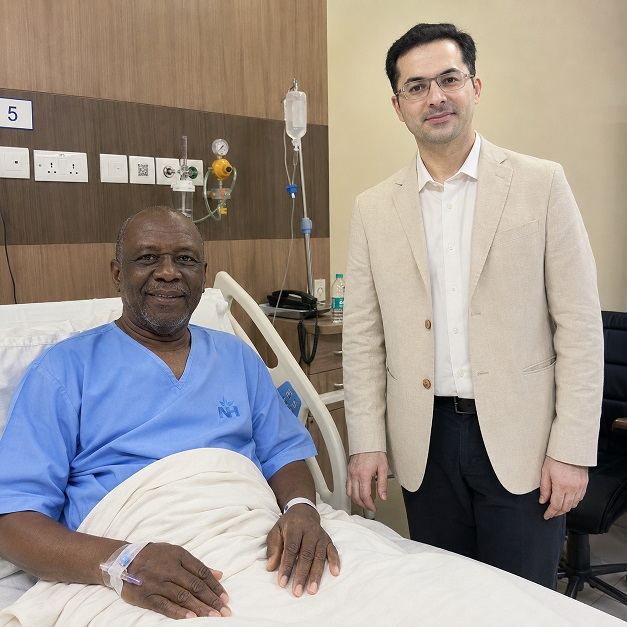
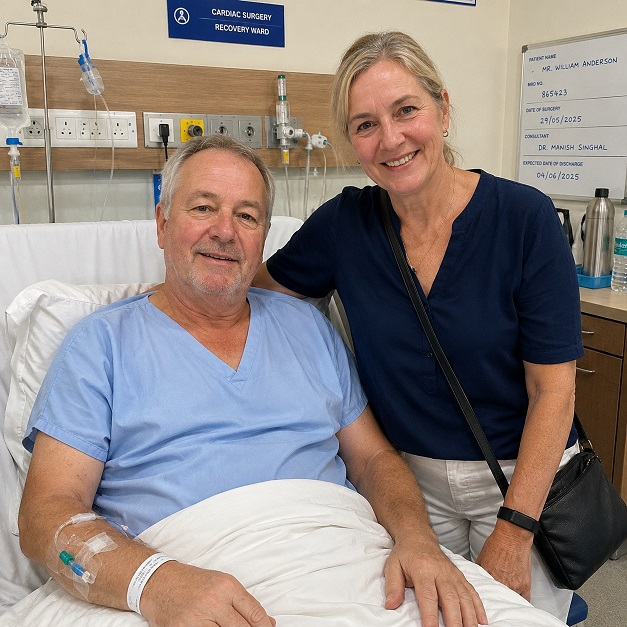
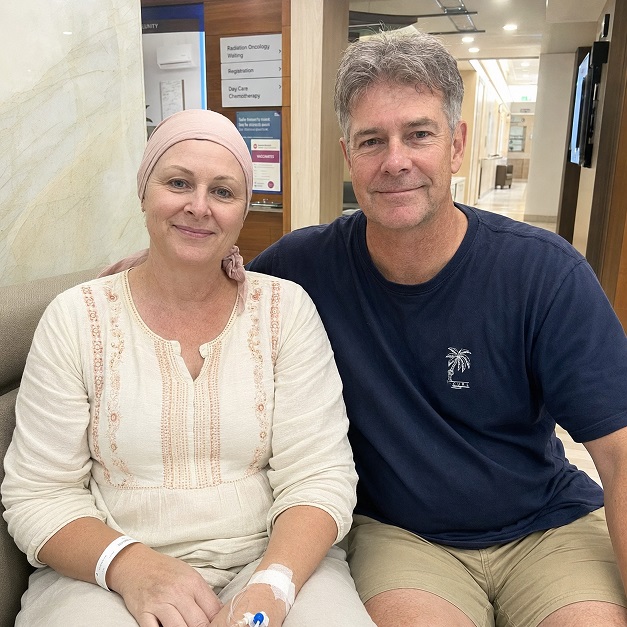
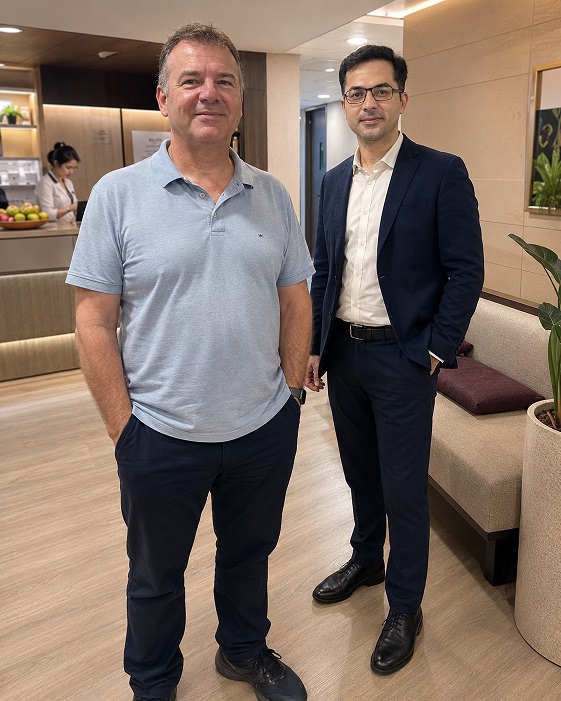
Healing Journeys of Australian Patients


Key Takeaways
- The briefing focuses on Australian women considering breast cancer surgery in India because of a genuine second-opinion need, documented reconstruction delays or the desire for a faster private pathway. It highlights a documented 55–61 week wait for risk-reducing mastectomy with immediate reconstruction in a high-risk genetic group following a hospital intervention.
- The document explains the important choice between immediate and delayed breast reconstruction. Immediate reconstruction can provide psychological and emotional benefits and combines procedures in one operation, while delayed reconstruction may be appropriate when treatments such as radiotherapy are planned first or when a staged approach better suits the patient.
- India's leading breast surgery centres are presented as having high surgical volumes, coordinated oncoplastic teams and modern techniques, including skin- and nipple-sparing procedures and immediate reconstruction. The briefing also highlights English-speaking specialists and JCI/NABH-accredited hospital infrastructure.
- The cost chart gives illustrative private costs of approximately AUD $9,000 in India, compared with AUD $35,000 in Australia for private self-funded mastectomy with reconstruction. Costs vary by reconstruction technique, so patients should obtain a written, itemised quotation covering both cancer surgery and reconstruction.
- Good breast cancer care should include genuine coordination between the surgical oncologist and reconstructive surgeon, experience with the specific reconstruction technique, transparent margin and complication data, and a clear plan if further surgery is required. Patients should be cautious when prices are provided before imaging and pathology have been reviewed or when the two surgical teams do not genuinely plan together.
- Australian patients are advised to keep up with recommended BreastScreen screening, inform their Australian breast team early, arrange ongoing oncology follow-up before travelling and ensure medical records are transferred home.
Quick Facts
- Treatment
- Breast Cancer Surgery and Reconstruction
- Patients
- Australian Patients
- Key Specialists
- Breast Surgical Oncologist and Reconstructive / Plastic Surgeon
- Main Options
- Immediate or delayed reconstruction
- Key Techniques
- Oncoplastic, skin-sparing and nipple-sparing surgery
- India Cost
- Approx. AUD $9,000
- Australia Cost
- Approx. AUD $35,000
- Documented Wait
- 55–61 weeks for the specific risk-reducing pathway described
- Hospital Check
- JCI/NABH accreditation and coordinated surgical teams
- Quality Check
- Technique-specific surgical volume and outcome data
- Pre-Travel Records
- Imaging, pathology and genetic testing
- Follow-Up
- Australian oncology and breast care team
- Treatment Timeline
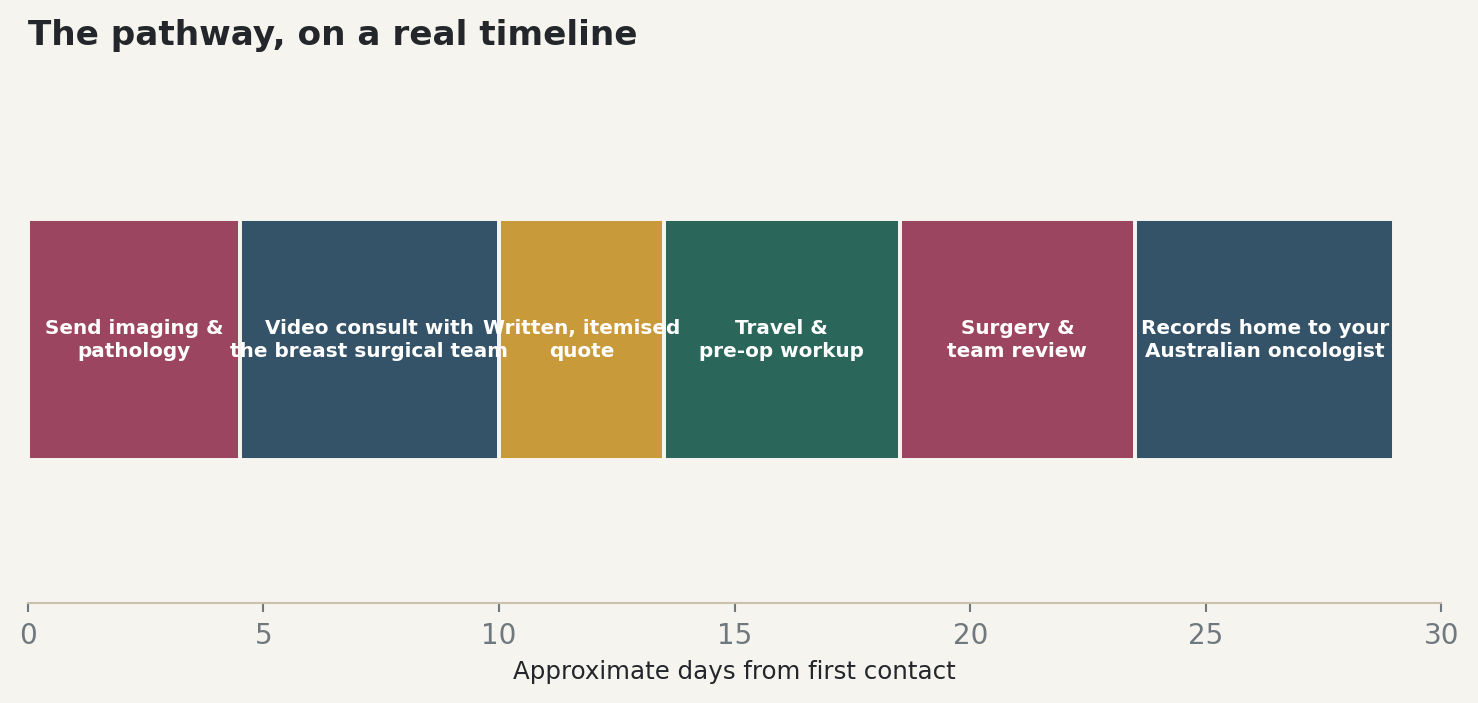
- Approximately 2–3 weeks to begin treatment, according to the briefing
- Visa
- Indian e-medical visa and e-medical attendant visa
- Author
- Dr. Dheeraj Bojwani
- Experience
- 24+ Years
In Brief
For Australian patients considering breast cancer surgery and reconstruction in India, the briefing highlights coordinated oncoplastic care, experienced breast surgery teams and modern reconstruction techniques. It compares an illustrative private cost of approximately AUD $9,000 in India with AUD $35,000 in Australia, while stressing that the actual cost depends on the reconstruction technique and individual treatment plan. Patients are advised to compare immediate and delayed reconstruction carefully, review their imaging and pathology with both surgical teams, obtain an itemised quotation and arrange Australian oncology follow-up before travelling.
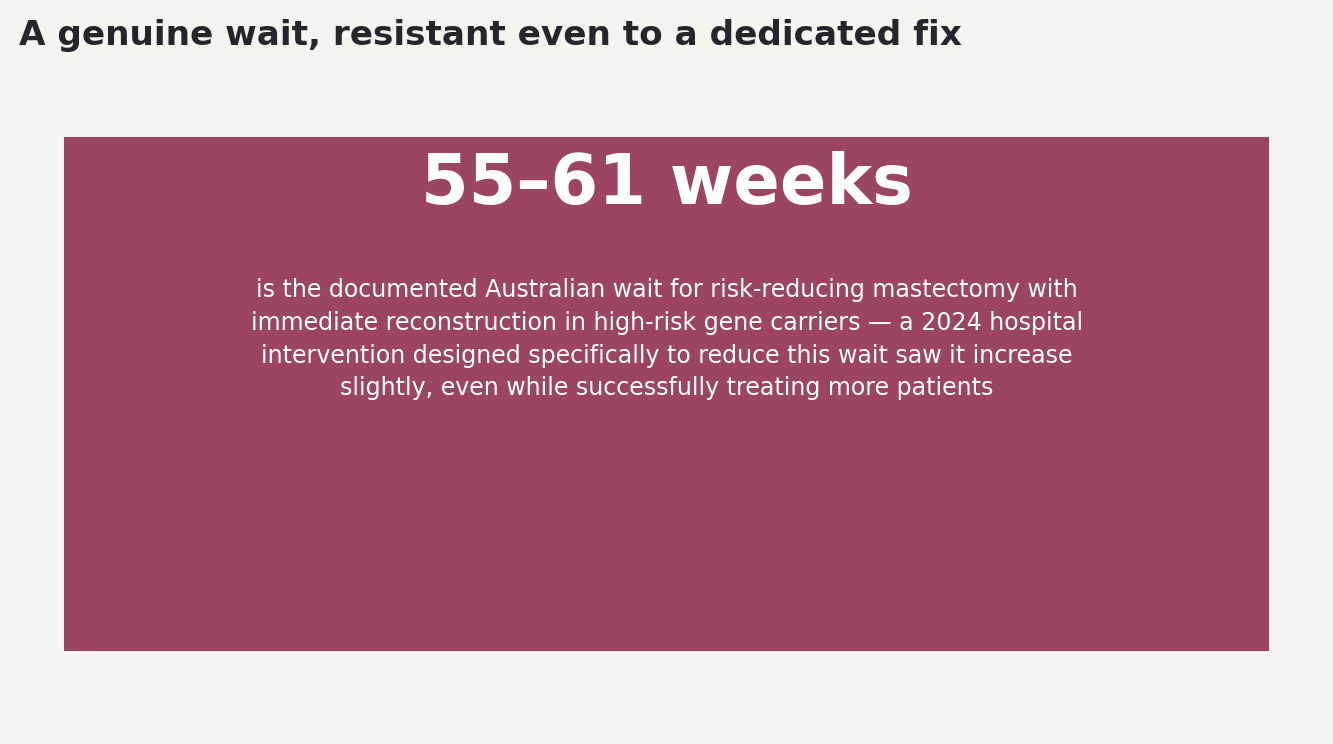
In 24 years of guiding international patients into Indian hospitals, this finding is genuinely striking, not because Australian hospitals aren't trying, but because it shows how structurally difficult this specific coordination problem is: getting a surgical oncologist and a plastic reconstructive surgeon into adjacent operating theatres, at the same time, remains genuinely hard even when a hospital sets out specifically to fix it. This particular wait applies to risk-reducing surgery for women carrying high-risk genetic mutations, but the underlying scheduling challenge, coordinating two specialist surgical teams for one combined operation, applies just as much to women having reconstruction following an active breast cancer diagnosis.
Reliable, quantitative data on this specific wait for women with an active diagnosis, rather than risk-reducing surgery, remains genuinely limited across Australia, which researchers themselves have flagged as a real gap in the current system. What is documented consistently is that the wait is often shortest for straightforward mastectomy without reconstruction, and longest for mastectomy combined with more complex autologous, or tissue-based, reconstruction, precisely because of the scheduling coordination this requires between two entirely separate specialist teams, each managing their own busy caseload.
This isn't a minor administrative inconvenience. For a woman facing a cancer diagnosis, every week of delay can carry genuine emotional weight, and the choice between accepting a longer wait for immediate reconstruction or proceeding sooner with a staged approach is not one any woman should feel forced into by hospital scheduling constraints alone.
Two genuine paths, each with a real trade-off
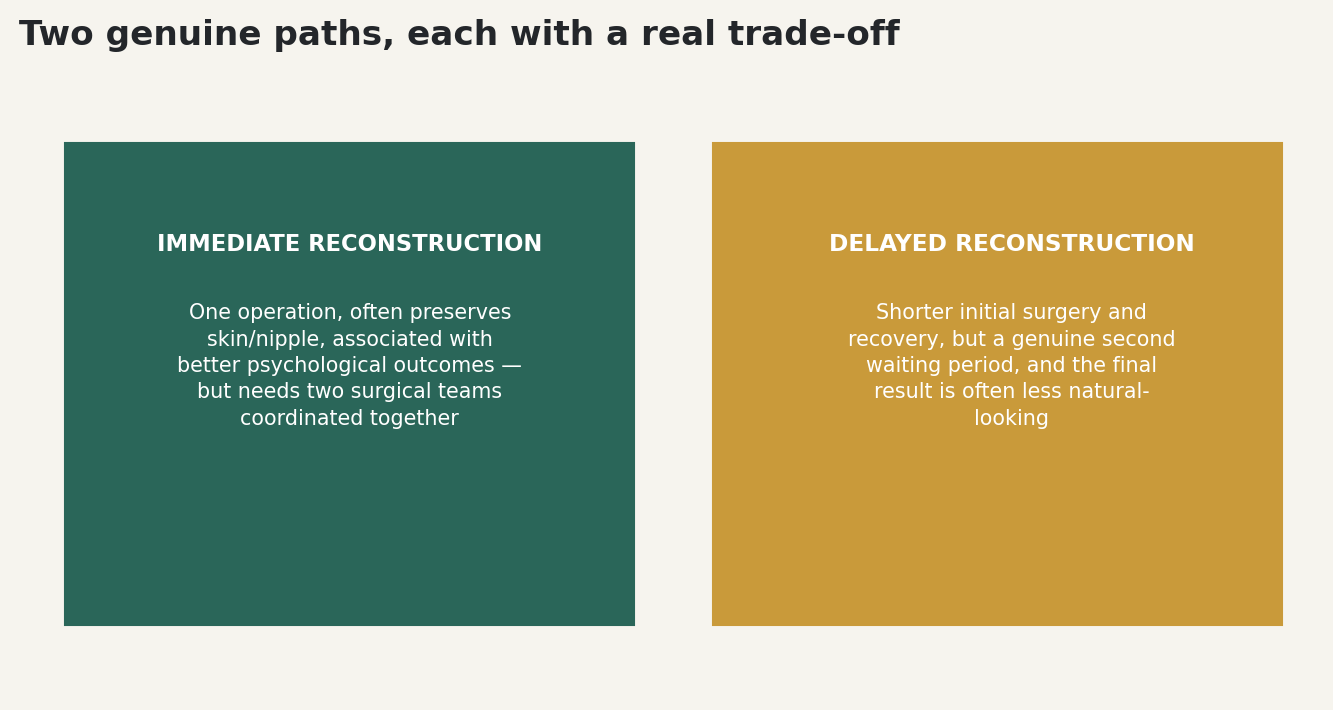
Get your full imaging, pathology and genetic testing results together before your first overseas conversation. This distinction matters because immediate reconstruction is genuinely associated with better psychological and emotional outcomes in published research, since a woman wakes from surgery with a breast shape rather than experiencing the loss and then a separate, later reconstruction months or years afterward. Coordinating two specialist teams for the same operation, in the same theatre, on the same day, is exactly the bottleneck that Australia's documented wait times reflect, and it's a genuinely solvable logistical problem when a hospital's surgical scheduling is built around it from the outset, rather than layered on top of two independently busy specialist practices.
It's worth being clear that delayed reconstruction remains a genuinely reasonable choice for many women, particularly where other treatments like radiotherapy are planned first, since radiation can affect how well reconstructed tissue heals and integrates. This isn't a decision with one universally correct answer; it's one that benefits from an honest, unhurried conversation about your specific priorities, treatment plan and timeline, ideally before you've committed to a surgical pathway that locks you into a particular sequence.
What both paths share, wherever you have surgery, is the value of genuine coordination: a surgical oncology team and a reconstructive team who plan together from the first consultation, rather than operating in sequence with a scheduling gap determined by whichever theatre slot happens to become available first.
Why India specifically, not just overseas
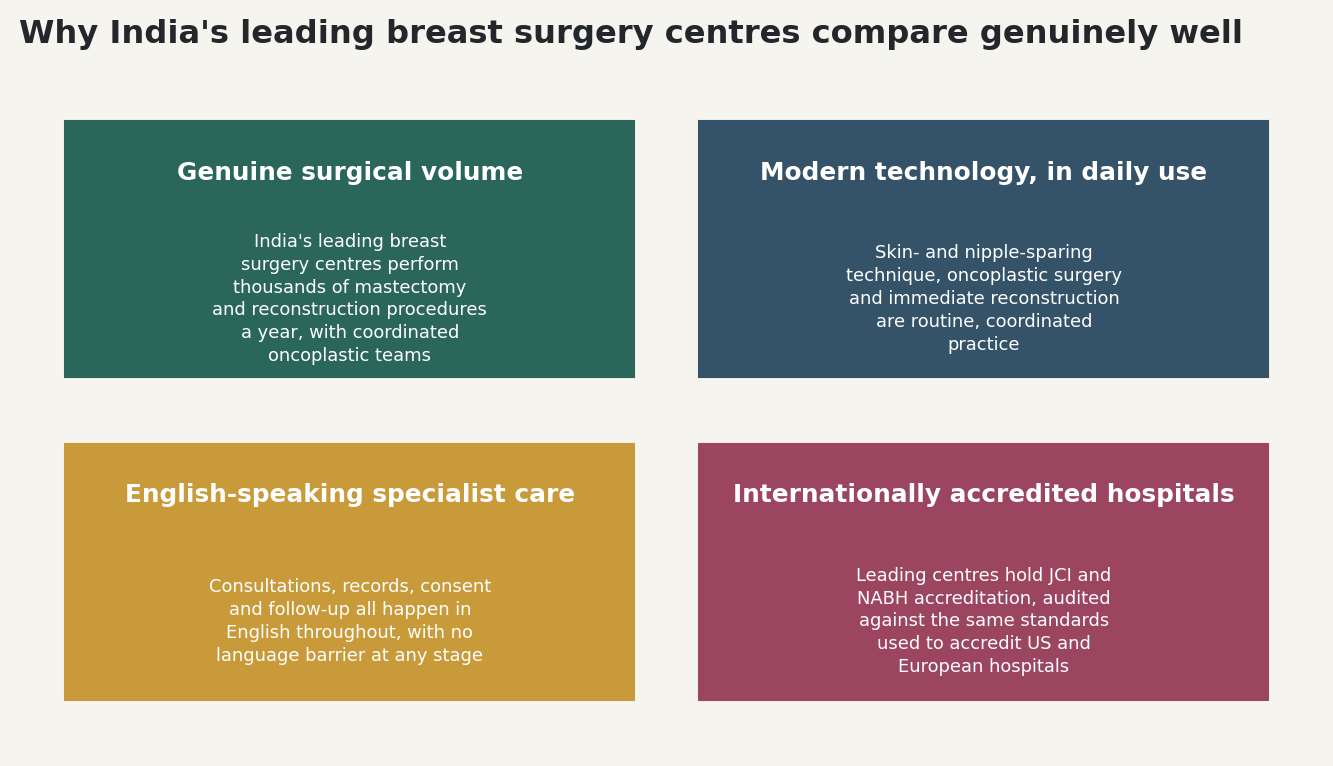
This is worth spelling out plainly. India's leading breast surgery centres perform a volume of mastectomy and reconstruction procedures that reflects the scale of the population they serve, with coordinated oncoplastic teams built into standard practice from the outset, avoiding the exact scheduling bottleneck that drives Australia's documented wait. This is not a compromise reached for cost and speed; for the right case, it is comparable depth of specific surgical experience, delivered by English-speaking specialists in internationally accredited hospitals, at a fraction of the equivalent Australian private cost.
The structural advantage here is genuine and specific: because leading Indian breast centres see this exact combined-surgery scenario routinely, rather than occasionally, they've built their operating schedules, theatre allocation and team rostering around delivering immediate reconstruction as standard practice, not as a special case requiring exceptional coordination. This isn't a matter of individual surgeon skill alone; it's an institutional design choice that Australia's own researchers have identified as the missing piece in their own system.
Every part of the process, from your first video consultation through detailed surgical and reconstruction planning, consent discussions, and every follow-up conversation, happens in English, with specialists trained to internationally recognised standards. Combined with JCI and NABH-accredited hospital infrastructure, matching the same benchmarks used to certify leading hospitals in the United States and Europe, this represents genuinely comparable, coordinated breast cancer care, not a lesser alternative reached through necessity.
An honest cost comparison
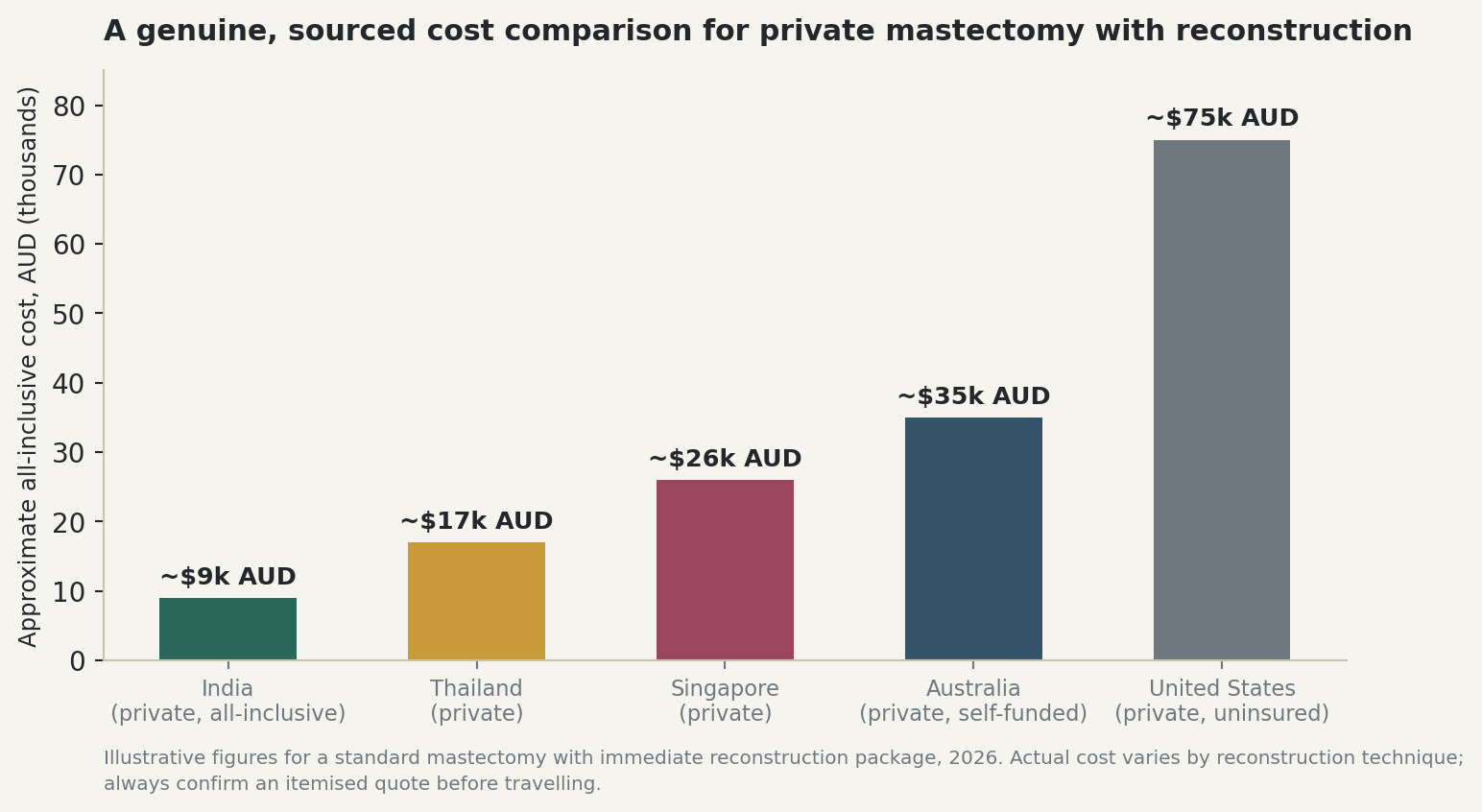
These figures are illustrative and vary by reconstruction technique, implant-based versus autologous, but the pattern holds consistently. Always insist on a written, itemised quote for your specific case before making any decision, covering both the oncological surgery and the full reconstruction process.
What Genuinely Good Breast Cancer Care Looks Like, Wherever You Have Surgery
- A genuine oncoplastic team, coordinated from the start. Ask whether your surgical oncologist and reconstruction surgeon plan your case together, not sequentially, and whether they operate in the same session.
- An honest immediate-versus-delayed discussion. Ask directly which approach suits your specific case, cancer stage and priorities, without pressure toward whichever is more scheduling-convenient for the hospital.
- Genuine volume in your specific reconstruction technique. Ask for the surgeon's own volume, whether implant-based or autologous tissue reconstruction.
- Candid margin and complication data. Ask for the team's own outcome data for your specific procedure, including how often further surgery for margins is needed.
- A clear, itemised quote before you travel. Confirm what happens if margins require further surgery, and whether that's included in the original price.
Signals worth taking seriously, wherever you're considering treatment
A few patterns are worth watching for, regardless of which country or hospital you're evaluating. A recommendation for delayed reconstruction without a genuine discussion of why immediate isn't being offered deserves a direct question in return. A price quoted before your imaging and pathology have been properly reviewed is another signal worth pausing on. Vagueness about whether your surgical and reconstruction teams genuinely plan together, rather than simply operating on the same patient at different times, often tells you more than the answer itself.
None of this is unique to overseas care; the same questions are worth asking of an Australian private provider too. What changes when evaluating a hospital overseas is that you have fewer easy, informal ways to verify answers, which is exactly why insisting on things in writing, and on a proper video consultation with both surgeons who will actually operate, matters more than it might at home.
Australia-specific considerations most patients miss
Don't skip your recommended screen. Given that most screen-detected cancers show no symptoms at all, staying current with BreastScreen matters regardless of where you'd ultimately have surgery, and early detection genuinely shapes every option available to you afterward.
Tell your Australian breast surgical team early, not after the fact. Most are more sympathetic to a second opinion than patients expect, and an informed home team is better placed to support your ongoing surveillance and care.
Arrange your ongoing oncology care before you leave. Confirm your Australian team is willing to continue follow-up based on overseas surgical findings, including any adjuvant treatment planning.
Apply for both visas together. Australian passport holders are eligible for India's electronic medical visa, with an e-medical attendant visa for whoever travels with you.
THE QUESTIONS WORTH ASKING BEFORE YOU DECIDE
- Are my surgical and reconstruction teams genuinely coordinated?
- Is immediate or delayed reconstruction right for my specific case?
- What is your specific volume in my reconstruction technique?
- What is your margin clearance and complication rate?
- What does the itemised quote include, and what happens if further surgery is needed?
- Who will manage my ongoing oncology follow-up once I'm home?
A closing word
Breast cancer surgery genuinely rewards coordinated, well-planned care, and Australia's own documented wait times show how difficult that coordination remains, even under a dedicated hospital effort to fix it. For patients weighing a second opinion or facing that documented wait, the case for India is a strong one: breast surgery teams with genuinely coordinated oncoplastic practice built into their institutional design as standard, not layered on as an afterthought, and treatment that can typically begin within two to three weeks, at a fraction of the equivalent Australian private cost. In 24 years of helping patients navigate exactly this decision, the pattern holds firm: those who look closely at what India's leading breast surgery centres actually offer, the coordination, the volume, the genuine institutional design around combined surgery, generally come away reassured rather than anxious. Confirm your team is genuinely coordinated first, weigh immediate versus delayed reconstruction honestly against your own priorities, and travel with a written, itemised quote in hand. For many women facing this decision, this represents a genuinely well-evidenced path forward, not a compromise made under pressure. If you would like a second opinion on your imaging, send it and I will look at it properly.
Frequently Asked Questions by Australian Patients about Breast Cancer Treatment and Surgery in India
Why might Australian patients consider breast cancer surgery in India?
Australian patients may consider India when seeking a second opinion, facing a documented reconstruction wait or looking for a faster private treatment pathway. The briefing highlights coordinated breast surgery and reconstruction as key factors.
What should Australian patients prepare before contacting an Indian breast surgery centre?
Patients should collect their imaging, pathology and genetic testing results before their first overseas consultation. This allows the surgical team to assess the case properly.
What is the difference between immediate and delayed breast reconstruction?
Immediate reconstruction is performed during the mastectomy and may offer psychological benefits, while delayed reconstruction is performed later and can be appropriate when radiotherapy or other treatments are planned first.
Can Australian patients receive immediate breast reconstruction in India?
The briefing presents India's leading breast centres as experienced in coordinated immediate reconstruction, with breast surgical and reconstructive teams planning and operating together.
How much does breast cancer surgery with reconstruction cost in India for Australians?
The briefing gives an illustrative private cost of approximately AUD $9,000 in India, compared with approximately AUD $35,000 in Australia. Actual costs vary according to the reconstruction technique and individual treatment requirements.
What should Australian patients check when choosing a breast surgeon in India?
They should ask about the surgeon's specific experience and procedure volume, particularly for the reconstruction technique being considered, as well as margin clearance and complication outcomes.
What should Australian patients check about the Indian hospital?
They should confirm that the breast surgical and reconstructive teams genuinely coordinate from the beginning and check the hospital's accreditation, multidisciplinary capabilities and ability to provide comprehensive cancer and reconstruction care.
What warning signs should Australian patients watch for?
Patients should be cautious about prices given before imaging and pathology are reviewed, unclear coordination between the surgical teams, or recommendations for delayed reconstruction without a clear explanation of why it is appropriate for their case.
How should Australian patients arrange follow-up after surgery in India?
They should arrange ongoing oncology and breast care in Australia before travelling and confirm that their Australian team will review the overseas surgical findings and manage any further treatment required.
How quickly can Australian patients potentially begin treatment in India?
The briefing's timeline indicates that treatment can typically begin within two to three weeks, depending on consultation, quotation, pre-operative work-up and travel arrangements.
Sources
- Timely Access to Risk-Reducing Bilateral Mastectomy: A Systematic Review, Australasian Journal of Plastic Surgery, 2026 — ajops.com
- Cancer Australia, Breast Cancer Surgery — canceraustralia.gov.au
- National Medical Commission — nmc.org.in
- National Accreditation Board for Hospitals & Healthcare Providers — nabh.co
- High Commission of India, e-Visa — indianvisaonline.gov.in
Page Summary
This six-page decision briefing examines breast cancer treatment and surgery in India for Australian patients, focusing on reconstruction delays, immediate versus delayed reconstruction, coordinated oncoplastic care and India's breast surgery expertise. It includes an illustrative cost comparison, hospital and surgeon selection criteria, warning signs, an approximate treatment pathway, Australian follow-up considerations and key questions to ask before travelling.
Citation Block
| Field | Information |
|---|---|
| Topic | Breast Cancer Treatment and Surgery in India for Australian Patients |
| Treatment | Breast Cancer Surgery and Reconstruction |
| Patients | Australian Patients |
| Key Specialists | Breast Surgical Oncologist and Reconstructive Surgeon |
| Main Options | Immediate or delayed reconstruction |
| Key Techniques | Oncoplastic, skin-sparing and nipple-sparing surgery |
| India Expertise | High surgical volume and coordinated oncoplastic teams |
| Hospital Check | JCI/NABH accreditation and coordinated specialist care |
| India Cost | Approx. AUD $9,000 |
| Australia Cost | Approx. AUD $35,000 |
| Wait Highlighted | 55–61 weeks for the specific risk-reducing pathway |
| Quote Requirement | Written, itemised quotation |
| Quality Check | Technique-specific volume, margins and complication data |
| Pre-Travel Records | Imaging, pathology and genetic testing |
| Follow-Up | Australian oncology and breast care team |
| Warning Signs | Price before review, poor team coordination and unclear outcome data |
| Patient Journey | Imaging → consultation → quote → pre-op work-up → surgery → Australian follow-up |
| Decision Principle | Compare coordination, expertise, reconstruction options, outcomes and cost |


Our Mission Statement
Our mission is to place patients at the centre of every healthcare decision by providing trustworthy, evidence-based, and unbiased medical information. We believe that informed patients make better decisions. Backed by personalised guidance from our experienced advisory team, we help patients understand their treatment options, compare them objectively, and confidently choose the path that best suits their medical needs and personal circumstances.
Patient Testimonials from Australia



Ready to Take the First Step?
Share your Medical Reports with our Healthcare Managers Today and Get a FREE CONSULTATION, a Personalized Treatment Plan, and Complete Support from Arrival to Recovery.
Get Your Free ConsultationAreas We Serve
This resource has been thoughtfully prepared for patients from Australia who are considering medical treatment in India. We also welcome patients from the wider region in the countries mentioned below-
We regularly assist patients from:
- Fiji
- Vanuatu
- Samoa
- Tonga
- Kiribati
- Nauru
- Tuvalu
- New Zealand
- Solomon Islands
- Papua New Guinea
Many of the insights, treatment pathways, hospital recommendations, travel guidance, and patient support services described here are equally relevant and may be used as a reference when planning treatment in India.
From Australia to India: Your Complete Patient Support Guide
- Cancer Treatment in India for Australian Patients: PBS Gap & Drug Costs
- Cardiac Surgery in India for Australian Patients: TAVI Access & Costs
- Dental Treatment & Surgery in India for Australian Patients
- Hip Surgery in India for Australian Patients: Costs, Waits & Implant Choice
- Knee Surgery in India for Australian Patients: Costs, Waits & Implants
- Neurosurgery in India for Australian Patients: Volume, Costs & When Not to Travel
- Spine Surgery in India for Australian Patients: Costs, Indications & Second Opinions (2026)
- Best Bariatric & Weight Loss Surgeons in India for Australian Patients
- Best Cancer Surgeons & Hospitals in India for Australian Patients
- Best Cardiac Surgeons & Hospitals in India for Australian Patients
- Best Cosmetic Surgeons & Hospitals in India for Australian Patients
- Best Dental Surgeons & Clinics in India for Australian Patients
- Best Hip Surgeons & Hospitals in India for Australian Patients
- Best Knee Surgeons & Hospitals in India for Australian Patients
- Best Scoliosis Surgeons & Hospitals in India for Australian Patients
- Best Spine Surgeons & Hospitals in India for Australian Patients
- Selecting the Best Urosurgery and Reconstructive Urology Centres in India for Australian Patients
- Selecting the Best Bone Marrow Transplant Centres in India for Australian Patients