

Complex Orthopaedic and Joint Revision Surgery in India: A Decision Briefing for Australian Patients
A genuine, worsening public wait for joint replacement, Australia's own registry data on why surgeon experience matters, and why India's leading revision centres offer a credible, well-evidenced alternative.
Revision surgery, replacing a joint replacement that has worn out, loosened or failed, is a genuinely more complex operation than a first-time joint replacement, and this briefing sets out an honest picture of the real, documented waits Australian patients face, alongside what the country's own joint registry has found about surgeon experience, and why India's leading centres are a credible option. It's worth being precise about who this is for. This briefing is written for patients whose orthopaedic surgeon has confirmed revision surgery is the right path, weighing where that surgery should happen, given both the wait-time reality and what the evidence shows about surgical volume.
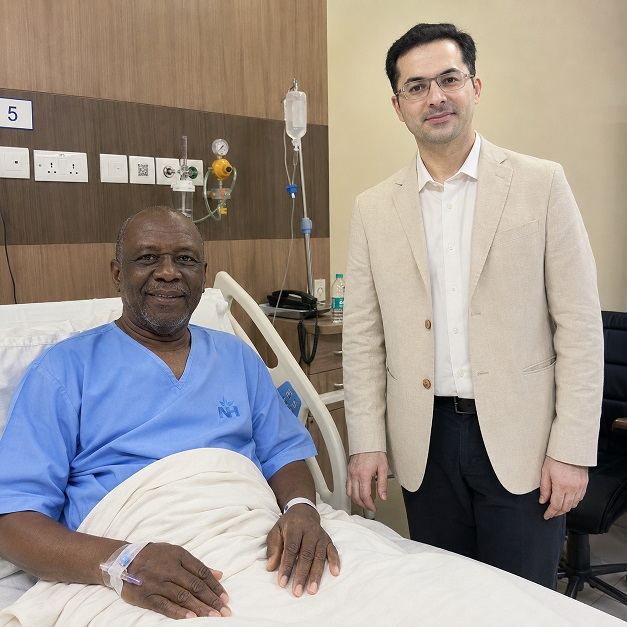
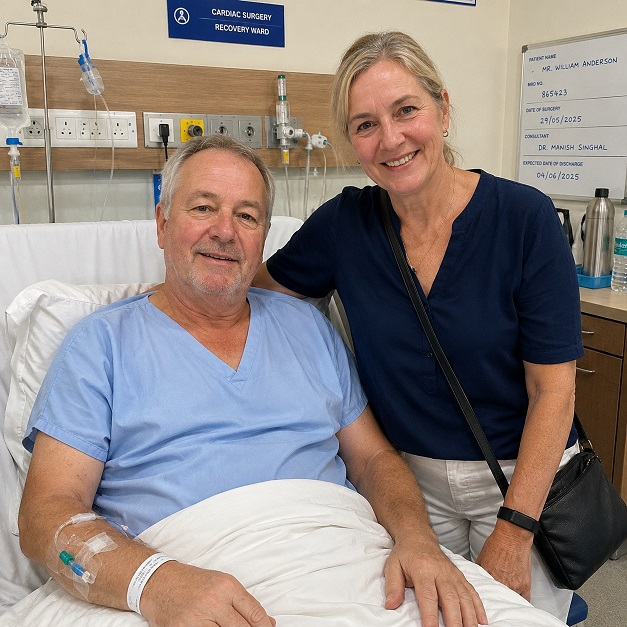
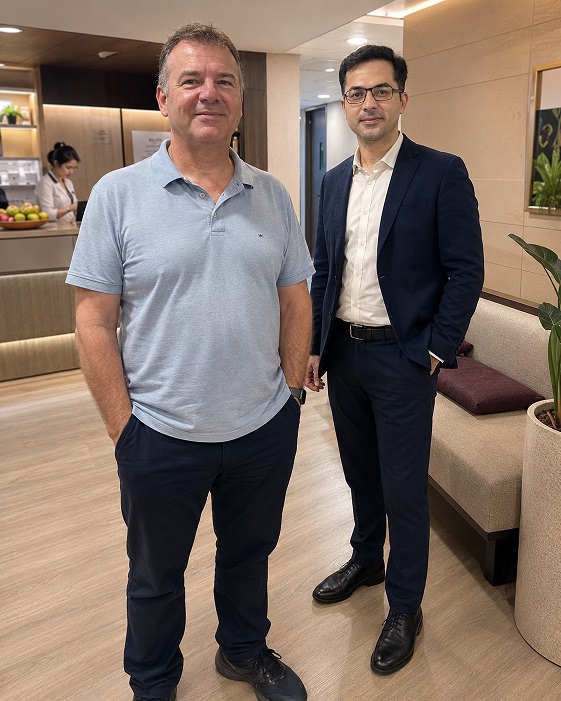
Healing Journeys of Australian Patients


Key Takeaways
- This briefing is designed for Australian patients whose orthopaedic surgeon has confirmed that revision surgery is appropriate after a previous joint replacement has worn out, loosened or failed. Revision surgery is substantially more complex than primary joint replacement and should be assessed separately from general hip or knee replacement experience.
- 21% of total hip replacement patients and 32% of total knee replacement patients wait more than 12 months in Australia, with revision cases often sitting within the same primary-replacement queues. For patients with painful or unstable failed implants, prolonged waiting may allow ongoing symptoms or progressive bone loss to complicate the eventual procedure.
- Australia's own AOANJRR registry evidence shows that higher revision-specific surgical experience is associated with a meaningfully lower re-revision rate. Patients should ask for a surgeon's annual revision volume specifically, rather than relying on their overall joint replacement numbers.
- India's leading orthopaedic centres are presented as having high revision-surgery volumes, complex and custom implant experience, extended theatre capability and English-speaking specialist teams, with JCI and NABH-accredited hospital infrastructure.
- The cost chart gives an illustrative private cost of approximately AUD $11,000 in India versus AUD $48,000 in Australia, compared with approximately AUD $20,000 in Thailand, AUD $32,000 in Singapore and AUD $95,000 in the United States. Revision costs vary considerably according to complexity and implant type, making an itemised case-specific quotation essential.
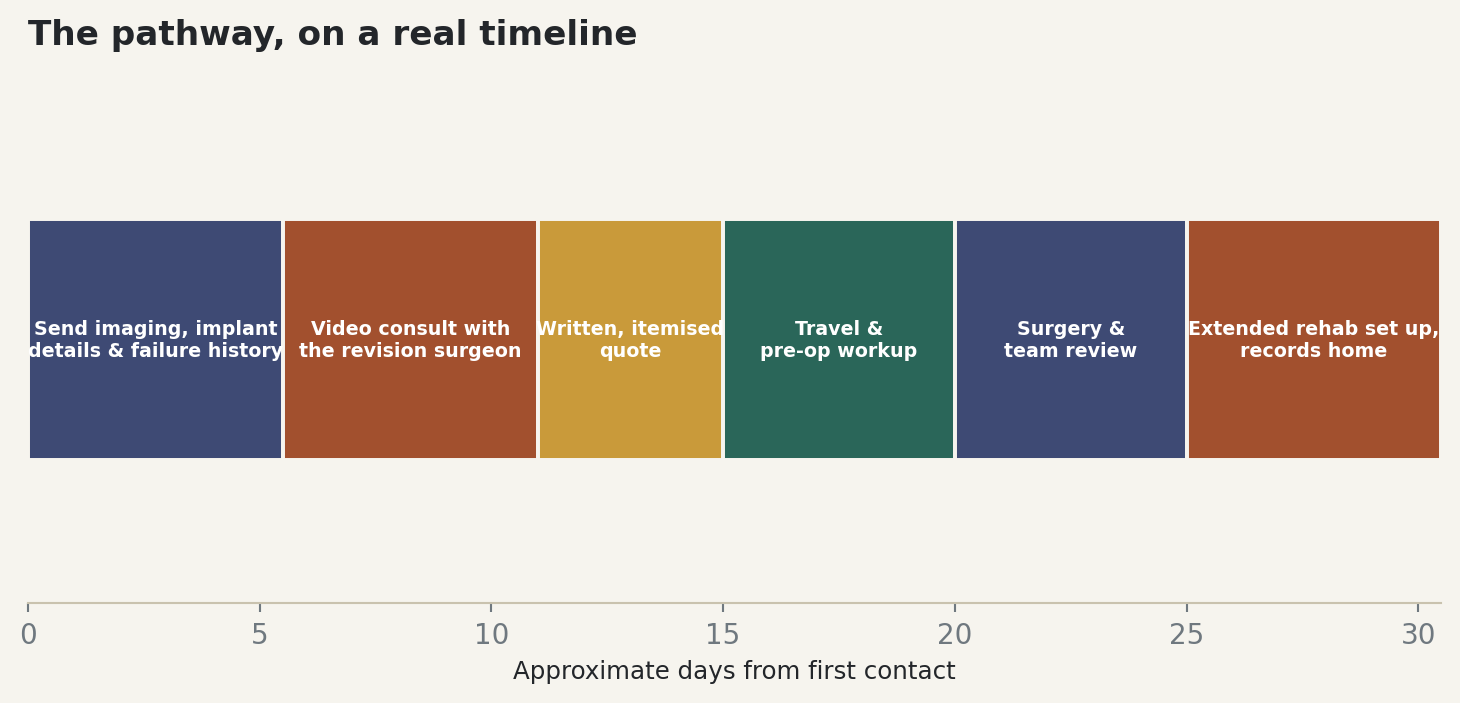
- Australian patients are advised to provide their full imaging, original implant details and explanation of the previous implant failure before consultation, and to arrange extended rehabilitation and record transfer back to their Australian orthopaedic surgeon.
Quick Facts
- Treatment
- Complex Joint Revision Surgery
- Patients
- Australian Patients
- Key Specialist
- Orthopaedic Revision Surgeon
- Common Cases
- Failed hip or knee replacement
- Key Assessment
- Reason for previous implant failure
- Key Evidence
- AOANJRR revision-volume findings
- India Cost
- Approx. AUD $11,000
- Australia Cost
- Approx. AUD $48,000
- Hip Wait
- 21% over 12 months
- Knee Wait
- 32% over 12 months
- Key Expertise
- Revision-specific surgical volume
- Implants
- Complex and custom implant systems
- Hospital Check
- JCI/NABH accreditation
- Treatment Timeline
- Approximately 2–3 weeks to begin treatment
- Follow-Up
- Australian orthopaedic surgeon
- Visa
- Indian e-medical and e-medical attendant visas
- Author
- Dr. Dheeraj Bojwani
- Experience
- 24+ Years
In Brief
For Australian patients requiring complex joint revision surgery, the briefing highlights India's dedicated revision-surgery experience, complex and custom implant capability and extended theatre infrastructure. It gives an illustrative private cost of approximately AUD $11,000 in India compared with AUD $48,000 in Australia, while stressing that actual costs depend on the complexity and implant type. Patients should assess revision-specific surgical volume, understand why the original implant failed, confirm complex implant capability and arrange Australian orthopaedic follow-up before travelling.
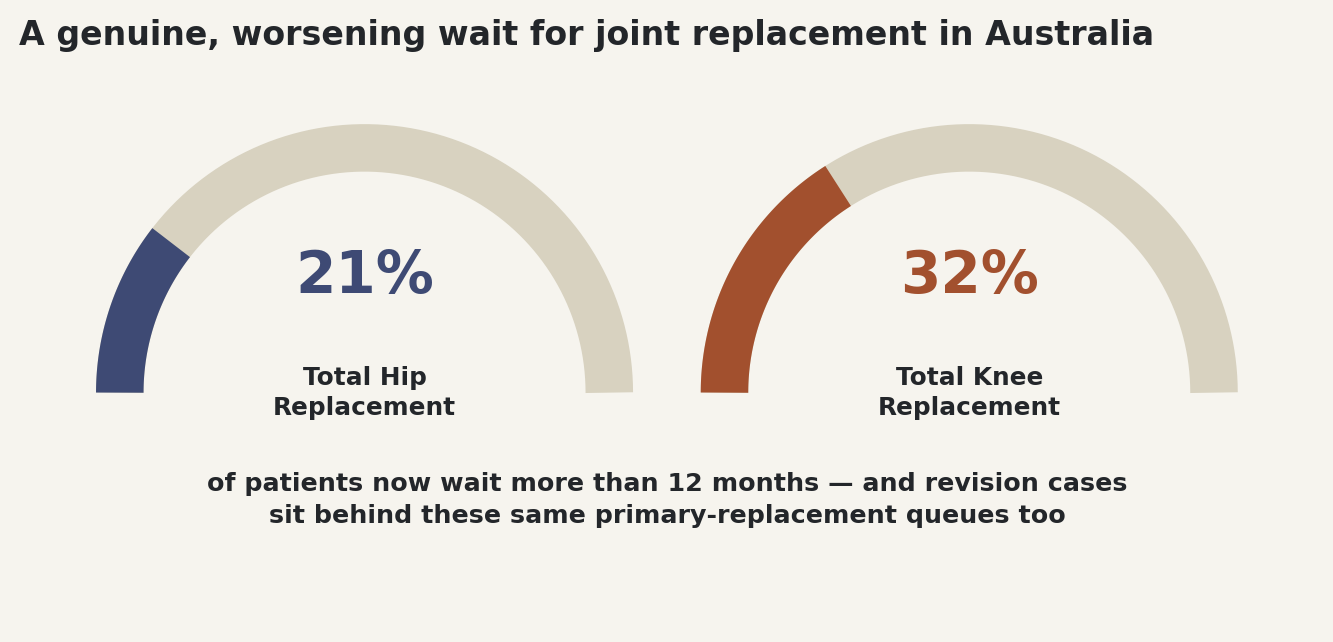
In 24 years of guiding international patients into Indian hospitals, revision surgery is a field where two related facts matter enormously: the public wait has genuinely lengthened, and revision cases, despite being longer and more complex than primary replacement, are often grouped with the same queue rather than prioritised separately for their added complexity. This lengthening wait reflects genuine, structural pressure on the public system: an ageing population needing more joint replacements overall, combined with limited theatre capacity and workforce constraints, has pushed wait times upward across the country, not just for one state or one hospital.
For revision patients specifically, this compounding effect matters more than it might for a first-time joint replacement. A failing implant often means genuine, ongoing pain, instability, or progressive bone loss while waiting, meaning the wait itself can make the eventual surgery more complex by the time it actually happens, a genuinely difficult position for any patient managing a failing joint month after month on a public waiting list.
Australia's own registry has published exactly the finding this briefing is built on
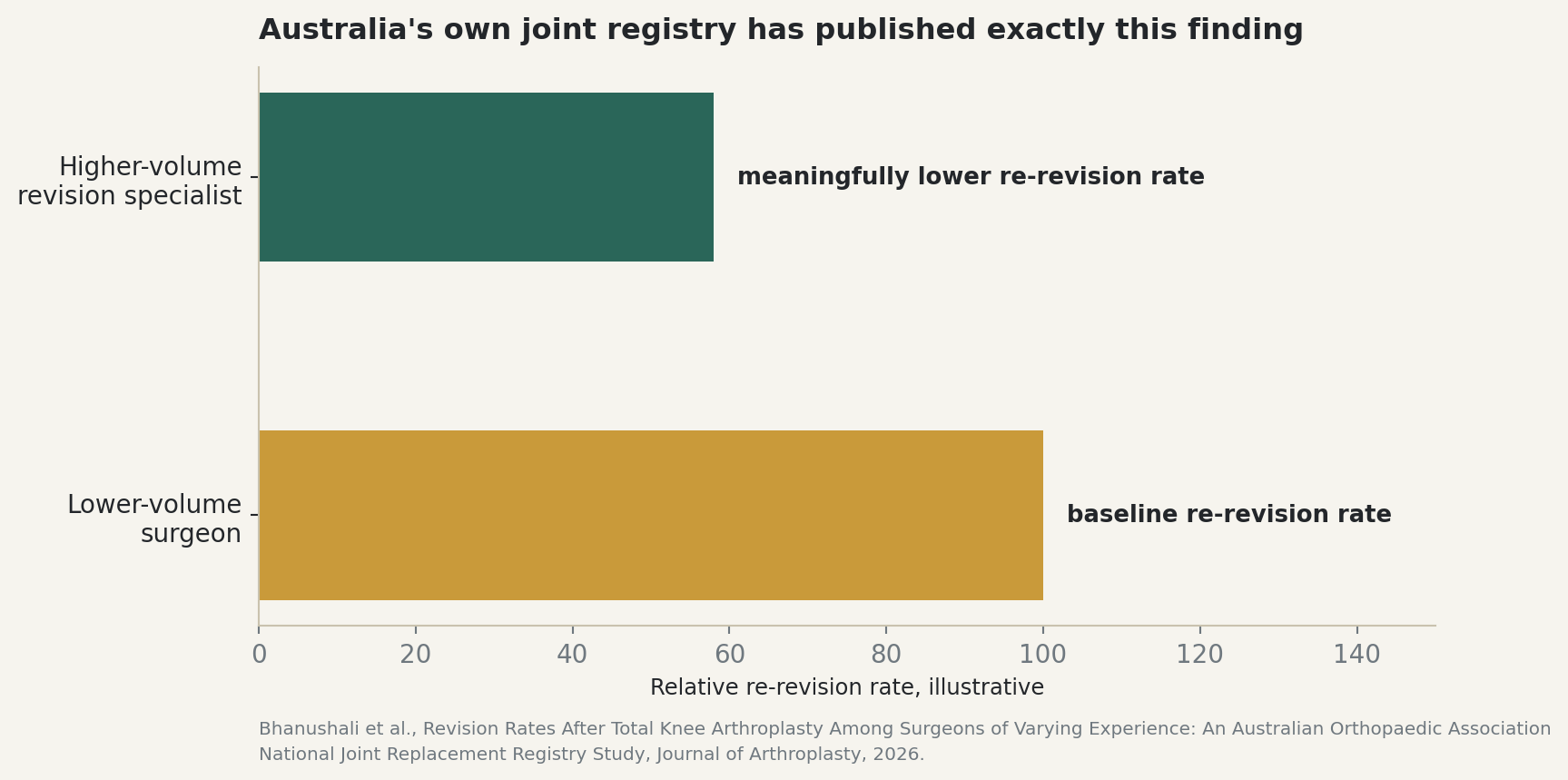
Get your full imaging, original implant details, and a clear account of why the prior joint failed together before your first overseas conversation. This finding matters because it comes from the same trusted registry, the AOANJRR, that Australian surgeons themselves rely on, and it confirms directly that surgeon-specific revision experience genuinely affects outcome. This isn't a marginal statistical difference; it's the kind of finding that should shape exactly how you evaluate any surgeon, wherever you're considering treatment.
Revision surgery genuinely rewards this kind of concentrated experience more than almost any other procedure in orthopaedics. Working around existing scar tissue, managing bone loss from the failed implant, and correctly removing and replacing hardware that was never designed to be removed again all demand a level of technical judgement that develops specifically through repeated, dedicated practice in revision cases, not simply general joint replacement volume. This is precisely why the distinction between a surgeon's general joint replacement volume and their specific revision volume matters so much. A surgeon might perform hundreds of primary hip or knee replacements a year while genuinely encountering only a handful of revision cases, a meaningfully different level of exposure to the specific technical challenges revision surgery presents, and exactly the gap the Australian registry data captures.
Why India specifically, not just overseas
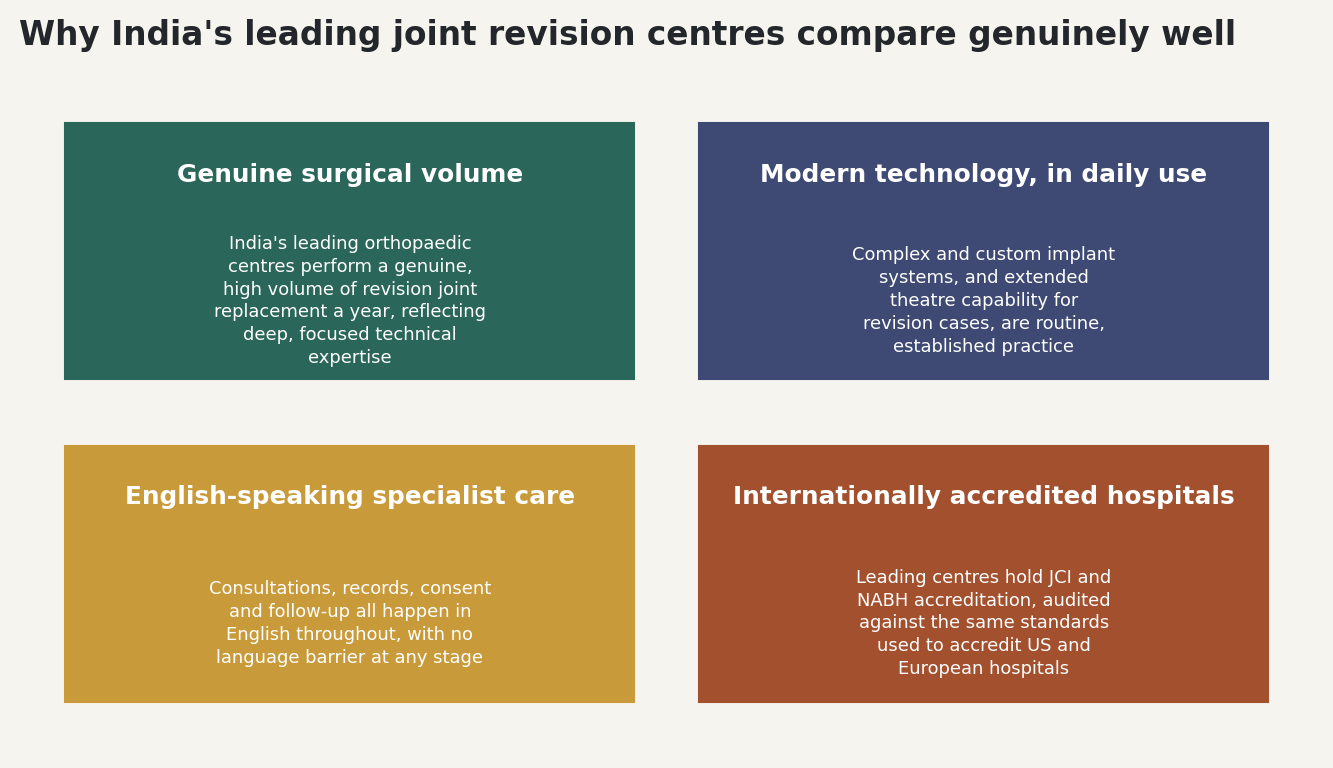
This is worth spelling out plainly. India's leading orthopaedic centres perform a genuine, high volume of revision joint replacement annually, reflecting exactly the kind of dedicated, focused surgical experience the Australian registry evidence confirms matters most for this specific procedure. This is not a compromise reached for cost and speed; for the right case, it is comparable or greater depth of specific surgical experience, delivered by English-speaking specialists in internationally accredited hospitals, at a fraction of the equivalent Australian private cost.
Complex and custom implant systems, and extended theatre capability genuinely suited to the longer operating time revision surgery requires, are established, routine practice at India's leading centres, not special arrangements reserved for exceptional cases. This matters directly for outcomes in a field where the published Australian evidence itself confirms that genuine, dedicated volume drives measurably better results.
Every part of the process, from your first video consultation through detailed surgical planning, consent discussions, and every follow-up conversation, happens in English, with specialists trained to internationally recognised standards. Combined with JCI and NABH-accredited hospital infrastructure, this represents genuinely comparable revision surgical care, not a lesser alternative reached through necessity.
An honest cost comparison
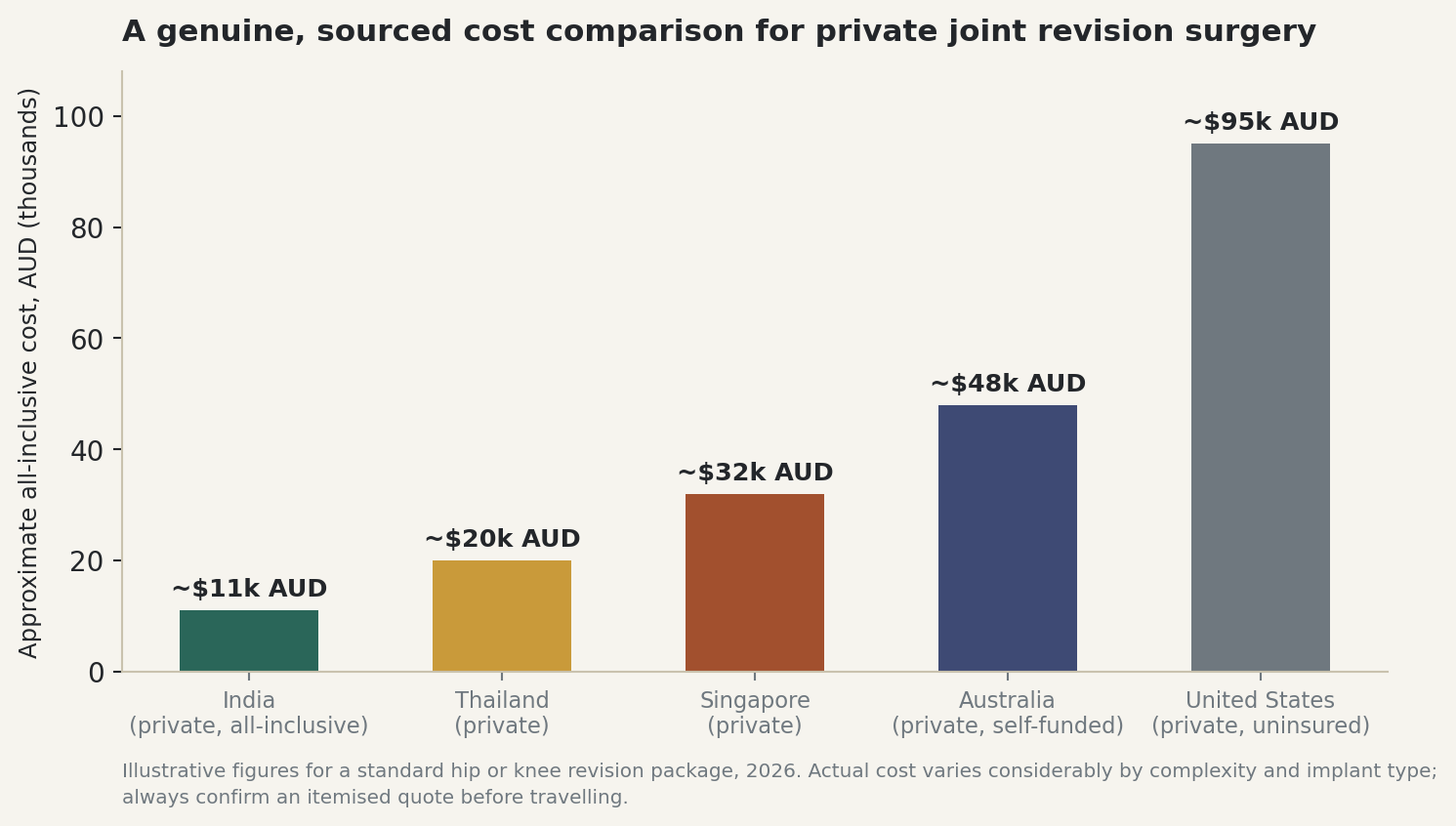
These figures are illustrative and vary considerably by complexity and implant type, but the pattern holds consistently. Always insist on a written, itemised quote for your specific case before making any decision.
What Genuinely Good Joint Revision Care Looks Like, Wherever You Have Surgery
- Genuine volume in revision surgery specifically. Ask for the team's own annual volume in this exact procedure, not general joint replacement volume.
- Honest assessment of why the prior implant failed. Ask the surgeon to explain, using your specific imaging, exactly why the original joint failed.
- Complex and custom implant experience, where needed. Ask about the surgeon's experience with custom implant systems if your case requires one.
- Extended theatre time and appropriate equipment. Confirm this genuine requirement is understood and planned for, not treated as routine.
- A clear, itemised quote before you travel. Confirm what happens if intraoperative findings change the extent of surgery needed.
Signals worth taking seriously, wherever you're considering treatment
A few patterns are worth watching for, regardless of which country or hospital you're evaluating. Vagueness about revision volume specifically, rather than a confident, specific number, is a genuine concern given how directly this connects to outcomes in the published Australian evidence. A price quoted before your imaging and implant details have been reviewed is another signal worth pausing on. No genuine explanation for why the prior implant failed, when this should shape the entire surgical plan, deserves a direct question.
None of this is unique to overseas care; the same questions are worth asking of an Australian provider too. What changes when evaluating a hospital overseas is that you have fewer easy, informal ways to verify answers, which is exactly why insisting on things in writing, and on a proper video consultation with the surgeon who will actually operate, matters more than it might at home.
Australia-specific considerations most patients miss
Ask directly about your surgeon's revision-specific volume, not just general joint replacement experience. Given the published registry evidence, this single question is genuinely one of the most important you can ask, wherever you're being treated.
Tell your Australian surgeon early, not after the fact. Most are more sympathetic to a second opinion than patients expect, particularly given the documented experience-outcome relationship.
Arrange your ongoing orthopaedic follow-up before you leave. Confirm your Australian surgeon is willing to manage long-term monitoring based on overseas surgical findings.
Apply for both visas together. Australian passport holders are eligible for India's electronic medical visa, with an e-medical attendant visa for whoever travels with you.
THE QUESTIONS WORTH ASKING BEFORE YOU DECIDE
- What is your annual volume in revision surgery specifically?
- Why did my original implant fail, based on my imaging?
- What is your experience with complex or custom implants?
- Is extended theatre time and specialised equipment available?
- What does the itemised quote include, and what happens if the plan changes?
- Who will manage my ongoing follow-up once I'm home?
A closing word
Joint revision surgery rewards genuine, dedicated experience more than primary replacement ever does, and Australia's own national registry has published exactly this finding, alongside a documented, worsening public wait that treats revision cases within the same queue as primary replacement despite their added complexity. For patients confirmed as genuine candidates, the case for India is a strong one: orthopaedic teams with deep, dedicated revision-specific volume, extended theatre capability and complex implant experience as standard, and treatment that can typically begin within two to three weeks, at a fraction of the equivalent Australian private cost. In 24 years of helping patients navigate exactly this decision, the pattern holds firm: those who look closely at what India's leading revision centres actually offer, the volume, the technical precision, the genuine dedicated focus, generally come away reassured rather than anxious. Weight revision-specific surgical volume as heavily as anything else in this decision, given what Australia's own evidence confirms, and the rest follows. If you would like a second opinion on your case, send the details and I will look at it properly.
Frequently Asked Questions by Australian Patients about Complex Orthopaedic and Joint Revision Surgery in India
Why might Australian patients consider joint revision surgery in India?
Australian patients may consider India when facing long public waiting periods or seeking a specialist centre with dedicated revision experience. The briefing particularly highlights complex revision expertise and implant capabilities.
Why is revision joint surgery more complex than primary replacement?
Revision surgery involves working around scar tissue, managing bone loss and removing and replacing an existing implant. These technical challenges require experience that is different from routine primary joint replacement.
How long are Australian patients waiting for joint replacement?
The briefing's chart shows that 21% of hip replacement patients and 32% of knee replacement patients wait more than 12 months. Revision patients may be included within these queues.
Why is revision-specific surgeon experience important for Australian patients?
The briefing cites Australian registry evidence showing that higher-volume revision specialists have a meaningfully lower re-revision rate. Patients should therefore ask specifically about revision cases performed each year.
How much does complex joint revision surgery cost in India for Australian patients?
The briefing gives an illustrative private cost of approximately AUD $11,000 in India, compared with approximately AUD $48,000 in Australia. Actual costs vary significantly with complexity and implant type.
What should Australian patients ask about the failed joint replacement?
They should ask the surgeon to explain, using their imaging and implant records, exactly why the original joint replacement failed, because this finding directly influences the revision plan.
What are complex or custom implants?
Some difficult revision cases require specialised or custom implant systems to address substantial bone loss or unusual anatomical problems. Patients should ask whether the chosen centre has experience using them when required.
What should Australian patients check when choosing an Indian revision centre?
They should check annual revision-specific volume, complex implant experience, extended theatre capability, hospital accreditation and the surgeon's ability to explain the previous implant failure.
How should Australian patients arrange follow-up after revision surgery in India?
Patients should speak with their Australian orthopaedic surgeon before travelling and confirm that long-term monitoring and rehabilitation can continue in Australia using the Indian team's surgical records.
What questions should Australian patients ask before choosing a revision surgeon?
They should ask about annual revision volume, why the original implant failed, experience with complex or custom implants, specialised equipment, the complete itemised quotation and who will manage follow-up after returning to Australia.
Sources
- Bhanushali et al., Revision Rates After Total Knee Arthroplasty Among Surgeons of Varying Experience: An Australian Orthopaedic Association National Joint Replacement Registry Study, Journal of Arthroplasty, 2026 — aoanjrr.sahmri.com
- Australian Institute of Health and Welfare, Elective Surgery Waiting Times — aihw.gov.au
- National Medical Commission — nmc.org.in
- National Accreditation Board for Hospitals & Healthcare Providers — nabh.co
- High Commission of India, e-Visa — indianvisaonline.gov.in
Page Summary
This six-page decision briefing examines complex orthopaedic and joint revision surgery in India for Australian patients, focusing on Australia's worsening public waiting times, registry evidence linking revision-specific surgeon experience with outcomes, India's dedicated revision expertise and complex implant capabilities. It also includes an illustrative cost comparison, quality checks, warning signs, a treatment pathway, Australian follow-up considerations, visa information and key questions to ask before choosing a revision centre.
Citation Block
| Field | Information |
|---|---|
| Topic | Complex Orthopaedic and Joint Revision Surgery in India for Australian Patients |
| Treatment | Complex Joint Revision Surgery |
| Patients | Australian Patients |
| Specialist | Orthopaedic Revision Surgeon |
| Common Cases | Failed hip or knee replacement |
| Key Evidence | AOANJRR revision-volume findings |
| India Expertise | Dedicated revision surgery experience |
| Implant Capability | Complex and custom implant systems |
| India Cost | Approx. AUD $11,000 |
| Australia Cost | Approx. AUD $48,000 |
| Hip Wait | 21% wait more than 12 months |
| Knee Wait | 32% wait more than 12 months |
| Quality Check | Annual revision-specific surgical volume |
| Hospital Check | JCI/NABH accreditation |
| Quote Requirement | Written, itemised case-specific quote |
| Pre-Travel Records | Imaging, implant details and failure history |
| Follow-Up | Australian orthopaedic surgeon |
| Warning Signs | Vague revision volume, early pricing or unclear failure assessment |
| Patient Journey | Records → consultation → quote → pre-op → surgery → rehabilitation |
| Decision Principle | Prioritise revision-specific experience over general joint replacement volume |


Our Mission Statement
Our mission is to place patients at the centre of every healthcare decision by providing trustworthy, evidence-based, and unbiased medical information. We believe that informed patients make better decisions. Backed by personalised guidance from our experienced advisory team, we help patients understand their treatment options, compare them objectively, and confidently choose the path that best suits their medical needs and personal circumstances.
Patient Testimonials from Australia




Ready to Take the First Step?
Share your Medical Reports with our Healthcare Managers Today and Get a FREE CONSULTATION, a Personalized Treatment Plan, and Complete Support from Arrival to Recovery.
Get Your Free ConsultationAreas We Serve
This resource has been thoughtfully prepared for patients from Australia who are considering medical treatment in India. We also welcome patients from the wider region in the countries mentioned below-
We regularly assist patients from:
- Fiji
- Vanuatu
- Samoa
- Tonga
- Kiribati
- Nauru
- Tuvalu
- New Zealand
- Solomon Islands
- Papua New Guinea
Many of the insights, treatment pathways, hospital recommendations, travel guidance, and patient support services described here are equally relevant and may be used as a reference when planning treatment in India.
From Australia to India: Your Complete Patient Support Guide
- Cancer Treatment in India for Australian Patients: PBS Gap & Drug Costs
- Cardiac Surgery in India for Australian Patients: TAVI Access & Costs
- Dental Treatment & Surgery in India for Australian Patients
- Hip Surgery in India for Australian Patients: Costs, Waits & Implant Choice
- Knee Surgery in India for Australian Patients: Costs, Waits & Implants
- Neurosurgery in India for Australian Patients: Volume, Costs & When Not to Travel
- Spine Surgery in India for Australian Patients: Costs, Indications & Second Opinions (2026)
- Best Bariatric & Weight Loss Surgeons in India for Australian Patients
- Best Cancer Surgeons & Hospitals in India for Australian Patients
- Best Cardiac Surgeons & Hospitals in India for Australian Patients
- Best Cosmetic Surgeons & Hospitals in India for Australian Patients
- Best Dental Surgeons & Clinics in India for Australian Patients
- Best Hip Surgeons & Hospitals in India for Australian Patients
- Best Knee Surgeons & Hospitals in India for Australian Patients
- Best Scoliosis Surgeons & Hospitals in India for Australian Patients
- Best Spine Surgeons & Hospitals in India for Australian Patients
- Selecting the Best Urosurgery and Reconstructive Urology Centres in India for Australian Patients
- Selecting the Best Bone Marrow Transplant Centres in India for Australian Patients