

Heart Failure Treatment and Surgery in India: A Decision Briefing for Australian Patients
A genuine, well-documented “revolving door” pattern in Australian heart failure care, and why India's leading cardiac centres offer a credible, well-evidenced path to breaking it.
Heart failure is a genuinely serious, progressive condition, and Australia's own research paints an honest, sobering picture of how often the standard pathway of medication and repeated hospitalisation actually plays out for patients. This briefing sets out that evidence clearly, alongside a genuine, recent policy improvement, and why India's leading cardiac centres are a credible option for patients who need more than medication alone. It's worth being precise about who this is for. Many heart failure patients are managed well with medication and lifestyle changes, and this briefing isn't written to suggest otherwise. It's written for patients whose Australian cardiology team has confirmed they need surgical or device-based treatment beyond medication alone, weighing where that treatment should happen.
Healing Journeys of Australian Patients


Key Takeaways
- The briefing is intended for Australian patients whose cardiology team has confirmed that they require surgical or device-based treatment beyond medication alone. It highlights Australia's documented pattern of repeated heart failure hospitalisations, with 61.3% experiencing an unplanned readmission within two years after their first admission.
- Repeated readmissions are associated with substantially higher mortality risk. Patients with one readmission have approximately 2.5 times the mortality risk, while those with two or more readmissions face approximately five times the risk compared with patients without readmission.
- A significant development is the recognition of LVAD as destination therapy from 1 March 2026, providing a genuine long-term treatment option for selected patients who are not eligible for heart transplantation. India's leading cardiac centres are presented as having established LVAD and heart-transplant experience, including magnetically levitated LVAD technology and dedicated heart-failure monitoring programmes.
- The cost chart gives an illustrative private cost of approximately AUD $16,000 in India versus AUD $65,000 in Australia for a standard LVAD implantation package. Costs vary considerably according to device type and ICU stay, so patients are advised to obtain a written, itemised quotation for their individual case.
- The briefing recommends checking the team's annual LVAD and transplant volume, complication and survival data, long-term device monitoring programme and connection with the patient's Australian cardiologist. It also warns against centres that recommend only one pathway, quote a price before reviewing clinical data or lack a structured long-term LVAD monitoring plan.
- Australian patients are advised to involve their cardiology team early and arrange continuing cardiac care before travelling.
Quick Facts
- Treatment
- Advanced Heart Failure Treatment
- Patients
- Australian Patients
- Key Specialists
- Cardiologist / Cardiac Surgeon
- Main Options
- LVAD and Heart Transplant
- Australian Readmission
- 61.3% within two years
- Repeated Risk
- 5× mortality risk with 2+ readmissions
- LVAD Status
- Recognised as destination therapy from March 2026
- India Cost
- Approx. AUD $16,000
- Australia Cost
- Approx. AUD $65,000
- Key Technology
- Magnetically levitated LVAD
- Quality Check
- Procedure-specific annual volume
- Outcome Check
- Complication and survival data
- Monitoring
- Long-term LVAD management programme
- Hospital Check
- JCI/NABH accreditation
- Follow-Up
- Australian cardiologist
- Visa
- Indian e-medical and e-medical attendant visas
- Author
- Dr. Dheeraj Bojwani
- Experience
- 24+ Years
In Brief
For Australian patients with advanced heart failure who have been advised to consider LVAD or transplant, the briefing highlights India's established experience with advanced heart failure surgery and long-term LVAD management. It gives an illustrative cost of approximately AUD $16,000 in India compared with AUD $65,000 in Australia for a standard LVAD implantation package. Patients should verify the appropriate treatment pathway, procedure-specific volume, outcome data, long-term monitoring arrangements and follow-up with their Australian cardiologist before travelling.
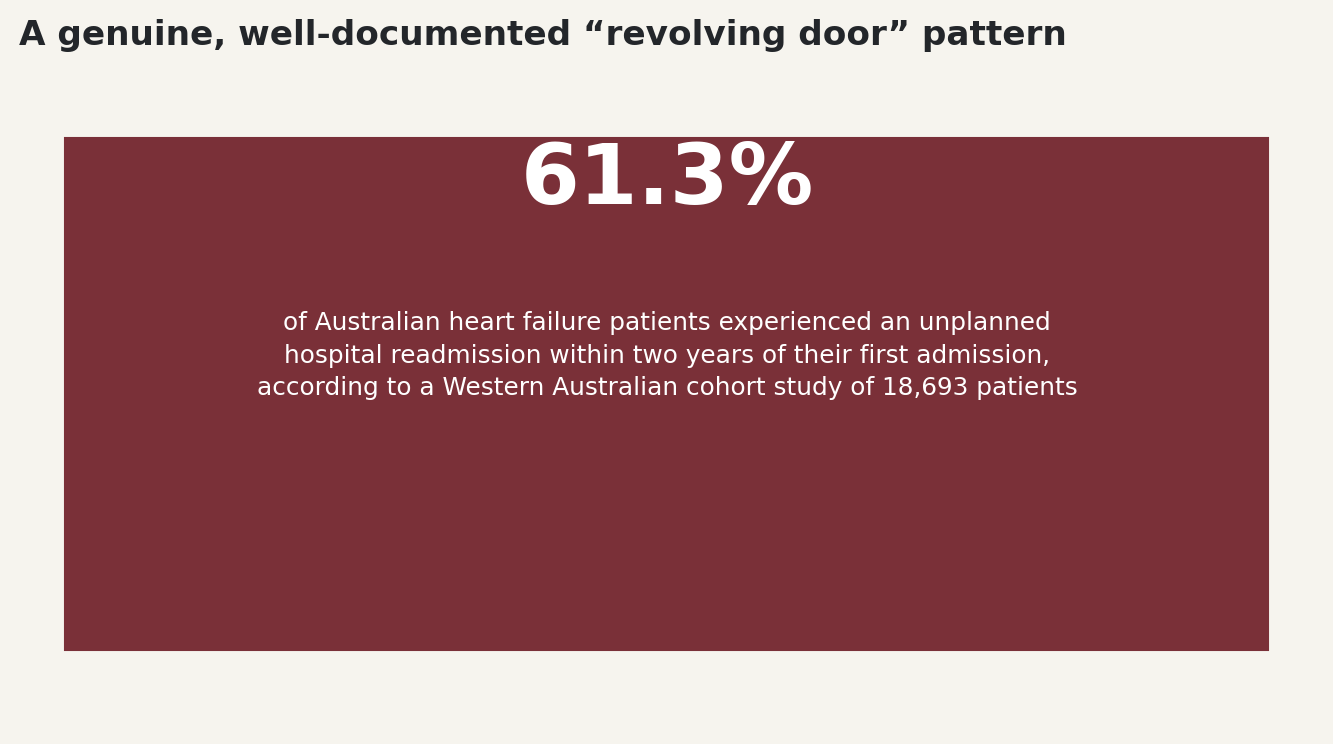
In 24 years of guiding international patients into Indian hospitals, this finding is genuinely sobering, and it comes from a rigorous, long-running Australian dataset, not an isolated or unusual result. Nearly two in three patients who survive their first heart failure hospitalisation end up back in hospital, unplanned, within two years. This isn't a minor inconvenience; it reflects the genuine, progressive nature of advanced heart failure when treatment doesn't move beyond medication management alone. The same Western Australian study, drawing on hospitalisation records spanning 2001 to 2015, found all-cause death occurred in 27.2% of the entire cohort, and that heart failure itself was the single leading cause of readmission, responsible for nearly a fifth of all unplanned returns to hospital. This is precisely the pattern that describes a condition still being managed reactively, treating each crisis as it arrives, rather than being addressed with a definitive intervention that changes the underlying trajectory.
This pattern isn't unique to Western Australia; a separate national systematic review and meta-analysis pooling data across the country found broadly consistent figures, a 20% readmission rate within 30 days and 56% within a year, confirming this is a genuine, structural feature of how advanced heart failure care plays out nationally, not an artefact of one state's data.
Each readmission genuinely, measurably raises the stakes
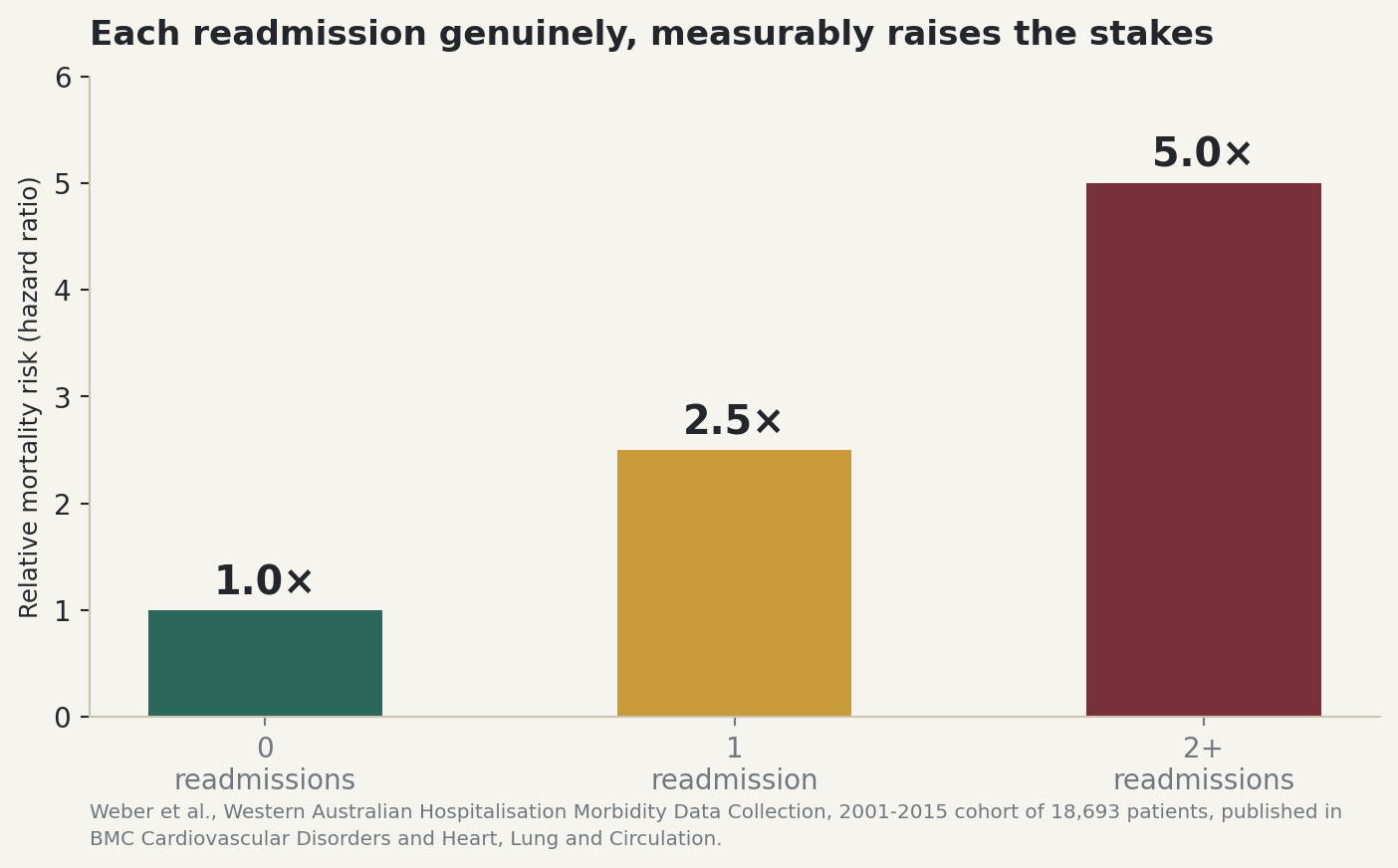
Get your full echocardiogram, catheterisation data and treatment history together before your first overseas conversation. This mortality data matters because it reframes the entire decision: the "revolving door" pattern of admission, discharge, and readmission isn't a neutral holding pattern while waiting for the next step; each cycle through it carries genuine, measurable additional risk. A patient with two or more readmissions faces five times the mortality risk of a patient who never returns to hospital at all. This is exactly the kind of finding that should shift how a patient and their family think about timing: waiting to see how things go with medication alone, while sometimes the right choice, carries a genuine, quantified cost if the underlying disease continues progressing through repeated hospitalisations rather than being addressed directly.
A genuine, positive expansion worth knowing about
From 1 March 2026, Medicare Benefits Schedule item 38620 formally recognised left ventricular assist devices, LVADs, as destination therapy, a genuine long-term treatment option for patients not eligible for heart transplantation, rather than only a temporary bridge while awaiting a donor organ. This matters because it reframes LVAD from a stopgap into a genuine, standalone treatment path in its own right, for the many patients who were never going to reach transplant given how constrained donor availability genuinely is in Australia.
Why India specifically, not just overseas
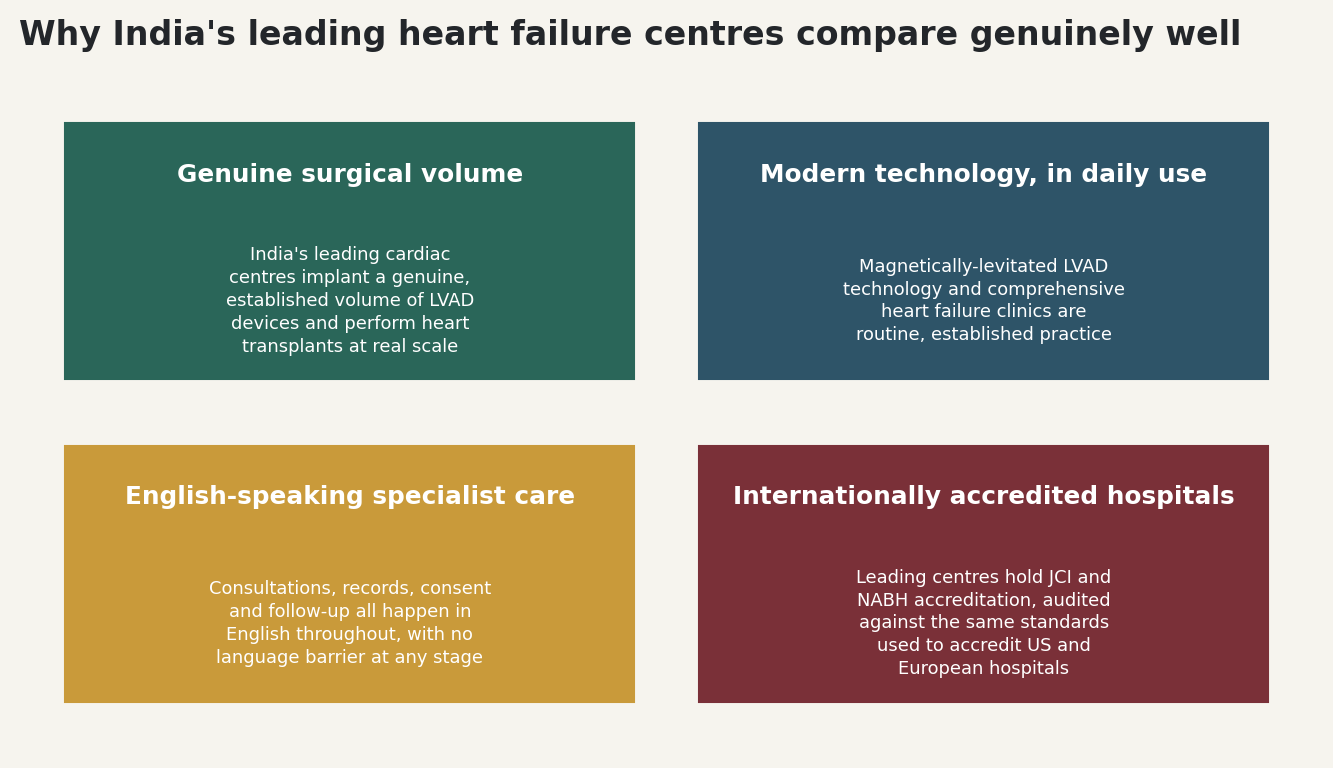
This is worth spelling out plainly. India's leading cardiac centres implant a genuine, established volume of LVAD devices and perform heart transplant surgery at real scale, reflecting deep, current experience with exactly the kind of advanced heart failure intervention that can break the readmission cycle the Australian data describes. This is not a compromise reached for cost and speed; for the right case, it is comparable or greater depth of specific experience, delivered by English-speaking specialists in internationally accredited hospitals, at a fraction of the equivalent Australian private cost.
Magnetically-levitated LVAD technology, and comprehensive, dedicated heart failure clinics for ongoing device management, are established, routine practice at India's leading centres. This matters directly for reducing exactly the kind of unplanned readmission the Australian research documents, since consistent, structured long-term monitoring is central to keeping LVAD patients stable and out of hospital.
Every part of the process, from your first video consultation through detailed treatment planning, consent discussions, and every follow-up conversation, happens in English, with specialists trained to internationally recognised standards. Combined with JCI and NABH-accredited hospital infrastructure, this represents genuinely comparable advanced heart failure care, not a lesser alternative reached through necessity.
An honest cost comparison
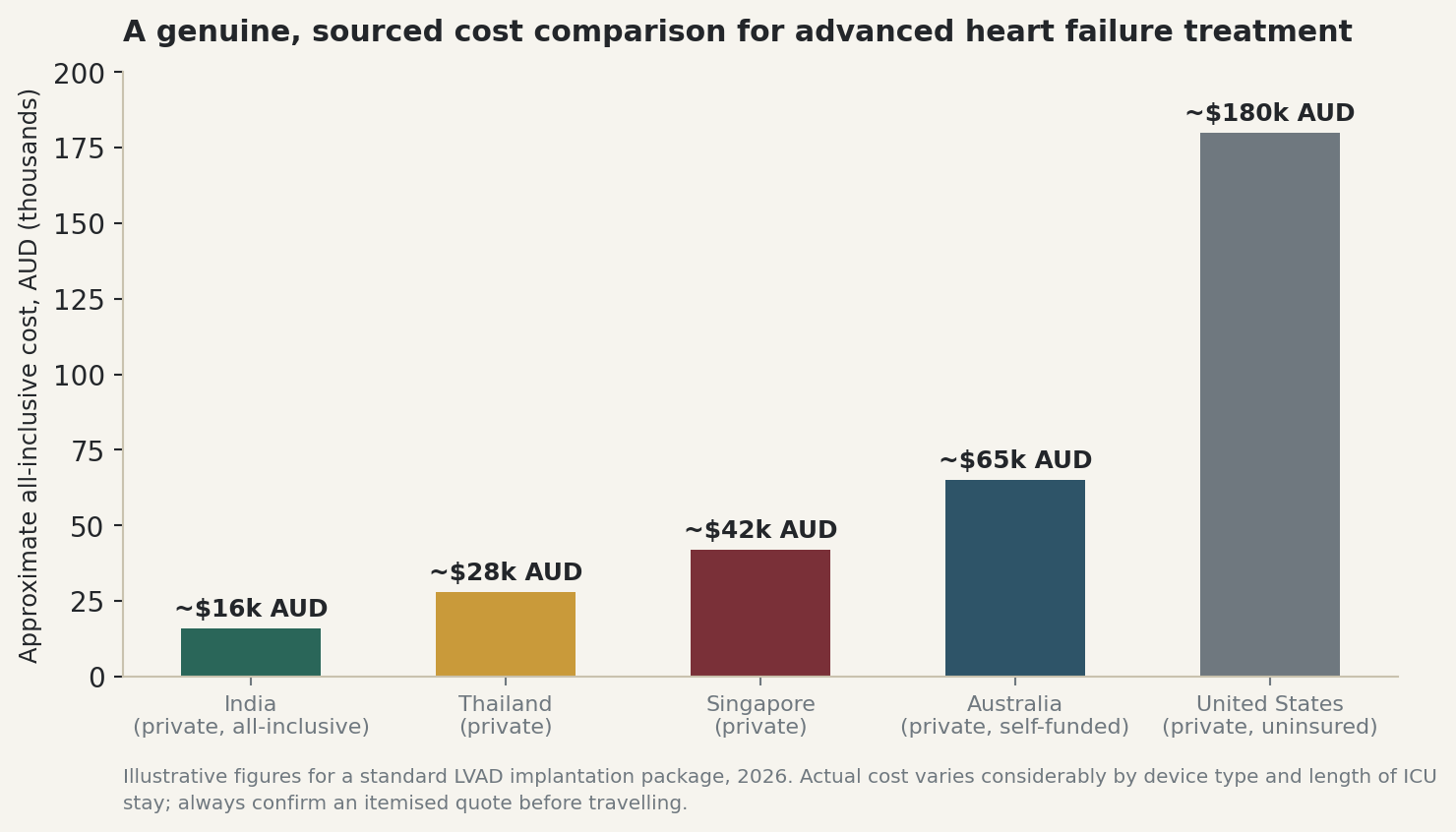
These figures are illustrative and vary considerably by device type and length of ICU stay, but the pattern holds consistently. Always insist on a written, itemised quote for your specific case before making any decision.
What Genuinely Good Heart Failure Care Looks Like, Wherever You Have Treatment
- Honest LVAD-versus-transplant candidacy judgement. Ask directly why a specific pathway is being recommended for your case, based on your own clinical profile.
- Genuine volume in advanced heart failure surgery. Ask for the team's specific annual volume in LVAD implantation and, where relevant, heart transplant.
- A structured, long-term device monitoring programme. Ask exactly how ongoing monitoring will connect back to your Australian cardiologist.
- Candid complication and survival data. Ask for the team's own outcome data for your specific procedure.
- A clear, itemised quote before you travel. Confirm what's included in ongoing follow-up.
Signals worth taking seriously, wherever you're considering treatment
A few patterns are worth watching for, regardless of which country or hospital you're evaluating. Only one pathway offered, without discussing the alternative, deserves a direct question in return. A price quoted before your echo and catheterisation data have been reviewed is another signal worth pausing on. No long-term device monitoring plan for LVAD specifically is a genuine, serious concern given how directly this connects to preventing exactly the readmission cycle described above.
None of this is unique to overseas care; the same questions are worth asking of an Australian provider too. What changes when evaluating a hospital overseas is that you have fewer easy, informal ways to verify answers, which is exactly why insisting on things in writing, and on a proper video consultation with the team who will actually treat you, matters more than it might at home.
Australia-specific considerations most patients miss
Tell your Australian cardiology team early, not after the fact. Most are more sympathetic to exploring every option than patients expect, particularly given the genuine donor constraint for transplant.
Arrange your ongoing cardiac care before you leave. Confirm your Australian cardiologist is willing to manage long-term monitoring, including LVAD device management, based on overseas treatment.
Apply for both visas together. Australian passport holders are eligible for India's electronic medical visa, with an e-medical attendant visa for whoever travels with you.
THE QUESTIONS WORTH ASKING BEFORE YOU DECIDE
- Why LVAD or transplant, specifically, for my case?
- What is your annual volume in this specific procedure?
- Will you personally be involved in my care?
- What is your complication and survival data?
- What long-term device monitoring is arranged, and how does it connect to my Australian cardiologist?
- What does the itemised quote include?
A closing word
Advanced heart failure care in Australia carries a genuine, well-documented "revolving door" risk, with nearly two in three patients readmitted within two years, and each readmission measurably raising mortality risk. LVAD's recognition as destination therapy offers a real, positive step forward for many patients who were never going to reach transplant. For patients confirmed as genuine candidates, the case for India is a strong one: cardiac teams with deep, current experience in exactly this intervention, structured long-term monitoring as standard, and treatment that can typically begin within two to three weeks, at a fraction of the equivalent Australian private cost. In 24 years of helping patients navigate exactly this decision, the pattern holds firm: those who look closely at what India's leading heart failure centres actually offer, the volume, the structured follow-up, the genuine device expertise, generally come away reassured rather than anxious. Confirm which pathway genuinely suits your case, weight the team's specific volume and monitoring programme heavily, and the rest follows. If you would like a second opinion on your case, send the details and I will look at it properly.
Frequently Asked Questions by Australian Patients about Heart Failure Treatment and Surgery in India
Why might Australian patients consider advanced heart failure treatment in India?
Australian patients may consider India when their cardiology team has confirmed that medication alone is no longer sufficient and a device-based or surgical treatment such as LVAD or transplant needs to be evaluated.
How common are hospital readmissions among Australian heart failure patients?
The briefing reports that 61.3% of patients experienced an unplanned hospital readmission within two years of their first heart failure admission, based on the Western Australian cohort discussed in the document.
Why are repeated heart failure hospitalisations important?
The briefing reports that mortality risk rises with repeated readmissions. Patients with two or more readmissions had approximately five times the mortality risk of patients without readmission in the cited study.
What is LVAD destination therapy?
LVAD destination therapy is a long-term treatment pathway for selected advanced heart failure patients who are not eligible for heart transplantation. The briefing notes that this was formally recognised under the Medicare Benefits Schedule from 1 March 2026.
Can Australian patients consider both LVAD and heart transplantation?
Yes. The briefing recommends asking why LVAD or transplant specifically is appropriate for the individual patient rather than assuming one pathway is automatically preferable.
How much does LVAD treatment cost in India for Australian patients?
The briefing gives an illustrative private cost of approximately AUD $16,000 in India, compared with approximately AUD $65,000 in Australia for a standard LVAD implantation package. Actual costs vary by device and ICU stay.
What should Australian patients check about an Indian LVAD centre?
They should ask about the team's specific annual LVAD implantation volume, complication and survival data, device technology and long-term monitoring programme.
Why is long-term LVAD monitoring important for Australian patients?
LVAD patients require ongoing device management and monitoring. Australian patients should confirm before travelling how this care will continue and how the Indian team will communicate with their Australian cardiologist.
What are warning signs when choosing a heart failure centre?
Patients should question a centre that presents only one treatment pathway, provides pricing before reviewing echocardiogram and catheterisation data or cannot explain its long-term LVAD monitoring arrangements.
What should Australian patients ask before choosing an advanced heart failure centre in India?
They should ask why LVAD or transplant is recommended, the team's annual procedure volume, whether the treating specialist will personally manage their case, complication and survival outcomes, long-term device monitoring arrangements and exactly what the itemised quotation includes.
Sources
- Weber et al., Unplanned 30-Day Readmissions and Long-Term Mortality Risk After Incident Heart Failure Hospitalisation in Western Australia, 2001-2015, Heart, Lung and Circulation, 2023 — doi.org/10.1016/j.hlc.2023.03.003
- Haematology Republic, LVAD Is a New Long-Term Destination for Advanced Heart Failure Care, 2026 — bloodrepublic.com.au
- National Medical Commission — nmc.org.in
- National Accreditation Board for Hospitals & Healthcare Providers — nabh.co
- High Commission of India, e-Visa — indianvisaonline.gov.in
Page Summary
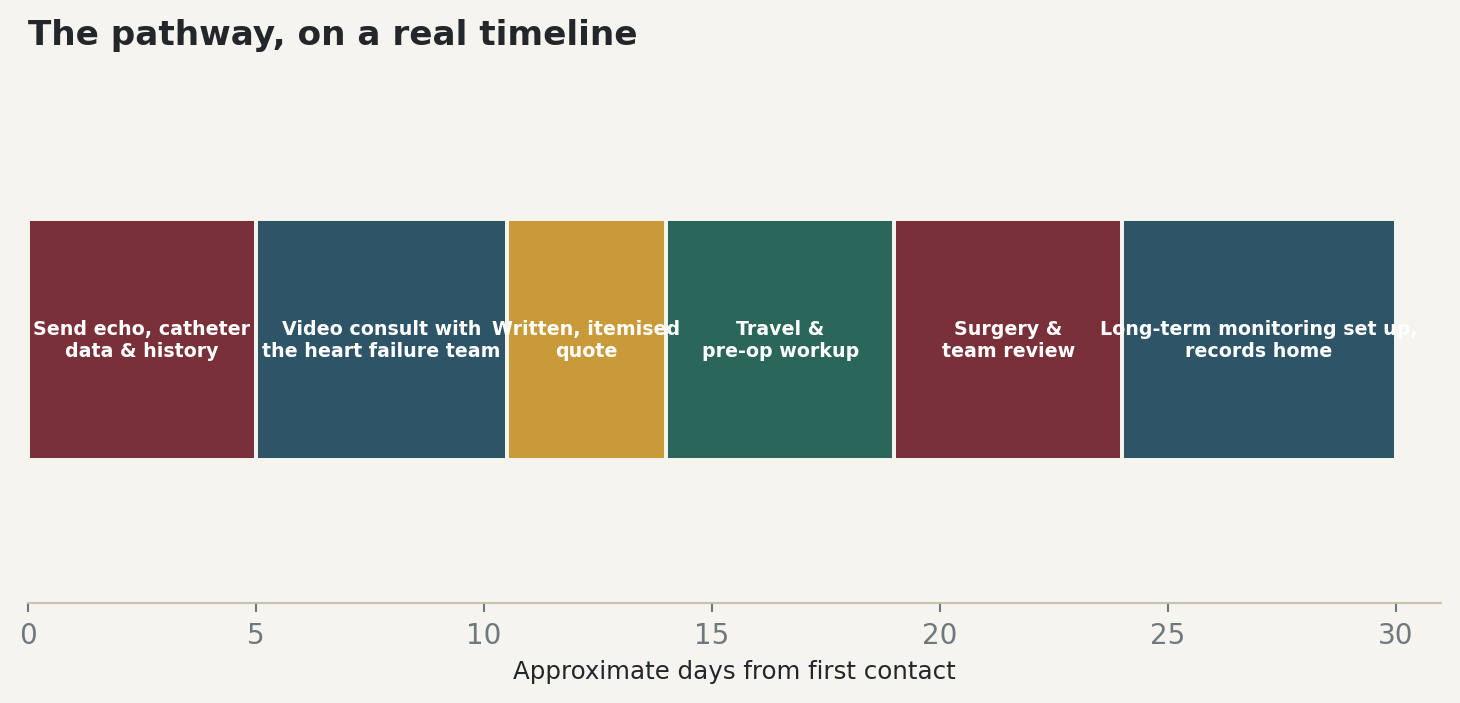
This six-page decision briefing examines advanced heart failure treatment and surgery in India for Australian patients, focusing on Australia's documented readmission burden, the increased mortality risk associated with repeated hospitalisations, the 2026 recognition of LVAD as destination therapy and India's established experience with LVAD implantation and heart transplantation. It includes an illustrative India-versus-Australia cost comparison, treatment-quality checks, warning signs, a practical treatment timeline, long-term monitoring requirements, Australian follow-up considerations, visa information and key questions patients should ask before choosing an advanced heart failure centre.
Citation Block
| Field | Information |
|---|---|
| Topic | Heart Failure Treatment and Surgery in India for Australian Patients |
| Treatment | Advanced Heart Failure Treatment |
| Patients | Australian Patients |
| Specialists | Cardiologist / Cardiac Surgeon |
| Main Options | LVAD / Heart Transplant |
| Readmission Rate | 61.3% within two years |
| Mortality Risk | 5× with 2+ readmissions |
| LVAD Status | Destination therapy recognised from March 2026 |
| India Expertise | Established LVAD and heart-transplant experience |
| Key Technology | Magnetically levitated LVAD |
| India Cost | Approx. AUD $16,000 |
| Australia Cost | Approx. AUD $65,000 |
| Quality Check | Specific annual LVAD / transplant volume |
| Outcome Check | Complication and survival data |
| Monitoring Check | Structured long-term LVAD monitoring |
| Hospital Check | JCI/NABH accreditation |
| Quote Requirement | Written, itemised quotation |
| Follow-Up | Australian cardiologist |
| Warning Signs | One pathway only, early pricing or no long-term LVAD monitoring plan |
| Patient Journey | Cardiac records → consultation → quote → pre-op → surgery → monitoring → Australian follow-up |
| Decision Principle | Choose the treatment pathway and centre based on clinical suitability, expertise and long-term support rather than cost alone |


Our Mission Statement
Our mission is to place patients at the centre of every healthcare decision by providing trustworthy, evidence-based, and unbiased medical information. We believe that informed patients make better decisions. Backed by personalised guidance from our experienced advisory team, we help patients understand their treatment options, compare them objectively, and confidently choose the path that best suits their medical needs and personal circumstances.
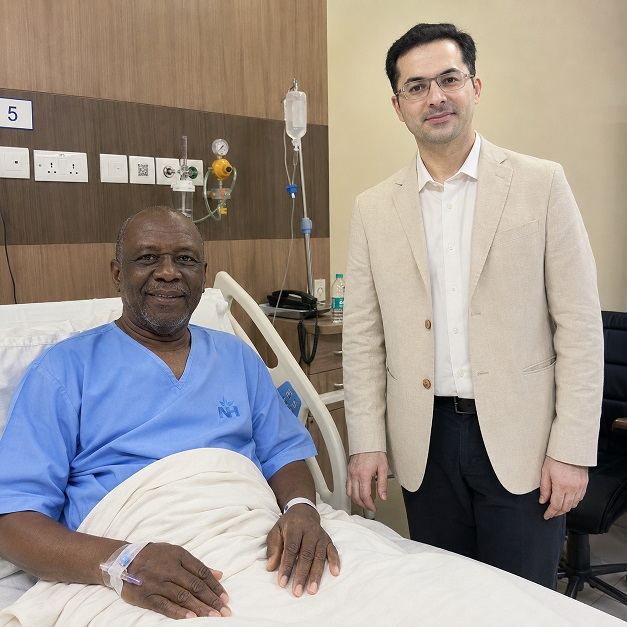
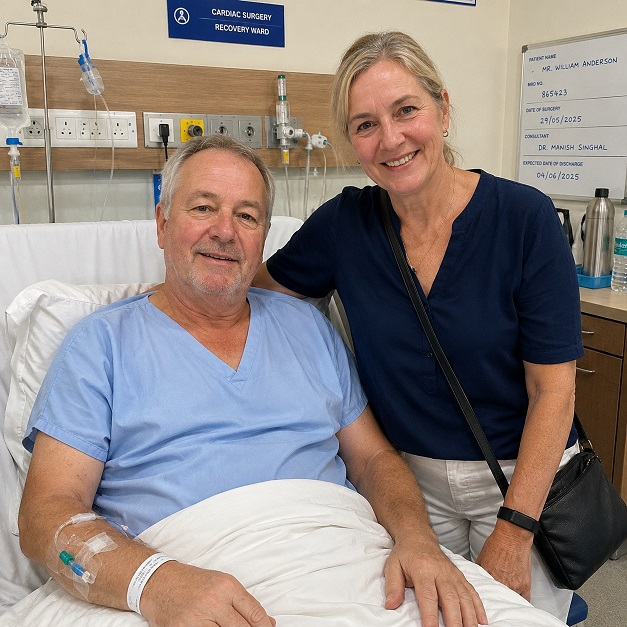
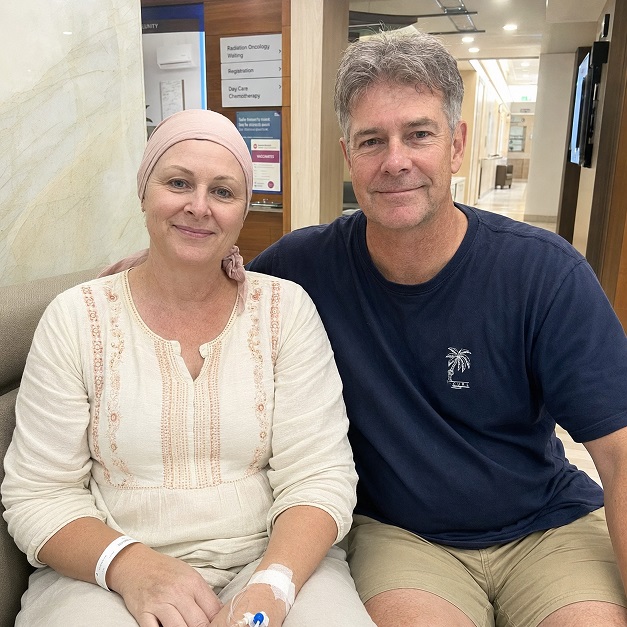
Patient Testimonials from Australia




Ready to Take the First Step?
Share your Medical Reports with our Healthcare Managers Today and Get a FREE CONSULTATION, a Personalized Treatment Plan, and Complete Support from Arrival to Recovery.
Get Your Free ConsultationAreas We Serve
This resource has been thoughtfully prepared for patients from Australia who are considering medical treatment in India. We also welcome patients from the wider region in the countries mentioned below-
We regularly assist patients from:
- Fiji
- Vanuatu
- Samoa
- Tonga
- Kiribati
- Nauru
- Tuvalu
- New Zealand
- Solomon Islands
- Papua New Guinea
Many of the insights, treatment pathways, hospital recommendations, travel guidance, and patient support services described here are equally relevant and may be used as a reference when planning treatment in India.
From Australia to India: Your Complete Patient Support Guide
- Cancer Treatment in India for Australian Patients: PBS Gap & Drug Costs
- Cardiac Surgery in India for Australian Patients: TAVI Access & Costs
- Dental Treatment & Surgery in India for Australian Patients
- Hip Surgery in India for Australian Patients: Costs, Waits & Implant Choice
- Knee Surgery in India for Australian Patients: Costs, Waits & Implants
- Neurosurgery in India for Australian Patients: Volume, Costs & When Not to Travel
- Spine Surgery in India for Australian Patients: Costs, Indications & Second Opinions (2026)
- Best Bariatric & Weight Loss Surgeons in India for Australian Patients
- Best Cancer Surgeons & Hospitals in India for Australian Patients
- Best Cardiac Surgeons & Hospitals in India for Australian Patients
- Best Cosmetic Surgeons & Hospitals in India for Australian Patients
- Best Dental Surgeons & Clinics in India for Australian Patients
- Best Hip Surgeons & Hospitals in India for Australian Patients
- Best Knee Surgeons & Hospitals in India for Australian Patients
- Best Scoliosis Surgeons & Hospitals in India for Australian Patients
- Best Spine Surgeons & Hospitals in India for Australian Patients
- Selecting the Best Urosurgery and Reconstructive Urology Centres in India for Australian Patients
- Selecting the Best Bone Marrow Transplant Centres in India for Australian Patients