

Neuronavigation and Advanced Brain Surgery in India: A Decision Briefing for Australian Patients
A genuinely rare technology even in Australia's largest states, a landmark finding on exactly why it matters, and why India's leading neurosurgical centres offer a credible, well-evidenced alternative.
Intraoperative MRI and advanced neuronavigation have genuinely transformed what's achievable in brain tumour surgery, allowing surgeons to see, in real time, exactly how much tumour remains before closing. This briefing sets out an honest picture of how rare access to this specific technology remains in Australia, alongside the landmark evidence for why it matters so much, and why India's leading centres are a credible option. It's worth being precise about who this is for. Standard neuronavigation without intraoperative imaging remains genuinely good care for many brain tumour cases, and this briefing isn't written to suggest otherwise. It's written for patients whose neurosurgeon has identified a tumour where maximal, precise resection genuinely matters most, weighing where that surgery should happen.
Healing Journeys of Australian Patients


Key Takeaways
- The briefing explains that intraoperative MRI and advanced neuronavigation can provide real-time imaging during brain tumour surgery, helping surgeons identify residual tumour before closing. It is specifically intended for patients whose neurosurgeon believes maximal and precise tumour resection is clinically important; standard neuronavigation remains appropriate for many cases.
- The briefing highlights the limited availability of intraoperative MRI in Australia. New South Wales has one hospital offering the technology for brain surgery, while Western Australia opened its first adult suite in 2022 after what the state described as a decade-long wait.
- The landmark evidence chart presents a comparison of approximately 68% complete tumour resection with standard surgery versus 96% with intraoperative MRI, with no increase in neurological complications in the cited trial.
- India is presented as a potential option because leading neurosurgical centres have routine access to intraoperative MRI and advanced neuronavigation, alongside high-volume complex brain tumour surgery, awake craniotomy and functional mapping, English-language specialist care and JCI/NABH-accredited hospital infrastructure.
- The cost chart gives illustrative all-inclusive costs of approximately A$12,000 in India, A$22,000 in Thailand, A$34,000 in Singapore, A$50,000 in Australia and A$110,000 in the United States for standard craniotomy with intraoperative MRI/neuronavigation.
- Important checks before travelling: confirm genuine intraoperative MRI rather than standard navigation, ask for the surgeon's specific experience with similar tumours, verify awake craniotomy and functional mapping where relevant, ensure multidisciplinary tumour-board review and obtain an itemised quotation.
- Australian passport holders can use India's electronic medical visa pathway, with an e-medical attendant visa for a companion. Arrange Australian follow-up imaging in advance and confirm the treating team will review the overseas surgical results.
Quick Facts
- Treatment
- Neuronavigation & Advanced Brain Surgery
- Patients
- Australian Patients
- Key Specialist
- Neurosurgeon / Brain Tumour Specialist
- Key Technology
- Intraoperative MRI & Advanced Neuronavigation
- Evidence Check
- Approximately 96% vs 68% complete resection
- Mapping
- Awake craniotomy and functional mapping where relevant
- Team Check
- Multidisciplinary tumour board
- Volume Check
- Surgeon-specific experience with similar tumours
- Cost in India
- Approx. A$12,000
- Quote Check
- Confirm intraoperative MRI is included
- Pre-Travel Check
- Full MRI imaging series and pathology
- Follow-Up
- Australian neurosurgical team
- Records
- Complete surgical and imaging records
- Travel Timeline
- Typically 2–3 weeks to begin treatment
- Key Warning
- “Advanced navigation” without genuine intraoperative imaging
- Author
- Dr. Dheeraj Bojwani
- Experience
- 24+ Years
In Brief
For Australian patients whose brain tumour genuinely benefits from maximal image-guided resection, the guide recommends verifying that intraoperative MRI is actually available and included, rather than assuming that a centre advertising “advanced neuronavigation” provides it. Surgeon-specific tumour volume, awake mapping where relevant, multidisciplinary review and a clear Australian follow-up plan are equally important.
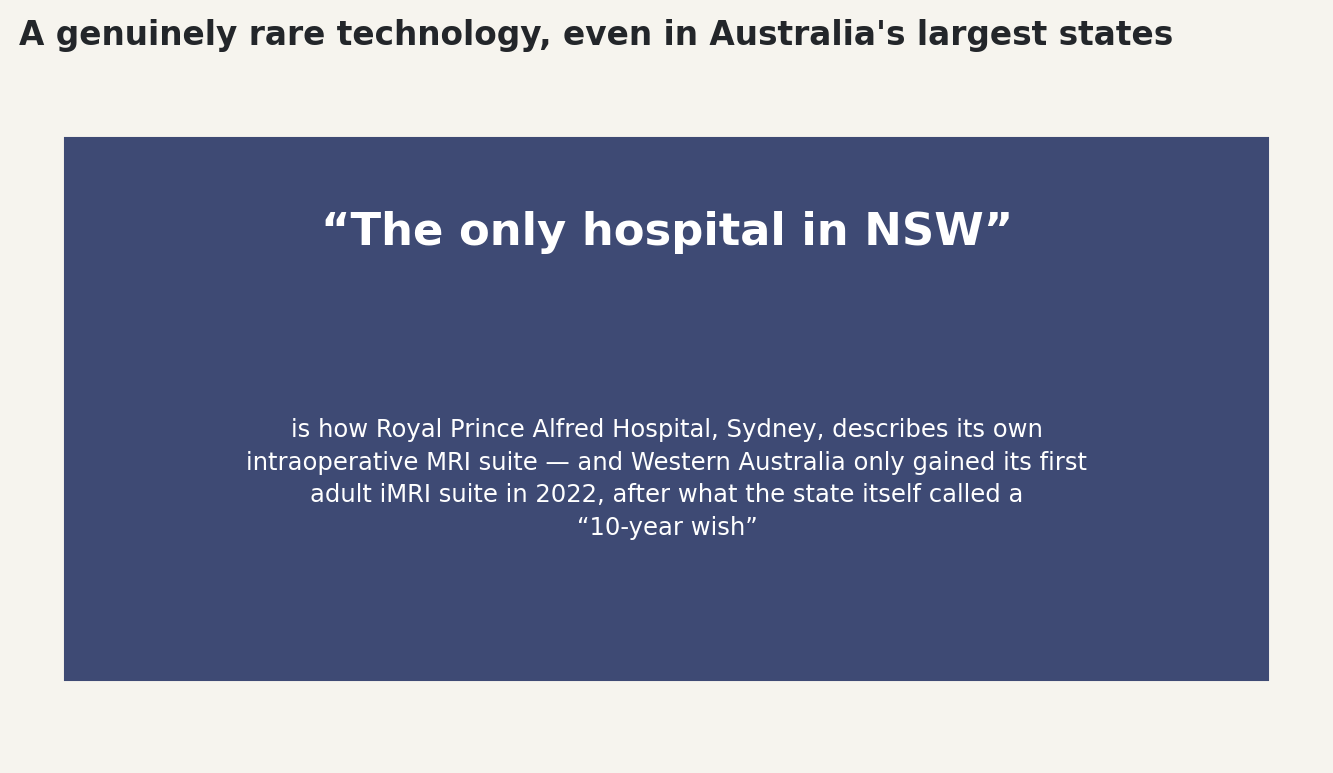
In 24 years of guiding international patients into Indian hospitals, this scarcity is genuinely striking for a technology this clinically important. New South Wales, Australia’s most populous state, has exactly one hospital offering intraoperative MRI for brain surgery. Western Australia waited a full decade, by its own government’s description, before its first adult suite finally opened in 2022. This isn’t a criticism of Australian neurosurgery, which includes genuinely excellent specialists; it reflects the sheer capital cost and specialised infrastructure this technology demands, and how slowly that infrastructure has spread even across the country’s largest population centres. Even Victoria’s paediatric flagship, the Royal Children’s Hospital, only became the first children’s hospital in the country to offer this technology relatively recently, with its intraoperative suite representing what the hospital itself described as an Australian first for its particular three-room configuration.
The genuine reason this technology remains so rare comes down to cost and complexity rather than clinical demand. A dedicated intraoperative MRI suite typically costs upward of twenty million dollars to build, requires an operating theatre specifically engineered around strict magnetic safety requirements, and demands a specialised team trained to work within those constraints. This is a genuinely different proposition from simply installing a standard MRI scanner in a radiology department, which is precisely why even wealthy health systems have been slow to build this capacity at scale.
The landmark finding behind why this technology matters so much
Get your full MRI imaging series, not just the radiology report, together before your first overseas conversation. This finding matters enormously because extent of resection is directly linked to survival in glioma surgery: the more completely a tumour is removed, the better a patient generally does. Without intraoperative imaging, the brain naturally shifts as surgery progresses, and standard pre-operative navigation systems become progressively less accurate as the operation continues. Intraoperative MRI solves this precisely by updating the navigation with real, current images taken mid-surgery, catching residual tumour that would otherwise be missed entirely.
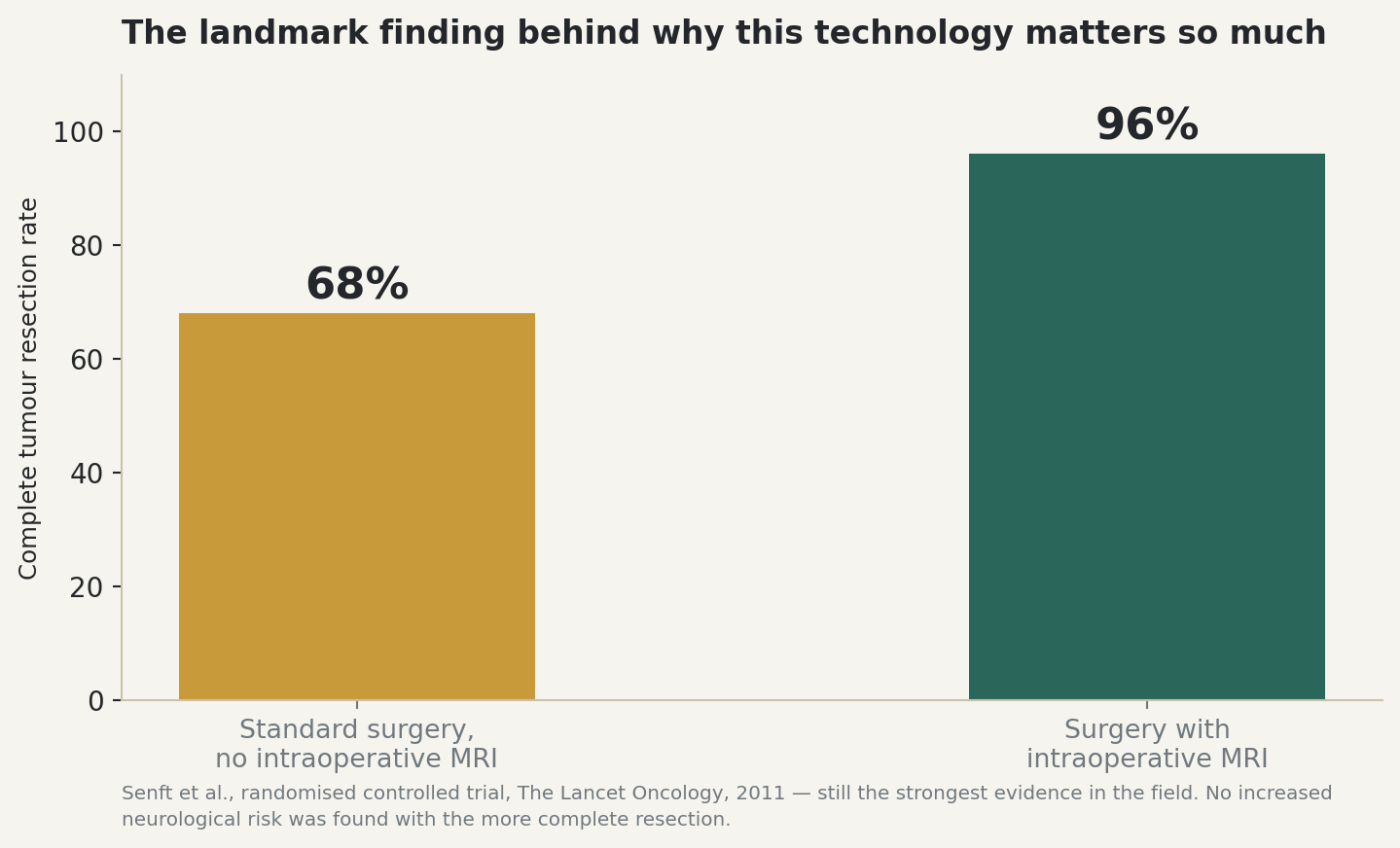
The scale of this difference, 96% versus 68% complete resection, achieved with no increase in neurological complications, is genuinely one of the strongest pieces of evidence in all of neurosurgery for why a specific technology matters. This isn't a marginal improvement; it represents nearly a third of patients potentially leaving surgery with tumour still present that could have been identified and removed with real-time imaging. This finding has held up remarkably well in the years since, cited consistently in subsequent research and clinical guidance as the benchmark evidence for intraoperative imaging's value in glioma surgery specifically. For patients with tumours where residual disease genuinely affects prognosis, this isn't an incremental technical upgrade; it's a fundamentally different level of surgical precision.
Why India specifically, not just overseas
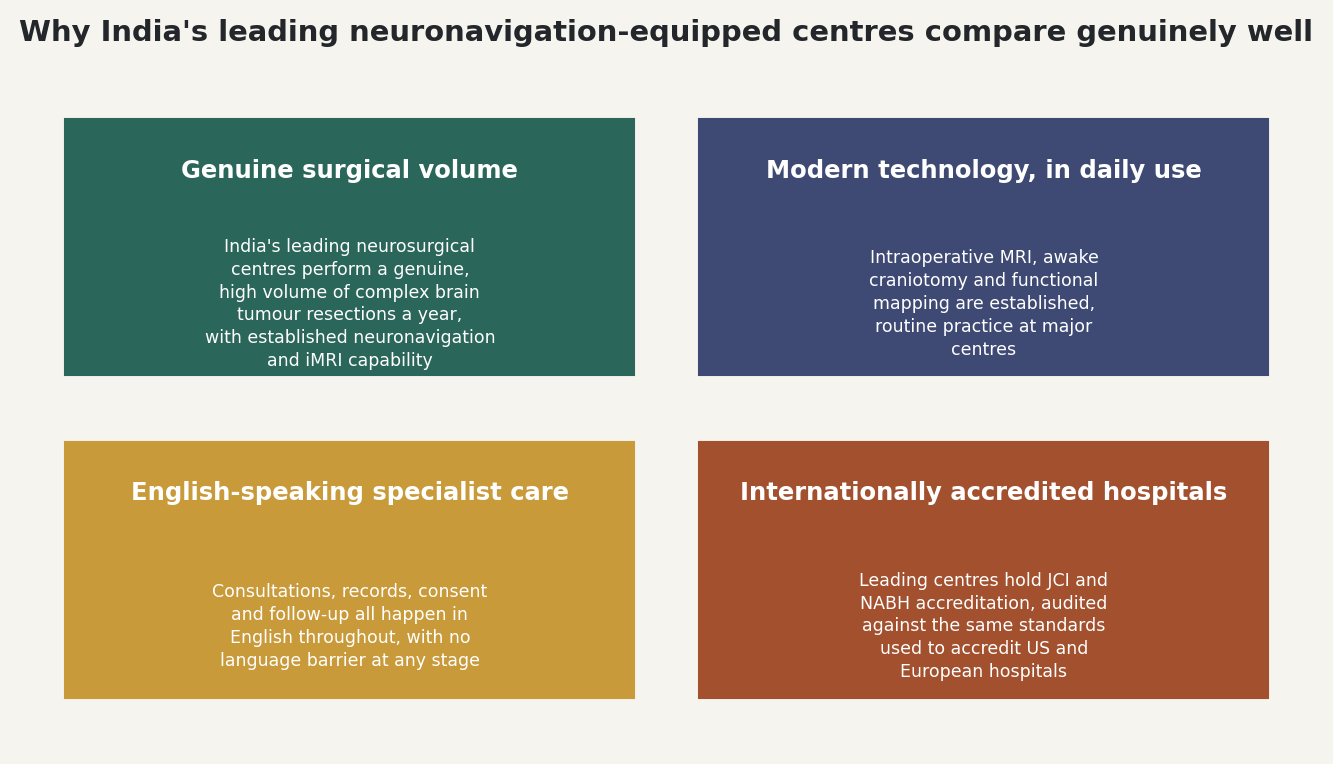
This is worth spelling out plainly. India's leading neurosurgical centres perform a genuine, high volume of complex brain tumour resections annually, with intraoperative MRI and advanced neuronavigation established as routine, daily practice rather than a single, rare suite serving an entire state. This is not a compromise reached for cost and speed; for the right case, it is comparable or greater access to exactly the technology the landmark evidence confirms matters most, delivered by English-speaking specialists in internationally accredited hospitals, at a fraction of the equivalent Australian private cost.
Awake craniotomy and functional mapping, essential for tumours near speech or motor areas, are similarly established practice at India's leading centres, combining with intraoperative imaging to allow genuinely maximal, safe resection even for tumours in the most technically challenging locations.
Every part of the process, from your first video consultation through detailed surgical planning, consent discussions, and every follow-up conversation, happens in English, with specialists trained to internationally recognised standards. Combined with JCI and NABH-accredited hospital infrastructure, this represents genuinely comparable advanced neurosurgical care, not a lesser alternative reached through necessity.
An honest cost comparison
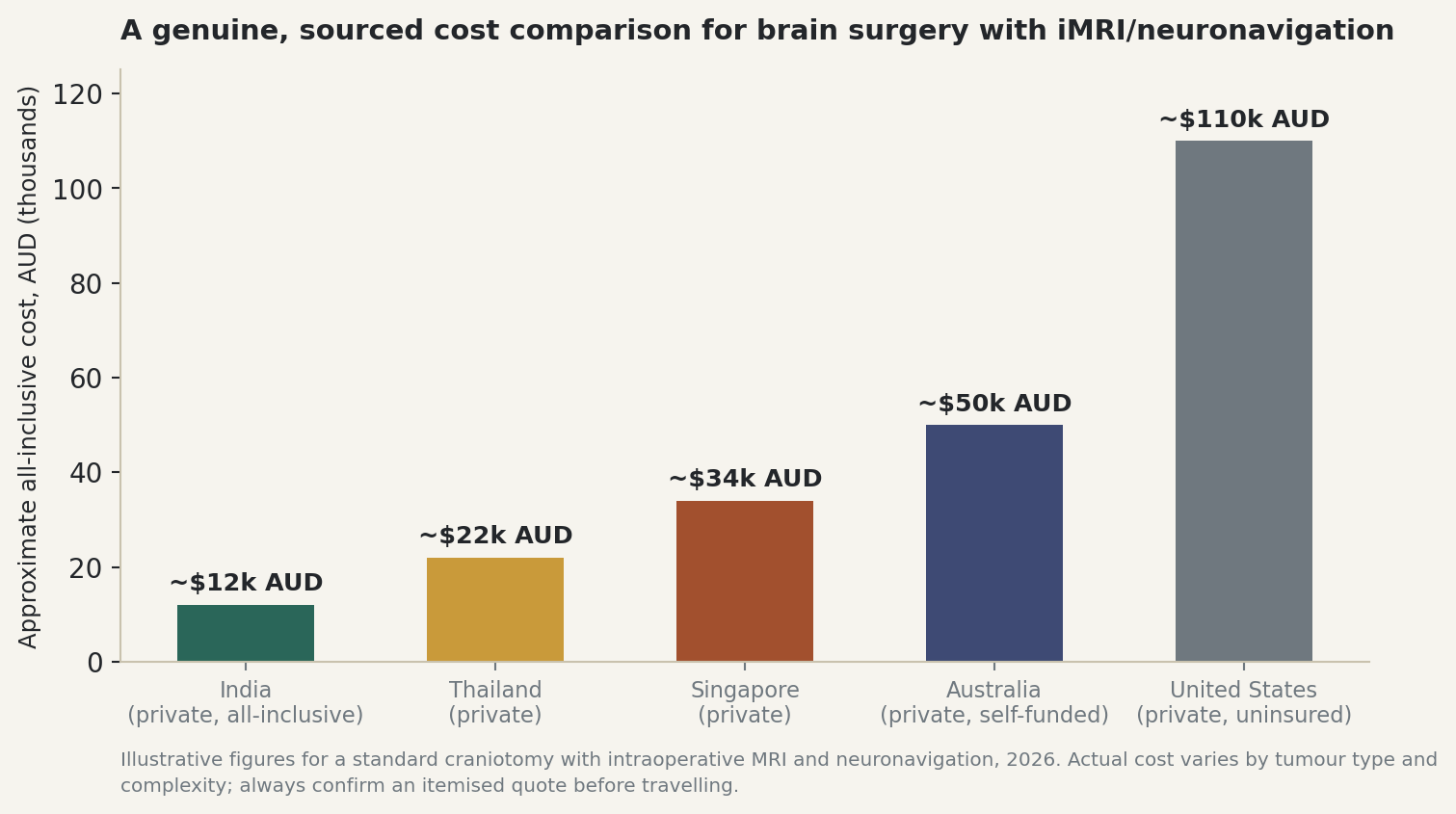
These figures are illustrative and vary by tumour type and complexity, but the pattern holds consistently. Always insist on a written, itemised quote confirming intraoperative MRI is genuinely included, not just standard pre-operative navigation.
What Genuinely Good Advanced Brain Surgery Looks Like, Wherever You Have Surgery
- Intraoperative MRI genuinely available and used. Confirm this specifically, since standard navigation and intraoperative imaging are very different things.
- Genuine volume in complex tumour resection. Ask for the surgeon's specific volume in cases similar to yours.
- Awake craniotomy capability, if relevant. For tumours near eloquent brain areas, confirm this technique and functional mapping are genuinely available.
- A real multidisciplinary tumour board. Your case should be reviewed by a genuine team before the surgical plan is finalised.
- A clear, itemised quote before you travel. Confirm intraoperative imaging is included, not billed as a separate, optional extra.
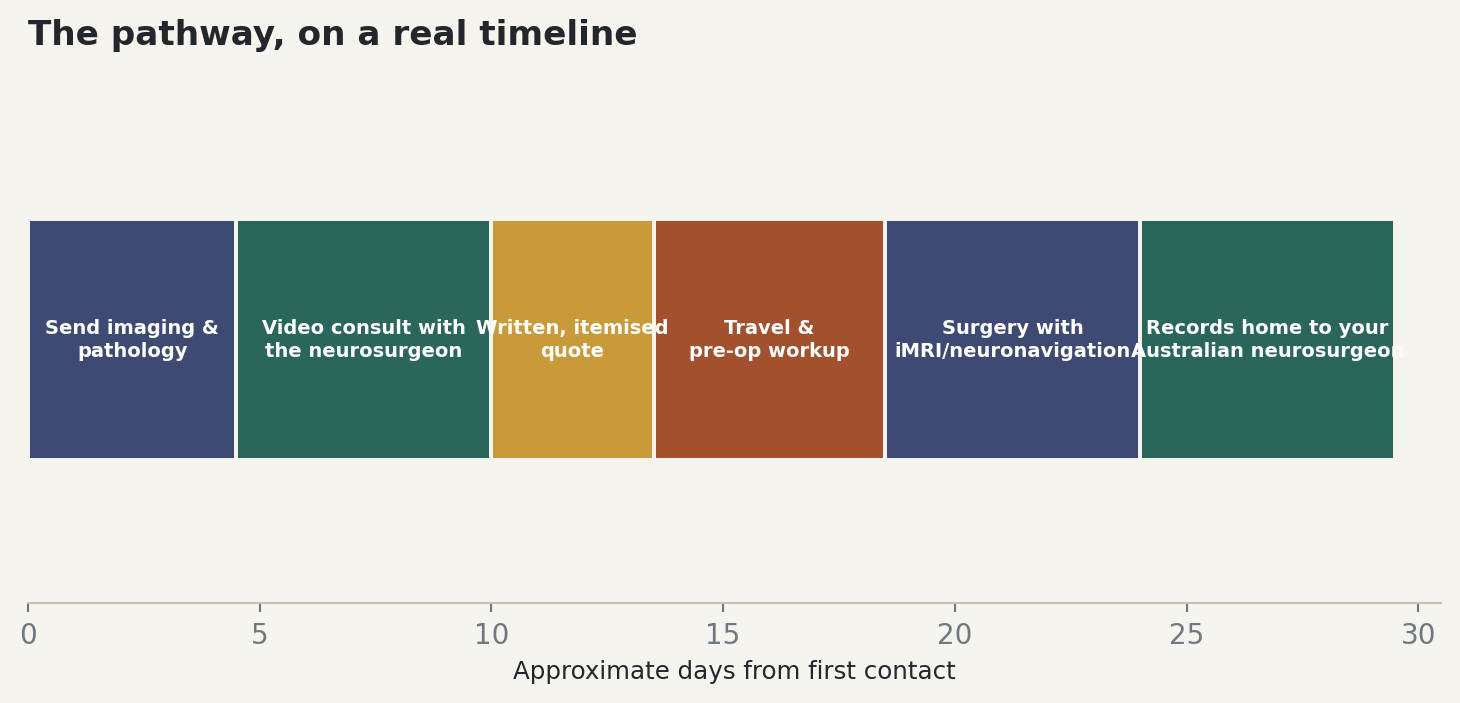
Signals worth taking seriously, wherever you're considering treatment
A few patterns are worth watching for, regardless of which country or hospital you're evaluating. A claim of “advanced neuronavigation” that turns out to be standard pre-operative navigation without intraoperative imaging is a genuine concern worth clarifying directly. A price quoted before your full imaging has been properly reviewed is another signal worth pausing on. Vagueness about a centre's specific volume with intraoperative MRI, rather than a confident, specific number, often tells you more than the answer itself.
None of this is unique to overseas care; the same questions are worth asking of an Australian provider too. What changes when evaluating a hospital overseas is that you have fewer easy, informal ways to verify answers, which is exactly why insisting on things in writing, and on a proper video consultation with the surgeon who will actually operate, matters more than it might at home.
Australia-specific considerations most patients miss
Ask your Australian neurosurgeon directly whether intraoperative MRI is genuinely available for your case. Given how few centres offer it, a direct, honest answer about access and wait time is worth getting early.
Arrange your follow-up imaging before you leave. Confirm your Australian team is willing to review results from treatment performed overseas over the following months.
Ask about the Medical Treatment Overseas Program. Where a specific technology is genuinely unavailable or has a significant wait in Australia, this Commonwealth programme can in some circumstances fund treatment abroad.
Apply for both visas together. Australian passport holders are eligible for India’s electronic medical visa, with an e-medical attendant visa for whoever travels with you.
THE QUESTIONS WORTH ASKING BEFORE YOU DECIDE
- Is intraoperative MRI, not just standard navigation, genuinely available for my case?
- What is the surgeon's specific volume in tumours similar to mine?
- Is awake craniotomy and functional mapping available, if relevant?
- Will my case go before a genuine multidisciplinary tumour board?
- What does the itemised quote include, and is intraoperative imaging included?
- What does the final surgical record include for my Australian neurosurgeon?
A closing word
Intraoperative MRI and advanced neuronavigation genuinely change what's achievable in brain tumour surgery, and the landmark evidence, 96% versus 68% complete resection, is about as strong as clinical research gets. Access to this specific technology remains genuinely rare in Australia, concentrated in a single NSW hospital and only recently reaching Western Australia at all. For patients whose tumour genuinely benefits from maximal, image-guided resection, the case for India is a strong one: neurosurgical centres with established, routine access to exactly this technology, and treatment that can typically begin within two to three weeks, at a fraction of the equivalent Australian private cost. In 24 years of helping patients navigate exactly this decision, the pattern holds firm: those who look closely at what India's leading neurosurgical centres actually offer, the volume, the genuine intraoperative imaging access, the technical precision, generally come away reassured rather than anxious. Confirm intraoperative MRI is genuinely included first, and the rest follows. If you would like a second opinion on your imaging, send it and I will look at it properly.
Frequently Asked Questions by Australian Patients about Neuronavigation and Advanced Brain Surgery in India
Is intraoperative MRI necessary for every brain tumour surgery?
No. The guide specifically states that standard neuronavigation remains good care for many brain tumour cases. Intraoperative MRI is most relevant when maximal and precise tumour resection is particularly important.
What is the benefit of intraoperative MRI?
It provides real-time imaging during surgery, helping the surgeon identify residual tumour after accounting for brain movement that can make pre-operative navigation less accurate as surgery progresses.
What does the cited evidence show?
The page 2 chart reports approximately 96% complete resection with intraoperative MRI compared with 68% with standard surgery, with no increase in neurological complications in the cited trial.
Is intraoperative MRI widely available in Australia?
The guide describes it as genuinely rare, noting one NSW hospital offering the technology for brain surgery and the relatively recent opening of Western Australia's first adult suite.
Why consider India for this technology?
The guide states that leading Indian neurosurgical centres have routine access to intraoperative MRI and advanced neuronavigation, combined with high-volume brain tumour surgery and functional mapping capabilities.
What should I ask the Indian hospital?
Ask whether intraoperative MRI is genuinely available for your specific case, whether it is included in the quotation, how many similar tumours the surgeon operates on and whether awake craniotomy or functional mapping is available if relevant.
What should the quotation include?
It should be written and itemised, with confirmation that intraoperative MRI is included rather than treated as an optional or additional service.
What records should I take back to Australia?
The guide recommends ensuring that the complete surgical and imaging record is transferred to the Australian neurosurgeon so follow-up and surveillance can continue appropriately.
Should I arrange follow-up before travelling?
Yes. The guide recommends confirming in advance that your Australian team will review follow-up imaging and results from surgery performed overseas.
What is the main warning sign?
Be cautious if a centre advertises “advanced neuronavigation” but actually provides only standard pre-operative navigation without intraoperative imaging. The guide recommends clarifying this directly before making any decision.
Sources
- Central Neurosurgery, Intraoperative MRI — centralneurosurgery.com.au
- Senft et al., Intraoperative MRI Guidance and Extent of Resection in Glioma Surgery: A Randomised, Controlled Trial, The Lancet Oncology, 2011
- National Medical Commission — nmc.org.in
- National Accreditation Board for Hospitals & Healthcare Providers — nabh.co
- High Commission of India, e-Visa — indianvisaonline.gov.in
Page Summary
This five-page decision briefing examines intraoperative MRI and advanced neuronavigation for brain tumour surgery in India for Australian patients, focusing on the limited availability of the technology in Australia, the landmark evidence for its clinical value, India's established neurosurgical expertise and the importance of multidisciplinary planning. It includes an illustrative India-versus-other-countries cost comparison, quality checks, Australia-specific follow-up considerations, the Medical Treatment Overseas Program, visa information and key questions patients should ask before choosing a centre.
Citation Block
| Field | Information |
|---|---|
| Topic | Neuronavigation & Advanced Brain Surgery in India for Australian Patients |
| Treatment | Advanced Brain Tumour Surgery |
| Patients | Australian Patients |
| Key Specialist | Neurosurgeon / Brain Tumour Specialist |
| Key Technology | Intraoperative MRI & Advanced Neuronavigation |
| Evidence | Approximately 96% vs 68% complete resection |
| Functional Mapping | Awake craniotomy where clinically relevant |
| Surgeon Check | Specific volume in similar brain tumour cases |
| Team Review | Genuine multidisciplinary tumour board |
| Hospital Technology | Intraoperative MRI and advanced navigation |
| Accreditation | JCI or NABH |
| Illustrative India Cost | Approximately A$12,000 |
| Quote Requirement | Written, itemised quotation with MRI explicitly included |
| Pre-Travel Records | Full MRI imaging series and pathology |
| Follow-Up | Australian neurosurgeon / treating team |
| Pathway | Imaging → consultation → quote → pre-op work-up → surgery → records home |
| Warning Signs | Standard navigation presented as advanced neuronavigation, early pricing or vague tumour-specific volume |
| Author | Dr. Dheeraj Bojwani |
| Experience | 24 Years Guiding International Patients |


Our Mission Statement
Our mission is to place patients at the centre of every healthcare decision by providing trustworthy, evidence-based, and unbiased medical information. We believe that informed patients make better decisions. Backed by personalised guidance from our experienced advisory team, we help patients understand their treatment options, compare them objectively, and confidently choose the path that best suits their medical needs and personal circumstances.
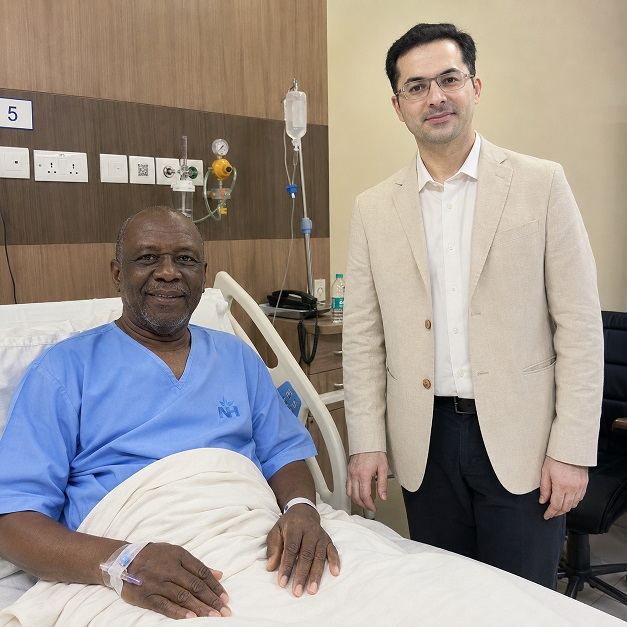
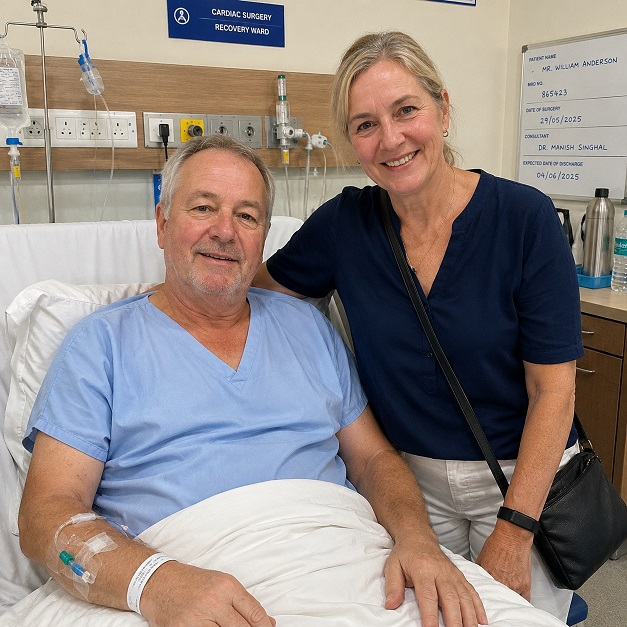
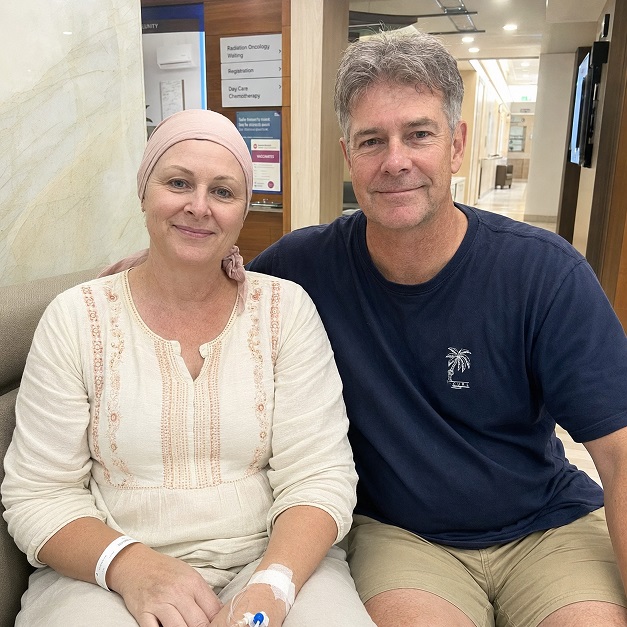
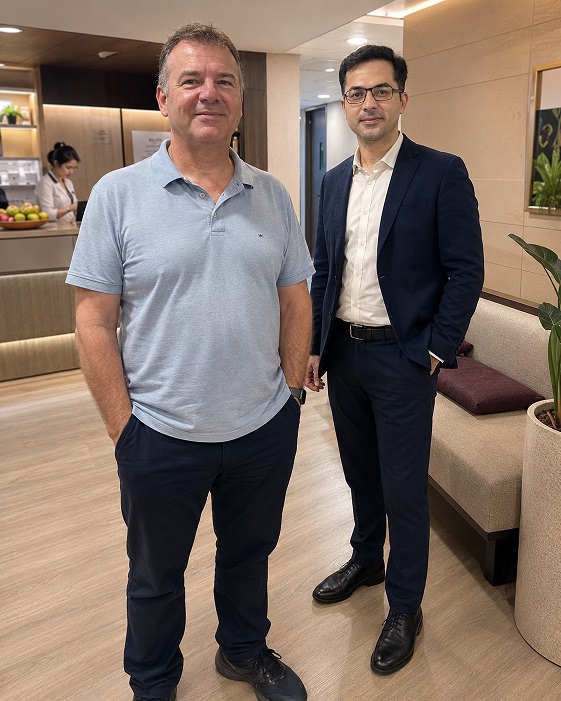
Patient Testimonials from Australia

Ready to Take the First Step?
Share your Medical Reports with our Healthcare Managers Today and Get a FREE CONSULTATION, a Personalized Treatment Plan, and Complete Support from Arrival to Recovery.
Get Your Free ConsultationAreas We Serve
This resource has been thoughtfully prepared for patients from Australia who are considering medical treatment in India. We also welcome patients from the wider region in the countries mentioned below-
We regularly assist patients from:
- Fiji
- Vanuatu
- Samoa
- Tonga
- Kiribati
- Nauru
- Tuvalu
- New Zealand
- Solomon Islands
- Papua New Guinea
Many of the insights, treatment pathways, hospital recommendations, travel guidance, and patient support services described here are equally relevant and may be used as a reference when planning treatment in India.
From Australia to India: Your Complete Patient Support Guide
- Cancer Treatment in India for Australian Patients: PBS Gap & Drug Costs
- Cardiac Surgery in India for Australian Patients: TAVI Access & Costs
- Dental Treatment & Surgery in India for Australian Patients
- Hip Surgery in India for Australian Patients: Costs, Waits & Implant Choice
- Knee Surgery in India for Australian Patients: Costs, Waits & Implants
- Neurosurgery in India for Australian Patients: Volume, Costs & When Not to Travel
- Spine Surgery in India for Australian Patients: Costs, Indications & Second Opinions (2026)
- Best Bariatric & Weight Loss Surgeons in India for Australian Patients
- Best Cancer Surgeons & Hospitals in India for Australian Patients
- Best Cardiac Surgeons & Hospitals in India for Australian Patients
- Best Cosmetic Surgeons & Hospitals in India for Australian Patients
- Best Dental Surgeons & Clinics in India for Australian Patients
- Best Hip Surgeons & Hospitals in India for Australian Patients
- Best Knee Surgeons & Hospitals in India for Australian Patients
- Best Scoliosis Surgeons & Hospitals in India for Australian Patients
- Best Spine Surgeons & Hospitals in India for Australian Patients
- Selecting the Best Urosurgery and Reconstructive Urology Centres in India for Australian Patients
- Selecting the Best Bone Marrow Transplant Centres in India for Australian Patients