

Brain Tumor Surgery in India for Canadian Patients
"Brain tumour" covers a wide range of conditions, most with genuinely good treatment outcomes. This guide covers what modern surgery offers across that full range, and how to choose a team confidently.
A 58-year-old teacher in Regina with a meningioma, found incidentally and almost certainly benign. A 34-year-old in Halifax with a pituitary tumour affecting her vision. A 46-year-old accountant in Regina with a high-grade glioma near the brain's speech centres. Three very different diagnoses, three very different conversations — and all three genuinely well served by modern neurosurgical care, provided the right team and the right technology are matched to the right tumour.
Read This Before Anything Else in This Document
This briefing is not written for an acutely deteriorating patient, a tumour causing rapidly worsening neurological symptoms, or raised intracranial pressure requiring urgent decompression. Those situations belong in a Canadian emergency department immediately. What follows concerns the decisions that come after a tumour has been found and the situation is stable enough to plan carefully — and for most brain tumour diagnoses, that planning leads to genuinely good outcomes.
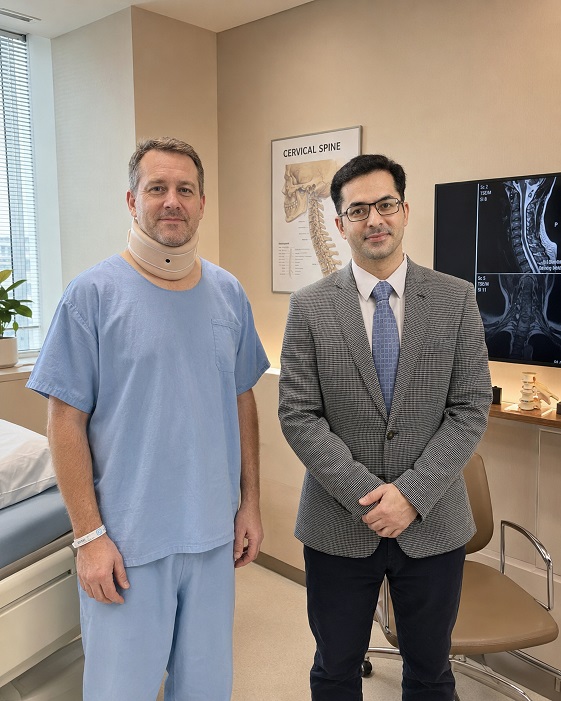
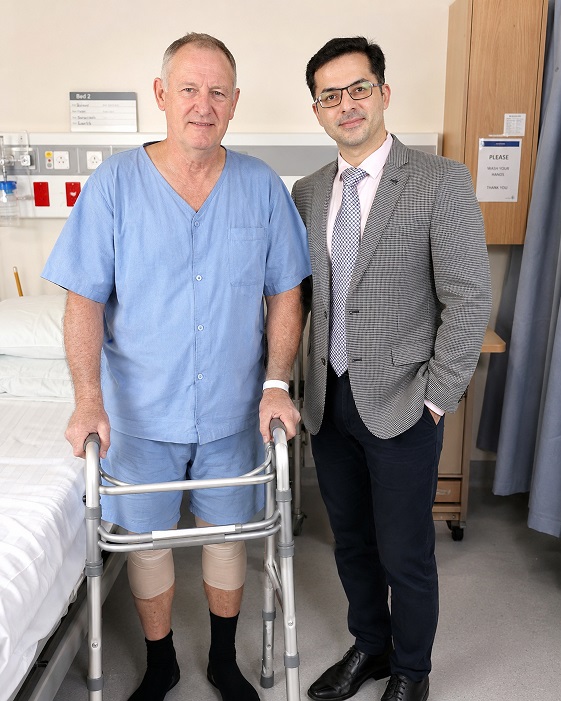
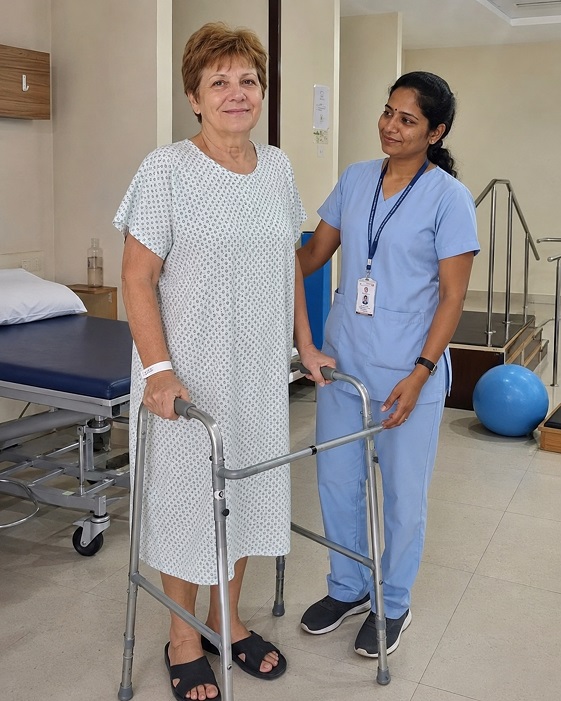
Healing Journeys of Canadian Patients
Key Takeaways
- “Brain tumour” describes a wide range of conditions, and the PDF emphasizes that many have favourable treatment outcomes when the diagnosis is matched with the right team and technology. Meningiomas are usually benign and are frequently treated successfully with surgery alone, while pituitary adenomas, acoustic neuromas and gliomas require different approaches.
- The guide highlights several technologies that can meaningfully influence surgery, including fluorescence-guided resection, awake craniotomy with intraoperative mapping and neuronavigation. For gliomas, molecular testing such as IDH mutation status, MGMT methylation and 1p/19q co-deletion is presented as central to modern diagnosis and treatment planning.
- The chart on page 3 illustrates the relationship between extent of resection and outcomes in high-grade glioma, with illustrative median-survival figures increasing from 12 months for subtotal resection to 15.5 months for near-total and 20.7 months for gross-total resection. The PDF also stresses that maximum removal is not always appropriate when critical brain functions are at risk.
- Canadian patients should therefore focus on whether the surgeon has specific experience with their tumour type and whether the required technology will actually be used in their operation, rather than choosing a hospital simply because it offers advanced equipment.
- The guide recommends a genuine multidisciplinary team involving neurosurgery, radiation oncology and neuroradiology, together with complete molecular pathology where relevant. It also recommends independently verifiable JCI or NABH accreditation.
- The page 4 cost chart gives indicative India figures of approximately C$13,800 for meningioma resection, C$11,200 for pituitary tumour endoscopic removal, C$15,600 for acoustic neuroma removal and C$16,500 for glioma resection with mapping, compared with substantially higher US private-care costs.
- The PDF recommends obtaining six important items in writing before travelling, including the planned technology, awake mapping where relevant, the surgeon's tumour-specific annual volume, pathology testing, an itemised price and an agreed Canadian follow-up plan.
Quick Facts
- Treatment
- Brain Tumor Surgery
- Country
- India
- Patients
- Canadian Patients
- Specialty
- Neurosurgery / Neuro-Oncology
- Common Tumours Discussed
- Meningioma, Pituitary Adenoma, Acoustic Neuroma, Metastatic Tumours and Glioma
- Meningioma
- Usually Benign and Frequently Treated With Surgery Alone
- Pituitary Adenoma
- May Be Treated With Surgery or Medication Depending on the Case
- Acoustic Neuroma
- Slow-Growing; Hearing and Facial Function Preservation May Be Considered
- Glioma
- Behaviour Varies; Molecular Testing Helps Guide Treatment Planning
- Advanced Techniques
- Fluorescence-Guided Resection, Awake Craniotomy, Intraoperative Mapping and Neuronavigation
- Molecular Testing
- IDH, MGMT and 1p/19q Testing for Relevant Gliomas
- Travel
- Changeable Ticket Recommended
- Fit-to-Fly
- Documented Assessment Before Returning to Canada
- Follow-Up
- Canadian Neuro-Oncology Team
In Brief
Brain tumour surgery should be planned around the specific tumour type, location and functional risks, rather than around the label “brain tumour” alone. A well-equipped neuro-oncology team may use fluorescence guidance, awake mapping, neuronavigation and molecular pathology where appropriate. Canadian patients should confirm the surgeon's specific tumour experience, the technology planned for their operation, complete pathology, an itemised treatment cost and a documented follow-up arrangement with their Canadian neuro-oncology team.
"Brain tumour" describes a wide range of conditions, most with good outcomes
Canadian neurosurgeons are excellent, and in 24 years of guiding international patients into Indian hospitals I have never suggested otherwise. The first thing worth understanding, because the word "tumour" alone can sound frightening, is how wide a range of conditions this actually covers — and how many of them carry genuinely favourable outlooks.
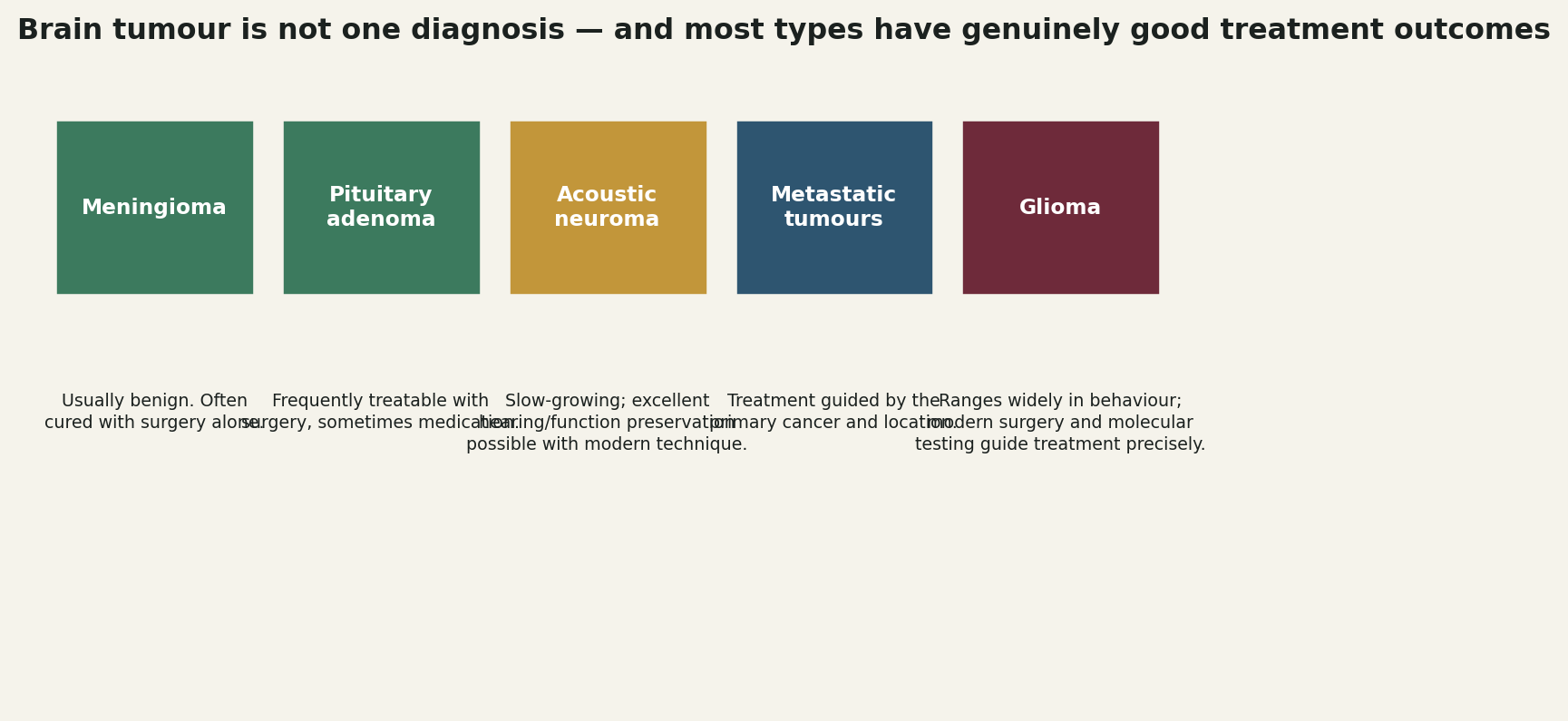
Meningiomas, among the most common brain tumours found, are usually benign and are frequently cured with surgery alone. Pituitary adenomas are often highly treatable, sometimes with surgery, sometimes with medication alone. Acoustic neuromas grow slowly, and modern surgical technique can often preserve hearing and facial function. Even glioma, the category that includes the more serious high-grade tumours, ranges widely in behaviour, and modern surgery combined with molecular testing now allows treatment to be planned with real precision for each individual case.
What a modern neuro-oncology team brings to your specific tumour
Whatever your diagnosis, the tools available to a well-equipped surgical team meaningfully shape the result.
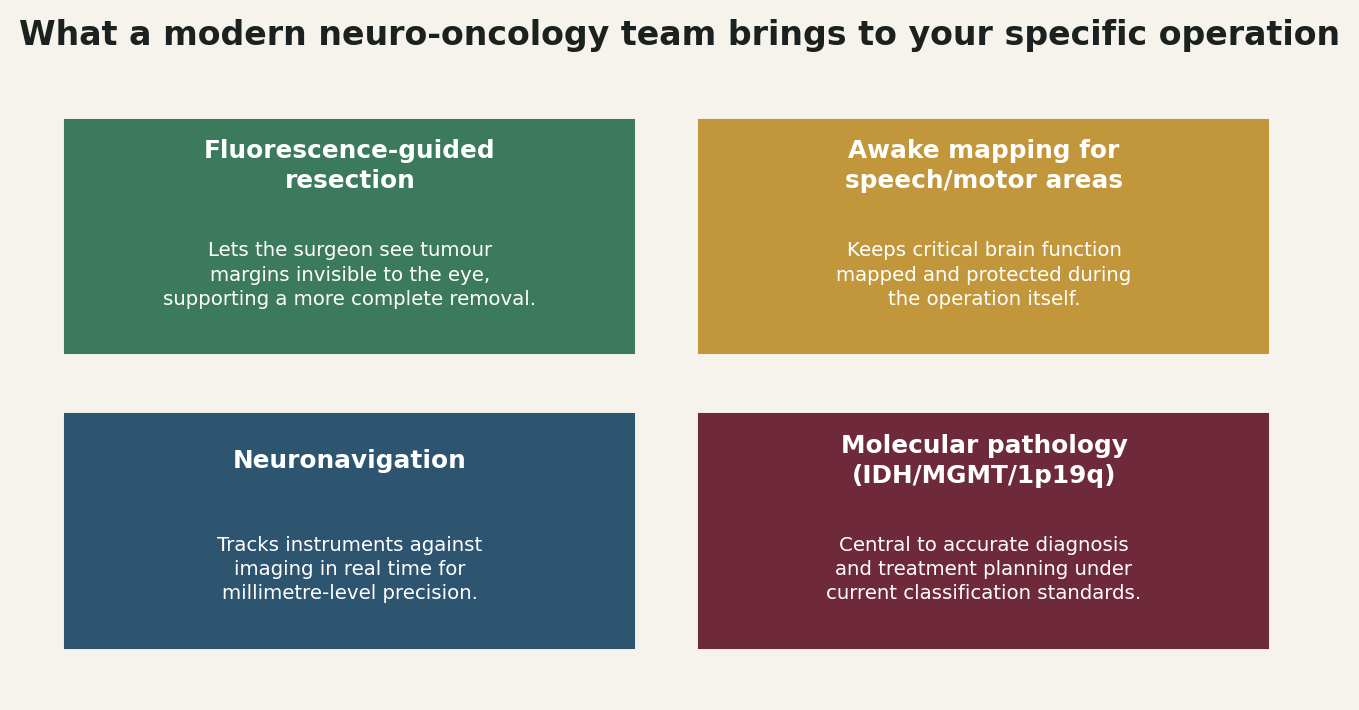
Fluorescence-guided resection, using a compound that causes high-grade tumour tissue to glow under specific light, helps a surgeon see margins that are otherwise invisible. Awake craniotomy with intraoperative mapping allows a team to identify and protect speech, motor and other critical functions directly during surgery, for tumours near these sensitive areas. Neuronavigation tracks instruments against pre-operative imaging in real time. And since 2021, molecular testing — IDH mutation status, MGMT methylation, and 1p/19q co-deletion for gliomas specifically — has become central to accurate diagnosis and treatment planning under current international classification standards, not simply a prognostic add-on.
Ask your team directly which of these apply to your specific tumour, and how they will be used in your case. A well-resourced centre combining the right tools with real experience in your tumour type is the combination genuinely worth seeking out, wherever that centre is.
Why a complete, well-planned resection matters
For tumours where surgical removal is the primary goal, how completely and safely that removal is achieved genuinely affects the outcome.
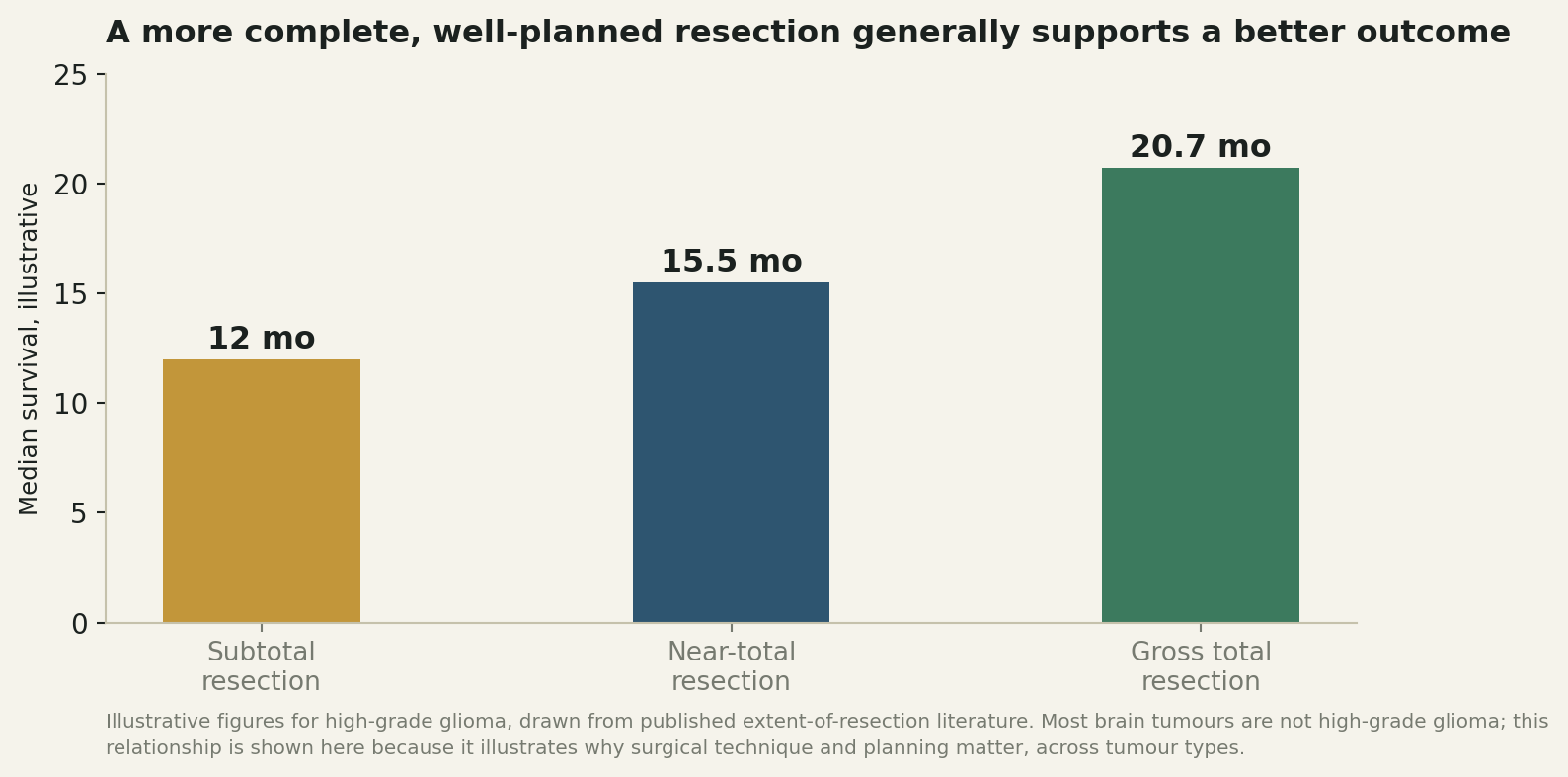
This relationship, seen clearly in high-grade glioma research, illustrates a principle that applies more broadly: surgical technique and planning matter. It is also worth saying plainly that a more aggressive resection is not always the right goal — for tumours deeply embedded near critical structures, a genuinely experienced team will sometimes recommend a more measured approach specifically to preserve function, and that judgement matters as much as the technology itself.
What the money actually looks like
Complex brain tumour surgery is not something Canada's small private surgical sector offers; it requires neuro-ICU capability, intraoperative imaging and a dedicated neuro-oncology team that exists only within larger academic centres. For a patient exploring options beyond the team currently proposed, the realistic paid alternative is the United States rather than a domestic private clinic.
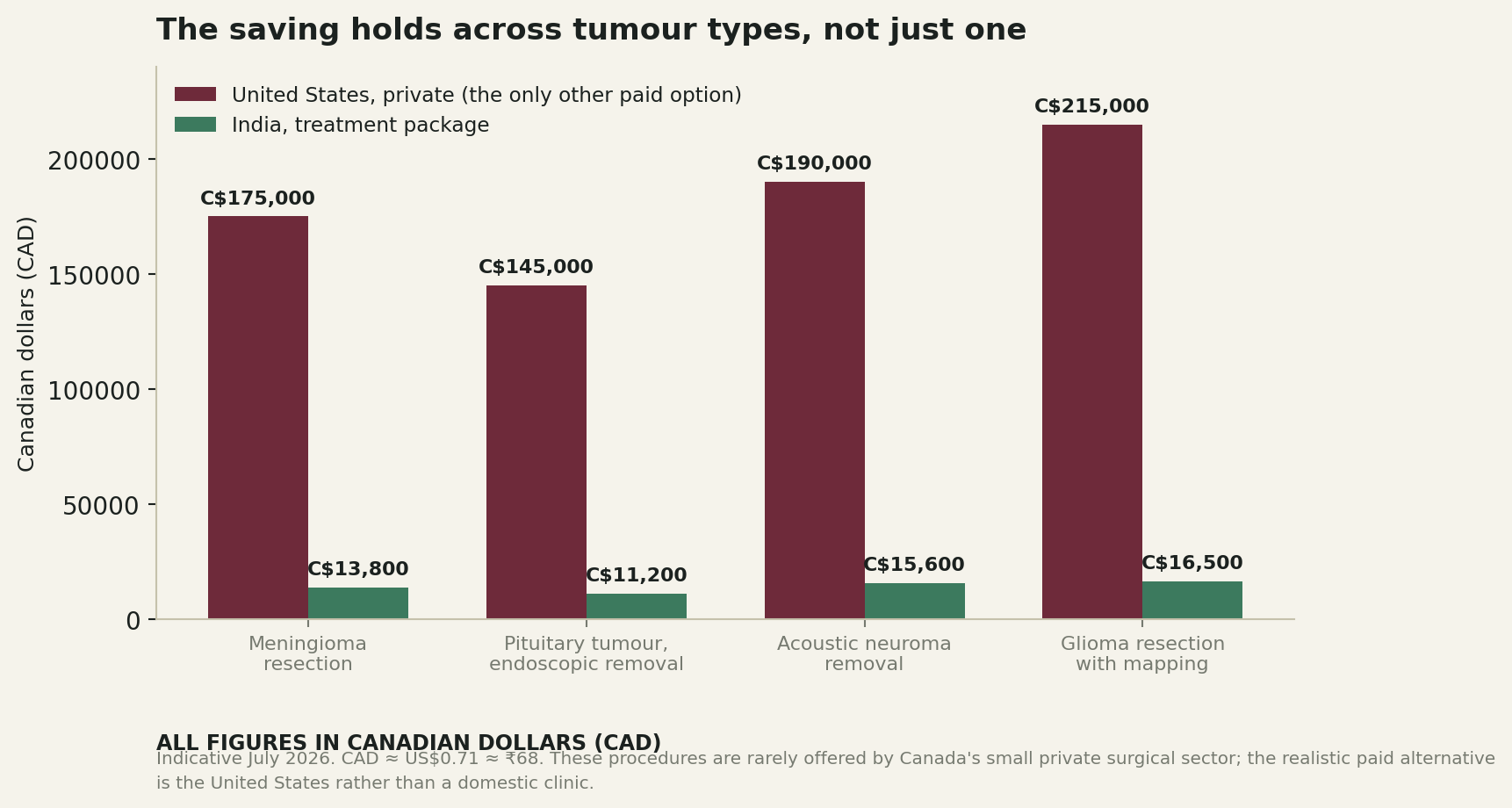
American brain tumour surgery, priced for an insurance-backed domestic market, commonly runs into six figures. India's major neuro-oncology centres routinely combine fluorescence guidance, neuronavigation and awake mapping as standard practice, with full molecular pathology performed as a matter of course, at a fraction of the American price — and this holds true across tumour types, not just the more complex ones. In 24 years of guiding patients through this decision, the single most useful question a patient can ask is whether the specific tools relevant to their tumour type will actually be used in their operation.
What you are actually getting for it
The right technology matched to your specific tumour, whether that means fluorescence guidance for glioma, endoscopic technique for pituitary tumours, or hearing-preservation approaches for acoustic neuroma.
A genuine multidisciplinary team, including neurosurgery, radiation oncology and neuroradiology together, rather than a single surgeon's opinion.
Complete molecular pathology where relevant, as a routine part of diagnosis rather than an afterthought.
Accreditation you can verify independently. JCI is the international arm of the body accrediting hospitals across the United States; NABH is India's national equivalent, recognised by the same global standards authority.
A discharge record built for your Canadian neuro-oncology team to use, including operative findings, full pathology and a specific follow-up plan.
Six Things to Have in Writing Before You FLY
1. Confirmation of which specific tools will be used for your tumour type, and why.
2. Whether awake craniotomy and intraoperative mapping are planned, if your tumour is near speech or motor areas.
3. The surgeon's own annual volume in your specific tumour type, not general neurosurgery.
4. Confirmation of full molecular or pathological testing relevant to your diagnosis.
5. An itemised, all-inclusive price, naming ICU days assumed and the cost of exceeding them.
6. Your Canadian follow-up, already agreed: a named neuro-oncologist and a surveillance imaging schedule.
Straight answers for Canadian Patients about Brain Tumor Surgery in India
My symptoms are worsening quickly. Does this briefing apply to me?
No. Rapidly worsening neurological symptoms or signs of raised intracranial pressure require immediate emergency assessment in Canada, not travel planning.
Is a meningioma diagnosis as serious as other brain tumours?
Usually not. Most meningiomas are benign and are frequently cured with surgery alone, and many are simply monitored if small and not causing symptoms. Ask your team specifically about your tumour's likely behaviour.
Will my provincial plan reimburse surgery performed in India?
Almost never. Out-of-country coverage exceptions require pre-approval showing the procedure is genuinely unavailable in Canada within a medically acceptable time.
How long should I plan to stay in India?
Around two to four weeks depending on tumour type and complexity, on a changeable ticket, following a documented fit-to-fly assessment.
Who manages my follow-up afterward?
Your Canadian neuro-oncology team, provided they have the operative note, full pathology and a specific follow-up plan in writing before you leave.
A closing word
Brain tumour treatment covers a genuinely wide range of conditions, and for most of them, modern surgery offers a confidently good outcome. The task is matching your specific diagnosis to a team with real, matching experience and the right technology for your tumour type — and then finding that the cost comparison makes an already sound decision an easy one. If you would like a second opinion on your imaging or pathology, send it to me and I will look at it properly.
Sources
- 🌐 Louis et al., "The 2021 WHO Classification of Tumors of the Central Nervous System", Neuro-Oncology — academic.oup.com
- 🌐 Medexus Pharmaceuticals, "Health Canada Approval of Gleolan (5-ALA)" — globenewswire.com
- 🌐 Brain Tumour Foundation of Canada — braintumour.ca
- 🌐 High Commission of India, e-Visa categories and eligibility — indianvisaonline.gov.in/evisa
Frequently Asked Questions by Canadian Patients about Brain Tumor Surgery in India
Are all brain tumours equally serious?
No. The PDF emphasizes that brain tumours cover a wide range of conditions. Many meningiomas are benign, pituitary adenomas can often be treated effectively, and acoustic neuromas are generally slow-growing. Gliomas vary considerably in behaviour.
What advanced technologies may be used during brain tumor surgery?
Depending on the tumour, a centre may use fluorescence-guided resection, awake craniotomy with intraoperative mapping and neuronavigation. The appropriate technology depends on the tumour's location and characteristics.
When is awake craniotomy and mapping important?
It may be considered when a tumour is located near important speech, motor or other functional areas. Intraoperative mapping helps the surgical team identify and protect these functions during the operation.
Why is molecular testing important for gliomas?
The guide identifies molecular testing such as IDH mutation status, MGMT methylation and 1p/19q co-deletion as important components of modern glioma diagnosis and treatment planning.
Does removing more of a brain tumour always mean a better result?
Not necessarily. Although greater safe resection can support better outcomes in some high-grade gliomas, the guide stresses that aggressive removal is not always appropriate when a tumour is close to critical brain structures. Preserving neurological function is also important.
How much does brain tumor surgery cost in India for Canadian patients?
The PDF gives indicative figures ranging from approximately C$11,200 for pituitary tumour endoscopic removal to C$16,500 for glioma resection with mapping, with other procedures falling between these figures. Actual costs depend on the individual case.
What should Canadian patients check about the neurosurgeon?
Patients should ask about the surgeon's annual experience with their specific tumour type, rather than relying on general neurosurgical volume. They should also confirm which technologies will actually be used during their operation.
What should Canadian patients check about the hospital?
The guide recommends a multidisciplinary team involving neurosurgery, radiation oncology and neuroradiology, complete molecular pathology where relevant and independently verifiable JCI or NABH accreditation.
How long should Canadian patients plan to stay in India?
The guide recommends planning for approximately two to four weeks, depending on the tumour type and complexity, with a changeable ticket and a documented fit-to-fly assessment before returning home.
Who manages follow-up after returning to Canada?
The Canadian neuro-oncology team should manage follow-up, provided it receives the operative note, complete pathology and a specific surveillance plan before the patient leaves India.
Page Summary
This guide explains brain tumor surgery options in India for Canadian patients and emphasizes that brain tumors represent a wide range of conditions with different treatment approaches. It covers modern techniques such as fluorescence-guided surgery, awake mapping, neuronavigation and molecular pathology. Patients are advised to choose a team with tumour-specific experience, multidisciplinary support and appropriate technology. The guide also provides indicative treatment costs, a pre-travel checklist and follow-up recommendations with the Canadian neuro-oncology team.
Citation Block
| Topic | Information |
|---|---|
| Topic | Brain Tumor Surgery in India for Canadian Patients |
| Treatment | Brain Tumor Surgery |
| Country | India |
| Intended Audience | Canadian Patients |
| Specialty | Neurosurgery / Neuro-Oncology |
| Tumours Discussed | Meningioma, Pituitary Adenoma, Acoustic Neuroma, Metastatic Tumours and Glioma |
| Advanced Techniques | Fluorescence Guidance, Awake Mapping and Neuronavigation |
| Molecular Testing | IDH, MGMT and 1p/19q for Relevant Gliomas |
| Team Structure | Neurosurgery, Radiation Oncology and Neuroradiology |
| Pathology | Complete Molecular Pathology Where Relevant |
| Accreditation | JCI or NABH |
| Follow-Up | Canadian Neuro-Oncology Team |
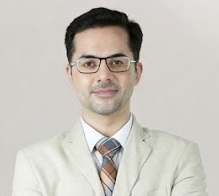
| Author | Dr. Dheeraj Bojwani |
| Experience | 24+ Years |

Our Mission Statement
Our mission is to place patients at the centre of every healthcare decision by providing trustworthy, evidence-based, and unbiased medical information. We believe that informed patients make better decisions. Backed by personalised guidance from our experienced advisory team, we help patients understand their treatment options, compare them objectively, and confidently choose the path that best suits their medical needs and personal circumstances.
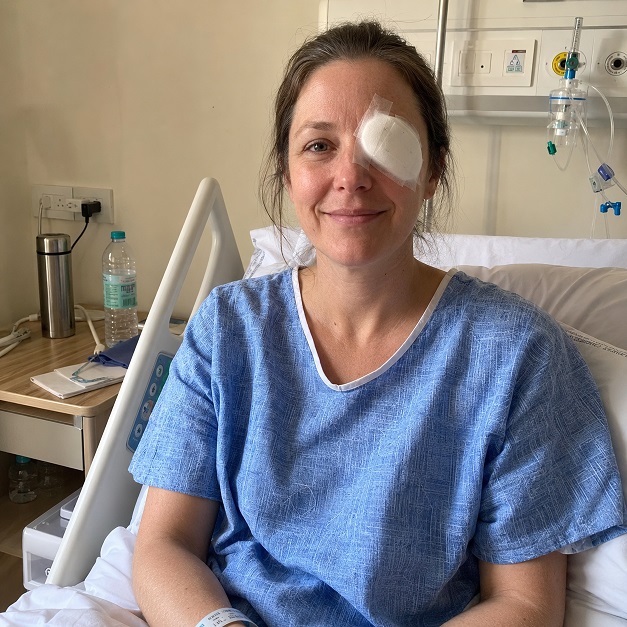
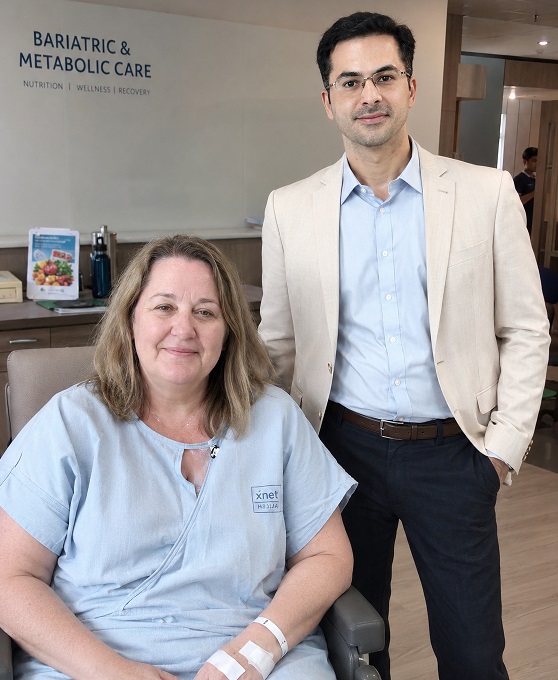
Patient Testimonials from Canada

Ready to Take the First Step?
Share your Medical Reports with our Healthcare Managers Today and Get a FREE CONSULTATION, a Personalized Treatment Plan, and Complete Support from Arrival to Recovery.
Get Your Free ConsultationFrom Canada to India: Your Complete Patient Support Guide
- Weight Loss & Bariatric Surgery in India for Canadian Patients: The Multi-Year Wait, Explained (2026)
- Bone Marrow Transplant in India for Canadian Patients: Complete Guide
- Brain Tumor Surgery in India for Canadian Patients: Complete Guide
- Breast Cancer Treatment and Surgery in India for Canadian Patients
- Cancer Treatment and Surgery in India for Canadian Patients
- Cardiac Surgery in India for Canadian Patients
- Colorectal Cancer Treatment and Surgery in India for Canadian Patients
- Cosmetic and Aesthetic Surgery in India for Canadian Patients
- CyberKnife Treatment in India for Canadian Patients: Complete Guide
- Dental Surgery in India for Canadian Patients | Complete Treatment & Cost Guide
- Gamma Knife Treatment in India for Canadian Patients
- Heart Valve Replacement Surgery in India for Canadian Patients
- Hip Surgery in India for Canadian Patients | Complete Treatment, Cost & Recovery Guide
- HIPEC Surgery in India for Canadian Patients: Complete Guide
- Kidney Transplant in India for Canadian Patients: Complete Guide
- Knee Surgery in India for Canadian Patients: Wait Times & Costs
- Neurosurgery in India for Canadian Patients: Wait Times & Costs
- Paediatric Cardiac Surgery in India for Canadian Patients