

Neurosurgery in India for Canadian Patients
Of every specialty Canada measures, neurosurgery has the longest wait in the country. Some of what causes that wait belongs in a Canadian hospital regardless. A meaningful share does not.
A 51-year-old teacher outside Halifax. Twelve months of one-sided hearing loss, put down to age, then an MRI showing a 21mm vestibular schwannoma pressing against the brainstem. Her family doctor referred her to a neurosurgeon in February. Her first appointment with that neurosurgeon is not until November. Nobody has behaved improperly. Neurosurgery in Canada, averaged across every kind of case in the specialty, now carries the single longest wait of any specialty Canada measures — and hers is not the urgent kind that jumps the queue.
Healing Journeys of Canadian Patients
Key Takeaways
- Neurosurgery has the longest median specialty wait among the specialties measured in the Canadian data cited in the briefing, with a reported 49.9-week median wait from GP referral to completed treatment.
- A substantial portion of that delay occurs before the patient reaches a neurosurgeon. The briefing cites an average 39.7-week wait from referral to the first neurosurgical consultation.
- Not every neurosurgical diagnosis is appropriate for medical travel. Conditions such as a ruptured aneurysm, acute intracranial haemorrhage, trauma, rapidly worsening neurological symptoms, or suspected high-grade malignant tumours requiring prompt integrated oncology treatment should generally be managed urgently in Canada.
- The guide focuses instead on carefully selected elective cranial and functional neurosurgical conditions where there is sufficient time for imaging review, second opinions, multidisciplinary assessment and international treatment planning.
- Conditions that may be considered for planned treatment in India include vestibular schwannoma, selected skull-base tumours, pituitary tumours, trigeminal neuralgia, selected meningiomas, movement disorders, epilepsy, Chiari malformation, hydrocephalus and selected unruptured aneurysms.
- The procedures discussed include craniotomy, vestibular schwannoma surgery, skull-base surgery, endoscopic pituitary surgery, stereotactic radiosurgery, microvascular decompression and deep brain stimulation.
- For technically demanding neurosurgery, the briefing highlights the value of treatment at high-volume centres where the surgeon and multidisciplinary team regularly manage the specific condition being treated.
- Larger Indian neurosurgical centres may offer neuronavigation, intraoperative neurophysiological monitoring, endoscopic skull-base systems, dedicated neuro-ICU care and, at selected centres, intraoperative MRI.
- The guide emphasises that patients should not choose a hospital based only on broad reputation. They should ask for the surgeon's procedure-specific case volume, especially for vestibular schwannoma, skull-base surgery, pituitary procedures or functional neurosurgery.
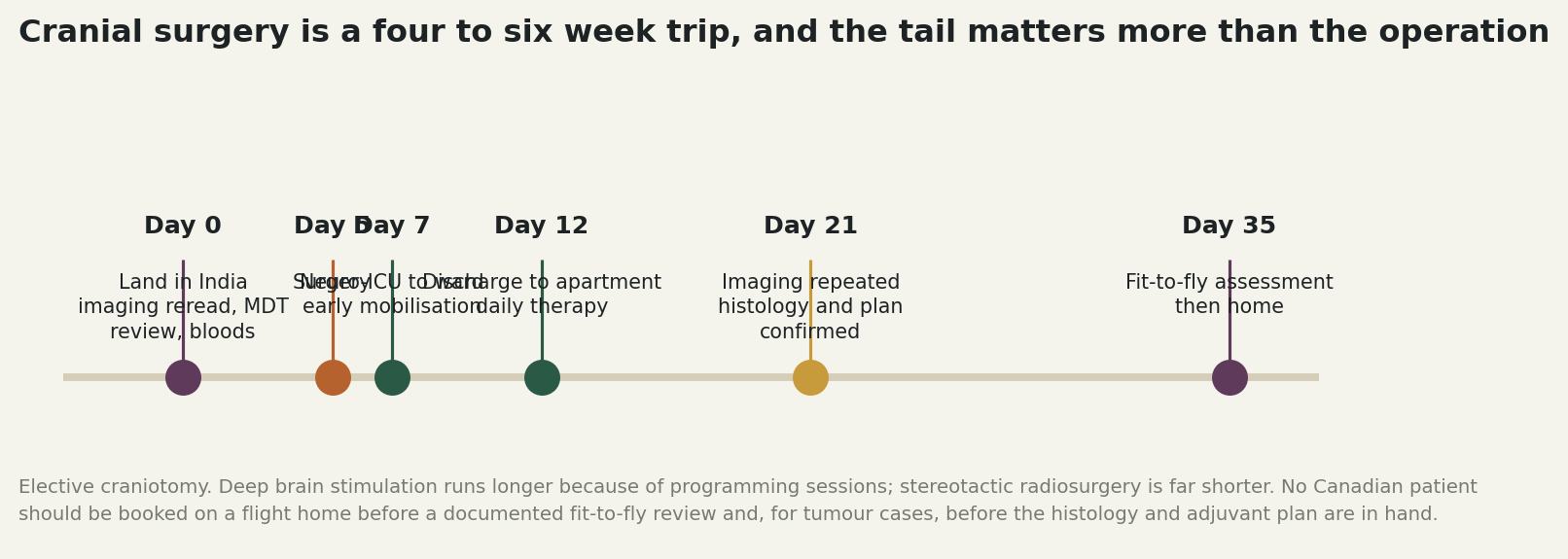
- For elective cranial surgery, the briefing recommends planning approximately 4–6 weeks in India, although the actual stay depends on the procedure, pathology, postoperative recovery and any additional treatment requirements.
Quick Facts
- Treatment
- Cranial and Functional Neurosurgery
- Country
- India
- Intended Audience
- Canadian Patients Considering Elective Neurosurgery
- Primary Focus
- Planned Cranial and Functional Neurosurgical Treatment
- Conditions Covered
- Vestibular Schwannoma, Skull-Base Tumours, Pituitary Tumours, Trigeminal Neuralgia, Selected Meningiomas, Movement Disorders, Epilepsy, Chiari Malformation, Hydrocephalus and Selected Unruptured Aneurysms
- Procedures Mentioned
- Craniotomy, Vestibular Schwannoma Surgery, Skull-Base Surgery, Endoscopic Pituitary Surgery, Stereotactic Radiosurgery, Microvascular Decompression and Deep Brain Stimulation
- Canadian Median Wait
- 49.9 Weeks From GP Referral to Completed Neurosurgical Treatment
- Referral-to-Consultation Wait
- 39.7 Weeks
- Treatment Access in India
- Approximately 1–3 Weeks From Confirmed Treatment Date to Operating Theatre
- Typical Stay in India
- Approximately 4–6 Weeks for Elective Cranial Surgery
- Recovery
- Highly Procedure-Dependent
- Main Decision Principle
- Separate Truly Elective Cases From Neurological Conditions That Require Urgent Treatment in Canada
- Author/Advisor
- Dr. Dheeraj Bojwani
- Experience
- 24+ Years as a Medical Travel Advisor
In Brief
India may be considered by Canadian patients requiring selected elective and technically demanding neurosurgical procedures, particularly when long waiting periods or limited procedure-specific case volumes affect access at home. The briefing cites a 49.9-week median Canadian wait from GP referral to completed neurosurgical treatment and a 39.7-week referral-to-consultation wait. High-volume Indian centres offer treatments including skull-base surgery, endoscopic pituitary surgery, stereotactic radiosurgery, microvascular decompression and deep brain stimulation, supported at larger centres by neuronavigation, neuromonitoring and dedicated neuro-ICU care. However, acute neurological emergencies and malignant tumours requiring urgent integrated oncology treatment should generally remain within the Canadian healthcare system.
The specialty with the worst wait in the entire Canadian system
Canadian neurosurgeons are trained to a standard as high as anywhere in the world, and in 24 years of guiding international patients into Indian hospitals I have never suggested otherwise. What Canada has is a capacity problem, and the data on it is unusually blunt.
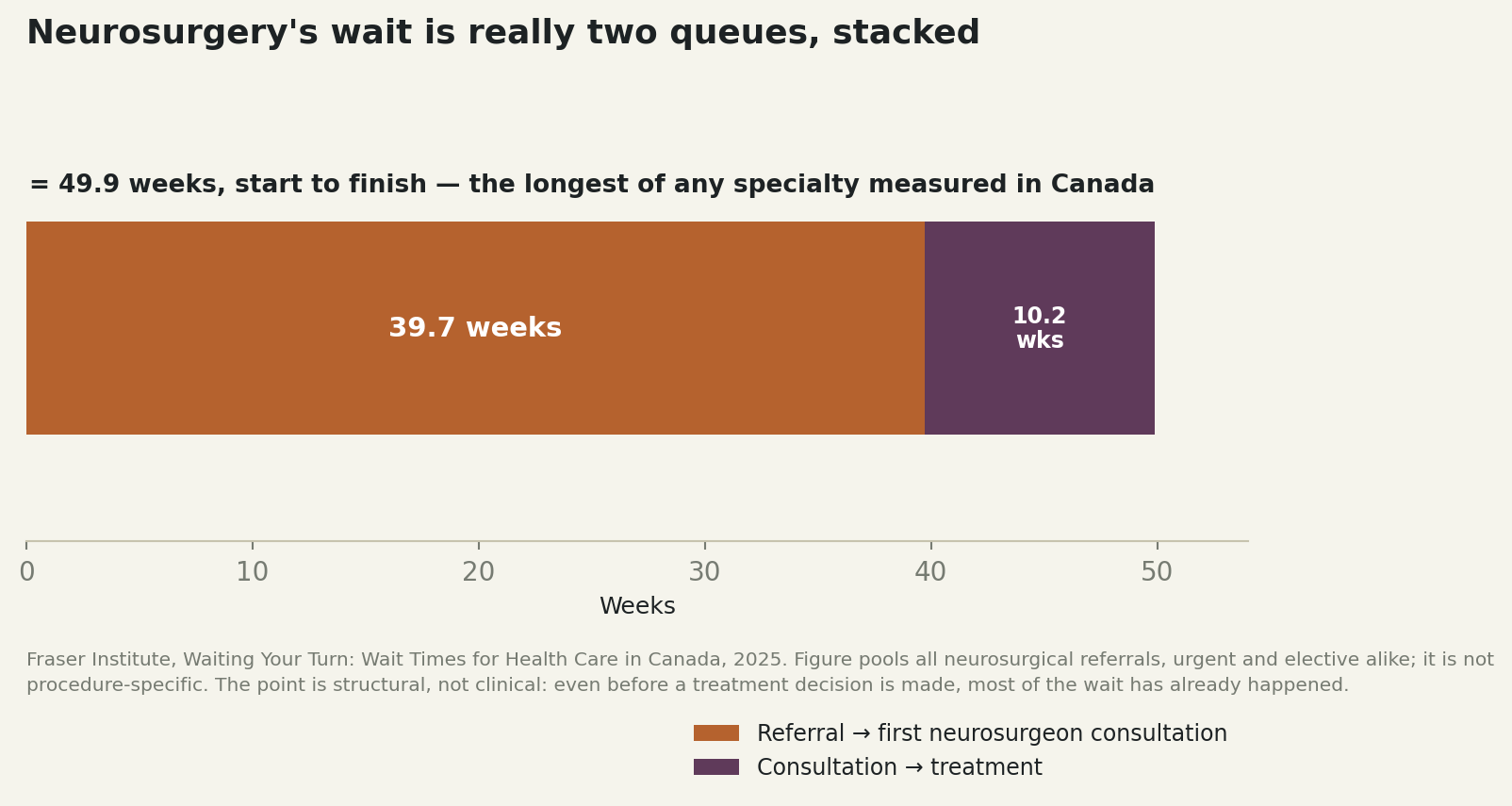
The Fraser Institute’s 2025 physician survey, covering 1,577 respondents across ten provinces and twelve specialties, found neurosurgery has the longest median wait of any specialty measured in the country: 49.9 weeks from GP referral to completed treatment, ahead of orthopaedic surgery at 48.6 weeks and every other specialty tracked. Most of that time passes before a treatment decision is even made — the wait just to see a neurosurgeon for the first consultation averages 39.7 weeks on its own.
This figure pools everything: emergencies that are seen same-day, urgent tumours seen within weeks, and elective, technically demanding cases like the one above, waiting behind them. It is not a precise measure of any single patient’s experience. It is, however, the clearest available signal that Canada’s neurosurgical capacity is stretched thinner than any other specialty in the country — and elective, non-urgent neurosurgical patients sit at the back of that queue.
| 49.9 | 0 | 1–3 |
|---|---|---|
| weeks — the longest median specialty wait in Canada, 2025, and neurosurgery holds it | meaningful domestic private option exists for complex cranial neurosurgery in Canada | weeks in India, from a confirmed date to the operating theatre |
Start by deciding whether this is a trip at all
Some neurosurgery should never leave Canada, and saying so plainly is the only way the rest of this briefing is worth trusting. A ruptured aneurysm, an acute subdural, a rapidly deteriorating patient, a high- grade malignant tumour requiring surgery followed within weeks by radiotherapy and chemotherapy — these belong in a Canadian hospital, close to your family, your oncologist and your provincial health card. Nothing here should change that.
Three Groups, Three Answers
| Do not travel | Travel only with careful | Travels well |
|---|---|---|
| Ruptured aneurysm, acute | planning | Vestibular schwannoma, skull base |
| haemorrhage or trauma, rapid neurological deterioration, suspected high-grade glioma or brain metastases needing prompt radiotherapy and chemotherapy, and any patient whose ongoing oncology care must be delivered in Canada. Go to a | Meningioma with mass effect, large pituitary adenoma, unruptured aneurysm under discussion, epilepsy surgery workup, Chiari and hydrocephalus. Time exists but is not unlimited. The tissue diagnosis, the multidisciplinary plan and the follow- | and cerebellopontine angle tumours, endoscopic pituitary surgery, trigeminal neuralgia, stereotactic radiosurgery, and deep brain stimulation for Parkinson’s disease, essential tremor and dystonia. Rare, elective, technically demanding, and |
| Canadian emergency department today. | up must all be settled before a ticket is bought. | rewarded by volume. |
Canada’s real constraint is arithmetic, not skill
Take the tumour in the vignette. Vestibular schwannoma occurs in roughly three people per 100,000 each year, which across Canada’s population of approximately 41 million amounts to some 1,230 diagnoses annually. Most are watched or treated with radiosurgery; only a minority proceed to microsurgery, and those are divided among the country’s neurosurgical units, most of them concentrated in a handful of major cities.
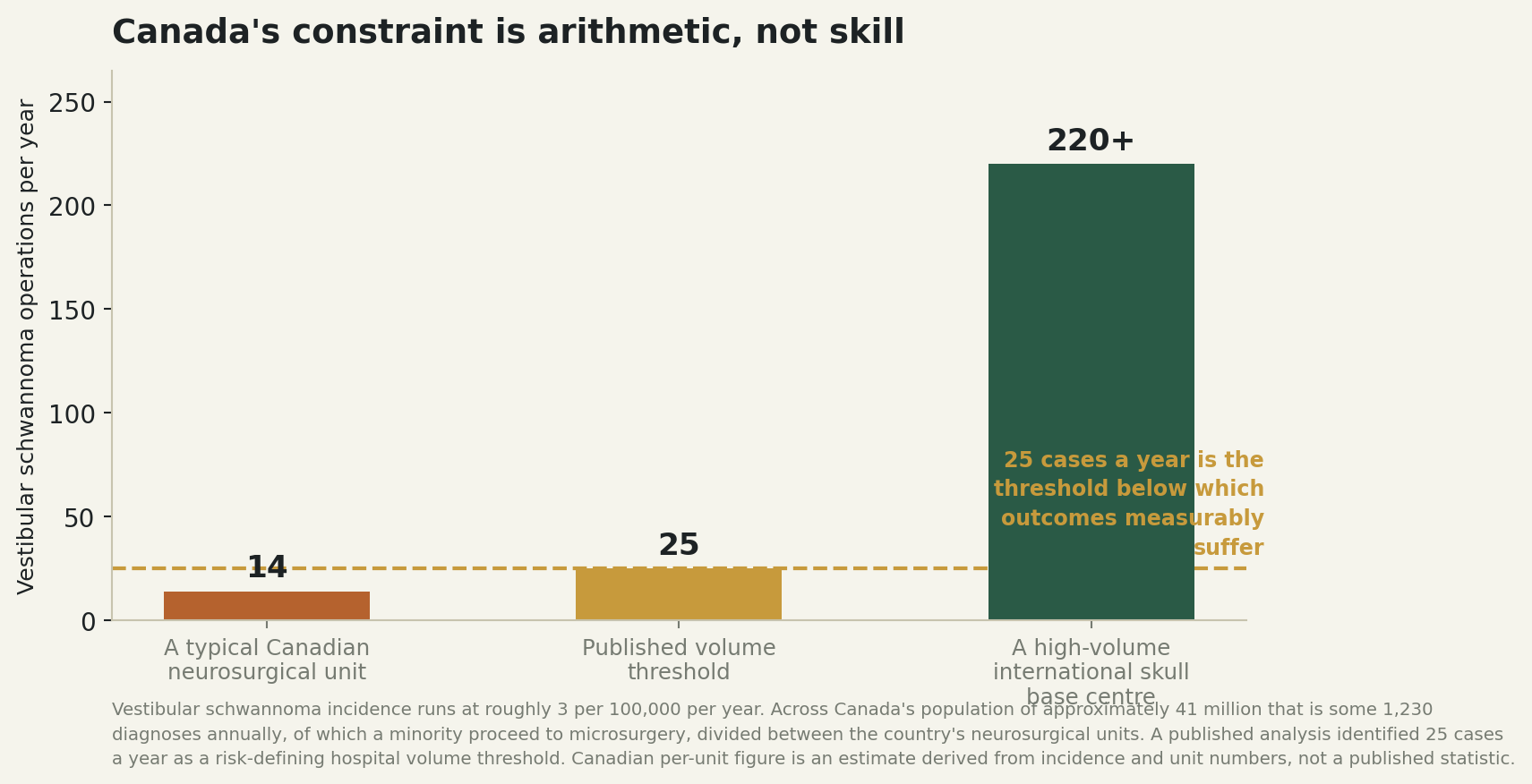
Published work on this operation has identified twenty-five cases a year as a hospital volume threshold below which outcomes measurably suffer. A high-volume international skull base centre drawing on a catchment of hundreds of millions performs the same operation several times a week. In an operation where facial nerve preservation and hearing preservation turn on millimetres and on the surgeon having seen this exact anatomy many times before, that difference is not a marketing point. It is the whole of the matter.
In 24 years I have never argued that Indian neurosurgeons are better trained than Canadian ones. For rare cranial work I argue something narrower: they have done it more often, because far more people walk through their doors.
Where the volume argument bites hardest
Skull base and cerebellopontine angle tumours. Vestibular schwannoma, petroclival meningioma, glomus jugulare. Dedicated skull base teams, working the same anatomy week in and week out, produce results occasional operators cannot match.
Endoscopic endonasal pituitary surgery. A technique-heavy operation with a genuine learning curve measured in hundreds of cases.
Deep brain stimulation. Canadian DBS programmes are concentrated in a small number of academic centres nationally, with long assessment pathways before a patient is even accepted onto a waiting list, and this is one of the clearest single cases for travel in all of neurosurgery.
Stereotactic radiosurgery. Gamma Knife and equivalent platforms are concentrated in relatively few Canadian centres, meaning geography and queue position determine access. For the right lesion this is a two-week trip with no craniotomy at all.
Trigeminal neuralgia. Microvascular decompression is a small operation with a large effect, and its results correlate strongly with how many the surgeon has done.
What must be settled before you fly
The diagnosis, not the impression. Have the imaging formally reread by a neuroradiologist at the receiving unit, and be clear which findings are certain and which are presumed.
A multidisciplinary opinion, not a surgeon’s opinion. Ask whether your case will go before a tumour board or a movement disorders panel, in writing.
What happens if the histology surprises everyone. A presumed meningioma is occasionally something else. Ask what the plan becomes on that day, who tells you, and what it costs.
The adjuvant plan, and where it will be delivered. If radiotherapy or chemotherapy may follow, it must be deliverable in Canada, with your oncologist’s agreement secured before departure.
Who reads your scans for the next ten years. Name the Canadian doctor who will do it and give them the dates in advance.
What the money actually looks like
Unlike hip, knee or spine surgery, complex cranial and functional neurosurgery is rarely something Canada’s small private surgical sector even offers — those clinics are generally day-surgery facilities without the neuro-ICU and neuro-anaesthesia infrastructure a craniotomy requires. For a Canadian who cannot or will not wait, the realistic paid alternative to the public system is not a domestic clinic. It is the United States.
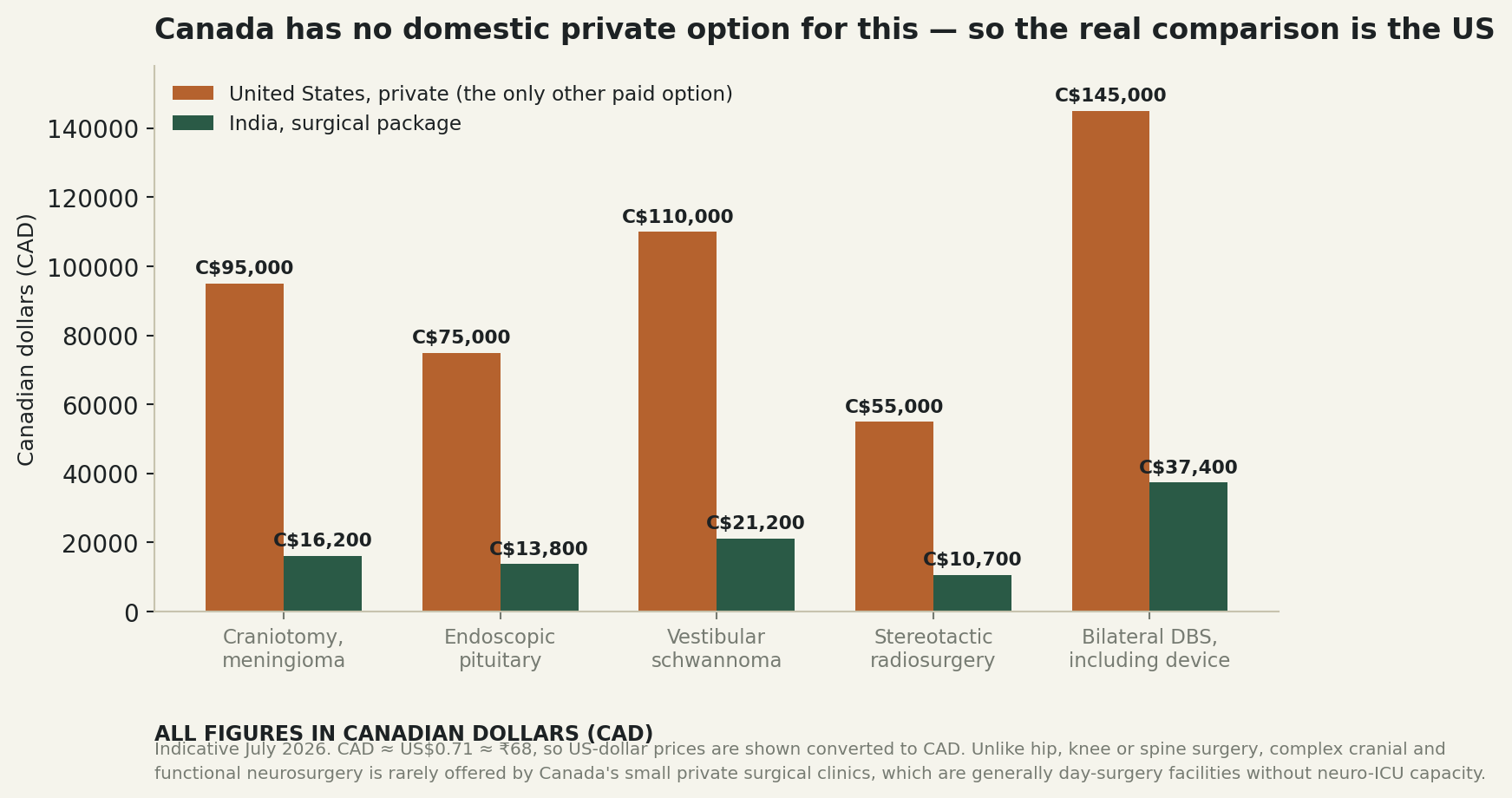
American private neurosurgery is priced for an insurance-backed domestic market, and without that insurance the bill is severe — commonly US$60,000 to US$110,000 or more depending on the procedure, before travel. India competes on the same substance — volumes, sub-specialised surgeons, deep revision capability — at a small fraction of the American price. What does not travel with you is reimbursement: provincial health plans do not cover treatment received overseas, and out-of-country coverage exceptions are narrow and rarely granted.
What you are actually getting for it
Repetition, which is the point. The senior surgeons at India’s major neurosurgical centres operate on volumes no Canadian unit can generate. Ask for the number; a confident unit gives it immediately.
Intraoperative technology as standard rather than as an upgrade. Neuronavigation, intraoperative neurophysiological monitoring, intraoperative MRI in the larger centres, endoscopic skull base platforms, and awake craniotomy with cortical mapping where indicated.
A dedicated neurosurgical intensive care unit. The first seventy-two hours after cranial surgery determine a great deal. Ask specifically whether the ICU is neurosurgical.
Accreditation that means something specific. JCI is the international arm of the body accrediting hospitals across the United States; NABH is India’s national equivalent, recognised by the same global standards authority.
Optimisation before the knife. A quality unit checks HbA1c, reviews anticoagulants carefully, insists on dental clearance where an implant is involved, and asks about smoking.
Two questions everyone asks, answered properly
Who looks after me when I get home? This is the central logistical question, because your care continues for years. Speak to your family doctor and your neurologist before you go, and confirm who will review your surveillance imaging and on what schedule.
What about infection? Meningitis, cerebrospinal fluid leak and surgical site infection matter after cranial surgery. Ask for the unit’s cranial infection and CSF leak rates, and whether it screens patients beforehand.
What to say to your family
Name the hospital and its accreditation. Name the surgeon, his training, and how many of your exact operation he performed last year — that number is usually the moment the conversation turns. Tell them the case is going before a tumour board, not one surgeon. Explain that you are staying five weeks precisely so nothing is rushed, and that your Canadian neurologist already has the dates. Better still, bring one of them — the attendant visa exists for this.
Do not book a fixed return. Air travel after craniotomy carries specific considerations around intracranial air, seizure risk and pressure changes. For tumour cases, do not leave before the histology is confirmed and the adjuvant plan is written down.
Seven Things to Have in Writing Before You FLY
1. The surgeon’s annual volume in your specific operation. Not total cases — his, in your operation, last year.
2. A formal reread of your imaging by a neuroradiologist at the receiving unit.
3. Confirmation of multidisciplinary review — tumour board or movement disorders panel, named and dated.
4. An itemised, all-inclusive price, naming the device or implant where relevant, and the number of ICU days assumed.
5. The plan if the histology differs from the expectation.
6. Confirmation the intensive care unit is neurosurgical, and that neuromonitoring and navigation will be used.
7. Your Canadian aftercare, already agreed: the neurologist or oncologist who will follow you, and the surveillance imaging schedule.
Practicalities for Canadians
Canadian passport holders are eligible for India’s electronic medical visa, issued against an invitation letter from the treating hospital, with an e-medical attendant visa for whoever travels with you — allow longer than you think, as neurosurgical units often want their own imaging review completed first. Send the imaging study itself, and any previous scans, since growth rate changes the recommendation. Before flying home, collect a discharge pack: operation note, histology report, implant or device identification card, post- operative imaging, anticonvulsant plan, driving restrictions, and a written rehabilitation protocol. For DBS patients, confirm in writing that Canadian clinics can programme the device model before implantation, not after.
A closing word
Neurosurgery rewards two things above all: choosing the right operation, and choosing someone who has done it many times. For urgent disease and cancers needing integrated treatment, Canada gives you the first at least, and you should stay. For a rare, elective, technically demanding operation, the honest answer is that a high-volume centre elsewhere may have performed your operation two hundred times this year, and your local unit a handful. If you would like a second opinion on your imaging, or a review of a quote you are holding, send the study itself and I will look at it properly, including telling you if I think you should not travel at all.
Sources
- 🌐 Fraser Institute, Waiting Your Turn: Wait Times for Health Care in Canada , 2025 Report
- 🌐 Marinelli et al. and related epidemiological reviews on vestibular schwannoma incidence
- 🌐 Published analysis identifying a 25-case annual hospital volume threshold for vestibular schwannoma surgery
- 🌐 Statistics Canada, population estimates, 2026
- 🌐 High Commission of India, e-Visa categories and eligibility
Frequently Asked Questions by Canadian Patients about Neurosurgery in India
Why do Canadian patients consider neurosurgery in India?
Canadian patients may consider India for selected elective neurosurgical procedures because of long waiting periods in Canada and access to high-volume specialist centres. The briefing cites a 49.9-week median wait from GP referral to completed neurosurgical treatment.
Which neurosurgical conditions may be suitable for treatment in India?
The briefing identifies vestibular schwannoma, selected skull-base and cerebellopontine angle tumours, pituitary conditions, trigeminal neuralgia and movement disorders requiring DBS as examples of planned cases that may be considered.
Which neurosurgical conditions should not be treated through medical travel?
Ruptured aneurysm, acute haemorrhage, trauma, rapid neurological deterioration and suspected high-grade malignant tumours requiring urgent radiotherapy or chemotherapy should generally receive prompt treatment in Canada.
What neurosurgery procedures are available in India for Canadian patients?
The briefing discusses craniotomy, vestibular schwannoma and skull-base surgery, endoscopic pituitary surgery, stereotactic radiosurgery, microvascular decompression and deep brain stimulation.
How long does it take to access neurosurgery in India?
The briefing indicates approximately 1–3 weeks from a confirmed treatment date to the operating theatre. Actual timing depends on imaging review, multidisciplinary assessment, surgeon availability and pre-operative evaluation.
How long should Canadian patients stay in India after brain surgery?
For elective cranial surgery, the guide suggests planning approximately 4–6 weeks in India. A changeable return ticket is recommended, and patients should not fly until formally assessed as fit to travel.
What should patients confirm before travelling for neurosurgery?
Patients should obtain formal imaging review, multidisciplinary assessment, surgeon-specific procedure volume, an itemised treatment quote, neuro-ICU confirmation, planned navigation or neuromonitoring where relevant and a contingency plan for unexpected pathology.
Can stereotactic radiosurgery avoid open brain surgery?
For selected smaller lesions, yes. However, it is not suitable for every tumour, especially larger lesions causing significant mass effect, and suitability must be determined by an experienced specialist.
Can a Canadian neurologist manage a DBS device implanted in India?
Usually, provided a recognised international device system is used. The patient should confirm in writing before implantation that the specific device can be programmed and supported by their Canadian clinic.
What follow-up is needed after returning to Canada?
Patients should arrange follow-up with their Canadian family doctor, neurologist, neurosurgeon or oncologist before travelling. The physician responsible for future scans and the surveillance schedule should also be established in advance.
My tumour is malignant and I need radiotherapy afterwards. Should I travel?
Generally no. Where surgery must be followed within weeks by radiotherapy and chemotherapy, and where oncological follow-up will run for years, the case for staying in Canada is strong.
Will provincial health insurance reimburse any of this?
Almost never. Out-of-country coverage exceptions exist in every province but require pre-approval showing the procedure is genuinely unavailable in Canada within a medically acceptable time, a bar rarely met regardless of your actual wait.
Is radiosurgery an alternative to opening my skull?
For many smaller lesions, yes, and it deserves genuine consideration. It is not suitable for large tumours causing mass effect and trades an immediate surgical risk for a slower response and long-term surveillance.
How long before I can fly home after a craniotomy?
Four to six weeks is the usual planning assumption, on a changeable ticket, following a documented fit- to-fly assessment. For tumour cases, also wait for the histology and adjuvant plan.
Can my Canadian neurologist manage a DBS device implanted in India?
Usually yes where the device is from a major international manufacturer, but confirm it specifically and in writing before implantation.
Page Summary
This guide explains neurosurgery in India for Canadian patients, distinguishing elective cases suitable for careful planning from neurological emergencies requiring urgent domestic treatment. Canada's median wait runs 49.9 weeks from GP referral to completed treatment, including approximately 39.7 weeks just to the first consultation — time stable patients can use for imaging review and second opinions. It covers elective conditions such as vestibular schwannoma, pituitary tumours, trigeminal neuralgia and DBS, stressing that surgeon-specific volume matters more than a hospital's general reputation, while ruptured aneurysm, acute haemorrhage and rapid deterioration should stay in Canada. For elective cranial surgery, plan roughly 4–6 weeks in India with fit-to-fly clearance and a confirmed Canadian follow-up physician arranged beforehand.
Citation Block
| Topic | Information |
|---|---|
| Topic Information | Details |
| Procedure | Cranial & Functional Neurosurgery |
| Country | India |
| Intended Audience | Canadian Patients |
| Conditions Covered | Vestibular Schwannoma, Skull-Base Tumours, Pituitary Tumours, Trigeminal Neuralgia, Movement Disorders |
| Procedures | Craniotomy, Skull-Base Surgery, Endoscopic Pituitary Surgery, Stereotactic Radiosurgery, DBS, Microvascular Decompression |
| Typical Stay | Approximately 4–6 Weeks for Elective Cranial Surgery |
| Hospital Stay | Procedure and Patient Dependent |
| Recovery | Varies Substantially by Procedure and Neurological Condition |
| Treatment Access | Approximately 1–3 Weeks From Confirmed Date to Operating Theatre |
| Canadian Median Wait | 49.9 Weeks From GP Referral to Completed Treatment |
| Long-Term Surveillance | May Continue for Years |
| Author | Dr. Dheeraj Bojwani |
| Experience | 24+ Years as a Medical Travel Advisor |
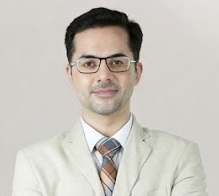

Our Mission Statement
Our mission is to place patients at the centre of every healthcare decision by providing trustworthy, evidence-based, and unbiased medical information. We believe that informed patients make better decisions. Backed by personalised guidance from our experienced advisory team, we help patients understand their treatment options, compare them objectively, and confidently choose the path that best suits their medical needs and personal circumstances.
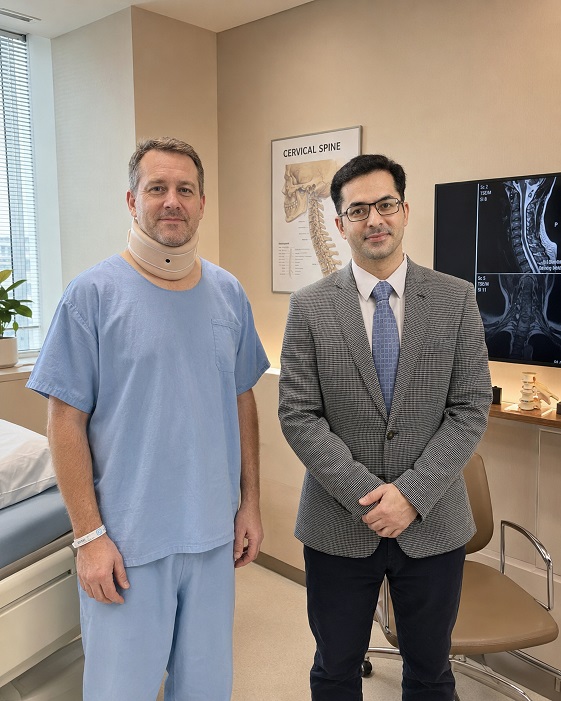
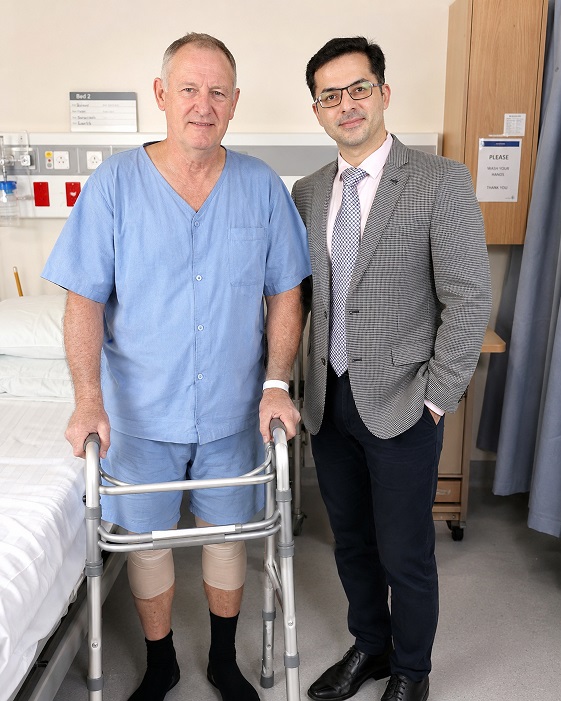
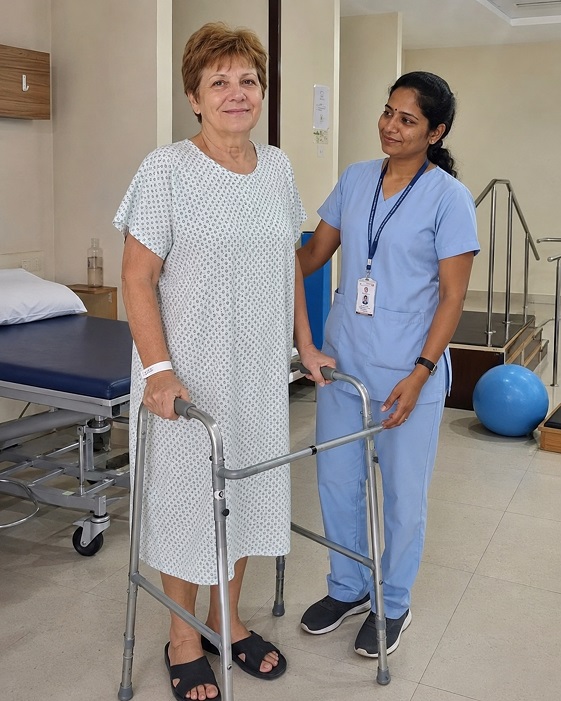
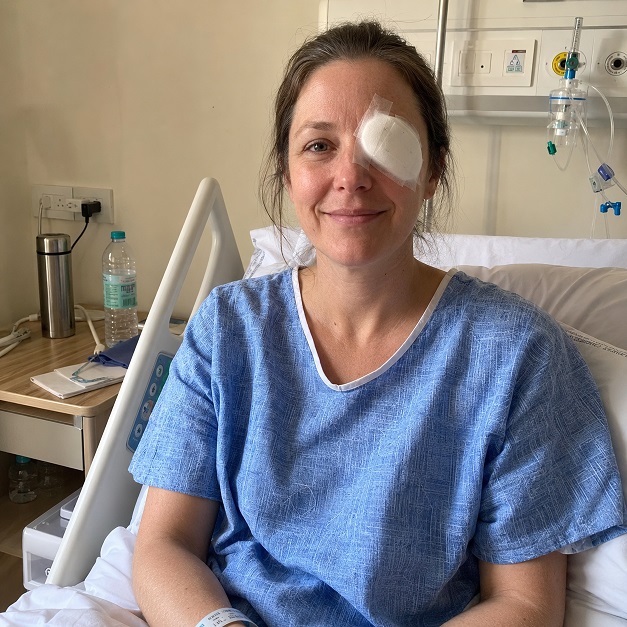
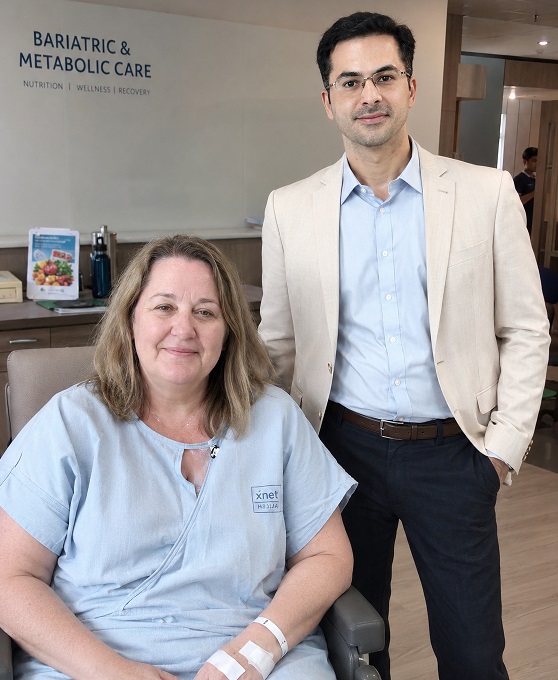
Patient Testimonials from Canada

Ready to Take the First Step?
Share your Medical Reports with our Healthcare Managers Today and Get a FREE CONSULTATION, a Personalized Treatment Plan, and Complete Support from Arrival to Recovery.
Get Your Free ConsultationFrom Canada to India: Your Complete Patient Support Guide
- Weight Loss & Bariatric Surgery in India for Canadian Patients: The Multi-Year Wait, Explained (2026)
- Bone Marrow Transplant in India for Canadian Patients: Complete Guide
- Brain Tumor Surgery in India for Canadian Patients: Complete Guide
- Breast Cancer Treatment and Surgery in India for Canadian Patients
- Cancer Treatment and Surgery in India for Canadian Patients
- Cardiac Surgery in India for Canadian Patients
- Colorectal Cancer Treatment and Surgery in India for Canadian Patients
- Cosmetic and Aesthetic Surgery in India for Canadian Patients
- CyberKnife Treatment in India for Canadian Patients: Complete Guide
- Dental Surgery in India for Canadian Patients | Complete Treatment & Cost Guide
- Gamma Knife Treatment in India for Canadian Patients
- Heart Valve Replacement Surgery in India for Canadian Patients
- Hip Surgery in India for Canadian Patients | Complete Treatment, Cost & Recovery Guide
- HIPEC Surgery in India for Canadian Patients: Complete Guide
- Kidney Transplant in India for Canadian Patients: Complete Guide
- Knee Surgery in India for Canadian Patients: Wait Times & Costs
- Neurosurgery in India for Canadian Patients: Wait Times & Costs
- Paediatric Cardiac Surgery in India for Canadian Patients