

Dental Surgery in India for Canadian Patients
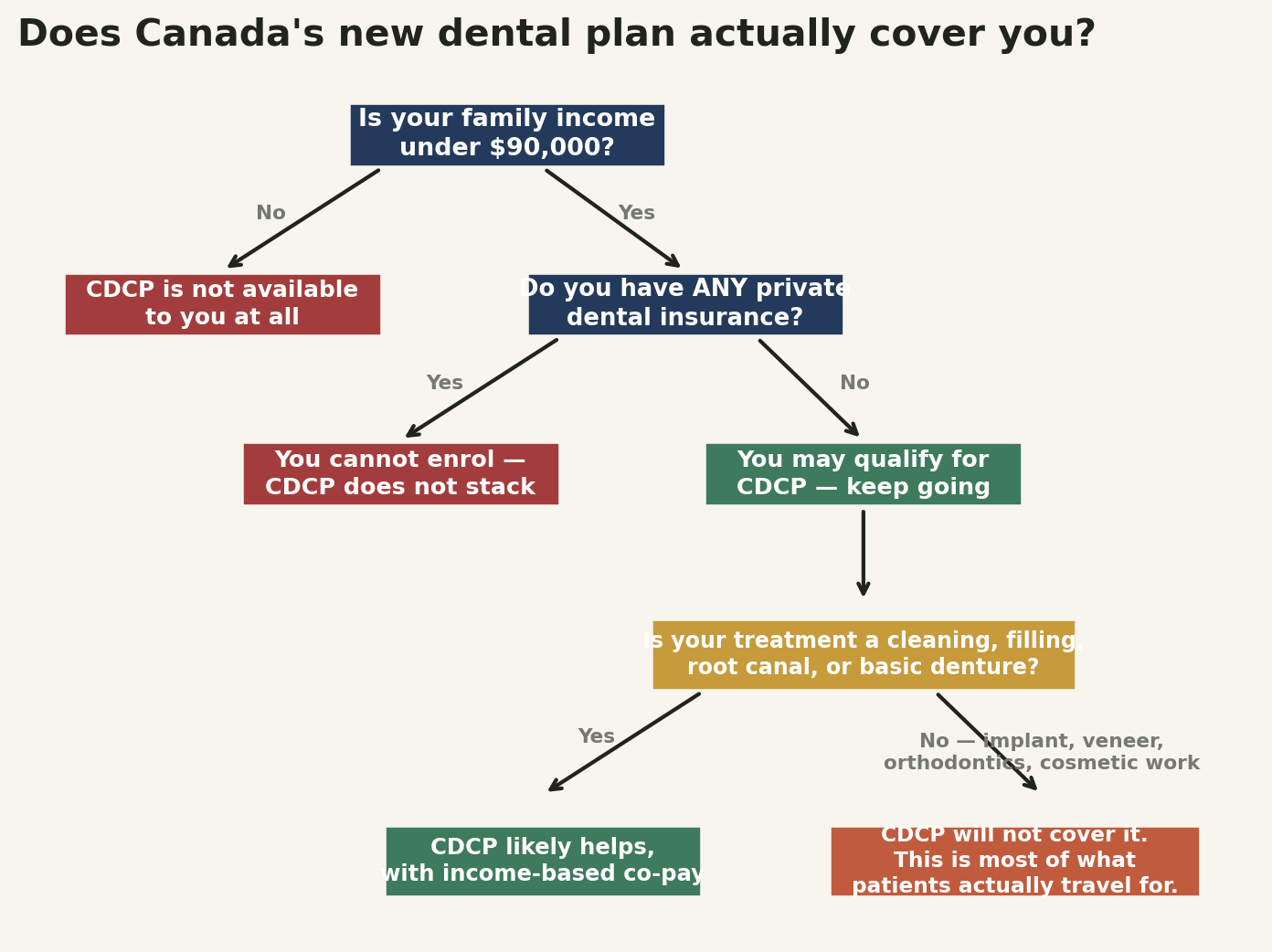
Before you read another word, find out whether Canada's new dental plan actually applies to you. For most people considering a trip abroad, it doesn't — and this report starts by showing you why.
The Canadian Dental Care Plan, rolled out nationally through 2024 to 2026, is real and has genuinely helped millions of people. As of April 2026, 6.3 million Canadians were enrolled, saving an average of roughly $900 a year each. It is also, for a great many Canadians, not the answer to the bill they are actually facing — and the flowchart above shows why in about fifteen seconds.
Start here, before anything else in this document, because it will save you from reading the rest of it under a false assumption.
Healing Journeys of Canadian Patients
Key Takeaways
- The Canadian Dental Care Plan (CDCP) provides valuable support for routine dental care but generally does not cover dental implants, cosmetic dentistry, adult orthodontics or most full-mouth rehabilitation procedures, which are among the main reasons Canadians seek treatment abroad.
- Many Canadians travelling to India for dental treatment already have employer dental insurance, but annual benefit limits often cover only a small portion of complex implant or reconstruction costs.
- Patients considering dental implants should obtain a written treatment plan and a second opinion before travelling to avoid unnecessary or irreversible procedures.
- Implant treatment generally follows the two-trip protocol. The first visit includes implant placement and temporary restoration, while the second visit, after approximately 3–6 months, allows placement of the final prosthesis once healing is complete.
- Routine procedures such as crowns, bridges, root canals and simple extractions can often be completed during a single visit of about one week.
- Patients requiring bone grafting may benefit from modern grafting techniques that allow grafting and implant placement during the same operation, reducing the total number of surgeries while still respecting normal healing times.
- A CBCT scan is considered essential for responsible implant planning, and treatment plans based only on photographs should be avoided.
- Before returning to Canada, patients should collect implant identification cards, warranty documents, complete treatment records and follow-up instructions for their Canadian dentist.
- Patients should avoid flying within 48 hours after implant placement, tooth extraction or sinus lift procedures, unless cleared by their treating dentist.
- Accredited Indian dental hospitals commonly provide multidisciplinary care involving oral and maxillofacial surgeons, prosthodontists, periodontists, endodontists and restorative dentistry specialists.
Quick Facts
- Conditions Covered
- Missing Teeth, Tooth Loss, Full Mouth Rehabilitation, Damaged Teeth, Bone Loss Requiring Grafting, Cosmetic Dental Concerns
- Procedures Mentioned
- Dental Implants, Full-Arch Implant Rehabilitation, Crowns, Bridges, Root Canal Treatment, Tooth Extractions, Bone Grafting, Sinus Lift, Veneers
- Target Audience
- Canadian patients considering dental surgery in India
- Author/Advisor
- Dr. Dheeraj Bojwani
- Experience
- 24+ Years in Medical Travel
- Treatment Highlights
- CBCT-based treatment planning, multidisciplinary dental specialists, internationally recognised implant systems, bone grafting, full-mouth rehabilitation and staged implant restoration
- Full Arch Dental Implants in Canada
- Approximately CAD 28,000
- Comparable Treatment in India
- Approximately CAD 7,400 (subject to individual treatment planning)
- Routine Dental Procedures
- Approximately 7–10 Days
- Implant Treatment
- Two Visits, each approximately 7–10 Days, separated by 3–6 Months
- Hospital Stay
- Usually performed as an outpatient or day-care procedure
- Medical Travel Requirements
- Indian e-Medical Visa, Invitation Letter from the Treating Dental Hospital or Clinic, Medical Records
- Medical Travel Support
- Treatment planning, second-opinion review, appointment scheduling, travel coordination, accommodation guidance and post-treatment follow-up planning
- Follow-up Care
- Implant review, oral hygiene maintenance, prosthesis evaluation and regular follow-up with a Canadian dentist.
In Brief
Dental surgery in India has become an option for many Canadian patients seeking procedures that are not routinely covered under the Canadian Dental Care Plan. Successful treatment depends on comprehensive pre-treatment planning, CBCT-based implant assessment, obtaining a written treatment plan before travel and following the recommended two-trip protocol for implant rehabilitation. While routine restorative procedures may be completed during a single visit, complex implant reconstruction requires adequate healing before the final prosthesis is placed. Careful planning, proper documentation and coordinated follow-up with a Canadian dentist contribute to long-term treatment success.
Three ways the new plan leaves you exactly where you started
Your household earns too much. Family income above $90,000 makes you ineligible outright, with no partial access. Between $70,000 and $90,000 you are eligible but pay a 40 to 60 per cent co-payment yourself — meaningful help, not free care.
You already have any private dental insurance. Not partial insurance, not insurance you rarely use — any access to it disqualifies you. CDCP does not stack with an employer plan, however thin that plan is.
Your treatment is the expensive kind. This is the one that matters most for this briefing. Implants are excluded in almost every case — covered only through a rare, pre-authorised medical exception for trauma or congenital defect, not for ordinary tooth replacement. Adult orthodontics, veneers, cosmetic bonding and whitening are excluded outright. In practice, the treatment categories Canadians most often travel abroad for are precisely the ones this plan does not touch.
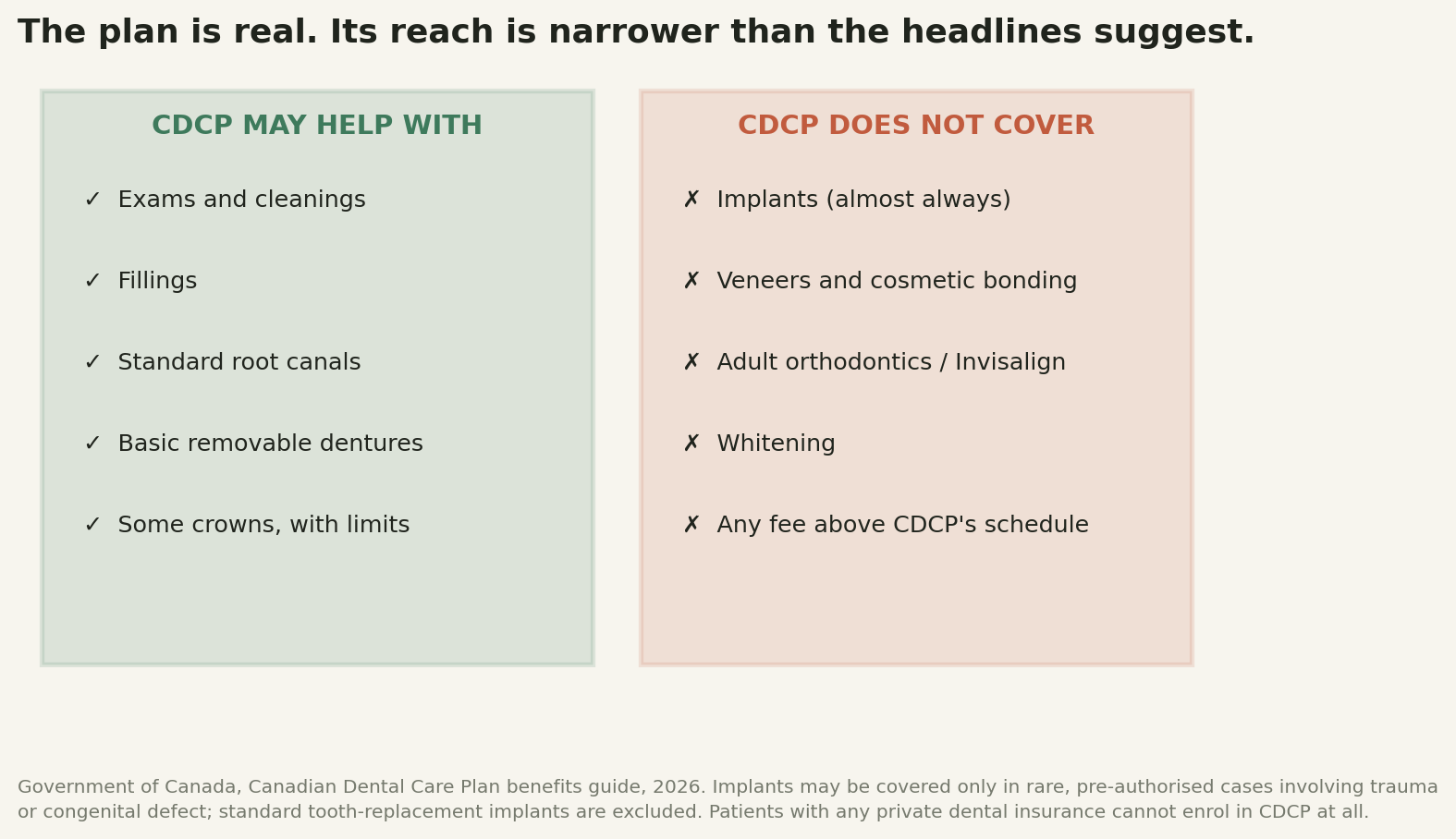
None of this is a criticism of the programme, which was designed for routine preventive and basic restorative care and does that job reasonably well. It simply means that if your situation involves a missing tooth, a failing smile, or work quoted in the tens of thousands of dollars, the plan you have been hearing about on the news was never going to be the solution.
There is also a balance-billing detail worth knowing even if you are eligible. CDCP pays according to its own federal fee schedule, and a dentist is entitled to charge above it — the difference becomes your responsibility, with your written consent, even on a fully covered procedure. A treatment that reads as free on paper can still carry a real bill attached, depending on which dentist you see and where you live.
What the gap actually costs
In 24 years of guiding international patients into Indian hospitals and clinics, I have watched Canada's dental conversation shift entirely toward the new federal plan — and watched the patients who actually call me be almost exclusively the ones the plan does not reach. A full arch of implants illustrates the gap plainly.
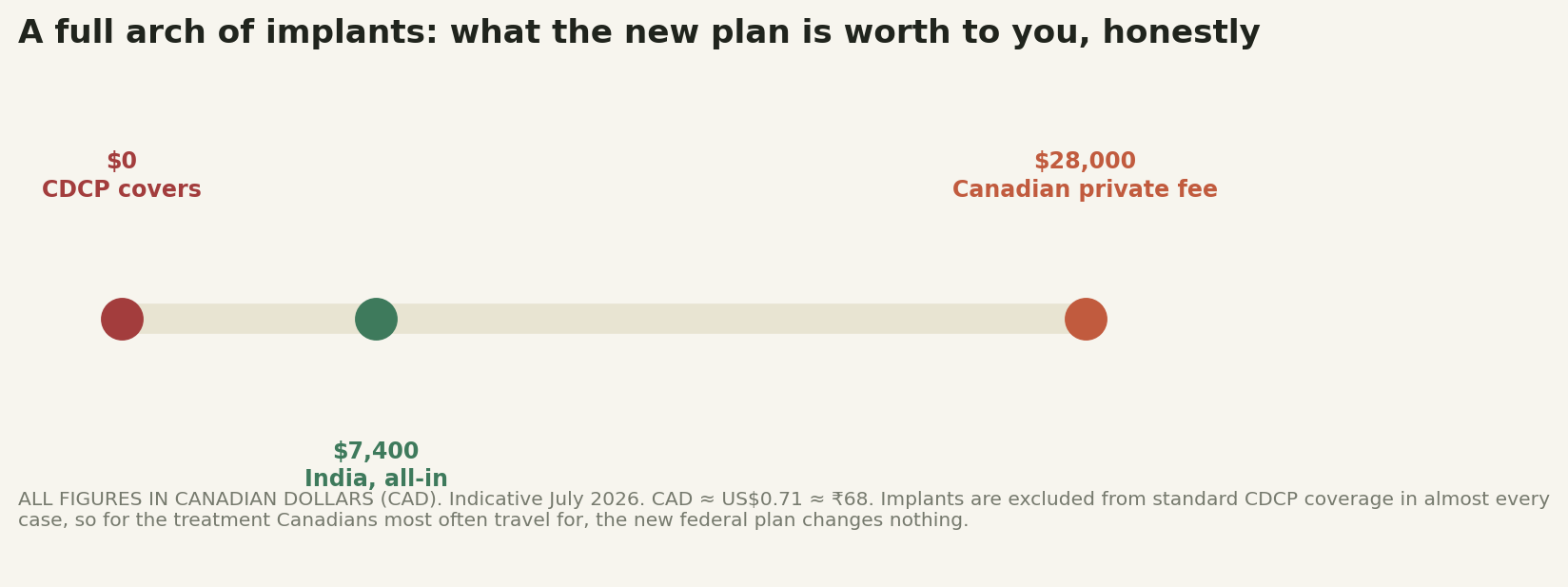
CDCP contributes nothing toward implant treatment in the overwhelming majority of cases. A Canadian private quote for a full arch commonly runs to $28,000. The same treatment, planned properly and using the same major implant systems and laboratory ceramics, typically costs around a quarter of that in India — a saving that exists entirely independently of whatever the federal government does or does not cover.
It is worth being precise about who this actually describes, because it is a larger group than the framing around CDCP suggests. Anyone earning above the $90,000 household threshold. Anyone with even minimal employer dental coverage, since that coverage typically caps major work at a few thousand dollars a year regardless of the total bill. And every single person, at any income, needing an implant, a full-arch rebuild, orthodontics or cosmetic work, because the programme excludes those categories outright rather than means-testing them. The federal plan was built around prevention and basic repair. It was never built around the bill this briefing is about.
The dentistry is not the risk. The plan is.
This is the part I most want you to read, because it is where dental travel goes wrong, and it is almost never the drilling that fails.
Dentistry is one of the few fields in medical travel where a patient can be sold considerably more than they need, and the extra treatment is irreversible in a way most other purchases are not. A crown requires cutting down the tooth beneath it. A veneer requires enamel removed permanently. A full-arch bridge requires the remaining teeth extracted. None of this can be undone, in any country, by anyone.
The single most valuable thing you can do is have your treatment plan settled and second-opinioned before you fly, tooth by tooth, in writing, and refuse to expand it once you are in the chair. Send your X-rays to two clinics and compare what comes back. Where they broadly agree, proceed with confidence. Where one proposes twice the work, you have learned something valuable for the price of an email.
There is a structural reason this risk concentrates abroad more than at home, and it has nothing to do with dishonesty. Your Canadian dentist sees you every six months for years and carries the consequences of over-treating you. A clinic seeing you once, for a nine-day trip, does not carry that same relationship. That asymmetry is worth holding in mind through every conversation that follows.
The two-trip rule
Implants fuse to bone, and bone takes three to six months to do it. That is physiology, not a scheduling preference, and it is why the honest answer to “can this be done in one trip?” is usually no.
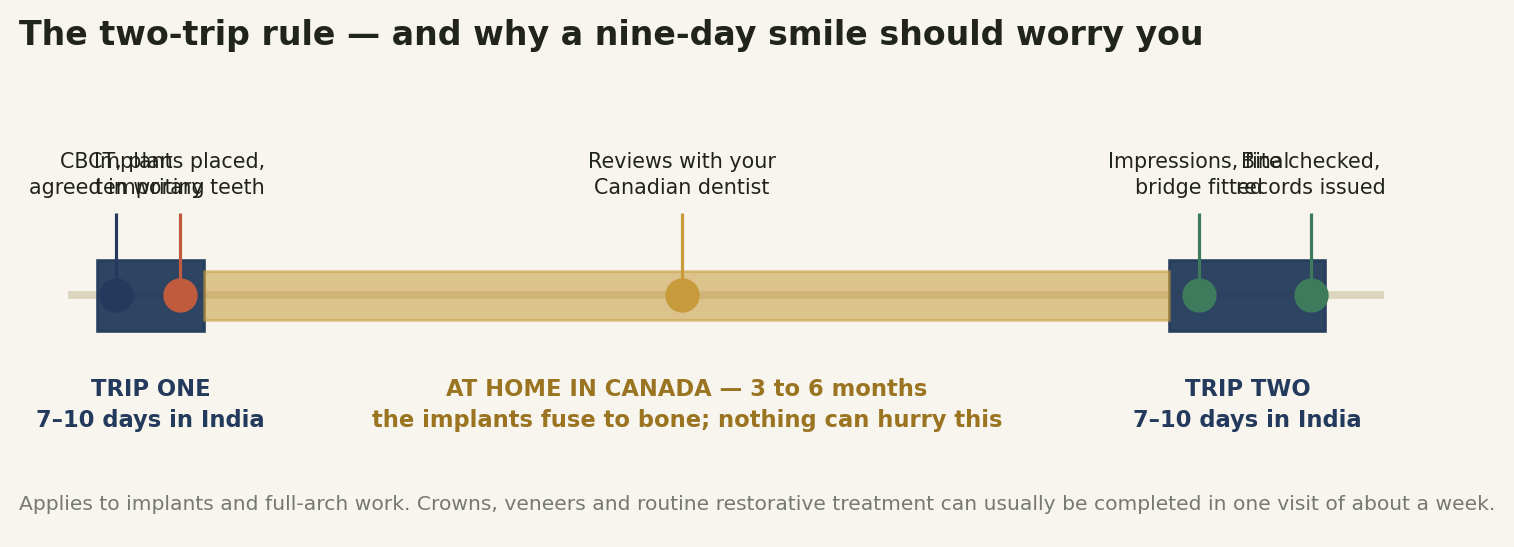
Trip one places the implants and fits a temporary. You return to Canada, live normally, and see your own dentist for reviews. Trip two, three to six months later, delivers the final restoration. It costs two sets of airfares and is still substantially cheaper than a single Canadian private quote. Routine work — crowns, bridges, root canals, extractions — is different, and can usually be completed comfortably in one visit of about a week.
In 24 years I have seen more dental disappointment caused by a compressed timeline than by poor workmanship, and the two are frequently confused after the fact. When a full-arch case fails eighteen months later, the cause is often that everything was delivered in nine days because that was the length of the trip, not because the surgery itself was substandard.
The graft that removes an entire surgery from your treatment — and a great deal of its cost
If a Canadian dentist has ever told you that you do not have enough bone for implants, and left it there, go back and ask again. That refusal is often years out of date.
For a long time, a patient with a resorbed ridge or a collapsed sinus floor faced three separate operations: graft the bone, wait six to nine months for it to mature, then open the site a second time to place the implants, then wait again before the final teeth. Deproteinised bovine bone mineral grafting — Bio-Oss is the most extensively documented material of this kind — used together with a resorbable collagen membrane, allows the graft and the implant to be placed in the same operation, at the same appointment, under the same anaesthetic. One surgery removed entirely, rather than added on. For a patient who was previously told the case was simply not possible, this is not a minor refinement. It is the difference between a plan and a flat refusal. It is also not a new or experimental material being tried out on Canadian patients for the first time. Bio-Oss carries decades of published clinical follow-up, longer than most implant systems themselves have existed, which is exactly why serious units reach for it rather than something newer and thinner on evidence. What it does not do is shorten how long bone actually takes to fuse to titanium. Grafted sites often need the full three to six months, sometimes longer, before the final bridge can safely go on — the two-trip rule above still applies, and a clinic promising to skip it because a graft was used is making a claim biology does not support. The genuine benefit is narrower and still substantial: a three-stage ordeal becomes two trips instead of three, and those months of healing are spent living your ordinary life at home in Canada rather than on a third flight.
Five Things that Should End the Conversation
1. A treatment plan produced without a CBCT scan. Nobody can plan implants responsibly from photographs alone.
2. Permanent teeth promised in a single visit. A temporary bridge on day one is normal. A final bridge before the bone has healed is not.
3. A plan that grows once you are in the chair. Decline, and ask for the original written plan.
4. Any proposal to extract teeth that can be saved. Ask specifically which teeth are being removed and why each cannot be kept.
5. No written warranty, or unclear remake terms. Ask what happens if a crown fails in a year, and whether it requires a return flight.
What you are actually getting for it
India’s larger dental hospitals run genuine specialist departments — oral and maxillofacial surgery, periodontics, prosthodontics, endodontics — rather than a single dentist attempting everything, with senior clinicians often trained internationally. Modern laboratories produce ceramics to the same standard used in Canadian practices, and the entire clinical record is produced in English, so your Canadian dentist can read every word without translation. Accreditation is worth checking yourself: JCI accredits hospitals internationally, and NABH is India’s national equivalent, recognised by the same global standards authority.
Practicalities for Canadians
Canadian passport holders are eligible for India’s electronic medical visa, issued against a letter from the treating clinic, with an attendant visa for whoever travels with you. Tell the clinic in advance about blood thinners, bisphosphonates, or diabetes, all of which change a treatment plan around extractions. Do not fly within forty-eight hours of extractions, implant placement or a sinus lift. Before returning home, collect your final treatment record, implant identification cards, warranty document and a recommended review schedule, and book a follow-up with your Canadian dentist a few weeks after landing.
A closing word
Canada now has a genuinely useful dental programme for a specific group of people with a specific kind of problem. If that is you, use it, and this briefing has little to add. If your situation is a missing tooth, a failing arch, or a quote with a five-figure number on it, the plan changes nothing, and the arithmetic that has always made India worth considering still holds. Get the plan in writing, insist on the second trip if implants are involved, and refuse to expand the work in the chair. Send me your X-rays and whatever quote you are holding and I will tell you what I think you actually need.
Sources
- 🌐 Government of Canada, Canadian Dental Care Plan — Dental Benefits Guide , 2026
- 🌐 Employment and Social Development Canada, CDCP enrolment figures, April 2026
- 🌐 Canadian Dental Association, CDCP coverage summaries
- 🌐 Canadian private dental fee surveys, 2026
- 🌐 Joint Commission International and National Accreditation Board for Hospitals and Healthcare Providers, accreditation registers
- 🌐 High Commission of India, e-Visa categories and eligibility
This briefing is general information for Canadian residents considering dental treatment overseas. It is not dental or medical advice and does not replace examination by a registered dentist. Treatment involving the removal of enamel or the extraction of teeth is permanent and cannot be reversed in any country. Facial swelling, difficulty swallowing or breathing, fever with dental pain, or uncontrolled bleeding require urgent care in Canada and are not circumstances in which to plan travel. CDCP eligibility rules, costs, exchange rates and visa requirements stated are indicative as at July 2026 and change; verify each before making decisions, including directly at Canada.ca for current CDCP terms.
Frequently Asked Questions by Canadian Patients about Dental Surgery in India
Does the Canadian Dental Care Plan (CDCP) cover dental implants?
Generally, no. The guide explains that the CDCP mainly supports preventive and basic restorative dental care. Dental implants, full-arch rehabilitation, cosmetic dentistry and adult orthodontics are typically not covered, except in rare medically approved situations.
Can most dental treatment be completed during one visit to India?
Routine procedures such as crowns, bridges, root canals and simple extractions can usually be completed during a single visit of about 7–10 days. However, dental implant treatment often requires two separate trips because the implants need 3–6 months to integrate with the bone before the final teeth are placed.
Why is a second opinion recommended before travelling?
The guide advises patients to obtain a written treatment plan and compare recommendations from more than one clinic before travelling. This helps ensure that only necessary treatment is performed and reduces the risk of unnecessary irreversible procedures such as tooth extraction or excessive crown preparation.
Why is a CBCT scan important before dental implant surgery?
A CBCT scan provides detailed three-dimensional images of the jawbone, allowing dentists to assess bone quality, implant position and the need for bone grafting. The guide recommends avoiding implant treatment plans prepared without a CBCT scan.
What happens if there is not enough bone for dental implants?
Patients with insufficient bone may still be suitable candidates for implants. Modern bone grafting techniques can allow bone grafting and implant placement during the same surgical procedure, reducing the total number of operations while maintaining appropriate healing time.
How soon can patients fly after dental surgery?
The guide recommends not flying within 48 hours after tooth extractions, implant placement or sinus lift procedures. Patients should always follow the treating dentist's advice regarding travel after surgery.
What records should patients bring before travelling to India?
Patients should carry their dental X-rays, CBCT scans (if available), previous dental treatment records, existing treatment plans, medical history and a list of current medications to help the dental team prepare an accurate treatment plan.
What documents should patients receive before returning to Canada?
Before leaving India, patients should obtain their complete treatment records, implant identification cards, warranty documents, final treatment summary and recommended follow-up schedule to share with their Canadian dentist.
Are dental hospitals in India equipped to manage complex cases?
According to the guide, larger Indian dental hospitals often have multidisciplinary teams that include oral and maxillofacial surgeons, prosthodontists, periodontists, endodontists and restorative dentistry specialists, allowing comprehensive management of complex dental conditions.
Why is the two-trip implant protocol considered important?
The guide explains that implant healing is a biological process that cannot be safely rushed. Allowing 3–6 months for the implant to integrate with the jawbone before placing the final prosthesis improves long-term stability and treatment success, making the two-trip approach the recommended protocol for most implant cases.
I earn under $70,000 and I'm CDCP-eligible. Does any of this still apply to me?
For routine cleanings and fillings, CDCP is genuinely worth using at home first. This briefing is specifically about implants, full-arch work, orthodontics and cosmetic treatment, which the plan excludes regardless of your income.
Can I keep my employer dental plan and still travel for implants?
Yes, and this is unrelated to CDCP eligibility. Most Canadian employer plans have low annual maximums for major work, often a few thousand dollars, which barely dents an implant quote. Check your plan's specific implant coverage and annual maximum before assuming either way.
How do I know the implants are a reputable brand?
Ask for the manufacturer and system name in writing before committing, and confirm it is a major international system. This determines whether a Canadian dentist can service the work later.
Is it cheaper to just wait and save for treatment at home?
Sometimes, and it is worth pricing properly. Compare the full Canadian quote, any financing interest, and what your employer plan actually contributes against the all-in India cost including two trips.
I have a health spending account through work. Does that change the arithmetic?
It can, and it is worth checking before you assume either way. Some employer health spending accounts will reimburse treatment performed overseas provided you submit a proper receipt and it falls within an eligible medical expense category; ask your plan administrator directly rather than guessing.
How long after dental surgery can I fly?
At least forty-eight hours after extractions or implant placement, longer after bone grafting or a sinus lift. Ask the clinic for a specific clearance.
Page Summary
This guide explains how Canadian patients can evaluate dental surgery in India by understanding the scope of the Canadian Dental Care Plan, determining whether advanced procedures such as implants or full-mouth rehabilitation are covered, comparing treatment costs, planning implant treatment using the recommended two-trip protocol and preparing for safe recovery. It also highlights the importance of CBCT-based planning, accredited dental centres, written treatment plans and coordinated follow-up after returning to Canada.
Citation Block
| Topic | Information |
|---|---|
| Topic Information | Details |
| Procedure | Dental Surgery & Oral Rehabilitation |
| Country | India |
| Intended Audience | Canadian Patients |
| Conditions Covered | Missing Teeth, Tooth Loss, Bone Loss, Full Mouth Rehabilitation, Cosmetic Dental Concerns |
| Procedures | Dental Implants, Crowns, Bridges, Root Canal Treatment, Bone Grafting, Sinus Lift, Veneers, Full-Arch Rehabilitation |
| Typical Stay | Routine Procedures: 7–10 Days; Implant Treatment: Two Visits of 7–10 Days Each |
| Hospital Stay | Usually Day Care / Outpatient |
| Recovery | Implant Healing Approximately 3–6 Months Before Final Restoration |
| Average Treatment Cost | Full Arch Implants: Approximately CAD 28,000 in Canada vs Approximately CAD 7,400 in India (Indicative) |
| Author | Dr. Dheeraj Bojwani |
| Experience | 24+ Years in Medical Travel |


Our Mission Statement
Our mission is to place patients at the centre of every healthcare decision by providing trustworthy, evidence-based, and unbiased medical information. We believe that informed patients make better decisions. Backed by personalised guidance from our experienced advisory team, we help patients understand their treatment options, compare them objectively, and confidently choose the path that best suits their medical needs and personal circumstances.
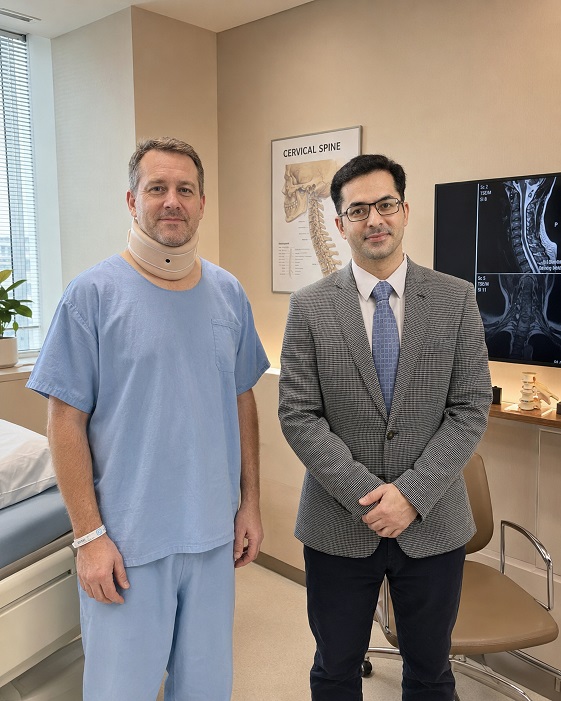
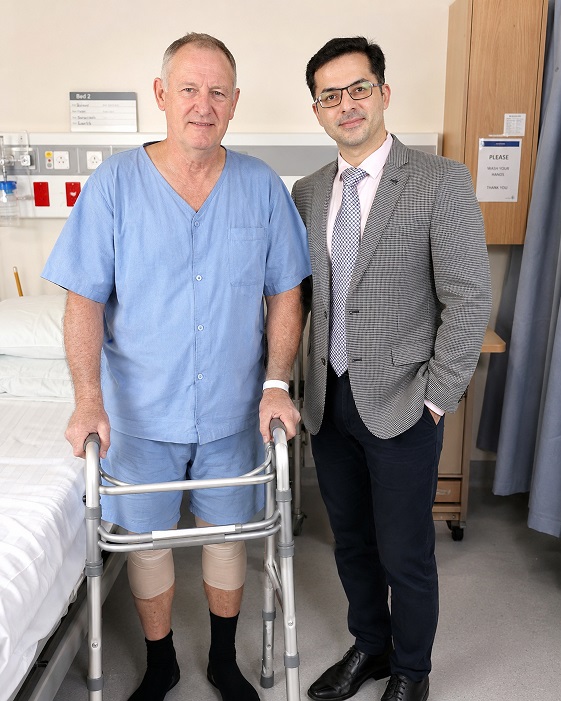
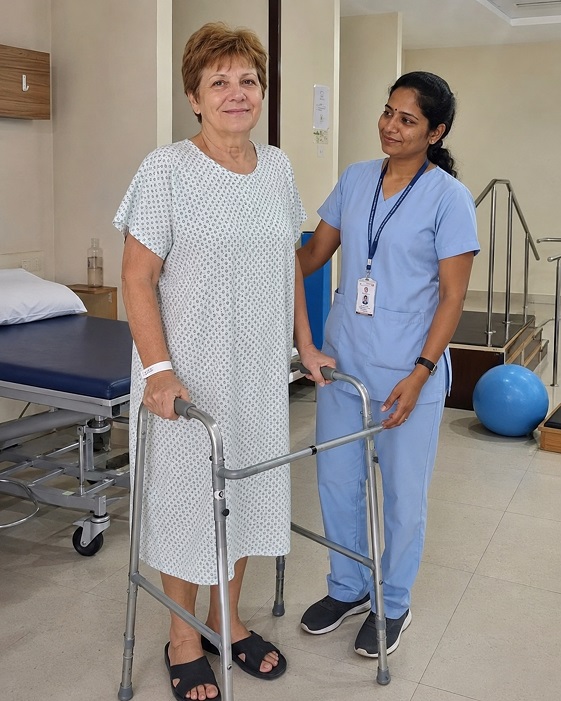
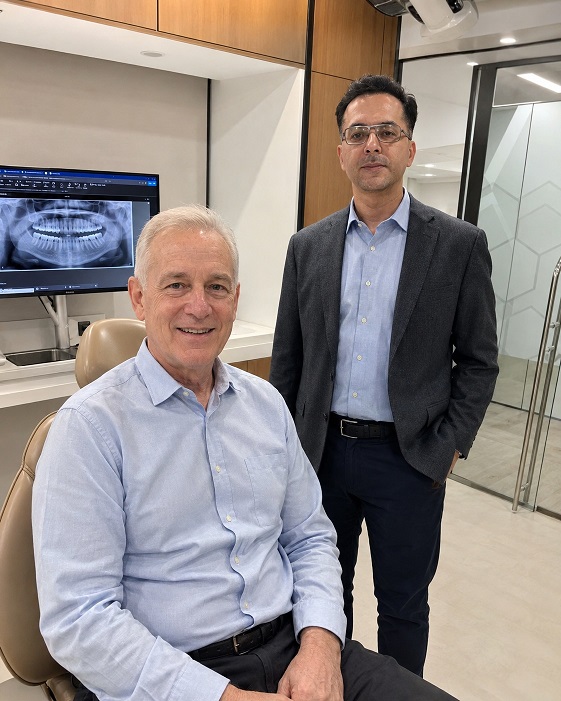
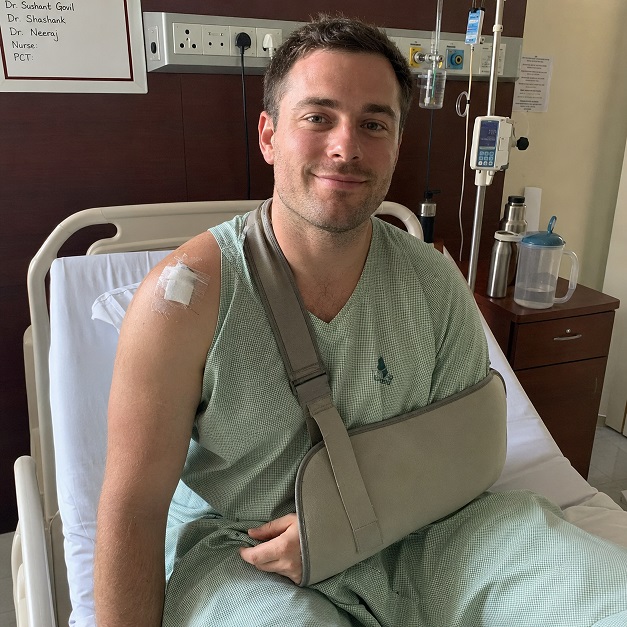
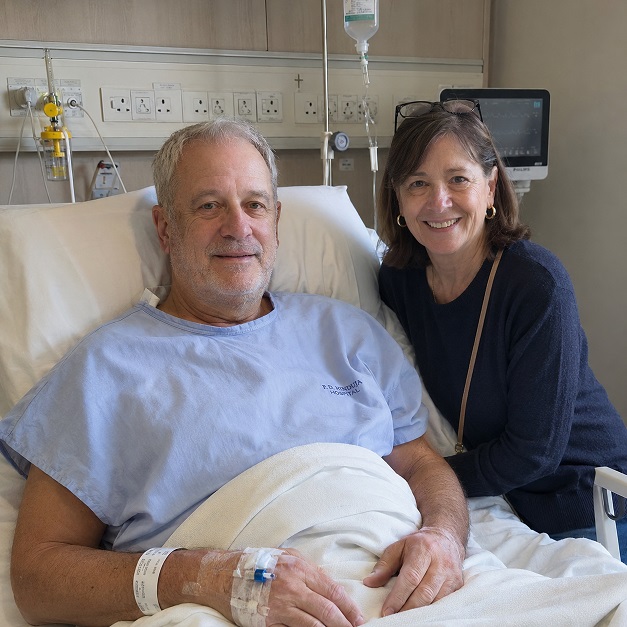
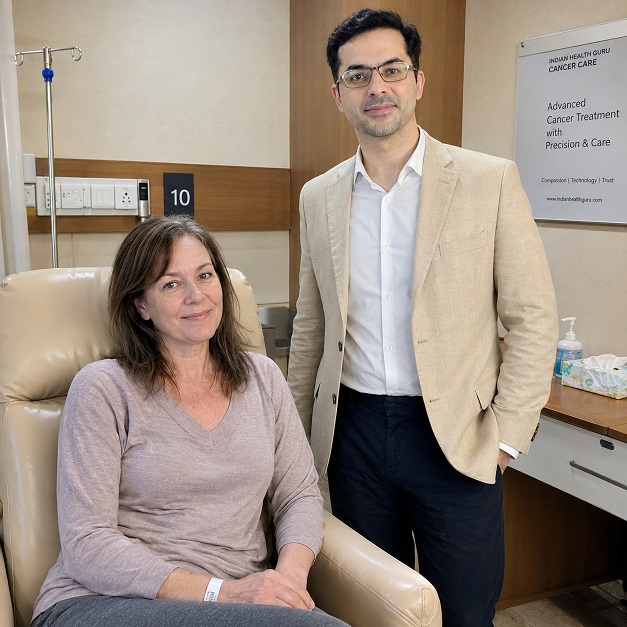
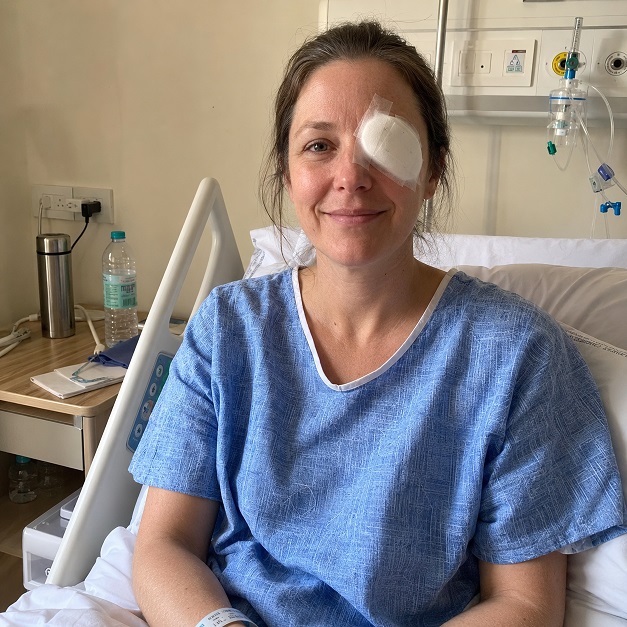
Patient Testimonials from Canada

Ready to Take the First Step?
Share your Medical Reports with our Healthcare Managers Today and Get a FREE CONSULTATION, a Personalized Treatment Plan, and Complete Support from Arrival to Recovery.
Get Your Free ConsultationFrom Canada to India: Your Complete Patient Support Guide
- Weight Loss & Bariatric Surgery in India for Canadian Patients: The Multi-Year Wait, Explained (2026)
- Bone Marrow Transplant in India for Canadian Patients: Complete Guide
- Brain Tumor Surgery in India for Canadian Patients: Complete Guide
- Breast Cancer Treatment and Surgery in India for Canadian Patients
- Cancer Treatment and Surgery in India for Canadian Patients
- Cardiac Surgery in India for Canadian Patients
- Colorectal Cancer Treatment and Surgery in India for Canadian Patients
- Cosmetic and Aesthetic Surgery in India for Canadian Patients
- CyberKnife Treatment in India for Canadian Patients: Complete Guide
- Dental Surgery in India for Canadian Patients | Complete Treatment & Cost Guide
- Gamma Knife Treatment in India for Canadian Patients
- Heart Valve Replacement Surgery in India for Canadian Patients
- Hip Surgery in India for Canadian Patients | Complete Treatment, Cost & Recovery Guide
- HIPEC Surgery in India for Canadian Patients: Complete Guide
- Kidney Transplant in India for Canadian Patients: Complete Guide
- Knee Surgery in India for Canadian Patients: Wait Times & Costs
- Neurosurgery in India for Canadian Patients: Wait Times & Costs
- Paediatric Cardiac Surgery in India for Canadian Patients