

Cardiac Surgery in India for Canadian Patients
Cardiac care has been one of Canada's five official wait-time priorities since 2004. Bypass surgery is measured against a national benchmark. Valve disease, including TAVI, is not — and the peer-reviewed data that does exist shows a wait getting longer, not shorter.
A 68-year-old retired postal worker outside Winnipeg. Severe aortic stenosis, breathless walking to the mailbox, otherwise reasonably fit for his age. His cardiologist confirms he is a candidate for a transcatheter valve rather than open surgery — the less invasive option, threaded up through the leg rather than through the chest. He is then told the wait for that specific procedure, at his hospital, runs to several months, and that a patient like him, at lower surgical risk, is not the priority. Nobody has behaved improperly. He has simply discovered that the operation he needs is not one Canada actually tracks.
Healing Journeys of Canadian Patients
Key Takeaways
- Cardiac care has been one of Canada's five official wait-time priorities since 2004, but the national benchmark does not cover all cardiac procedures.
- CIHI publishes a 182-day national benchmark for coronary artery bypass grafting (CABG). Open valve replacement, valve repair and TAVI do not have an equivalent national benchmark or national compliance percentage.
- Canadian registry data cited in the guide found that the median wait from referral to TAVI increased from 80 days in 2012 to 110 days in 2018.
- A 2025 study discussed in the document proposed risk-based TAVI benchmarks of approximately three weeks for high-risk patients and seven weeks for medium-risk patients, while some lower-risk patients could wait up to 25 weeks.
- The guide gives an indicative Indian scheduling range of approximately 10–21 days from a confirmed date to the operating theatre.
- Before comparing surgeons or hospitals, patients should first establish whether an intervention is required and precisely what procedure is appropriate.
- A recent echocardiogram should provide numerical information such as valve gradient and valve area, while coronary angiography may be needed when intervention is being considered.
- The decision between catheter-based treatment and open surgery should be made through a heart-team assessment involving an interventional cardiologist and a cardiac surgeon, rather than relying on one clinician's preference.
- For valve disease, patients should determine whether repair or replacement is appropriate and, where replacement is planned, which valve or device will be used.
- Surgeon evaluation should focus on the surgeon's annual experience with the exact procedure, not general cardiac-surgery volume.
Quick Facts
- Treatment
- Cardiac Surgery and Structural Heart Treatment
- Country
- India
- Intended Audience
- Canadian Patients and Families
- Primary Procedures
- CABG, Valve Surgery, TAVI and Structural Heart Procedures
- Canadian Cardiac Wait-Time Priority
- Cardiac Care Has Been a National Priority Since 2004
- National CABG Benchmark
- 182 Days
- National Valve Surgery Benchmark
- None
- National TAVI Benchmark
- None
- Median TAVI Wait Mentioned
- 110 Days in 2018
- Earlier Median TAVI Wait
- 80 Days in 2012
- India Scheduling Mentioned
- 10–21 Days From Confirmed Date to Operating Theatre
- Records for Return to Canada
- Operation Note, Device Card, Imaging, Anticoagulation Plan and Rehabilitation Protocol
- Author
- Dr. Dheeraj Bojwani
- Experience
- 24 Years' Experience
In Brief
Canadian patients evaluating cardiac surgery in India should begin with a clearly documented diagnosis and a heart-team assessment rather than comparing hospitals on waiting time or price alone. The guide notes that Canada has a 182-day national benchmark for CABG, while valve surgery and TAVI have no equivalent national benchmark. Patients should evaluate the surgeon's volume in the exact procedure, confirm cardiac ICU and structural-heart capability, obtain an itemised quotation and organise Canadian cardiology and anticoagulation follow-up before travelling.
Cardiac care is one of Canada's five tracked priorities. Half of cardiac surgery isn't actually in it.
In 2004, Canada’s governments agreed to reduce wait times in five priority areas: cancer treatment, cardiac care, diagnostic imaging, joint replacement, and sight restoration. Canadian cardiac surgeons are excellent, and in 24 years of guiding international patients into Indian hospitals I have never suggested otherwise. What is worth understanding is what “cardiac care” actually means inside that 2004 commitment, because it is narrower than it sounds.
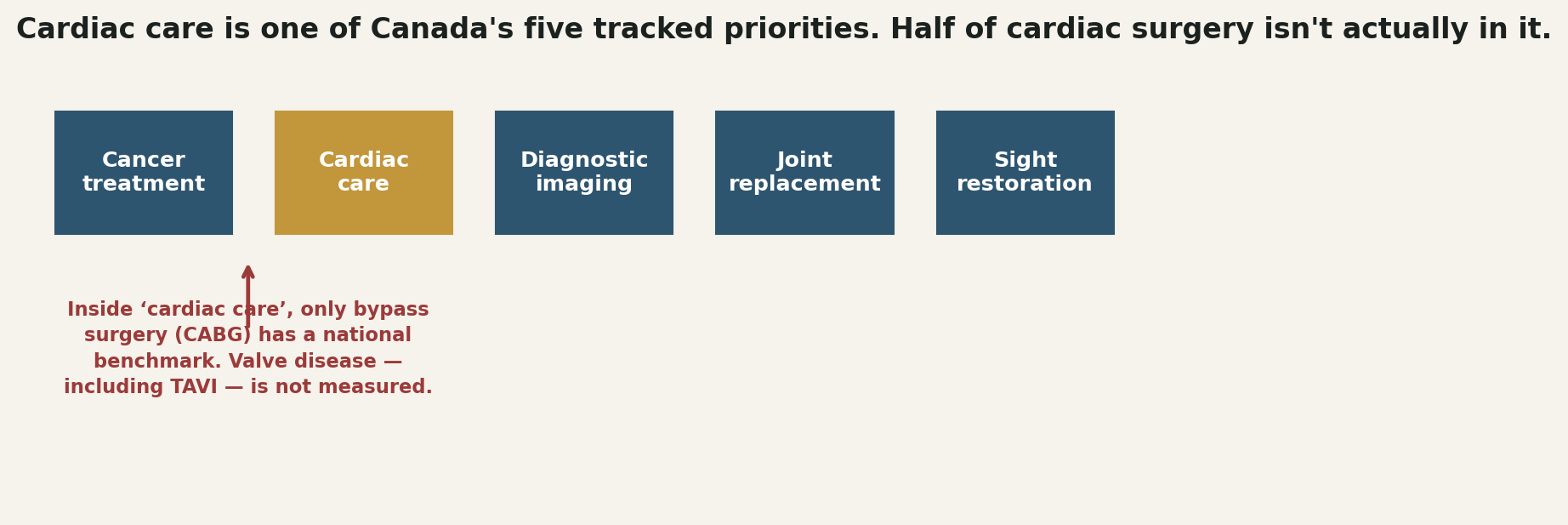
CIHI publishes a national wait-time indicator, and a 182-day benchmark, for exactly one cardiac procedure: coronary artery bypass grafting. Valve disease — open replacement, repair, and transcatheter aortic valve implantation (TAVI) — has no equivalent national benchmark and no published national compliance percentage. If your heart problem is a blocked artery, Canada measures your wait. If it is a failing valve, it largely does not.
The number that does exist for valve disease, and it is heading the wrong way
Peer-reviewed Canadian research fills part of the gap CIHI leaves. A national study using the Canadian Cardiovascular Society’s own registry data found the median wait from referral to TAVI worsened from 80 days in 2012 to 110 days in 2018, as demand grew faster than the system’s capacity to deliver it.
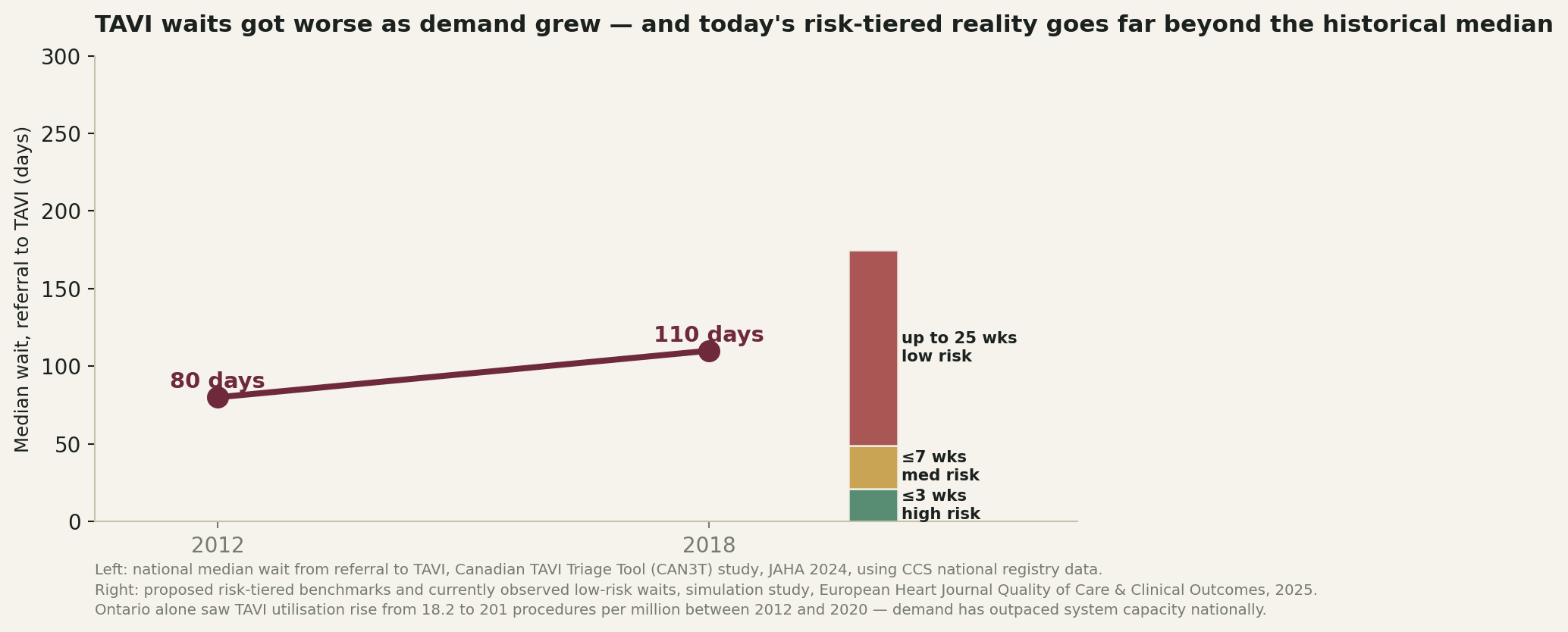
A 2025 simulation study published in the European Heart Journal Quality of Care & Clinical Outcomes proposed formal risk-tiered benchmarks — roughly three weeks for high-risk patients and seven weeks for medium-risk patients — and found that under current, unprioritised conditions, lower-risk patients can wait up to twenty-five weeks. TAVI access in Canada is also geographically uneven: a pan-Canadian evaluation published in 2020 documented real variation in capacity and wait times between provinces, concentrated in a small number of specialised centres, and called on policymakers to address the inequity directly. In Ontario alone, TAVI utilisation rose from 18.2 to 201 procedures per million people between 2012 and 2020 — an eleven-fold increase in a decade, comfortably outpacing the system’s ability to keep up.
| 110 | 0 | 10–21 |
|---|---|---|
| days — the median Canadian wait for TAVI in 2018, up from 80 days in 2012 | national benchmark exists for valve surgery, despite cardiac being a tracked priority since 2004 | days in India, from a confirmed date to the operating theatre |
The private option Canada does not really have for this
Unlike hip, knee or spine surgery, complex cardiac surgery is rarely something Canada’s small private surgical sector even offers. Those clinics are generally day-surgery facilities without the cardiac intensive care, perfusion and cardiac anaesthesia infrastructure that bypass grafting or valve surgery requires. For a Canadian who cannot or will not wait, the realistic paid alternative is not a domestic clinic. It is the United States.
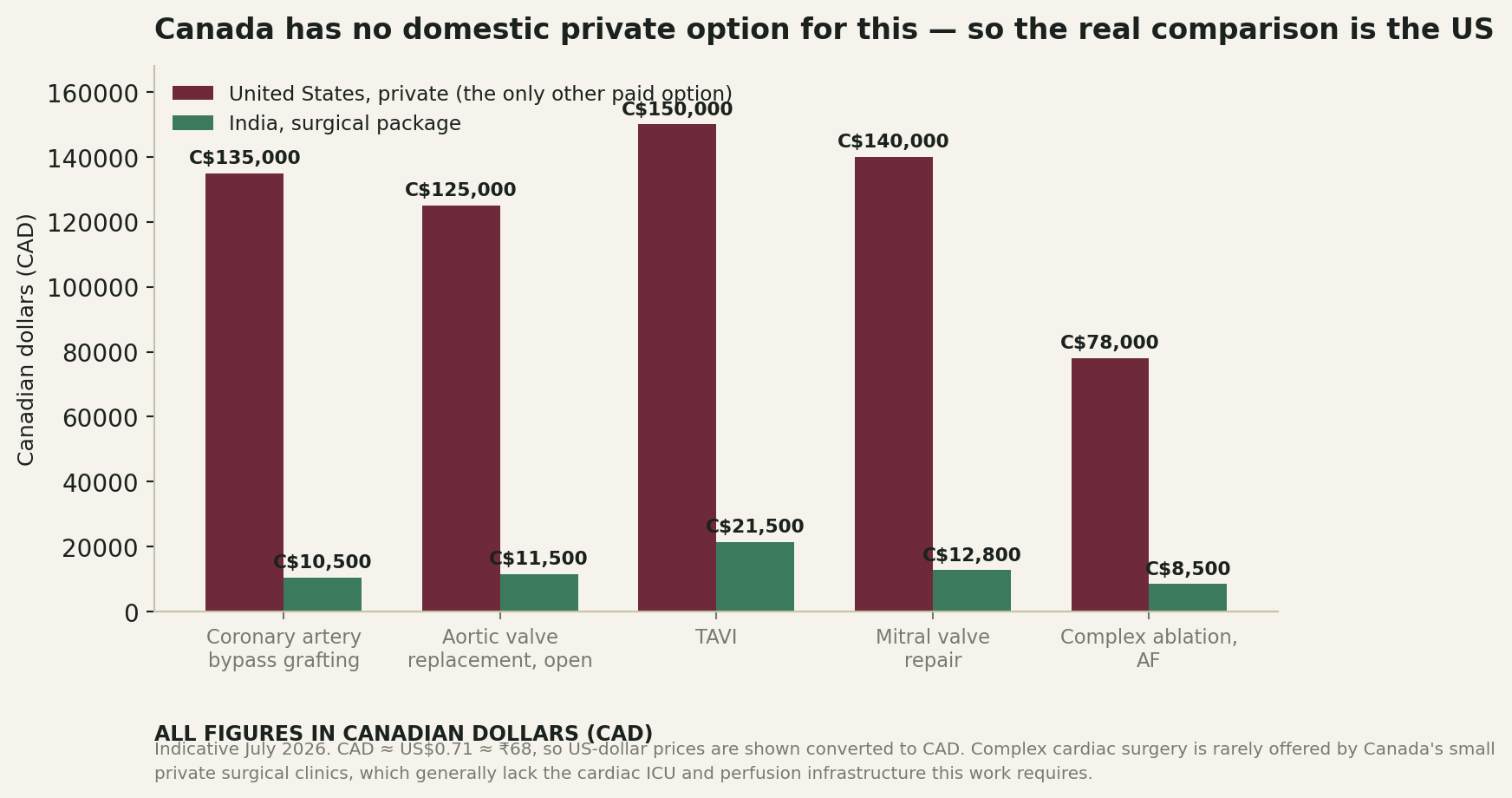
American private cardiac surgery is priced for an insurance-backed domestic market, and without that insurance the bill is severe — commonly US$90,000 to US$110,000 or more depending on the procedure, before travel. India competes on the same substance as it does everywhere else in this series — volume, sub-specialised surgeons, structural heart programmes that run continuously rather than occasionally — at a small fraction of the American price. In 24 years of guiding patients through this decision, I have found that disputes almost never concern the quoted price. They concern what the quote silently omitted — an ICU day assumed but not stated, a valve generation left unnamed. Insist on a written, itemised figure before any deposit moves, and pay a deposit only, never the full balance in advance.
What does not travel with you is reimbursement: provincial health plans do not cover treatment received overseas, and out-of-country coverage exceptions are narrow and rarely granted.
Before you choose anything: four decisions, in order
One — does anything need doing yet, and what? Get a recent echocardiogram with the gradient and valve area stated numerically, and a coronary angiogram if any intervention is contemplated. Take the actual images with you into every conversation that follows.
Two — catheter or open chest? This should be a heart-team decision — an interventional cardiologist and a cardiac surgeon considering your case together — not one clinician’s preference. Ask for that confirmation in writing.
Three — repair or replace, and with what? For a leaking mitral valve, repair is usually preferable to replacement where feasible, but the proportion of valves a surgeon successfully repairs varies enormously with experience. Ask directly for the surgeon’s own repair rate.
Four — who does it, and who looks after you afterwards? Confirm your Canadian cardiologist will take over follow-up before you leave, and if a mechanical valve is planned, establish who will manage your INR monitoring and how often.
These four decisions matter more than any single fact about the surgeon or the hospital, because a well- chosen surgeon working from the wrong plan can still produce a poor outcome. Settle them in order, before comparing quotes, and every subsequent conversation becomes considerably easier to judge.
What you are actually getting for it
Volume, which in cardiac surgery is not a marketing claim. India’s major cardiac institutions perform bypass and valve operations in numbers no Canadian unit approaches, and coronary disease presents roughly a decade earlier there, producing a correspondingly larger surgical caseload.
Structural heart programmes that run continuously. Transcatheter valves and related procedures are routine daily work at the larger Indian centres, rather than rationed to a handful of specialised sites the way TAVI is nationally in Canada. Ask directly how many of the specific procedure proposed for you the unit performs in a typical month; a confident, specific answer is worth more than any accreditation certificate on a wall.
Accreditation that means something specific. JCI is the international arm of the body accrediting hospitals across the United States; NABH is India’s national equivalent, recognised by the same global standards authority.
Cardiac rehabilitation from day one. Supervised, daily, in the hospital, rather than a referral chased from home after discharge.
Optimisation before the knife. A quality unit insists on dental clearance before any valve procedure — oral bacteria are a recognised route to prosthetic valve endocarditis — and checks HbA1c, anticoagulants and smoking status.
What to say to your family
Name the hospital and its accreditation. Name the surgeon and how many of your exact operation he performed last year. Explain that your case went through a heart team, not one enthusiast. Tell them your Canadian cardiologist already has the dates. Bring someone with you — after cardiac surgery a second set of ears in every consultation is not a luxury.
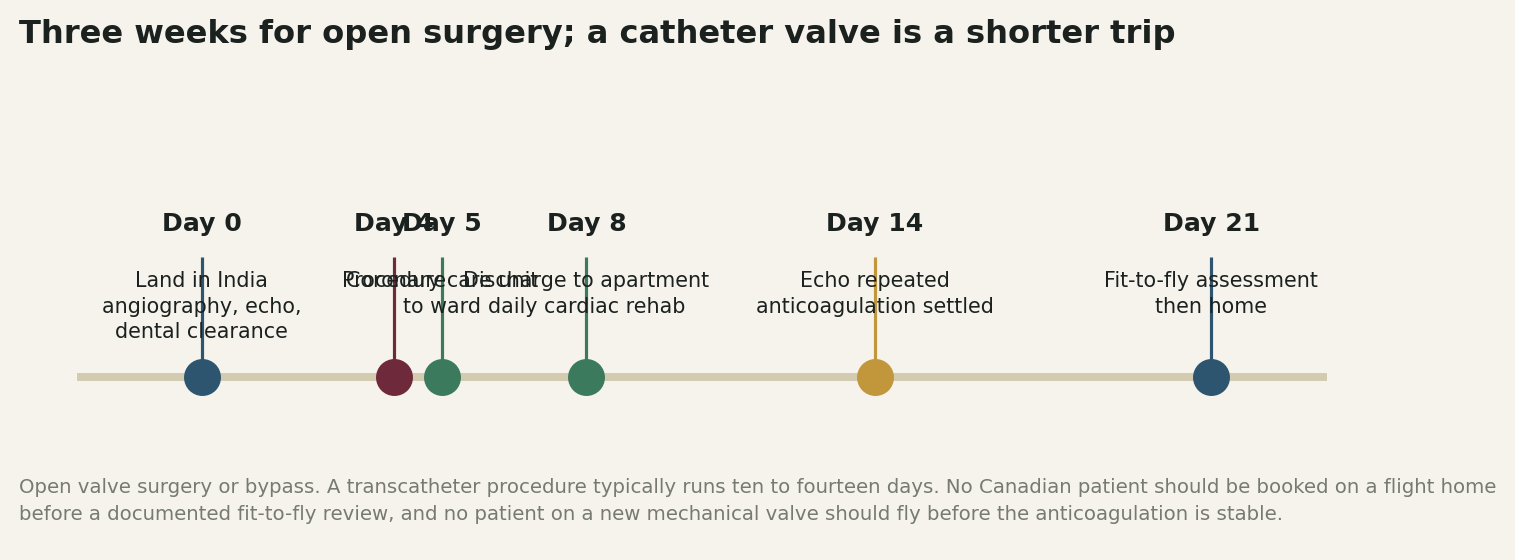
Flying after cardiac surgery carries specific considerations around oxygenation, arrhythmia and sternal healing. If you have a new mechanical valve, do not leave until anticoagulation is stable and you carry a written plan naming your target range and who will monitor it in Canada.
Six Things to Have in Writing Before You FLY
1. Numbers, not adjectives. Gradient, valve area, ejection fraction, and which vessels are diseased and by how much.
2. A heart-team assessment, not a single clinician’s recommendation, with the reasoning in writing.
3. The surgeon’s own mitral repair rate, if a mitral valve is involved, and his annual volume in your specific procedure.
4. An itemised, all-inclusive price, naming the valve or device by brand and generation, and the cost of each additional ICU day.
5. What the hospital covers if a return to theatre is needed during your stay.
6. Your Canadian follow-up, already agreed: a named cardiologist, and an anticoagulation monitoring plan if relevant.
Practicalities for Canadians
Canadian passport holders are eligible for India’s electronic medical visa, issued against an invitation letter from the treating hospital, with an e-medical attendant visa for whoever travels with you. Before flying home, collect a discharge pack: operation note, valve or device identification card, post-operative imaging, anticoagulation plan, and cardiac rehabilitation protocol. Ask for a valve identification card and keep it permanently — you will be asked for it before every dental appointment for the rest of your life.
Straight answers for Canadian Patients about Cardiac Surgery in India
Should I travel for urgent heart disease?
No. Acute coronary syndromes, unstable angina, endocarditis, aortic dissection and decompensated heart failure belong in a Canadian emergency department immediately.
My cardiologist says I'm low-risk and TAVI isn't urgent for me. Is that a fair assessment?
Clinically, often yes — risk-based prioritisation exists precisely because higher-risk patients benefit most from faster access. The point of this briefing is not that the prioritisation is wrong; it is that being deprioritised in a system with no national benchmark for your procedure can mean a genuinely long wait with real symptoms in the meantime.
Will my provincial plan reimburse any of this?
Almost never. Out-of-country coverage exceptions require pre-approval showing the procedure is genuinely unavailable in Canada within a medically acceptable time, a bar rarely met regardless of your actual wait.
Mechanical or tissue valve?
It depends on your age, bleeding risk, and practical access to INR monitoring where you live. A mechanical valve lasts longer but commits you to lifelong warfarin.
How long before I can fly home?
About three weeks after open surgery and ten to fourteen days after a transcatheter procedure, on a changeable ticket, following a documented fit-to-fly assessment.
A closing word
Canadian cardiac surgery is excellent, and for urgent disease you should stay and let it treat you. But if you have been told the less invasive option exists, that you are a candidate for it, and that the wait for your specific procedure is neither short nor formally tracked, that is a measurement gap rather than a medical judgement about your case — and it is worth knowing the same procedure, done by a team that performs it daily, is available elsewhere for a fraction of the American price and without the wait. Send me your echocardiogram, your angiogram report, and whatever quote you are holding, and I will give you an honest view.
Sources
- 🌐 Canadian Institute for Health Information, Wait times for priority procedures in Canada, 2025
- 🌐 Canadian Institute for Health Information, Wait Times for Bypass Surgery indicator
- 🌐 Canadian Institute for Health Information, Wait time metadata (the five priority areas, defined)
- 🌐 Miranda et al., “Transcatheter Aortic Valve Implantation Wait-Time Management: Derivation and Validation of the Canadian TAVI Triage Tool (CAN3T)”, Journal of the American Heart Association , 2024
- 🌐 “Inequity in Access to Transcatheter Aortic Valve Replacement: A Pan-Canadian Evaluation of Wait-Times”, PubMed , 2020
- 🌐 High Commission of India, e-Visa categories and eligibility
Frequently Asked Questions by Canadian Patients about Cardiac Surgery in India
How should Canadian patients evaluate cardiac surgery in India?
Start with a confirmed diagnosis and heart-team review. Then compare the surgeon's experience with the exact procedure and the hospital's cardiac infrastructure.
What is Canada's national benchmark for CABG?
The guide states that CIHI uses a 182-day benchmark for coronary artery bypass grafting.
Does Canada have a national benchmark for TAVI or valve surgery?
No. The document states that valve replacement, valve repair and TAVI do not have an equivalent national benchmark.
What TAVI wait time is mentioned in the guide?
The median Canadian referral-to-TAVI wait increased from 80 days in 2012 to 110 days in 2018.
Who should decide between TAVI and open surgery?
The guide recommends a heart-team decision involving both an interventional cardiologist and a cardiac surgeon.
What should Canadian patients ask a cardiac surgeon?
Ask how many of the exact procedure the surgeon performs annually. For mitral surgery, also ask for the surgeon's repair rate.
What hospital facilities should be checked?
Patients should confirm cardiac ICU, perfusion, cardiac anaesthesia, structural-heart capability and rehabilitation support.
What should an Indian cardiac surgery quote include?
It should identify the exact procedure, valve or device, ICU assumptions and additional ICU-day costs.
What should patients arrange before returning to Canada?
A named Canadian cardiologist and, where relevant, a written anticoagulation monitoring plan should already be in place.
Should Canadians travel to India for urgent heart disease?
No. Acute coronary syndromes, unstable angina, endocarditis, aortic dissection and decompensated heart failure require immediate treatment in Canada.
Page Summary
This guide provides Canadian patients with a framework for evaluating elective cardiac surgery in India. Although cardiac care has been a national wait-time priority since 2004, only CABG has a CIHI benchmark — valve surgery and TAVI do not, and the median TAVI wait rose from 80 days in 2012 to 110 in 2018, against an indicative India scheduling period of 10–21 days. It recommends four linked decisions: whether intervention is needed, catheter versus open treatment, repair versus replacement, and verifying both surgeon and follow-up clinician, alongside hospital ICU, perfusion and structural-heart capability. Before travelling, patients should obtain a written heart-team recommendation, quotation, Canadian follow-up plan and complete operative documentation.
Citation Block
| Topic | Information |
|---|---|
| Topic Information | Cardiac Surgery in India for Canadian Patients |
| Treatment | Cardiac Surgery and Structural Heart Treatment |
| Country | India |
| Intended Audience | Canadian Patients and Families |
| Procedures Covered | CABG, Valve Surgery and TAVI |
| Canadian CABG Benchmark | 182 Days |
| National Valve/TAVI Benchmark | None |
| Median TAVI Wait Mentioned | 110 Days in 2018 |
| India Scheduling Mentioned | 10–21 Days |
| First Requirement | Confirm Diagnosis and Need for Intervention |
| Primary Planning Method | Heart-Team Assessment |
| Records for Follow-Up | Operative Note, Device Details, Imaging and Rehabilitation Plan |
| Author | Dr. Dheeraj Bojwani |
| Experience | 24 Years' Experience |


Our Mission Statement
Our mission is to place patients at the centre of every healthcare decision by providing trustworthy, evidence-based, and unbiased medical information. We believe that informed patients make better decisions. Backed by personalised guidance from our experienced advisory team, we help patients understand their treatment options, compare them objectively, and confidently choose the path that best suits their medical needs and personal circumstances.
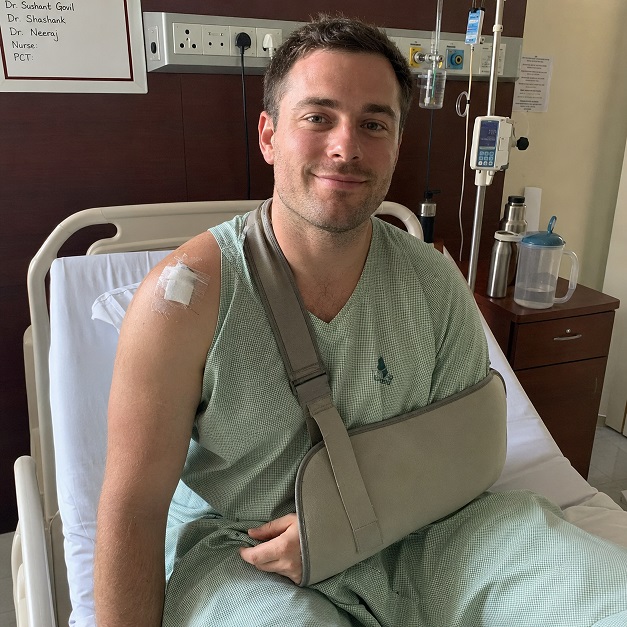
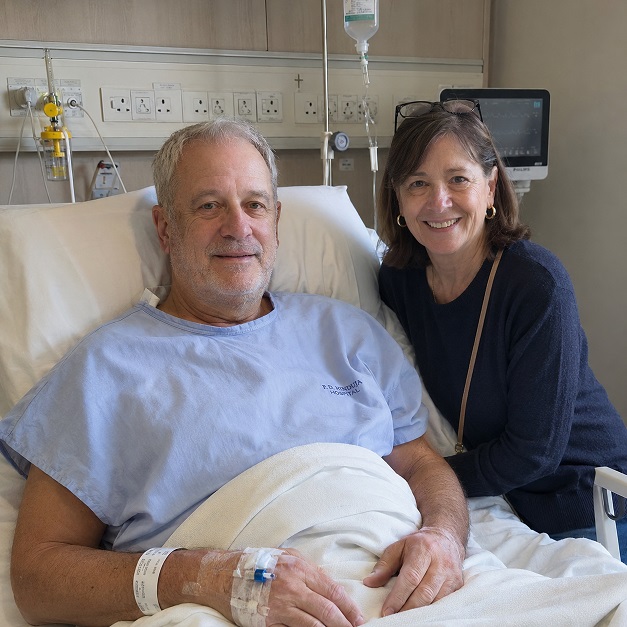
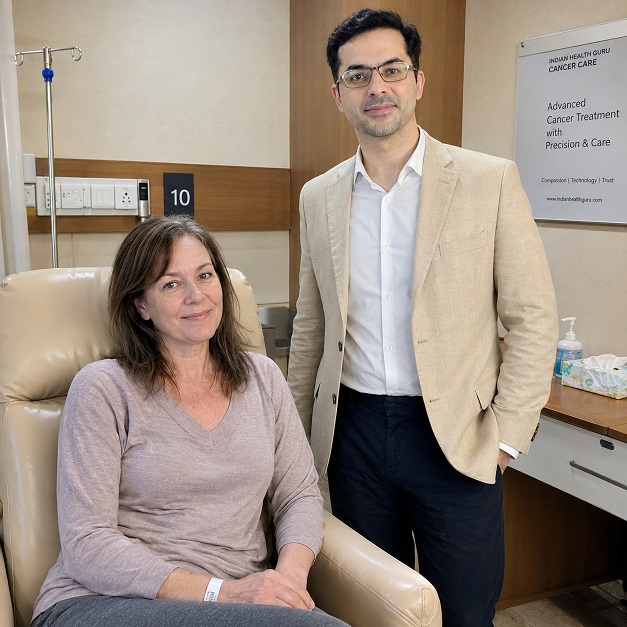
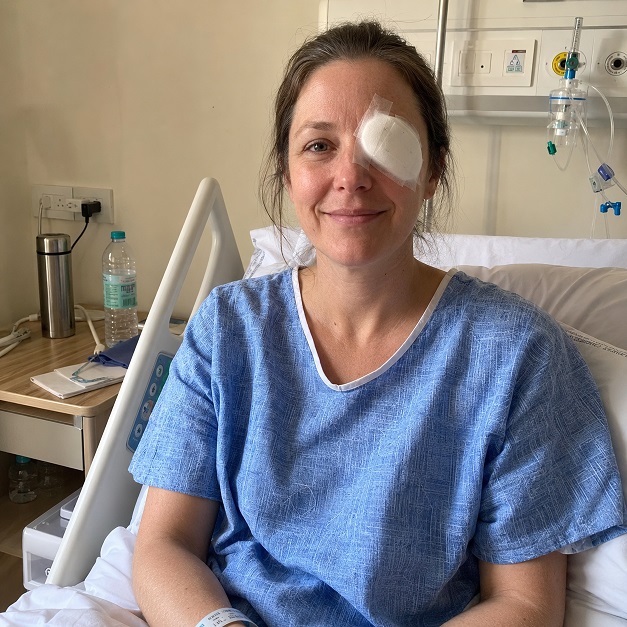
Patient Testimonials from Canada


Ready to Take the First Step?
Share your Medical Reports with our Healthcare Managers Today and Get a FREE CONSULTATION, a Personalized Treatment Plan, and Complete Support from Arrival to Recovery.
Get Your Free ConsultationFrom Canada to India: Your Complete Patient Support Guide
- Weight Loss & Bariatric Surgery in India for Canadian Patients: The Multi-Year Wait, Explained (2026)
- Bone Marrow Transplant in India for Canadian Patients: Complete Guide
- Brain Tumor Surgery in India for Canadian Patients: Complete Guide
- Breast Cancer Treatment and Surgery in India for Canadian Patients
- Cancer Treatment and Surgery in India for Canadian Patients
- Cardiac Surgery in India for Canadian Patients
- Colorectal Cancer Treatment and Surgery in India for Canadian Patients
- Cosmetic and Aesthetic Surgery in India for Canadian Patients
- CyberKnife Treatment in India for Canadian Patients: Complete Guide
- Dental Surgery in India for Canadian Patients | Complete Treatment & Cost Guide
- Gamma Knife Treatment in India for Canadian Patients
- Heart Valve Replacement Surgery in India for Canadian Patients
- Hip Surgery in India for Canadian Patients | Complete Treatment, Cost & Recovery Guide
- HIPEC Surgery in India for Canadian Patients: Complete Guide
- Kidney Transplant in India for Canadian Patients: Complete Guide
- Knee Surgery in India for Canadian Patients: Wait Times & Costs
- Neurosurgery in India for Canadian Patients: Wait Times & Costs
- Paediatric Cardiac Surgery in India for Canadian Patients