

HIPEC Surgery in India for Canadian Patients
Only four centres in the entire country perform this operation. For most patients, the real barrier isn't a wait — it's simply never being referred for evaluation at all.
A 54-year-old teacher in St. John's, Newfoundland. Appendiceal cancer with peritoneal spread, confirmed at surgery two years ago, now recurrent. Her oncologist has managed her chemotherapy attentively and well. Nobody has raised cytoreductive surgery with HIPEC with her, not because it wouldn't help — her disease pattern is exactly the kind this treatment was developed for — but because her province has never had a programme that performs it, and the referral pathway to one that does simply never came up in conversation.
Healing Journeys of Canadian Patients
Key Takeaways
- Canada has only four major centres performing CRS-HIPEC nationally, according to the PDF. The guide highlights that access is particularly limited in provinces such as Newfoundland and Labrador, where no CRS-HIPEC programme exists.
- CRS-HIPEC combines cytoreductive surgery, which removes visible tumour from the abdominal cavity, with heated chemotherapy delivered directly into the abdomen to target microscopic residual disease. It may be considered for selected patients with peritoneal spread from colorectal, appendiceal, ovarian or gastric cancer and peritoneal mesothelioma.
- The procedure is technically demanding and may take eight to twelve hours. The PDF emphasizes that completeness of cytoreduction—the extent to which visible tumour is removed—is a particularly important factor in outcomes.
- The page 2 chart compares the Canadian competency floor of 12 CRS-HIPEC cases per year with an illustrative high-volume international centre performing approximately 150 cases per year. The guide stresses that 12 cases is a minimum competency threshold, not a marker of excellence.
- CRS-HIPEC is not suitable for every patient with peritoneal spread. The guide says it generally works best for limited, resectable disease, assessed using a formal peritoneal cancer index, and may not be appropriate for extensive disease, significant disease outside the abdomen or patients unable to tolerate a prolonged operation and recovery.
- The page 4 cost visual gives an indicative India CRS-HIPEC surgical-package cost of approximately C$24,500, compared with approximately C$225,000 for private treatment in the United States.
- Patients should evaluate a centre's annual CRS-HIPEC caseload, the individual surgeon's experience, formal peritoneal cancer index assessment, dedicated ICU and perioperative pathways, accreditation and quality of discharge documentation rather than choosing based on price alone.
- The guide recommends planning for approximately four to five weeks in India, using a changeable ticket and obtaining documented fit-to-fly clearance before returning to Canada.
Quick Facts
- Treatment
- CRS-HIPEC Surgery
- Country
- India
- Patients
- Canadian Patients
- Specialty
- Peritoneal Surface Oncology / Surgical Oncology
- CRS-HIPEC Centres in Canada
- 4 Major Centres
- Main Cancer Types
- Colorectal, Appendiceal, Ovarian and Gastric Cancer; Peritoneal Mesothelioma
- Treatment Approach
- Cytoreductive Surgery Followed by Heated Intraperitoneal Chemotherapy
- Typical Operation Duration
- Approximately 8–12 Hours
- Key Assessment
- Peritoneal Cancer Index and Disease Resectability
- Canadian Competency Floor
- 12 Cases Per Year
- Illustrative High-Volume Centre
- Approximately 150 Cases Per Year
- Hospital Selection
- Dedicated Perioperative/ICU Pathway and Verifiable Accreditation
- Follow-Up
- Canadian Oncologist With Complete Surgical and Treatment Records
- Important Principle
- Confirm Candidacy Through a Specialist Peritoneal Disease Team
In Brief
For Canadian patients with peritoneal spread from an appropriate primary cancer, the most important question is whether a specialist peritoneal disease team has formally assessed the disease for CRS-HIPEC, rather than simply comparing treatment prices. Because the procedure is highly specialised and concentrated in only a few Canadian centres, a second opinion from a high-volume peritoneal disease centre in India may be considered when appropriate.
The rarest, most concentrated treatment in this entire series
Cytoreductive surgery with hyperthermic intraperitoneal chemotherapy, CRS-HIPEC, removes visible tumour from the abdominal cavity and then bathes it in heated chemotherapy, treating microscopic disease the surgeon cannot see. For selected patients with peritoneal spread from colorectal, appendiceal, ovarian or gastric cancer, or from peritoneal mesothelioma, it is genuinely the standard of care. In 24 years of guiding international patients into Indian hospitals, this is the procedure where I most often find the problem is not treatment quality. It is that the patient was never told the treatment existed for their situation.
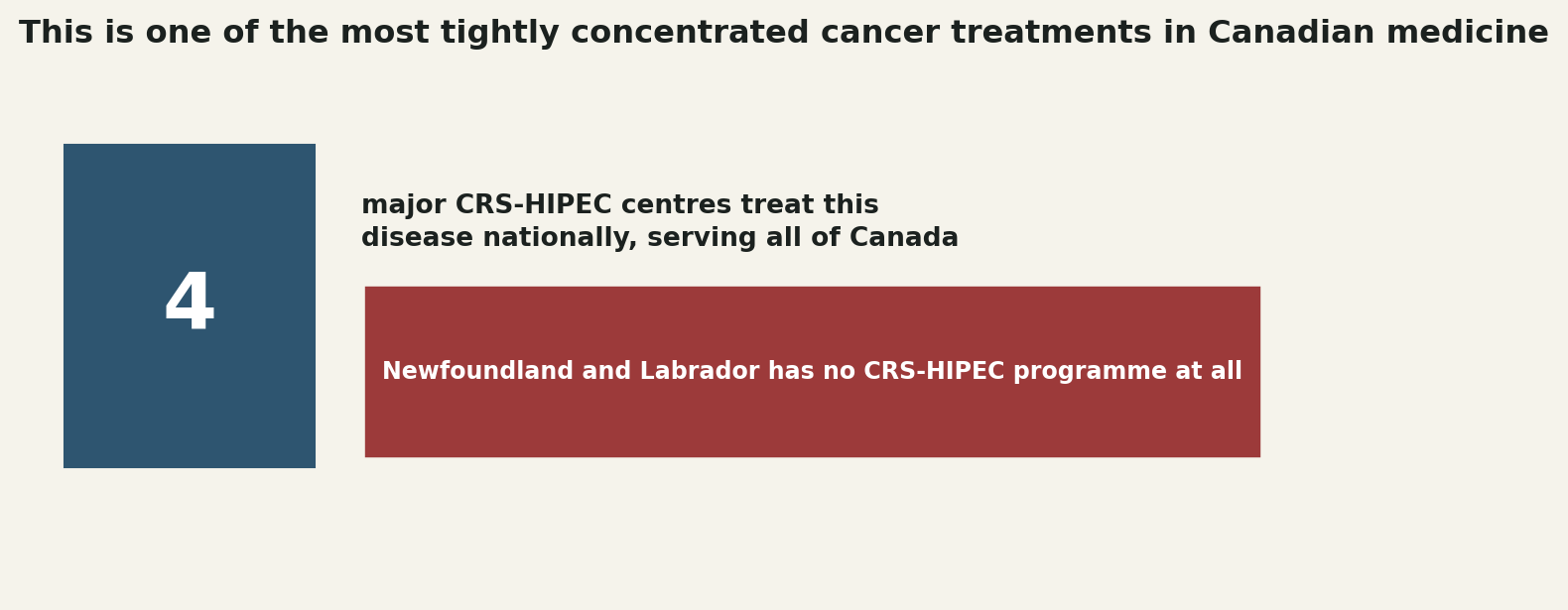
Published Canadian research on peritoneal mesothelioma identified four major peritoneal disease centres treating this condition nationally, across the entire country. A feasibility study specifically examining Newfoundland and Labrador confirmed the province has no CRS-HIPEC programme at all. This is not a wait-time story in the way most of this series has been. It is a geography and awareness story: an entire category of curative-intent treatment that simply does not exist in large parts of Canada, delivered by clinicians who, understandably, do not think to raise a procedure their own province cannot provide.
Why volume matters more here than almost anywhere else in oncology
CRS-HIPEC is a long, technically demanding operation, often eight to twelve hours, and the single most important predictor of outcome is how completely the visible tumour is removed — what surgeons call the completeness of cytoreduction. Achieving that consistently depends on experience in a way few other cancer operations do.
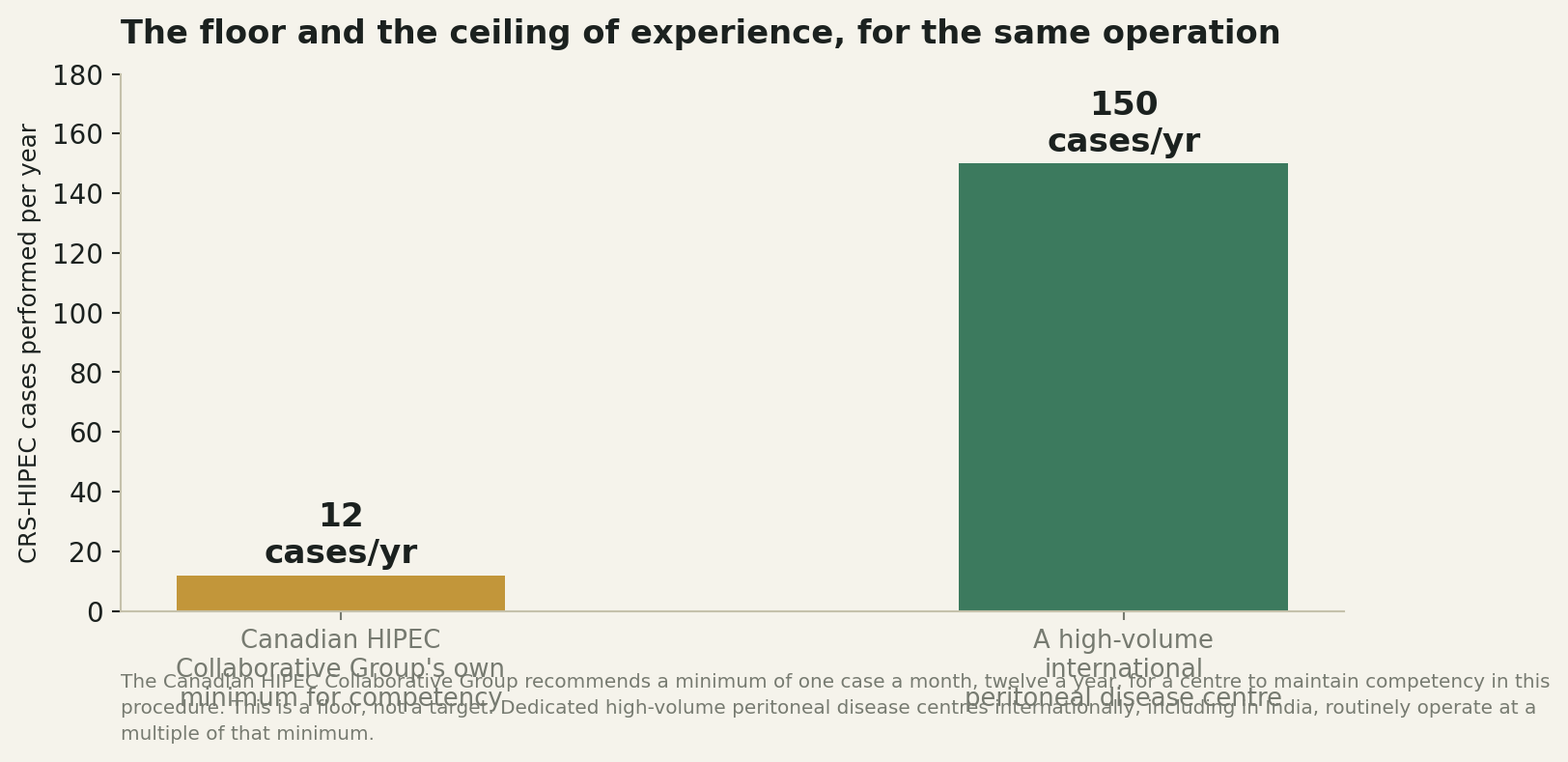
The Canadian HIPEC Collaborative Group itself recommends a minimum of one case a month, twelve a year, for a centre to maintain competency in this procedure. That is stated explicitly as a floor for adequacy, not a marker of excellence. Dedicated high-volume international peritoneal disease centres, including several in India, routinely operate at several multiples of that minimum, concentrating the kind of experience that shows up directly in completeness-of-cytoreduction rates and long-term survival.
The gap that should worry you most: not the wait, the referral
Because this treatment is genuinely rare and technically specialised, most oncologists, including excellent ones, encounter it only occasionally in their own practice. That creates a specific, well-documented failure mode internationally: patients diagnosed outside an expert peritoneal disease centre are measurably less likely to ever be referred for CRS-HIPEC evaluation at all, independent of whether they were medically appropriate for it.
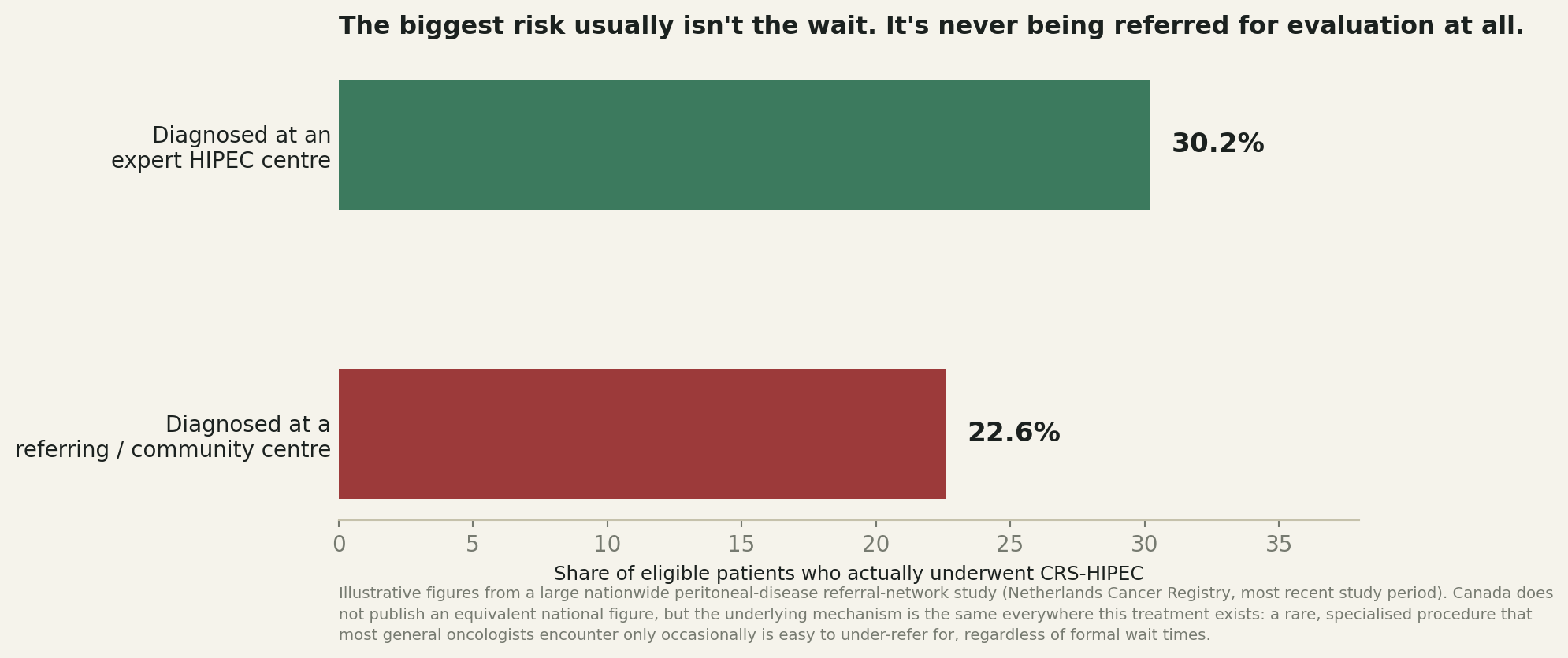
Canada does not publish an equivalent national figure, but the mechanism is not unique to any one country. A rare, specialised treatment that most general oncologists see only a handful of times in a career is easy to under-refer for, particularly outside the small number of centres where it is routine. If you have peritoneal disease from an appropriate primary cancer and CRS-HIPEC has never explicitly been discussed and ruled out by a peritoneal disease specialist, that omission itself is worth raising directly with your oncologist.
Who this actually applies to
CRS-HIPEC is not appropriate for every patient with peritoneal spread. It works best for limited, resectable disease, assessed using a formal peritoneal cancer index, and is generally not appropriate for extensive disease, significant disease outside the abdominal cavity, or a patient too unwell to tolerate a long operation and recovery. This determination should be made by a specialist peritoneal disease team, not inferred from a general oncology opinion alone — which is precisely why the referral gap above matters as much as it does.
What the money actually looks like
CRS-HIPEC is not something Canada's small private surgical sector offers at any price; it requires specialised heated-perfusion equipment, a dedicated peritoneal disease surgical team, and an extended intensive care stay that a boutique clinic simply cannot provide. For a patient exploring options beyond the four national centres, the realistic paid alternative is the United States rather than a domestic clinic.
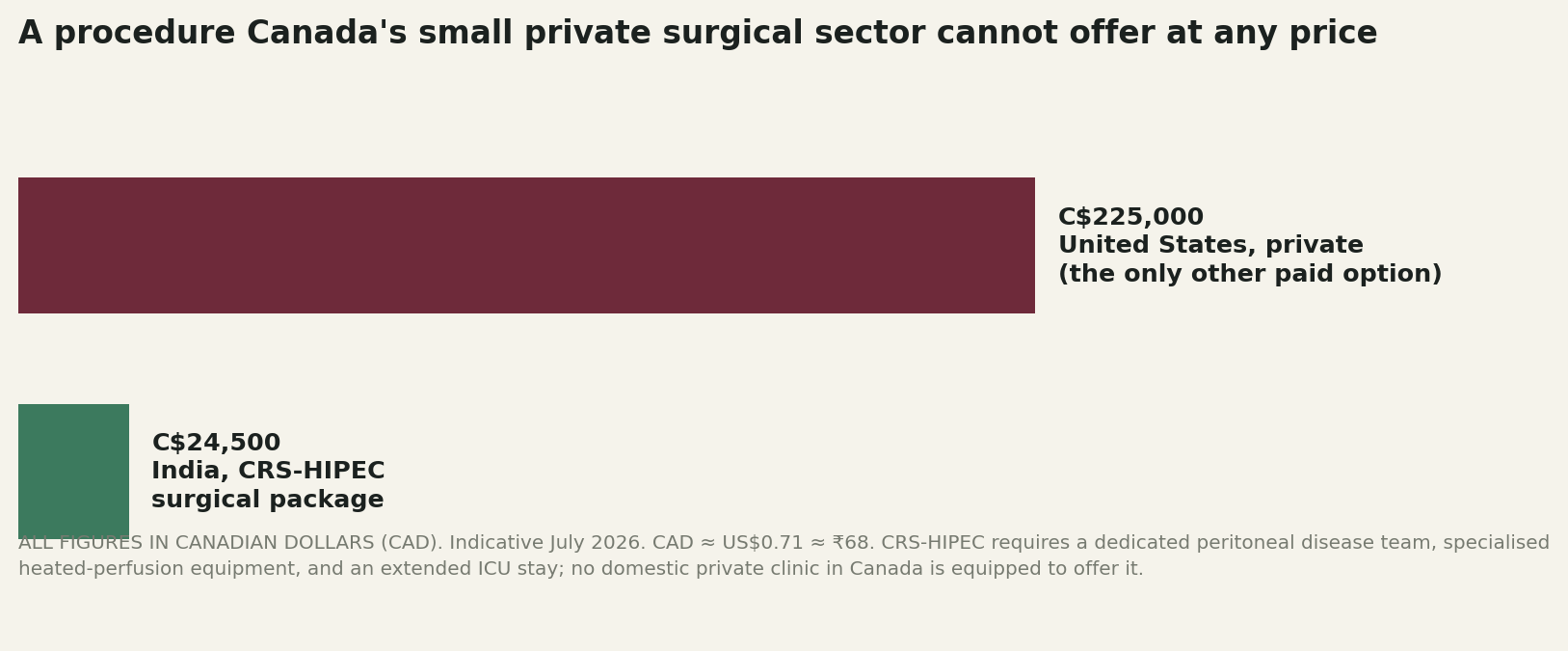
American CRS-HIPEC, priced for an insurance-backed domestic market, commonly runs into six figures once insurance is not in the picture. India's major peritoneal disease centres perform this operation at high volume, with dedicated teams and the same completeness-of-cytoreduction discipline described above, at a fraction of the American price. In 24 years of guiding patients through decisions like this, the question I ask first is never the price. It is whether a genuine peritoneal disease specialist, not a general oncologist, has actually reviewed the imaging and confirmed the disease is resectable.
What you are actually getting for it
Genuine, checkable peritoneal-disease-specific volume. Ask for the unit's annual CRS-HIPEC caseload and the operating surgeon's own volume, separately from general oncological surgery numbers.
Formal peritoneal cancer index scoring and a real resectability assessment, not an assumption based on a scan report alone.
A dedicated perioperative and ICU pathway built for this specific operation, including nutritional optimisation before surgery, which meaningfully affects recovery from an operation this extensive.
Accreditation you can verify independently. JCI is the international arm of the body accrediting hospitals across the United States; NABH is India's national equivalent, recognised by the same global standards authority.
A discharge record built for your Canadian oncologist to use, including the completeness-of- cytoreduction score, chemotherapy agents used, and a specific surveillance and adjuvant treatment plan.
Four Things that Should Make You Walk Away Immediately
A firm CRS-HIPEC recommendation made without a formal peritoneal cancer index assessment. This determination requires specific expertise, not a general read of your existing scans.
Any clinic promising to operate on disease most specialists would consider too extensive. This procedure has real limits, and a responsible unit will tell you plainly if you are not a candidate.
Vagueness about annual CRS-HIPEC volume, for the unit or the surgeon. Given how strongly this specific operation rewards experience, this is the single most important number in the decision.
Pressure to decide within days, or discomfort with your Canadian oncologist being kept informed. A genuine second opinion welcomes collaboration with your existing care team.
Straight answers for Canadian Patients about HIPEC Surgery in India
My oncologist has never mentioned CRS-HIPEC. Should I ask about it directly?
Yes, particularly if you have peritoneal spread from colorectal, appendiceal, ovarian or gastric cancer, or peritoneal mesothelioma. Ask specifically whether a peritoneal disease specialist has reviewed your case, not just your general oncology team.
Will my provincial plan reimburse treatment performed in India?
Almost never. Out-of-country coverage exceptions require pre-approval showing the procedure is genuinely unavailable in Canada within a medically acceptable time, though the genuine absence of a programme in some provinces may be relevant to that conversation; ask your provincial ministry of health directly.
How do I know if I'm actually a candidate?
A peritoneal cancer index score, calculated from your imaging by a specialist, determines this, alongside your overall fitness for a long operation. This is not something a general oncology opinion can substitute for.
How long should I plan to stay in India?
Around four to five weeks, given the length and complexity of this operation, on a changeable ticket, following a documented fit-to-fly assessment.
Who manages my follow-up once I'm home?
Your Canadian oncologist, provided they have the completeness-of-cytoreduction score, chemotherapy details and a specific surveillance plan in writing before you leave.
A closing word
CRS-HIPEC is not a treatment most Canadians with peritoneal disease will be offered as a matter of course, not because it wouldn't help, but because the country's capacity to deliver it is genuinely thin and concentrated in four centres for the whole population. If you have not had a specific, explicit conversation with a peritoneal disease specialist about whether you are a candidate, that conversation is worth having before anything else. If you would like a second opinion on your imaging, send it to me and I will look at it properly.
Sources
- 🌐 "Feasibility of a HIPEC Program for Gastrointestinal and Gynecological Cancer Care in Newfoundland and Labrador" — mdpi.com/2673-7523/5/2/16
- 🌐 "Cytoreductive surgery (CRS) and heated intraperitoneal chemotherapy (HIPEC) for peritoneal mesothelioma: Canadian practices and outcomes" — pubmed.ncbi.nlm.nih.gov/37249154
- 🌐 "A Canadian single-centre experience with cytoreductive surgery and hyperthermic intraperitoneal chemotherapy for abdominal malignancies", Canadian Journal of Surgery — canjsurg.ca/content/65/3/E342
- 🌐 "Towards Equal Access to Cytoreductive Surgery with HIPEC in Patients with Isolated Colorectal Peritoneal Metastases: A Nationwide Population-Based Study" — ncbi.nlm.nih.gov/pmc/articles/PMC11076384
- 🌐 High Commission of India, e-Visa categories and eligibility — indianvisaonline.gov.in/evisa
Frequently Asked Questions by Canadian Patients about HIPEC Surgery in India
What is CRS-HIPEC surgery?
CRS-HIPEC combines cytoreductive surgery to remove visible abdominal tumour with heated chemotherapy delivered directly into the abdominal cavity to treat microscopic disease.
Which cancers may be treated with HIPEC?
The guide discusses selected cases involving colorectal, appendiceal, ovarian and gastric cancers, as well as peritoneal mesothelioma when the disease pattern is appropriate.
How many CRS-HIPEC centres are available in Canada?
The PDF identifies four major peritoneal disease centres treating this condition nationally. It also notes that Newfoundland and Labrador has no CRS-HIPEC programme.
How is CRS-HIPEC candidacy determined?
A specialist team assesses disease distribution using a peritoneal cancer index and determines whether the disease can be adequately resected. Overall fitness for a long operation is also considered.
Why is surgeon and hospital volume important for HIPEC?
CRS-HIPEC is a technically demanding operation that can last eight to twelve hours. The guide emphasizes that experience is particularly important for achieving complete cytoreduction consistently.
How much does HIPEC cost in India?
The PDF gives an indicative India CRS-HIPEC surgical-package cost of approximately C$24,500, compared with approximately C$225,000 for private treatment in the United States.
How long should Canadian patients plan to stay in India?
The guide recommends planning for approximately four to five weeks, depending on recovery and fit-to-fly clearance.
What should make a patient reconsider a HIPEC centre?
Warning signs include a treatment recommendation without formal peritoneal cancer index assessment, promises to operate despite extensive disease, unclear CRS-HIPEC volume and pressure to decide quickly or exclude the Canadian oncologist from communication.
Will a Canadian provincial plan reimburse HIPEC performed in India?
Almost never. The guide notes that out-of-country coverage generally requires pre-approval and evidence that the procedure is genuinely unavailable in Canada within a medically acceptable time.
Who manages follow-up after returning to Canada?
The Canadian oncologist should manage follow-up using the surgical records, completeness-of-cytoreduction score, chemotherapy details and specific surveillance plan prepared before the patient leaves India.
Page Summary
This guide explains CRS-HIPEC surgery in India for Canadian patients with selected peritoneal cancers. It highlights Canada's limited access, with only four major centres nationally, and explains why referral and awareness can be a greater barrier than waiting time. The guide describes patient selection using the peritoneal cancer index and disease resectability, emphasizes the importance of high-volume specialist teams, and compares indicative India and US costs. It also recommends approximately four to five weeks in India and stresses detailed communication and follow-up with the Canadian oncology team.
Citation Block
| Topic | Information |
|---|---|
| Topic | HIPEC Surgery in India for Canadian Patients |
| Treatment | CRS-HIPEC |
| Country | India |
| Intended Audience | Canadian Patients |
| Specialty | Peritoneal Surface Oncology / Surgical Oncology |
| Canadian CRS-HIPEC Centres | 4 Major Centres |
| Cancer Types | Colorectal, Appendiceal, Ovarian, Gastric and Peritoneal Mesothelioma |
| Treatment Method | Cytoreductive Surgery + Heated Intraperitoneal Chemotherapy |
| Operation Duration | Approximately 8–12 Hours |
| Key Assessment | Peritoneal Cancer Index and Resectability |
| Canadian Competency Floor | 12 Cases Per Year |
| Key Selection Factor | Specialist Peritoneal Disease Assessment |
| Author | Dr. Dheeraj Bojwani |
| Experience | 24+ Years |


Our Mission Statement
Our mission is to place patients at the centre of every healthcare decision by providing trustworthy, evidence-based, and unbiased medical information. We believe that informed patients make better decisions. Backed by personalised guidance from our experienced advisory team, we help patients understand their treatment options, compare them objectively, and confidently choose the path that best suits their medical needs and personal circumstances.
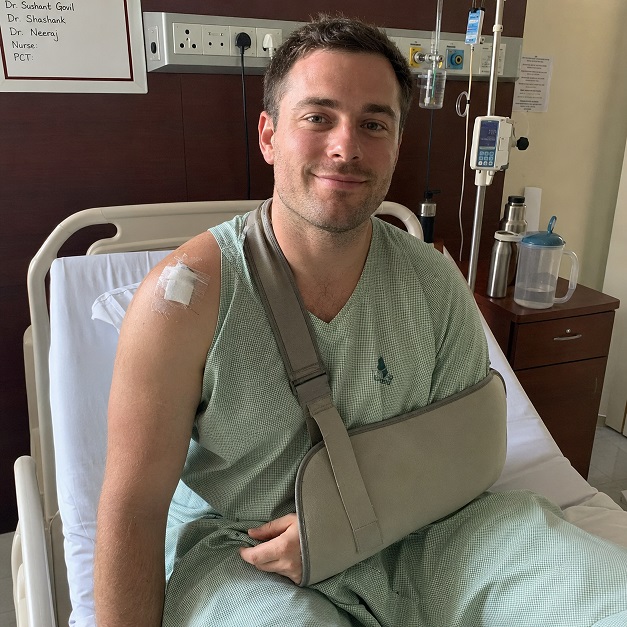
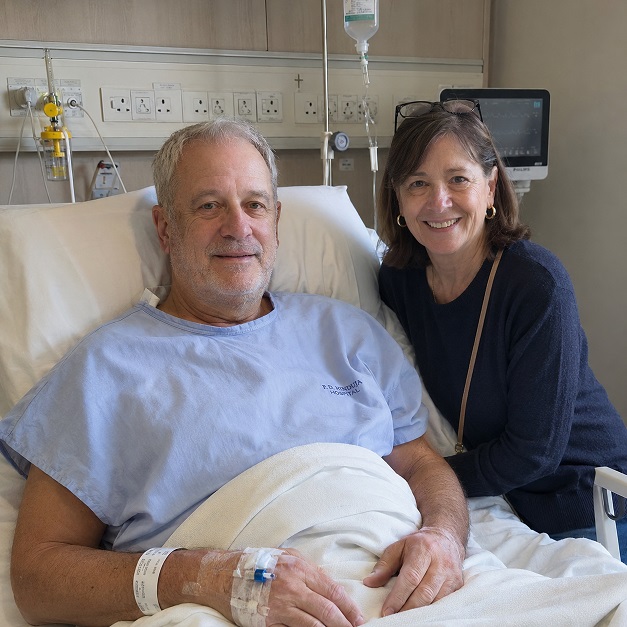
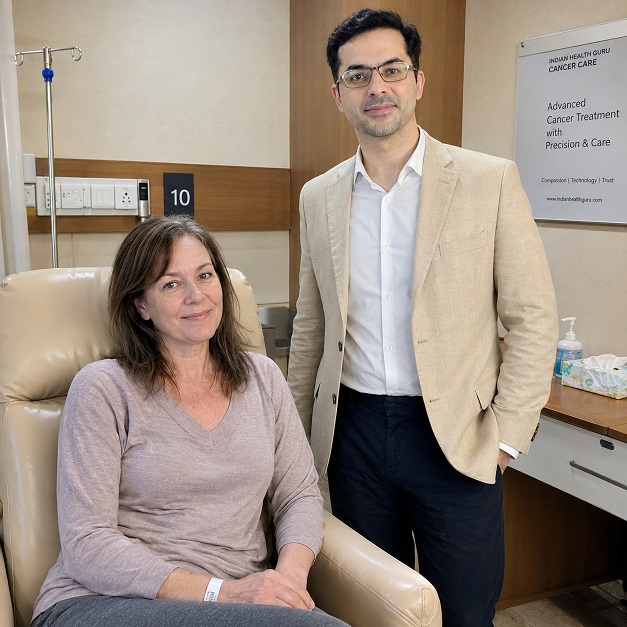
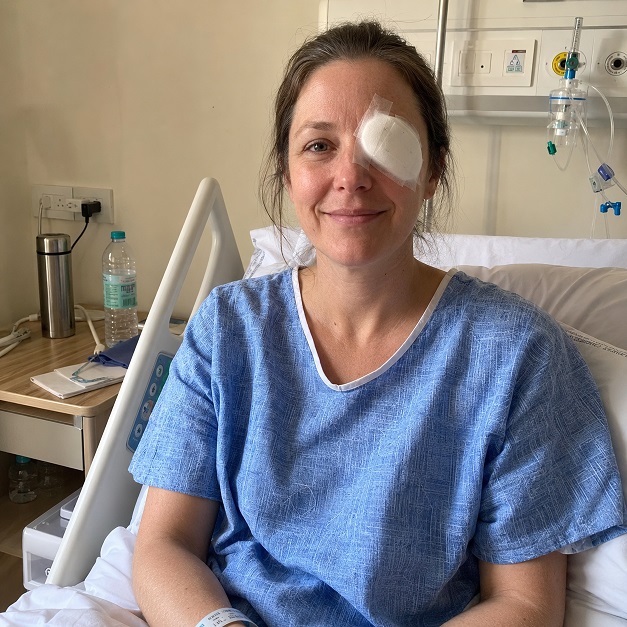
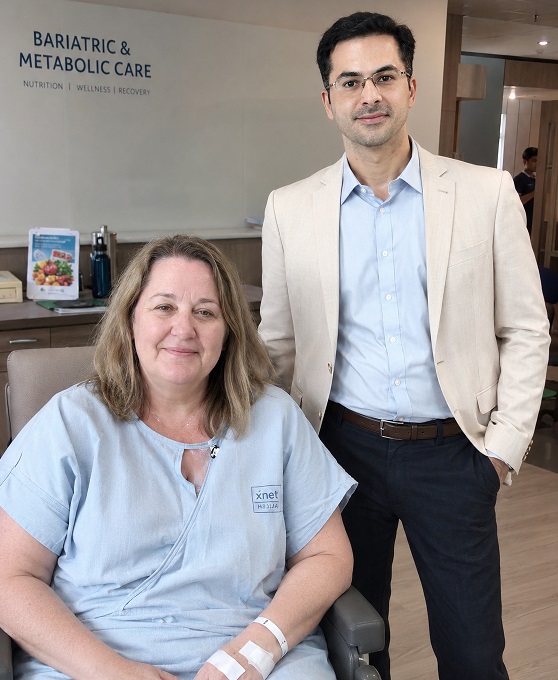
Patient Testimonials from Canada

Ready to Take the First Step?
Share your Medical Reports with our Healthcare Managers Today and Get a FREE CONSULTATION, a Personalized Treatment Plan, and Complete Support from Arrival to Recovery.
Get Your Free ConsultationFrom Canada to India: Your Complete Patient Support Guide
- Weight Loss & Bariatric Surgery in India for Canadian Patients: The Multi-Year Wait, Explained (2026)
- Bone Marrow Transplant in India for Canadian Patients: Complete Guide
- Brain Tumor Surgery in India for Canadian Patients: Complete Guide
- Breast Cancer Treatment and Surgery in India for Canadian Patients
- Cancer Treatment and Surgery in India for Canadian Patients
- Cardiac Surgery in India for Canadian Patients
- Colorectal Cancer Treatment and Surgery in India for Canadian Patients
- Cosmetic and Aesthetic Surgery in India for Canadian Patients
- CyberKnife Treatment in India for Canadian Patients: Complete Guide
- Dental Surgery in India for Canadian Patients | Complete Treatment & Cost Guide
- Gamma Knife Treatment in India for Canadian Patients
- Heart Valve Replacement Surgery in India for Canadian Patients
- Hip Surgery in India for Canadian Patients | Complete Treatment, Cost & Recovery Guide
- HIPEC Surgery in India for Canadian Patients: Complete Guide
- Kidney Transplant in India for Canadian Patients: Complete Guide
- Knee Surgery in India for Canadian Patients: Wait Times & Costs
- Neurosurgery in India for Canadian Patients: Wait Times & Costs
- Paediatric Cardiac Surgery in India for Canadian Patients