

Hip Surgery in India for Canadian Patients
Canada's real alternative to a year-long wait is not a robust private system, the way it is in Australia or the United States. It is a patchwork that barely exists outside two provinces, sits in legal controversy, and comes with no guaranteed reimbursement at any price.
A 56-year-old electrician outside Calgary. Two years of worsening groin pain, now waking him most nights, and a job he cannot do from a chair. His surgeon confirmed he needs a hip replacement fourteen months ago. He is still on the list. He looked into paying privately and found a clinic that could see him in six weeks — for $27,000, out of pocket, with no guarantee his provincial plan would ever reimburse a cent of it. He is not choosing between public and private care the way an Australian or an American would. He is choosing between waiting and paying the entire bill himself.
Healing Journeys of Canadian Patients
Key Takeaways
- Canada's main challenge for hip replacement is often access and waiting time, rather than surgical quality. Many patients experience long waits before surgery, leading some to consider treatment abroad.
- Domestic private hip replacement services are available only in limited parts of Canada and are generally not guaranteed to be reimbursed by provincial health plans.
- Hip replacement in accredited Indian hospitals is presented as a cost-effective alternative, with comprehensive treatment packages that often include surgery, implants, physiotherapy, investigations and inpatient care.
- Younger patients should pay particular attention to implant selection, including the cup, stem, bearing surface and fixation method, because implant longevity becomes increasingly important over a lifetime.
- Implant details should always be provided in writing before surgery, allowing patients to understand the exact prosthesis being used.
- Indian arthroplasty centres commonly provide daily supervised physiotherapy, computer-assisted or robotic technology where appropriate, and multidisciplinary rehabilitation following surgery.
- Patients are encouraged to arrange post-operative physiotherapy and follow-up with their Canadian family doctor before travelling to ensure continuity of care after returning home.
- Most patients should remain in India for approximately three weeks after a single hip replacement to complete supervised rehabilitation and obtain medical clearance before flying.
- Before travelling home, patients should collect implant identification cards, operation notes, rehabilitation protocols, post-operative imaging and anticoagulation plans.
- Patients should request an itemised quotation, the named operating surgeon, annual surgical volume and details of what is covered if additional surgery becomes necessary during the hospital stay.
Quick Facts
- Conditions Covered
- Hip Arthritis, Osteoarthritis, Hip Joint Degeneration, Femoral Neck Fracture, Hip Deformities, Post-Traumatic Hip Disease
- Procedures Mentioned
- Total Hip Replacement, Bilateral Hip Replacement, Revision Hip Replacement, Robotic-Assisted Hip Replacement, Computer-Navigated Hip Surgery
- Target Audience
- Canadian patients considering hip surgery in India
- Author/Advisor
- Dr. Dheeraj Bojwani
- Experience
- 24+ Years in Medical Travel
- Treatment Highlights
- High-volume arthroplasty centres, fellowship-trained orthopaedic surgeons, advanced implant systems, robotic and computer-assisted surgery, daily supervised physiotherapy and structured rehabilitation
- Domestic Private Hip Replacement in Canada
- Approximately CAD 20,000–28,000
- Comprehensive Hip Replacement in India
- Approximately CAD 15,000 (all-inclusive estimate, depending on treatment requirements)
- Typical Stay in India
- Approximately 3 Weeks for a single hip replacement
- Hospital Stay
- Included within the treatment package, depending on the patient's recovery
- Recovery
- Supervised rehabilitation begins immediately after surgery, with ongoing physiotherapy before returning to Canada
- Medical Travel Requirements
- Indian e-Medical Visa, Hospital Invitation Letter, Medical Records, e-Medical Attendant Visa (if applicable)
- Medical Travel Support
- Treatment planning, implant selection guidance, appointment scheduling, accommodation assistance, airport transfers, rehabilitation planning and discharge coordination
- Follow-up Care
- Family doctor review, physiotherapy, implant monitoring, rehabilitation programme and long-term orthopaedic follow-up in Canada.
In Brief
Hip surgery in India offers Canadian patients an alternative when prolonged waiting times or limited private treatment options delay surgery. Successful treatment depends on choosing an experienced arthroplasty surgeon, understanding implant selection, obtaining a written treatment plan and arranging rehabilitation before returning home. Comprehensive surgical packages, supervised physiotherapy and coordinated follow-up with Canadian healthcare providers contribute to a smoother recovery and long-term implant success.
Canada's problem with hip replacement is not quality. It is arithmetic and access.
Canadian orthopaedic surgeons are excellent, trained to a standard as high as anywhere in the world, and in 24 years of guiding international patients into Indian hospitals I have never suggested otherwise to a Canadian. What Canada does not have is what Australia, the UK or the United States all have in some form: a large, legally settled private hospital sector that lets an insured or paying patient simply step around the public queue. Canada's courts closed that door. In April 2023 the Supreme Court of Canada declined to hear a final appeal in Cambie Surgeries Corporation v. British Columbia , ending a fourteen-year legal challenge and upholding the law that bans extra-billing and duplicate private insurance for medically necessary care. Paying to jump the queue at home remains, in most of the country, either unavailable or a genuine legal grey zone.
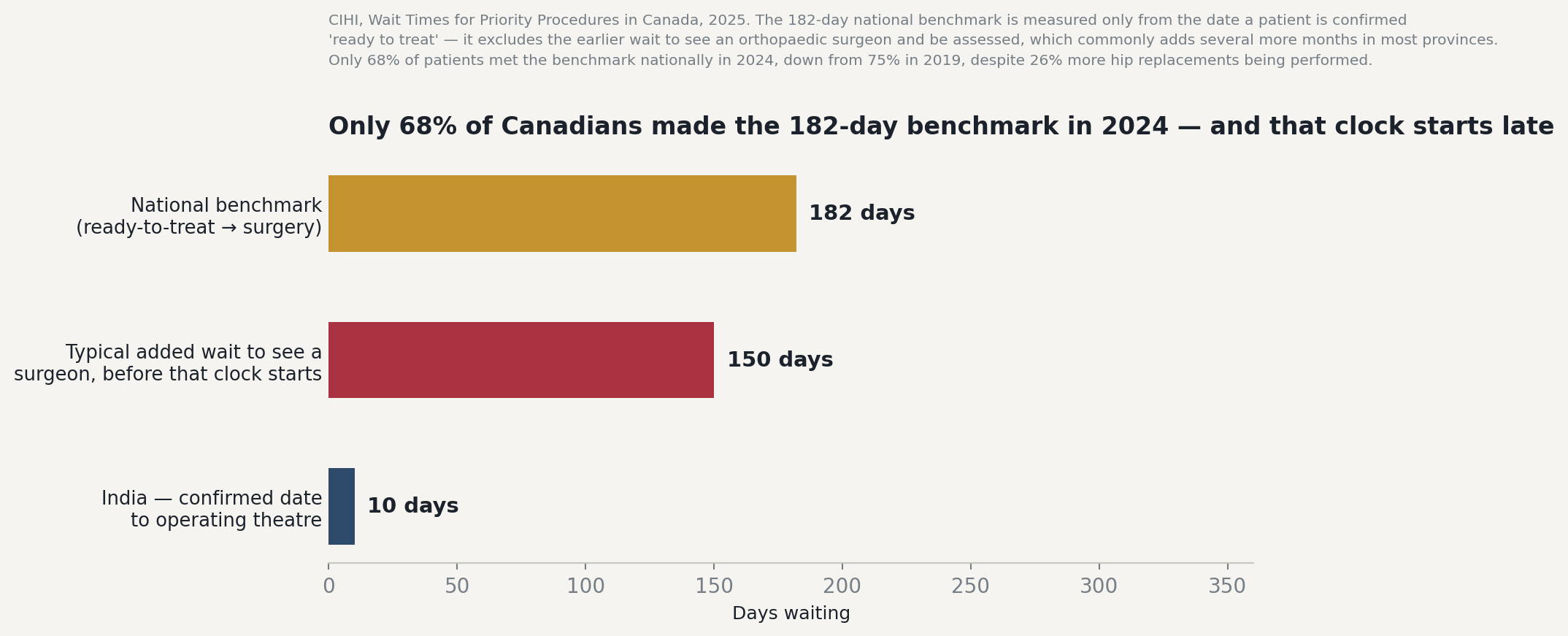
Meanwhile the public wait is real and getting harder to meet. The national benchmark for a hip replacement is 182 days — six months — from the date you are confirmed ready for surgery. In 2024, only 68 per cent of Canadians made that benchmark, down from 75 per cent in 2019, even though 26 per cent more hip replacements were performed. And that clock starts late: the 182-day benchmark only begins once a surgeon has assessed you and confirmed you need the operation. The wait to see that surgeon in the first place, in most provinces, adds months on top.
| 68% | ~⅔ | 10 |
|---|---|---|
| of Canadian hip patients met the 182-day national benchmark in 2024, down from 75% in 2019 | less for the surgery itself at an accredited Indian hospital, even against Canada's own private clinics | days in India from confirmed date to operating theatre |
The private option Canada does have, and why it is not really an escape valve
It would be inaccurate to say Canada has no private surgery. It does — a patchwork of clinics, mostly in British Columbia and increasingly Alberta, charging patients directly for hip and knee replacement. Prices commonly run $20,000 to $28,000, and the sector is growing precisely because the public wait keeps lengthening. Alberta passed legislation in late 2025 explicitly allowing surgeons to move between public and private practice, a genuine sign of where policy is heading.
But this is a fundamentally different proposition from Australia's private hospital system or America's insurance-backed private sector. It exists province by province, sits in continuing legal and political controversy, is not reliably covered by any insurance, and its availability depends entirely on where you happen to live. A British Columbian has options an Islander or a rural Manitoban simply does not. Nothing about it resembles a nationally available, insured fast lane — it is closer to paying full retail, with no certainty, wherever the nearest clinic happens to be.
The one number that should shape your whole decision
Hip replacement patients are younger than knee replacement patients, and that single fact changes everything about how you should choose. If you are having your first hip at 54, you are not asking whether the operation works. You are asking whether the implant will outlive you.
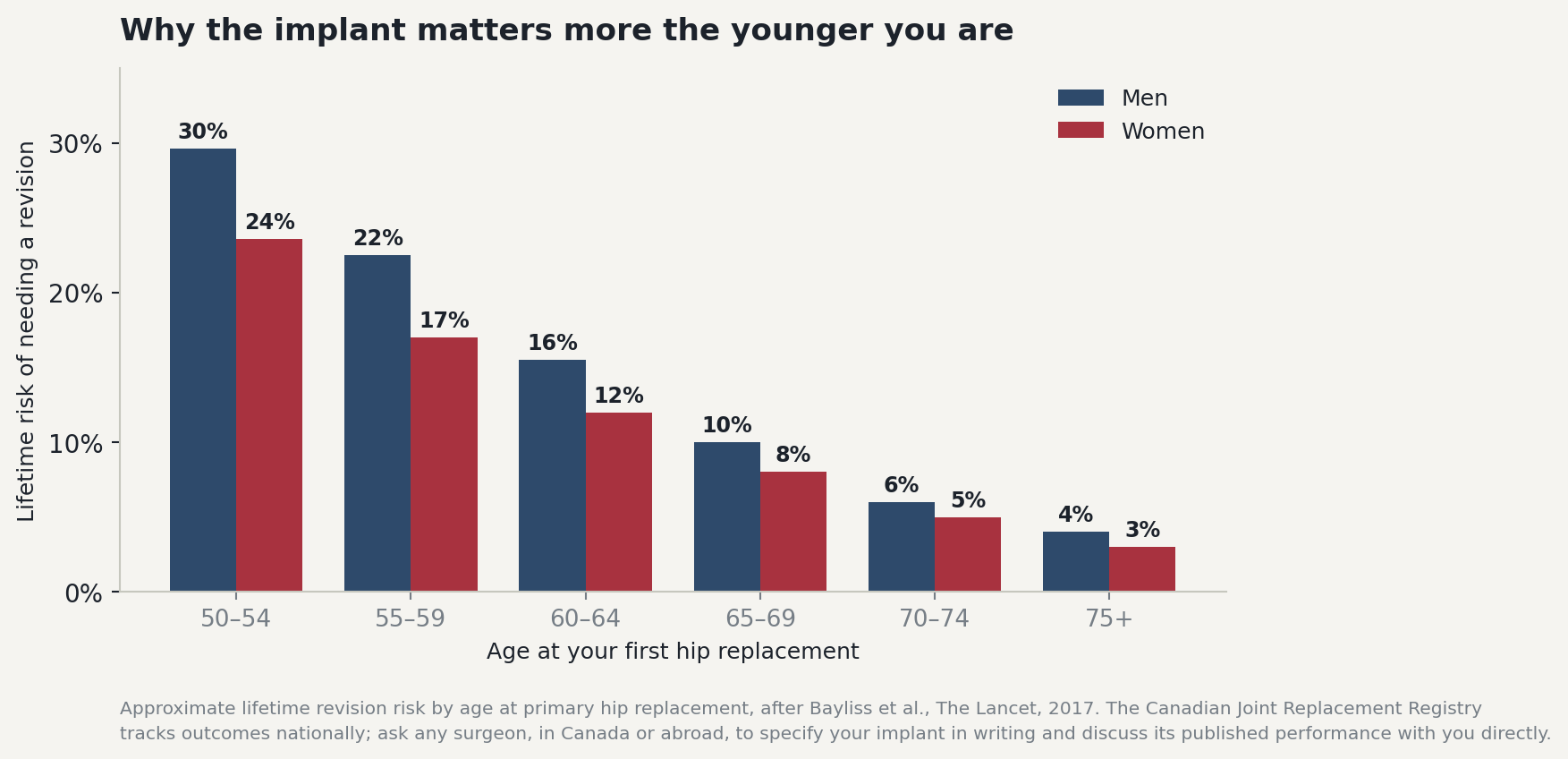
The published lifetime risk of needing a revision approaches 30 per cent for a man having his first hip in his early fifties, and falls to low single figures for someone having it after 75. The Canadian Joint Replacement Registry, maintained by CIHI, tracks hip and knee outcomes nationally and is a genuine resource — though it does not offer the same patient-searchable, implant-by-implant public lookup that some other countries' registries do. The practical response is the same everywhere: the younger you are, the more the specific implant matters, and the less you should accept a surgeon who will not discuss cup, stem, bearing and fixation with you directly, in writing, before surgery.
Which Hip Patient are You?
| Under 60 | 60 to 75 | Over 75 |
|---|---|---|
| Longevity dominates. Ceramic-on- | The sweet spot. Almost any well- | Bone quality and fracture risk lead. |
| cross-linked-polyethylene, a larger head where anatomy allows, and cementless fixation are the usual answer. Ask about bearing wear specifically, and rule out joint-preserving options first if the joint space is not yet gone. | performing modern combination will comfortably see you out. Choose on surgeon volume and unit quality rather than agonising over hardware. | Cemented femoral fixation is often preferred, because periprosthetic fracture rather than wear is the thing most likely to bring you back to theatre. Medical optimisation matters more than implant choice. |
What the money actually looks like
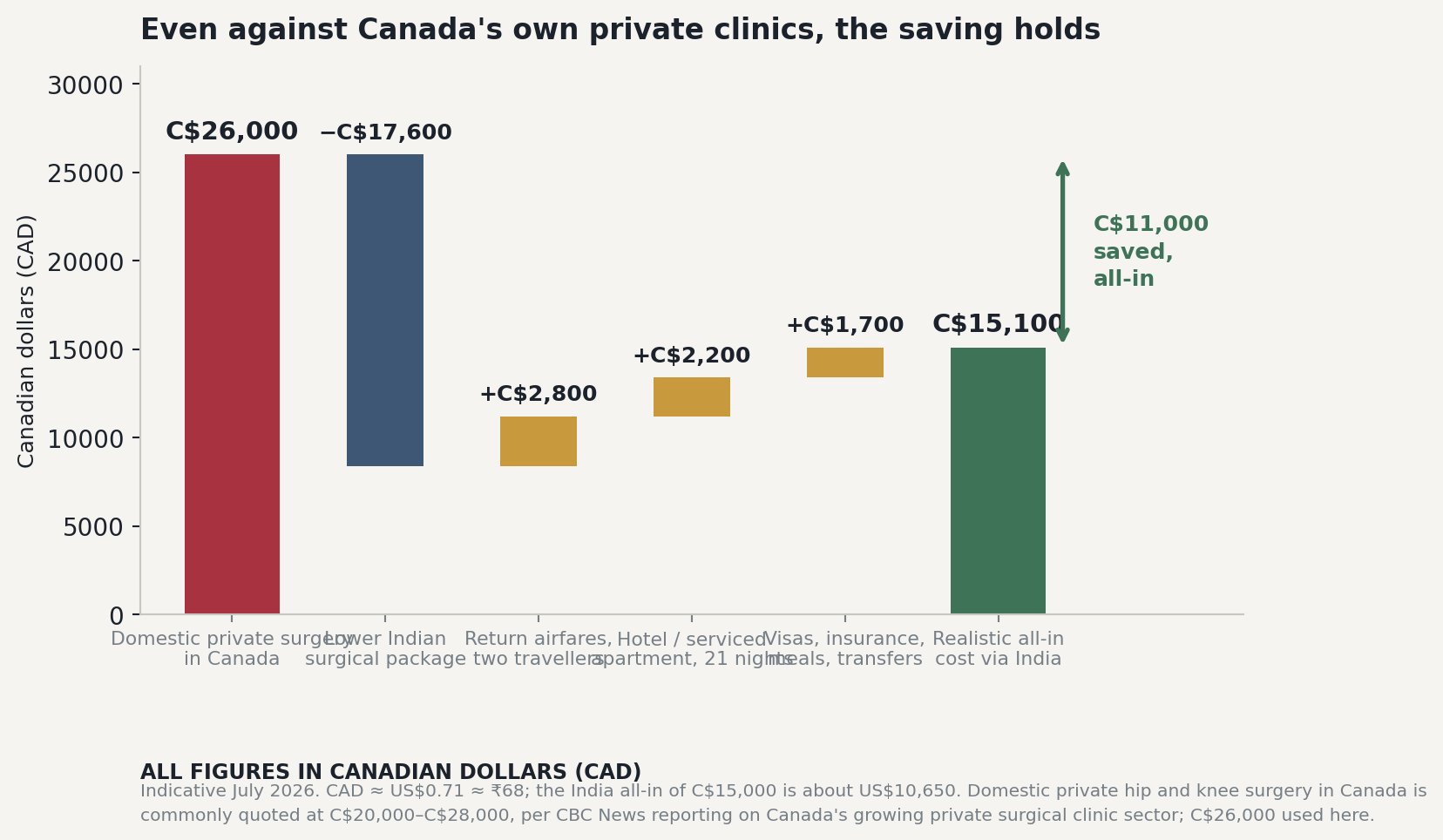
Domestic private hip replacement in Canada is commonly quoted between $20,000 and $28,000, and it comes with none of the certainty a public hospital or a settled insurance system would give you — no guaranteed reimbursement, no national standard, and availability that varies by province. The same operation, performed by a fellowship-trained arthroplasty surgeon at an accredited Indian hospital using an implant from the same global manufacturers, typically costs around two-thirds less.
What the Indian package usually includes that a Canadian private quote itemises separately
- Surgeon, anaesthetist and assistant fees
- The implant, specified by brand and model before you arrive
- Every inpatient night, stated up front
- Daily one-on-one physiotherapy until discharge
- Post-operative imaging, blood work and medication
- Airport transfers and accommodation coordination
In 24 years of guiding patients through this process, I have found that disputes almost never concern the quoted price. They concern what the quote silently omitted. Understand what does not travel with you. Provincial health plans do not cover treatment received overseas, and out-of-country coverage exceptions are narrow, discretionary and require pre-approval that is rarely granted for a routine hip replacement. That is the shape of the decision rather than a hidden trap, and it is exactly why a written, itemised, all-inclusive quote matters before any deposit moves.
Your three realistic options, side by side
| Public system | Domestic private (where available) | India | |
|---|---|---|---|
| Time to surgery | 9–24 months, province-dependent | 2–8 weeks, if a clinic is near you | 1–3 weeks |
| Your out-of-pocket | Nil | $20,000–$28,000 no guaranteed reimbursement | About C$15,000 all-in (US$10,650) |
| Choice of surgeon | Limited | Yes | Yes |
| Choice of implant | Rarely discussed | Sometimes | Specified in writing |
| Availability by region | Everywhere, but variable | Mostly BC and Alberta | Same access, nationwide |
| Physiotherapy | Bought separately | Bought separately | Daily, included |
| Follow-up at home | Built in | Built in | Arrange before you fly |
All dollar figures are Canadian dollars (CAD) unless marked US$. Times and costs indicative, July 2026.
What you are actually getting for it
Volume, and the sub-specialisation that follows. Leading Indian arthroplasty centres perform hip replacement in numbers few individual hospitals anywhere can match, and their senior surgeons frequently do nothing else, many holding fellowships from Canada, the United Kingdom or the United States. Volume is among the more reliable predictors of outcome in joint surgery, and it is why these units treat dysplastic hips, protrusio and post-traumatic deformity as routine rather than exceptional.
Cup position, which is where hips are won or lost. Dislocation and edge wear both trace back to how accurately the acetabular component is placed. Computer navigation and robotic assistance are widely available in Indian centres and generally included rather than charged as an upgrade.
Accreditation that means something specific. JCI is the international arm of the body accrediting hospitals across the United States; NABH is India’s national equivalent, recognised by the same global standards authority. When a hospital holds either, an external inspector has audited its infection control, surgical checklists and record-keeping against a published standard, and you can verify it independently.
Rehabilitation that is genuinely supervised. Most hip patients are standing within a day and walking with a frame almost immediately. In India you do that under supervision, working one-on-one with a physiotherapist daily and reviewed throughout by the surgeon who operated.
Optimisation before the knife. A quality unit insists on dental clearance, checks your HbA1c and discusses weight before booking a theatre date, because each materially affects prosthetic joint infection risk.
Why India rather than the United States, Mexico or Turkey
Canadians exploring medical travel are usually shown the United States first, and occasionally Mexico or Turkey. The United States solves speed but not cost — American private hip replacement runs to US$30,000–$50,000 or more, before travel, which erases the entire financial case for leaving Canada in the first place. India competes on substance: the volumes, the sub-specialised surgeons, and serious revision capability standing behind the primary operation, at a genuine fraction of American or domestic private pricing. Its entire medical record is produced in English, so nothing needs translating before your Canadian surgeon or GP can read it. And unlike a cross-border trip to a Mexican or Turkish clinic your provincial college has no relationship with, Indian hospital accreditation is independently verifiable against global standards before you ever book a flight.
Two questions everyone asks, answered properly
Who looks after me when I get home? Arrange it before you go rather than after you land. Speak to your family doctor, give them the dates, and confirm your post-operative physiotherapy in advance. Most family doctors are willing once brought in early and given a proper handover, and the discharge pack described below is what makes that handover easy.
What about infection? Prosthetic joint infection is the complication that matters in hip replacement anywhere in the world, and good units manage it actively rather than hope. Ask for the unit’s surgical site infection rate for primary hip arthroplasty and whether it screens patients before joint surgery. Ask for any culture result in writing, and tell your Canadian doctor on return that you have had surgery overseas.
What to say to your family
The objection nobody writes about is not clinical. It is the phone call in which you tell your daughter you are having surgery in India, and the pause that follows. What settles it is specifics rather than reassurance. Name the hospital and its accreditation and invite her to look it up. Name the surgeon, his training and his annual hip volume. Name the cup, the stem and the bearing. Explain that you are staying three weeks precisely so nothing is rushed, and that your family doctor already has the dates. Families do not object to India; they object to the sense that a relative is taking an unresearched gamble with something irreversible. Show them the research and the objection generally dissolves. Better still, bring one of them — the attendant visa exists for this.
Three supervised weeks
Hips recover faster than knees, which is why the temptation to book an early flight is strong. Resist it. Plan three weeks for a single hip.
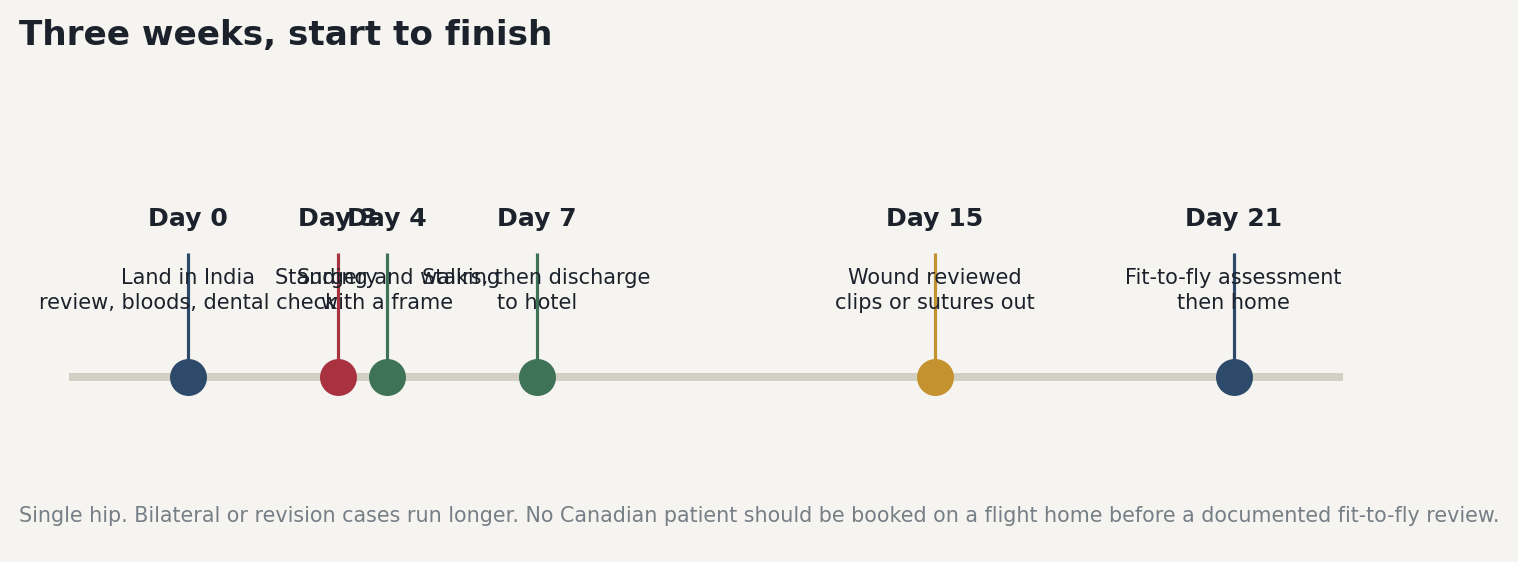
Venous thromboembolism risk stays elevated for weeks after hip arthroplasty and long-haul immobility compounds it, while the early dislocation risk is highest in the first six weeks. Book a changeable return, ask for a written thromboprophylaxis plan covering the flight, request the unit’s hip precautions in writing, take an aisle seat and move regularly.
Six Things to Have in Writing Before You FLY
1. The implant, fully specified. Cup, stem, bearing combination, head diameter and fixation — the five answers that let you check the most important choice in the operation.
2. An itemised, all-inclusive price, with physiotherapy, imaging and inpatient nights clearly inside or outside the number, and the cost of extra nights stated.
3. The named operating surgeon, and a video consultation with them — not a coordinator, and before any deposit.
4. Their annual primary hip volume, and who assists if the case proves complex.
5. What the hospital covers if you need a return to theatre during your stay.
6. Your Canadian follow-up, already booked: a family doctor review and physiotherapy course confirmed before you leave.
Practicalities for Canadians
Canadian passport holders are eligible for India’s electronic medical visa, issued against an invitation letter from the hospital, with an e-medical attendant visa for whoever travels with you — apply for both in the same batch. Send the imaging study itself, not only the radiologist’s report: a standing AP pelvis and lateral are what the surgeon needs to template the implant. Before flying home, collect a discharge pack — operation note, implant identification card with lot numbers for both components, post-operative films, culture results, anticoagulation plan, hip precautions and rehabilitation protocol. That pack is what lets your family doctor and physiotherapist pick up your care confidently.
A closing word
A hip replacement done well is close to a restoration. For a Canadian facing a year or more on a provincial list, with no legally settled private alternative available where they live, having it done promptly at a high- volume Indian centre is a thoroughly reasonable decision — provided the implant is chosen deliberately and the follow-up is arranged before departure. If you would like a second opinion on your films, or a review of a quote you already hold, send the imaging and I will look at it properly.
Sources
- 🌐 Canadian Institute for Health Information, Wait Times for Priority Procedures in Canada , 2025
- 🌐 Canadian Institute for Health Information, CJRR Annual Report: Hip and Knee Replacements in Canada , 2024–25
- 🌐 Supreme Court of Canada, denial of leave to appeal in Cambie Surgeries Corporation v. British Columbia (Attorney General) , April 2023
- 🌐 CBC News, reporting on Canada’s private surgical clinic sector, 2023–2025
- 🌐 Bayliss et al., “The effect of patient age at intervention on risk of implant revision after total replacement of the hip or knee”, The Lancet , 2017
- 🌐 High Commission of India, e-Visa categories and eligibility
Frequently Asked Questions by Canadian Patients about Hip Surgery in India
Why do some Canadian patients choose hip surgery in India?
The guide explains that many Canadians consider hip surgery in India because of prolonged waiting times for surgery in the public system and limited access to domestic private hip replacement services. India offers earlier treatment with comprehensive care and rehabilitation.
Does provincial health insurance usually reimburse hip replacement performed in India?
Generally, no. The guide states that out-of-country coverage for routine hip replacement is uncommon and usually requires prior approval under limited circumstances. Patients should check directly with their provincial health authority before making travel arrangements.
Why is implant selection important before hip replacement surgery?
The guide recommends discussing the implant in detail before surgery, including the cup, stem, bearing surface, head size and fixation method. Younger patients, in particular, should understand implant selection because it may influence long-term implant durability.
How long should Canadian patients stay in India after hip replacement?
For a single hip replacement, patients are generally advised to remain in India for approximately three weeks. This allows time for supervised rehabilitation, wound review, medical assessment and a documented fit-to-fly evaluation before returning home.
What should be included in the hospital quotation before surgery?
Patients should request an itemised quotation that clearly specifies surgeon fees, implant details, hospital stay, physiotherapy, investigations, medications, imaging and any additional charges that may arise if extra inpatient days become necessary.
Can both hips be replaced during the same trip?
The guide explains that bilateral hip replacement may be appropriate for selected patients without significant medical risks. The decision should be made after a thorough evaluation by the orthopaedic surgeon rather than as a routine recommendation.
What medical records should patients carry before travelling?
Patients should bring standing AP pelvis and lateral hip X-rays, MRI or CT scans (if available), previous orthopaedic reports, medical history, medication list and any relevant laboratory investigations to help the surgeon plan treatment accurately.
What documents should patients receive before returning to Canada?
Before leaving India, patients should collect the operation note, implant identification card with implant details, post-operative X-rays, rehabilitation protocol, anticoagulation plan, discharge summary and follow-up instructions for their Canadian healthcare providers.
How is rehabilitation managed after hip replacement in India?
According to the guide, rehabilitation begins soon after surgery with supervised physiotherapy. Patients are encouraged to arrange continued physiotherapy and follow-up with their Canadian family doctor before returning home to ensure continuity of care.
What should patients confirm before booking hip surgery in India?
The guide recommends confirming the named operating surgeon, annual surgical volume, implant specifications, complete treatment cost, rehabilitation plan, hospital coverage for unexpected complications and follow-up arrangements in Canada before making a final decision.
Will my provincial health plan reimburse any of this?
Almost never for a routine hip replacement. Out-of-country coverage exceptions exist in every province but are narrow, discretionary, and generally require pre-approval demonstrating the procedure is genuinely unavailable in Canada within a medically acceptable time — a high bar that a standard hip replacement rarely clears, however long your actual wait has been. Ask your provincial ministry of health directly rather than assuming either way.
Anterior or posterior approach — which should I insist on?
Neither, and be wary of anyone selling one as revolutionary. Both give excellent results in experienced hands; the anterior approach may recover marginally faster in the first weeks, with the difference largely gone by three months. Surgeon volume and accurate component positioning matter far more than the incision.
How long before I can fly home?
About three weeks for a single hip, on a changeable ticket, following a documented fit-to-fly assessment.
Can both hips be done on the same trip?
For fit patients without significant cardiac or respiratory disease this is often reasonable and is one of the real advantages of travelling — one anaesthetic, one rehabilitation period, one trip. A good unit examines that question with you rather than simply agreeing.
I am 54. Should I wait a few years so the implant lasts long enough?
Usually not. Waiting costs you years of function and does not reduce lifetime revision risk as much as people assume. The better response to being young is to be exacting about the implant and the surgeon.
Page Summary
This guide explains how Canadian patients can evaluate hip surgery in India by comparing waiting times, treatment costs and available surgical options. It highlights the importance of implant selection, choosing experienced arthroplasty surgeons, obtaining a written treatment plan, planning three weeks of supervised recovery in India and arranging follow-up care in Canada before travelling. The guide also explains what should be included in an itemised quotation and which documents patients should collect before returning home.
Citation Block
| Topic | Information |
|---|---|
| Topic Information | Details |
| Procedure | Hip Surgery & Total Hip Replacement |
| Country | India |
| Intended Audience | Canadian Patients |
| Conditions Covered | Hip Arthritis, Osteoarthritis, Hip Degeneration, Femoral Neck Fracture, Hip Deformities |
| Procedures | Total Hip Replacement, Bilateral Hip Replacement, Revision Hip Replacement, Robotic-Assisted Hip Replacement |
| Typical Stay | Approximately 3 Weeks |
| Hospital Stay | Depends on Recovery and Treatment Plan |
| Recovery | Supervised Rehabilitation with Physiotherapy Before Returning Home |
| Average Treatment Cost | Canada: CAD 20,000–28,000 (Private); India: Approximately CAD 15,000 All-Inclusive (Indicative) |
| Author | Dr. Dheeraj Bojwani |
| Experience | 24+ Years in Medical Travel |


Our Mission Statement
Our mission is to place patients at the centre of every healthcare decision by providing trustworthy, evidence-based, and unbiased medical information. We believe that informed patients make better decisions. Backed by personalised guidance from our experienced advisory team, we help patients understand their treatment options, compare them objectively, and confidently choose the path that best suits their medical needs and personal circumstances.
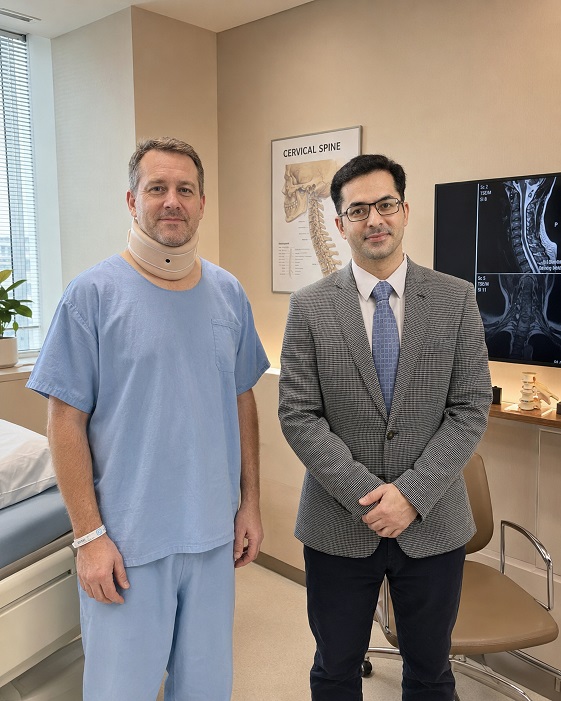
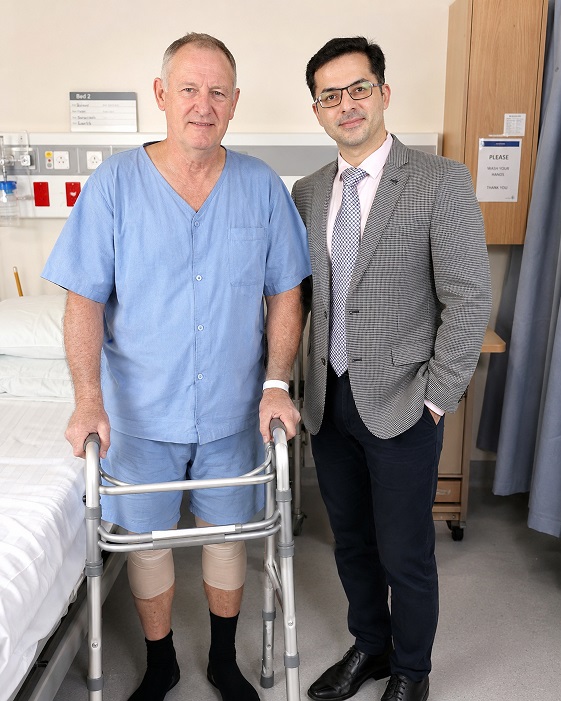
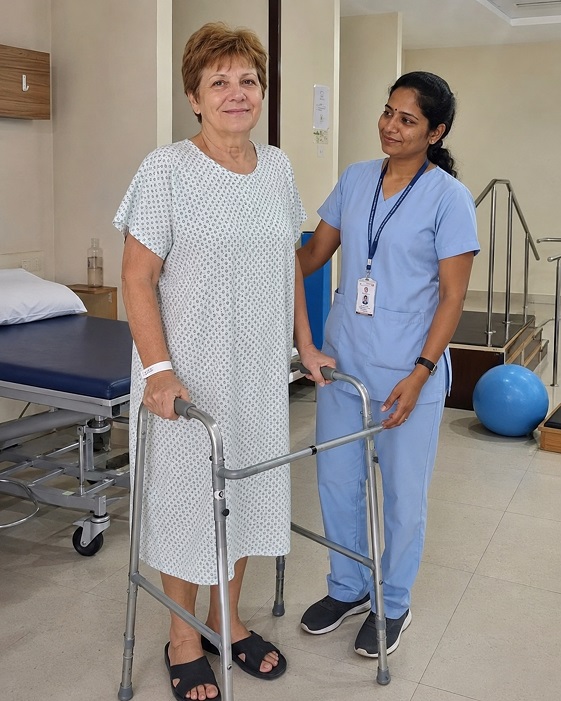
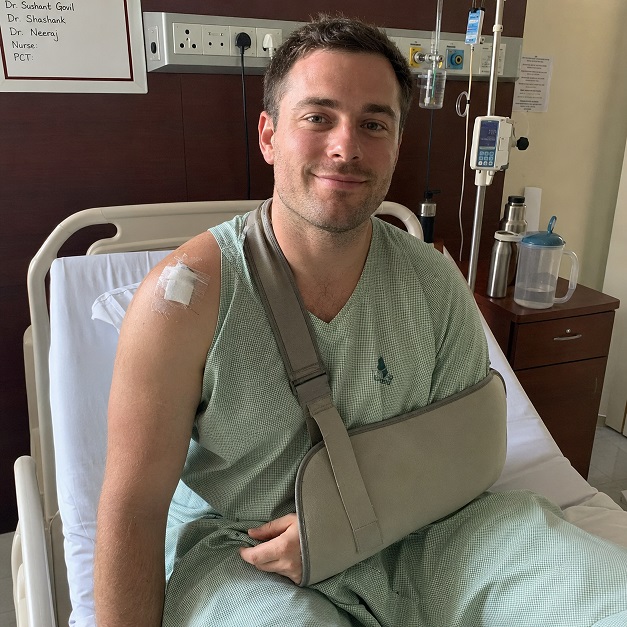
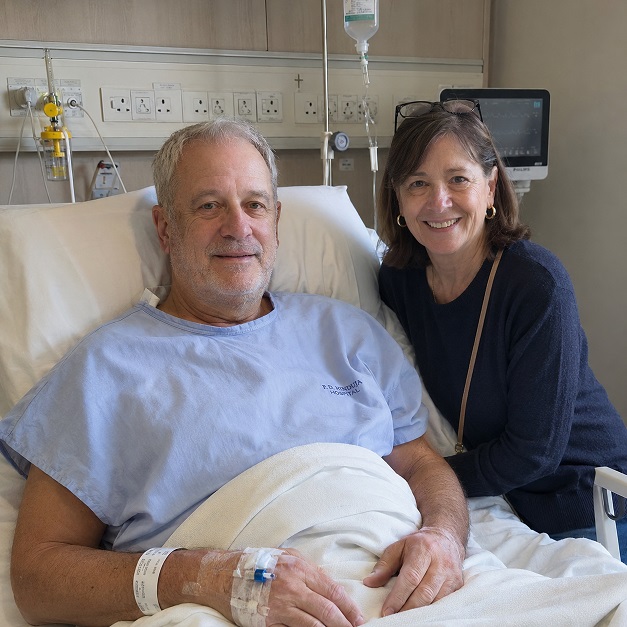
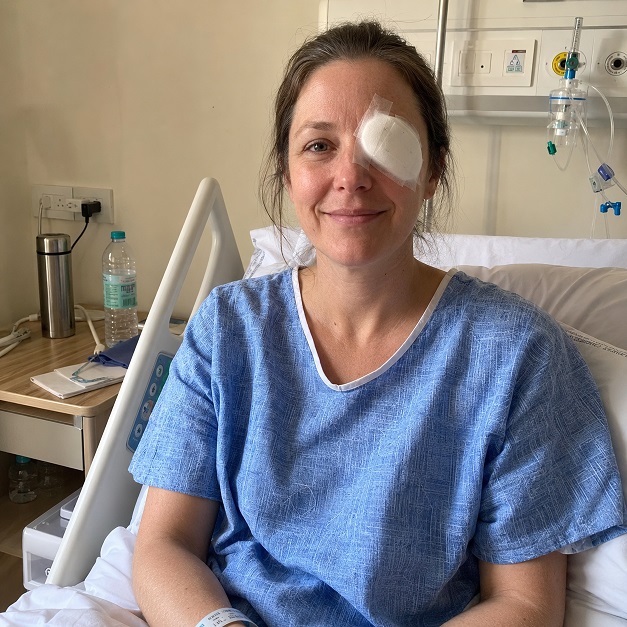
Patient Testimonials from Canada



Ready to Take the First Step?
Share your Medical Reports with our Healthcare Managers Today and Get a FREE CONSULTATION, a Personalized Treatment Plan, and Complete Support from Arrival to Recovery.
Get Your Free ConsultationFrom Canada to India: Your Complete Patient Support Guide
- Weight Loss & Bariatric Surgery in India for Canadian Patients: The Multi-Year Wait, Explained (2026)
- Bone Marrow Transplant in India for Canadian Patients: Complete Guide
- Brain Tumor Surgery in India for Canadian Patients: Complete Guide
- Breast Cancer Treatment and Surgery in India for Canadian Patients
- Cancer Treatment and Surgery in India for Canadian Patients
- Cardiac Surgery in India for Canadian Patients
- Colorectal Cancer Treatment and Surgery in India for Canadian Patients
- Cosmetic and Aesthetic Surgery in India for Canadian Patients
- CyberKnife Treatment in India for Canadian Patients: Complete Guide
- Dental Surgery in India for Canadian Patients | Complete Treatment & Cost Guide
- Gamma Knife Treatment in India for Canadian Patients
- Heart Valve Replacement Surgery in India for Canadian Patients
- Hip Surgery in India for Canadian Patients | Complete Treatment, Cost & Recovery Guide
- HIPEC Surgery in India for Canadian Patients: Complete Guide
- Kidney Transplant in India for Canadian Patients: Complete Guide
- Knee Surgery in India for Canadian Patients: Wait Times & Costs
- Neurosurgery in India for Canadian Patients: Wait Times & Costs
- Paediatric Cardiac Surgery in India for Canadian Patients