

Selecting the Best Colorectal Cancer Surgeons and Hospitals in India for Canadian Patients
Ten weighted criteria — but first, a genuine, documented irony in Canadian colonoscopy wait times, and why India's leading colorectal cancer centres offer a considered, faster, well-evidenced alternative.
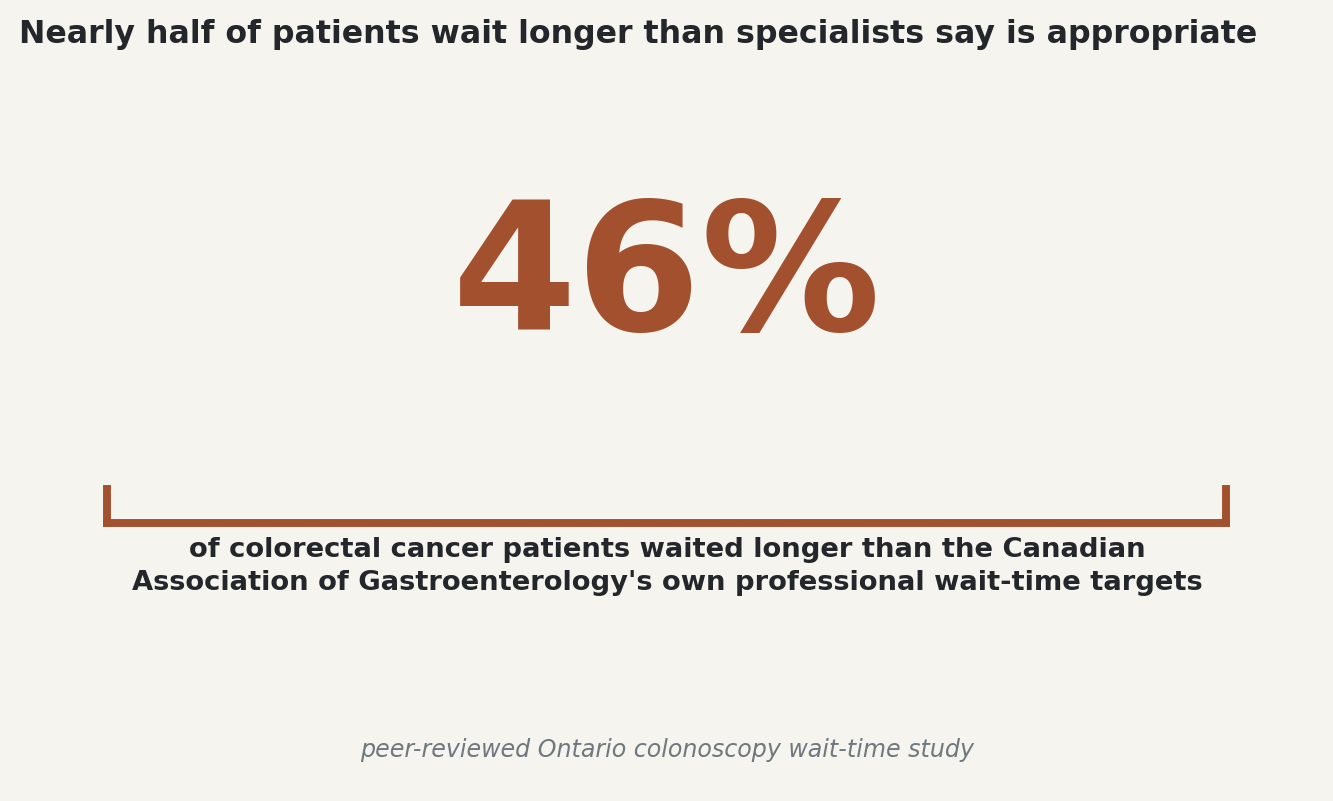
In 24 years of guiding international patients into Indian hospitals, this figure is genuinely striking precisely because the benchmark it's measured against comes from Canada's own gastroenterology professionals, not an external or arbitrary standard. Nearly half of colorectal cancer patients in this peer-reviewed Ontario study waited longer than their own specialists say is clinically appropriate, a genuine, documented gap between professional guidance and actual patient experience. This isn't an isolated finding either. Separate research from Queen's University in Kingston reported a mean colonoscopy wait time of 229 days, with 78.6% of cases failing to meet the same professional targets, a genuinely more severe version of the same national pattern documented independently at a different Canadian centre.
Healing Journeys of Canadian Patients
Key Takeaways
- The guide highlights a documented concern with colonoscopy and diagnostic delays in Canada. A peer-reviewed Ontario study found that 46% of colorectal cancer patients waited longer than the Canadian Association of Gastroenterology's professional wait-time targets. Separate research from Queen's University reported a mean colonoscopy wait of 229 days, with 78.6% of cases failing to meet the same targets.
- The page 2 graphic highlights an important finding: Stage 1 patients, despite having the earliest and most curable disease, had a mean wait of more than 150 days in the cited research. The guide explains that delays of months can allow colorectal cancer to progress and emphasises the importance of timely diagnosis and treatment planning.
- India is presented as an alternative because leading colorectal cancer centres perform high volumes of resections, including complex cases requiring careful judgement about whether the anal sphincter can be safely preserved and a permanent stoma avoided. Biomarker testing such as KRAS, NRAS, BRAF and MSI, minimally invasive surgery and internationally accredited hospital care are also highlighted.
- The selection framework gives 55% weighting to the surgeon and 45% to the hospital. Surgeon assessment focuses on tumour location-specific experience, sphincter-preservation judgement, personal involvement in surgery, margin clearance and complication data. Hospital assessment includes biomarker testing, a genuine multidisciplinary tumour board, international accreditation and complete treatment records.
- The page 4 qualification table identifies MCh in Surgical Oncology or a fellowship in colorectal surgery as dedicated further training relevant to colorectal cancer surgery. The guide also identifies four warning signs: recommending a permanent stoma without discussing preservation, quoting a price before pathology review, vague biomarker testing and absence of a genuine multidisciplinary tumour board.
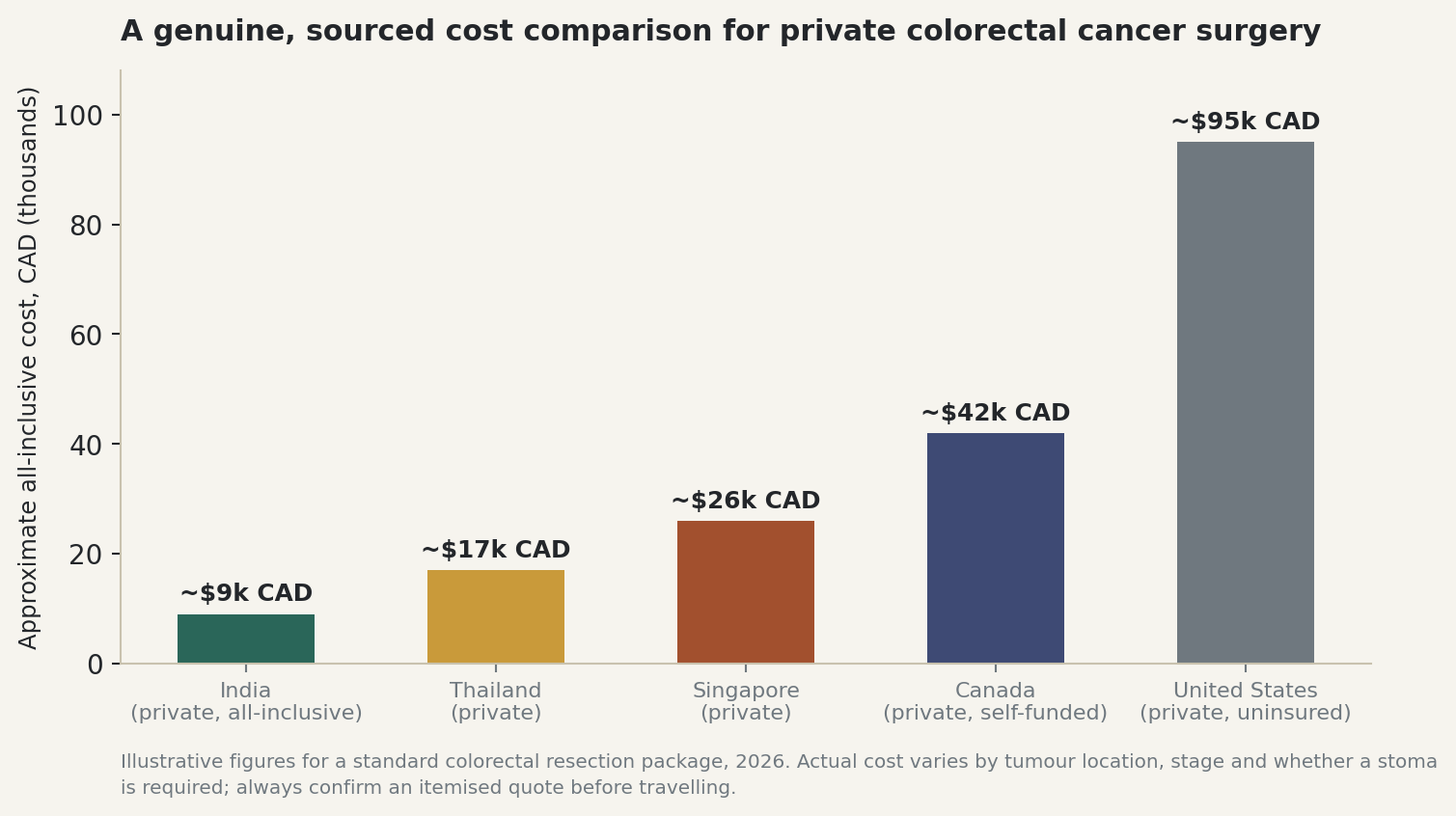
- The page 4 cost chart gives illustrative private costs of approximately C$9,000 in India, C$17,000 in Thailand, C$26,000 in Singapore, C$42,000 in Canada and C$95,000 in the United States for a standard colorectal resection package. The guide notes that actual costs vary according to tumour location, stage and whether a stoma is required.
Quick Facts
- Treatment
- Colorectal Cancer Surgery
- Patients
- Canadian Patients
- Key Specialist
- Colorectal / Surgical Oncologist
- Key Procedure
- Colorectal Resection
- Key Consideration
- Sphincter Preservation
- Selection Weighting
- 55% surgeon / 45% hospital
- Key Qualification
- MCh Surgical Oncology / Colorectal Surgery Fellowship
- Biomarkers
- KRAS, NRAS, BRAF & MSI
- Hospital Check
- Multidisciplinary Tumour Board
- India Cost
- Approximately C$9,000
- Canada Cost
- Approximately C$42,000
- US Cost
- Approximately C$95,000
- Pre-Travel Records
- Pathology, staging imaging & biomarker results
- Follow-Up
- Canadian Oncologist
- Key Warning
- Avoid centres that do not properly discuss sphincter preservation
- Decision Principle
- Prioritise tumour-specific expertise, sphincter-preservation judgement and coordinated cancer care.
- Author
- Dr. Dheeraj Bojwani
- Experience
- 24+ Years
In Brief
For Canadian patients, the guide's central message is to evaluate colorectal cancer surgery beyond cost and speed. Tumour-specific surgical experience, the possibility of sphincter preservation, biomarker-guided treatment, multidisciplinary review, transparent pricing and continuity with the Canadian oncology team should all be considered before travelling.
Colorectal cancer surgery genuinely rewards early diagnosis and precise surgical judgement, particularly around whether the sphincter can be safely preserved. This guide exists for patients whose diagnosis is confirmed, weighing where and how that surgery should happen.
Nationwide practice audits paint a similarly concerning picture: a median wait time of 91 days for endoscopy generally, rising to 203 days at the 75th percentile, meaning a genuine, substantial share of patients experience waits considerably longer than even the already-lengthy median figure suggests. One in five Canadians surveyed reported difficulty accessing specialist care generally, resulting in genuine, documented worry, anxiety and stress, exactly the kind of psychological burden that compounds an already difficult diagnosis.
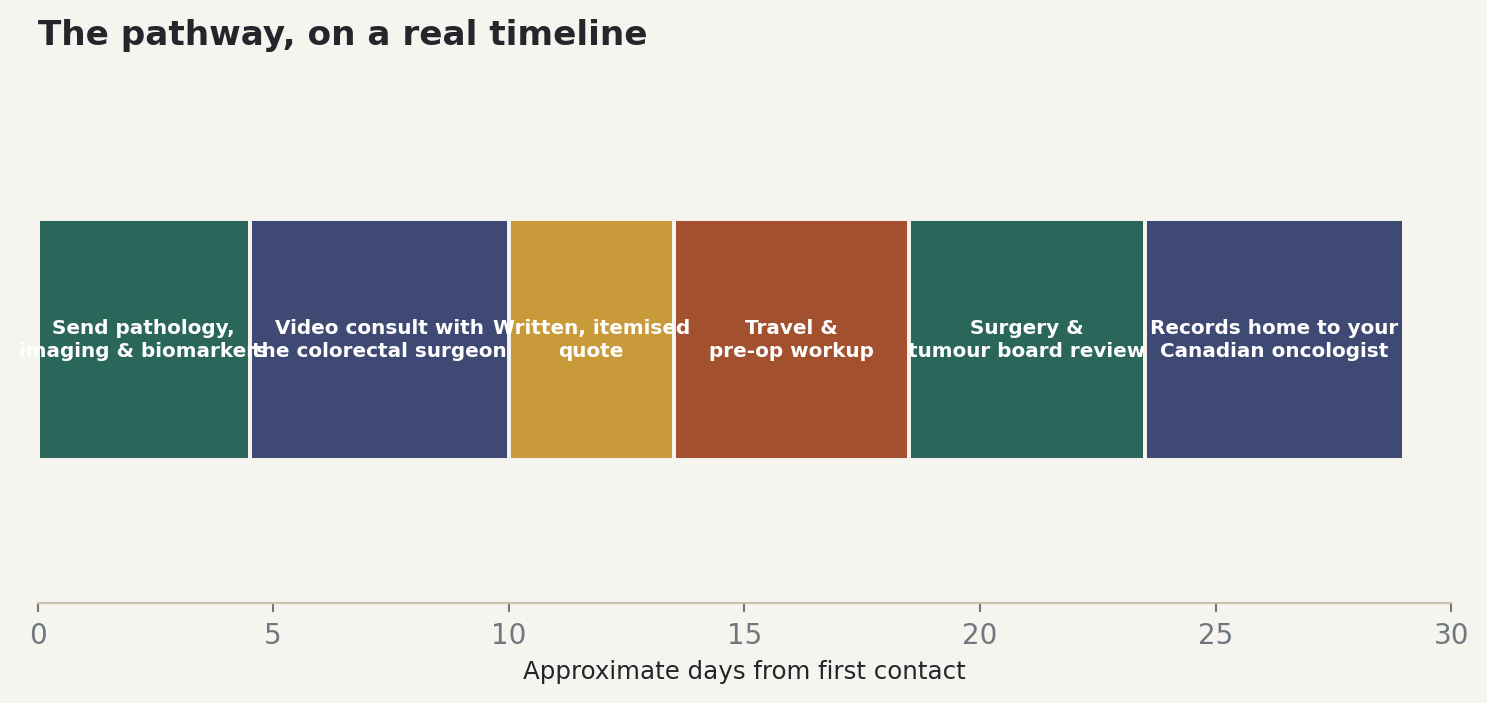
For patients facing this genuine, documented reality, the case for looking seriously at India is a strong one: internationally accredited colorectal cancer centres with genuinely high surgical volume, deep experience in exactly the sphincter-preservation judgement that shapes quality of life after surgery, and treatment that can typically begin within two to three weeks of your first consultation, all at a fraction of the equivalent Canadian private cost.
The genuine irony: earlier-stage patients waited longer, not less
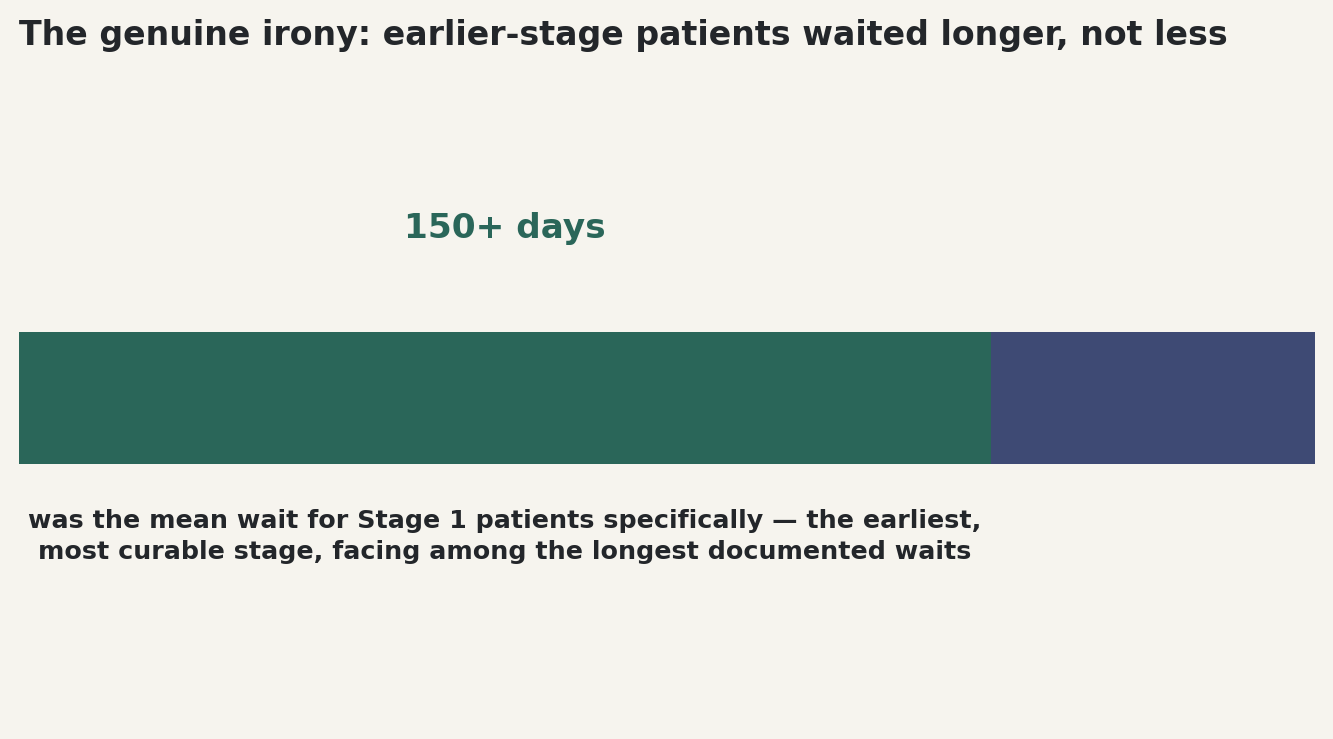
Get your full pathology and staging imaging together before your first overseas conversation. This finding deserves particular attention because it runs counter to what you'd reasonably expect: patients with the earliest, most curable stage of colorectal cancer, precisely those who stand to benefit most from prompt treatment, experienced among the longest documented waits of any stage group in this research. The study's authors specifically noted that earlier colonoscopy in this exact subgroup could, in some cases, have caught disease before it progressed from high-grade dysplasia to invasive cancer, potentially avoiding the need for surgery entirely.
This pattern reflects a genuine, structural feature of how triage systems work: patients presenting with more alarming symptoms are understandably prioritised faster, while those with more subtle, early-stage findings can move more slowly through the same system, even though the clinical stakes of that delay are, in their own way, just as significant. This has genuine clinical consequences worth understanding directly. Colorectal cancer, particularly early-stage disease, doesn't remain static while a patient waits; it can progress through recognised stages of increasing severity, and a delay measured in months, rather than the weeks professional guidelines recommend, gives that progression genuine time to occur.
Why India specifically, not just “overseas”
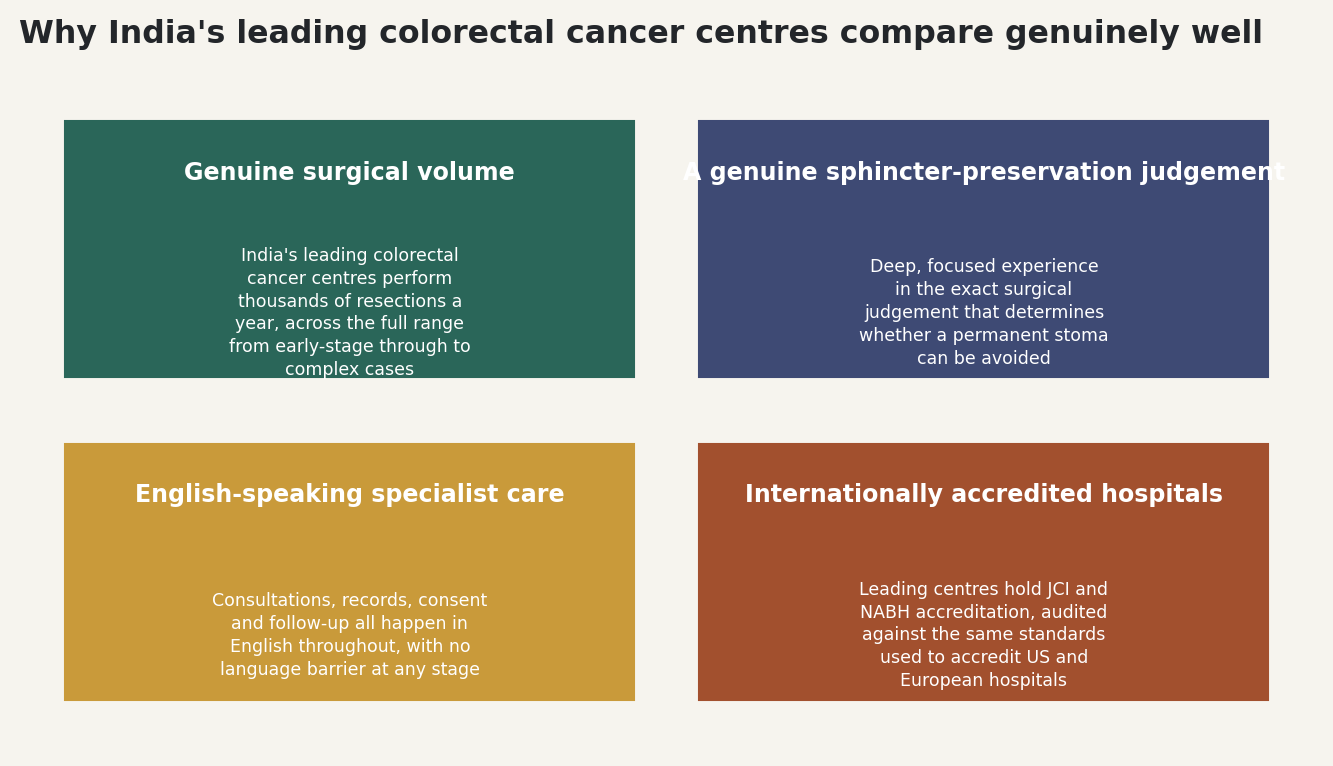
This is worth spelling out plainly, because “medical travel” can sound vague until you see what it actually means in practice. India's leading colorectal cancer centres perform a volume of resections, across the full range from early-stage disease through to complex cases, that reflects the scale of the population these centres serve. This depth of experience matters enormously for one specific, high-stakes surgical judgement: whether a tumour close to the anal sphincter can be safely removed while preserving that sphincter, avoiding a permanent stoma. This is not a compromise reached for cost and speed; it represents genuine, deep surgical experience in exactly this judgement call.
Biomarker testing (KRAS, NRAS, BRAF, MSI) and minimally invasive resection technique are established, routine practice at India's leading centres. Every consultation, medical record, consent discussion and follow-up letter happens in English, conducted by specialists trained to internationally recognised standards, and leading hospitals hold Joint Commission International accreditation alongside India's own NABH certification.
Ten weighted criteria, out of 100
The same weighting that applies across this series applies here: the surgeon carries 55 points, the hospital 45. Part one, judging the surgeon: genuine volume in your tumour's specific location, an honest sphincter-preservation discussion, whether the surgeon personally operates, and candid margin clearance and complication data.
| Qualification | Length | What it actually means |
|---|---|---|
| MBBS | 5½ years | The basic medical degree. A licence to practise, not a specialist qualification. |
| MS (General Surgery) | 3 years | The base specialist surgical qualification. |
| MCh (Surgical Oncology) or fellowship in colorectal surgery | 2–3 years further | This is what matters most here. Dedicated further training specifically in colorectal cancer surgery. |
Part two, judging the hospital: biomarker testing genuinely used to guide your plan, a real multidisciplinary tumour board, verified international accreditation, and a complete treatment record your Canadian oncology team can use.
Four Signals That Should Make You Pause
- A permanent stoma proposed without a genuine sphincter-preservation discussion. Ask directly why preservation isn't possible for your specific tumour.
- A price quoted before your pathology has been reviewed. Nobody can meaningfully price this surgery without seeing your specific case.
- Vagueness about biomarker testing. Confirm this genuinely shapes your treatment plan, not just a box ticked.
- No genuine multidisciplinary tumour board review. Your case should be reviewed by a genuine team, not decided by one surgeon alone.
Canada-specific considerations most patients miss
If you're 45 to 49, request a screening kit directly. The lowered screening age took effect July 2026; it isn't always sent automatically, so ask your GP or provincial screening programme proactively.
Tell your Canadian surgical team early, not after the fact. Most are more sympathetic to a second opinion than patients expect.
Arrange your ongoing oncology care before you leave. Confirm your Canadian oncologist is willing to continue follow-up based on overseas surgical findings.
The Questions, in the Order You Should Ask Them
| Of the surgeon | Of the hospital |
|---|---|
| Is sphincter-preserving surgery achievable for my tumour? | Is biomarker testing genuinely used to guide my plan? |
| What is your volume at my exact tumour location? | Will my case go before a genuine multidisciplinary tumour board? |
| Will you personally operate? | Which accreditation do you hold, and when was it last inspected? |
| What is your complication and margin clearance rate? | What does the final treatment record include? |
A closing word
Canada's own peer-reviewed research confirms a genuine, documented pattern: nearly half of colorectal cancer patients wait longer than professional targets, with a genuine irony that Stage 1 patients, the most curable, faced among the longest waits. For patients facing that reality, the case for India is genuinely strong, not a fallback option: colorectal surgical teams with deep, current volume and exactly the sphincter-preservation judgement this cancer demands, and treatment that can typically begin within two to three weeks, at a fraction of the equivalent Canadian private cost.
In 24 years of guiding patients through exactly this decision, the pattern is consistent: those who look closely at what India's leading colorectal centres actually offer, rather than assuming distance means compromise, generally come away reassured rather than anxious. Weight the sphincter-preservation judgement as heavily as anything else, confirm genuine surgical volume, and travel with a written, itemised quote in hand.
If you would like a second opinion on your pathology, send it and I will look at it properly.
Frequently Asked Questions by Canadians about Colorectal Cancer Surgeons and Hospitals in India
What colorectal cancer issue does the guide highlight?
A peer-reviewed Ontario study found that 46% of colorectal cancer patients waited longer than Canadian professional wait-time targets.
How long did Stage 1 patients wait in the cited research?
The page 2 graphic reports a mean wait of more than 150 days for Stage 1 patients.
Why is sphincter preservation important?
For tumours close to the anal sphincter, surgical judgement can determine whether the sphincter can safely be preserved and a permanent stoma avoided.
What specialist should I look for?
Choose a colorectal surgeon or surgical oncologist with specific experience at your tumour's location, particularly for rectal cancers where sphincter preservation may be relevant.
What qualification is highlighted?
The guide identifies MCh in Surgical Oncology or a fellowship in colorectal surgery as dedicated further training relevant to colorectal cancer surgery.
Which biomarkers are mentioned?
The guide specifically mentions KRAS, NRAS, BRAF and MSI testing as part of modern colorectal cancer care.
How much does colorectal cancer surgery cost in India?
The guide gives an illustrative cost of approximately C$9,000 in India, compared with C$42,000 in Canada and C$95,000 in the US.
What records should I provide before travelling?
Prepare your pathology, staging imaging and available biomarker results before the overseas consultation.
What should I ask the surgeon?
Ask whether sphincter-preserving surgery is achievable, the surgeon's experience with your exact tumour location, whether they will personally operate, and their complication and margin-clearance data.
What are the main warning signs?
Be cautious if a permanent stoma is proposed without a proper preservation discussion, pricing is given before pathology review, biomarker testing is unclear or there is no genuine multidisciplinary tumour-board review.
Sources
- Wait Times for Diagnostic Colonoscopy Among Outpatients with Colorectal Cancer: A Comparison with Canadian Association of Gastroenterology Targets — pmc.ncbi.nlm.nih.gov
- Cancer Care Ontario, Colorectal Cancer Screening Recommendations Summary, 2026 — cancercareontario.ca
- National Medical Commission — nmc.org.in
- National Accreditation Board for Hospitals & Healthcare Providers — nabh.co
Page Summary
This guide helps Canadian patients compare colorectal cancer surgeons and hospitals in India, focusing on tumour-specific expertise, sphincter preservation, biomarker testing, multidisciplinary care, cost and follow-up. It highlights Canadian diagnostic delays and India's specialised colorectal surgical capabilities. Indicative costs are C$9,000 in India, C$42,000 in Canada and C$95,000 in the US.
Citation Block
| Field | Information |
|---|---|
| Topic | Best Colorectal Cancer Surgeons & Hospitals in India for Canadian Patients |
| Treatment | Colorectal Cancer Surgery |
| Patients | Canadian Patients |
| Specialist | Colorectal / Surgical Oncologist |
| Key Procedure | Colorectal Resection |
| Key Consideration | Sphincter Preservation |
| Selection Weighting | 55% surgeon / 45% hospital |
| Key Qualification | MCh Surgical Oncology / Colorectal Surgery Fellowship |
| Surgeon Check | Exact tumour location experience |
| Biomarker Check | KRAS, NRAS, BRAF & MSI |
| Hospital Check | Multidisciplinary Tumour Board |
| India Cost | ~C$9,000 |
| Canada Cost | ~C$42,000 |
| US Cost | ~C$95,000 |
| Records Required | Pathology, staging imaging & biomarkers |
| Follow-Up | Canadian Oncologist |
| Warning Signs | No sphincter-preservation discussion, early pricing, vague biomarker use, no tumour board |
| Patient Pathway | Pathology/imaging → consultation → quote → pre-op workup → surgery → tumour-board review → Canadian follow-up |
| Key Decision | Prioritise colorectal expertise, sphincter preservation and coordinated care |


Our Mission Statement
Our mission is to place patients at the centre of every healthcare decision by providing trustworthy, evidence-based, and unbiased medical information. We believe that informed patients make better decisions. Backed by personalised guidance from our experienced advisory team, we help patients understand their treatment options, compare them objectively, and confidently choose the path that best suits their medical needs and personal circumstances.
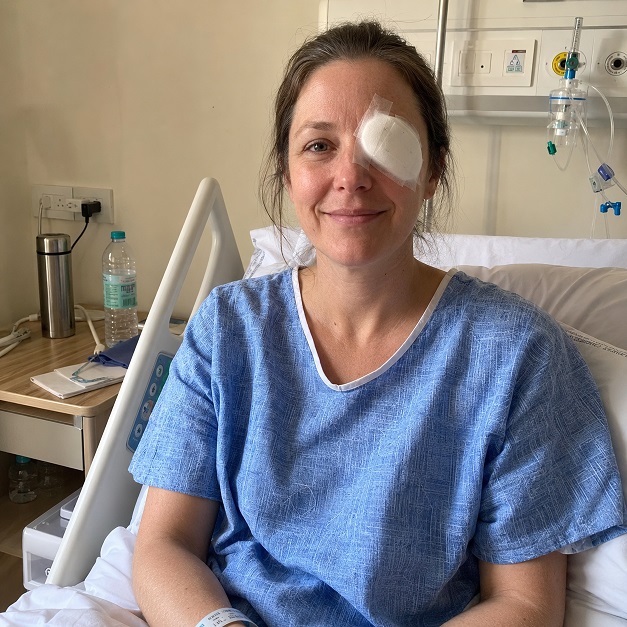
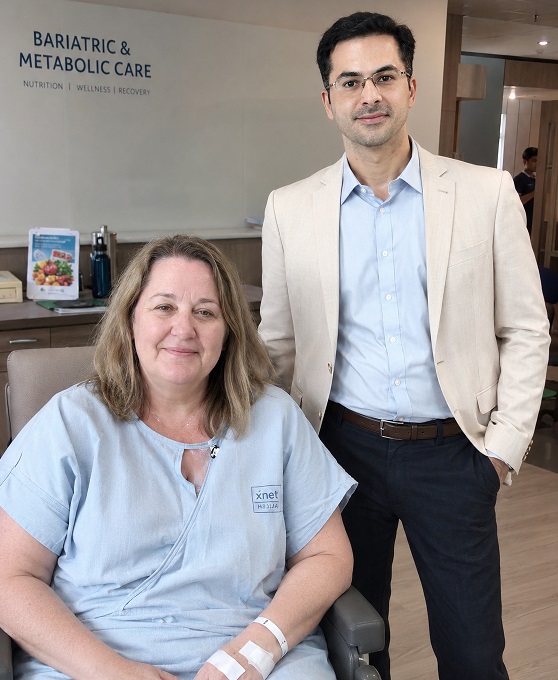
Patient Testimonials from Canada

Ready to Take the First Step?
Share your Medical Reports with our Healthcare Managers Today and Get a FREE CONSULTATION, a Personalized Treatment Plan, and Complete Support from Arrival to Recovery.
Get Your Free ConsultationAreas We Serve
This resource has been thoughtfully prepared for patients from Canada who are considering medical treatment in India. We also welcome patients from the wider region in the countries mentioned below-
We regularly assist patients from:
- Canada
- United States
- Jamaica
- Bahamas
- Barbados
- Belize
- Guyana
- Saint Lucia
- Grenada
- Dominica
- Trinidad and Tobago
- Saint Kitts and Nevis
- Antigua and Barbuda
- Saint Vincent and the Grenadines
Many of the insights, treatment pathways, hospital recommendations, travel guidance, and patient support services described here are equally relevant and may be used as a reference when planning treatment in India.
From Canada to India: Your Complete Patient Support Guide
- Cancer Treatment & Surgery in India for Canadian Patients
- Cardiac Surgery in India for Canadian Patients
- Dental Treatment & Surgery in India for Canadian Patients
- Hip Surgery in India for Canadian Patients
- Knee Surgery in India for Canadian Patients
- Neurosurgery in India for Canadian Patients
- Spine Surgery in India for Canadian Patients
- Weight Loss & Bariatric Surgery in India for Canadian Patients
- Liver Transplant in India for Canadian Patients
- Kidney Transplant in India for Canadian Patients
- Prostate Cancer Treatment & Surgery in India for Canadian Patients
- Robotic Cancer Surgery in India for Canadian Patients
- Bone Marrow Transplant in India for Canadian Patients
- Brain Tumor Surgery in India for Canadian Patients
- Breast Cancer Treatment & Surgery in India for Canadian Patients
- Colorectal Cancer Treatment & Surgery in India for Canadian Patients
- Heart Valve Replacement Surgery in India for Canadian Patients
- Selecting the Best Colorectal Cancer Surgeons and Hospitals in India for Canadian Patients