

Prostate Cancer Treatment and Surgery in India for Canadian Patients
Canada's own national task force still recommends against PSA screening. Its own urologists' association recommends the opposite. New research is now connecting that gap directly to a rise in incurable diagnoses.
A 58-year-old electrician in Kamloops, British Columbia. No symptoms, no family history he knew of. His family doctor, following the national screening guideline, never raised a PSA test. He asked for one himself at 60, after a colleague's diagnosis prompted the conversation. It came back elevated, and by the time it was investigated properly, the cancer had already spread beyond the prostate. He is one of a growing number of Canadian men whose story researchers are now connecting directly to the country's own screening policy.
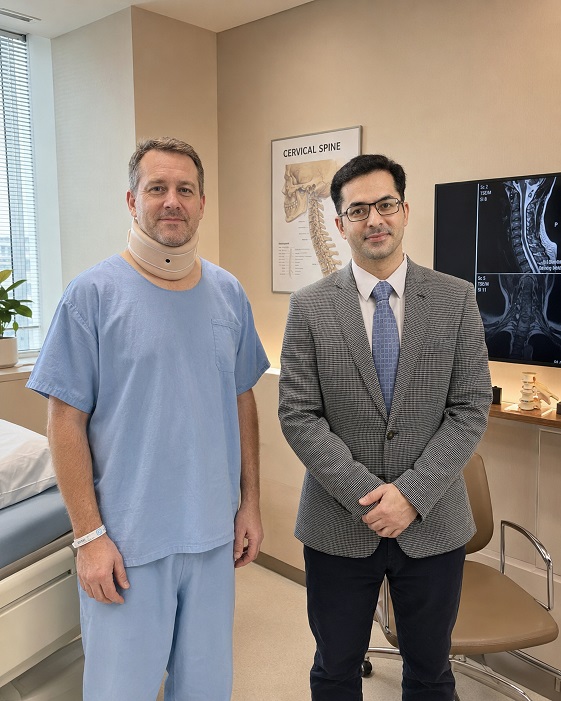
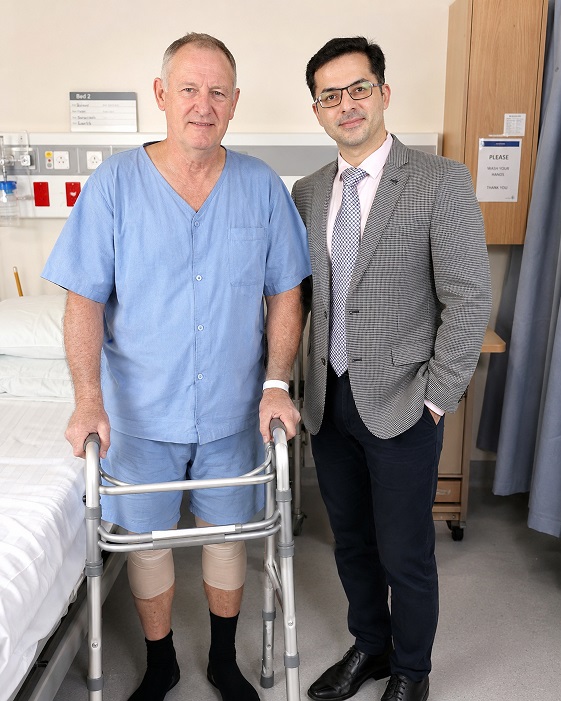
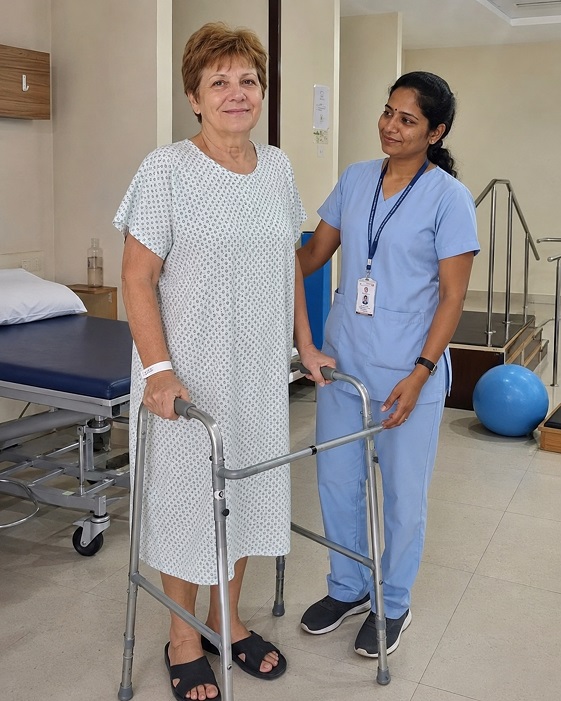
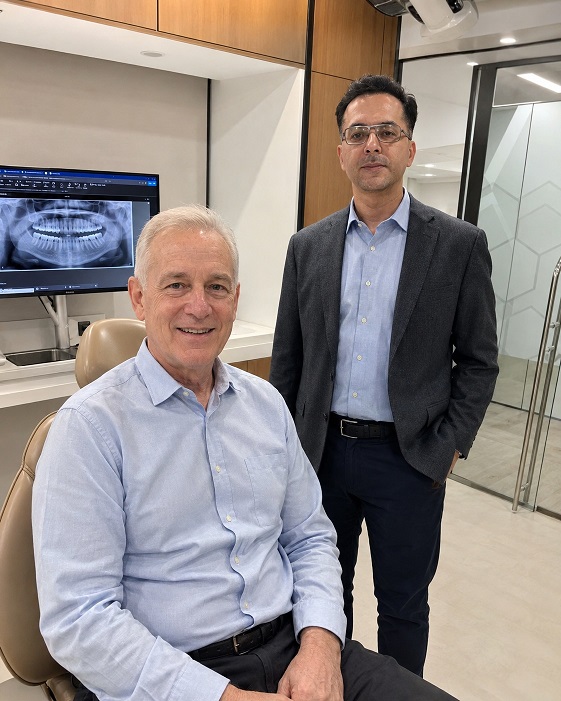
Healing Journeys of Canadian Patients
Key Takeaways
- The PDF highlights a difference between Canada's national preventive-health task force and the Canadian Urological Association regarding PSA screening. The task force's 2014 guideline remains against routine screening, while the CUA's 2022 guidance recommends offering PSA screening through shared decision-making, generally from age 50 or 45 for men at higher risk.
- The guide explains that research reported in December 2025 connected the absence of organised screening in Canada with a rise in men presenting with incurable stage 4 prostate cancer. It also acknowledges the genuine concerns around false positives, overdiagnosis and overtreatment associated with PSA testing.
- PSMA PET/CT is presented as an important modern imaging tool for staging high-risk prostate cancer and identifying recurrence. The page 3 visual contrasts its international use as a standard-of-care scan with its investigational status and registry-based access framework in Canada.
- For men already diagnosed with prostate cancer, the guide focuses on the trifecta of cancer control, urinary continence and sexual function. It recommends assessing the surgeon's personal experience with nerve-sparing prostatectomy and asking for individual outcome data rather than choosing a centre based only on the robotic platform.
- The page 4 chart gives indicative India package costs of approximately C$11,800 for robotic-assisted radical prostatectomy, C$8,600 for open radical prostatectomy, C$6,900 for brachytherapy and C$2,400 for PSMA PET/CT, compared with substantially higher US private-care figures.
- The guide stresses that active surveillance should be discussed honestly for men with genuinely low-risk disease. Immediate surgery is not automatically appropriate for every prostate cancer diagnosis.
- Patients travelling to India should confirm that their actual pathology and imaging have been reviewed, that the surgeon can provide procedure-specific outcomes, that accreditation is independently verifiable and that a detailed PSA surveillance plan is prepared for their Canadian urologist.
Quick Facts
- Treatment
- Prostate Cancer Treatment and Surgery
- Country
- India
- Patients
- Canadian Patients
- Specialty
- Urologic Oncology
- Main Surgical Options
- Robotic-Assisted and Open Radical Prostatectomy
- Other Treatment
- Brachytherapy and Active Surveillance
- Key Imaging
- PSMA PET/CT
- CUA Screening Position
- Shared Decision-Making From Age 50, or 45 for Higher-Risk Men
- Key Surgical Outcome
- Cancer Control, Continence and Potency — the Trifecta
- Indicative Robotic Prostatectomy Cost
- Approximately C$11,800
- Indicative Open Prostatectomy Cost
- Approximately C$8,600
- Hospital Selection
- Independently Verifiable Accreditation
- Follow-Up
- Canadian Urologist
- Important Principle
- Review Pathology and Imaging Before Choosing Treatment
In Brief
For Canadian patients considering prostate cancer treatment in India, the decision should begin with accurate staging and risk assessment, rather than immediately choosing surgery. The guide emphasizes access to PSMA PET/CT, honest discussion of active surveillance and procedure-specific experience in nerve-sparing prostatectomy. For men who do require surgery, the surgeon's personal outcomes for continence, potency and cancer control may matter more than whether the operation is performed using a robotic or open platform.
Two Canadian bodies. Opposite advice. Neither has moved.
Canadian urological surgery is genuinely excellent, and in 24 years of guiding international patients into Indian hospitals I have never suggested otherwise. This briefing is about something that happens before surgery is even on the table: whether a Canadian man is offered the test that would catch this cancer while it is still curable.
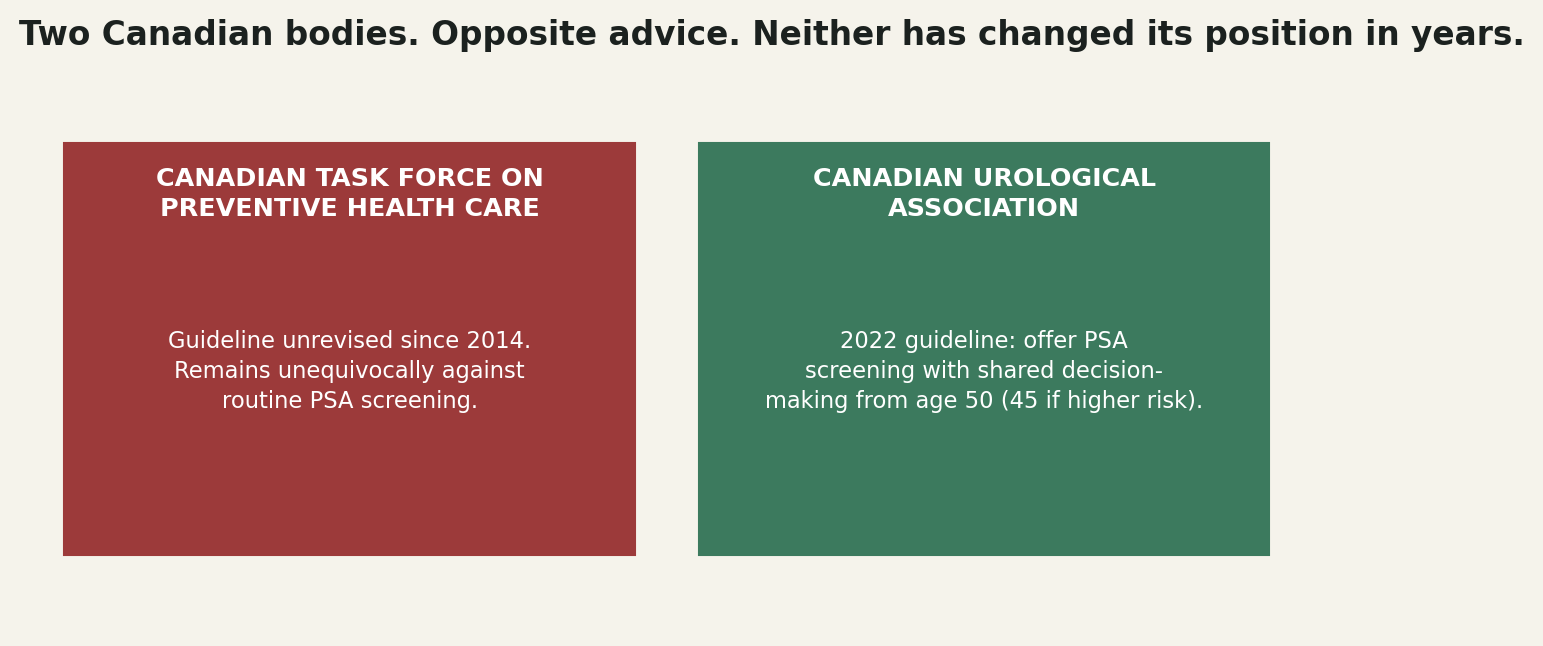
The Canadian Task Force on Preventive Health Care's guideline on PSA screening was last published in 2014 and remains, in the words of a specialist panel that reviewed it, unequivocally against routine testing.
The Canadian Urological Association, the country's own specialist body, takes the opposite position: its 2022 guideline recommends offering PSA screening with shared decision-making, typically from age 50, or 45 for men at higher risk. Ontario's Ministry of Health sits in between, formally recommending against population-wide mass screening while providing an informational brochure to help individual men decide. The result is that whether a Canadian man is offered this test at all depends heavily on which guideline his own family doctor happens to be following.
What that gap has actually produced
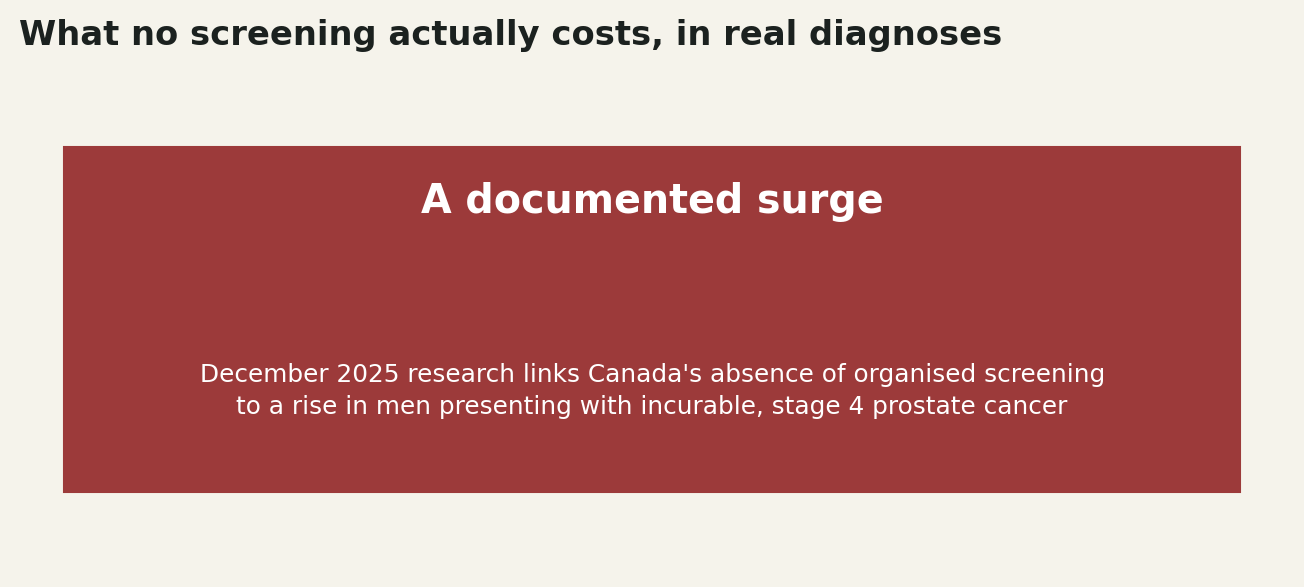
This is not an abstract policy disagreement. Research reported in December 2025 found evidence connecting Canada's absence of organised screening directly to a documented rise in men presenting with incurable, stage 4 prostate cancer — disease that has already spread beyond the point surgery or radiation can cure it, found only because nobody looked earlier.
Researchers examining this problem have pointed to newer evidence the original 2014 guideline could not have considered: long-term data showing a real, if modest, prostate cancer mortality reduction from screening, and the finding that a low PSA in a man's sixties reliably predicts a very low lifetime risk of dying from this disease. Several academic reviewers have now explicitly asked whether it is time for Canada to revisit its approach.
The original concern behind the 2014 guideline was genuine, not manufactured: PSA testing produces real false positives, and overdiagnosis and overtreatment of slow-growing, low-risk prostate cancers that would never have caused harm is a well-documented problem internationally. The honest response to this is not to abandon PSA testing but to pair it with active surveillance for genuinely low-risk disease, an approach several other countries have adopted alongside organised screening rather than as an alternative to it. Canada's continued absence of organised screening does not avoid the overdiagnosis problem; it simply trades it for the later, more serious problem this section describes.
A second gap, once cancer is already found: seeing exactly where it has gone
PSMA PET/CT is a scan that has become the international standard for accurately staging high-risk prostate cancer and locating recurrence after treatment, replacing older imaging that frequently misses small deposits of disease. In Canada, the radiopharmaceutical it depends on is still classified as an investigational new drug.
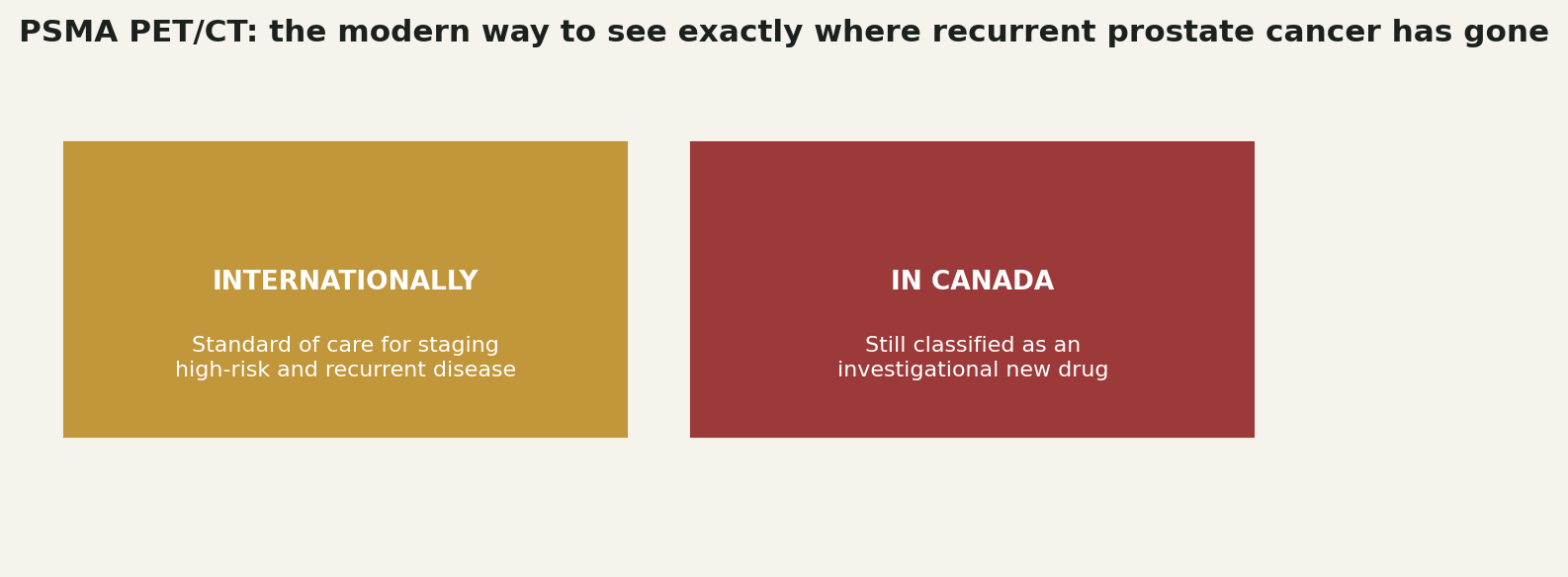
Ontario has built a provincial registry specifically to manage access to this scan within that investigational framework, which is a genuine effort to work around the gap — but it means access still varies by province and by registry criteria, rather than being available as a standard test the way it now is in much of the world.
This matters clinically because older imaging, CT and bone scan, frequently misses small deposits of recurrent disease that PSMA PET/CT reliably detects. A man whose PSA is rising after treatment, with no visible recurrence on conventional imaging, is in exactly the situation this scan was built to resolve — and in much of Canada, obtaining it means qualifying for a registry rather than simply ordering a test.
When actual treatment abroad is the concrete advantage
For a man already diagnosed, two things matter most: whether the surgery preserves continence and potency alongside cancer control — urologists call this the trifecta — and whether he can actually get the imaging needed to know precisely what he is dealing with. Both are volume and access questions as much as they are decisions.
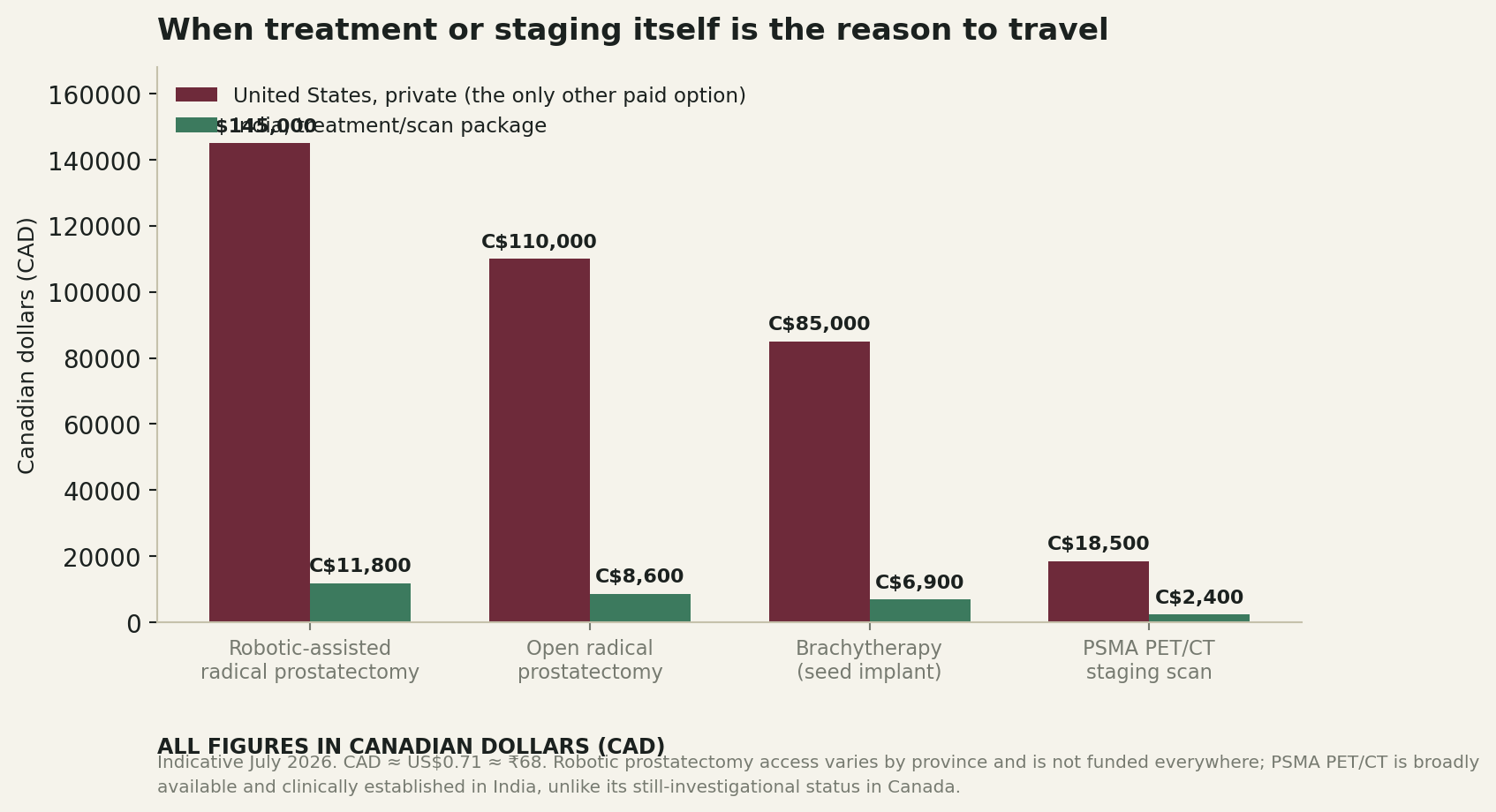
Robotic-assisted radical prostatectomy is not funded or available in every Canadian province, and where it is available, access and wait can both vary considerably. A high-volume international surgical team, performing nerve-sparing prostatectomy routinely, offers a genuine trifecta advantage for the right patient, alongside PSMA PET/CT available as a standard staging tool rather than a registry-managed exception. In 24 years of guiding patients through this decision, the single most useful thing a newly diagnosed man can do is get his imaging and pathology in front of a high-volume specialist quickly, before deciding anything else.
What you are actually getting for it
Genuine, checkable surgical volume in nerve-sparing prostatectomy, the technique that most directly determines continence and potency outcomes. Ask for the surgeon's own annual volume and his personal trifecta rate.
PSMA PET/CT as a standard test, not an exception. Ask specifically whether it will be used for your staging or recurrence evaluation.
Active surveillance discussed honestly, not skipped past. Not every prostate cancer needs immediate treatment; a genuine specialist will tell you plainly if your disease is low-risk enough to monitor rather than treat.
A structured surveillance protocol if active surveillance is genuinely appropriate, not a vague instruction to "keep an eye on it." Ask what the actual monitoring schedule looks like, including repeat imaging and biopsy intervals.
Accreditation you can verify independently. JCI is the international arm of the body accrediting hospitals across the United States; NABH is India's national equivalent, recognised by the same global standards authority.
A discharge record built for your Canadian urologist to use, including pathology, margin status, nerve- sparing details and a specific PSA surveillance schedule.
Four Things that Should Make You Walk Away Immediately
Any clinic promising a cure your Canadian urologist has not heard of. Every legitimate treatment has published trial data with a name you can look up.
Pressure toward surgery without a genuine discussion of active surveillance. Not every prostate cancer is the same cancer, and treatment is not automatically the right answer for every diagnosis.
Vagueness about the surgeon's own trifecta rate. This is the number that determines your quality of life afterward, and a confident surgeon gives it immediately.
Straight answers for Canadian Patients about Prostate Cancer Treatment and Surgery in India
Should I ask my doctor for a PSA test even though the national guideline recommends against it?
This is a genuine, informed decision to have with your doctor, not a settled question. The Canadian Urological Association recommends offering the test with shared decision-making from age 50, or 45 if you are at higher risk, and it is reasonable to raise this directly if it has not been offered.
Will my provincial plan reimburse treatment performed in India?
Almost never. Out-of-country coverage exceptions require pre-approval showing the procedure is genuinely unavailable in Canada within a medically acceptable time, a bar rarely met regardless of the actual wait.
Is robotic surgery actually better than open surgery?
Robotic surgery generally means less blood loss and a faster recovery, but long-term cancer control, continence and potency depend far more on surgeon experience and technique than on the platform used. Ask for the surgeon's own outcomes regardless of which approach is used.
How long should I plan to stay in India?
Around two to three weeks for radical prostatectomy, on a changeable ticket, following a documented fit-to-fly assessment.
Who manages my PSA surveillance once I'm home?
Your Canadian urologist, provided they have the full pathology report and a specific surveillance schedule in writing before you leave.
A closing word
Prostate cancer is unusually dependent on decisions made before treatment ever begins: whether you were offered a PSA test at all, and whether the imaging exists to see precisely what you are dealing with once something is found. Canada's own bodies disagree about the first question, and new research is now connecting that disagreement to real, late diagnoses. If you have not had a direct conversation with your doctor about PSA screening, that is worth having regardless of anything else in this briefing. If you already have a diagnosis and would like a second opinion, send me your pathology and imaging and I will look at it properly.
Sources
- 🌐 "The CUA: Advocating for our patients", Canadian Urological Association Journal — pmc.ncbi.nlm.nih.gov/articles/PMC9565070
- 🌐 "New research suggests surge in incurable prostate cancer from lack of early screening", CBC News, December 2025 — cbc.ca
- 🌐 "Is it time for Canada to revisit its approach to prostate cancer screening?", PMC, 2025 — pmc.ncbi.nlm.nih.gov/articles/PMC12485535
- 🌐 "Establishing a Provincial Registry for Recurrent Prostate Cancer: Providing Access to PSMA PET/CT in Ontario, Canada" — ncbi.nlm.nih.gov/pmc/articles/PMC8366560
- 🌐 High Commission of India, e-Visa categories and eligibility — indianvisaonline.gov.in/evisa
Frequently Asked Questions by Canadian Patients about Prostate Cancer Treatment and Surgery in India
Should Canadian men ask their doctor about PSA screening?
The guide presents PSA screening as an informed decision rather than a settled question. It notes that the Canadian Urological Association recommends offering PSA screening with shared decision-making from age 50, or 45 for men at higher risk.
What is PSMA PET/CT used for?
PSMA PET/CT is used for staging high-risk prostate cancer and detecting recurrent disease. The guide highlights its ability to identify smaller deposits that conventional CT and bone scans may miss.
Is PSMA PET/CT readily available in Canada?
The guide states that the radiopharmaceutical used for PSMA PET/CT remains classified as an investigational new drug in Canada, with access varying by province and registry criteria.
How much does robotic prostatectomy cost in India?
The PDF gives an indicative India package cost of approximately C$11,800 for robotic-assisted radical prostatectomy. Actual costs depend on the individual treatment plan.
Is robotic prostatectomy better than open surgery?
The guide states that robotic surgery generally means less blood loss and faster recovery, but long-term cancer control, continence and potency depend more on surgeon experience and technique than on the platform itself.
What is the prostate cancer treatment “trifecta”?
The trifecta refers to achieving cancer control while preserving urinary continence and sexual function. The guide recommends asking surgeons for their own outcome data.
Is surgery necessary for every prostate cancer patient?
No. The guide emphasizes that active surveillance should be discussed for genuinely low-risk prostate cancer rather than automatically proceeding to treatment.
What should I check before choosing a prostate cancer surgeon in India?
Ask for the surgeon's own annual nerve-sparing prostatectomy volume and personal trifecta outcomes. Ensure your actual pathology and imaging have also been reviewed before treatment is recommended.
How long should Canadian patients stay in India after prostatectomy?
The guide recommends planning for approximately two to three weeks after radical prostatectomy, with a changeable ticket and documented fit-to-fly assessment.
Who manages PSA surveillance after returning to Canada?
The Canadian urologist should manage PSA surveillance, provided they receive the complete pathology report and a specific surveillance schedule before the patient leaves India.
Page Summary
This guide explains prostate cancer treatment and surgery in India for Canadian patients, beginning with the differences in PSA-screening recommendations within Canada and the growing discussion around earlier diagnosis. It highlights PSMA PET/CT for staging and recurrence assessment, discusses robotic and open radical prostatectomy, and emphasizes cancer control, continence and potency as the key treatment outcomes. The guide also gives indicative India costs, stresses active-surveillance discussions for low-risk disease, and recommends providing complete pathology, surgical details and a PSA surveillance schedule to the Canadian urologist after treatment.
Citation Block
| Topic | Information |
|---|---|
| Topic | Prostate Cancer Treatment and Surgery in India for Canadian Patients |
| Treatment | Prostate Cancer Treatment and Surgery |
| Country | India |
| Intended Audience | Canadian Patients |
| Specialty | Urologic Oncology |
| Main Surgery | Robotic-Assisted / Open Radical Prostatectomy |
| Other Treatment | Brachytherapy / Active Surveillance |
| Key Imaging | PSMA PET/CT |
| CUA Screening Recommendation | Shared Decision-Making From Age 50 / 45 for Higher Risk |
| Key Surgical Outcome | Cancer Control, Continence and Potency |
| Robotic Prostatectomy Cost | Approximately C$11,800 |
| Key Selection Factor | Review of Actual Pathology and Imaging |
| Author | Dr. Dheeraj Bojwani |
| Experience | 24+ Years |


Our Mission Statement
Our mission is to place patients at the centre of every healthcare decision by providing trustworthy, evidence-based, and unbiased medical information. We believe that informed patients make better decisions. Backed by personalised guidance from our experienced advisory team, we help patients understand their treatment options, compare them objectively, and confidently choose the path that best suits their medical needs and personal circumstances.
Patient Testimonials from Canada



Ready to Take the First Step?
Share your Medical Reports with our Healthcare Managers Today and Get a FREE CONSULTATION, a Personalized Treatment Plan, and Complete Support from Arrival to Recovery.
Get Your Free ConsultationFrom Canada to India: Your Complete Patient Support Guide
- Weight Loss & Bariatric Surgery in India for Canadian Patients: The Multi-Year Wait, Explained (2026)
- Bone Marrow Transplant in India for Canadian Patients: Complete Guide
- Brain Tumor Surgery in India for Canadian Patients: Complete Guide
- Breast Cancer Treatment and Surgery in India for Canadian Patients
- Cancer Treatment and Surgery in India for Canadian Patients
- Cardiac Surgery in India for Canadian Patients
- Colorectal Cancer Treatment and Surgery in India for Canadian Patients
- Cosmetic and Aesthetic Surgery in India for Canadian Patients
- CyberKnife Treatment in India for Canadian Patients: Complete Guide
- Dental Surgery in India for Canadian Patients | Complete Treatment & Cost Guide
- Gamma Knife Treatment in India for Canadian Patients
- Heart Valve Replacement Surgery in India for Canadian Patients
- Hip Surgery in India for Canadian Patients | Complete Treatment, Cost & Recovery Guide
- HIPEC Surgery in India for Canadian Patients: Complete Guide
- Kidney Transplant in India for Canadian Patients: Complete Guide
- Knee Surgery in India for Canadian Patients: Wait Times & Costs
- Neurosurgery in India for Canadian Patients: Wait Times & Costs
- Paediatric Cardiac Surgery in India for Canadian Patients