

Liver Transplant in India for Canadian Patients
The liver is the only solid organ in the body that regenerates — a remarkable fact that makes living donor transplant a genuinely hopeful option. This guide covers how the system works, and what to know if a willing donor is ready to travel with you.
A 51-year-old contractor in Saskatoon with cirrhosis, MELD score climbing slowly, and a 26- year-old daughter who has already been assessed as a compatible living donor. His transplant team has explained the wait for a deceased donor liver could run well over a year at his current score. What nobody had explained to him, until his daughter asked, was that the portion of liver she would give him would regrow to nearly full size within months — in both of them.
Healing Journeys of Canadian Patients
Key Takeaways
- Canadian patients with a willing and compatible living donor may have an alternative to waiting for a deceased donor liver through India's high-volume living donor transplant programmes.
- A living donor typically gives approximately 60–70% of their liver, while the donor's remaining liver and the recipient's new liver segment begin regenerating within days.
- The PDF explains that both the donor's remaining liver and recipient's new liver segment can reach close to full functional size within a few months.
- Canada's deceased donor system uses the MELD score, calculated from routine blood tests, to determine transplant priority according to medical need rather than simply time spent waiting.
- A large 2022 study of more than 119,000 liver transplant candidates found that living donor recipients gained an average of 13–17 additional years of life compared with patients who never received a transplant.
- At a MELD score as low as 11, living donor transplantation was associated with a 34% reduction in mortality compared with remaining on the waiting list in the cited study.
- India generally requires a living liver donor to be a close relative, with additional government approval required for donors outside the permitted relationship categories.
- The indicative India transplant package shown in the PDF is approximately C$26,500 with a directed living donor, compared with C$285,000+ in the United States.
- Canadian patients should verify the transplant centre's annual living donor liver transplant volume, donor complication rate, independent donor evaluation process, accreditation and long-term follow-up arrangements.
- Before travelling, both the Canadian patient and potential donor should have the donor relationship, treatment plan, complete pricing and Canadian follow-up arrangements confirmed in writing.
Quick Facts
- Treatment
- Liver Transplantation
- Country
- India
- Patients
- Canadian Patients
- Main Transplant Type
- Living Donor Liver Transplantation
- Living Donor Liver Portion
- Approximately 60–70%
- Liver Regeneration
- Both donor and recipient liver portions regenerate substantially within weeks
- Functional Regrowth
- Both can reach close to full functional size within a few months
- Canadian Deceased Donor Priority
- MELD Score
- MELD Basis
- Routine blood tests and medical need
- Cited Study Size
- More than 119,000 liver transplant candidates
- Reported Survival Benefit
- 13–17 additional years of life for living donor recipients
- Cited Mortality Reduction
- 34% at MELD 11 compared with remaining on the waitlist
- Donor Eligibility in India
- Generally a close relative, with additional approval for others
- Indicative India Cost
- Approximately C$26,500 with a directed living donor
- U.S. Cost Shown
- C$285,000+
- Key Specialist
- Liver Transplant / Hepatobiliary Transplant Team
- Donor Safety
- Independent and rigorous donor evaluation is essential
- Hospital Accreditation
- JCI or NABH can be independently verified
- Follow-Up
- Canadian Hepatology Team
- Required Records
- Full operative and immunosuppression details
- Important Pre-Travel Requirement
- Donor relationship eligibility should be confirmed in writing
In Brief
Canadian patients with advanced liver disease and a willing, compatible living donor may consider living donor liver transplantation in India rather than relying solely on the deceased donor pathway. The PDF explains that a donor typically gives 60–70% of their liver and that both the donor's remaining liver and recipient's new liver segment regenerate substantially within weeks and reach close to full functional size within a few months. Canada's deceased donor system uses the MELD score to prioritise patients according to medical need. A 2022 study cited in the briefing found 13–17 additional years of life among living donor recipients compared with patients who never received a transplant. Canadian patients considering India should confirm donor-relationship eligibility, independently assess donor safety, verify the centre's living donor transplant volume and complication rate, obtain an itemised price and establish long-term follow-up with their Canadian hepatology team before travelling.
The liver does something no other organ in the body can do
Canadian transplant hepatology and surgery teams are excellent, and in 24 years of guiding international patients into Indian hospitals I have never suggested otherwise. It's worth opening with the single most
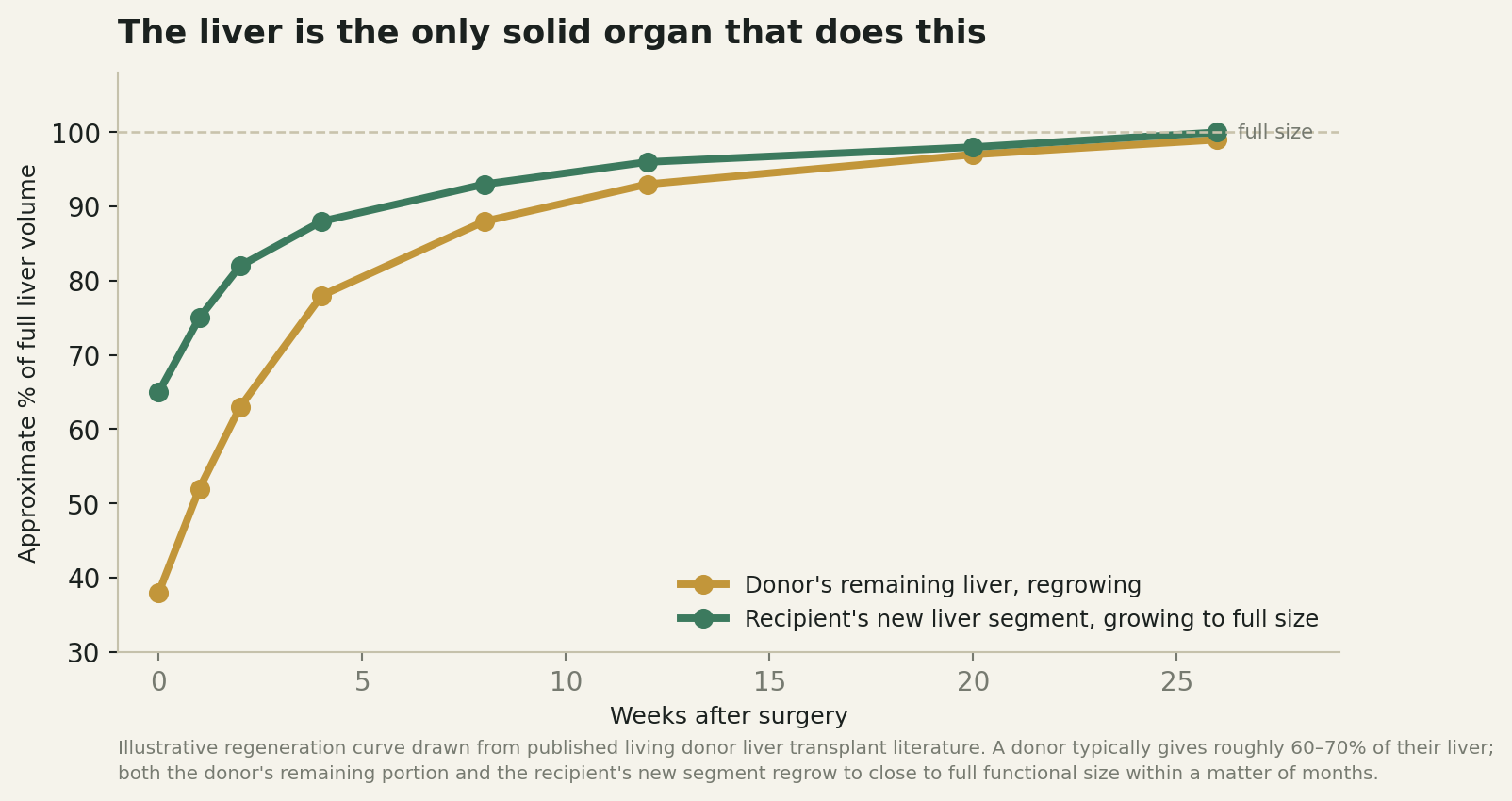
remarkable fact in this entire field: the liver is the only solid organ in the human body that regenerates.
A living liver donor typically gives sixty to seventy per cent of their liver. Within days, both the donor's remaining portion and the recipient's new segment begin regrowing, and within a matter of months, both livers reach close to full functional size. This is genuinely unlike kidney or heart donation, where the organ does not regrow; it is one of the more remarkable facts in modern transplant medicine, and it is the reason living donor liver transplant has become such a well-established, successful option.
How deceased donor priority actually works
For patients on the deceased donor pathway, Canada uses the same transparent, medical-need-based system used across North America.
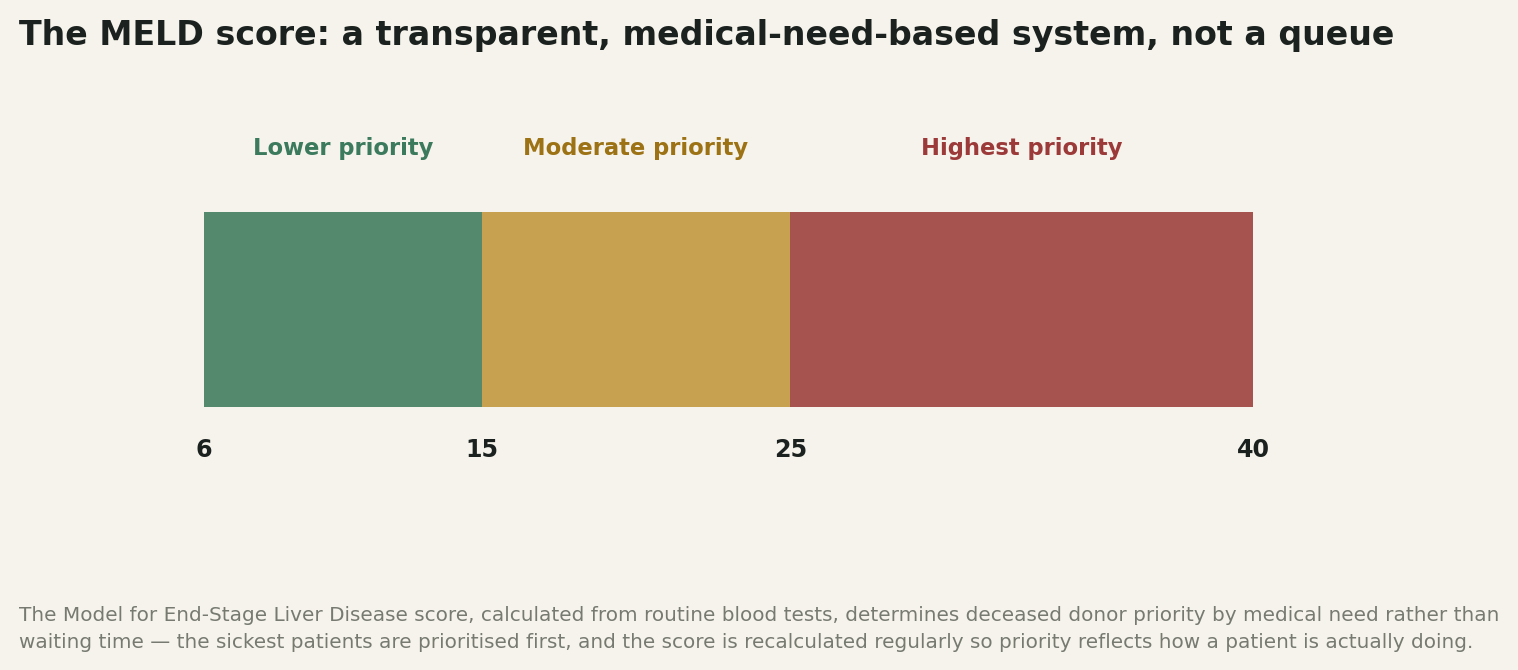
The Model for End-Stage Liver Disease score, calculated from routine blood tests, determines priority by how sick the liver actually is, not by how long someone has been waiting. This means the system is genuinely fair in a specific, important sense: it directs livers to the patients who need them most urgently, and your score is recalculated regularly as your condition changes, so priority reflects your real situation at any given time.
Why exploring living donation early is genuinely worth doing
This is the single most important, most actionable piece of information in this entire briefing, and it deserves to be understood clearly rather than left as background detail.
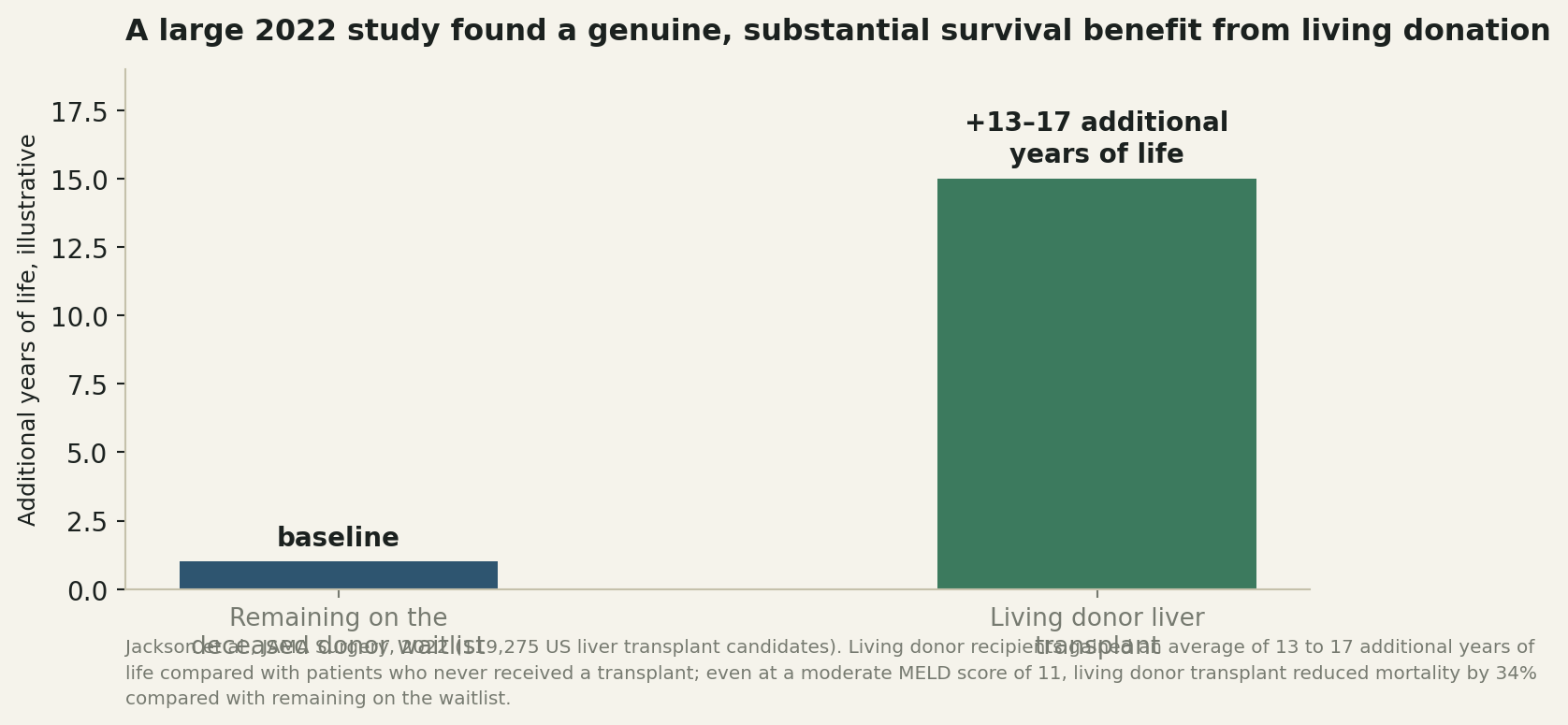
A large 2022 study of over 119,000 American liver transplant candidates found that living donor recipients gained an average of thirteen to seventeen additional years of life compared with patients who never received a transplant. Remarkably, this survival benefit appeared even at moderate MELD scores — at a score as low as eleven, living donor transplant reduced mortality by thirty-four per cent compared with remaining on the waitlist. The practical implication is genuinely hopeful: if you have a potential living donor, exploring that option early, rather than waiting until your MELD score climbs higher, is a decision genuinely worth making sooner rather than later.
If you already have a willing donor and are considering travel
For a family with a specific, willing, compatible living donor — often an adult child, sibling, spouse or parent — who would rather not wait for the deceased donor pathway at home, travelling for the transplant itself is a genuine option. India's transplant law generally requires a living liver donor to be a close relative, with additional government approval required for donors outside this circle, so confirming your specific relationship's eligibility early is worth doing.
It is also worth knowing that India performs a genuinely enormous volume of living donor liver transplants — among the highest volumes of any country globally — reflecting deep, specific expertise in the surgical and donor-care aspects of this particular procedure, built up over decades of high-volume practice.
What the money actually looks like
Liver transplantation is not something Canada's private surgical sector offers; it requires a full transplant programme, hepatobiliary surgical expertise, and long-term follow-up capability that exists only within Canada's public system. For a family with a ready, willing directed donor exploring options beyond the domestic timeline, the realistic paid alternative is the United States rather than a domestic private clinic.
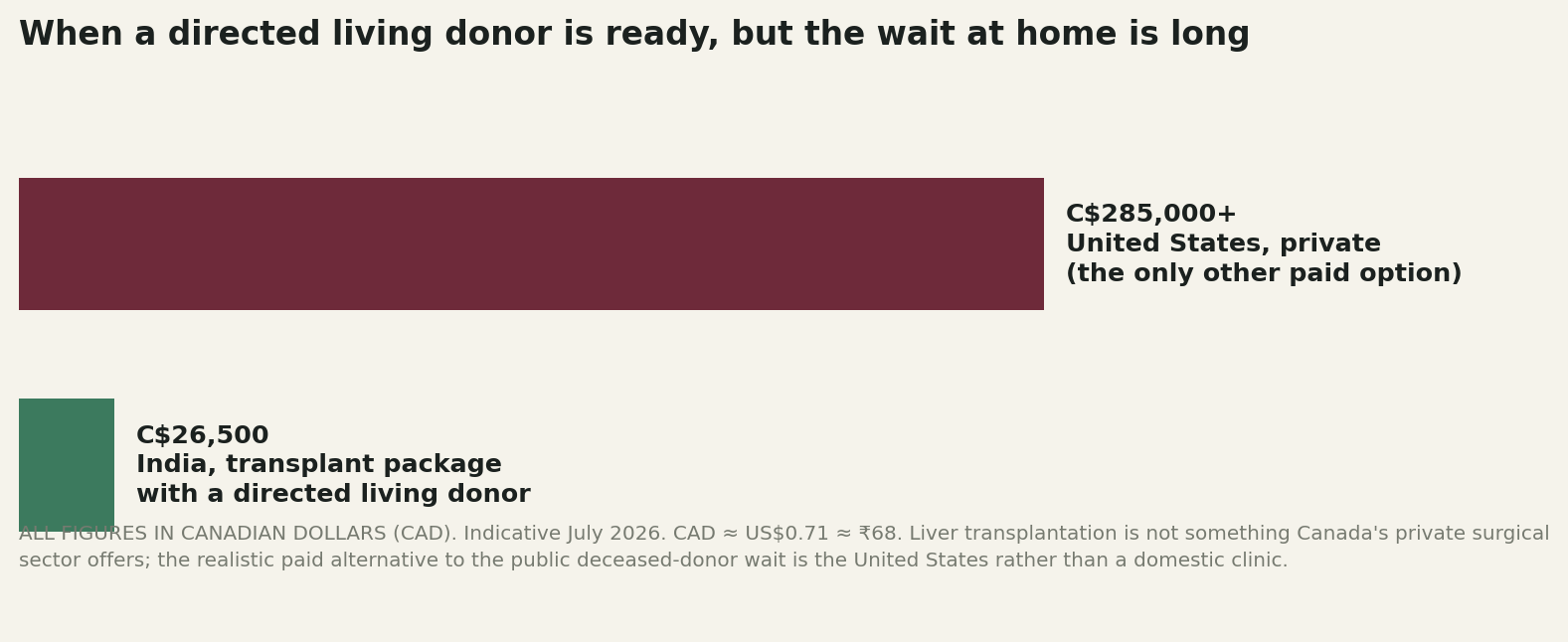
American transplant care, priced for an insurance-backed domestic market, commonly runs well into six figures. India's major transplant centres, with their high living donor liver transplant volume, perform this surgery routinely, with the same donor-safety protocols and long-term follow-up, at a fraction of the American price. In 24 years of guiding patients through this decision, the families who do best are the ones who have this conversation with their Canadian transplant team early, exploring every option, including living donation timing, together.
What you are actually getting for it
Genuine, high-volume living donor liver transplant experience, a specific surgical skill distinct from deceased donor transplantation.
Rigorous, independent donor safety evaluation, since donor wellbeing is central to a responsible living donor programme.
Accreditation you can verify independently. JCI is the international arm of the body accrediting hospitals across the United States; NABH is India's national equivalent, recognised by the same global standards authority.
A full donor and recipient workup completed transparently, with results shared with you directly.
A discharge record built for your Canadian hepatology team to use, including the full operative and immunosuppression details for ongoing care.
Six Things to Have in Writing Before You FLY
1. Confirmation your specific donor relationship meets the eligibility requirements before travelling.
2. The centre's annual living donor liver transplant volume, and its donor complication rate.
3. A complete, independent donor evaluation plan, confirming donor safety is a genuine, separate focus.
4. An itemised, all-inclusive price for both donor and recipient care, including the immunosuppression regimen.
5. What the centre covers if a complication requires extended care during your stay.
6. Your Canadian follow-up, already agreed: a named hepatologist and a specific long-term monitoring plan.
Straight answers for Canadian Patients about Liver Transplant in India
Is it safe for the donor to give part of their liver?
Living liver donation is major surgery and carries real, discussed risks, but decades of experience worldwide, including in Canada and India, have made it a well-established procedure with a strong safety record when performed by an experienced team with rigorous donor evaluation.
Who is eligible to be my living liver donor if I travel to India?
Generally a close relative — a parent, adult child, sibling, spouse, or grandparent or grandchild — under India's transplant law, with additional approval required for others. Confirm your specific relationship's eligibility with the treating centre before travelling.
Will my provincial plan reimburse a transplant performed in India?
Almost never. Out-of-country coverage exceptions require pre-approval showing the procedure is genuinely unavailable in Canada within a medically acceptable time.
How long does the donor's liver take to regrow?
Both the donor's remaining liver and the recipient's new segment regrow substantially within weeks and reach close to full functional size within a few months.
Who manages my long-term follow-up once I'm home?
Your Canadian hepatology team, provided they have the complete transplant record and immunosuppression details in writing before you leave, ideally confirmed in advance of travel.
A closing word
Liver transplantation offers some of the most remarkable outcomes in modern medicine, made possible by an organ that genuinely regrows itself in both donor and recipient. For a family with a ready, willing donor who would rather not wait, travelling for the transplant is a real and reasonable option, and the survival data suggests exploring it early is worth doing. If you would like to talk through your specific situation, send me the details and I will look at it properly.
Sources
- 🌐 Jackson et al., "Survival Benefit of Living-Donor Liver Transplant", JAMA Surgery , 2022 — pmc.ncbi.nlm.nih.gov/PMC9350845
- 🌐 PSC Partners Canada, "MELD and PELD Scores and Their Use in Liver Transplantation" — pscpartners.ca
- 🌐 PSC Partners Canada, "Liver Transplant: A New Lease on Life" — pscpartners.ca
- 🌐 High Commission of India, e-Visa categories and eligibility — indianvisaonline.gov.in/evisa
Frequently Asked Questions by Canadian Patients about Liver Transplant in India
Can Canadian patients with a willing living donor consider liver transplantation in India?
Yes. Canadian patients with a specific, willing and compatible living donor may consider travelling to India for living donor liver transplantation. The PDF particularly discusses this option for families that do not want to rely solely on the deceased donor pathway.
Who can be a living liver donor for Canadian patients travelling to India?
For Canadian patients travelling to India, the PDF states that the donor is generally required to be a close relative, such as a parent, adult child, sibling, spouse, grandparent or grandchild. Additional government approval is required for donors outside these relationships.
How much does living donor liver transplantation cost for Canadian patients in India?
The PDF shows an indicative cost of approximately C$26,500 for an India transplant package with a directed living donor. Canadian patients should obtain an itemised, all-inclusive quotation covering both donor and recipient care before travelling.
Can Canadian patients with a low or moderate MELD score explore living donor transplantation in India?
Yes. Canadian patients with a potential living donor may discuss the option early with their transplant team. The PDF cites evidence that living donor transplantation provided a survival benefit even at moderate MELD scores, including a reported 34% mortality reduction at MELD 11.
How should Canadian patients verify the safety of their living donor before travelling to India?
Canadian patients should ask the Indian transplant centre for a complete, independent donor evaluation plan that separately assesses donor safety. They should also request the centre's donor complication rate and annual living donor transplant volume in writing.
How long does the liver take to regenerate for Canadian patients and their donors after transplantation in India?
For Canadian patients travelling with a living donor, the PDF states that both the donor's remaining liver and the recipient's new liver segment begin regenerating within days and reach close to full functional size within a few months.
Will a Canadian provincial health plan reimburse a liver transplant performed in India?
Canadian patients should not expect routine provincial reimbursement for a transplant performed in India. The PDF states that out-of-country coverage exceptions require pre-approval showing that the procedure is genuinely unavailable in Canada within a medically acceptable time.
How should Canadian patients choose a liver transplant centre in India?
Canadian patients should verify the centre's annual living donor liver transplant volume, donor complication rate, independent donor-safety evaluation process and hospital accreditation. They should also confirm that the centre provides complete donor and recipient workup results directly to them.
What should Canadian patients have in writing before travelling to India for a living donor liver transplant?
Canadian patients should have written confirmation of donor-relationship eligibility, the centre's transplant volume and donor complication rate, an independent donor evaluation plan, an itemised all-inclusive price, arrangements for complications requiring extended care and a named Canadian hepatologist with a long-term monitoring plan.
How should Canadian patients arrange long-term follow-up after liver transplantation in India?
Canadian patients should arrange follow-up with their Canadian hepatology team before travelling. They should return with the complete transplant record, including operative and immunosuppression details, so their Canadian team can continue long-term care.
Page Summary
This guide explains living donor liver transplantation in India for Canadian patients with a willing donor. It highlights the liver's unique ability to regenerate in both donor and recipient. It explains Canada's MELD-based deceased donor priority system and why living donation may be worth exploring early. The page 1 visual illustrates liver regeneration after donation and transplantation. The page 2 chart explains MELD-based transplant priority. The page 3 chart highlights the reported survival benefit of living donation. The page 4 comparison shows the indicative India and U.S. transplant costs.
Citation Block
| Topic | Information |
|---|---|
| Topic Information | Liver Transplant in India for Canadian Patients |
| Treatment | Liver Transplantation |
| Country | India |
| Intended Audience | Canadian Patients |
| Main Transplant Type | Living Donor Liver Transplantation |
| Living Donor Portion | Approximately 60–70% of the liver |
| Regeneration | Both donor and recipient liver portions regenerate substantially within weeks |
| Near-Full Functional Size | Within a few months |
| Canadian Deceased Donor Priority | MELD Score |
| MELD Basis | Routine blood tests and medical need |
| Cited Study Population | More than 119,000 candidates |
| Reported Survival Benefit | 13–17 additional years |
| Cited Mortality Reduction | 34% at MELD 11 |
| Indian Donor Eligibility | Generally close relatives; additional approval for others |
| Indicative India Cost | Approximately C$26,500 with directed living donor |
| U.S. Cost Shown | C$285,000+ |
| Key Specialist | Liver Transplant / Hepatobiliary Transplant Team |
| Donor Evaluation | Independent and rigorous safety assessment |
| Centre Experience | Annual living donor transplant volume and donor complication rate should be verified |
| Hospital Accreditation | JCI or NABH can be independently verified |
| Follow-Up | Canadian Hepatology Team |
| Required Records | Full operative and immunosuppression details |
| Pre-Travel Confirmation | Donor relationship eligibility, pricing and follow-up should be documented |
| Author | Dr. Dheeraj Bojwani |
| Experience | 24+ Years |


Our Mission Statement
Our mission is to place patients at the centre of every healthcare decision by providing trustworthy, evidence-based, and unbiased medical information. We believe that informed patients make better decisions. Backed by personalised guidance from our experienced advisory team, we help patients understand their treatment options, compare them objectively, and confidently choose the path that best suits their medical needs and personal circumstances.
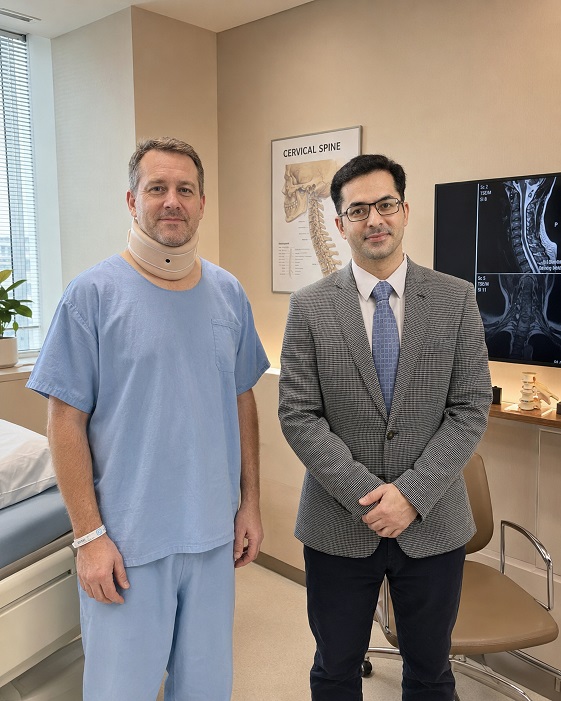
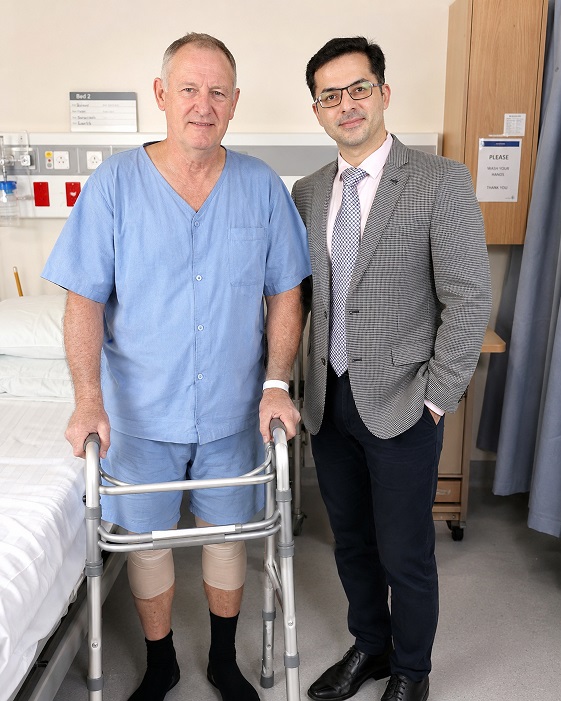
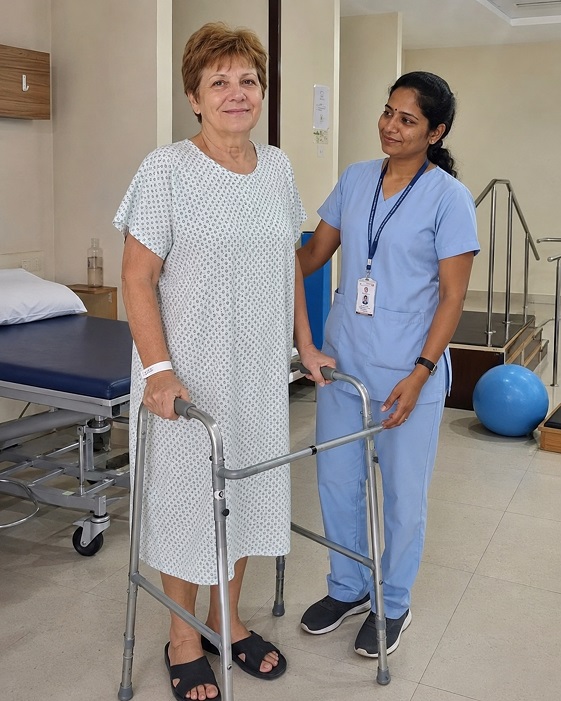
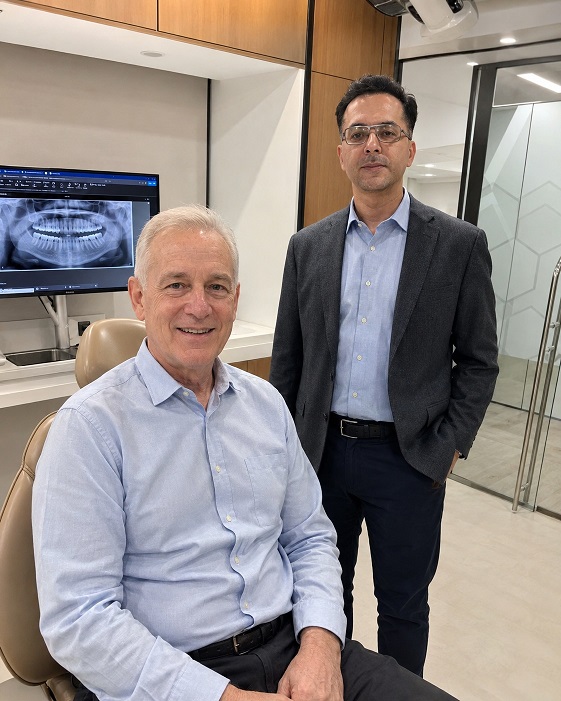
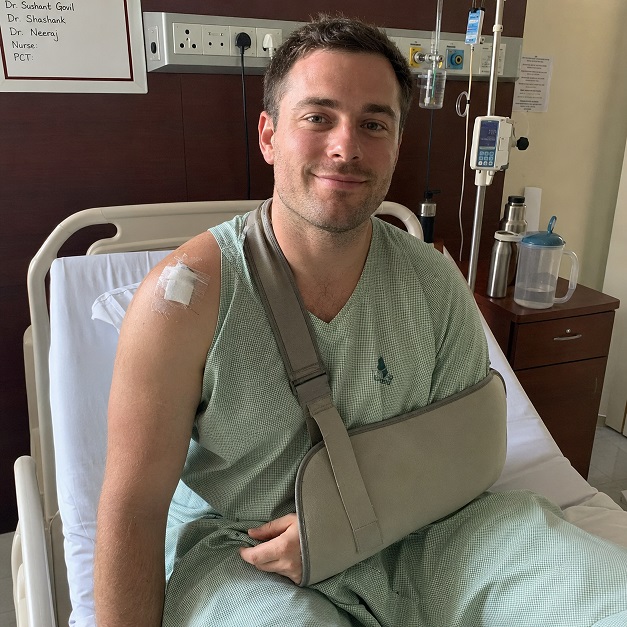
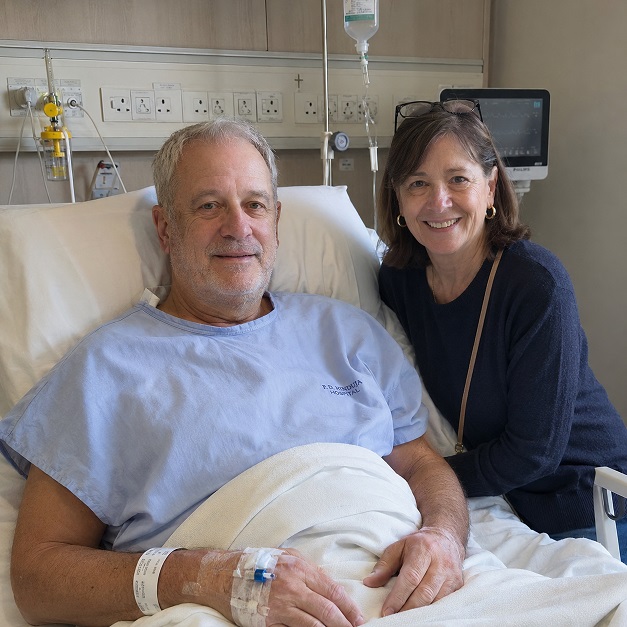
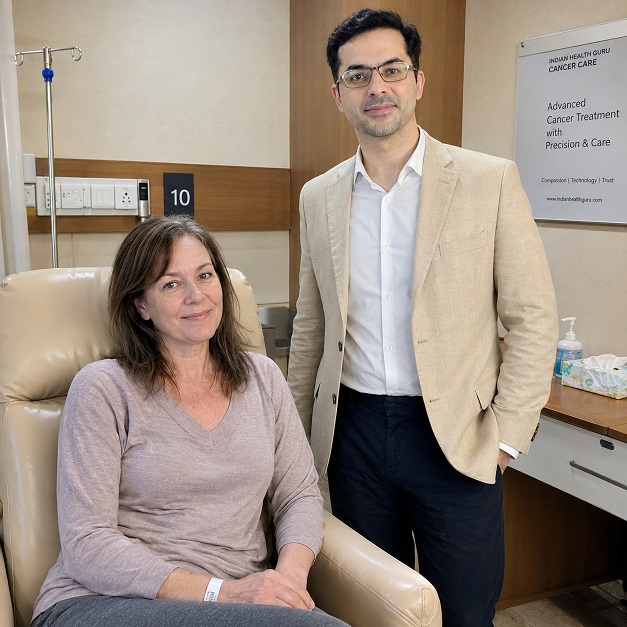
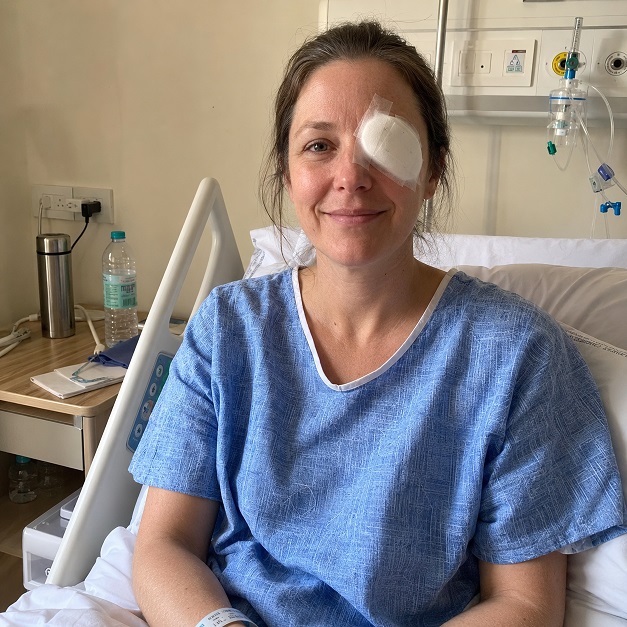
Patient Testimonials from Canada

Ready to Take the First Step?
Share your Medical Reports with our Healthcare Managers Today and Get a FREE CONSULTATION, a Personalized Treatment Plan, and Complete Support from Arrival to Recovery.
Get Your Free ConsultationFrom Canada to India: Your Complete Patient Support Guide
- Weight Loss & Bariatric Surgery in India for Canadian Patients: The Multi-Year Wait, Explained (2026)
- Bone Marrow Transplant in India for Canadian Patients: Complete Guide
- Brain Tumor Surgery in India for Canadian Patients: Complete Guide
- Breast Cancer Treatment and Surgery in India for Canadian Patients
- Cancer Treatment and Surgery in India for Canadian Patients
- Cardiac Surgery in India for Canadian Patients
- Colorectal Cancer Treatment and Surgery in India for Canadian Patients
- Cosmetic and Aesthetic Surgery in India for Canadian Patients
- CyberKnife Treatment in India for Canadian Patients: Complete Guide
- Dental Surgery in India for Canadian Patients | Complete Treatment & Cost Guide
- Gamma Knife Treatment in India for Canadian Patients
- Heart Valve Replacement Surgery in India for Canadian Patients
- Hip Surgery in India for Canadian Patients | Complete Treatment, Cost & Recovery Guide
- HIPEC Surgery in India for Canadian Patients: Complete Guide
- Kidney Transplant in India for Canadian Patients: Complete Guide
- Knee Surgery in India for Canadian Patients: Wait Times & Costs
- Neurosurgery in India for Canadian Patients: Wait Times & Costs
- Paediatric Cardiac Surgery in India for Canadian Patients