

Spine Surgery in India for Canadian Patients
Canada tracks and publishes a national wait-time target for hip and knee replacement. It never agreed to do the same for spine — and the specialty data that does exist shows why that gap matters.
A 44-year-old millwright outside Hamilton. Four years of back pain, and for the past eight months a burning pain down his right leg that stops him after two hundred metres. He saw his family doctor promptly. He is still waiting to see a specialist. Nobody has given him a date for that appointment, let alone for surgery, and when he searched for how long it might take, he found headline figures for hip and knee replacement everywhere — and almost nothing specific to his own condition. His case has simply never been one the system agreed to measure.
Healing Journeys of Canadian Patients
Key Takeaways
- Canada does not have a national wait-time benchmark specifically for spine surgery, unlike hip and knee replacement, because spine surgery was not included in the five priority procedure areas selected for national tracking in 2004.
- Spine surgery may fall under either neurosurgery or orthopaedic surgery, and the briefing cites median Canadian waits of 49.9 weeks for neurosurgery and 48.6 weeks for orthopaedic surgery from GP referral to completed treatment.
- Before considering surgery, patients should confirm that the procedure is genuinely indicated. This is especially important for spinal fusion, where the evidence can be less clear in patients with back-dominant pain without definite nerve compression.
- Patients with leg-dominant pain caused by nerve compression may benefit more predictably from procedures such as microdiscectomy or decompression than patients whose symptoms are mainly axial back pain.
- Canadian patients considering treatment in India should obtain an independent second opinion, confirm the exact spinal level and planned procedure, and receive a written itemised treatment quotation before travel.
- Leading Indian spine centres may offer specialised spinal surgeons, intraoperative neuromonitoring, navigation, accredited hospital facilities, supervised physiotherapy, and structured rehabilitation.
- For instrumented spinal fusion, the briefing suggests planning approximately four weeks in India, while a microdiscectomy or simpler decompression may require around two weeks before a fit-to-fly assessment.
- Patients with new weakness, saddle numbness, or bladder or bowel dysfunction may have cauda equina syndrome and should seek emergency treatment in Canada rather than travel.
Quick Facts
- Conditions covered
- Lumbar disc disease, sciatica, nerve compression, spinal stenosis, neurogenic claudication, spondylolisthesis, spinal instability, deformity, fracture, infection, tumour, and selected chronic back pain conditions
- Procedures mentioned
- Microdiscectomy, spinal decompression, single-level spinal fusion, instrumented fusion
- Target audience
- Canadian patients considering elective spine surgery in India
- Author/Advisor
- Dr. Dheeraj Bojwani, 24+ years of experience
- Treatment highlights
- Specialist spine surgeons, independent second opinion, intraoperative neuromonitoring, navigation, internationally accredited hospitals, supervised physiotherapy, structured rehabilitation, and fit-to-fly assessment
- Canadian wait-time information
- Neurosurgery median wait: 49.9 weeks; orthopaedic surgery median wait: 48.6 weeks from GP referral to completed treatment
- National spine benchmark in Canada
- No specific national benchmark or published CIHI compliance target for spine surgery
- Treatment access in India
- Approximately 1–3 weeks from a confirmed treatment date to the operating theatre
- Indicative Canadian private fusion cost
- Approximately C$40,000–C$55,000 where available
- Indicative India cost example
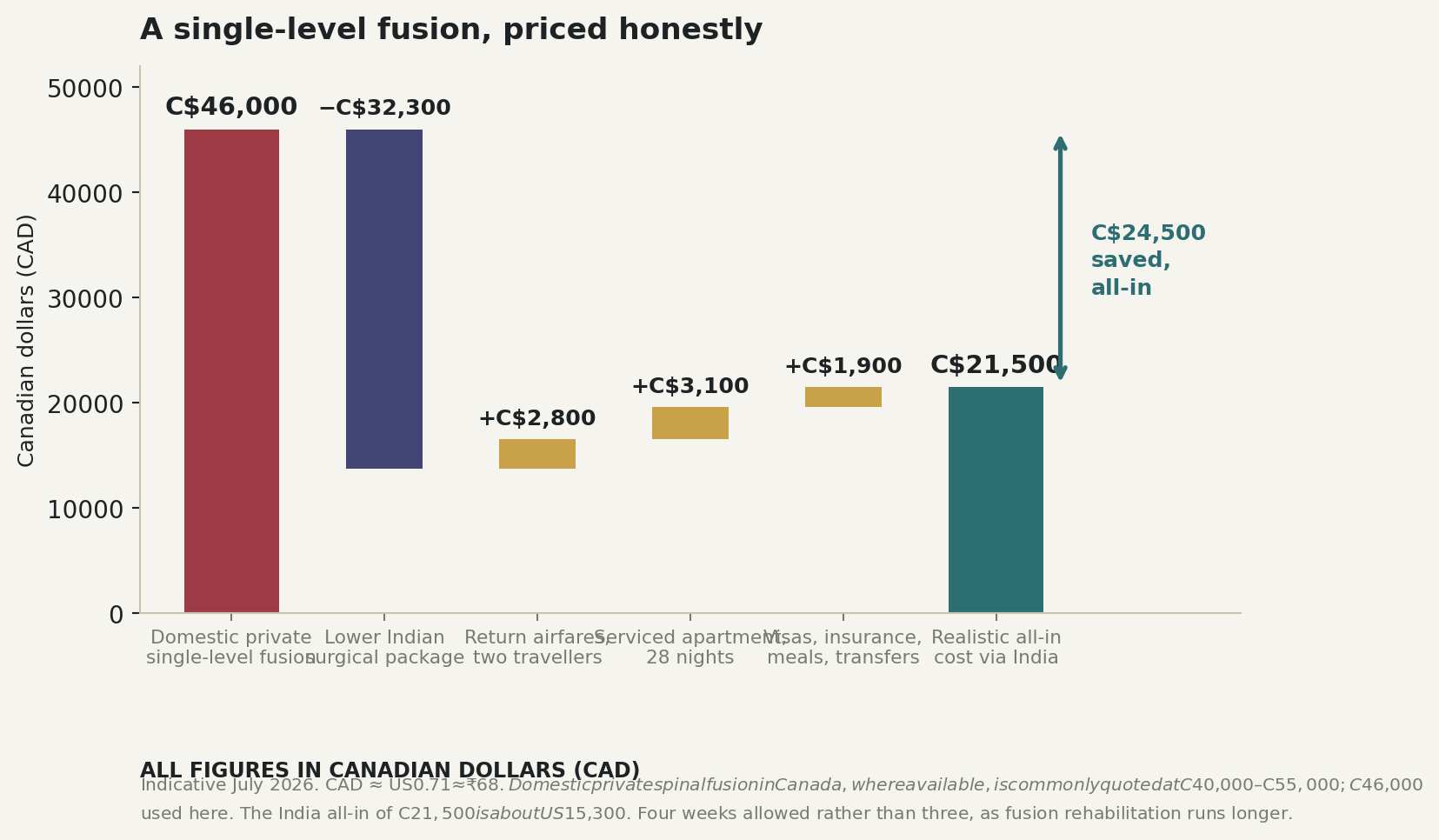
- The briefing’s comparison chart uses approximately C$21,500 all-in for a single-level fusion including travel-related expenses
- Typical stay in India
- Around 4 weeks after instrumented fusion; approximately 2 weeks after microdiscectomy or simple decompression
- Medical travel preparation
- Independent surgical opinion, MRI review, exact spinal level and procedure confirmation, itemised quote, surgeon consultation, neuromonitoring and navigation confirmation, medical visa arrangements, and Canadian follow-up planning
- Follow-up
- Family doctor review and physiotherapy in Canada should be arranged before departure
- Important caution
- Cauda equina symptoms, including bladder or bowel disturbance, saddle numbness, or progressive weakness, require emergency assessment in Canada and are not appropriate for planned medical travel.
In Brief
India may be considered by Canadian patients seeking elective spine surgery when long specialist waiting times affect access to treatment. The briefing explains that Canada has no national wait-time benchmark specifically for spine surgery, while the two specialties that commonly perform spinal procedures—neurosurgery and orthopaedic surgery—have some of the longest reported waits in the country. Treatment in India may include microdiscectomy, spinal decompression, and spinal fusion at accredited hospitals using neuromonitoring, navigation, specialist spine teams, and supervised rehabilitation. However, the document emphasises that the need for surgery itself should be independently confirmed before travel, particularly when fusion is proposed for back-dominant pain.
Spine surgery is not one of the five things Canada promised to track
In 2004, Canada’s federal, provincial and territorial governments agreed to work toward reducing wait times in five priority areas: cancer treatment, cardiac care, diagnostic imaging, joint replacement, and sight restoration. CIHI was mandated to collect data and publish a national benchmark for each. Spine surgery was not included.
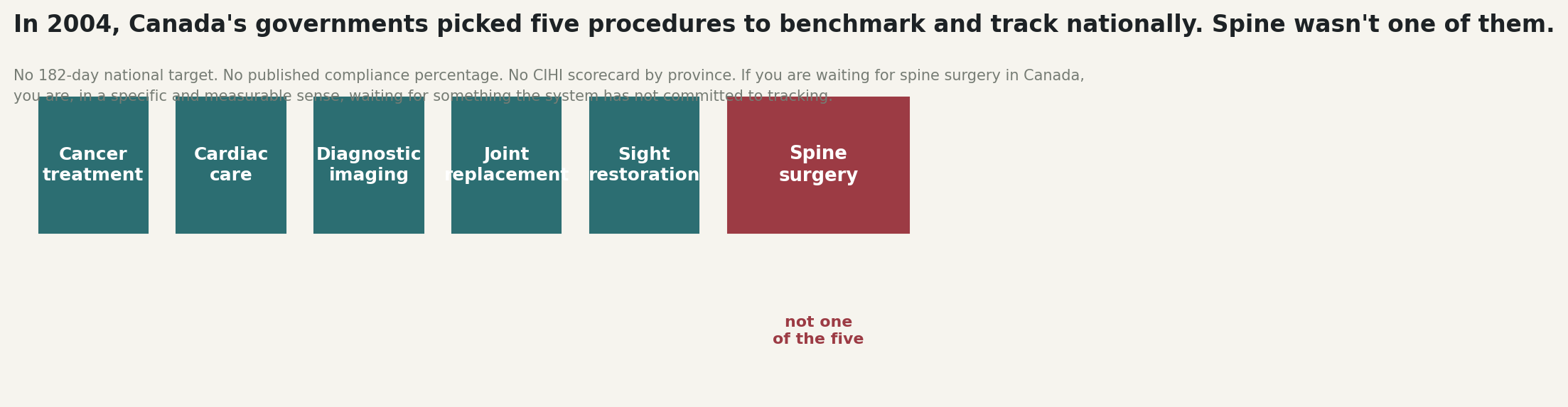
That omission has a real consequence two decades later. There is no 182-day national target for spine surgery, no published compliance percentage, and no CIHI scorecard comparing provinces the way there is for a hip or a knee. Canadian spine patients are waiting inside a system that has never formally committed to measuring, let alone improving, how long that wait actually is.
This is not a small technicality. What gets measured tends to get managed; hospital administrators are held to the benchmarks that exist and allocate operating room time accordingly. A procedure with no national target has no equivalent lever pulling in its favour, and the millwright in the vignette above has no headline figure to point to, no provincial ranking to check, and no published number to hold anyone accountable to.
The number that does exist, and it is not a good one
Canadian spinal surgeons — both orthopaedic and neurosurgical — are excellent, trained to a standard as high as anywhere in the world, and in 24 years of guiding international patients into Indian hospitals I have never suggested otherwise. What Canada lacks for spine is capacity relative to demand, measured the only way anyone actually has: by specialty, not by procedure.
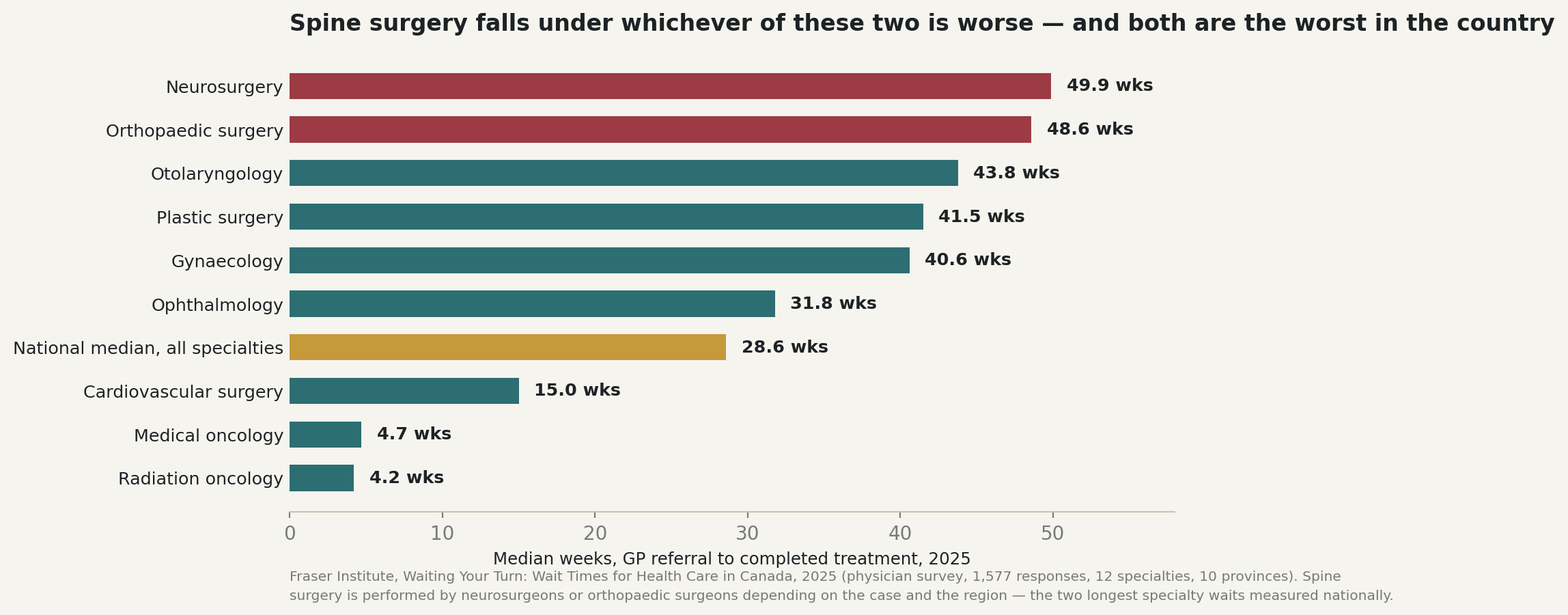
The Fraser Institute’s 2025 physician survey, covering 1,577 respondents across ten provinces, found the median wait from GP referral to completed treatment was longest, nationally, in neurosurgery at 49.9 weeks and orthopaedic surgery at 48.6 weeks — both comfortably above the 28.6-week median across all specialties measured. Spine surgery is performed by one or the other depending on the case and the region. There is no version of that assignment that lands you somewhere good. Whichever specialty operates on your spine, you are entering the two longest queues in the entire Canadian healthcare system.
Break the neurosurgery figure down further and it gets worse before it gets better: the wait from referral to even seeing a neurosurgeon for the first time averages close to forty weeks on its own, before any decision to operate has been made and before the surgical wait itself begins. A patient in genuine pain, waiting on a symptom that is actively affecting nerve function, is not waiting once. They are waiting through two consecutive queues, neither benchmarked, stacked one after the other.
| 49.9 | 0 | 1–3 |
|---|---|---|
| weeks — the longest median specialty wait in Canada, neurosurgery, 2025 | national benchmarks or published targets exist specifically for spine surgery | weeks in India, from a confirmed date to the operating theatre |
The private option Canada does have, and its real limits
A small number of Canadian clinics, concentrated mainly in British Columbia and increasingly Alberta, perform spinal surgery for direct payment, commonly $40,000 to $55,000. It exists, but it is not a nationally available fast lane. Following the Supreme Court of Canada’s April 2023 decision to decline a final appeal in Cambie Surgeries Corporation v. British Columbia , the law banning extra-billing and duplicate private insurance for medically necessary care remains firmly in place across most of the country. Domestic private spine surgery depends heavily on where you live and comes with no guaranteed insurance reimbursement.
Before any of that: has this operation earned its place?
Spine is different from hip and knee replacement in a way worth stating plainly. The operation is not always settled the way a joint replacement is; the same imaging can honestly generate different recommendations from different specialists, and the evidence for some spinal procedures, particularly fusion for back pain without clear nerve compression, is genuinely contested in the international literature. This is true in Canada exactly as it is everywhere else.
The single most valuable thing a Canadian patient can do, whether treating at home or abroad, is have the indication itself checked by a second, independent specialist before committing to surgery anywhere. Ask directly: which symptom is this operation meant to fix, and what happens to the other one? Why fusion rather than decompression alone? What would a structured course of physiotherapy be expected to achieve first? A surgeon who engages seriously with these questions, in Canada or in India, is the one worth trusting.
Which Spine Patient are You?
| Leg-dominant pain | Back-dominant pain | Instability or red flags |
|---|---|---|
| Sciatica or neurogenic claudication, worse below the knee than in the back. This is the group surgery serves best. Microdiscectomy and decompression have strong, well-evidenced results. | Pain mostly in the back, without a clear nerve compression that matches it. This is the group where fusion evidence is weakest. Be cautious of a large multi-level quote here. | Spondylolisthesis with movement on flexion-extension films, deformity, fracture, infection or tumour. Surgery may be genuinely necessary. Cauda equina symptoms are an emergency — go to a Canadian emergency department today. |
What the money actually looks like
Domestic private single-level fusion in Canada, where available, is commonly quoted between $40,000 and $55,000, with no guaranteed reimbursement from any source. The same operation, performed by a fellowship-trained spinal surgeon at an accredited Indian hospital using implants from the same global manufacturers, typically costs around a third of that all-in, once four weeks of travel and accommodation are included.
Understand what does not travel with you. Provincial health plans do not cover treatment received overseas, and out-of-country coverage exceptions are narrow and rarely granted for a routine spinal procedure, however long the actual wait has been.
In 24 years of guiding patients through this process, I have found that disputes almost never concern the quoted price. They concern what the quote silently omitted — a second level, an unplanned night in hospital, imaging billed separately. Insist on a written, itemised figure before any deposit moves, and pay a deposit only, never the full balance in advance.
What you are actually getting for it
Volume, and genuine sub-specialisation. Leading Indian spinal units operate in numbers few individual Canadian hospitals can match, with surgeons who do spine exclusively, many holding fellowships from Canada, the United Kingdom or the United States.
Intraoperative neuromonitoring and navigation as standard. Nerve monitoring during decompression and image guidance for pedicle screw placement are routine in good Indian units and generally included rather than billed as an upgrade.
Accreditation that means something specific. JCI is the international arm of the body accrediting hospitals across the United States; NABH is India’s national equivalent, recognised by the same global standards authority.
Rehabilitation that is genuinely supervised. Daily, one-on-one physiotherapy for weeks, reviewed throughout by the surgeon who operated.
Optimisation before the knife. A quality unit checks your HbA1c, insists on dental clearance, and asks about smoking — nicotine measurably impairs fusion.
Why India rather than the United States or elsewhere
Canadians exploring medical travel are usually shown the United States first. It solves speed but not cost — American private spinal fusion runs to US$60,000–$100,000 or more before travel, which erases the financial case entirely. India competes on substance: the volumes, the exclusively spinal surgeons, and deep revision capability behind the primary operation, at a fraction of American or Canadian domestic private pricing. Its entire medical record is produced in English, and hospital accreditation is independently verifiable against global standards before you ever book a flight.
What to say to your family
Name the hospital and its accreditation. Name the surgeon, his training and his annual case volume. Tell them a second specialist independently agreed the indication. Explain that you are staying four weeks precisely so nothing is rushed, and that your family doctor already has the dates. Families do not object to India; they object to the sense that a relative is taking an unresearched gamble with something irreversible.
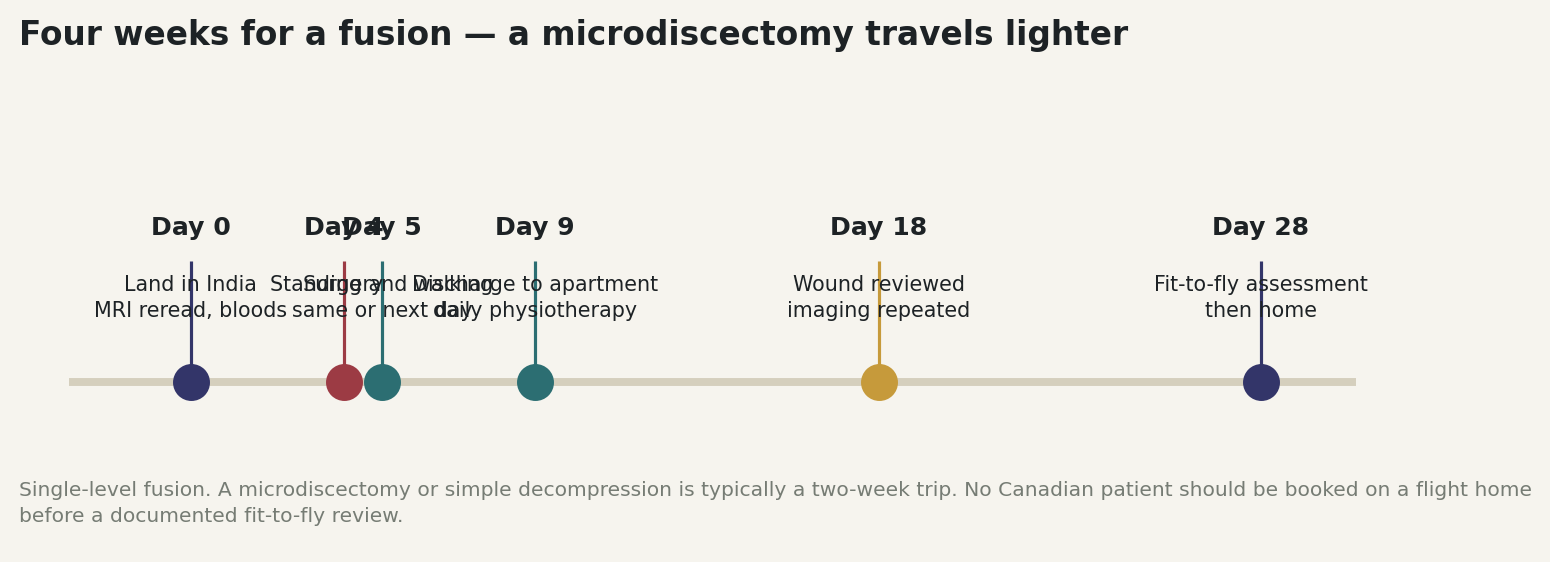
Venous thromboembolism risk is elevated after major spinal surgery, and sitting for fourteen hours in a fixed seat is precisely the posture most patients are told to limit early on. Book a changeable return and do not fly without a documented fit-to-fly assessment and written movement restrictions.
Six Things to Have in Writing Before You FLY
1. An independent opinion on the indication. A second specialist who has reviewed your imaging and symptoms and agrees this is the right operation.
2. The exact levels and the exact procedure. “L4/5 decompression” is a plan; “spine surgery” is not.
3. An itemised, all-inclusive price, stating physiotherapy, imaging and inpatient nights clearly, and what a second level would add.
4. The named operating surgeon, and a video consultation with them before any deposit.
5. Confirmation that neuromonitoring and navigation will be used.
6. Your Canadian follow-up, already booked: a family doctor review and physiotherapy course confirmed before you leave.
Practicalities for Canadians
Canadian passport holders are eligible for India’s electronic medical visa, issued against an invitation letter from the hospital, with an e-medical attendant visa for whoever travels with you. Send the MRI sequences themselves, plus flexion-extension films if instability is in question, not only the typed report. Before flying home, collect a discharge pack naming the levels operated on, implant identification cards, post- operative imaging, an anticoagulation plan, written movement restrictions and a rehabilitation protocol staged over three months.
A closing word
Spinal surgery rewards precision in the decision more than any other operation in this series, and Canada asks you to make that decision inside a system that has never agreed to measure how long it takes. Get the indication checked independently, match the operation to the symptom, and a well-chosen procedure at a high-volume Indian unit is excellent value and often available months, sometimes years, sooner than at home. If you would like a second opinion on your imaging, or a review of a quote you are holding, send it to me and I will look at it properly — including telling you if I think the operation should not happen at all.
Sources
- 🌐 Fraser Institute, Waiting Your Turn: Wait Times for Health Care in Canada , 2025 Report
- 🌐 Government of Canada, 2004 First Ministers' Accord on Health Care Renewal, priority procedure areas
- 🌐 Canadian Institute for Health Information, wait time indicators and scope
- 🌐 Supreme Court of Canada, denial of leave to appeal in Cambie Surgeries Corporation v. British Columbia (Attorney General) , April 2023
- 🌐 Canadian private surgical clinic published pricing, 2026
- 🌐 High Commission of India, e-Visa categories and eligibility
This briefing is general information for Canadian residents considering elective spinal treatment overseas. It is not medical advice and does not replace assessment by a qualified spinal surgeon or your family doctor. New or progressive weakness, numbness in the saddle area, or disturbance of bladder or bowel function may indicate cauda equina syndrome and requires immediate emergency assessment in Canada, not travel. Costs, exchange rates, provincial coverage policy and visa rules stated are indicative as at July 2026 and change; verify each before making decisions, including directly with your provincial ministry of health regarding any out-of-country coverage exception.
Frequently Asked Questions by Canadian Patients about Spine Surgery in India
Why do Canadian patients consider spine surgery in India?
Canadian patients may consider India because spine surgery has no specific national wait-time benchmark in Canada, while neurosurgery and orthopaedic surgery—the two specialties that commonly perform spine procedures—have some of the longest reported specialty waits. India may provide faster access to elective treatment at specialised spine centres.
How long is the wait for spine surgery in Canada?
There is no national procedure-specific benchmark for spine surgery. The briefing instead cites 2025 specialty-level median waits of 49.9 weeks for neurosurgery and 48.6 weeks for orthopaedic surgery, measured from GP referral to completed treatment.
Should I get a second opinion before spinal fusion?
Yes. The briefing describes an independent second opinion as one of the most valuable steps before proceeding, particularly because the evidence for fusion can be less clear when back pain dominates without definite nerve compression that matches the symptoms.
Which spine procedures are discussed for Canadian patients travelling to India?
The briefing discusses procedures including microdiscectomy, spinal decompression and instrumented spinal fusion. The exact operation should be determined by the patient's symptoms, imaging findings, spinal level, instability and specialist assessment.
How much does spinal fusion cost in India compared with Canada?
The briefing states that private single-level spinal fusion in Canada, where available, is commonly quoted at approximately C$40,000–C$55,000. Its comparison chart estimates approximately C$21,500 all-in for a single-level fusion in India, including travel-related expenses. Actual costs vary by procedure and individual requirements.
How quickly can spine surgery be arranged in India?
The briefing indicates approximately 1–3 weeks from a confirmed treatment date to the operating theatre. Scheduling can vary according to imaging review, medical evaluation, surgeon availability and the complexity of the planned procedure.
How long should Canadian patients stay in India after spine surgery?
The briefing suggests approximately four weeks after an instrumented fusion and around two weeks after a microdiscectomy or simple decompression. Patients should use a changeable return ticket and undergo a documented fit-to-fly assessment before returning to Canada.
What should I confirm before travelling to India for spine surgery?
Patients should have an independent opinion confirming the indication, the exact spinal levels and procedure, an itemised all-inclusive quotation, the name of the operating surgeon, a pre-treatment video consultation, confirmation of neuromonitoring and navigation, and Canadian follow-up already arranged.
Will Medicare or a provincial health plan reimburse spine surgery in India?
According to the briefing, reimbursement is uncommon for routine overseas spinal procedures. Out-of-country coverage exceptions are narrow and generally require prior approval demonstrating that medically necessary treatment is unavailable in Canada within an acceptable timeframe.
When should a Canadian spine patient seek emergency care instead of travelling?
New or progressive weakness, numbness in the saddle area, or bladder or bowel dysfunction may indicate cauda equina syndrome. The briefing specifically advises patients with these symptoms to seek immediate emergency assessment in Canada rather than travel overseas for planned treatment.
I have been offered a fusion. Should I get another opinion first?
Yes, and it is the single most valuable step available to you, whether you ultimately treat in Canada or abroad. Fusion evidence is genuinely contested for back-dominant pain, and a second opinion costs a fraction of the surgery.
Will Medicare or my provincial plan reimburse any of this?
Almost never for a routine spinal procedure. Out-of-country coverage exceptions are narrow and require pre-approval showing the surgery is genuinely unavailable in Canada within a medically acceptable time, a bar that is rarely met regardless of your actual wait.
Why is there no published wait time for spine surgery in my province?
Because it was never included in the 2004 priority procedure agreement that created the national benchmarks for cancer, cardiac, imaging, joint replacement and sight restoration. Spine falls under whichever specialty performs it, and both neurosurgery and orthopaedic surgery post the longest waits of any specialty measured nationally.
How long before I can fly home?
About four weeks after an instrumented fusion, around two weeks after a microdiscectomy, on a changeable ticket, following a documented fit-to-fly assessment.
Will surgery fix my back pain?
It is far more reliable at relieving leg pain from a compressed nerve than relieving back pain itself. If leg symptoms dominate and match your imaging, the odds are good. If back pain dominates without clear compression, be cautious.
Page Summary
This guide explains spine surgery in India for Canadian patients, with particular focus on the absence of a national Canadian wait-time benchmark for spinal procedures and the long waits associated with neurosurgery and orthopaedic surgery. It discusses conditions such as sciatica, nerve compression, spinal stenosis, instability, and back pain, along with procedures including microdiscectomy, decompression, and spinal fusion. The guide places strong emphasis on obtaining an independent second opinion before surgery, particularly when fusion is being considered for back-dominant pain. It also covers treatment costs, surgeon selection, exact spinal-level planning, intraoperative neuromonitoring, navigation, hospital accreditation, physiotherapy, medical travel arrangements, fit-to-fly assessment, and follow-up after returning to Canada. Emergency symptoms suggestive of cauda equina syndrome are specifically identified as requiring immediate treatment in Canada rather than travel.
Citation Block
| Topic | Information |
|---|---|
| Topic Information | Details |
| Procedure | Spine Surgery |
| Country | India |
| Intended Audience | Canadian Patients |
| Conditions Covered | Disc Disease, Sciatica, Spinal Stenosis, Nerve Compression, Spondylolisthesis, Spinal Instability |
| Procedures | Microdiscectomy, Spinal Decompression, Spinal Fusion |
| Typical Stay | Approx. 2 Weeks for Microdiscectomy; 4 Weeks for Instrumented Fusion |
| Hospital Stay | Depends on Procedure and Recovery |
| Recovery | Procedure dependent; fusion rehabilitation may continue for several months |
| Indicative India Cost | Approx. C$21,500 all-in for Single-Level Fusion in the briefing comparison |
| Canadian Private Fusion Cost | Approx. C$40,000–C$55,000 Where Available |
| National Spine Benchmark | No Specific National Benchmark |
| Author | Dr. Dheeraj Bojwani |
| Experience | 24+ Years as a Medical Travel Advisor |


Our Mission Statement
Our mission is to place patients at the centre of every healthcare decision by providing trustworthy, evidence-based, and unbiased medical information. We believe that informed patients make better decisions. Backed by personalised guidance from our experienced advisory team, we help patients understand their treatment options, compare them objectively, and confidently choose the path that best suits their medical needs and personal circumstances.
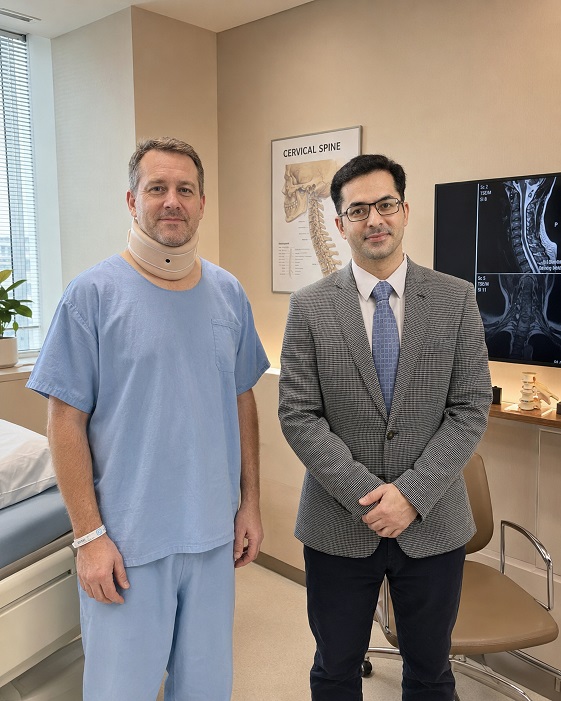
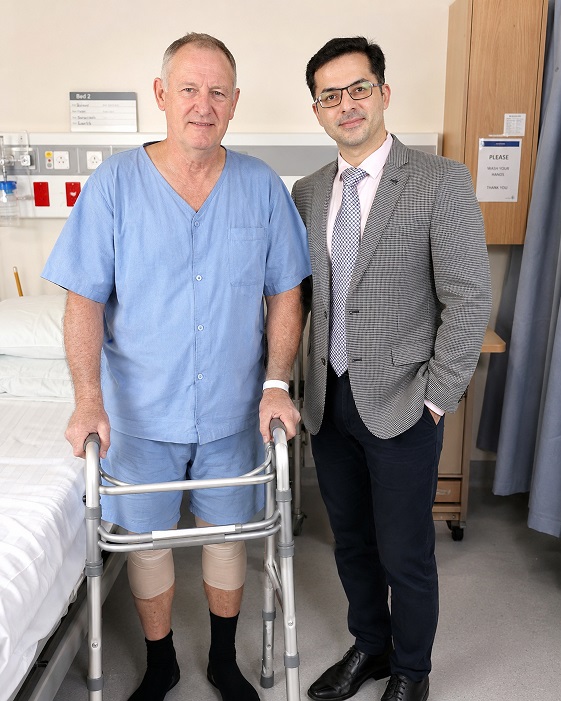
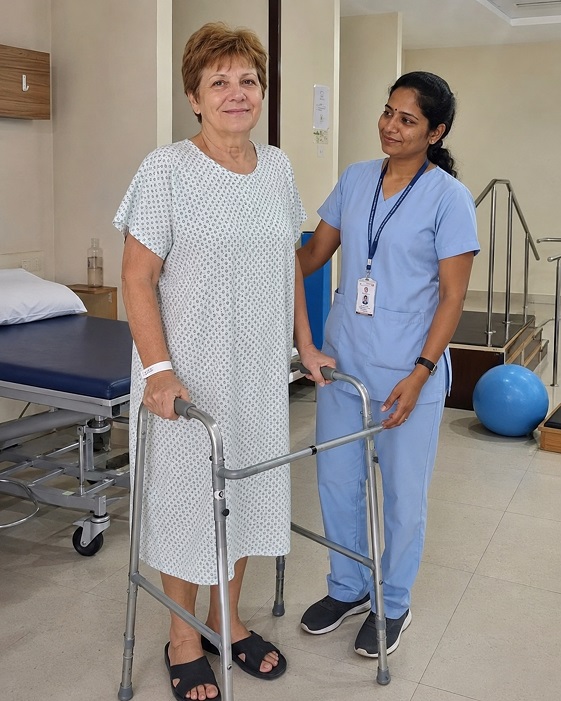
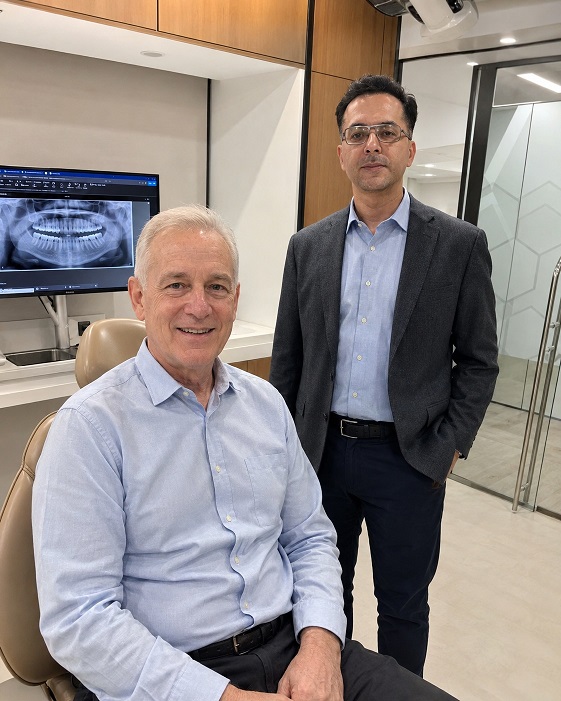
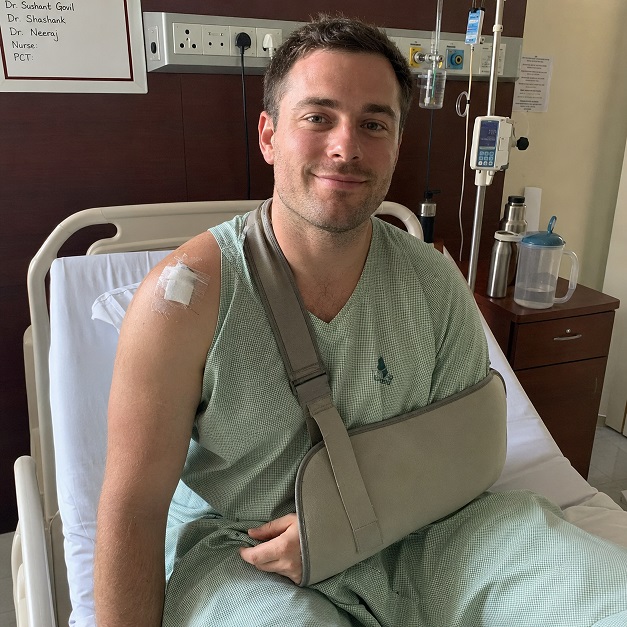
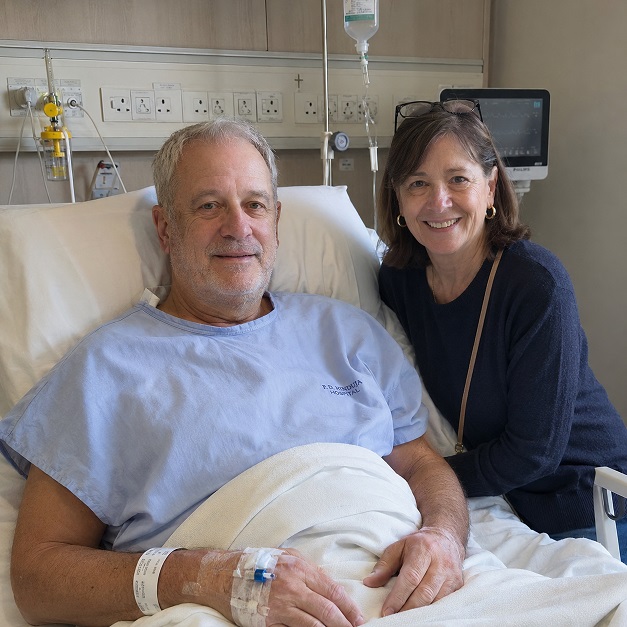
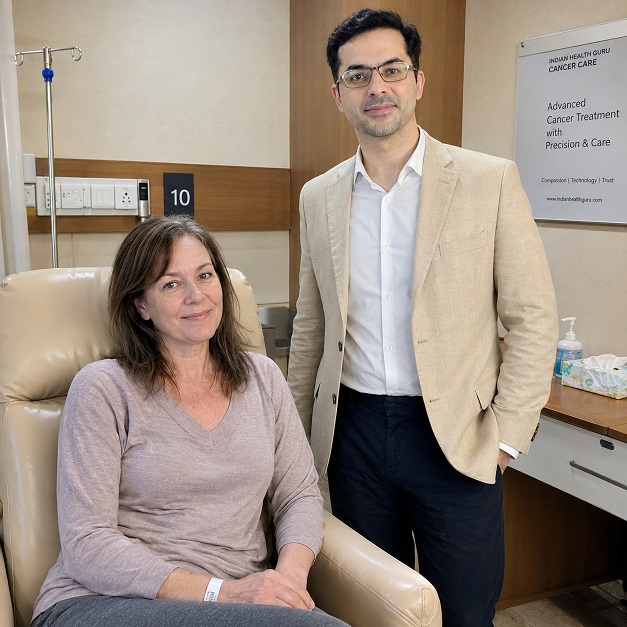
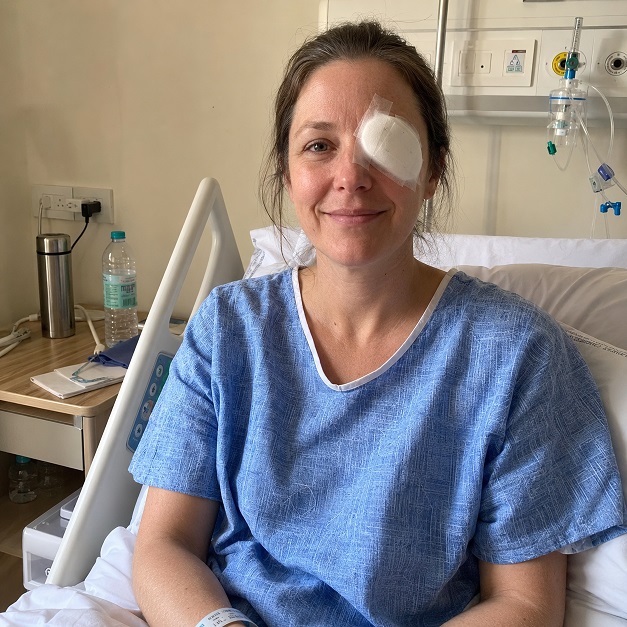
Patient Testimonials from Canada

Ready to Take the First Step?
Share your Medical Reports with our Healthcare Managers Today and Get a FREE CONSULTATION, a Personalized Treatment Plan, and Complete Support from Arrival to Recovery.
Get Your Free ConsultationFrom Canada to India: Your Complete Patient Support Guide
- Weight Loss & Bariatric Surgery in India for Canadian Patients: The Multi-Year Wait, Explained (2026)
- Bone Marrow Transplant in India for Canadian Patients: Complete Guide
- Brain Tumor Surgery in India for Canadian Patients: Complete Guide
- Breast Cancer Treatment and Surgery in India for Canadian Patients
- Cancer Treatment and Surgery in India for Canadian Patients
- Cardiac Surgery in India for Canadian Patients
- Colorectal Cancer Treatment and Surgery in India for Canadian Patients
- Cosmetic and Aesthetic Surgery in India for Canadian Patients
- CyberKnife Treatment in India for Canadian Patients: Complete Guide
- Dental Surgery in India for Canadian Patients | Complete Treatment & Cost Guide
- Gamma Knife Treatment in India for Canadian Patients
- Heart Valve Replacement Surgery in India for Canadian Patients
- Hip Surgery in India for Canadian Patients | Complete Treatment, Cost & Recovery Guide
- HIPEC Surgery in India for Canadian Patients: Complete Guide
- Kidney Transplant in India for Canadian Patients: Complete Guide
- Knee Surgery in India for Canadian Patients: Wait Times & Costs
- Neurosurgery in India for Canadian Patients: Wait Times & Costs
- Paediatric Cardiac Surgery in India for Canadian Patients