

Robotic Cancer Surgery in India for Canadian Patients
Canada has roughly thirty surgical robots for the entire country, and whether your hospital has one often depends on a charitable fundraising campaign, not a national plan.
A 63-year-old retired nurse in Penticton, BC, needing colorectal cancer surgery. Her local hospital does not have a surgical robot; the foundation is still partway through a five-million- dollar campaign to buy one. Her surgeon is skilled and the open operation will remove her cancer perfectly well, but the shorter recovery and lower complication rate a robotic approach could offer for her specific case simply isn't available where she lives, not because of her diagnosis, but because of a fundraising thermometer on a hospital website.
Healing Journeys of Canadian Patients
Key Takeaways
- Canada has roughly 30 da Vinci surgical systems nationally, but access is uneven. The page 1 visual explains that hospitals often acquire robotic systems through foundation fundraising, meaning availability can depend heavily on geography and local fundraising rather than a coordinated national rollout.
- The PDF gives examples of this variation: a Halifax hospital added its seventh robot through a C$3.8 million donor campaign, while a hospital foundation in Penticton was still raising approximately C$5 million for a single system.
- For most solid tumours, robotic and open surgery generally provide similar long-term cancer control. The main advantages of robotic surgery are recovery-related, including less blood loss, shorter hospital stays and fewer conversions to open surgery.
- The guide highlights one important exception: a 2018 randomised trial found worse disease-free survival with minimally invasive radical hysterectomy for cervical cancer compared with open surgery. Patients with cervical cancer should therefore specifically discuss whether an open approach is more appropriate.
- The page 3 Ontario chart shows minimally invasive colorectal cancer surgery increasing from 47% before robotic programme introduction to 85% afterward, alongside fewer emergency visits, shorter hospital stays and fewer conversions to open surgery.
- The page 3 cost chart gives indicative India package costs of approximately C$9,800 for robotic colorectal resection, C$8,600 for robotic partial nephrectomy, C$6,900 for robotic hysterectomy and C$12,500 for robotic lung lobectomy.
- The guide emphasizes that patients should not choose a hospital simply because it owns a robot. The more important question is the surgeon's own robotic case volume for the exact cancer procedure, together with institutional experience and an appropriately trained team.
- Canadian patients considering treatment in India should also confirm hospital accreditation, complete operative documentation and a follow-up plan with their Canadian oncologist or surgeon before travelling.
Quick Facts
- Treatment
- Robotic Cancer Surgery
- Country
- India
- Patients
- Canadian Patients
- Specialty
- Robotic / Minimally Invasive Cancer Surgery
- Robotic Systems in Canada
- Approximately 30
- Cancer Procedures Discussed
- Colorectal, Kidney, Cervical and Lung Surgery
- Main Benefit
- Faster Recovery With Less Blood Loss and Shorter Hospital Stay
- Long-Term Cancer Control
- Generally Equivalent to Open Surgery for Most Solid Tumours
- Important Exception
- Cervical Cancer Requires Careful Review of Robotic vs Open Surgery
- Colorectal Minimally Invasive Surgery
- 47% Before vs 85% After Robotic Programme Introduction
- Robotic Colorectal Surgery Cost in India
- Approximately C$9,800
- Hospital Selection
- Verifiable JCI or NABH Accreditation
- Follow-Up
- Canadian Oncologist or Surgeon
- Important Principle
- Choose the Right Operation, Not Simply the Available Technology
In Brief
Robotic surgery can offer meaningful recovery benefits for appropriately selected cancer patients, but the technology itself should not determine the treatment decision. The guide emphasizes procedure-specific robotic experience, institutional learning-curve maturity and evidence for the particular cancer. For cervical cancer especially, patients should question a minimally invasive recommendation because the evidence does not support assuming that robotic surgery is automatically safer or equally effective.
A funding model most patients never hear explained
Canadian surgeons using robotic platforms are excellent, and in 24 years of guiding international patients into Indian hospitals I have never suggested otherwise. What is worth understanding is how a hospital actually acquires this technology in the first place.
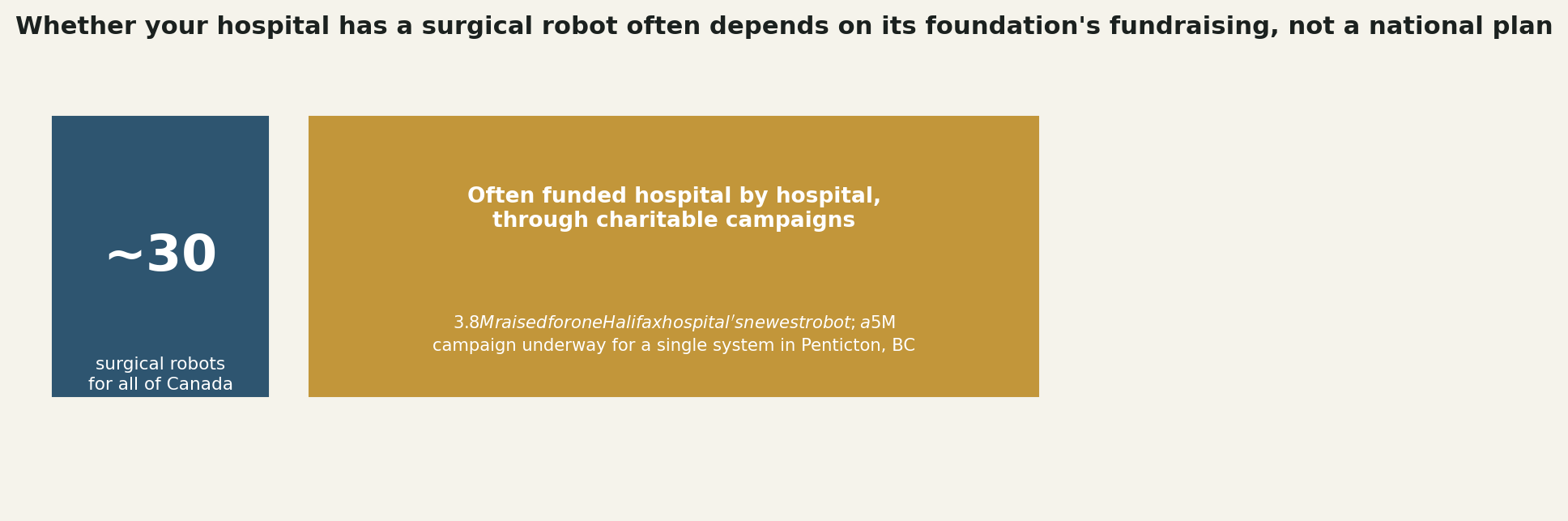
Canada has roughly thirty da Vinci surgical systems nationally, and that number is genuinely uneven in how it is distributed. Nova Scotia's flagship Halifax hospital recently added its seventh robot, funded largely through a $3.8 million donor campaign. Saskatchewan just added a fourth system province-wide, among the highest per capita in the country. Meanwhile a hospital foundation in Penticton, British Columbia, is still raising the roughly $5 million needed for a single system. This is not a criticism of any hospital or its donors — philanthropy has genuinely expanded access where it has succeeded, and every hospital foundation running one of these campaigns deserves real credit for it. It means, in practice, that whether robotic surgery is available for your specific cancer often depends on where you live and how successfully your local hospital's foundation has fundraised, rather than on a coordinated national or even provincial rollout.
This is a genuinely unusual way to allocate access to a cancer treatment technology, and it is worth naming plainly rather than treating as background noise. In most other areas of this series, the gap has been a wait, a benchmark, or a funding formula. Here it is closer to a lottery, decided by which community happens to have a hospital foundation with the fundraising capacity and donor base to reach several million dollars, and which does not.
What the robot actually changes, and what it generally doesn't
It is worth being precise about what robotic surgery buys a patient, because the honest answer is narrower than the marketing around it often suggests.
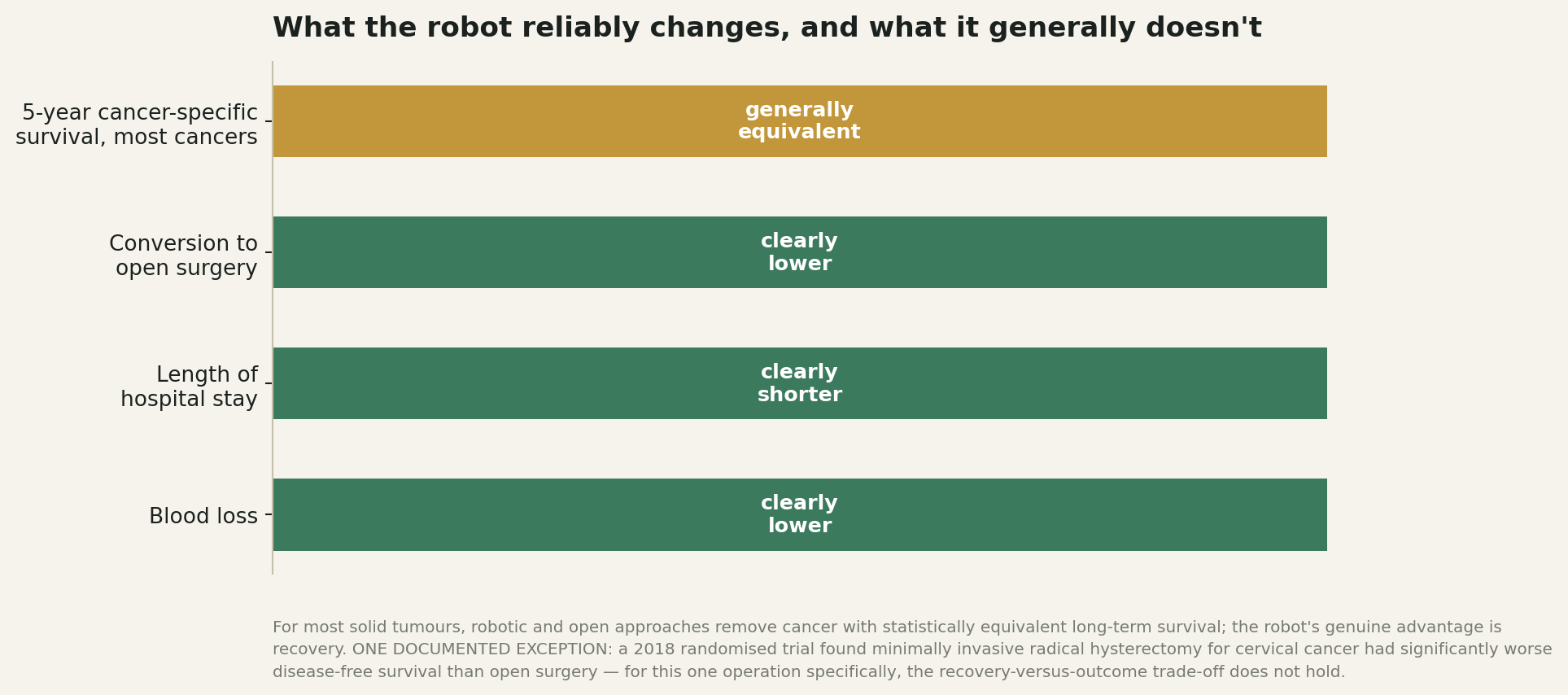
For most solid tumours, the robotic and open approaches remove cancer equally well over the long term. What genuinely differs is recovery: less blood loss, a shorter hospital stay, and fewer conversions to open surgery mid-operation. That is a real and meaningful benefit, particularly for older or frailer patients, but it is a recovery advantage rather than a survival advantage for most cancers. The one documented exception matters enough to state plainly: a randomised trial published in 2018 found that minimally invasive radical hysterectomy for cervical cancer produced significantly worse disease-free survival than open surgery. For this specific operation, the usual recovery-versus-outcome trade-off does not hold, and a genuinely careful surgeon will discuss this with you directly rather than defaulting to whichever approach the hospital happens to have equipment for.
This finding surprised much of the surgical community when it was published, precisely because it ran against the pattern seen in almost every other cancer type, and it is a useful reminder that "minimally invasive" and "equally effective" are not automatically the same claim. Ask specifically, for your own diagnosis, whether robotic or open surgery is the evidence-based recommendation, rather than assuming the newer technology is always the better one.
Where access does exist, the benefit is real
This isn't a reason to dismiss the technology. Ontario hospital data on introducing a robotic programme is genuinely persuasive.
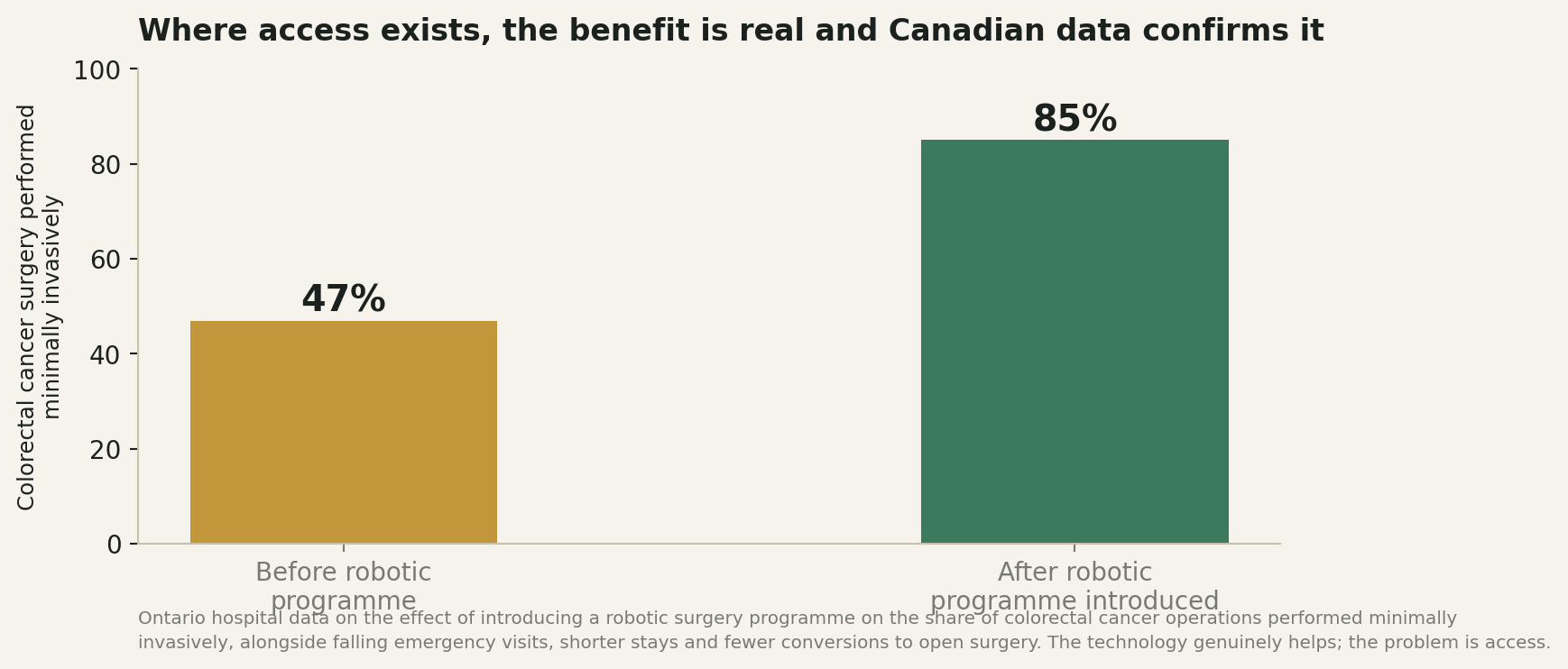
The share of colorectal cancer surgery performed minimally invasively rose sharply after a robotic programme was introduced, alongside fewer emergency visits, shorter stays and fewer conversions to open surgery. The technology works. The problem this briefing addresses is not whether robotic surgery helps — it plainly can — but whether it is actually available to you, which in Canada currently depends heavily on geography and hospital fundraising success rather than clinical need alone.
When robotic access itself is the reason to travel
If your local hospital does not have a robotic programme for your specific cancer type, or the wait for the one regional system serving your area is long, that is a genuine and specific reason to consider where else this surgery can be performed well.
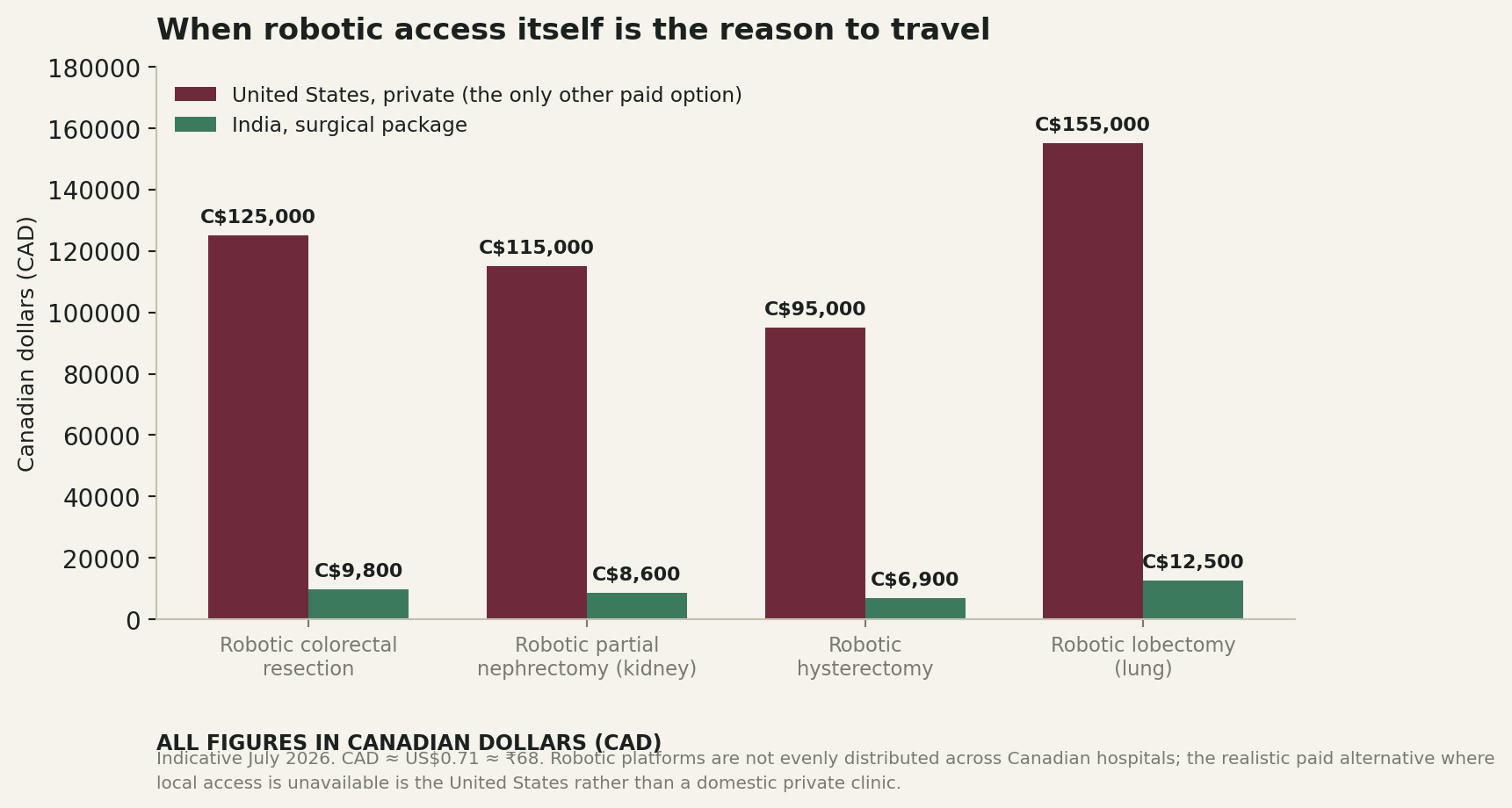
Robotic platforms are not something Canada's small private surgical sector generally offers either; the capital cost of the equipment alone puts it out of reach for most private clinics. For a patient without local access, the realistic paid alternative is the United States rather than a domestic private option. India's major cancer centres operate robotic platforms at high volume across colorectal, urologic, gynaecologic and thoracic cancer surgery, with dedicated teams who have moved well past the console-time learning curve every robotic surgeon starts with. In 24 years of guiding patients through decisions like this, the question worth asking first is not whether a hospital has a robot, but how many cases the specific surgeon has performed on that platform, for your specific cancer — console time on a robotic system is its own distinct skill, separate from general surgical experience.
What you are actually getting for it
Genuine, checkable console-time volume, not just access to the machine. Ask for the surgeon's own robotic case count in your specific procedure.
A team that has moved past the learning curve. Outcomes with any new robotic platform improve measurably with institutional experience, not just surgeon experience.
Honesty about cervical cancer specifically. If your diagnosis is cervical cancer, ask directly why a minimally invasive approach is being recommended given the 2018 trial findings, and expect a considered answer.
Accreditation you can verify independently. JCI is the international arm of the body accrediting hospitals across the United States; NABH is India's national equivalent, recognised by the same global standards authority.
Four Things that Should Make You Walk Away Immediately
A robotic approach pushed for cervical cancer without acknowledging the 2018 trial data. This is the one situation in this briefing where "robotic" is not automatically the safer choice.
Any clinic marketing "robotic" as inherently curing cancer better. For most solid tumours it does not; it improves recovery.
Vagueness about the surgeon's own console-time volume. Access to a robot is not the same as expertise using it.
Pressure toward a robotic approach that isn't actually appropriate for your anatomy or disease stage. A responsible surgeon recommends the right operation, not the available equipment.
Straight answers for Canadian Patients about Robotic Cancer Surgery in India
My local hospital doesn't have a surgical robot. Does that mean I'm getting worse care?
Not necessarily. Open and laparoscopic surgery remain excellent options for most cancers, with equivalent long-term survival to robotic approaches. The difference is mainly in recovery, which matters but is not the only measure of good care.
Will my provincial plan reimburse robotic surgery performed in India?
Almost never. Out-of-country coverage exceptions require pre-approval showing the procedure is genuinely unavailable in Canada within a medically acceptable time, a bar rarely met regardless of local equipment access.
Is robotic surgery ever the wrong choice?
Yes, most clearly for cervical cancer, where a 2018 randomised trial found worse outcomes with a minimally invasive approach. Ask your surgeon directly if this applies to your diagnosis.
How long should I plan to stay in India?
Around two to three weeks for most robotic cancer procedures, on a changeable ticket, following a documented fit-to-fly assessment.
Who manages my follow-up once I'm home?
Your Canadian oncologist or surgeon, provided they have the full operative record and pathology in writing before you leave.
A closing word
Robotic surgery genuinely helps recovery for most cancer patients who can access it, and in Canada that access currently depends more on hospital fundraising success than on a coordinated plan. If your local option doesn't include it, or your diagnosis is one where the robotic approach itself deserves scrutiny, both are worth a direct conversation before you commit to anything. Send me your diagnosis and imaging and I will give you an honest view.
Sources
- 🌐 "Saint John doctors eager to have robots play role in surgery", CBC News — cbc.ca
- 🌐 Ramirez et al., "Minimally Invasive versus Abdominal Radical Hysterectomy for Cervical Cancer" (the LACC trial), New England Journal of Medicine, 2018 — nejm.org/doi/full/10.1056/NEJMoa1806395
- 🌐 Nova Scotia Health, "New surgical robot at QEII enables Nova Scotia firsts and expands access to advanced care" — nshealth.ca
- 🌐 Government of Saskatchewan, "Robot Assisted Surgeries Strengthening Patient Care in Saskatchewan" — saskatchewan.ca
- 🌐 High Commission of India, e-Visa categories and eligibility — indianvisaonline.gov.in/evisa
Frequently Asked Questions by Canadian Patients about Robotic Cancer Surgery in India
How many surgical robots are available in Canada?
The guide states that Canada has approximately 30 da Vinci surgical systems, but their distribution is uneven across hospitals and provinces.
Why is robotic surgery not available at every Canadian hospital?
The PDF explains that access often depends on hospital-level fundraising and donor campaigns rather than a coordinated national or provincial rollout.
Does robotic surgery provide better cancer survival?
For most solid tumours, the guide states that robotic and open surgery generally provide equivalent long-term cancer control. The main advantages are related to recovery.
What are the main recovery benefits of robotic cancer surgery?
Robotic surgery can provide less blood loss, shorter hospital stays and fewer conversions to open surgery. These benefits can be particularly meaningful for older or medically frailer patients.
Is robotic surgery suitable for cervical cancer?
This requires particular caution. The guide cites a 2018 randomised trial showing worse disease-free survival with minimally invasive radical hysterectomy compared with open surgery for cervical cancer.
How much does robotic cancer surgery cost in India?
The PDF gives indicative costs ranging from approximately C$6,900 for robotic hysterectomy to C$12,500 for robotic lung lobectomy, depending on the procedure.
How should I choose a robotic cancer surgeon in India?
Ask for the surgeon's own robotic case count for your specific procedure. General surgical experience or simply working at a hospital with a robot does not establish procedure-specific robotic expertise.
Does having a robotic system automatically mean better treatment?
No. The guide emphasizes that a responsible surgeon should recommend the operation that is appropriate for the patient's anatomy, cancer type and disease stage rather than simply using the equipment available.
How long should Canadian patients stay in India?
The guide recommends planning for approximately two to three weeks for most robotic cancer procedures, with a changeable ticket and documented fit-to-fly assessment.
Who manages follow-up after returning to Canada?
The Canadian oncologist or surgeon should manage follow-up after receiving the complete operative record and pathology report in writing before the patient leaves India.
Page Summary
This guide explains robotic cancer surgery in India for Canadian patients and focuses on Canada's uneven access to surgical robotic systems. It explains that robotic surgery generally offers recovery advantages such as less blood loss and shorter hospital stays rather than better long-term cancer survival for most solid tumours. The guide highlights the important cervical-cancer exception, provides Ontario data showing increased minimally invasive colorectal surgery after robotic-programme introduction, and compares indicative India costs for several robotic procedures. It emphasizes procedure-specific surgeon experience, institutional learning-curve maturity, accreditation and Canadian follow-up planning.
Citation Block
| Topic | Information |
|---|---|
| Topic | Robotic Cancer Surgery in India for Canadian Patients |
| Treatment | Robotic Cancer Surgery |
| Country | India |
| Intended Audience | Canadian Patients |
| Specialty | Robotic / Minimally Invasive Cancer Surgery |
| Robotic Systems in Canada | Approximately 30 |
| Procedures Discussed | Colorectal, Kidney, Cervical and Lung Surgery |
| Main Benefit | Less Blood Loss, Shorter Stay and Faster Recovery |
| Long-Term Cancer Control | Generally Equivalent for Most Solid Tumours |
| Cervical Cancer | Minimally Invasive Surgery Requires Particular Caution |
| Colorectal Minimally Invasive Surgery | 47% Before / 85% After Robotic Programme |
| Key Selection Factor | Appropriate Procedure and Surgeon Experience |
| Author | Dr. Dheeraj Bojwani |
| Experience | 24+ Years |


Our Mission Statement
Our mission is to place patients at the centre of every healthcare decision by providing trustworthy, evidence-based, and unbiased medical information. We believe that informed patients make better decisions. Backed by personalised guidance from our experienced advisory team, we help patients understand their treatment options, compare them objectively, and confidently choose the path that best suits their medical needs and personal circumstances.
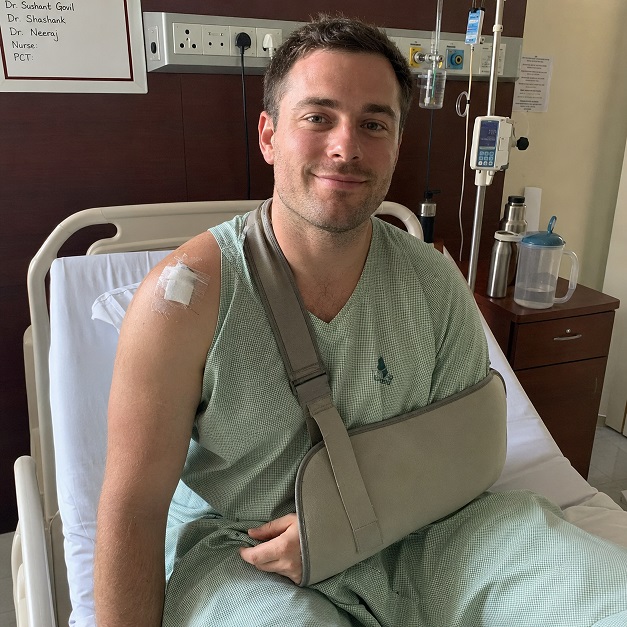
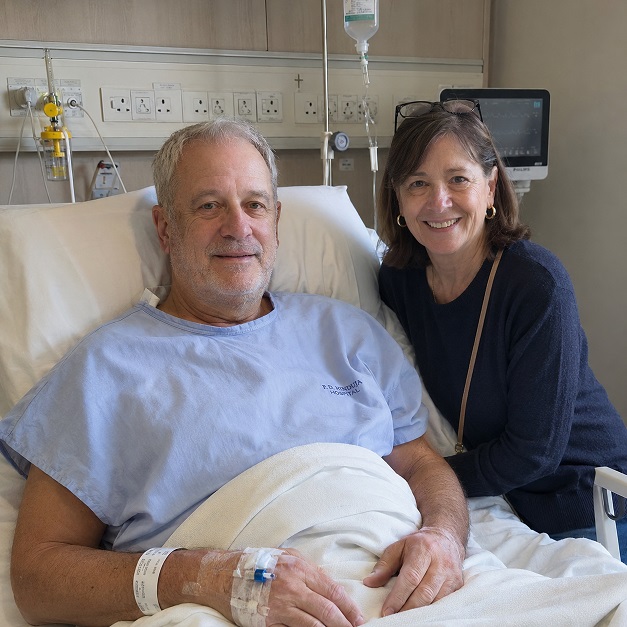
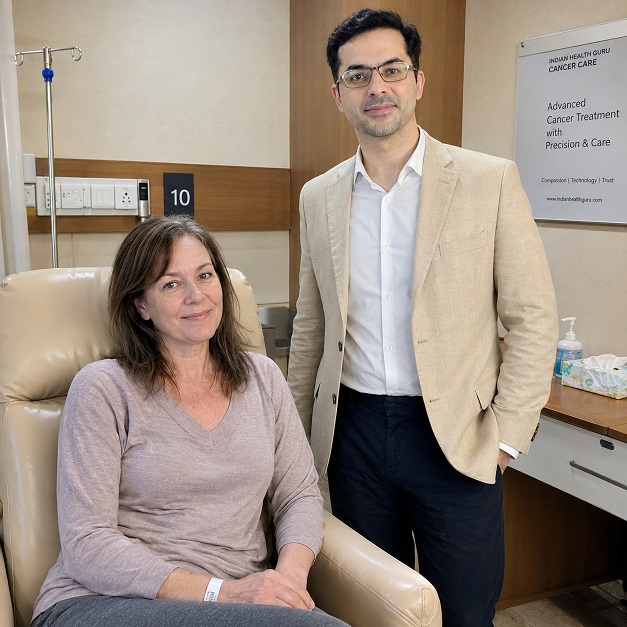
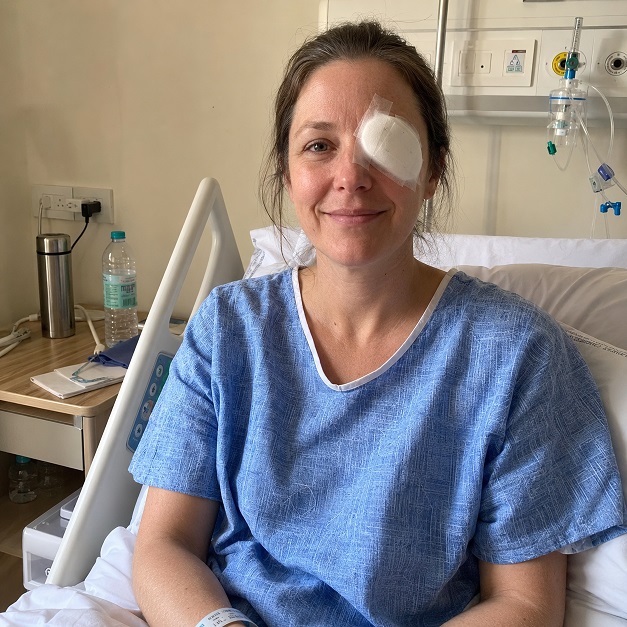
Patient Testimonials from Canada


Ready to Take the First Step?
Share your Medical Reports with our Healthcare Managers Today and Get a FREE CONSULTATION, a Personalized Treatment Plan, and Complete Support from Arrival to Recovery.
Get Your Free ConsultationFrom Canada to India: Your Complete Patient Support Guide
- Weight Loss & Bariatric Surgery in India for Canadian Patients: The Multi-Year Wait, Explained (2026)
- Bone Marrow Transplant in India for Canadian Patients: Complete Guide
- Brain Tumor Surgery in India for Canadian Patients: Complete Guide
- Breast Cancer Treatment and Surgery in India for Canadian Patients
- Cancer Treatment and Surgery in India for Canadian Patients
- Cardiac Surgery in India for Canadian Patients
- Colorectal Cancer Treatment and Surgery in India for Canadian Patients
- Cosmetic and Aesthetic Surgery in India for Canadian Patients
- CyberKnife Treatment in India for Canadian Patients: Complete Guide
- Dental Surgery in India for Canadian Patients | Complete Treatment & Cost Guide
- Gamma Knife Treatment in India for Canadian Patients
- Heart Valve Replacement Surgery in India for Canadian Patients
- Hip Surgery in India for Canadian Patients | Complete Treatment, Cost & Recovery Guide
- HIPEC Surgery in India for Canadian Patients: Complete Guide
- Kidney Transplant in India for Canadian Patients: Complete Guide
- Knee Surgery in India for Canadian Patients: Wait Times & Costs
- Neurosurgery in India for Canadian Patients: Wait Times & Costs
- Paediatric Cardiac Surgery in India for Canadian Patients