

Selecting the Best CyberKnife Treatment Centres in India for Canadian Patients
Ten weighted criteria — but first, why this precise, sessions-not-weeks technology has remained genuinely rare across Canada, and why India's leading radiosurgery centres offer a genuinely strong, faster path to the same modern standard of care.
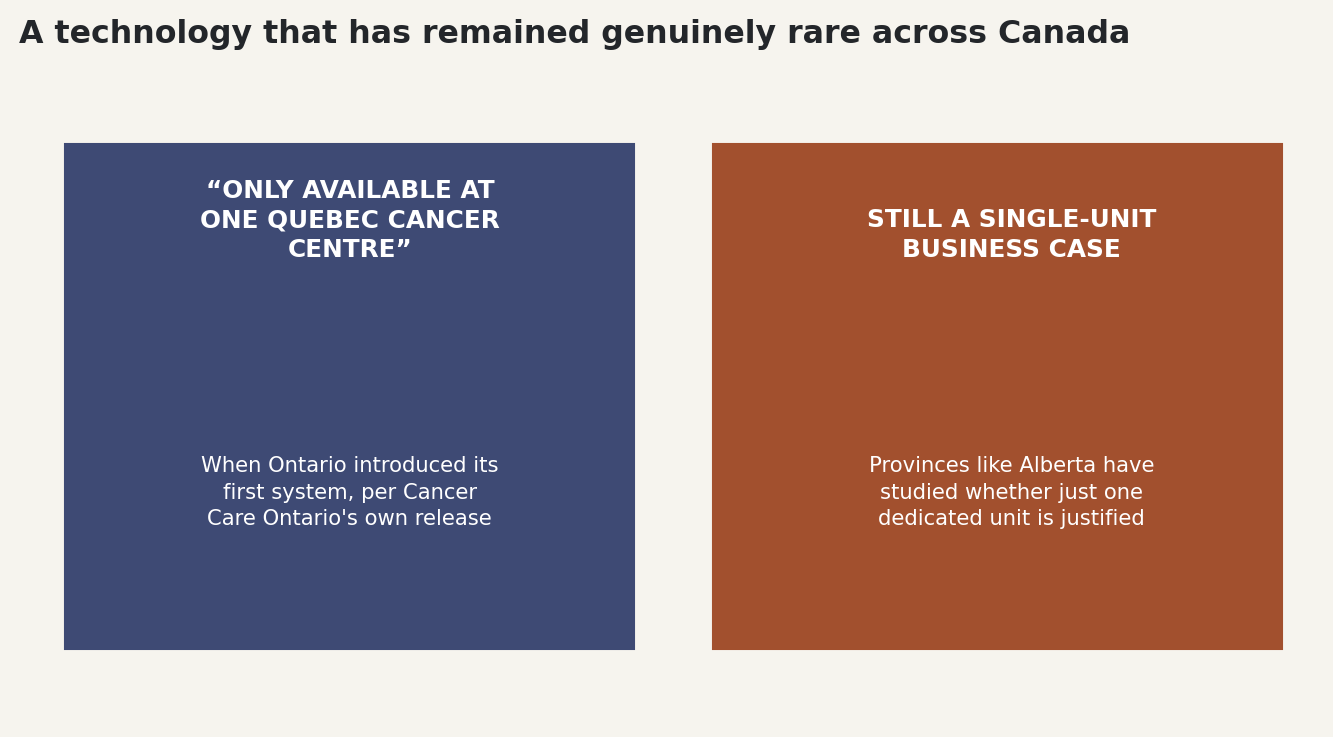
In 24 years of guiding international patients into Indian hospitals, this genuine scarcity is worth understanding clearly. Even as Ontario celebrated bringing this technology to a second Canadian province, the announcement itself confirmed just how limited access had been up to that point, and provincial health authorities elsewhere have subsequently had to formally study whether even a single dedicated unit makes economic sense for their population, a genuine reflection of how narrow and carefully-managed access to this specific technology remains across the country. This pattern reflects the genuine capital cost and specialised infrastructure this technology demands. A CyberKnife system itself represents a multi-million dollar investment, before accounting for the dedicated medical physics staff, treatment planning software, and ongoing maintenance a genuinely functioning programme requires.
Healing Journeys of Canadian Patients
Key Takeaways
- The guide highlights that CyberKnife remains relatively rare in Canada, with access expanding only gradually. The page 1 graphic notes that Ontario's introduction of its first system was described as a milestone, while provinces such as Alberta have formally studied whether even one dedicated unit is economically justified.
- The page 2 chart illustrates the difference in treatment duration: conventional radiotherapy may involve around 30 treatment sessions, while CyberKnife radiosurgery can deliver a comparable effective dose in approximately 5 sessions for appropriate cases. This can make treatment considerably easier for patients travelling from Canada.
- India is presented as an alternative because leading cancer centres use CyberKnife and equivalent stereotactic systems as established, routine treatments, supported by dedicated medical physics teams and established treatment volumes. The guide also highlights real-time tumour tracking, sub-millimetre precision, English-language care and JCI/NABH-accredited hospitals.
- The selection framework gives 55% weighting to the treating team and 45% to the hospital. Team assessment focuses on honest candidacy assessment, a named medical physicist, established treatment volume and outcome data. Hospital assessment includes established experience, multidisciplinary tumour-board review, international accreditation and complete treatment records.
- The page 4 qualification table identifies MD in Radiotherapy followed by a 1–2 year fellowship in stereotactic radiosurgery as the dedicated training most relevant to this technology. The guide also identifies four warning signs: recommending CyberKnife without confirming candidacy, no named medical physicist, vague treatment volume and quoting a price before imaging is reviewed.
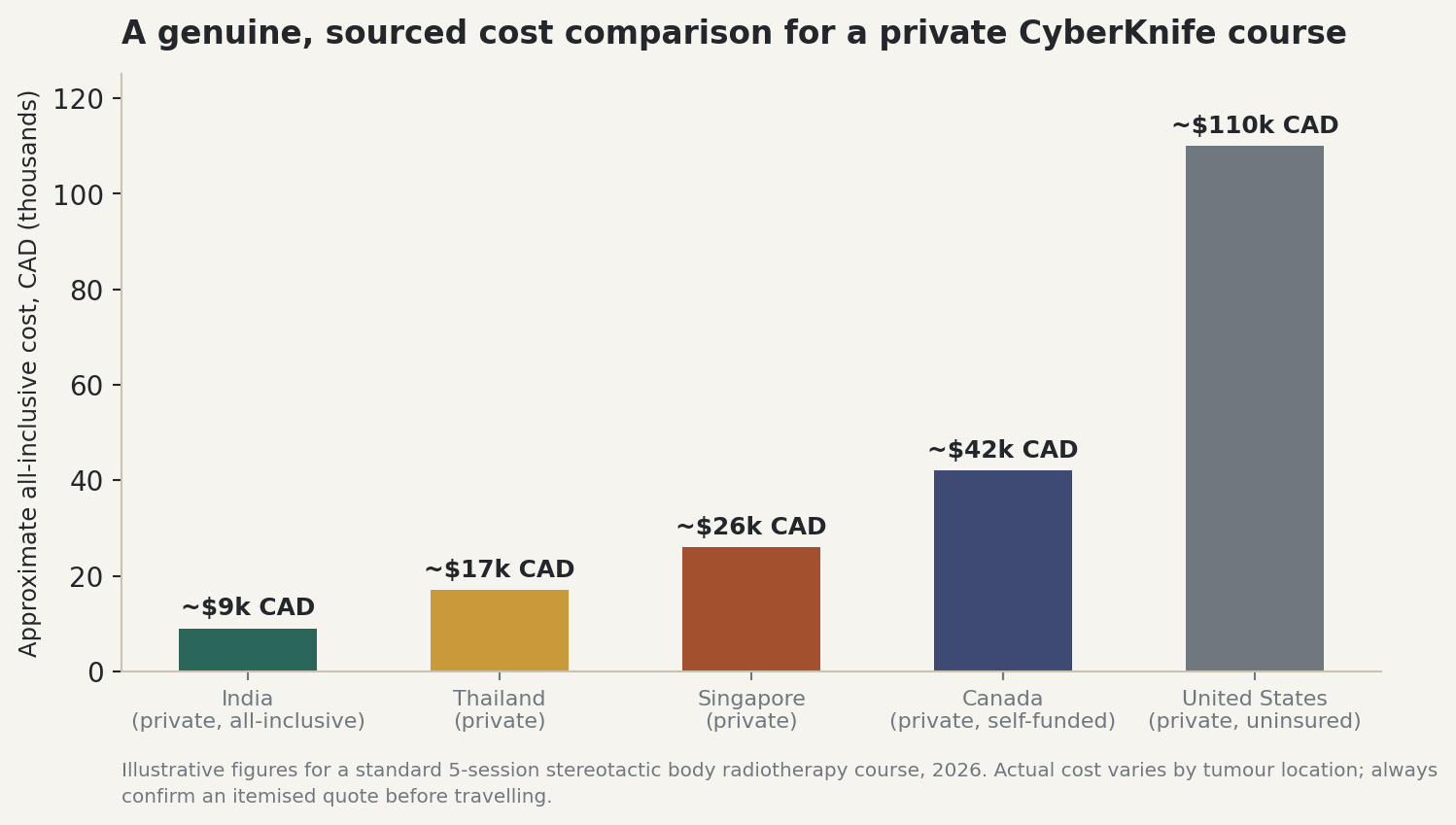
- The page 4 cost chart gives illustrative private costs of approximately C$9,000 in India, C$17,000 in Thailand, C$26,000 in Singapore, C$42,000 in Canada and C$110,000 in the United States for a standard five-session stereotactic body radiotherapy course. The guide notes that actual costs vary according to tumour location and recommends an itemised quotation.
Quick Facts
- Treatment
- CyberKnife Stereotactic Radiosurgery
- Patients
- Canadian Patients
- Key Specialist
- Radiation Oncologist
- Selection Weighting
- 55% treating team / 45% hospital
- Key Qualification
- MD Radiotherapy + Stereotactic Radiosurgery Fellowship
- Key Technology
- Real-time tumour tracking & sub-millimetre precision
- Team Check
- Named Medical Physicist
- Hospital Check
- Multidisciplinary Tumour Board & Accreditation
- Typical Sessions
- Approximately 5
- India Cost
- Approximately C$9,000
- Canada Cost
- Approximately C$42,000
- US Cost
- Approximately C$110,000
- Pre-Travel Records
- Full imaging & pathology
- Follow-Up
- Canadian oncology team & follow-up imaging
- Key Warning
- Avoid centres that recommend CyberKnife without reviewing your specific case
- Decision Principle
- Prioritise genuine candidacy, established treatment volume and qualified medical physics support.
- Author
- Dr. Dheeraj Bojwani
- Experience
- 24+ Years
In Brief
For Canadian patients, the guide's central message is to confirm genuine CyberKnife candidacy before choosing a centre and then assess the treating team, medical physics support, treatment volume, accreditation, cost and follow-up. The guide also recommends arranging follow-up imaging and Canadian oncology review before leaving India.
CyberKnife is a genuinely remarkable technology, delivering precise, high-dose radiation without surgery in far fewer sessions than conventional radiotherapy. This guide exists for patients whose radiation oncologist has confirmed they're a genuine candidate, weighing where that treatment should happen.
This matters directly for Canadian patients today: even where a business case has been approved, building genuine day-to-day operational experience with a new system takes years, meaning a newly commissioned Canadian CyberKnife programme may not yet have accumulated the kind of deep, routine treatment volume that an established international programme has built over a much longer operating history.
For patients facing this genuine, documented scarcity, the case for looking seriously at India is a strong one: internationally accredited cancer centres with genuinely established radiosurgery volume, dedicated medical physics teams, and treatment that can typically begin within two to three weeks of your first consultation, all at a fraction of the equivalent Canadian private cost. This isn't a fallback option; for patients who understand exactly how limited domestic access remains, it's a considered, well-evidenced alternative worth exploring seriously.
Why this technology genuinely changes the treatment timeline
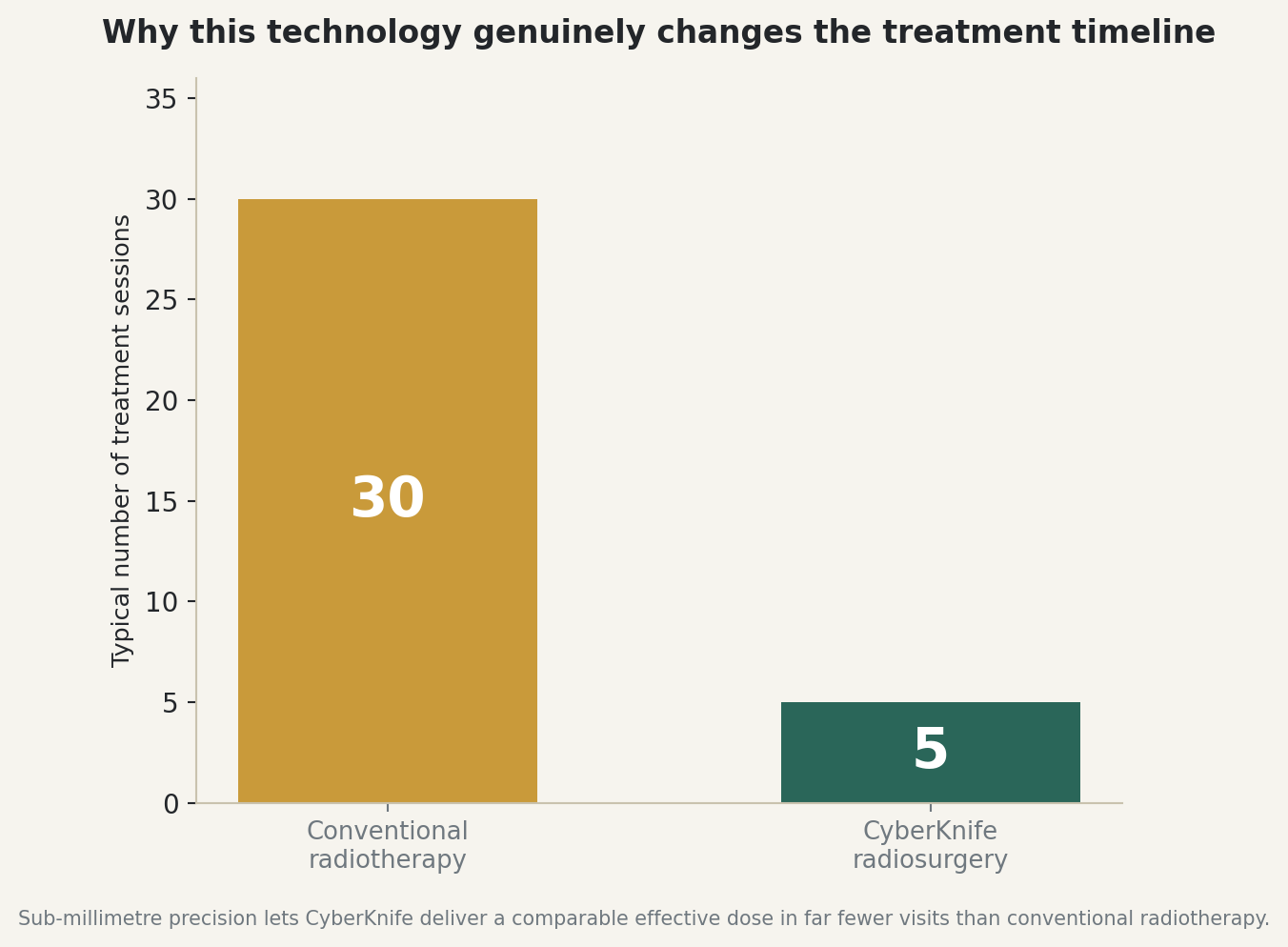
Get your full imaging and pathology together before your first overseas conversation. This is one of the most practically important distinctions to understand. Conventional radiotherapy typically spans several weeks of daily visits, a genuine burden for any patient, but particularly one who might otherwise need to travel repeatedly to one of Canada's few facilities offering this technology. CyberKnife's sub-millimetre precision and real-time tumour tracking allow a comparable effective dose to be delivered in around five sessions, a genuinely different commitment.
This session-count difference matters even more directly for patients considering travel specifically, since a five-session course is a fundamentally more manageable undertaking, whether travelling within Canada to one of the few domestic centres or considering treatment overseas, than committing to six weeks of daily visits at a facility far from home. For working patients, or those with family or caregiving responsibilities at home, the practical difference between a roughly one-week course and a six-week commitment is genuinely significant, often shaping the decision as much as the underlying clinical benefit of the technology itself.
Why India specifically, not just “overseas”
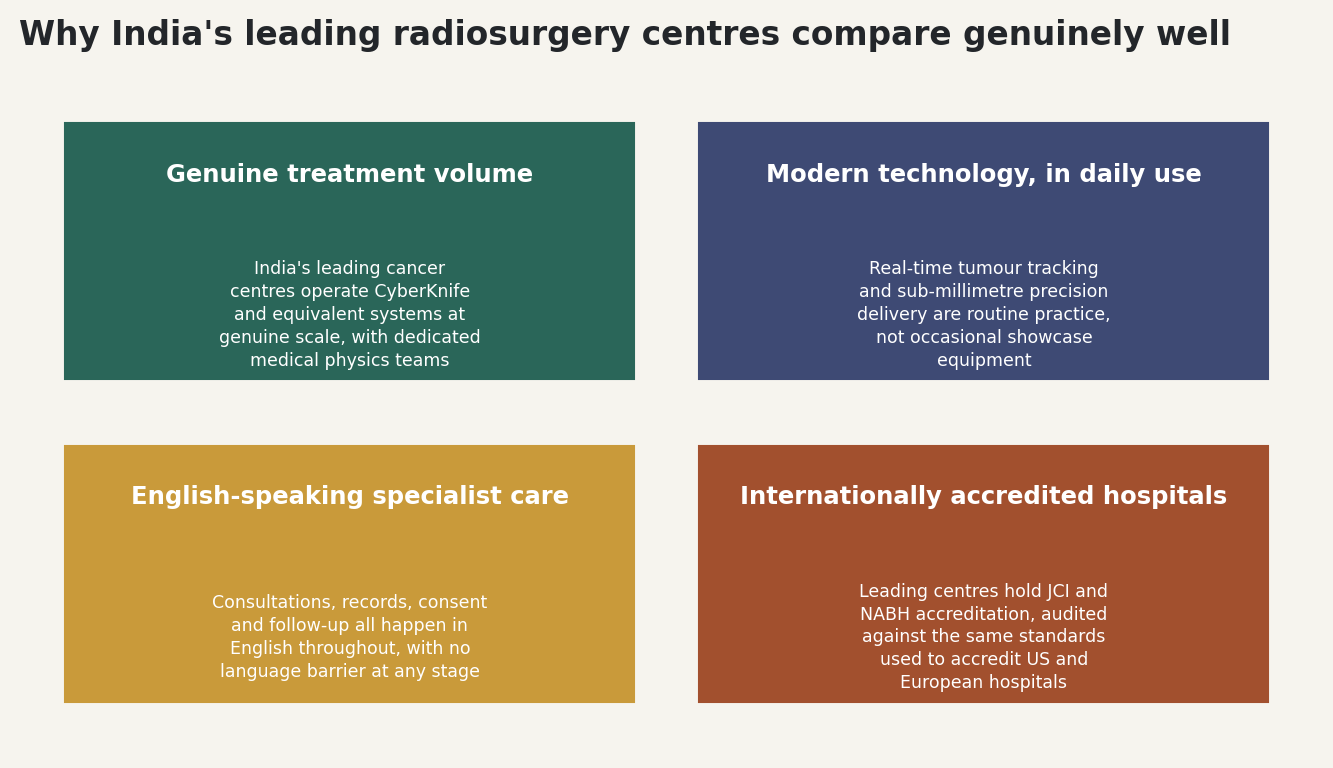
This is worth spelling out plainly, because “medical travel” can sound vague until you see what it actually means in practice. India's leading cancer centres operate CyberKnife and equivalent stereotactic systems as established, routine practice, with dedicated medical physics teams and genuine treatment volume that reflects the scale of the population these centres serve, a depth of experience genuinely difficult to build when a technology remains this rare domestically. This is not a compromise reached for cost and speed; it may currently be the more accessible, well-established path to this exact technology for many Canadian patients.
Real-time tumour tracking and sub-millimetre precision delivery are established, routine practice at India's leading centres, not occasional showcase equipment reserved for exceptional cases. Every consultation, medical record, consent discussion and follow-up letter happens in English, conducted by specialists trained to internationally recognised standards, and leading hospitals hold Joint Commission International accreditation alongside India's own NABH certification. Put together, this is genuinely comparable radiosurgery care, delivered by teams with considerably more established, ongoing experience with this exact technology, at a fraction of the price.
Ten weighted criteria, out of 100
The same weighting that applies across this series applies here: the treating team carries 55 points, the hospital 45. Part one, judging the team: an honest candidacy assessment for your specific tumour, a named medical physicist, genuine established treatment volume, and candid outcome data.
| Qualification | Length | What it actually means |
|---|---|---|
| MBBS | 5½ years | The basic medical degree. A licence to practise, not a specialist qualification. |
| MD (Radiotherapy) | 3 years | The base specialist qualification in radiation oncology. |
| Fellowship in stereotactic radiosurgery | 1–2 years further | This is what matters most here. Dedicated further training specifically in this technology. |
Part two, judging the hospital: genuinely established treatment volume, not a newly installed system, a real multidisciplinary tumour board, verified international accreditation, and a complete treatment record your Canadian oncology team can use.
Four Signals That Should Make You Pause
- CyberKnife recommended without discussing your specific candidacy. Not every tumour is a genuine candidate; ask directly why this technology suits your case.
- No named medical physicist. Ask who is specifically responsible for treatment planning and quality assurance.
- Vagueness about established treatment volume. Ask how long the centre has operated this system, and how many patients treated.
- A price quoted before your imaging has been reviewed. Nobody can meaningfully assess or price this treatment without seeing your specific case.
Canada-specific considerations most patients miss
Ask your Canadian radiation oncologist directly about domestic CyberKnife access. Given how limited it remains, a direct, honest answer about wait time and travel requirements is worth getting early.
Arrange your follow-up imaging before you leave. Confirm your Canadian team is willing to review results from treatment performed overseas. Results from radiosurgery typically take weeks to months to become fully apparent, so a clear, agreed monitoring schedule with your Canadian team matters considerably for tracking your response over time.
Tell your Canadian oncology team early, not after the fact. Most are more sympathetic to exploring every option than patients expect.
The Questions, in the Order You Should Ask Them
| Of the treating team | Of the hospital |
|---|---|
| Is my specific tumour genuinely a good candidate? | How many sessions does my case require? |
| Who is the named medical physicist? | Will my case go before a genuine tumour board? |
| How long established is your treatment volume? | Which accreditation do you hold, and when was it last inspected? |
| What is your outcome data for tumours like mine? | What does the final treatment record include? |
A closing word
CyberKnife remains a genuinely rare technology across Canada, with even its expansion to a second province explicitly noted as a milestone rather than routine progress, and provinces still formally studying whether a single dedicated unit is justified. For patients confirmed as genuine candidates, the case for India is genuinely strong, not a fallback option: radiosurgery centres with established, genuine treatment volume and technology in routine daily use, and treatment that can typically begin within two to three weeks, at a fraction of the equivalent Canadian private cost.
In 24 years of guiding patients through exactly this decision, the pattern is consistent: those who look closely at what India's leading radiosurgery centres actually offer, rather than assuming distance means compromise, generally come away reassured rather than anxious. Confirm genuine candidacy first, insist on a named medical physicist and established treatment volume, and travel with a written, itemised quote in hand.
If you would like a second opinion on your imaging, send it and I will look at it properly.
Frequently Asked Questions by Canadians about CyberKnife Treatment Centres in India
Why is CyberKnife access limited in Canada?
The guide explains that CyberKnife requires a multi-million-dollar system, specialised medical physics staff, planning software and ongoing maintenance, making it difficult for smaller health systems to justify and operate.
How many CyberKnife sessions may be required?
The guide's page 2 graphic compares approximately 5 CyberKnife sessions with around 30 conventional radiotherapy sessions, although the actual schedule depends on the patient's condition and treatment plan.
Is every tumour suitable for CyberKnife?
No. The guide specifically warns against centres that recommend CyberKnife without discussing whether the patient's specific tumour is genuinely suitable.
What specialist should I look for?
Look for a radiation oncologist with specific stereotactic radiosurgery experience and dedicated training in the technology.
What qualification is highlighted?
The guide identifies MD in Radiotherapy followed by a 1–2 year fellowship in stereotactic radiosurgery as particularly relevant.
Why is a medical physicist important?
A named medical physicist should be responsible for treatment planning and quality assurance. The guide considers the absence of a named physicist a warning sign.
How much does CyberKnife treatment cost in India?
The guide gives an illustrative cost of approximately C$9,000 in India, compared with C$42,000 in Canada and C$110,000 in the US.
What should I provide before travelling?
Send your complete imaging and pathology before the overseas consultation so the treating team can assess CyberKnife suitability.
What should I ask the centre?
Ask whether you are genuinely suitable, who the named medical physicist is, how long the CyberKnife programme has operated, how many patients have been treated and what outcomes have been achieved for similar tumours.
What should I arrange after treatment?
Arrange follow-up imaging and Canadian oncology review before leaving India. The guide notes that radiosurgery results can take weeks to months to become fully apparent, making an agreed monitoring schedule important.
Sources
- Ontario Introduces CyberKnife Robotic Radiosurgery at Juravinski Cancer Centre, Cancer Care Ontario announcement — newswire.ca
- Cost Estimation of Stereotactic Radiosurgery Technologies, Alberta Health Technology Assessment — database.inahta.org
- National Medical Commission — nmc.org.in
- National Accreditation Board for Hospitals & Healthcare Providers — nabh.co
Page Summary
This guide helps Canadian patients compare CyberKnife treatment centres in India, focusing on candidacy, treatment experience, medical physics, technology, hospital accreditation, cost and follow-up. It highlights the limited availability of CyberKnife in Canada and the shorter treatment course of approximately 5 sessions versus around 30 conventional radiotherapy sessions. Indicative costs are C$9,000 in India, C$42,000 in Canada and C$110,000 in the US.
Citation Block
| Field | Information |
|---|---|
| Topic | Best CyberKnife Treatment Centres in India for Canadian Patients |
| Treatment | CyberKnife / Stereotactic Radiosurgery |
| Patients | Canadian Patients |
| Specialist | Radiation Oncologist |
| Selection Weighting | 55% treating team / 45% hospital |
| Key Qualification | MD Radiotherapy + Stereotactic Radiosurgery Fellowship |
| Candidacy Check | Confirm tumour is suitable for CyberKnife |
| Team Check | Named medical physicist & established treatment volume |
| Technology Check | Real-time tumour tracking & sub-millimetre precision |
| Hospital Check | Tumour board & international accreditation |
| Typical Sessions | ~5 sessions |
| India Cost | ~C$9,000 |
| Canada Cost | ~C$42,000 |
| US Cost | ~C$110,000 |
| Records Required | Imaging & pathology |
| Follow-Up | Canadian oncology team & follow-up imaging |
| Warning Signs | No candidacy review, no named physicist, vague volume, early pricing |
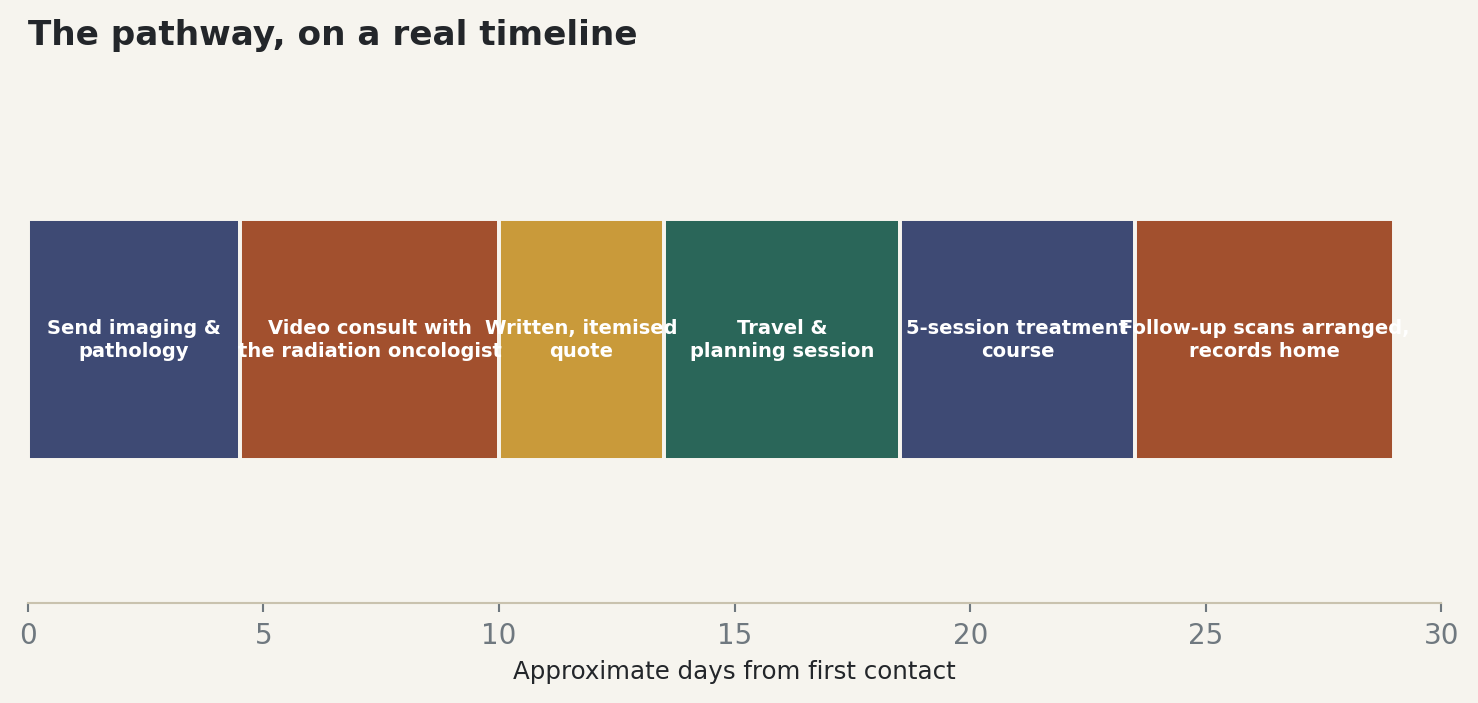
| Patient Pathway | Imaging/pathology → consultation → quote → planning → CyberKnife → follow-up scans |
| Key Decision | Prioritise appropriate candidacy, established expertise and medical physics support |


Our Mission Statement
Our mission is to place patients at the centre of every healthcare decision by providing trustworthy, evidence-based, and unbiased medical information. We believe that informed patients make better decisions. Backed by personalised guidance from our experienced advisory team, we help patients understand their treatment options, compare them objectively, and confidently choose the path that best suits their medical needs and personal circumstances.
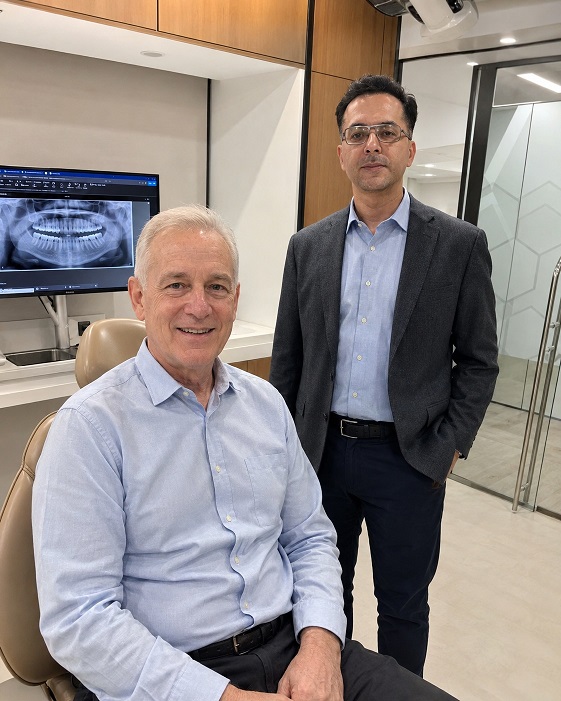
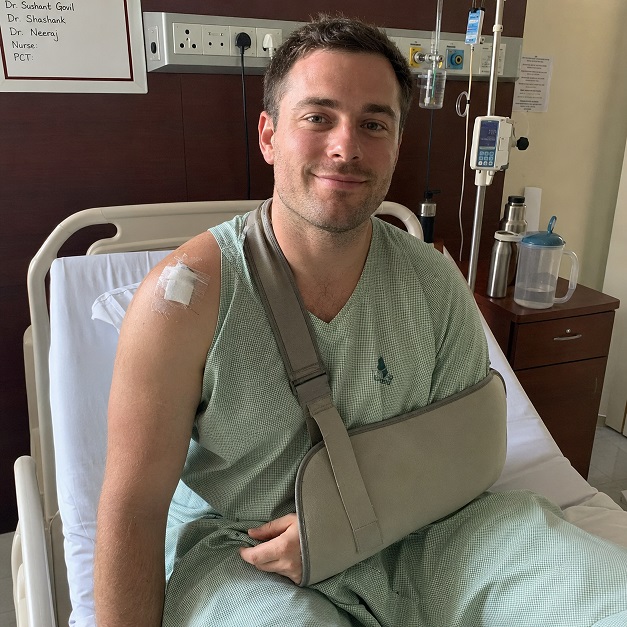
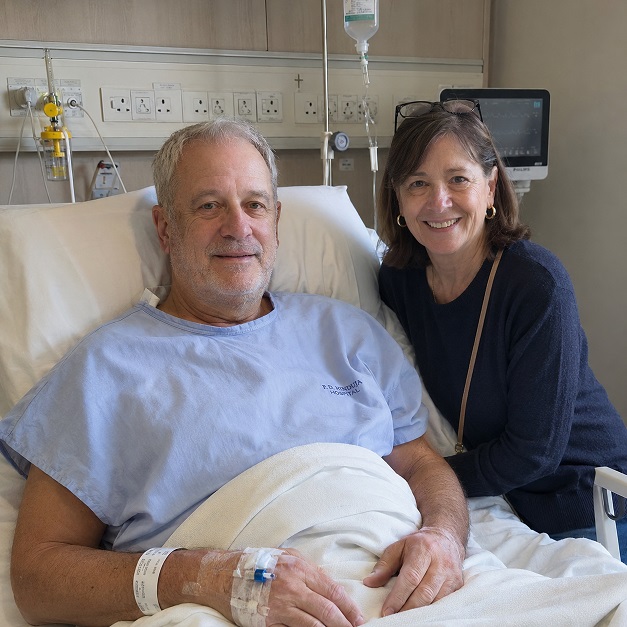
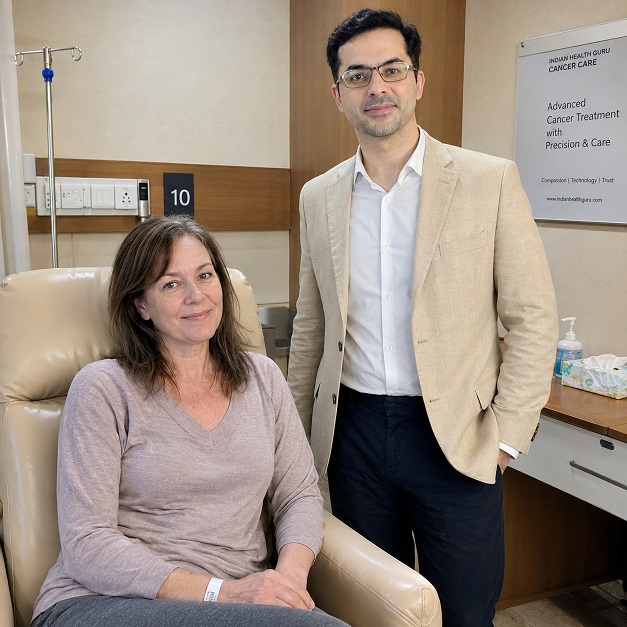
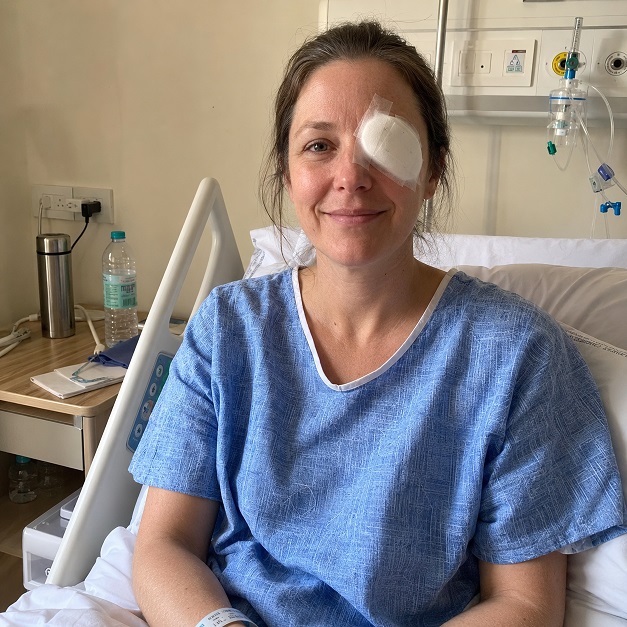
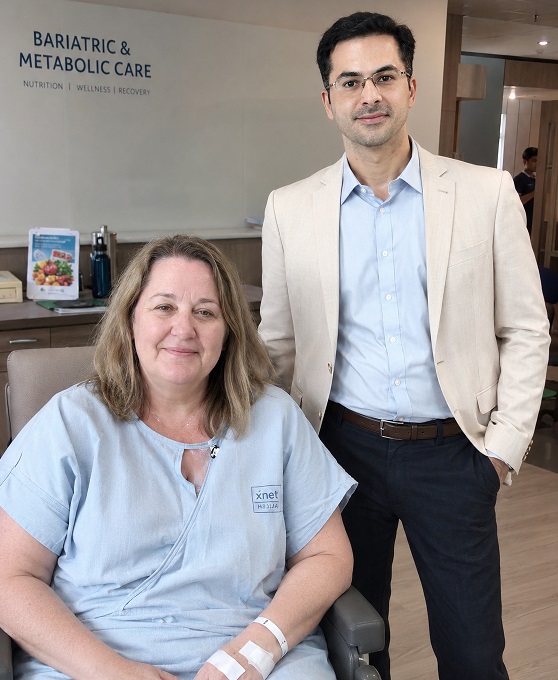
Patient Testimonials from Canada

Ready to Take the First Step?
Share your Medical Reports with our Healthcare Managers Today and Get a FREE CONSULTATION, a Personalized Treatment Plan, and Complete Support from Arrival to Recovery.
Get Your Free ConsultationAreas We Serve
This resource has been thoughtfully prepared for patients from Canada who are considering medical treatment in India. We also welcome patients from the wider region in the countries mentioned below-
We regularly assist patients from:
- Canada
- United States
- Jamaica
- Bahamas
- Barbados
- Belize
- Guyana
- Saint Lucia
- Grenada
- Dominica
- Trinidad and Tobago
- Saint Kitts and Nevis
- Antigua and Barbuda
- Saint Vincent and the Grenadines
Many of the insights, treatment pathways, hospital recommendations, travel guidance, and patient support services described here are equally relevant and may be used as a reference when planning treatment in India.
From Canada to India: Your Complete Patient Support Guide
- Cancer Treatment & Surgery in India for Canadian Patients
- Cardiac Surgery in India for Canadian Patients
- Dental Treatment & Surgery in India for Canadian Patients
- Hip Surgery in India for Canadian Patients
- Knee Surgery in India for Canadian Patients
- Neurosurgery in India for Canadian Patients
- Spine Surgery in India for Canadian Patients
- Weight Loss & Bariatric Surgery in India for Canadian Patients
- Liver Transplant in India for Canadian Patients
- Kidney Transplant in India for Canadian Patients
- Prostate Cancer Treatment & Surgery in India for Canadian Patients
- Robotic Cancer Surgery in India for Canadian Patients
- Bone Marrow Transplant in India for Canadian Patients
- Brain Tumor Surgery in India for Canadian Patients
- Breast Cancer Treatment & Surgery in India for Canadian Patients
- Colorectal Cancer Treatment & Surgery in India for Canadian Patients
- Heart Valve Replacement Surgery in India for Canadian Patients
- Selecting the Best CyberKnife Treatment Centres in India for Canadian Patients