

Selecting the Best Heart Failure Treatment Centres in India for Canadian Patients
Ten weighted criteria — but first, a genuine, national resource concentration problem confirmed by Canada's own Heart and Stroke Foundation, and why India's leading centres offer a considered, consistently well-equipped alternative.
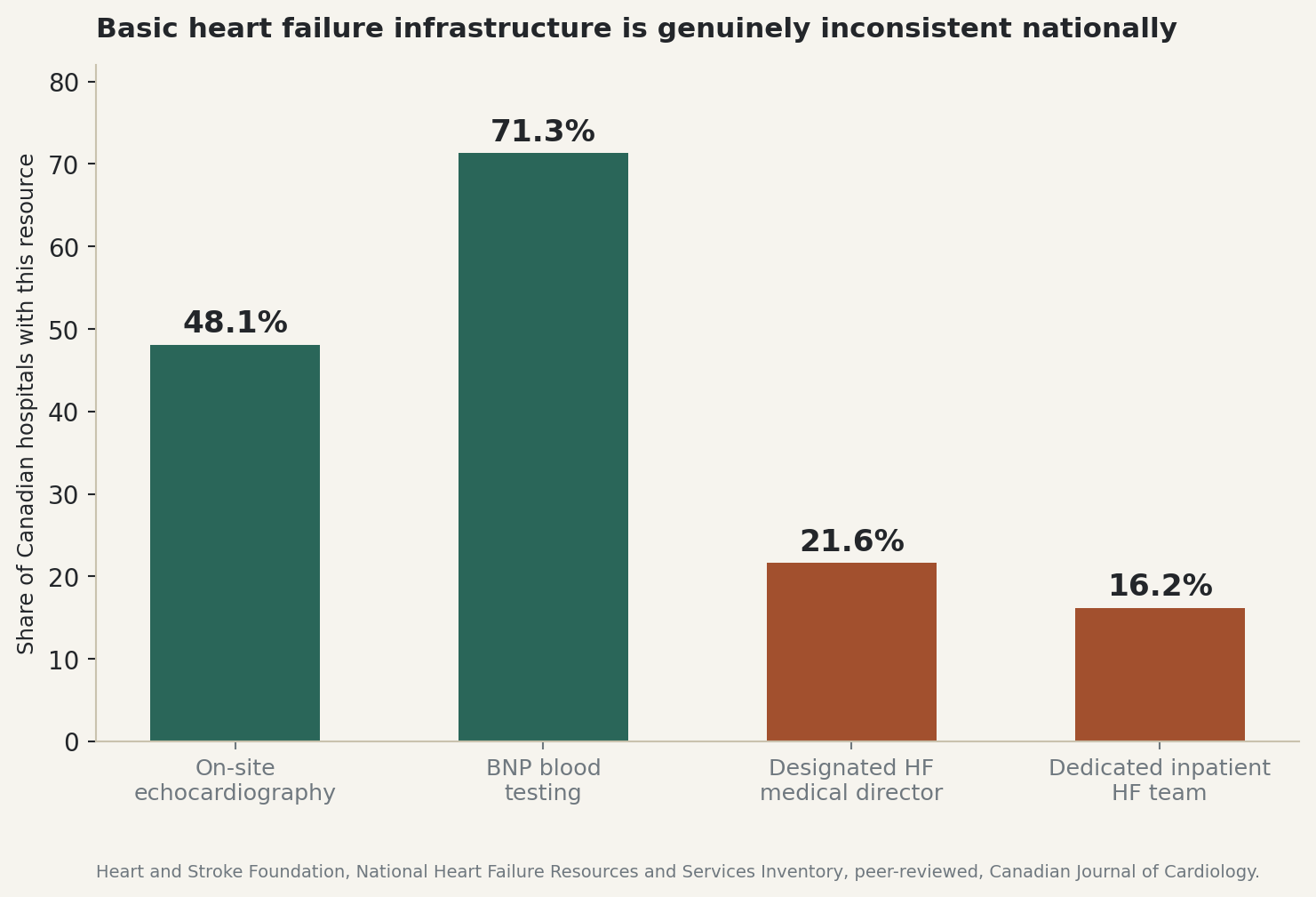
In 24 years of guiding international patients into Indian hospitals, this national inventory, published by Canada's own Heart and Stroke Foundation, is genuinely important to understand clearly. Basic diagnostic tools for heart failure, echocardiography and blood biomarker testing, are far from universally available, and dedicated specialist infrastructure, a designated medical director or an interdisciplinary team, remains genuinely rare across the country's hospital network. This finding is genuinely striking precisely because heart failure isn't a rare condition; it affects hundreds of thousands of Canadians, and its prevalence continues rising as the population ages. An inconsistent resource picture for a condition this common means a genuinely large number of patients are affected by these gaps, not a small, unusual minority.
Healing Journeys of Canadian Patients
Key Takeaways
- The guide highlights a documented national resource gap in Canadian heart failure care. The page 1 chart shows that only 48.1% of Canadian hospitals have on-site echocardiography, 71.3% have BNP blood testing, 21.6% have a designated heart failure medical director and 16.2% have a dedicated inpatient heart failure team.
- The page 2 graphic reports that only 12.2% of heart failure care in Canada is delivered by hospitals with genuine dedicated heart failure expertise and resources, while 50.9% of heart failure admissions occur at centres with minimal outpatient or inpatient heart failure capabilities. Among hospitals with dedicated heart failure clinics, 40.4% report waits exceeding two weeks for a first appointment.
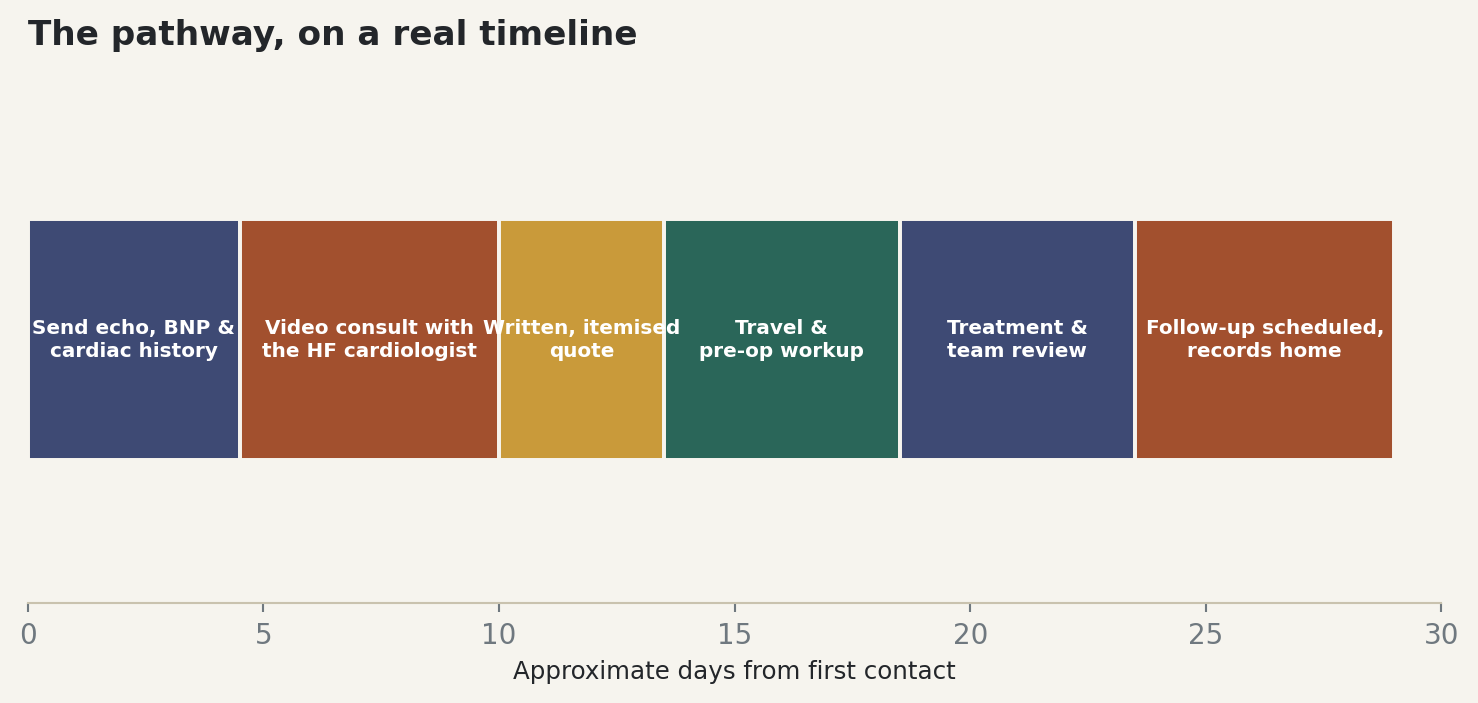
- India is presented as a considered alternative because leading cardiac centres operate dedicated heart failure programmes with on-site echocardiography, biomarker testing and specialist teams. The guide also highlights English-language consultations and records, JCI/NABH accreditation and treatment that can typically begin within 2–3 weeks of the first consultation.
- The selection framework gives 55% weighting to the specialist team and 45% to the hospital. Team assessment focuses on procedure-specific volume, dedicated heart failure expertise, personal specialist involvement and outcome data. Hospital assessment considers on-site echocardiography and BNP testing, a genuine dedicated heart failure team, accreditation and complete treatment records for the Canadian cardiologist.
- The page 4 qualification table identifies MBBS, followed by MD (Medicine) and then DM (Cardiology) with a heart failure fellowship as the most relevant advanced training pathway. The guide identifies four warning signs: no confirmed on-site echocardiography or biomarker testing, no dedicated heart failure specialist, pricing before reviewing the patient's echocardiogram and history, and no candid discussion of realistic outcomes.
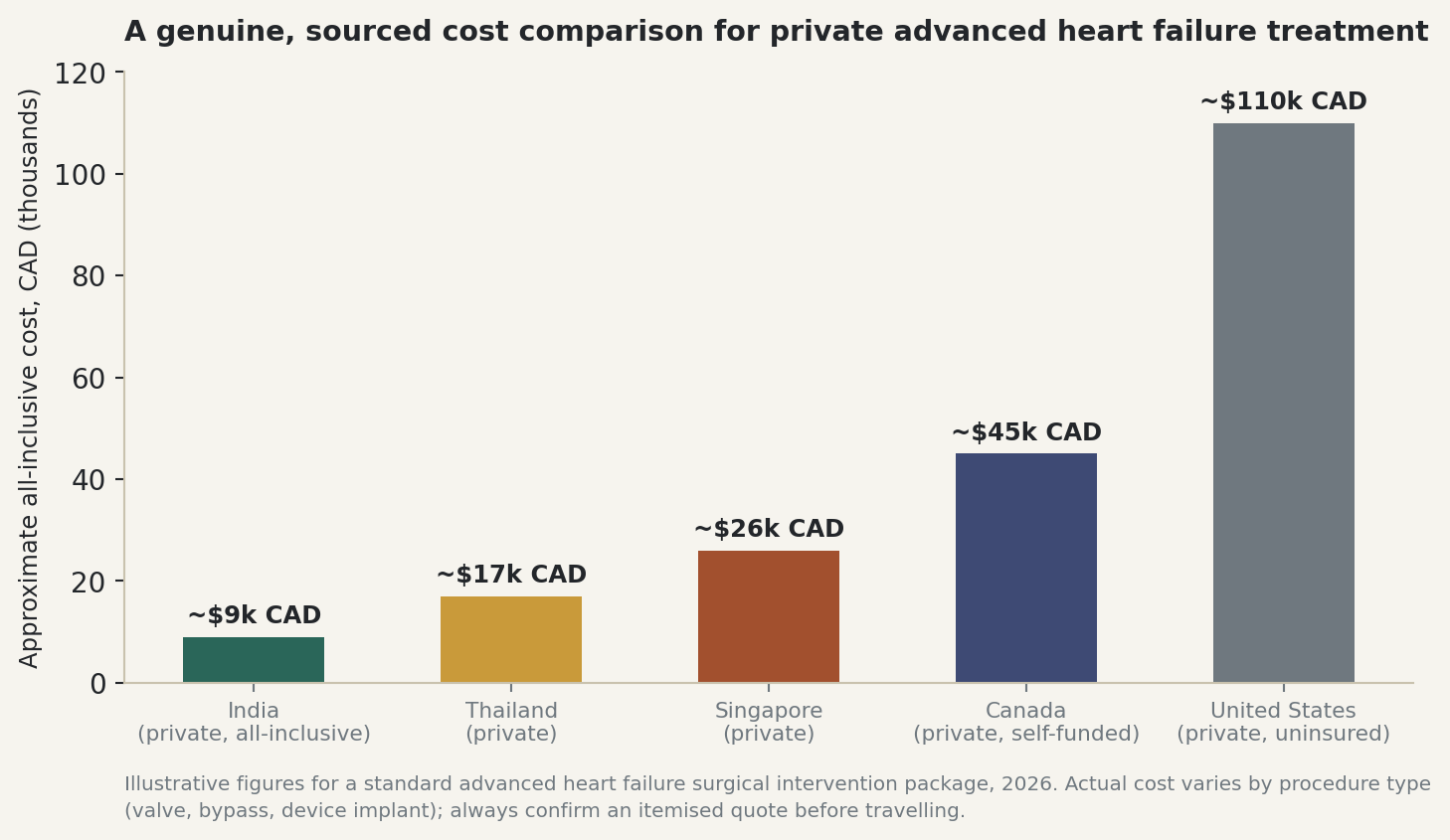
- The page 4 cost chart gives illustrative costs for standard advanced heart failure surgical or device-based treatment of approximately C$9,000 in India, C$17,000 in Thailand, C$26,000 in Singapore, C$45,000 in Canada and C$110,000 in the United States. Actual costs vary by procedure, so the guide recommends confirming an itemised quotation before travelling.
Quick Facts
- Treatment
- Advanced Heart Failure Treatment
- Patients
- Canadian Patients
- Key Specialist
- Heart Failure Cardiologist
- Selection Weighting
- 55% specialist team / 45% hospital
- Key Qualification
- DM (Cardiology) + heart failure fellowship
- Key Expertise
- Advanced heart failure management
- Diagnostics
- On-site echocardiography and BNP testing
- Hospital Check
- Dedicated heart failure team
- Accreditation
- JCI / NABH verification
- India Cost
- Approximately C$9,000
- Canada Cost
- Approximately C$45,000
- US Cost
- Approximately C$110,000
- Pre-Travel Records
- Recent echocardiogram, BNP levels and cardiac history
- Follow-Up
- Canadian cardiologist
- Key Warning
- Avoid centres without confirmed dedicated heart failure resources
- Decision Principle
- Prioritise specialist-led care, dedicated infrastructure and transparent outcomes.
- Author
- Dr. Dheeraj Bojwani
- Experience
- 24+ Years
In Brief
For Canadian patients whose cardiologist has confirmed that advanced heart failure treatment is appropriate, the guide recommends comparing dedicated heart failure expertise, procedure-specific experience, diagnostic resources, specialist involvement, realistic outcome data, accreditation and long-term Canadian follow-up, rather than choosing a centre based only on cost or speed.
Advanced heart failure genuinely benefits from specialised, multidisciplinary care, from precise diagnosis through to surgical or device-based intervention. This guide exists for patients whose cardiologist has confirmed advanced treatment is the right path, weighing where and how that treatment should happen.
The inventory itself was comprehensive, surveying hospital sites across every province and territory to build a genuine, national picture rather than relying on assumptions or a partial sample. This rigour is precisely what makes the findings so credible, and so difficult to dismiss as an isolated or unrepresentative snapshot of Canadian heart failure care.
For patients facing this genuine, documented reality, the case for looking seriously at India is a strong one: internationally accredited cardiac centres with genuine, dedicated heart failure infrastructure as standard, not a coin-flip, and treatment that can typically begin within two to three weeks of your first consultation, all at a fraction of the equivalent Canadian private cost.
A genuine, national resource concentration problem
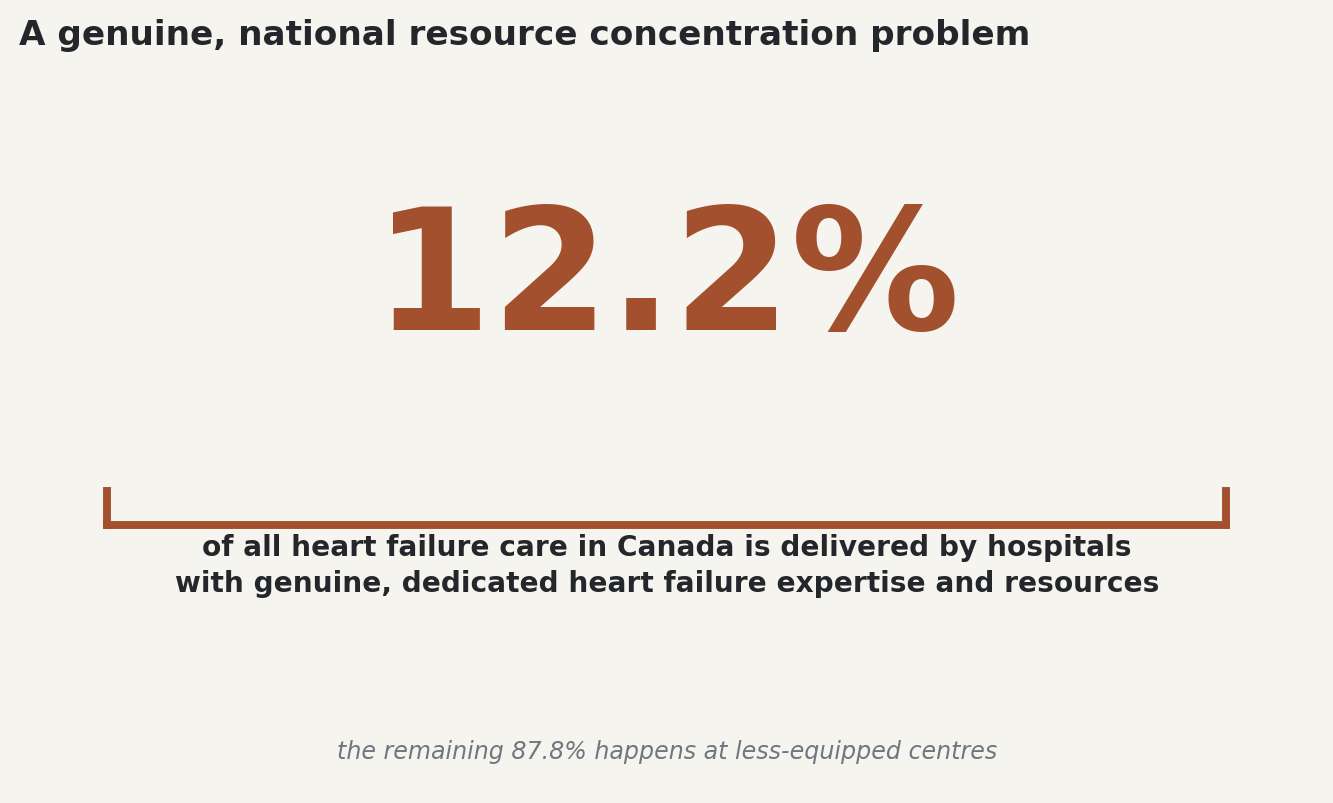
Get your recent echocardiogram results and BNP levels together before your first overseas conversation. This figure matters because it confirms the resource gaps documented above aren't scattered, isolated exceptions; they concentrate genuine expertise into a genuinely small share of the overall care Canadians with heart failure actually receive. The same national inventory found 50.9% of heart failure hospital admissions happen at centres with minimal outpatient or inpatient heart failure capabilities, meaning the majority of patients hospitalised for this condition are treated somewhere without the resources specifically built for it.
This matters directly for how you should think about where your own treatment happens. Even among the minority of sites that operate genuine heart failure clinics specifically, 40.4% still report average wait times exceeding two weeks just for a first appointment, a documented delay layered on top of an already uneven national resource picture. Geographic variation compounds this further. The same inventory documented significant differences in delivery and access to heart failure services across provinces and territories, meaning the specific resources available to you can depend meaningfully on where in Canada you happen to live, not solely on the severity of your condition.
Why India specifically, not just “overseas”
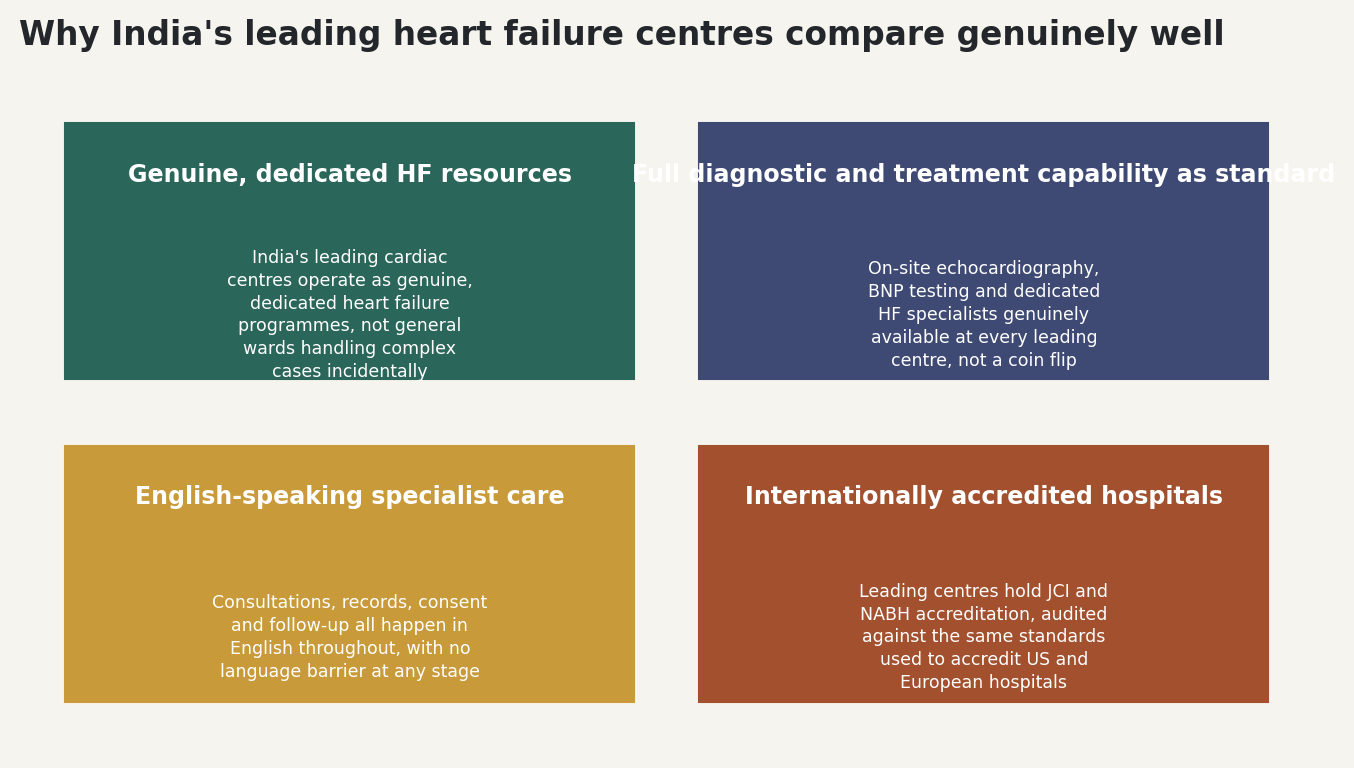
This is worth spelling out plainly, because “medical travel” can sound vague until you see what it actually means in practice. India's leading cardiac centres operate as genuine, dedicated heart failure programmes, with on-site echocardiography, biomarker testing and specialist teams available as standard, not the inconsistent picture Canada's own national inventory documents. This is not a compromise reached for cost and speed; it represents genuine, consistent access to exactly the resources that specifically improve outcomes for this condition.
Every consultation, medical record, consent discussion and follow-up letter happens in English, conducted by specialists trained to internationally recognised standards, and leading hospitals hold Joint Commission International accreditation alongside India's own NABH certification. Put together, this is genuinely comparable, well-resourced heart failure care, without the resource uncertainty Canadian patients currently navigate, at a fraction of the price.
Ten weighted criteria, out of 100
The same weighting that applies across this series applies here: the specialist team carries 55 points, the hospital 45. Part one, judging the team: genuine volume in your specific procedure, a dedicated heart failure cardiologist leading your care, whether the specialist personally treats you, and candid outcome data.
| Qualification | Length | What it actually means |
|---|---|---|
| MBBS | 5½ years | The basic medical degree. A licence to practise, not a specialist qualification. |
| MD (Medicine) | 3 years | The base specialist qualification in general medicine. |
| DM (Cardiology), heart failure fellowship | 3 years further | This is what matters most here. Dedicated further training specifically in advanced heart failure management. |
Part two, judging the hospital: confirmed on-site echocardiography and biomarker testing, a genuine dedicated heart failure team, verified international accreditation, and a complete treatment record your Canadian cardiologist can use.
Four Signals That Should Make You Pause
- No on-site echocardiography or biomarker testing confirmed. These are basic, essential tools; their absence is a genuine concern.
- No dedicated heart failure specialist leading your care. Ask directly who is specifically responsible for your treatment plan.
- A price quoted before your echocardiogram and history have been reviewed. Nobody can meaningfully assess or price treatment without seeing your specific case.
- No candid discussion of realistic outcomes. A responsible team addresses this directly, not evasively.
Canada-specific considerations most patients miss
Ask your Canadian hospital directly whether it operates a genuine, dedicated heart failure clinic. Given the documented national gaps, this single question can reveal a considerably different picture of your local resources than assumed.
Tell your Canadian cardiology team early, not after the fact. Most are more sympathetic to a second opinion than patients expect. Being upfront about exploring overseas options, rather than treating it as something to hide, generally leads to a more collaborative relationship for your eventual follow-up care.
Arrange your ongoing follow-up before you leave. Confirm your Canadian cardiologist is willing to continue monitoring based on overseas treatment findings. Heart failure management is genuinely an ongoing, lifelong process, so a clear, agreed monitoring plan with your Canadian care team matters considerably for your long-term wellbeing.
The Questions, in the Order You Should Ask Them
| Of the specialist | Of the hospital |
|---|---|
| What is your specific volume in my exact procedure? | Is on-site echocardiography and BNP testing available? |
| Are you a dedicated heart failure specialist? | Is there a genuine, dedicated heart failure team? |
| Will you personally lead my treatment? | Which accreditation do you hold, and when was it last inspected? |
| What is your outcome data? | What does the final treatment record include? |
A closing word
Canada's own Heart and Stroke Foundation confirms a genuine, documented national gap: only 12.2% of heart failure care is delivered by hospitals with genuine, dedicated expertise, with basic diagnostic tools inconsistently available across the country. For patients facing that reality, the case for India is genuinely strong, not a fallback option: heart failure centres with deep, current resources and specialist teams as standard, and treatment that can typically begin within two to three weeks, at a fraction of the equivalent Canadian private cost.
In 24 years of guiding patients through exactly this decision, the pattern is consistent: those who look closely at what India's leading heart failure centres actually offer, rather than assuming distance means compromise, generally come away reassured rather than anxious. Confirm genuine, dedicated infrastructure first, weight specialist-led care heavily, and travel with a written, itemised quote in hand.
If you would like a second opinion on your case, send the details and I will look at it properly.
Frequently Asked Questions by Canadians about Heart Failure Treatment Centres in India
How widely available are dedicated heart failure resources in Canada?
The guide reports that only 21.6% of Canadian hospitals have a designated heart failure medical director and 16.2% have a dedicated inpatient heart failure team.
How much heart failure care occurs at centres with dedicated expertise?
The page 2 graphic reports that only 12.2% of heart failure care is delivered by hospitals with genuine dedicated heart failure expertise and resources.
What proportion of heart failure admissions occur at minimally equipped centres?
The cited national inventory found that 50.9% of heart failure hospital admissions occur at centres with minimal outpatient or inpatient heart failure capabilities.
Which qualification should patients look for?
The guide identifies DM (Cardiology) with a heart failure fellowship as the most relevant advanced training for specialised heart failure management.
Why are echocardiography and BNP testing important?
The guide identifies on-site echocardiography and BNP blood testing as basic diagnostic resources that should be confirmed when assessing a heart failure centre.
How much can advanced heart failure treatment cost in India?
The guide gives an illustrative cost of approximately C$9,000 in India, compared with C$45,000 in Canada and C$110,000 in the United States.
What should I provide before an overseas consultation?
The guide recommends preparing your recent echocardiogram results, BNP levels and cardiac history before the first overseas conversation.
What are the main warning signs when selecting a centre?
Important warning signs include no confirmed echocardiography or biomarker testing, no dedicated heart failure specialist, pricing before reviewing the patient's records and no candid discussion of realistic outcomes.
What should I ask the heart failure specialist?
Ask about their specific experience with your treatment, whether they are a dedicated heart failure specialist, whether they will personally lead your care and what outcome data they can provide.
What should I arrange before returning to Canada?
Confirm that your Canadian cardiologist will continue monitoring you after treatment and ensure the complete treatment record is transferred for ongoing, lifelong heart failure management.
Sources
- Access to Heart Failure Services in Canada: Findings of the Heart and Stroke National Heart Failure Resources and Services Inventory, Canadian Journal of Cardiology — onlinecjc.ca
- Specialized Multi-Disciplinary Heart Failure Clinics in Ontario, Canada: An Environmental Scan, PMC — pmc.ncbi.nlm.nih.gov
- National Medical Commission — nmc.org.in
- National Accreditation Board for Hospitals & Healthcare Providers — nabh.co
Page Summary
This guide helps Canadian patients compare heart failure treatment centres in India, focusing on dedicated specialist expertise, diagnostic resources, treatment experience, accreditation, cost and follow-up. It highlights that only 12.2% of heart failure care in Canada is delivered by hospitals with genuine dedicated heart failure expertise and resources, while 50.9% of heart failure admissions occur at centres with minimal heart failure capabilities; India is presented as a considered option with dedicated heart failure programmes, English-language care and treatment that can typically begin within 2–3 weeks, with illustrative costs of approximately C$9,000 in India compared with C$45,000 in Canada and C$110,000 in the US.
Citation Block
| Field | Information |
|---|---|
| Topic | Best Heart Failure Treatment Centres in India for Canadian Patients |
| Treatment | Advanced Heart Failure Treatment |
| Patients | Canadian Patients |
| Specialist | Heart Failure Cardiologist |
| Selection Weighting | 55% specialist team / 45% hospital |
| Key Qualification | DM (Cardiology) + heart failure fellowship |
| Experience Check | Specific procedure/treatment volume |
| Specialist Check | Dedicated heart failure specialist |
| Diagnostic Check | On-site echocardiography and BNP testing |
| Hospital Check | Dedicated heart failure team |
| Outcome Check | Candid outcome data |
| Accreditation | JCI / NABH verification |
| India Cost | ~C$9,000 |
| Thailand Cost | ~C$17,000 |
| Singapore Cost | ~C$26,000 |
| Canada Cost | ~C$45,000 |
| US Cost | ~C$110,000 |
| Canadian Resource Finding | 12.2% of heart failure care delivered by hospitals with genuine dedicated expertise/resources |
| Admission Finding | 50.9% of heart failure admissions occur at centres with minimal HF capabilities |
| Clinic Wait Finding | 40.4% of dedicated HF clinics report waits exceeding two weeks |
| Records Required | Recent echocardiogram, BNP levels and cardiac history |
| Follow-Up | Canadian cardiologist |
| Warning Signs | No dedicated specialist, missing diagnostics, early pricing, no candid outcomes |
| Patient Pathway | Echo/BNP/history → video consultation → itemised quote → travel/pre-op workup → treatment → team review → follow-up and records home |
| Key Decision | Prioritise dedicated heart failure infrastructure, specialist expertise and transparent outcomes |


Our Mission Statement
Our mission is to place patients at the centre of every healthcare decision by providing trustworthy, evidence-based, and unbiased medical information. We believe that informed patients make better decisions. Backed by personalised guidance from our experienced advisory team, we help patients understand their treatment options, compare them objectively, and confidently choose the path that best suits their medical needs and personal circumstances.
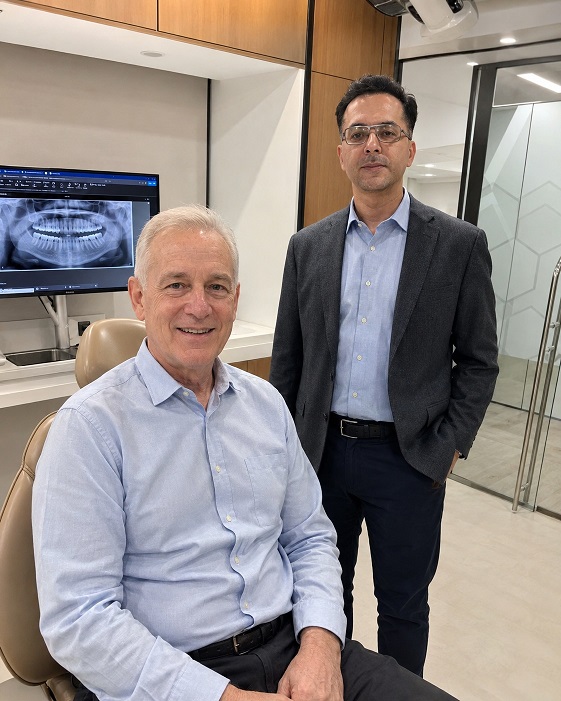
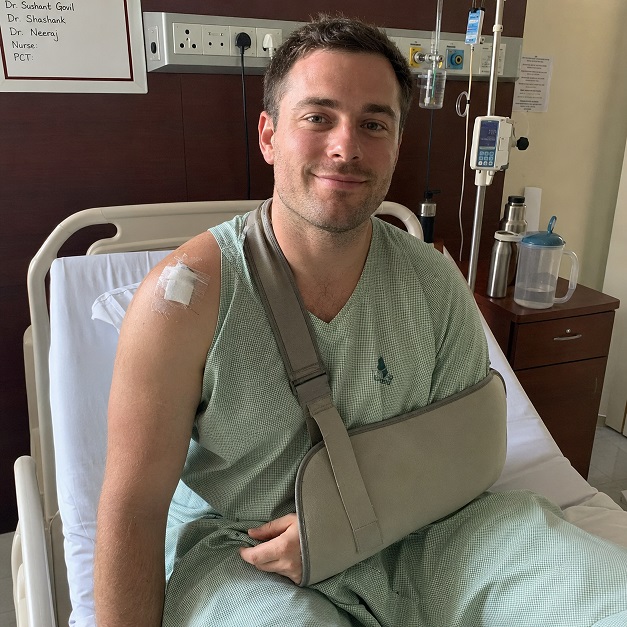
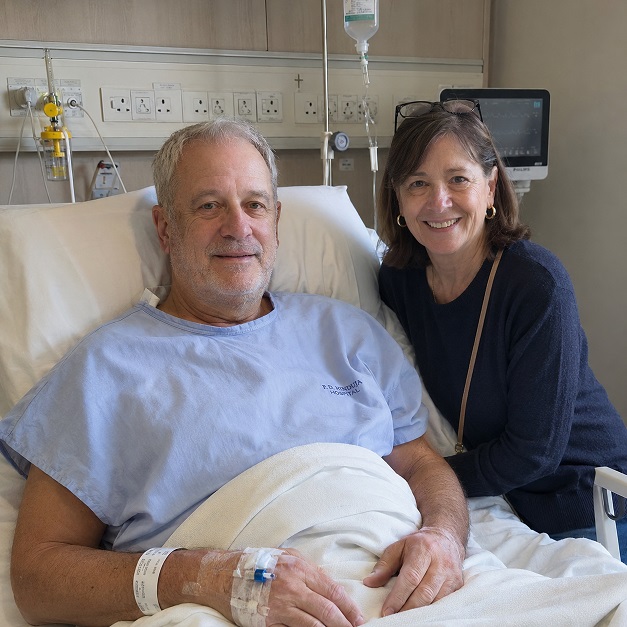
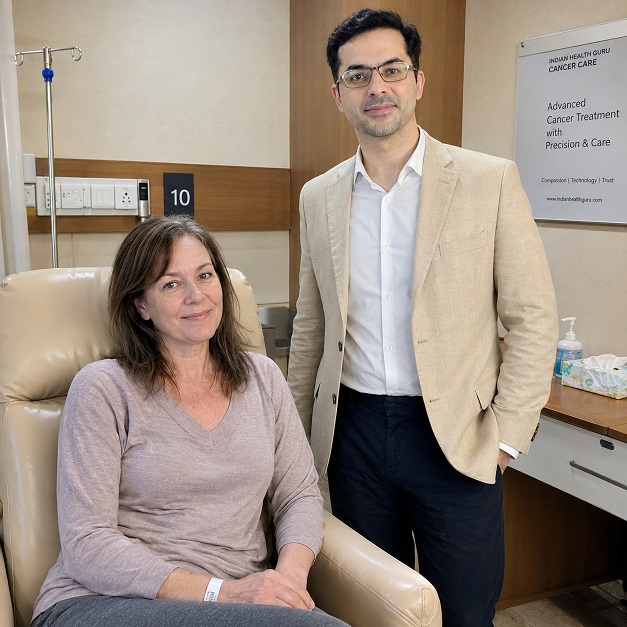
Patient Testimonials from Canada


Ready to Take the First Step?
Share your Medical Reports with our Healthcare Managers Today and Get a FREE CONSULTATION, a Personalized Treatment Plan, and Complete Support from Arrival to Recovery.
Get Your Free ConsultationAreas We Serve
This resource has been thoughtfully prepared for patients from Canada who are considering medical treatment in India. We also welcome patients from the wider region in the countries mentioned below-
We regularly assist patients from:
- Canada
- United States
- Jamaica
- Bahamas
- Barbados
- Belize
- Guyana
- Saint Lucia
- Grenada
- Dominica
- Trinidad and Tobago
- Saint Kitts and Nevis
- Antigua and Barbuda
- Saint Vincent and the Grenadines
Many of the insights, treatment pathways, hospital recommendations, travel guidance, and patient support services described here are equally relevant and may be used as a reference when planning treatment in India.
From Canada to India: Your Complete Patient Support Guide
- Cancer Treatment & Surgery in India for Canadian Patients
- Cardiac Surgery in India for Canadian Patients
- Dental Treatment & Surgery in India for Canadian Patients
- Hip Surgery in India for Canadian Patients
- Knee Surgery in India for Canadian Patients
- Neurosurgery in India for Canadian Patients
- Spine Surgery in India for Canadian Patients
- Weight Loss & Bariatric Surgery in India for Canadian Patients
- Liver Transplant in India for Canadian Patients
- Kidney Transplant in India for Canadian Patients
- Prostate Cancer Treatment & Surgery in India for Canadian Patients
- Robotic Cancer Surgery in India for Canadian Patients
- Bone Marrow Transplant in India for Canadian Patients
- Brain Tumor Surgery in India for Canadian Patients
- Breast Cancer Treatment & Surgery in India for Canadian Patients
- Colorectal Cancer Treatment & Surgery in India for Canadian Patients
- Heart Valve Replacement Surgery in India for Canadian Patients
- Selecting the Best Heart Failure Treatment Centres in India for Canadian Patients