

Selecting the Best HIPEC and Cytoreductive Surgery Centres in India for Canadian Patients
Ten weighted criteria — but first, why HIPEC remains genuinely concentrated in just a handful of Canadian centres, and why India's leading peritoneal surgery centres offer a considered, high-volume alternative.
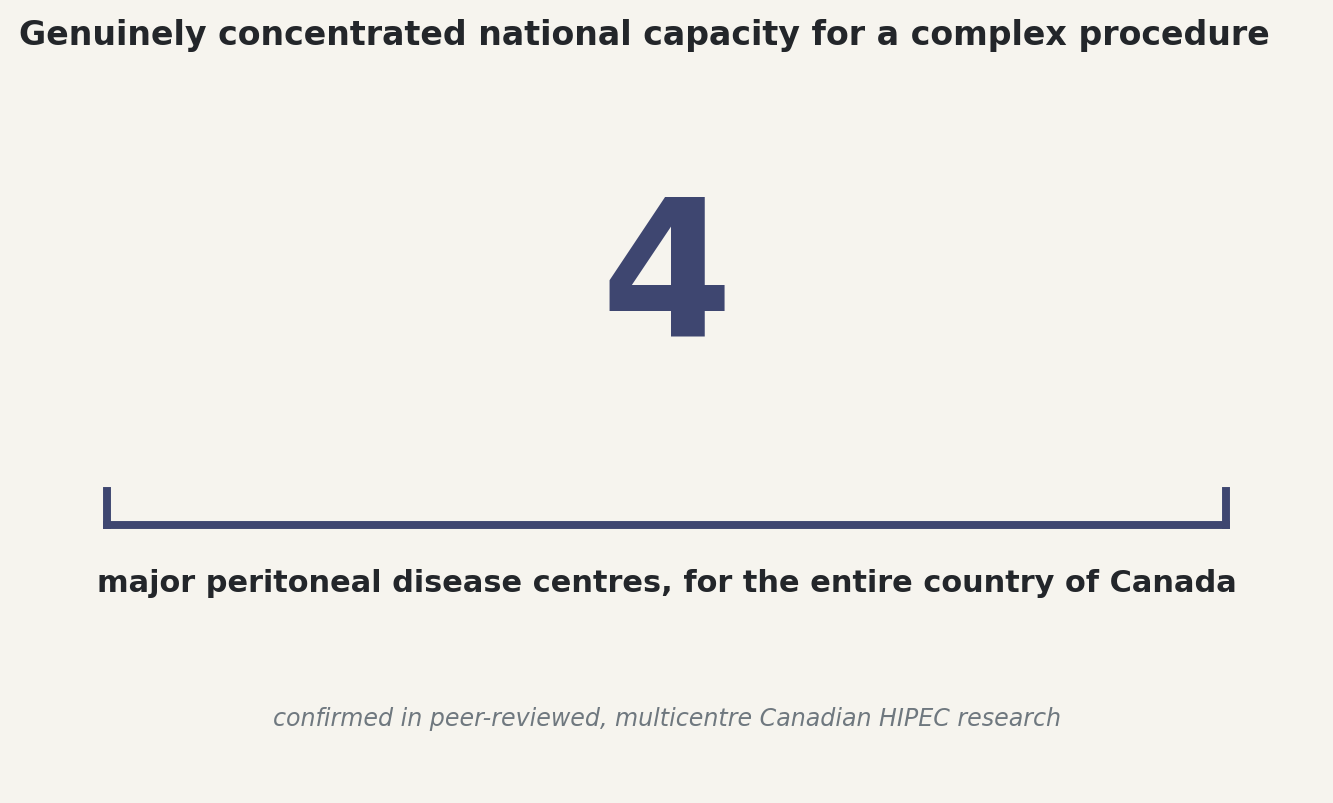
In 24 years of guiding international patients into Indian hospitals, this concentration is genuinely significant for a procedure this complex. Peer-reviewed, multicentre Canadian research studying HIPEC outcomes specifically for peritoneal mesothelioma confirmed just four major centres nationally handle this exact category of complex peritoneal disease. For a country the size of Canada, this represents a genuinely thin national network for a surgery that many patients cannot safely delay. CRS-HIPEC is a genuinely unusual combination of two demanding elements in a single, lengthy operation: cytoreductive surgery to physically remove every visible tumour deposit from the abdominal cavity, sometimes including affected sections of bowel, spleen or other organs, followed immediately by heated chemotherapy circulated throughout the abdomen to target microscopic disease too small to see or remove by hand.
Healing Journeys of Canadian Patients
Key Takeaways
- The guide highlights the limited availability of CRS-HIPEC in Canada, noting that peer-reviewed Canadian research identified only four major peritoneal disease centres nationally handling this complex category of treatment. The guide uses this concentration to explain why access to specialised peritoneal surgery can vary considerably across Canada.
- CRS-HIPEC combines extensive cytoreductive surgery, which removes visible tumour deposits from the abdominal cavity, with heated chemotherapy circulated within the abdomen to target microscopic disease. Because the procedure can involve bowel, spleen or other organs and requires specialised anaesthesia, perfusion and intensive postoperative care, the guide stresses that appropriate infrastructure is essential.
- The guide identifies completeness of cytoreduction as the strongest predictor of long-term outcome in this field. It therefore recommends choosing a team with sustained experience in the exact procedure rather than a centre that performs CRS-HIPEC only occasionally. The page 2 graphic states that Canada's own HIPEC Collaborative Group recommends a minimum of 1 case per month, or 12 cases annually, to maintain surgical competency.
- India is presented as a considered alternative because leading peritoneal surgery centres perform CRS-HIPEC at volumes well above the recognised monthly competency threshold. The guide also highlights routine peritoneal carcinomatosis index (PCI) assessment, English-language specialist care and hospitals holding JCI and NABH accreditation.
- The selection framework gives 55% weighting to the surgical team and 45% to the hospital. Team assessment focuses on CRS-HIPEC volume, formal PCI-based candidacy assessment, personal involvement of the lead surgeon, completeness-of-cytoreduction results and complication data. Hospital assessment includes dedicated ICU capability, multidisciplinary tumour-board review, accreditation and a complete treatment record for the Canadian oncology team.
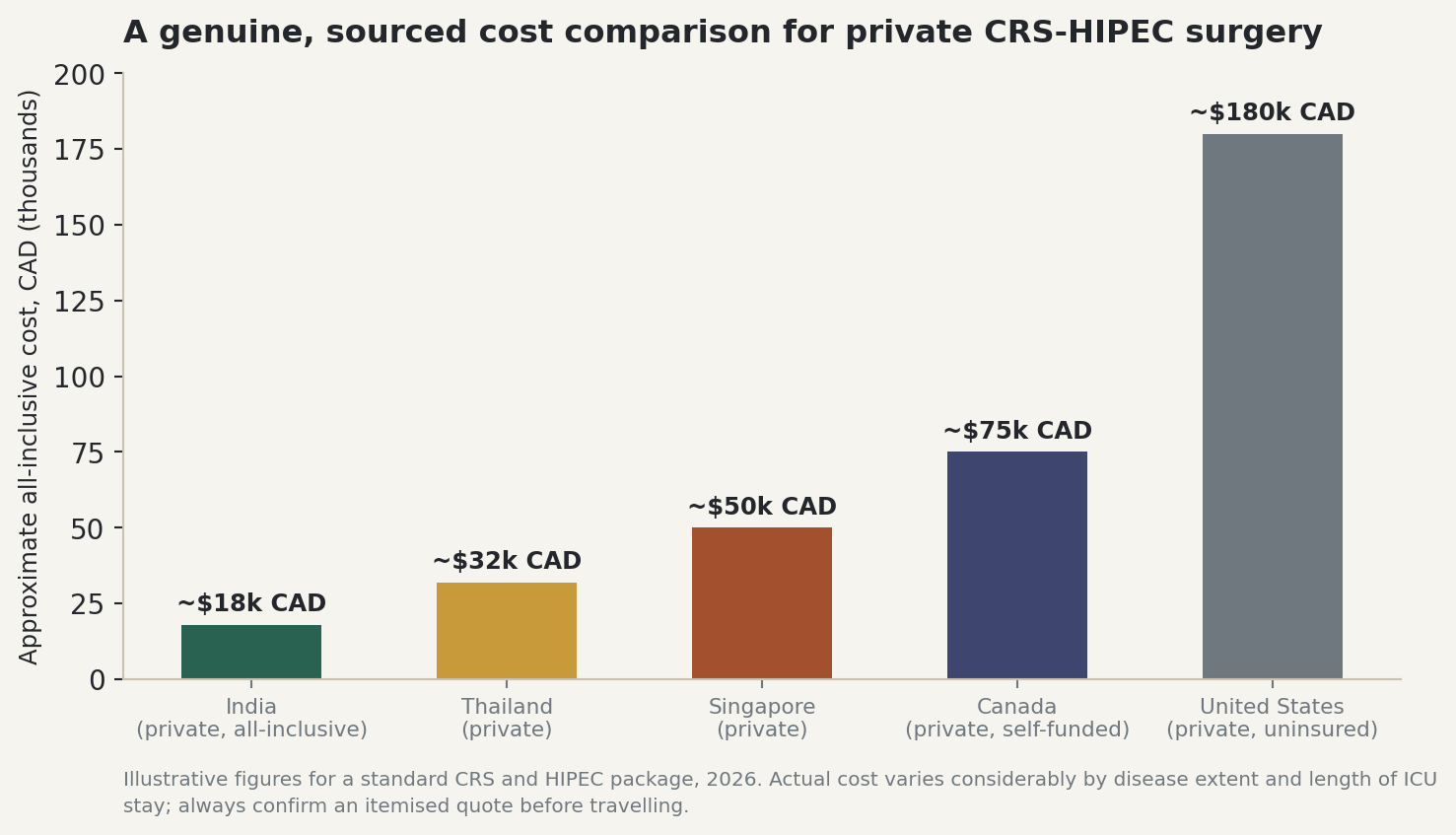
- The page 4 cost chart gives illustrative private costs of approximately C$18,000 in India, C$32,000 in Thailand, C$50,000 in Singapore, C$75,000 in Canada and C$180,000 in the United States for a standard CRS-HIPEC package. The guide stresses that actual costs vary considerably with disease extent and ICU stay and recommends obtaining an itemised quotation after imaging has been reviewed.
Quick Facts
- Treatment
- CRS-HIPEC
- Patients
- Canadian Patients
- Key Specialist
- Surgical Oncologist / Peritoneal Cancer Surgeon
- Selection Weighting
- 55% surgical team / 45% hospital
- Key Qualification
- MCh Surgical Oncology with peritoneal surgery focus
- Competency Benchmark
- Minimum 1 CRS-HIPEC case per month / 12 annually
- Key Assessment
- Peritoneal Carcinomatosis Index (PCI)
- Hospital Check
- Dedicated ICU & multidisciplinary tumour board
- India Cost
- Approximately C$18,000
- Canada Cost
- Approximately C$75,000
- US Cost
- Approximately C$180,000
- Pre-Travel Records
- Imaging, pathology & prior treatment summary
- Treatment Timeline
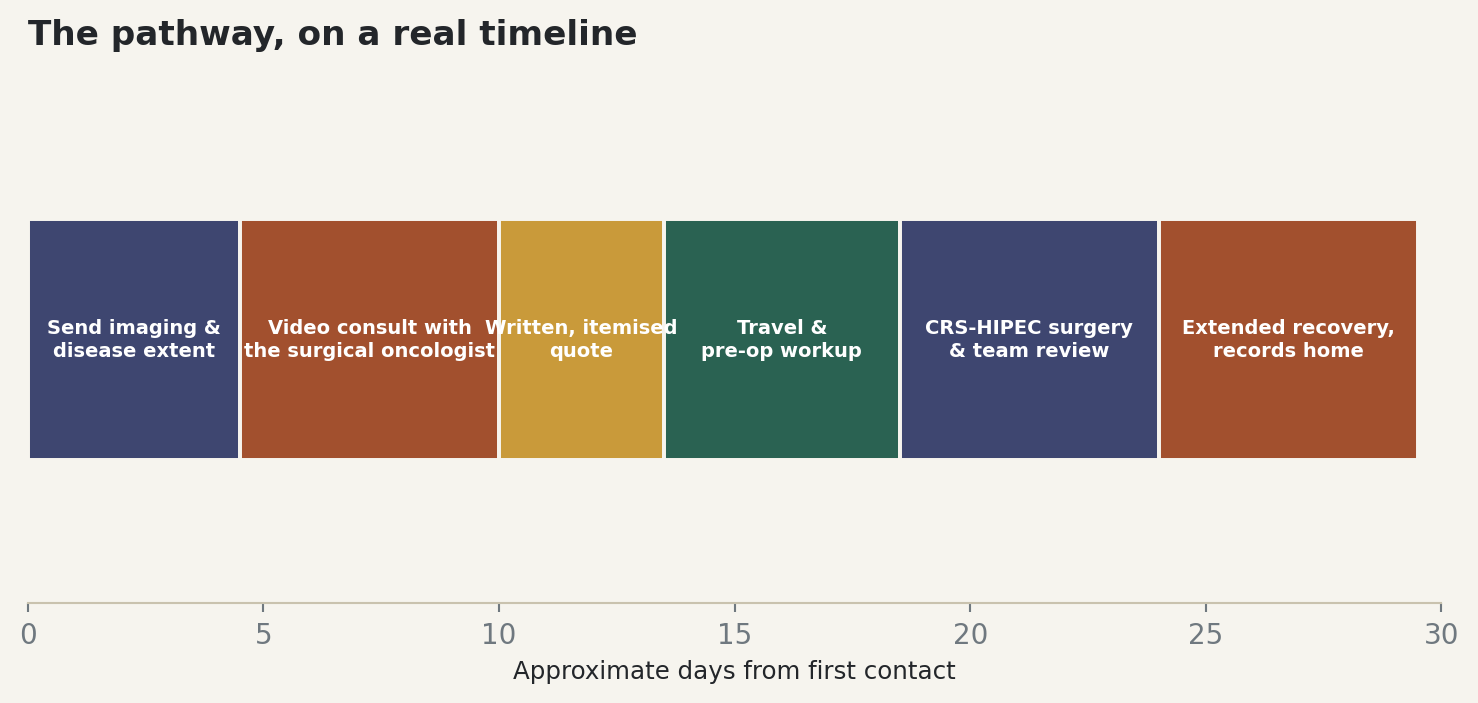
- Typically 2–3 weeks from first consultation
- Follow-Up
- Canadian oncology team
- Key Warning
- Avoid centres without proven CRS-HIPEC volume or formal PCI assessment
- Decision Principle
- Prioritise sustained procedural expertise, complete cytoreduction capability and appropriate ICU support.
- Author
- Dr. Dheeraj Bojwani
- Experience
- 24+ Years
In Brief
For Canadian patients confirmed as suitable CRS-HIPEC candidates, the guide recommends prioritising sustained surgical volume, formal PCI assessment, completeness-of-cytoreduction data and dedicated ICU capability. Patients should also arrange Canadian oncology follow-up and carry a complete treatment record back home.
HIPEC combined with cytoreductive surgery offers genuine, transformative hope for selected patients with peritoneal cancer spread, a diagnosis that once carried a uniformly poor prognosis. This guide exists for patients whose surgical oncologist has confirmed they're a genuine candidate, weighing where that complex surgery should happen.
This genuine complexity is exactly why the infrastructure required, specialised anaesthesia and perfusion capability through to intensive post-operative care, cannot be replicated at every hospital.
The completeness of cytoreduction, how thoroughly every visible tumour deposit is removed during surgery, is the single strongest predictor of long-term outcome in this field. A surgeon who has performed this exact operation many times develops a level of technical judgement about what can genuinely be removed safely that is difficult to build through occasional practice, which is precisely why the concentration of this surgery into just a handful of Canadian centres carries real, practical weight for outcomes, not simply convenience.
For patients facing this genuine, documented concentration, the case for looking seriously at India is a strong one: internationally accredited peritoneal surgery centres with surgical volume well beyond the recognised competency threshold, dedicated ICU capability built around consistent, established demand, and treatment that can typically begin within two to three weeks of your first consultation, all at a fraction of the equivalent Canadian private cost.
The professional standard Canada's own specialists have set
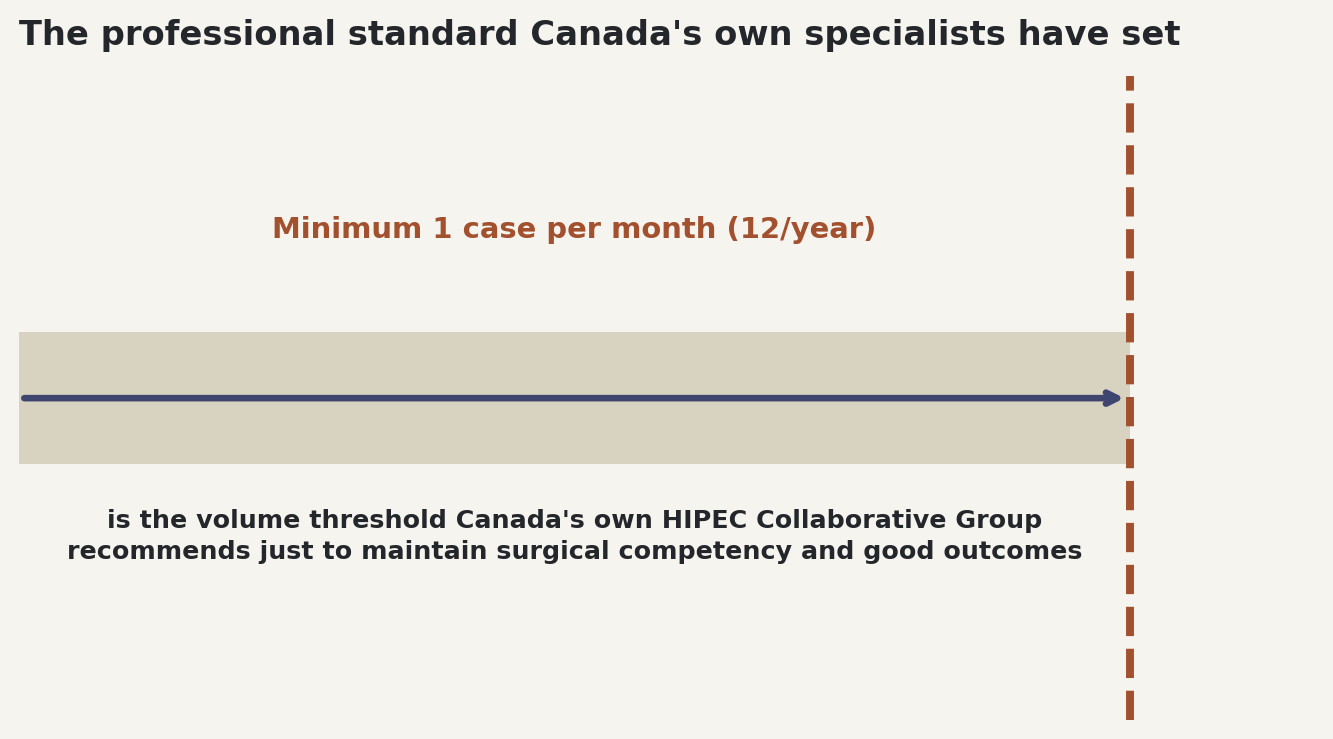
Get your full imaging, pathology and prior treatment summary together before your first overseas conversation. This threshold matters because it comes directly from the Canadian professionals who perform this exact surgery, not an outside estimate. Their own guidance is explicit: a centre needs to sustain at least monthly case volume simply to maintain the surgical skill this technically demanding procedure requires. A 2025 feasibility study went further, confirming that CRS-HIPEC is not currently provided in Newfoundland and Labrador at all, despite the province's own cancer registry identifying genuine patient need meeting the clinical criteria for this exact surgery.
This matters directly for how you should evaluate any centre offering this surgery, in Canada or overseas. A centre performing this procedure only occasionally, well below the recognised monthly threshold, is working against the very standard the country's own specialist collaborative has established as necessary for good outcomes. The Newfoundland and Labrador finding is worth understanding fully: researchers deliberately reviewed the province's own cancer care registry over a full year specifically to demonstrate that genuine patient volume existed to justify establishing a programme, precisely because none currently exists. This is a genuine, documented gap between clinical need and available domestic infrastructure, not an assumption.
Why India specifically, not just “overseas”
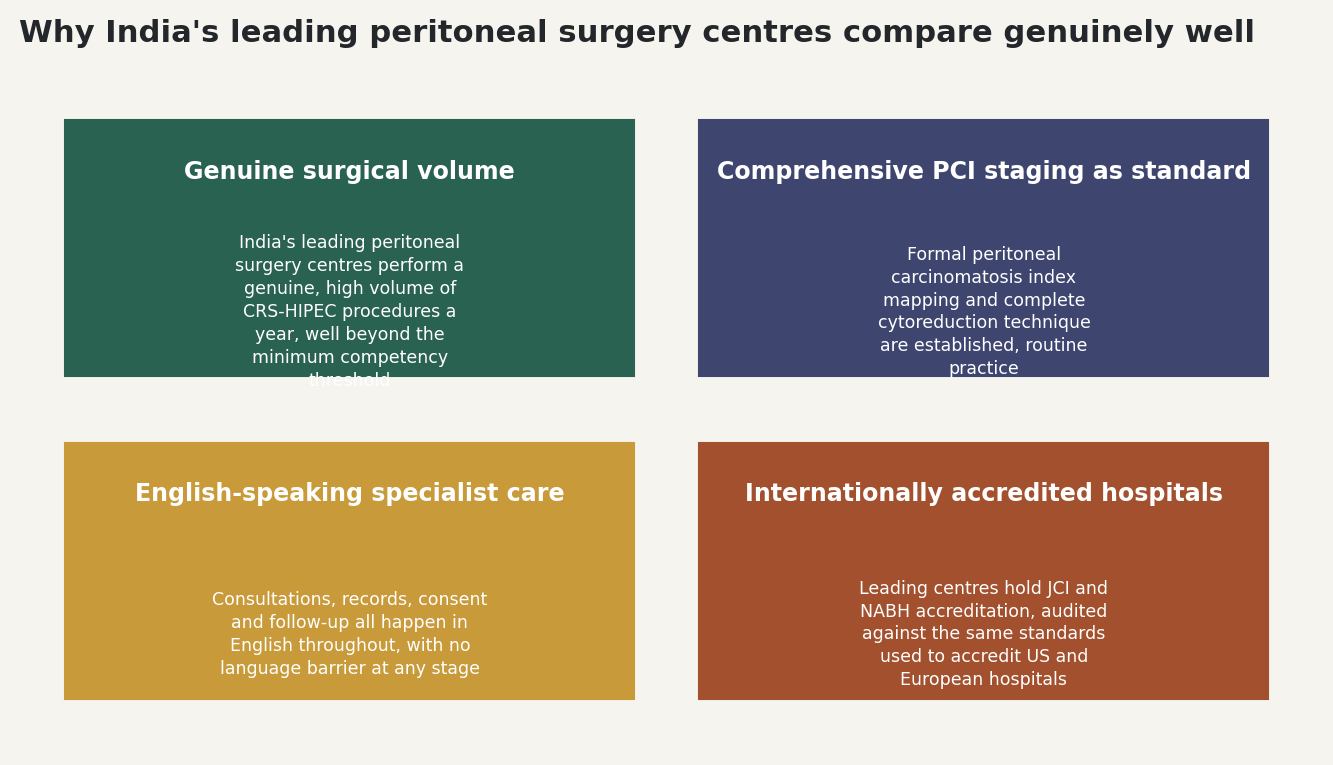
This is worth spelling out plainly, because “medical travel” can sound vague until you see what it actually means in practice. India's leading peritoneal surgery centres perform a genuine, high volume of CRS-HIPEC procedures, comfortably exceeding the monthly competency threshold Canada's own specialists have established, reflecting the scale of the population these centres serve. This is not a compromise reached for cost and speed; for the right case, it is comparable or greater depth of specific surgical experience, precisely the kind of sustained volume the evidence links to better outcomes in this technically demanding field.
Formal peritoneal carcinomatosis index assessment, mapping disease extent across the abdominal cavity, is established, routine practice at India's leading centres, directly informing whether surgery genuinely offers benefit for your specific case. Every consultation, medical record, consent discussion and follow-up letter happens in English, conducted by specialists trained to internationally recognised standards, and leading hospitals hold Joint Commission International accreditation alongside India's own NABH certification.
Ten weighted criteria, out of 100
The same weighting that applies across this series applies here: the surgical team carries 55 points, the hospital 45. Part one, judging the team: genuine volume well above the monthly competency threshold, a formal PCI-based candidacy assessment, whether the lead surgeon personally operates, and candid completeness-of-cytoreduction and complication data.
| Qualification | Length | What it actually means |
|---|---|---|
| MBBS | 5½ years | The basic medical degree. A licence to practise, not a specialist qualification. |
| MS (General Surgery) | 3 years | The base specialist surgical qualification. |
| MCh (Surgical Oncology), peritoneal surgery focus | 3 years further | This is what matters most here. Dedicated further training specifically in CRS-HIPEC technique. |
Part two, judging the hospital: dedicated ICU capability for the demanding recovery this surgery requires, a genuine multidisciplinary tumour board, verified international accreditation, and a complete treatment record your Canadian oncology team can use.
Four Signals That Should Make You Pause
- Vagueness about the team's specific CRS-HIPEC volume. Ask for a confident, specific number against the recognised monthly competency threshold.
- No formal peritoneal carcinomatosis index assessment. This mapping should shape the entire surgical plan, not be skipped.
- A price quoted before your full imaging has been reviewed. Nobody can meaningfully assess candidacy or price this complex surgery without seeing your specific disease extent.
- No dedicated ICU capability confirmed. This is major surgery with a genuinely demanding recovery.
Canada-specific considerations most patients miss
Ask your Canadian surgical oncology team directly about their specific annual CRS-HIPEC volume. Given the genuine national concentration and the professional competency threshold, this single question is worth asking wherever you're being treated.
Tell your Canadian surgical oncology team early, not after the fact. Most are more sympathetic to a second opinion than patients expect, especially for a procedure this specialised.
Arrange your ongoing oncology care before you leave. Confirm your Canadian team is willing to continue follow-up based on overseas surgical findings.
The Questions, in the Order You Should Ask Them
| Of the surgical team | Of the hospital |
|---|---|
| What is your specific annual volume in CRS-HIPEC? | What dedicated ICU capability supports my recovery? |
| What does my PCI assessment show? | Will my case go before a genuine multidisciplinary tumour board? |
| Will the lead surgeon personally operate? | Which accreditation do you hold, and when was it last inspected? |
| What is your completeness-of-cytoreduction and complication data? | What does the final treatment record include? |
A closing word
HIPEC and cytoreductive surgery remain genuinely concentrated in just four major Canadian centres nationally, with Canada's own specialists confirming a specific monthly volume threshold necessary to maintain the surgical skill this technically demanding procedure requires. For patients confirmed as genuine candidates, the case for India is genuinely strong, not a fallback option: peritoneal surgery centres with volume well beyond that recognised threshold, dedicated ICU capability as standard, and treatment that can typically begin within two to three weeks, at a fraction of the equivalent Canadian private cost.
In 24 years of guiding patients through exactly this decision, the pattern is consistent: those who look closely at what India's leading peritoneal surgery centres actually offer, rather than assuming distance means compromise, generally come away reassured rather than anxious. Weight genuine surgical volume heavily against the professional competency threshold, insist on a formal PCI assessment, and travel with a written, itemised quote in hand.
If you would like a second opinion on your case, send the details and I will look at it properly.
Frequently Asked Questions by Canadians about HIPEC and Cytoreductive Surgery Centres in India
What is CRS-HIPEC?
CRS-HIPEC combines cytoreductive surgery to remove visible abdominal tumour deposits with heated chemotherapy circulated within the abdomen to target microscopic disease.
How concentrated is HIPEC in Canada?
The guide cites Canadian research identifying only four major peritoneal disease centres nationally for the specific complex category discussed.
Why is surgical volume important?
The guide states that completeness of cytoreduction is a major predictor of long-term outcome and cites a Canadian competency threshold of at least one case per month to maintain surgical skill.
What is PCI assessment?
The Peritoneal Carcinomatosis Index maps the extent of disease throughout the abdominal cavity and helps determine whether CRS-HIPEC is appropriate for a particular patient.
Which qualification should I look for?
The guide highlights MCh in Surgical Oncology with a peritoneal surgery focus as the most relevant dedicated further training.
How much does CRS-HIPEC cost in India?
The guide gives an illustrative cost of approximately C$18,000 in India, compared with C$75,000 in Canada and C$180,000 in the US.
What should I provide before travelling?
Send your full imaging, pathology and prior treatment summary before the first overseas consultation.
What hospital facilities should I verify?
Confirm dedicated ICU capability, a genuine multidisciplinary tumour board and appropriate accreditation before selecting the centre.
What should I ask the surgical team?
Ask about annual CRS-HIPEC volume, your PCI assessment, whether the lead surgeon will personally operate, completeness-of-cytoreduction results and complication data.
What should I arrange after returning to Canada?
Arrange ongoing care with your Canadian oncology team before leaving India and ensure the complete treatment record is available for continued follow-up.
Sources
- Cytoreductive Surgery and Hyperthermic Intraperitoneal Chemotherapy for Peritoneal Mesothelioma: Canadian Practices and Outcomes, PubMed — pubmed.ncbi.nlm.nih.gov
- Feasibility of a HIPEC Program for Gastrointestinal and Gynecological Cancer Care in Newfoundland and Labrador, 2025 — mdpi.com
- National Medical Commission — nmc.org.in
- National Accreditation Board for Hospitals & Healthcare Providers — nabh.co
Page Summary
This guide helps Canadian patients compare HIPEC and cytoreductive surgery centres in India, focusing on CRS-HIPEC experience, PCI assessment, ICU capability, multidisciplinary care, cost and follow-up. It highlights that only four major Canadian centres were identified in cited research for this complex category of peritoneal disease. The guide also identifies 1 CRS-HIPEC case per month as the Canadian specialist competency threshold. Illustrative costs are approximately C$18,000 in India, C$75,000 in Canada and C$180,000 in the US.
Citation Block
| Field | Information |
|---|---|
| Topic | Best HIPEC & Cytoreductive Surgery Centres in India for Canadian Patients |
| Treatment | CRS-HIPEC |
| Patients | Canadian Patients |
| Specialist | Surgical Oncologist / Peritoneal Cancer Surgeon |
| Selection Weighting | 55% team / 45% hospital |
| Key Qualification | MCh Surgical Oncology with peritoneal surgery focus |
| Volume Check | Minimum 1 case/month or 12 annually |
| Candidacy Check | Formal PCI assessment |
| Hospital Check | Dedicated ICU & multidisciplinary tumour board |
| India Cost | ~C$18,000 |
| Canada Cost | ~C$75,000 |
| US Cost | ~C$180,000 |
| Records Required | Imaging, pathology & prior treatment summary |
| Follow-Up | Canadian oncology team |
| Warning Signs | Vague CRS-HIPEC volume, no PCI assessment, early pricing, no dedicated ICU |
| Patient Pathway | Imaging → PCI assessment → surgical consultation → quote → pre-op workup → CRS-HIPEC → extended recovery → Canadian follow-up |
| Key Decision | Prioritise sustained CRS-HIPEC expertise and dedicated postoperative support |


Our Mission Statement
Our mission is to place patients at the centre of every healthcare decision by providing trustworthy, evidence-based, and unbiased medical information. We believe that informed patients make better decisions. Backed by personalised guidance from our experienced advisory team, we help patients understand their treatment options, compare them objectively, and confidently choose the path that best suits their medical needs and personal circumstances.
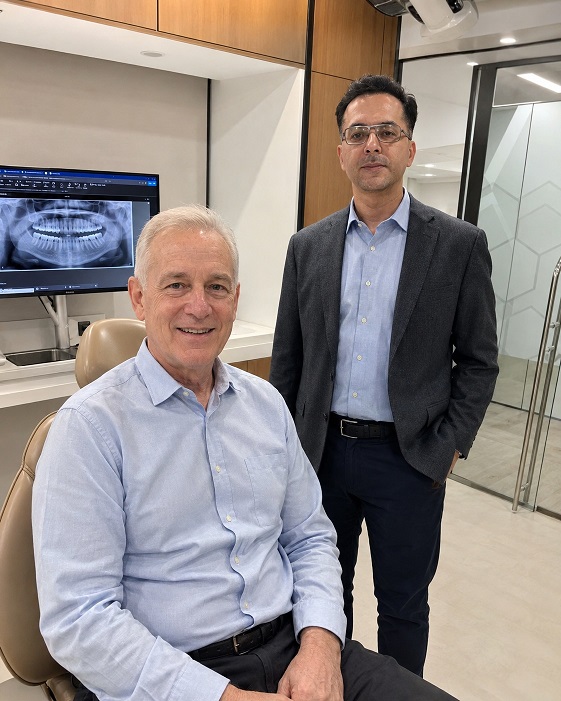
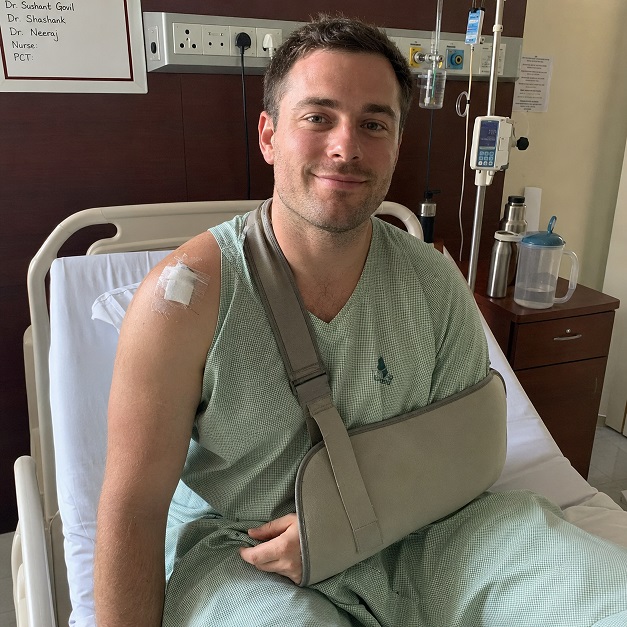
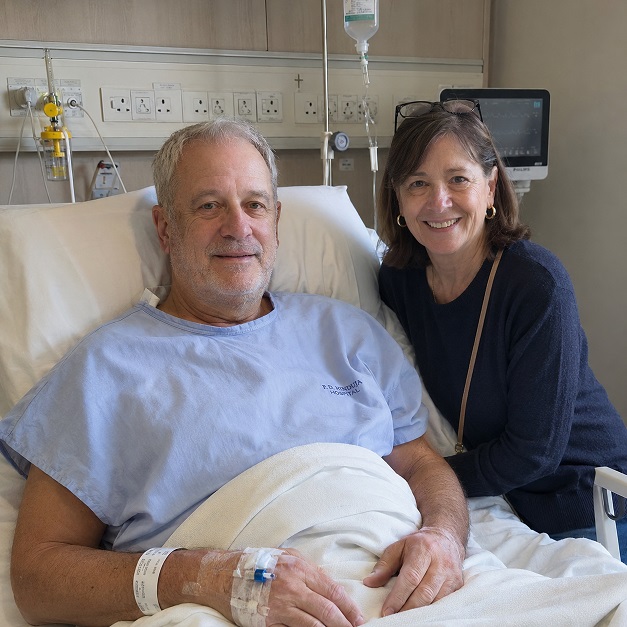
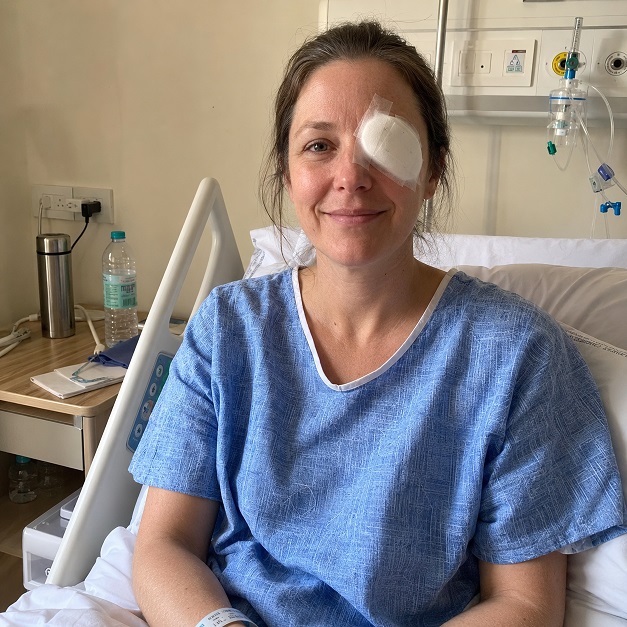
Patient Testimonials from Canada


Ready to Take the First Step?
Share your Medical Reports with our Healthcare Managers Today and Get a FREE CONSULTATION, a Personalized Treatment Plan, and Complete Support from Arrival to Recovery.
Get Your Free ConsultationAreas We Serve
This resource has been thoughtfully prepared for patients from Canada who are considering medical treatment in India. We also welcome patients from the wider region in the countries mentioned below-
We regularly assist patients from:
- Canada
- United States
- Jamaica
- Bahamas
- Barbados
- Belize
- Guyana
- Saint Lucia
- Grenada
- Dominica
- Trinidad and Tobago
- Saint Kitts and Nevis
- Antigua and Barbuda
- Saint Vincent and the Grenadines
Many of the insights, treatment pathways, hospital recommendations, travel guidance, and patient support services described here are equally relevant and may be used as a reference when planning treatment in India.
From Canada to India: Your Complete Patient Support Guide
- Cancer Treatment & Surgery in India for Canadian Patients
- Cardiac Surgery in India for Canadian Patients
- Dental Treatment & Surgery in India for Canadian Patients
- Hip Surgery in India for Canadian Patients
- Knee Surgery in India for Canadian Patients
- Neurosurgery in India for Canadian Patients
- Spine Surgery in India for Canadian Patients
- Weight Loss & Bariatric Surgery in India for Canadian Patients
- Liver Transplant in India for Canadian Patients
- Kidney Transplant in India for Canadian Patients
- Prostate Cancer Treatment & Surgery in India for Canadian Patients
- Robotic Cancer Surgery in India for Canadian Patients
- Bone Marrow Transplant in India for Canadian Patients
- Brain Tumor Surgery in India for Canadian Patients
- Breast Cancer Treatment & Surgery in India for Canadian Patients
- Colorectal Cancer Treatment & Surgery in India for Canadian Patients
- Heart Valve Replacement Surgery in India for Canadian Patients
- Selecting the Best HIPEC and Cytoreductive Surgery Centres in India for Canadian Patients