

Selecting the Best Pancreatic Cancer Surgery Centres in India for Canadian Patients
Ten weighted criteria — but first, what a genuine, peer-reviewed Ontario study confirms about the real trade-off between wait time and survival, and why India's leading centres offer a considered, high-volume alternative without that trade-off.
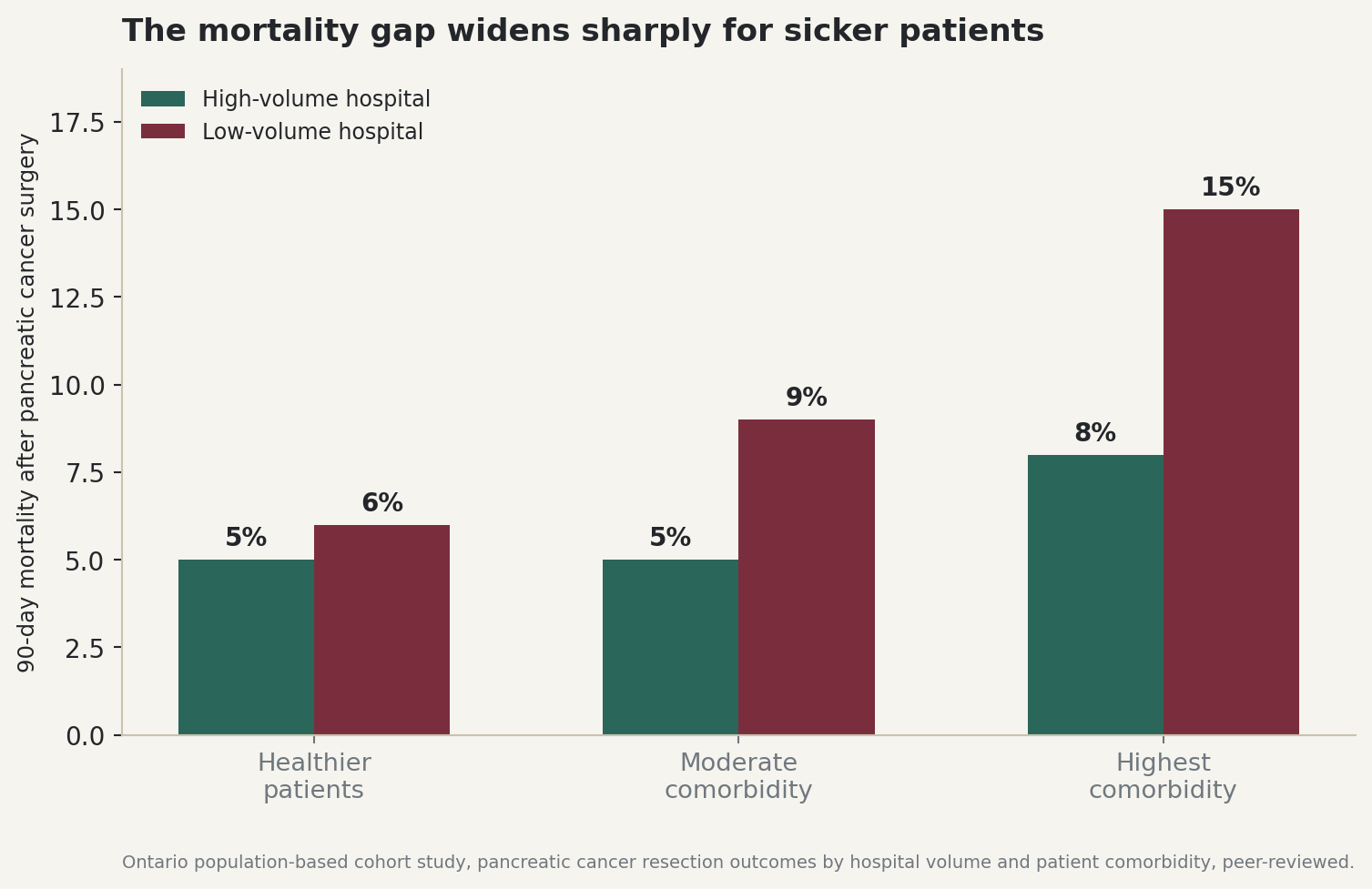
In 24 years of guiding international patients into Indian hospitals, this finding, from a rigorous, population-based Ontario cohort study, is genuinely important to understand clearly. For genuinely healthy patients, hospital volume matters only modestly. But for patients carrying real comorbidity burden, precisely the patients who most need surgery to go well, the gap between high- and low-volume hospitals becomes genuinely stark: nearly double the 90-day mortality risk at the lowest-volume centres. This same research found the survival benefit of high-volume care translated into a genuine, measurable difference in months of life, not just a statistical abstraction: patients with moderate comorbidity gained an adjusted 3.1 months of overall survival when treated at a high-volume centre compared with a low-volume one, a genuinely meaningful difference for patients and families weighing where to have this surgery.
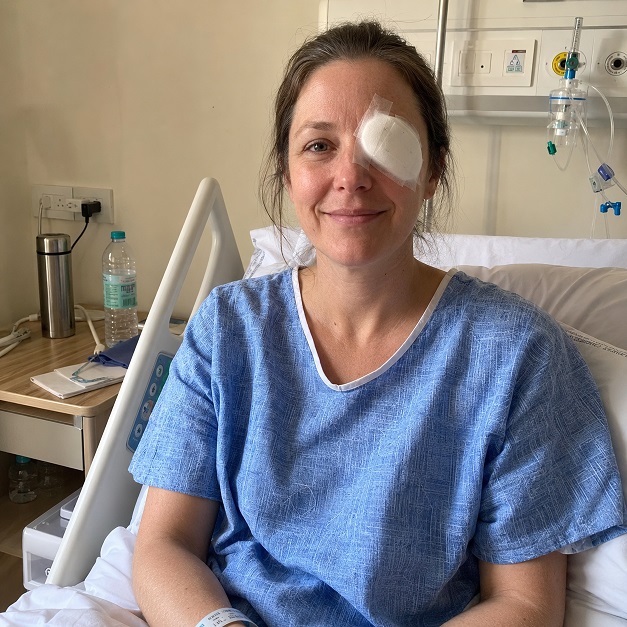
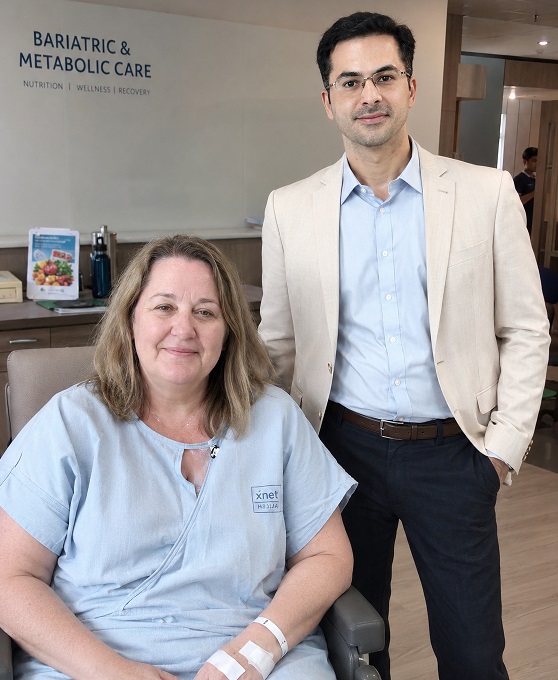
Healing Journeys of Canadian Patients
Key Takeaways
- The guide explains that the Whipple procedure remains the only potentially curative surgical treatment for pancreatic cancer confined to the head of the pancreas, making the experience of the surgical team particularly important. The guide is intended for patients whose surgical oncologist has already confirmed that resection is an appropriate treatment pathway.
- The page 1 chart highlights the relationship between hospital volume, patient comorbidity and 90-day mortality. Among healthier patients, mortality was 5% at high-volume centres versus 6% at low-volume centres; for patients with moderate comorbidity it was 5% versus 9%, and for the highest-comorbidity group it was 8% versus 15%.
- The guide states that patients with moderate comorbidity treated at high-volume centres experienced an adjusted 3.1-month improvement in overall survival compared with treatment at low-volume centres. It also notes that similar volume-outcome relationships have been documented across multiple healthcare systems.
- Ontario's own benchmark is highlighted on page 2: 40+ pancreatic procedures per year is identified as the threshold for a high-volume pancreatic surgery centre. The guide explains that Canadian patients may therefore face a trade-off between shorter waits at lower-volume centres and access to higher-volume centres associated with better outcomes, particularly for patients with significant comorbidities.
- The selection framework gives 55 points to the surgeon and 45 points to the hospital. Surgeon assessment focuses on annual Whipple and pancreatic-resection volume, HPB fellowship training, personal involvement in surgery and transparent mortality and complication data. Hospital assessment includes a dedicated HPB unit, ICU capability, international accreditation and complete treatment records for the Canadian oncology team.
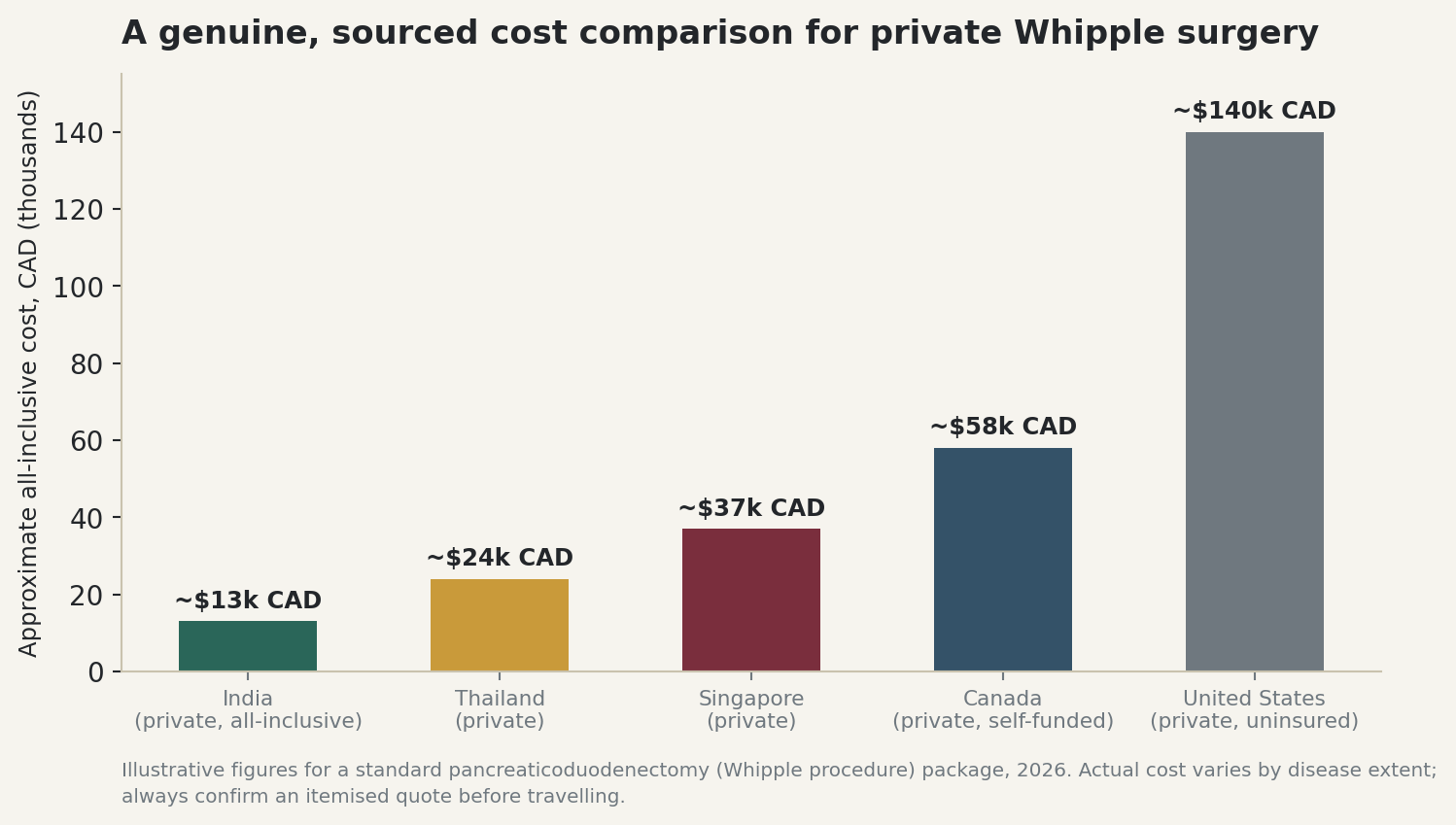
- The page 4 cost chart gives illustrative private Whipple-surgery costs of approximately C$13,000 in India, C$24,000 in Thailand, C$37,000 in Singapore, C$58,000 in Canada and C$140,000 in the United States. The guide recommends obtaining an itemised quotation only after imaging and CA19-9 results have been reviewed.
Quick Facts
- Treatment
- Pancreatic Cancer Surgery
- Patients
- Canadian Patients
- Key Procedure
- Whipple Procedure
- Key Specialist
- HPB / Pancreatic Surgeon
- Selection Weighting
- 55% surgeon / 45% hospital
- Key Qualification
- MCh Surgical Gastroenterology / HPB Surgery
- Volume Benchmark
- 40+ pancreatic procedures per year
- India Cost
- Approximately C$13,000
- Canada Cost
- Approximately C$58,000
- US Cost
- Approximately C$140,000
- Pre-Travel Records
- Imaging, CA19-9 results and pathology
- Hospital Check
- Dedicated HPB unit and ICU capability
- Outcome Check
- 90-day mortality and complication data
- Follow-Up
- Canadian oncology team
- Key Warning
- Avoid centres that cannot provide specific Whipple-volume and outcome data
- Decision Principle
- Prioritise high-volume expertise, hospital capability and transparent treatment planning.
- Author
- Dr. Dheeraj Bojwani
- Experience
- 24+ Years
In Brief
For Canadian patients, the central message is to prioritise genuine Whipple volume and transparent surgical outcomes rather than choosing a centre based only on waiting time or cost. The guide recommends reviewing imaging, CA19-9 and pathology before travel and confirming that the centre has dedicated HPB and ICU capabilities.
The Whipple procedure remains the only potentially curative treatment for pancreatic cancer confined to the head of the pancreas, a genuinely complex operation where surgical experience matters enormously. This guide exists for patients whose surgical oncologist has confirmed resection is the right path, weighing where and how that surgery should happen.
This volume-outcome relationship isn't unique to Canada; it has been documented consistently across multiple countries and healthcare systems, from a landmark New England Journal of Medicine analysis of American Medicare data through to studies from Finland, Belgium, the United Kingdom and beyond. The consistency of this finding across such different healthcare systems is precisely what makes it a genuinely reliable, evidence-based principle to apply to your own decision, rather than a single study's isolated result.
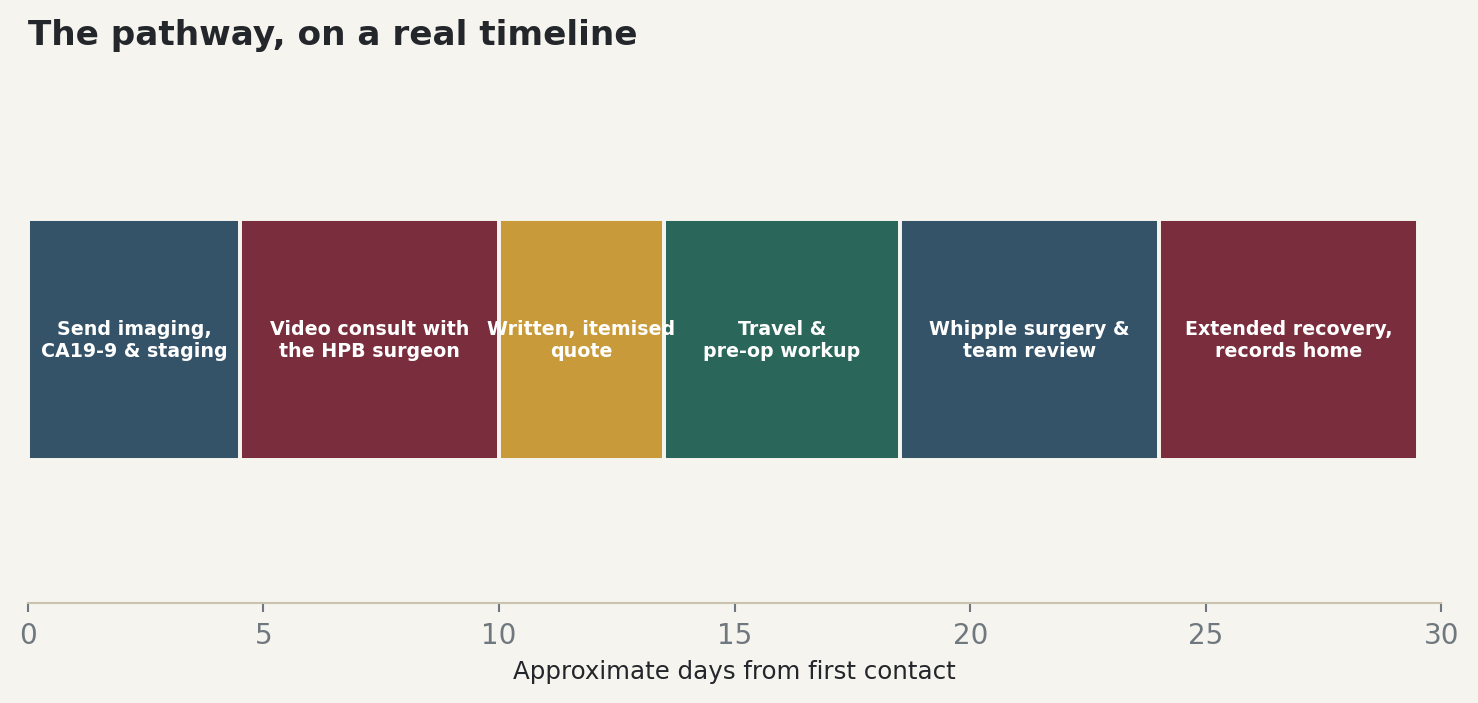
For patients facing this genuine, documented reality, the case for looking seriously at India is a strong one: internationally accredited hepatopancreatobiliary centres with genuinely high Whipple procedure volume, well above Canada's own defined high-volume threshold, and treatment that can typically begin within two to three weeks of your first consultation, all at a fraction of the equivalent Canadian private cost.
A genuine, specific bar Canada's own health system set for itself
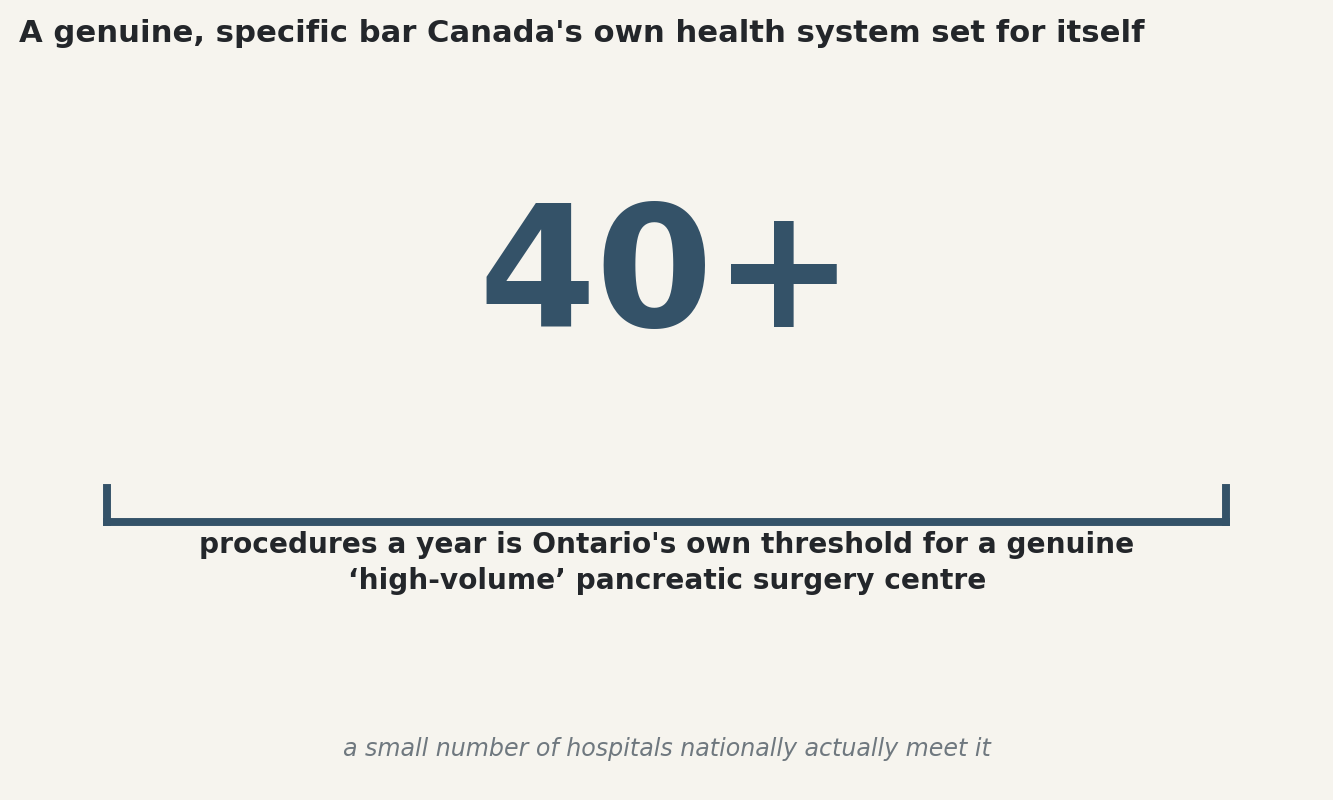
Get your full imaging, CA19-9 results and pathology together before your first overseas conversation. This threshold matters because it comes directly from Ontario's own regionalization policy, deliberately designed after research confirmed the volume-outcome relationship for this exact surgery. Peer-reviewed research specifically documents that superior surgical outcomes at high-volume centres come despite genuinely longer waiting times compared to the shorter waits available at low-volume centres, meaning Canadian patients face a real, documented trade-off between speed and survival odds.
This matters directly for how you should think about any Canadian wait time quoted to you. A shorter wait at a lower-volume centre isn't necessarily the better choice; the same research these policies are built on confirms it can carry a genuinely higher mortality risk, particularly if you have any significant comorbidity. Ontario's regionalization effort, implemented from 1999 onward, has been credited with achieving genuinely lower operative mortality rates than comparable American cohorts, confirming that deliberate concentration of complex surgery into fewer, higher-volume centres can meaningfully improve outcomes at a system level, not just in theory.
Why India specifically, not just “overseas”
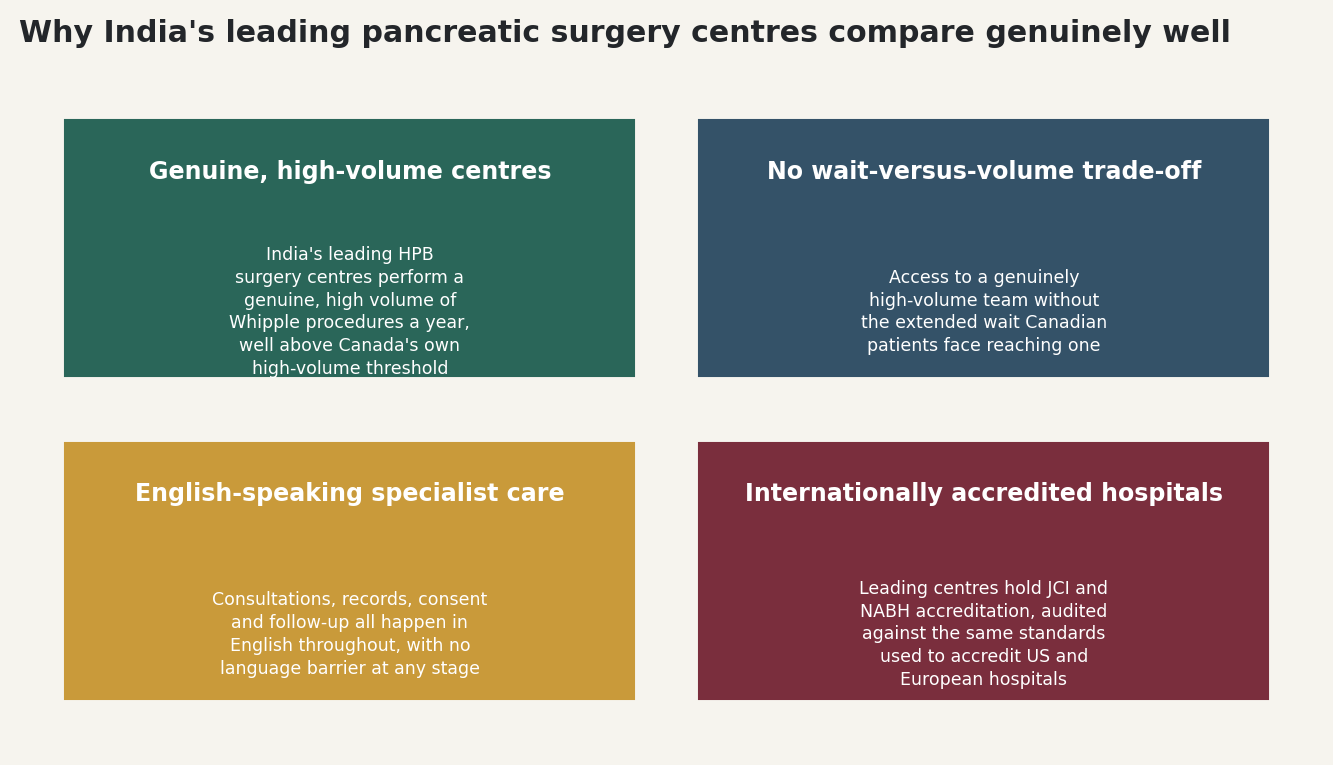
This is worth spelling out plainly, because “medical travel” can sound vague until you see what it actually means in practice. India's leading hepatopancreatobiliary surgery centres perform a genuine, high volume of Whipple procedures annually, comfortably exceeding Ontario's own 40-procedure high-volume threshold, reflecting the scale of the population these centres serve. This is not a compromise reached for cost and speed; it means access to precisely the kind of high-volume surgical team the evidence links to significantly better outcomes, without the extended wait Canadian patients face reaching an equivalent centre domestically.
Every consultation, medical record, consent discussion and follow-up letter happens in English, conducted by specialists trained to internationally recognised standards, and leading hospitals hold Joint Commission International accreditation alongside India's own NABH certification. Put together, this is genuinely comparable, high-volume pancreatic cancer surgery, without the wait-versus-volume trade-off Canadian patients currently navigate, at a fraction of the price.
Ten weighted criteria, out of 100
The same weighting that applies across this series applies here: the surgeon carries 55 points, the hospital 45. Part one, judging the surgeon: genuine annual volume in Whipple and pancreatic resections specifically, fellowship training in HPB surgery, whether the surgeon personally operates, and candid mortality and complication data.
| Qualification | Length | What it actually means |
|---|---|---|
| MBBS | 5½ years | The basic medical degree. A licence to practise, not a specialist qualification. |
| MS (General Surgery) | 3 years | The base specialist surgical qualification. |
| MCh (Surgical Gastroenterology/HPB Surgery) | 3 years further | This is what matters most here. Dedicated further training specifically in hepatopancreatobiliary surgery. |
Part two, judging the hospital: a genuinely dedicated HPB unit performing well above 40 procedures a year, dedicated ICU capability for this demanding recovery, verified international accreditation, and a complete treatment record your Canadian oncology team can use.
Four Signals That Should Make You Pause
- Vagueness about the centre's specific annual Whipple volume. Ask for a confident, specific number against Ontario's own 40-procedure benchmark.
- A price quoted before your imaging and CA19-9 have been reviewed. Nobody can meaningfully assess resectability without seeing your specific case.
- No dedicated HPB team or ICU capability. This is major surgery with a genuinely demanding recovery.
- No candid discussion of 90-day mortality and complication data. A responsible team addresses this directly, not evasively.
Canada-specific considerations most patients miss
Ask your Canadian surgical team directly for their hospital's specific annual Whipple volume. Given the documented outcome gap, this single question is genuinely worth asking wherever you're being treated.
Tell your Canadian oncology team early, not after the fact. Most are more sympathetic to a second opinion than patients expect, especially for a surgery this specialised. Being upfront about exploring overseas options, rather than treating it as something to hide, generally leads to a more collaborative relationship for your eventual follow-up care.
Arrange your ongoing oncology care before you leave. Confirm your Canadian team is willing to continue follow-up based on overseas surgical findings.
The Questions, in the Order You Should Ask Them
| Of the surgeon | Of the hospital |
|---|---|
| What is your specific annual volume in Whipple procedures? | What is your centre's overall annual HPB volume? |
| Will you personally operate? | What dedicated ICU capability supports my recovery? |
| What is your 90-day mortality and complication data? | Which accreditation do you hold, and when was it last inspected? |
| Is my tumour genuinely resectable? | What does the final treatment record include? |
A closing word
Ontario's own population-based research confirms a genuine, documented trade-off: shorter waits at low-volume centres, or longer waits at high-volume centres with meaningfully better survival odds, especially for patients with real comorbidity. For patients facing that reality, the case for India is genuinely strong, not a fallback option: HPB centres with genuine, high Whipple volume well above Canada's own benchmark, and treatment that can typically begin within two to three weeks, at a fraction of the equivalent Canadian private cost.
In 24 years of guiding patients through exactly this decision, the pattern is consistent: those who look closely at what India's leading pancreatic surgery centres actually offer, rather than assuming distance means compromise, generally come away reassured rather than anxious. Weight genuine, high annual volume heavily, insist on candid mortality data, and travel with a written, itemised quote in hand.
If you would like a second opinion on your imaging, send it and I will look at it properly.
Frequently Asked Questions by Canadians about Pancreatic Cancer Surgery Centres in India
What is the Whipple procedure?
The Whipple procedure is a complex pancreatic operation and, according to the guide, remains the only potentially curative surgical treatment when pancreatic cancer is confined to the head of the pancreas.
Why is hospital volume important?
The guide highlights substantially different 90-day mortality rates between high- and low-volume centres, particularly among patients with significant comorbidities.
What is Ontario's high-volume benchmark?
The guide identifies 40 or more pancreatic procedures per year as Ontario's threshold for a high-volume pancreatic surgery centre.
What specialist should perform Whipple surgery?
Look for an HPB or pancreatic surgeon with substantial annual experience specifically in Whipple procedures and pancreatic resections.
What qualification should I check?
The guide highlights MCh in Surgical Gastroenterology/HPB Surgery as dedicated additional training relevant to hepatopancreatobiliary surgery.
How much does Whipple surgery cost in India?
The guide gives an illustrative private cost of approximately C$13,000 in India, compared with about C$58,000 in Canada.
What records should I send before travelling?
Provide your complete imaging, CA19-9 results and pathology so the surgical team can assess the specific disease and potential resectability.
What should I ask about hospital facilities?
Ask whether the centre has a dedicated HPB unit, appropriate ICU capability and verified accreditation, as recommended by the guide.
Can I continue cancer follow-up in Canada?
Yes, but the guide recommends arranging this before leaving India and confirming that your Canadian oncology team will continue follow-up using the overseas treatment records.
What are the biggest warning signs?
Be cautious if a centre cannot provide its specific annual Whipple volume, quotes a price before reviewing imaging and CA19-9, lacks dedicated HPB/ICU capability or avoids discussing 90-day mortality and complication data.
Sources
- Defining Standards for Hepatopancreatobiliary Cancer Surgery in Ontario, Canada: A Population-Based Cohort Study, PMC — pmc.ncbi.nlm.nih.gov
- Superior Surgical Outcomes in High-Volume Centers Despite Longer Waiting Times for Curative Pancreatic Surgery, ScienceDirect — sciencedirect.com
- National Medical Commission — nmc.org.in
- National Accreditation Board for Hospitals & Healthcare Providers — nabh.co
Page Summary
This six-page selection guide explains how Canadian patients can evaluate pancreatic cancer surgery centres in India, with particular emphasis on Whipple procedure volume and hospital capability. Page 1 shows the relationship between hospital volume, comorbidity and 90-day mortality, while page 2 identifies 40+ procedures per year as Ontario's high-volume benchmark. Page 3 explains why Indian HPB centres may offer access to high-volume Whipple teams without the same wait-versus-volume trade-off described for Canada. Page 4 compares illustrative Whipple costs of C$13,000 in India, C$58,000 in Canada and C$140,000 in the US. Page 5 provides a pathway from imaging, CA19-9 and staging through specialist consultation, written quotation, pre-operative workup, Whipple surgery and return of treatment records to the Canadian oncology team.
Citation Block
| Field | Information |
|---|---|
| Topic | Pancreatic Cancer Surgery Centres in India for Canadian Patients |
| Treatment | Pancreatic Cancer Surgery / Whipple |
| Patients | Canadian Patients |
| Specialist | HPB / Pancreatic Surgeon |
| Selection Weighting | 55% surgeon / 45% hospital |
| Key Benchmark | 40+ pancreatic procedures/year |
| Qualification | MCh Surgical Gastroenterology / HPB Surgery |
| Hospital Check | Dedicated HPB unit & ICU |
| Outcome Check | 90-day mortality & complication data |
| India Cost | ~C$13,000 |
| Canada Cost | ~C$58,000 |
| US Cost | ~C$140,000 |
| Records Required | Imaging, CA19-9 & pathology |
| Pre-Travel Review | Confirm resectability and treatment plan before travel |
| Treatment Planning | Review imaging, pathology and CA19-9 before finalising surgery |
| Surgical Volume | Verify annual Whipple and pancreatic-resection numbers |
| Follow-Up | Canadian oncology team |
| Medical Records | Obtain complete operative and treatment records for return care |
| Warning Signs | Unclear Whipple volume, early pricing, no HPB/ICU, no outcome data |
| Pathway | Imaging → consultation → quote → pre-op → Whipple → recovery → Canadian follow-up |
| Key Decision | Choose genuine high-volume expertise with transparent outcomes |


Our Mission Statement
Our mission is to place patients at the centre of every healthcare decision by providing trustworthy, evidence-based, and unbiased medical information. We believe that informed patients make better decisions. Backed by personalised guidance from our experienced advisory team, we help patients understand their treatment options, compare them objectively, and confidently choose the path that best suits their medical needs and personal circumstances.
Patient Testimonials from Canada
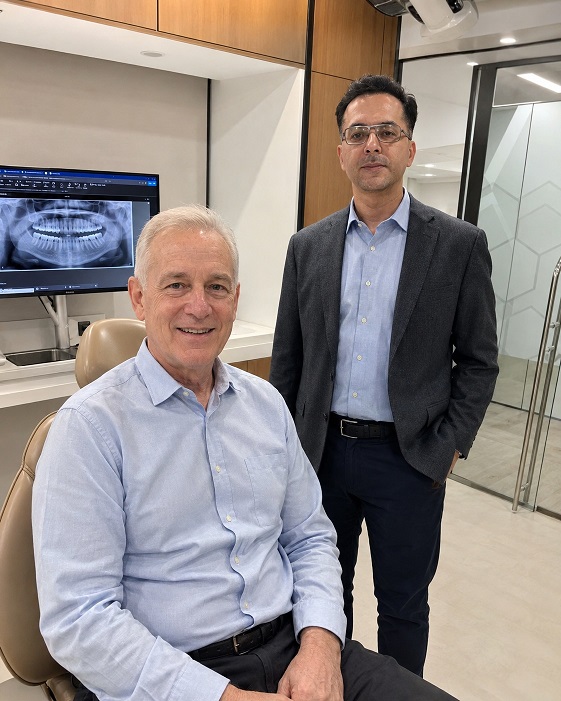
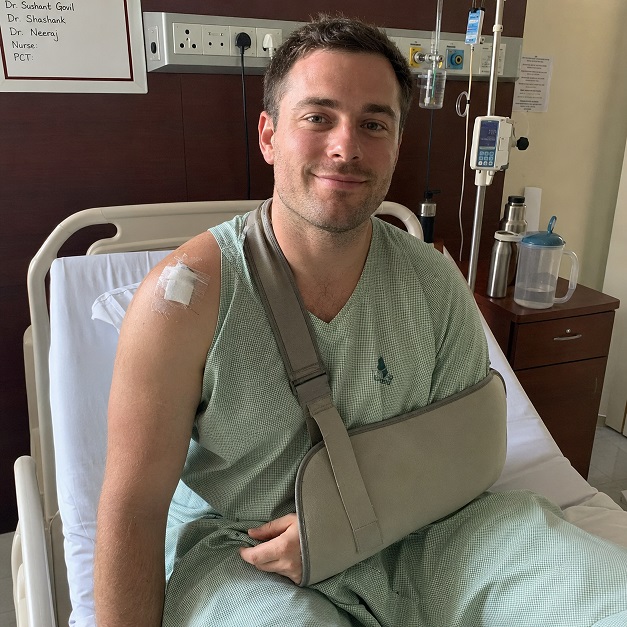
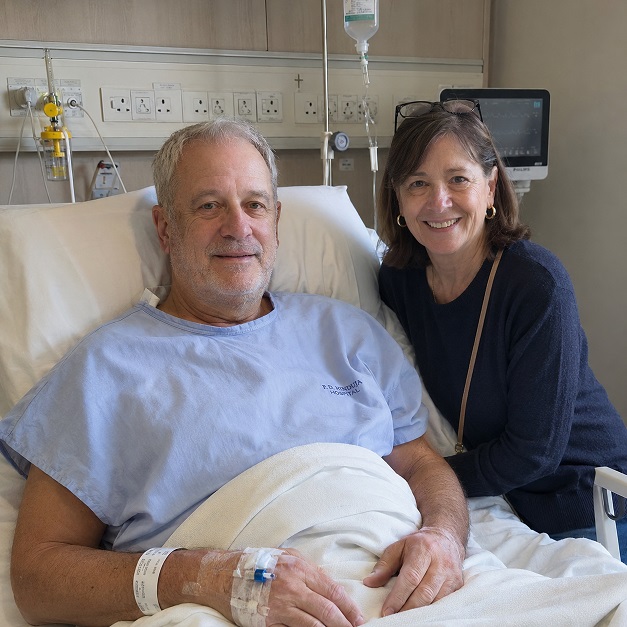
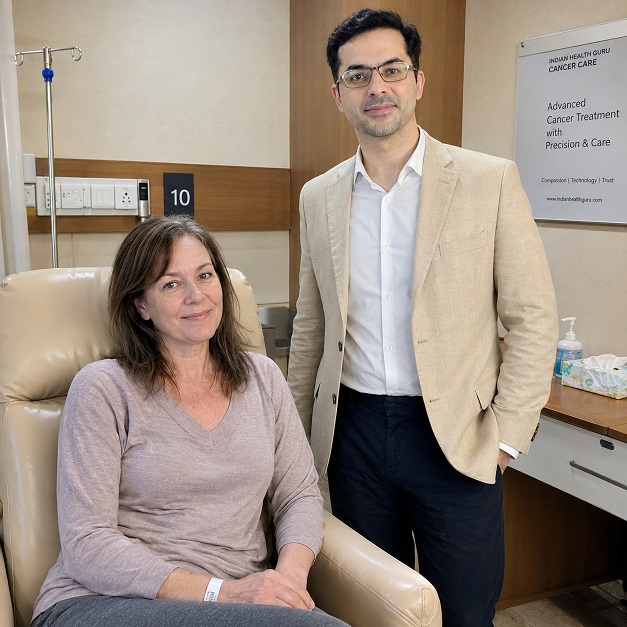

Ready to Take the First Step?
Share your Medical Reports with our Healthcare Managers Today and Get a FREE CONSULTATION, a Personalized Treatment Plan, and Complete Support from Arrival to Recovery.
Get Your Free ConsultationAreas We Serve
This resource has been thoughtfully prepared for patients from Canada who are considering medical treatment in India. We also welcome patients from the wider region in the countries mentioned below-
We regularly assist patients from:
- Canada
- United States
- Jamaica
- Bahamas
- Barbados
- Belize
- Guyana
- Saint Lucia
- Grenada
- Dominica
- Trinidad and Tobago
- Saint Kitts and Nevis
- Antigua and Barbuda
- Saint Vincent and the Grenadines
Many of the insights, treatment pathways, hospital recommendations, travel guidance, and patient support services described here are equally relevant and may be used as a reference when planning treatment in India.
From Canada to India: Your Complete Patient Support Guide
- Cancer Treatment & Surgery in India for Canadian Patients
- Cardiac Surgery in India for Canadian Patients
- Dental Treatment & Surgery in India for Canadian Patients
- Hip Surgery in India for Canadian Patients
- Knee Surgery in India for Canadian Patients
- Neurosurgery in India for Canadian Patients
- Spine Surgery in India for Canadian Patients
- Weight Loss & Bariatric Surgery in India for Canadian Patients
- Liver Transplant in India for Canadian Patients
- Kidney Transplant in India for Canadian Patients
- Prostate Cancer Treatment & Surgery in India for Canadian Patients
- Robotic Cancer Surgery in India for Canadian Patients
- Bone Marrow Transplant in India for Canadian Patients
- Brain Tumor Surgery in India for Canadian Patients
- Breast Cancer Treatment & Surgery in India for Canadian Patients
- Colorectal Cancer Treatment & Surgery in India for Canadian Patients
- Heart Valve Replacement Surgery in India for Canadian Patients
- Selecting the Best Pancreatic Cancer Surgery Centres in India for Canadian Patients