

IVF and Infertility Treatment in India for Canadian Patients
Canada is in the middle of a genuinely active expansion of fertility funding. This guide covers what's improving, what still isn't covered, and what a second or third cycle actually costs.
A couple in Calgary, both 34, ready to start IVF after two years of trying. Alberta offers no public funding for IVF at all, unlike Ontario or British Columbia. Their first cycle, entirely private, didn't result in a pregnancy. Facing a second cycle at full price, they started looking at what the same treatment costs elsewhere. This isn't a story about desperation. It's about a couple doing straightforward math on a path to parenthood that dozens of provinces are, right now, actively working to make easier.
Healing Journeys of Canadian Patients
Key Takeaways
- Canadian patients should understand that IVF is an established fertility treatment that has been helping build families for more than four decades, with modern protocols, laboratory techniques and embryo selection improving treatment capabilities.
- Canada's fertility funding landscape has expanded significantly during 2025–2026, but access still varies considerably between provinces.
- Ontario has committed C$250 million to expand its fertility programme through 2027/28 and introduced a refundable tax credit covering 25% of eligible costs.
- British Columbia launched its first publicly funded IVF programme in July 2025, offering up to C$19,000 on an income-based sliding scale.
- New Brunswick introduced a programme in April 2025 reimbursing one full IVF cycle up to C$20,000, while Alberta and the Northwest Territories currently offer no public IVF or IUI funding.
- Where public funding exists, it typically covers one cycle, while the PDF notes that many patients need two to three cycles to achieve a live birth.
- A second or third IVF cycle beyond public funding commonly costs C$10,000–C$15,000 before medication in Canada.
- The age-related chart on page 3 illustrates approximate live-birth rates of ~45% under 35, ~35% at 35–37, ~25% at 38–40 and ~12% over 40, while emphasising that individual results vary.
- The PDF gives an indicative India cost of approximately C$4,200 for an IVF cycle including medication and monitoring, compared with C$22,000+ in the United States.
- Canadian patients considering treatment in India should verify laboratory accreditation, age- and diagnosis-specific success data, treatment protocols and the arrangements for transferring their complete treatment record back to their Canadian fertility team.
Quick Facts
- Treatment
- IVF and Infertility Treatment
- Country
- India
- Patients
- Canadian Patients
- Primary Treatment
- In Vitro Fertilisation (IVF)
- IVF Experience
- Established fertility treatment used for more than four decades
- Ontario Funding
- C$250 million programme expansion through 2027/28 plus 25% refundable tax credit on eligible costs
- British Columbia Funding
- Up to C$19,000 based on an income-based sliding scale
- New Brunswick Funding
- One full IVF cycle reimbursed up to C$20,000
- Alberta / Northwest Territories
- No public IVF or IUI funding stated in the briefing
- Cycles Commonly Needed
- 2–3 cycles for a live birth
- Additional Canadian Cycle Cost
- Commonly C$10,000–C$15,000 before medication
- Illustrative Live-Birth Rate Under 35
- Approximately 45%
- Illustrative Live-Birth Rate Over 40
- Approximately 12%
- Indicative India IVF Cost
- Approximately C$4,200 per cycle including medication and monitoring
- U.S. IVF Cost Shown
- C$22,000+ per cycle
- Typical India Stay
- Approximately 2–3 weeks for stimulation, retrieval and transfer
- Key Specialists
- Fertility Specialist / Reproductive Endocrinology Team
- Laboratory Requirement
- Accredited embryology laboratory
- Follow-Up
- Canadian Obstetrician or Family Doctor
- Required Records
- Complete treatment protocol, embryo/sample storage details and fertility treatment records
In Brief
Canadian patients considering IVF in India should first understand what fertility funding is available in their own province and whether they are planning a first, second or third cycle. The PDF highlights significant differences across Canada: Ontario, British Columbia and New Brunswick have expanded public support, while Alberta and the Northwest Territories currently offer no public IVF or IUI funding. Where funding exists, it commonly supports one cycle, while many patients require two to three cycles for a live birth. Age is identified as the single largest factor affecting IVF success, with the page 3 chart showing progressively lower illustrative live-birth rates with increasing maternal age. Canadian patients considering India should compare the complete cost of treatment, verify the fertility team's credentials and embryology laboratory accreditation, request success data broken down by age and diagnosis, and ensure a complete treatment record is prepared for their Canadian fertility team or family doctor.
IVF is a well-established, successful path to parenthood
Canadian fertility specialists do excellent, compassionate work, and in 24 years of guiding international patients into Indian hospitals I have never suggested otherwise. It's worth opening with how established this field is: IVF has been building families successfully for over four decades, and modern protocols, lab techniques and embryo selection have made outcomes better than ever.
Canada is in the middle of a genuinely active period of expanding access
This is worth saying plainly, because it's easy to focus only on the gaps: 2025 and 2026 have seen real, substantial movement across the country.
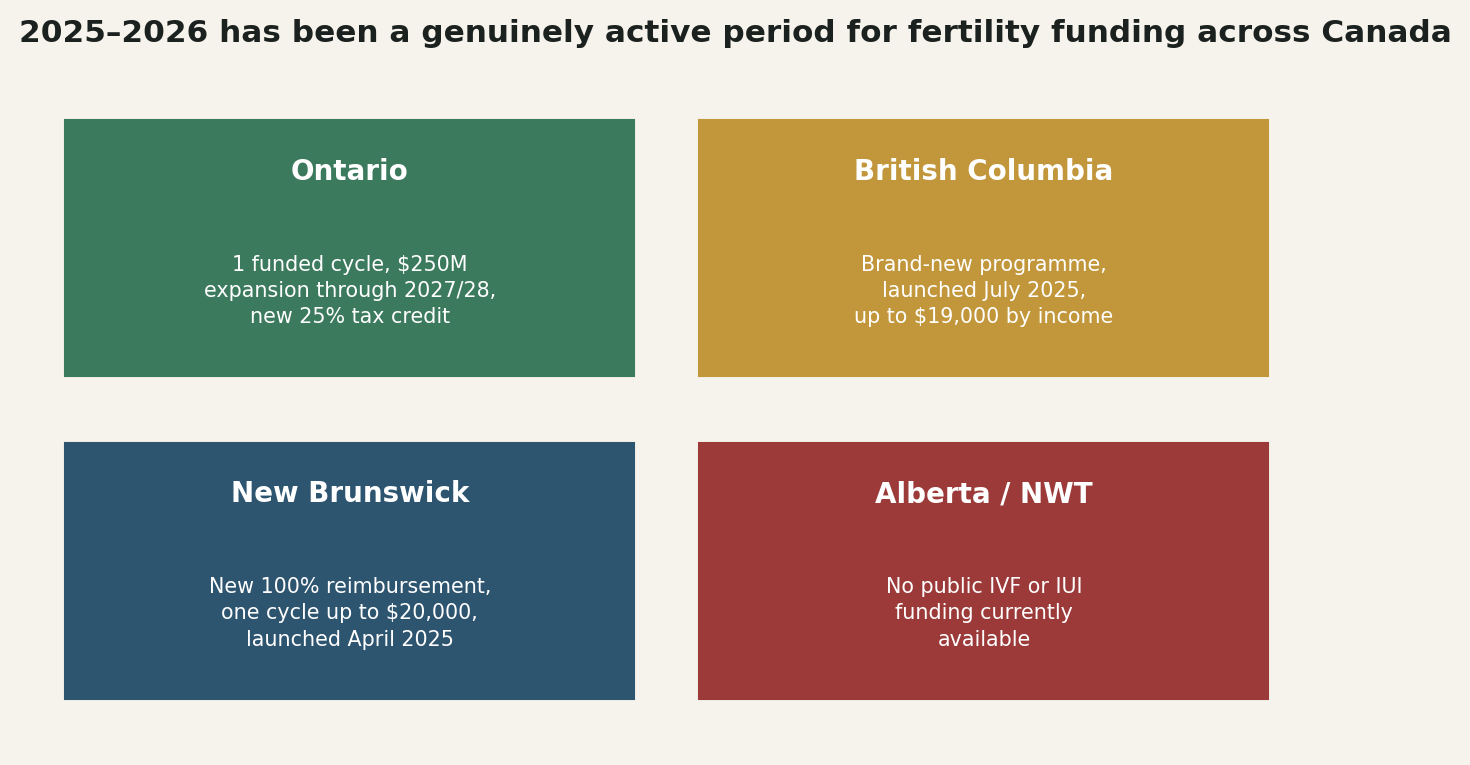
Ontario has committed $250 million to expand its fertility programme through 2027/28, alongside a new refundable tax credit covering twenty-five per cent of eligible costs. British Columbia launched its first- ever publicly funded IVF programme in July 2025, offering up to $19,000 on an income-based sliding scale. New Brunswick introduced a new programme in April 2025 reimbursing one full IVF cycle up to $20,000. Newfoundland and Labrador restructured its subsidy into a more generous lifetime payment. Alberta and the Northwest Territories, by contrast, currently offer no public IVF or IUI funding at all, and Yukon offers only a tax credit rather than direct funding.
Even with funding, the arithmetic often doesn't fully close
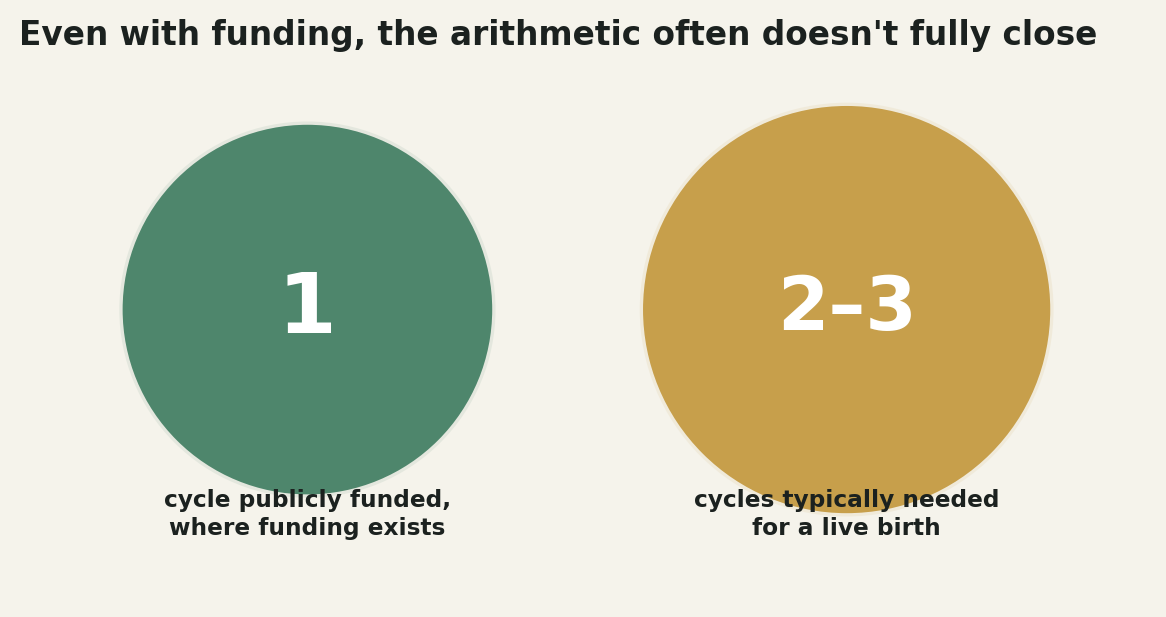
Where public funding exists, it typically covers one cycle per lifetime. Most patients, however, need two to three cycles to achieve a live birth, and every cycle beyond the first is generally an out-of-pocket cost, commonly ten to fifteen thousand dollars before medication. This is the honest gap sitting underneath an otherwise genuinely improving picture: the first cycle is increasingly well supported, and the second or third often isn't.
Why timing matters, without it needing to feel like pressure
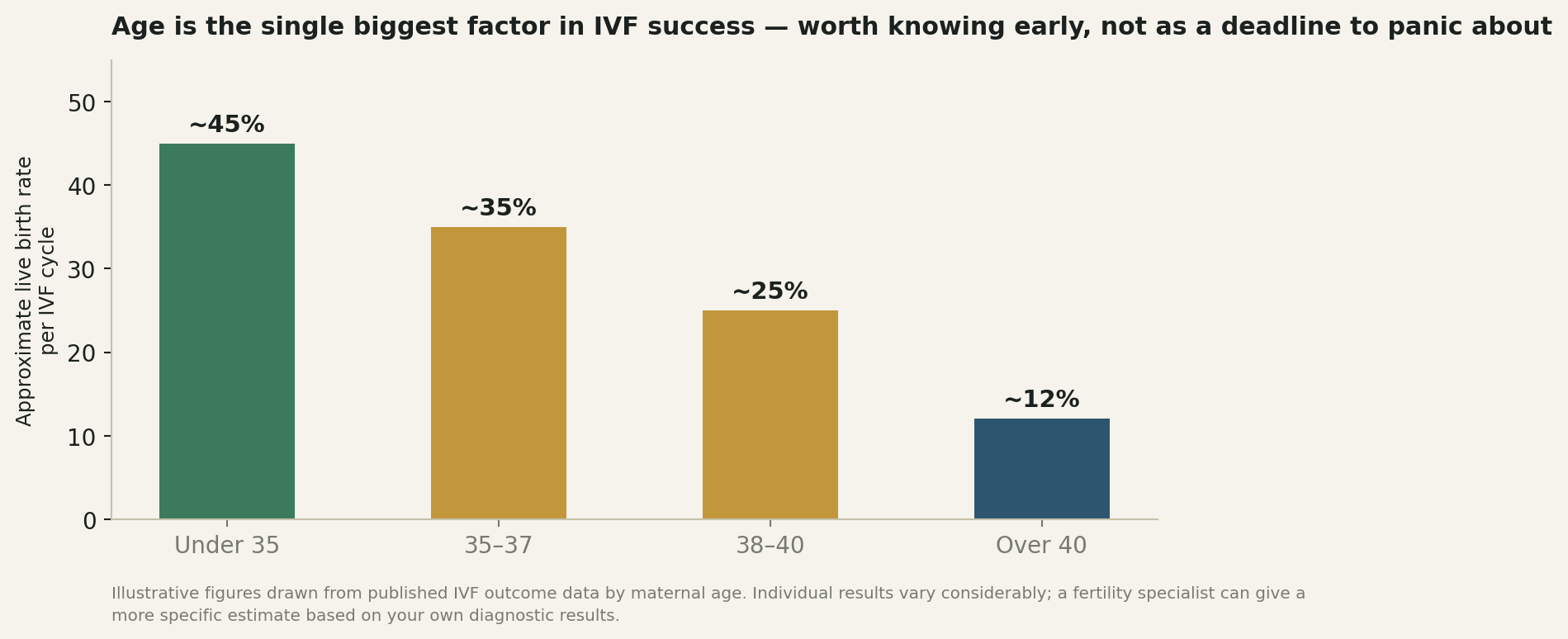
Age is the single largest factor in IVF success, and it's worth understanding early rather than as a source of last-minute anxiety. Success rates are highest under thirty-five and decline gradually through the late thirties and forties. This is exactly why a long wait for a funded cycle, or repeated unsuccessful cycles spaced out by cost, can matter in a way that's specific to fertility treatment: time itself is part of the clinical picture, not just an inconvenience.
What the money actually looks like
For a second or third cycle beyond what's covered at home, or for patients in a province with no public funding at all, the cost comparison is substantial.
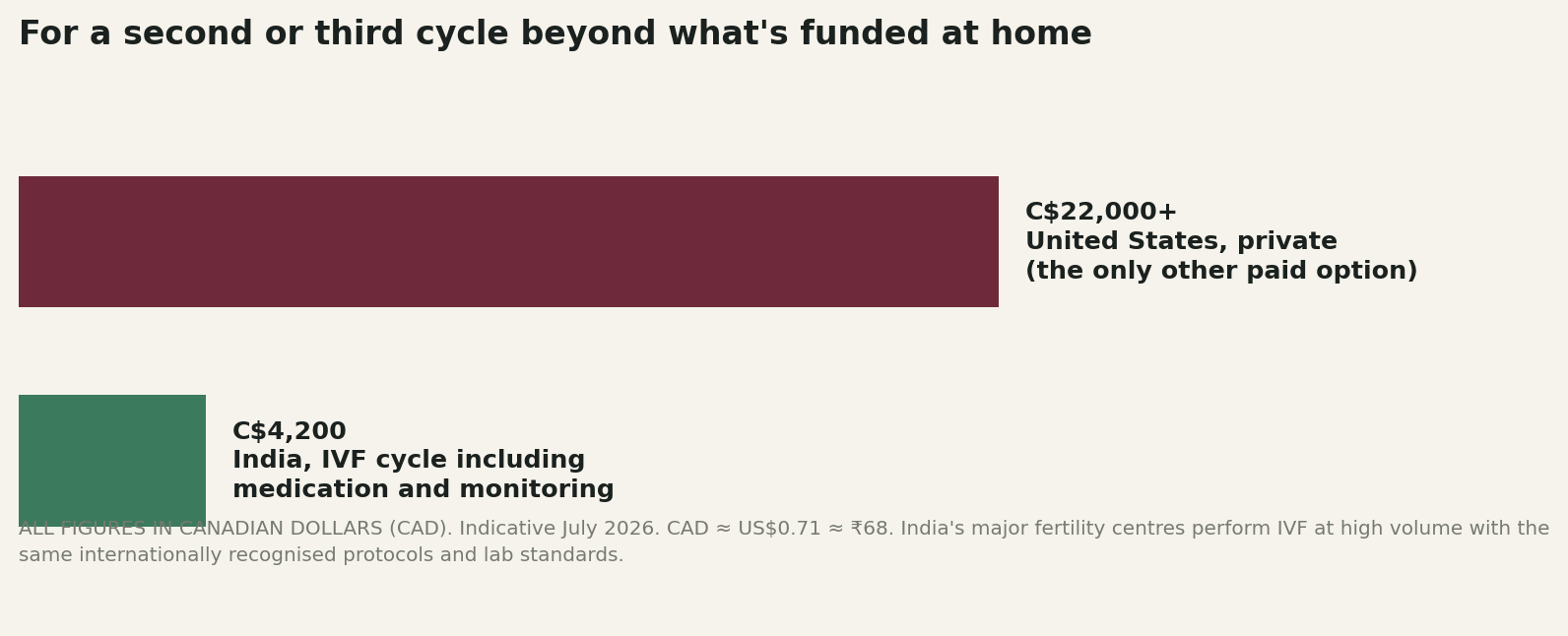
American IVF, priced for an insurance-backed domestic market, commonly runs well above twenty thousand dollars per cycle. India's major fertility centres perform IVF at high volume, using the same internationally recognised protocols and laboratory standards, at a fraction of the American price. In 24 years of guiding patients through this decision, the couples who do best are the ones who use whatever funding exists at home for one cycle, then look clearly at the real cost of any cycles beyond that.
What you are actually getting for it
A genuine fertility team, including reproductive endocrinology and an accredited embryology laboratory.
Transparent success rate data, broken down by age and diagnosis, not a single blended headline number.
Modern laboratory technique as standard, including embryo grading and, where appropriate, genetic screening.
Accreditation you can verify independently. JCI is the international arm of the body accrediting hospitals across the United States; NABH is India's national equivalent, recognised by the same global standards authority.
A complete treatment record built for your Canadian fertility team or family doctor to use, including protocol details and any embryos or samples in storage.
Straight answers for Canadian Patients about IVF and Infertility Treatment in India
My province doesn't fund IVF at all. What are my options?
Check whether your employer's benefits plan covers medications, diagnostics or consultations even if not the procedure itself, and compare the full out-of-pocket cost at home against options abroad using the same accreditation standards.
Will my provincial plan or tax credit apply to treatment performed in India?
Provincial direct funding generally requires treatment at a participating domestic clinic. Refundable tax credits in some provinces cover eligible fertility expenses more broadly; check your specific province's rules, since this varies.
How many cycles should I expect to need?
Most patients need two to three cycles for a live birth, though this varies significantly by age and individual diagnosis. Ask your fertility specialist for an estimate based on your own results.
How long should I plan to stay in India for a cycle?
Typically two to three weeks for stimulation, retrieval and transfer, though this can sometimes be shortened with careful coordination between clinics.
Who manages my pregnancy care once I'm home?
Your Canadian obstetrician or family doctor, provided they have the complete treatment record before you leave.
A closing word
IVF is a well-established, increasingly well-supported path to parenthood in Canada, and the funding landscape is genuinely improving. The honest gap sits in the second and third cycle many patients need, and in the provinces that haven't yet expanded coverage. If that's where you find yourself, it's worth exploring properly. If you'd like to talk through your specific situation, send me the details and I will look at it properly.
Sources
- 🌐 Province of British Columbia, "Publicly funded in-vitro fertilization (IVF) program" — gov.bc.ca
- 🌐 "Fertility Funding in Canada", Fertility Finder Canada — fertilityfinder.ca
- 🌐 Government of Ontario, Ontario Fertility Program — ontario.ca
- 🌐 High Commission of India, e-Visa categories and eligibility — indianvisaonline.gov.in/evisa
Frequently Asked Questions by Canadian Patients about IVF and Infertility Treatment in India
Can Canadian patients from provinces without public IVF funding consider treatment in India?
Yes. Canadian patients from provinces such as Alberta and the Northwest Territories, where the briefing states there is currently no public IVF or IUI funding, may compare the full private cost at home with treatment options abroad.
Can Canadian patients use provincial IVF funding and then seek a second or third cycle in India?
Canadian patients may use whatever provincial funding they are eligible for and then consider the cost of additional cycles if further treatment is required. The PDF notes that public funding commonly covers one cycle, while many patients require two to three cycles.
How much does an IVF cycle cost for Canadian patients in India?
The PDF gives an indicative cost of approximately C$4,200 for an IVF cycle in India, including medication and monitoring. Canadian patients should obtain an individual quotation based on their treatment protocol.
Can Canadian patients from Ontario benefit from the province's IVF funding before considering India?
Yes. Ontario has committed C$250 million to expand its fertility programme through 2027/28, alongside a refundable tax credit covering 25% of eligible costs. Canadian patients should verify their current Ontario eligibility before making treatment arrangements.
Can Canadian patients from British Columbia receive public IVF funding before travelling to India?
British Columbia launched its first publicly funded IVF programme in July 2025, offering up to C$19,000 on an income-based sliding scale. Canadian patients in British Columbia should check their current eligibility and participating-clinic requirements before considering treatment abroad.
How should Canadian patients compare IVF success rates between an Indian fertility centre and a Canadian clinic?
Canadian patients should request success data broken down by age and diagnosis, rather than relying on a single overall success percentage. The PDF specifically recommends transparent, age- and diagnosis-specific data when evaluating a fertility team.
How long should Canadian patients plan to stay in India for an IVF cycle?
Canadian patients should typically plan for approximately two to three weeks in India for stimulation, egg retrieval and embryo transfer, although careful coordination between clinics may sometimes shorten the stay.
What IVF treatment records should Canadian patients bring back from India?
Canadian patients should obtain a complete treatment record containing the treatment protocol and information about any embryos or samples in storage. The record should be prepared so that their Canadian fertility team or family doctor can use it after they return home.
How should Canadian patients arrange pregnancy care after IVF treatment in India?
Canadian patients can arrange pregnancy care with their Canadian obstetrician or family doctor after returning home, provided the complete IVF treatment record is available before they leave India.
What should Canadian patients check before choosing an IVF centre in India?
Canadian patients should verify the fertility team's reproductive endocrinology expertise, the embryology laboratory's accreditation, transparent success data by age and diagnosis, modern laboratory techniques and the arrangements for transferring treatment records back to Canada.
Page Summary
This guide explains IVF and infertility treatment in India for Canadian patients, focusing on Canada's changing fertility-funding landscape and the financial gap that can remain after a publicly funded first cycle. It covers provincial funding developments, the cost of additional IVF cycles, the importance of age in IVF outcomes, indicative India and U.S. treatment costs, fertility-team expertise, embryology laboratory standards and follow-up in Canada. The funding graphic on page 2 compares the major provincial developments, while the page 3 chart illustrates the relationship between maternal age and approximate IVF live-birth rates.
Citation Block
| Topic | Information |
|---|---|
| Topic Information | IVF and Infertility Treatment in India for Canadian Patients |
| Treatment | In Vitro Fertilisation (IVF) |
| Country | India |
| Intended Audience | Canadian Patients |
| IVF Experience | More than four decades |
| Ontario Funding | C$250 million expansion through 2027/28 + 25% refundable tax credit |
| British Columbia Funding | Up to C$19,000 on an income-based sliding scale |
| New Brunswick Funding | One full cycle up to C$20,000 |
| Alberta / NWT | No public IVF or IUI funding stated |
| Typical Cycles Needed | 2–3 cycles for a live birth |
| Additional Cycle Cost in Canada | C$10,000–C$15,000 before medication |
| Illustrative IVF Rate Under 35 | ~45% live-birth rate |
| Illustrative IVF Rate Over 40 | ~12% live-birth rate |
| India IVF Cost | Approximately C$4,200 including medication and monitoring |
| U.S. IVF Cost Shown | C$22,000+ per cycle |
| Typical India Stay | Approximately 2–3 weeks |
| Key Specialists | Fertility Specialist / Reproductive Endocrinology Team |
| Laboratory | Accredited embryology laboratory |
| Success Data to Request | Broken down by age and diagnosis |
| Treatment Planning | Protocol details and embryo/sample storage information |
| Follow-Up | Canadian Obstetrician or Family Doctor |
| Required Records | Complete fertility treatment record |
| Hospital Accreditation | JCI or NABH can be independently verified |
| Author | Dr. Dheeraj Bojwani |
| Experience | 24+ Years |


Our Mission Statement
Our mission is to place patients at the centre of every healthcare decision by providing trustworthy, evidence-based, and unbiased medical information. We believe that informed patients make better decisions. Backed by personalised guidance from our experienced advisory team, we help patients understand their treatment options, compare them objectively, and confidently choose the path that best suits their medical needs and personal circumstances.
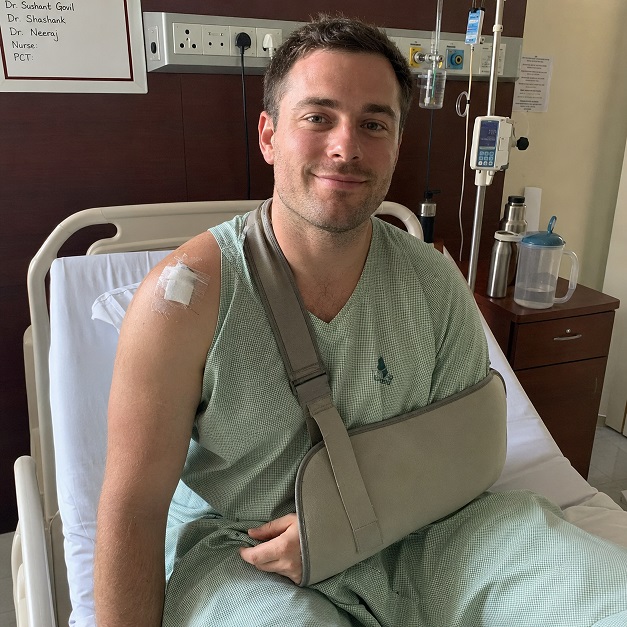
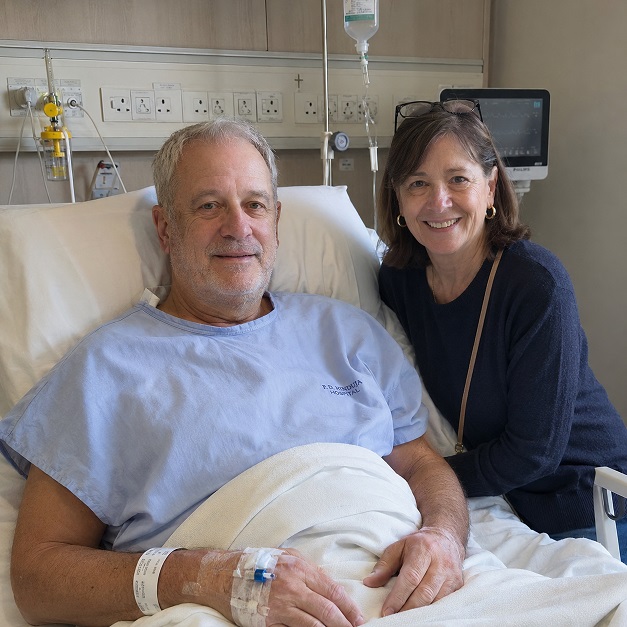
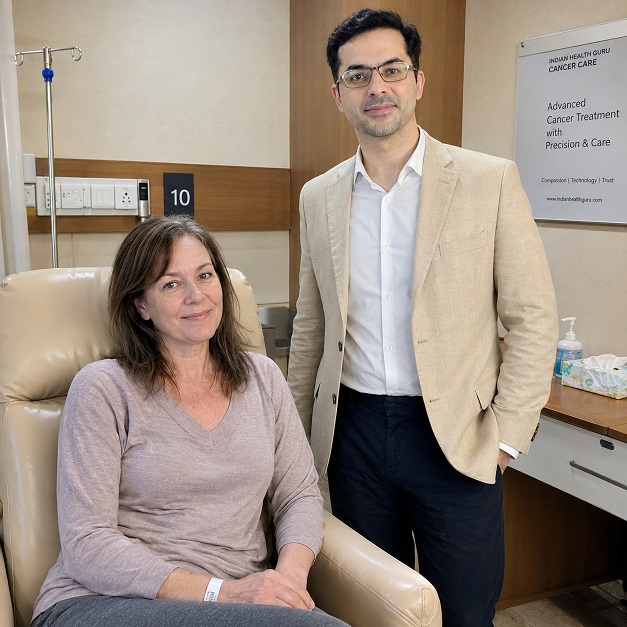
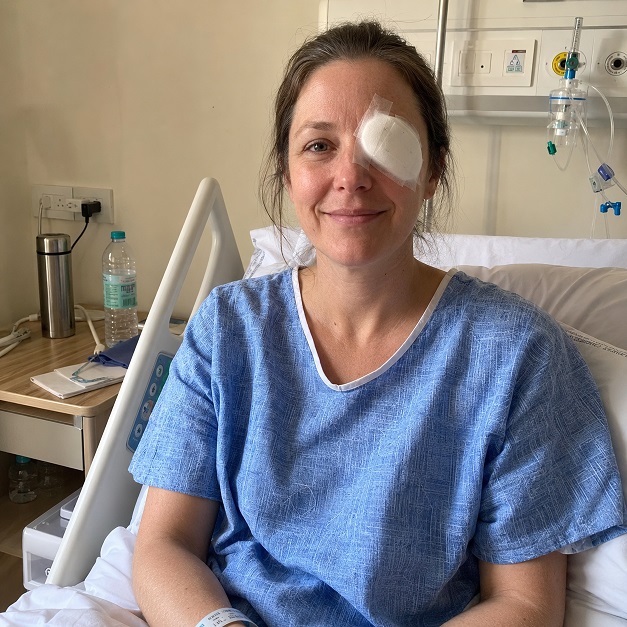
Patient Testimonials from Canada

Ready to Take the First Step?
Share your Medical Reports with our Healthcare Managers Today and Get a FREE CONSULTATION, a Personalized Treatment Plan, and Complete Support from Arrival to Recovery.
Get Your Free ConsultationFrom Canada to India: Your Complete Patient Support Guide
- Weight Loss & Bariatric Surgery in India for Canadian Patients: The Multi-Year Wait, Explained (2026)
- Bone Marrow Transplant in India for Canadian Patients: Complete Guide
- Brain Tumor Surgery in India for Canadian Patients: Complete Guide
- Breast Cancer Treatment and Surgery in India for Canadian Patients
- Cancer Treatment and Surgery in India for Canadian Patients
- Cardiac Surgery in India for Canadian Patients
- Colorectal Cancer Treatment and Surgery in India for Canadian Patients
- Cosmetic and Aesthetic Surgery in India for Canadian Patients
- CyberKnife Treatment in India for Canadian Patients: Complete Guide
- Dental Surgery in India for Canadian Patients | Complete Treatment & Cost Guide
- Gamma Knife Treatment in India for Canadian Patients
- Heart Valve Replacement Surgery in India for Canadian Patients
- Hip Surgery in India for Canadian Patients | Complete Treatment, Cost & Recovery Guide
- HIPEC Surgery in India for Canadian Patients: Complete Guide
- Kidney Transplant in India for Canadian Patients: Complete Guide
- Knee Surgery in India for Canadian Patients: Wait Times & Costs
- Neurosurgery in India for Canadian Patients: Wait Times & Costs
- Paediatric Cardiac Surgery in India for Canadian Patients