

Leukemia, Lymphoma and Blood Cancer Treatment in India for Canadian Patients
Real Canadian data: CAR-T cell therapy raised 3-year survival for relapsed lymphoma from 10% to 59%. This guide covers the science, the timing that matters, and where to turn.
A 44-year-old teacher in Hamilton, Ontario, with large B-cell lymphoma that returned after two rounds of chemotherapy. Ten years ago, her options at this point would have been genuinely limited. Today, her hematology team is discussing CAR-T cell therapy, a treatment that has turned what used to be a median survival of a few months into a realistic chance at a durable, multi-year remission. This is one of the most hopeful stories in modern oncology, and it deserves to be told clearly.
Healing Journeys of Canadian Patients
Key Takeaways
- Canadian patients with relapsed or refractory blood cancers may now have access to advanced cellular therapies such as CAR-T, which has produced major improvements in outcomes for selected patients.
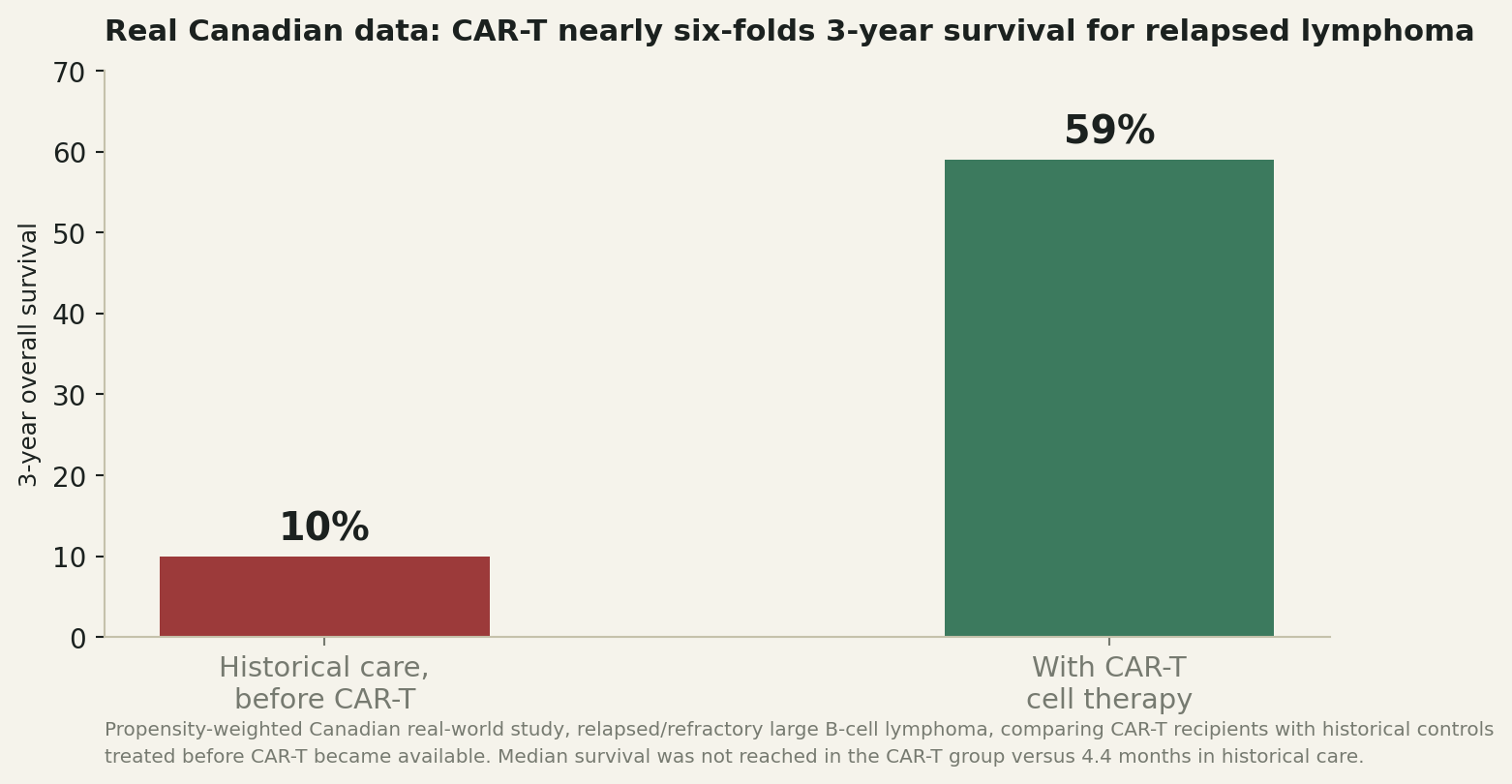
- A Canadian real-world study cited in the PDF found 3-year overall survival of 59% with CAR-T therapy versus 10% with historical care in relapsed large B-cell lymphoma.
- Median survival was not reached in the CAR-T group by the end of that study, compared with 4.4 months with historical care.
- CAR-T therapy uses a patient's own immune cells, which are collected, genetically engineered to recognise cancer and manufactured individually before being returned to the patient.
- The treatment has been particularly transformative for acute lymphoblastic leukemia in children and young adults, while Health Canada has approved and funded CAR-T for large B-cell lymphoma since late 2019 and for mantle cell lymphoma more recently.
- BCMA-targeted CAR-T represents a newer treatment frontier for multiple myeloma, particularly for patients whose standard treatment options have stopped working.
- Timing matters because CAR-T cells are individually manufactured for each patient, and the PDF highlights that limited treatment centres and manufacturing capacity can influence access.
- The indicative India CAR-T cell therapy package cost shown in the PDF is approximately C$58,000, compared with C$650,000+ in the United States.
- Canadian patients considering CAR-T in India should specifically confirm the complete timeline from referral and cell collection through manufacturing, infusion and acute monitoring.
- The treating centre should have genuine experience managing important CAR-T complications, particularly cytokine release syndrome and neurotoxicity, and should provide a complete treatment record and long-term surveillance plan for the Canadian hematology team.
Quick Facts
- Treatment
- Leukemia, Lymphoma and Blood Cancer Treatment
- Country
- India
- Patients
- Canadian Patients
- Advanced Therapy Featured
- CAR-T Cell Therapy
- Canadian 3-Year Survival with CAR-T
- 59% in the cited relapsed large B-cell lymphoma study
- Historical 3-Year Survival
- 10% in the cited comparison
- Historical Median Survival
- 4.4 months
- CAR-T Median Survival
- Not reached in the cited study by its end
- Main CAR-T Areas
- Acute Lymphoblastic Leukemia, Large B-Cell Lymphoma, Mantle Cell Lymphoma and Multiple Myeloma
- CAR-T Manufacturing
- Patient's own cells are collected, genetically engineered and individually manufactured
- Key Timing Issue
- Referral-to-infusion interval can matter because manufacturing takes time
- Indicative India CAR-T Cost
- Approximately C$58,000
- U.S. CAR-T Cost Shown
- C$650,000+
- Typical India Stay
- Approximately 4–6 weeks
- Major Treatment Risks
- Cytokine Release Syndrome and Neurotoxicity
- Key Specialists
- Hematology / Oncology and Cellular Therapy Team
- Required Infrastructure
- Apheresis, CAR-T manufacturing coordination and specialised inpatient monitoring
- Hospital Accreditation
- JCI or NABH can be independently verified
- Follow-Up
- Canadian Hematology Team
- Required Records
- Complete treatment record and long-term surveillance plan
In Brief
Canadian patients with relapsed or refractory blood cancers should understand that CAR-T therapy has moved from an emerging technology to an established treatment option for selected malignancies. The Canadian real-world study highlighted in the PDF reported 3-year overall survival of 59% with CAR-T compared with 10% with historical care for relapsed large B-cell lymphoma, with median survival not reached in the CAR-T group versus 4.4 months historically. CAR-T is individually manufactured from the patient's own immune cells, making the interval from referral to infusion clinically important. The PDF also highlights its use in acute lymphoblastic leukemia, large B-cell lymphoma and mantle cell lymphoma, with BCMA-targeted CAR-T representing a newer option for multiple myeloma. Canadian patients considering treatment in India should verify the centre's cellular therapy infrastructure, manufacturing coordination, experience managing cytokine release syndrome and neurotoxicity, realistic referral-to-infusion timeline, accreditation and long-term follow-up arrangements with their Canadian hematology team.
A genuine revolution, confirmed in real Canadian outcomes
Canadian hematologists and cellular therapy teams do genuinely excellent work, and in 24 years of guiding international patients into Indian hospitals I have never suggested otherwise. It's worth opening
with data that speaks for itself.
A propensity-weighted Canadian real-world study compared patients with relapsed large B-cell lymphoma who received CAR-T therapy against historical patients treated before it became available. Three-year overall survival was 59 per cent in the CAR-T group, against just 10 per cent historically, with median survival not even reached in the CAR-T group by the study's end, compared with 4.4 months previously. This is one of the largest survival improvements documented for any cancer treatment introduced in the past decade, and it's been confirmed directly in Canadian patients, not just international trial data.
A genuinely new category of treatment, now reaching several blood cancers
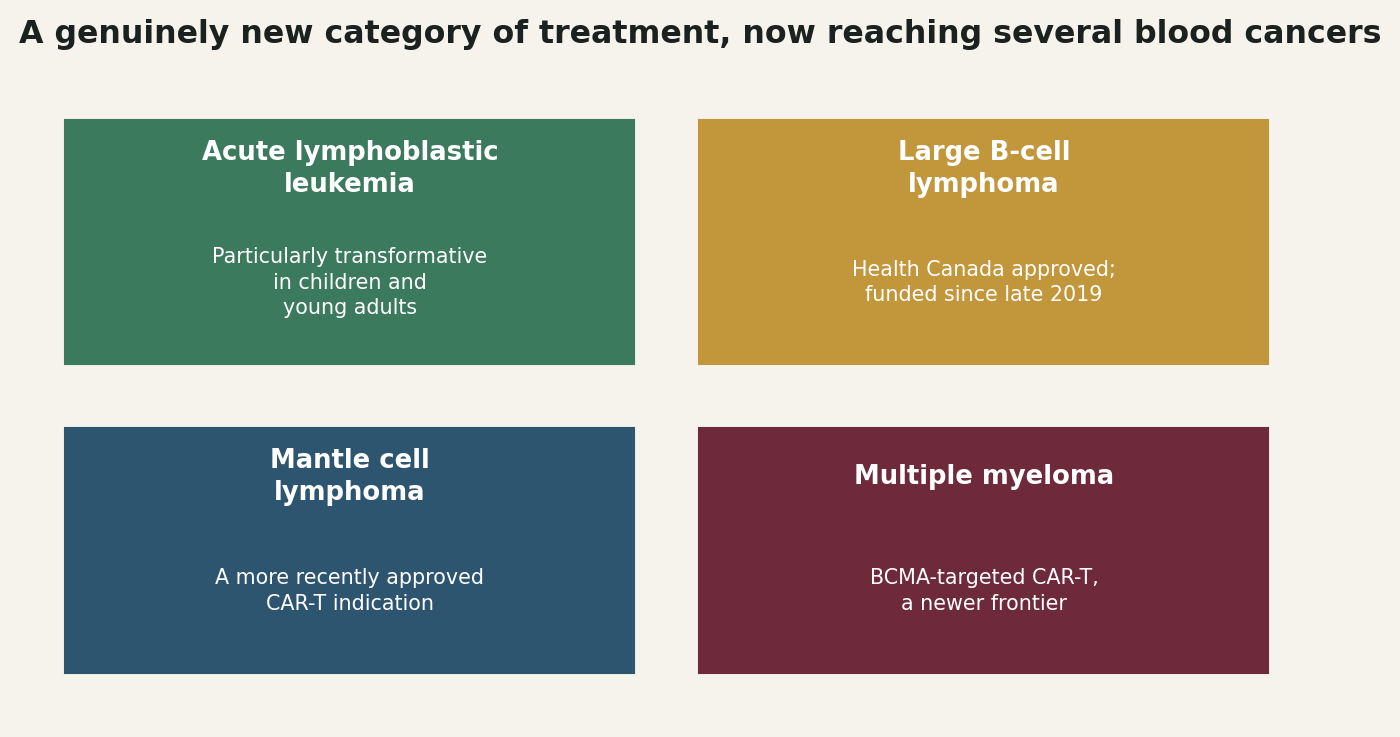
CAR-T therapy works by genetically engineering a patient's own immune cells to recognise and attack their specific cancer. It has been particularly transformative for acute lymphoblastic leukemia in children and young adults, and is Health Canada approved and funded for large B-cell lymphoma since late 2019 and for mantle cell lymphoma more recently. BCMA-targeted CAR-T for multiple myeloma represents a newer frontier, extending this same approach to a cancer that historically had few options once standard treatments stopped working.
Why asking about timing early is worth doing
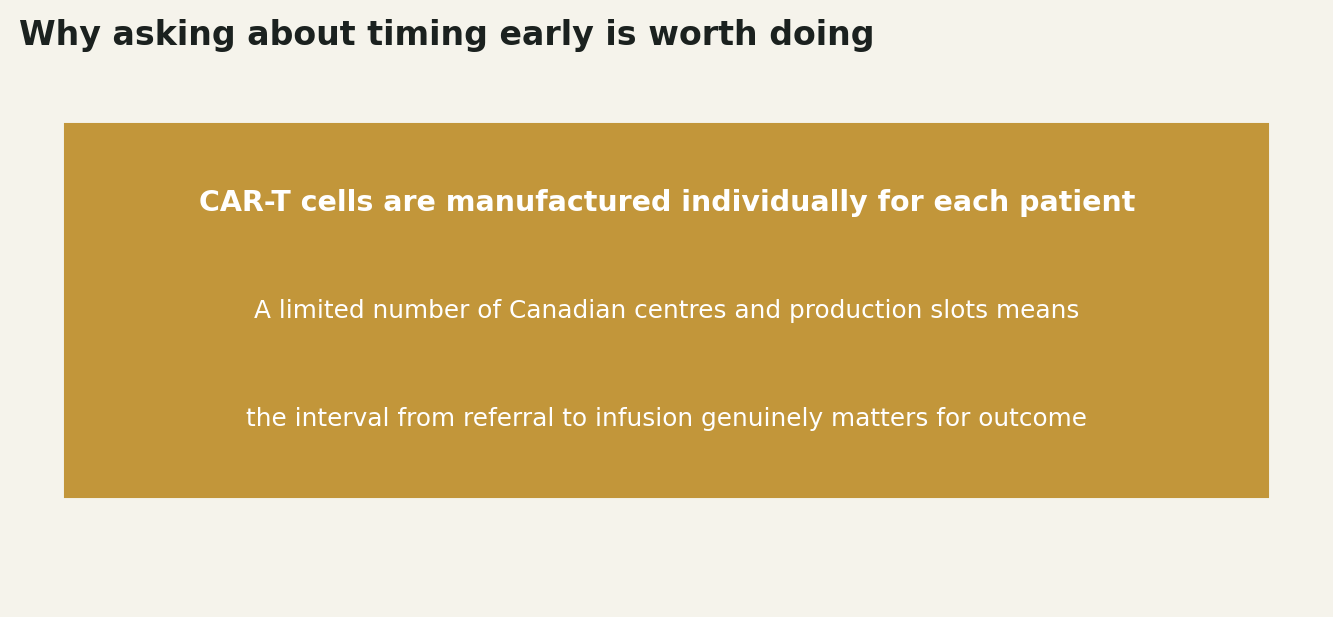
CAR-T cells aren't a stock medication; each patient's own cells are collected, genetically engineered, and manufactured individually before being returned to them, a process that takes real time. Canadian research has noted directly that access is shaped by the limited number of centres offering this therapy nationally, and international data on similar cellular therapies has documented that patients able to secure a treatment slot promptly do measurably better than those facing a longer wait for manufacturing capacity. This is worth raising directly and early with your hematology team, not as a source of alarm, but because it's a genuine, actionable factor in how well this treatment works.
What the money actually looks like
CAR-T therapy requires highly specialised manufacturing and cellular therapy infrastructure that exists at only a small number of centres anywhere in the world.
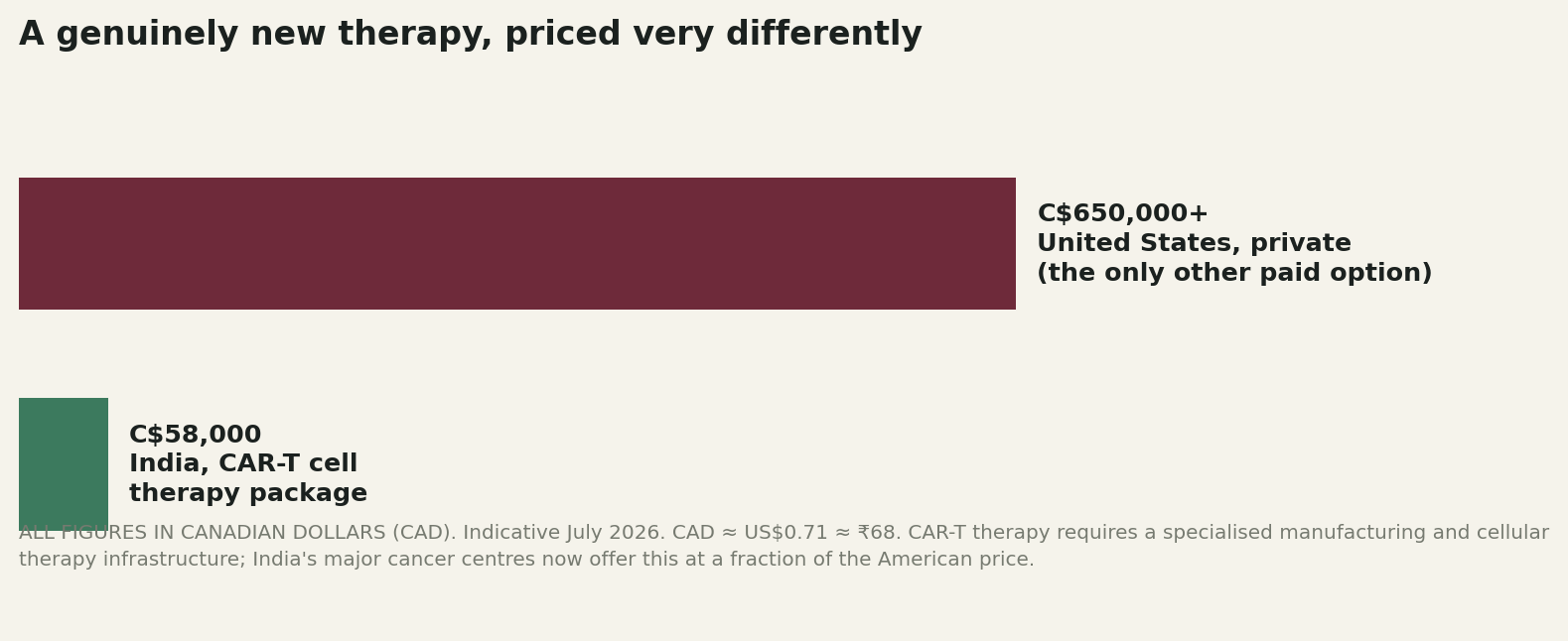
American CAR-T therapy, priced for an insurance-backed domestic market, commonly runs well above half a million dollars. India's leading cancer centres now offer CAR-T therapy with the same manufacturing standards, at a fraction of the American price. In 24 years of guiding patients through this decision, the question worth asking first is how quickly a specific centre can move from referral to actual infusion, since that interval is a genuine, documented part of how well this treatment works.
What you are actually getting for it
A genuine cellular therapy programme, including apheresis, manufacturing coordination and specialised inpatient monitoring for the acute recovery period.
A realistic timeline from referral to infusion, stated honestly and specifically for your case.
Experienced management of cytokine release syndrome and neurotoxicity, the specific, well- understood complications of this therapy, by a team with genuine experience managing them.
Accreditation you can verify independently. JCI is the international arm of the body accrediting hospitals across the United States; NABH is India's national equivalent, recognised by the same global standards authority.
A discharge record built for your Canadian hematology team to use, including the full treatment record and a specific long-term surveillance plan.
Straight answers for Canadian Patients about Leukemia, Lymphoma and Blood Cancer Treatment in India
Is CAR-T therapy available in Canada?
Yes, it's Health Canada approved and funded for specific blood cancers, but access is shaped by a limited number of treating centres nationally, which is worth discussing directly and early with your hematology team.
Will my provincial plan reimburse CAR-T therapy performed in India?
Almost never. Out-of-country coverage exceptions require pre-approval showing the treatment is genuinely unavailable in Canada within a medically acceptable time.
What are the main risks of CAR-T therapy?
Cytokine release syndrome and neurotoxicity are well-documented, expected complications, generally manageable by an experienced team following established protocols. Ask directly about the centre's specific experience managing them.
How long should I plan to stay in India?
Typically four to six weeks, covering cell collection, manufacturing time, infusion, and the acute monitoring period afterward.
Who manages my long-term follow-up once I'm home?
Your Canadian hematology team, provided they have the complete treatment record and a specific surveillance plan in writing before you leave.
A closing word
CAR-T cell therapy represents one of the genuine breakthroughs of modern oncology, confirmed directly in real Canadian outcomes data. If your treatment team has raised it, or if you're wondering whether it applies to your situation, that conversation is worth having with real urgency behind it, not resignation. If you'd like a second opinion on your case, send me the details and I will look at it properly.
Sources
- 🌐 "Improved survival and health care use with CAR-T vs historical care in relapsed/refractory large B-cell lymphoma", Blood Advances , 2026 — doi.org/10.1182/bloodadvances.2025017401
- 🌐 "Real-World Characterization of Toxicities and Medication Management in Recipients of CAR T-Cell Therapy... in Nova Scotia, Canada" — ncbi.nlm.nih.gov/PMC11764397
- 🌐 "Management of Canadian patients with refractory or relapsed diffuse large B-cell lymphoma in the real world", RE- MIND2 study — ncbi.nlm.nih.gov/PMC12605763
- 🌐 High Commission of India, e-Visa categories and eligibility — indianvisaonline.gov.in/evisa
Frequently Asked Questions by Canadian Patients about Leukemia, Lymphoma and Blood Cancer Treatment in India
Is CAR-T therapy available to Canadian patients with blood cancer?
Yes. Canadian patients can access CAR-T therapy for specific eligible blood cancers, and the PDF states that it is Health Canada approved and funded for large B-cell lymphoma and has more recently been approved for mantle cell lymphoma.
Can Canadian patients with relapsed large B-cell lymphoma consider CAR-T therapy in India?
Yes. Canadian patients with relapsed or refractory large B-cell lymphoma may be assessed for CAR-T therapy in India. The Canadian real-world data cited in the PDF showed 59% 3-year overall survival with CAR-T compared with 10% with historical care.
How much does CAR-T therapy cost for Canadian patients in India?
The PDF shows an indicative India CAR-T cell therapy package cost of approximately C$58,000, compared with C$650,000+ in the United States. Canadian patients should obtain a case-specific quotation before travelling.
Can Canadian patients with multiple myeloma receive CAR-T therapy in India?
Canadian patients with multiple myeloma may be assessed for BCMA-targeted CAR-T therapy, which the PDF describes as a newer treatment frontier for patients whose standard treatment options have stopped working. Eligibility must be determined by a qualified hematology/cellular therapy team.
Can Canadian patients with acute lymphoblastic leukemia consider CAR-T treatment in India?
Yes. The PDF identifies acute lymphoblastic leukemia, particularly in children and young adults, as one of the areas in which CAR-T therapy has been particularly transformative. Canadian patients require individual eligibility assessment before treatment.
How quickly can Canadian patients receive CAR-T therapy after travelling to India?
Canadian patients should ask the Indian cellular therapy centre for a realistic, case-specific timeline from referral and cell collection through manufacturing and infusion. The PDF emphasises that CAR-T cells are individually manufactured and that the referral-to-infusion interval can affect outcomes.
Will Canadian provincial health insurance reimburse CAR-T therapy performed in India?
Canadian patients should not assume that provincial plans will reimburse CAR-T treatment in India. The PDF states that out-of-country coverage exceptions require pre-approval showing that the treatment is genuinely unavailable in Canada within a medically acceptable time.
How long should Canadian patients stay in India for CAR-T treatment?
Canadian patients should typically plan for approximately four to six weeks in India, covering cell collection, manufacturing time, infusion and the acute monitoring period afterward.
What CAR-T treatment risks should Canadian patients ask an Indian cancer centre about?
Canadian patients should specifically ask about the centre's experience managing cytokine release syndrome and neurotoxicity, the two well-documented complications highlighted in the PDF. They should ask how these complications are monitored and managed during the inpatient recovery period.
What records should Canadian patients take back to their hematologist after CAR-T therapy in India?
Canadian patients should return with the complete CAR-T treatment record and a specific long-term surveillance plan. The PDF recommends that the discharge documentation be prepared specifically for the patient's Canadian hematology team to continue follow-up after returning home.
Page Summary
This guide explains blood cancer treatment in India for Canadian patients, focusing on CAR-T cell therapy. It highlights improved outcomes reported in Canadian real-world data. The page 1 chart compares 59% 3-year survival with CAR-T versus 10% with historical care. Page 2 covers CAR-T use in leukemia, lymphoma and multiple myeloma. It also explains why treatment timing and specialised care are important. Page 3 compares the indicative India cost of C$58,000 with C$650,000+ in the U.S.
Citation Block
| Topic | Information |
|---|---|
| Topic Information | Leukemia, Lymphoma and Blood Cancer Treatment in India for Canadian Patients |
| Treatment | Blood Cancer Treatment / CAR-T Cell Therapy |
| Country | India |
| Intended Audience | Canadian Patients |
| Main Therapy Featured | CAR-T Cell Therapy |
| Cited 3-Year Survival with CAR-T | 59% |
| Historical 3-Year Survival | 10% |
| Historical Median Survival | 4.4 months |
| CAR-T Median Survival | Not reached in cited study |
| Main Blood Cancers Discussed | ALL, Large B-Cell Lymphoma, Mantle Cell Lymphoma, Multiple Myeloma |
| CAR-T Process | Cell collection, genetic engineering, individual manufacturing and reinfusion |
| Key Timing Factor | Referral-to-infusion interval |
| Indicative India CAR-T Cost | Approximately C$58,000 |
| U.S. Cost Shown | C$650,000+ |
| Typical India Stay | Approximately 4–6 weeks |
| Major CAR-T Complications | Cytokine Release Syndrome and Neurotoxicity |
| Cellular Therapy Infrastructure | Apheresis, manufacturing coordination and specialised inpatient monitoring |
| Key Specialist | Hematologist / Oncologist and Cellular Therapy Team |
| Treatment Experience | Specific experience managing CAR-T complications |
| Hospital Accreditation | JCI or NABH can be independently verified |
| Follow-Up | Canadian Hematology Team |
| Required Records | Full treatment record and long-term surveillance plan |
| Author | Dr. Dheeraj Bojwani |
| Experience | 24+ Years |


Our Mission Statement
Our mission is to place patients at the centre of every healthcare decision by providing trustworthy, evidence-based, and unbiased medical information. We believe that informed patients make better decisions. Backed by personalised guidance from our experienced advisory team, we help patients understand their treatment options, compare them objectively, and confidently choose the path that best suits their medical needs and personal circumstances.
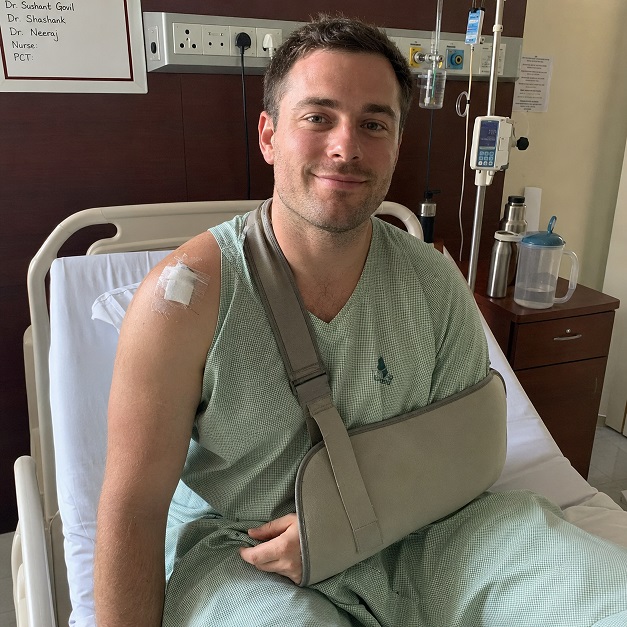
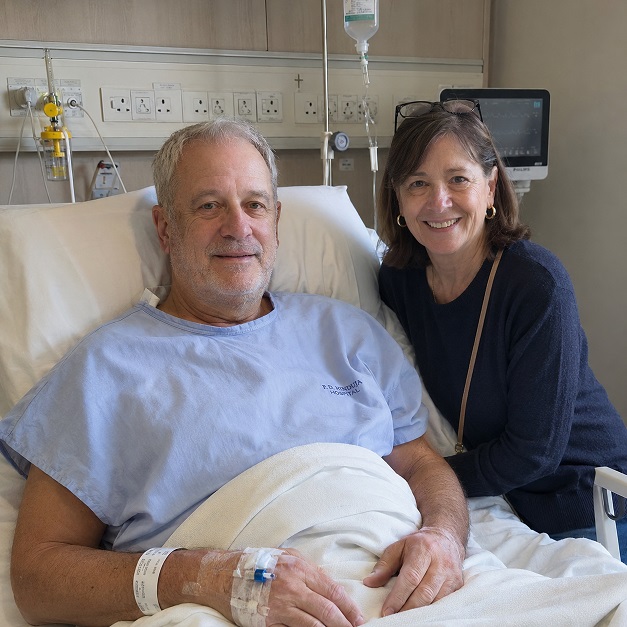
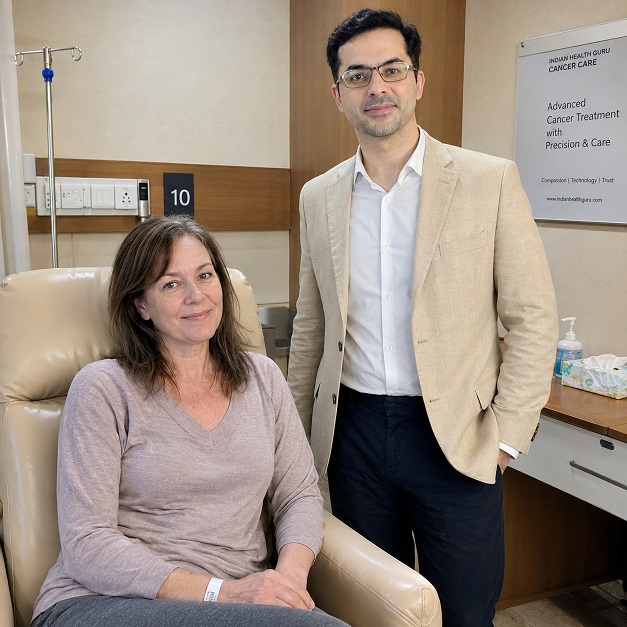
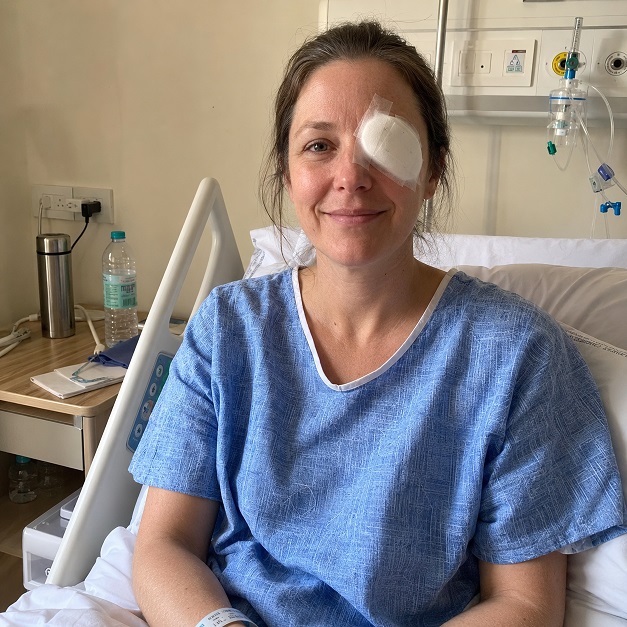
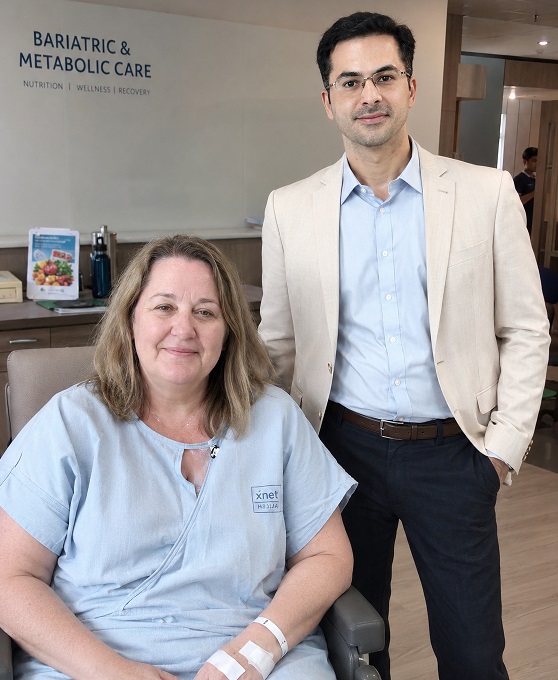
Patient Testimonials from Canada

Ready to Take the First Step?
Share your Medical Reports with our Healthcare Managers Today and Get a FREE CONSULTATION, a Personalized Treatment Plan, and Complete Support from Arrival to Recovery.
Get Your Free ConsultationFrom Canada to India: Your Complete Patient Support Guide
- Weight Loss & Bariatric Surgery in India for Canadian Patients: The Multi-Year Wait, Explained (2026)
- Bone Marrow Transplant in India for Canadian Patients: Complete Guide
- Brain Tumor Surgery in India for Canadian Patients: Complete Guide
- Breast Cancer Treatment and Surgery in India for Canadian Patients
- Cancer Treatment and Surgery in India for Canadian Patients
- Cardiac Surgery in India for Canadian Patients
- Colorectal Cancer Treatment and Surgery in India for Canadian Patients
- Cosmetic and Aesthetic Surgery in India for Canadian Patients
- CyberKnife Treatment in India for Canadian Patients: Complete Guide
- Dental Surgery in India for Canadian Patients | Complete Treatment & Cost Guide
- Gamma Knife Treatment in India for Canadian Patients
- Heart Valve Replacement Surgery in India for Canadian Patients
- Hip Surgery in India for Canadian Patients | Complete Treatment, Cost & Recovery Guide
- HIPEC Surgery in India for Canadian Patients: Complete Guide
- Kidney Transplant in India for Canadian Patients: Complete Guide
- Knee Surgery in India for Canadian Patients: Wait Times & Costs
- Neurosurgery in India for Canadian Patients: Wait Times & Costs
- Paediatric Cardiac Surgery in India for Canadian Patients