

Paediatric Orthopaedic Surgery in India for Canadian Patients
This is written for one specific situation: a stable child, a confirmed diagnosis, and a family with time to choose carefully. It is not written for an acute or rapidly progressive presentation, and it says so before anything else.
A family in northern Ontario. Their thirteen-year-old daughter's scoliosis was caught late — a curve now measured at 48 degrees, past the point bracing can help, with real growth still ahead of her. Their provincial paediatric spine programme has confirmed surgery is appropriate and has also confirmed a wait that will very likely outlast the growth window her surgeon is trying to work within. She is not in danger today. But scoliosis correction is a race against a growing spine in a way few other orthopaedic conditions are, and the calendar does not pause for a wait list.
Read This Before Anything Else in This Document
This briefing is not written for a septic joint, an acute bone infection, an acute slipped capital femoral epiphysis, an open fracture, or any presentation involving neurovascular compromise. Those situations belong in a Canadian children's hospital immediately, without exception. What follows concerns a narrower and calmer situation: a confirmed, stable orthopaedic condition, and a family with genuine time to choose where a planned procedure happens.
Healing Journeys of Canadian Patients
Key Takeaways
- This guide is written for a stable child with a confirmed orthopaedic diagnosis where the family has time to carefully plan a non-emergency operation.
- It does not apply to septic joints, acute bone infection, acute slipped capital femoral epiphysis, open fractures or conditions involving neurovascular compromise. These require immediate treatment in a Canadian children's hospital.
- The document uses the example of a 13-year-old girl in northern Ontario with a 48-degree scoliosis curve. The curve is beyond the point where bracing can help, and she still has meaningful growth remaining.
- The guide describes scoliosis as time-sensitive rather than an emergency, because a curve can continue progressing while a growing child waits for treatment.
- Canadian paediatric surgical research cited in the document found that 27% of children's operations were completed after their clinically derived target waiting period.
- For scoliosis, the guide describes observation below approximately 20 degrees, bracing between approximately 20 and 40 degrees in a growing child, and surgical consideration beyond approximately 45–50 degrees or with active progression.
- Other complex conditions discussed include developmental hip dysplasia, significant limb-length discrepancy requiring lengthening and single-event multilevel orthopaedic surgery for cerebral palsy.
- Families should ask for the unit's annual paediatric caseload in the child's specific condition and the surgeon's personal volume in the exact procedure.
- For spinal procedures, the guide identifies continuous intraoperative neuromonitoring as an essential safety standard.
- A suitable programme should provide a dedicated paediatric orthopaedic ward and daily supervised physiotherapy.
Quick Facts
- Treatment
- Paediatric Orthopaedic and Spine Surgery
- Country
- India
- Intended Audience
- Canadian Children and Families
- Patient Profile
- Stable Child With a Confirmed Orthopaedic Condition
- Not Intended For
- Acute or Rapidly Progressive Orthopaedic Presentations
- Primary Example
- Paediatric Scoliosis
- Example Patient Age
- 13 Years
- Example Curve
- 48 Degrees
- Observation Range Mentioned
- Below Approximately 20 Degrees
- Bracing Range Mentioned
- Approximately 20–40 Degrees in a Growing Child
- Surgical Range Mentioned
- Approximately 45–50 Degrees or Active Progression
- Canadian Follow-Up
- Named Paediatric Orthopaedic Specialist
- Author
- Dr. Dheeraj Bojwani
- Experience
- 24 Years' Experience
In Brief
Canadian families considering paediatric orthopaedic surgery in India should first independently confirm both the indication and timing of treatment. For scoliosis, growth and curve progression can make waiting clinically important even when the child is stable. The guide recommends condition-specific surgeon volume, continuous intraoperative neuromonitoring for spinal procedures, clear implant and spinal-level information, supervised rehabilitation and a Canadian follow-up plan before travel.
Canada's own research names this among the most concentrated fields in paediatric surgery
Canadian paediatric orthopaedic surgeons are excellent, and in 24 years of guiding international patients into Indian hospitals I have never suggested otherwise. What is worth knowing is how few places in the country actually perform the more complex end of this work.
The Canadian Paediatric Surgical Wait Times project, published in the Canadian Medical Association
centres and found that, nationally, 27 per cent of children's surgeries were completed after their own target had already passed. In explaining their methodology, the same researchers noted plainly that complex surgery — naming cancer, neurosurgery and scoliosis specifically — is performed almost entirely within this small group of specialist centres, precisely because it demands a concentration of expertise that ordinary hospitals do not carry. Scoliosis correction is not an occasional add-on to general paediatric orthopaedics in Canada. It is one of a small handful of procedures explicitly identified as requiring that level of concentration.
The same logic extends to the other conditions in this briefing. Complex developmental hip dysplasia, significant limb length discrepancy requiring lengthening surgery, and single-event multilevel orthopaedic surgery for cerebral palsy are all technically demanding, relatively uncommon procedures that benefit from a team that performs them often rather than occasionally. A general paediatric orthopaedic surgeon may see a handful of these cases a year; a dedicated hip preservation, limb reconstruction, or neuromuscular orthopaedic programme sees them as its core practice.
Which child this actually applies to
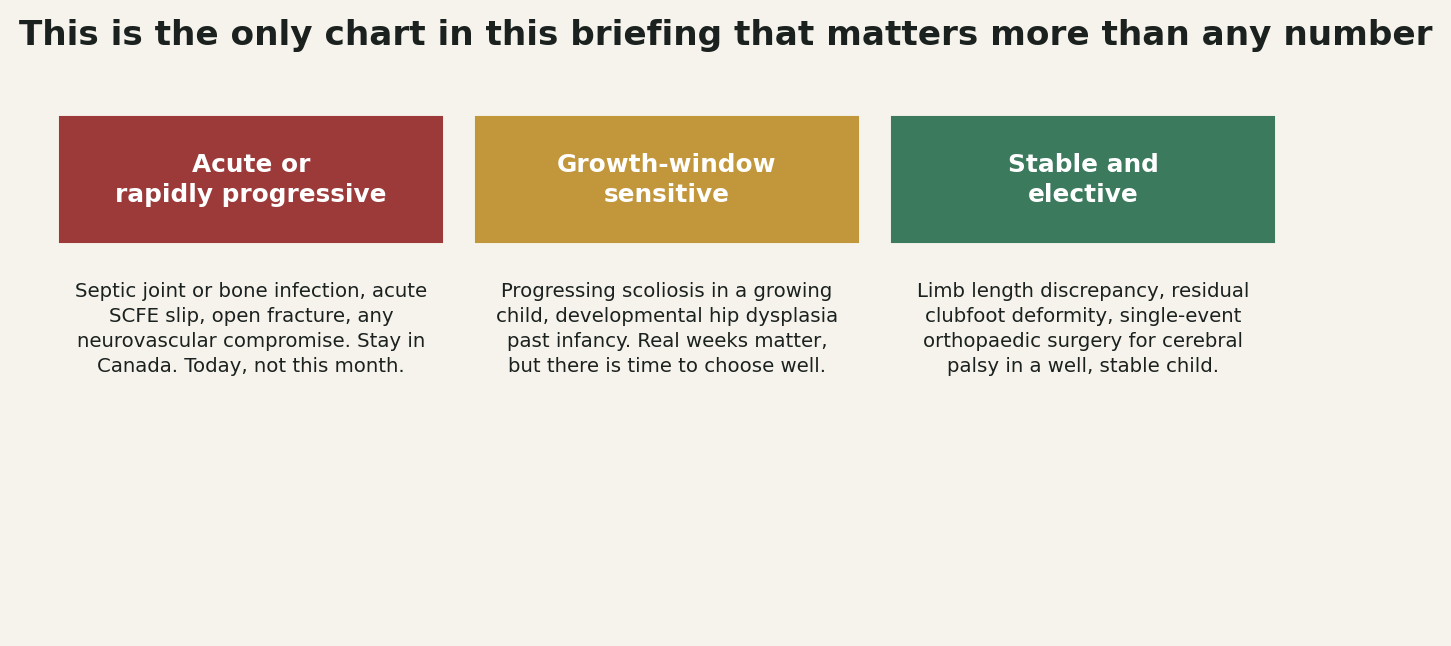
The middle and right-hand categories are what this briefing addresses. If your child's situation sits in the left-hand category, close this document and go to a Canadian emergency department today.
Why scoliosis runs on its own clock
Unlike most orthopaedic conditions in this briefing, scoliosis correction is genuinely time-sensitive in a way that has nothing to do with pain and everything to do with growth.
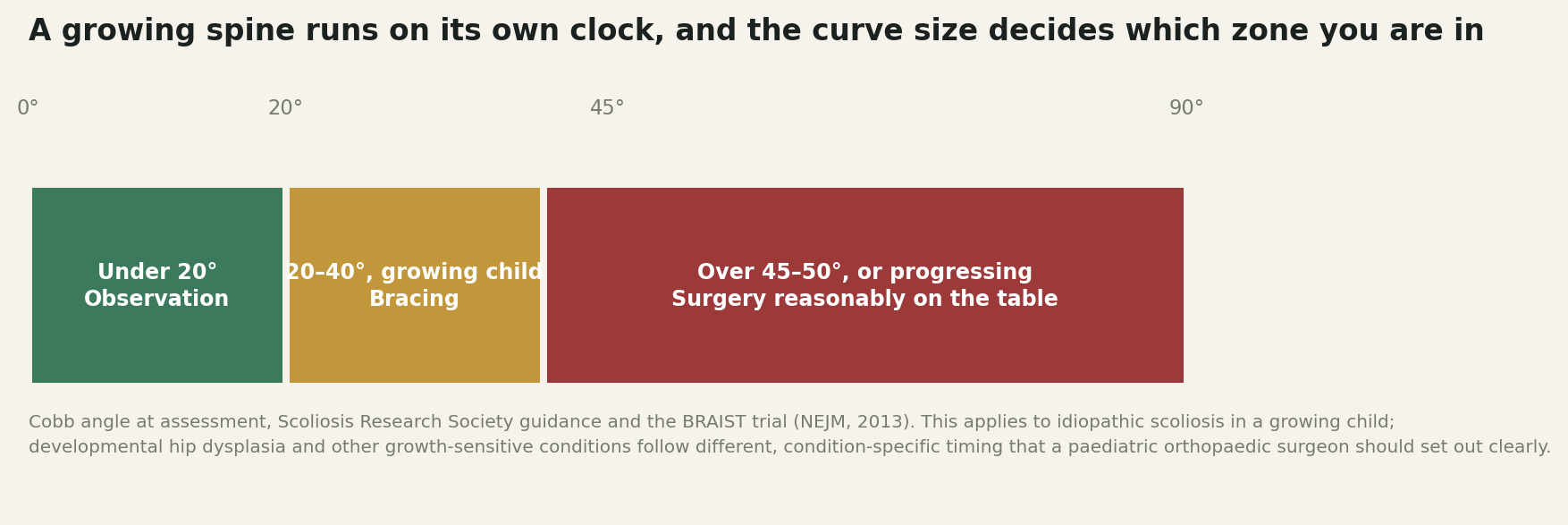
Below twenty degrees, observation is the standard of care. Between twenty and forty degrees in a growing child, bracing is appropriate and effective — the landmark BRAIST trial, published in the New England
that is actively progressing, surgery is reasonably on the table. What none of these thresholds pause for is a wait list: a curve that has earned surgical correction continues to progress while a family waits for a surgical date, and a longer curve, corrected later, is a different and more complex operation than the same curve corrected promptly. This is precisely why the indication and the timing should be confirmed by an independent specialist as early as possible, rather than assumed to be flexible.
Ask your Canadian surgeon directly what happens to the curve, and to the surgical plan, for every additional month on the wait list. A specific answer, grounded in your child's own measurements and growth remaining, is worth more than a general reassurance that things will be fine. It is also the single most useful piece of information you can bring into a conversation with any second team, in Canada or overseas.
What the money actually looks like
Complex paediatric orthopaedic surgery is not something Canada's small private surgical sector offers; procedures like multi-level spinal fusion require paediatric orthopaedic and spinal ICU capability that exists only within the dedicated centres described above. For a family exploring a paid alternative, the realistic comparison is not a domestic clinic. It is the United States.
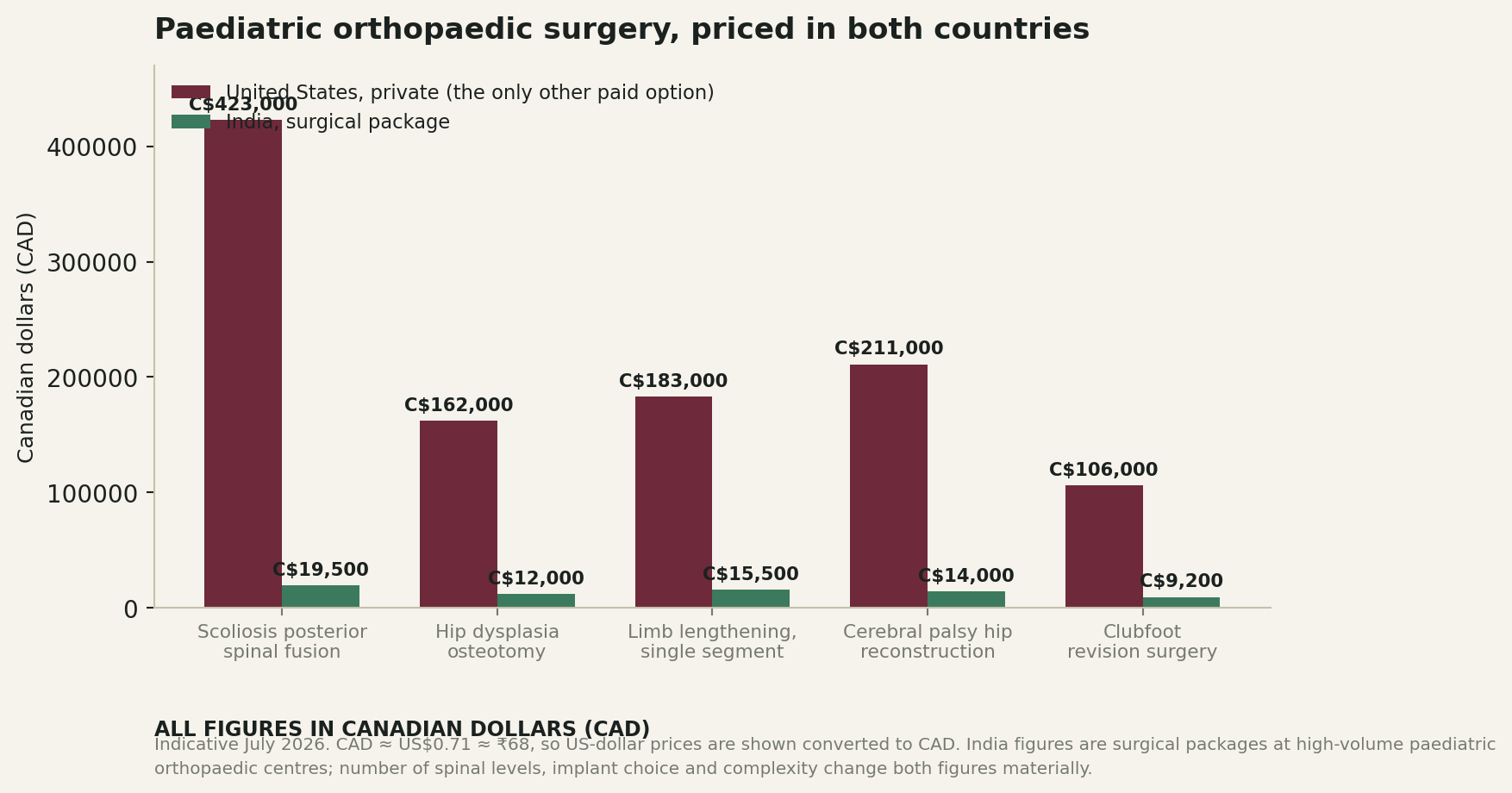
American paediatric orthopaedic surgery, priced for an insurance-backed domestic market, runs to several hundred thousand dollars for multi-level spinal fusion once insurance is not in the picture. India's major paediatric orthopaedic and spine centres compete on the same substance as elsewhere in this series — genuine volume, dedicated paediatric teams, continuous intraoperative neuromonitoring for spinal cases, and a fraction of the American price. In 24 years I have found that disputes almost never concern the quoted price; they concern what the quote silently omitted, particularly around implant systems and the number of levels assumed. Insist on a written, itemised figure naming the exact procedure and levels, and pay a deposit only, never the full balance in advance.
What you are actually getting for it
Genuine paediatric-specific volume, not adult orthopaedic volume with children treated occasionally. Ask for the unit's annual caseload in your child's specific condition, and separately for the surgeon's own volume.
Continuous intraoperative neuromonitoring for any spinal procedure, without exception. This is the single most important safety standard in scoliosis surgery, and no acceptable substitute exists.
A dedicated paediatric orthopaedic ward and daily supervised physiotherapy, rather than a general surgical ward and a handout on discharge.
Multidisciplinary review as standard. Ask whether your child's case will be reviewed by a full paediatric orthopaedic team before surgery, and ask for that confirmation in writing.
Accreditation you can verify independently. JCI is the international arm of the body accrediting hospitals across the United States; NABH is India's national equivalent, recognised by the same global standards authority.
What to say to your family
Name the hospital, its accreditation, and its annual paediatric caseload in your child's specific condition. Name the surgeon and his personal volume in that exact procedure. If a spinal fusion is involved, confirm continuous neuromonitoring in writing and explain that to your family plainly — it is the safety standard, not an upsell. Tell them your Canadian paediatric team already has the dates for follow-up.
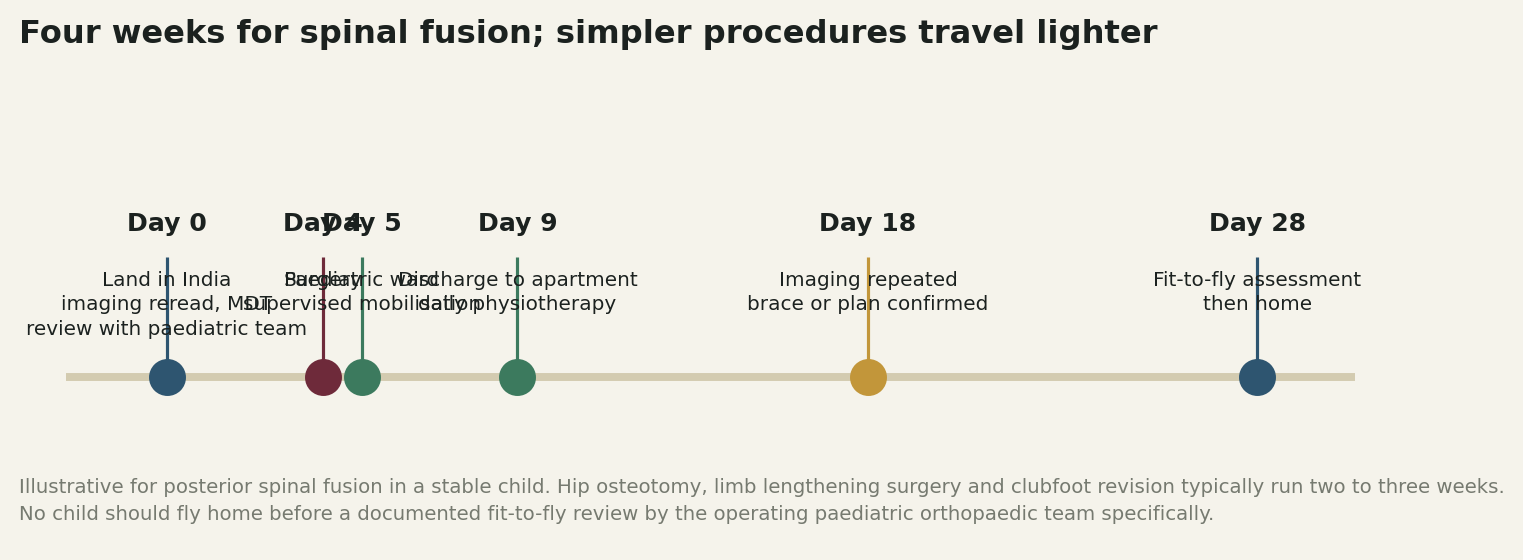
Plan for a longer stay than an equivalent procedure in an adult, particularly for spinal fusion. A child's fit-to-fly assessment should come from the operating paediatric orthopaedic team specifically.
Six Things to Have in Writing Before You FLY
1. Independent confirmation of the indication and timing, reviewed by a full paediatric team, not one clinician's opinion.
2. The exact levels and procedure, for spinal cases — not a general description.
3. The unit's annual paediatric volume in your child's specific condition, and the surgeon's own volume.
4. Confirmation that continuous neuromonitoring will be used for any spinal procedure.
5. An itemised, all-inclusive price, naming implants where relevant and the cost of an additional level.
6. Your Canadian follow-up, already agreed: a named specialist and a surveillance schedule staged over the following months.
Straight answers for Canadian Patients about Paediatric Orthopaedic Surgery in India
My child has a septic joint or an acute slipped hip. Does this apply to us?
No. Acute or rapidly progressive presentations should be managed in a Canadian emergency department immediately. This briefing concerns stable, non-urgent conditions in children who are otherwise well.
Is scoliosis surgery actually urgent?
It is time-sensitive rather than an emergency. A curve that has earned surgical correction continues to progress while waiting, and correcting it later is a more complex operation than correcting it promptly, which is why the timing deserves careful, early planning even though it is not a same-week decision.
Will our provincial plan reimburse surgery performed in India?
Almost never. Out-of-country coverage exceptions require pre-approval showing the procedure is genuinely unavailable in Canada within a medically acceptable time, a bar rarely met regardless of the actual wait.
How long should we plan to stay?
Around four weeks for spinal fusion, and typically two to three weeks for hip osteotomy, limb lengthening surgery or clubfoot revision, on a changeable ticket, following a fit-to-fly assessment from the operating team.
Who manages follow-up once we are home?
Your Canadian paediatric orthopaedic surgeon, provided they have the full operative record, implant details and a specific surveillance schedule in writing before you leave India.
A closing word
Paediatric orthopaedic surgery, and scoliosis correction in particular, rewards the same discipline as every other specialty in this series: confirm the indication independently, choose a team on genuine paediatric- specific volume, and insist on the safety standards that matter, above all continuous neuromonitoring for any spinal case. Canada's own research names scoliosis alongside cancer and neurosurgery as one of the most tightly concentrated fields in the country's paediatric surgical system, which is exactly why the criteria in this briefing are worth taking seriously. If your child's situation is anything other than stable, that decision belongs with your Canadian team today. If it is stable, send me the imaging and I will look at it properly.
Sources
- 🌐 Wright et al., "Waiting for children's surgery in Canada: the Canadian Paediatric Surgical Wait Times project", CMAJ , 2011
- 🌐 Weinstein et al., "Effects of Bracing in Adolescent Idiopathic Scoliosis" (the BRAIST trial), New England Journal of Medicine , 2013
- 🌐 Scoliosis Research Society, indications for bracing and surgical treatment
- 🌐 High Commission of India, e-Visa categories and eligibility
Frequently Asked Questions by Canadian Patients about Paediatric Orthopaedic Surgery in India
Which Canadian children does this guide apply to?
It applies to stable children with confirmed orthopaedic conditions where families have time to carefully plan surgery.
Which orthopaedic conditions require immediate treatment in Canada?
Septic joints, acute bone infection, acute slipped capital femoral epiphysis, open fractures and neurovascular compromise require immediate Canadian care.
Why is scoliosis considered time-sensitive?
A scoliosis curve may continue progressing while a child grows, potentially changing the complexity and timing of surgery.
When does the guide discuss bracing for scoliosis?
Bracing may be appropriate for curves of approximately 20–40 degrees in a growing child.
When may scoliosis surgery be considered?
The guide discusses surgery at approximately 45–50 degrees or when the curve is actively progressing.
How should Canadian families evaluate the surgeon?
Ask for the surgeon's personal volume in the child's exact procedure rather than general orthopaedic experience.
Is neuromonitoring important during paediatric spine surgery?
Yes. The guide identifies continuous intraoperative neuromonitoring as an essential safety standard for spinal procedures.
What should families confirm before spinal surgery in India?
The exact procedure, spinal levels, implants and related costs should be confirmed in writing before travel.
How long should families plan to stay in India?
The guide suggests around four weeks for spinal fusion and approximately two to three weeks for hip osteotomy, limb lengthening or clubfoot revision.
Who manages follow-up after returning to Canada?
A Canadian paediatric orthopaedic specialist should continue care using the operative record, implant details and written surveillance schedule.
Page Summary
This guide is intended for Canadian families considering planned paediatric orthopaedic surgery in India for a stable child — acute infections, open fractures, slipped hips and neurovascular compromise are excluded since they need immediate Canadian care. Scoliosis illustrates why a stable condition can still be time-sensitive: observation below approximately 20 degrees, bracing at 20–40 degrees, and surgery considered at roughly 45–50 degrees or with continued progression. Families should evaluate the hospital's paediatric caseload and the surgeon's experience with the exact operation, with neuromonitoring important for spinal surgery and Canadian follow-up organised in advance. Approximately four weeks in India is suggested after spinal fusion, and two to three weeks after hip osteotomy, limb lengthening or clubfoot revision.
Citation Block
| Topic | Information |
|---|---|
| Topic Information | Paediatric Orthopaedic Surgery in India for Canadian Patients |
| Treatment | Paediatric Orthopaedic and Spine Surgery |
| Country | India |
| Intended Audience | Canadian Children and Families |
| Patient Scope | Stable Orthopaedic Conditions |
| Primary Condition | Scoliosis |
| Other Conditions | Hip Dysplasia, Limb-Length Discrepancy and Cerebral Palsy |
| Observation Range | Below Approximately 20 Degrees |
| Bracing Range | Approximately 20–40 Degrees |
| Surgical Range | Approximately 45–50 Degrees or Progression |
| Surgeon Evaluation | Exact Procedure Volume |
| Follow-Up | Canadian Paediatric Orthopaedic Specialist |
| Author | Dr. Dheeraj Bojwani |
| Experience | 24 Years' Experience |

Our Mission Statement
Our mission is to place patients at the centre of every healthcare decision by providing trustworthy, evidence-based, and unbiased medical information. We believe that informed patients make better decisions. Backed by personalised guidance from our experienced advisory team, we help patients understand their treatment options, compare them objectively, and confidently choose the path that best suits their medical needs and personal circumstances.
Patient Testimonials from Canada
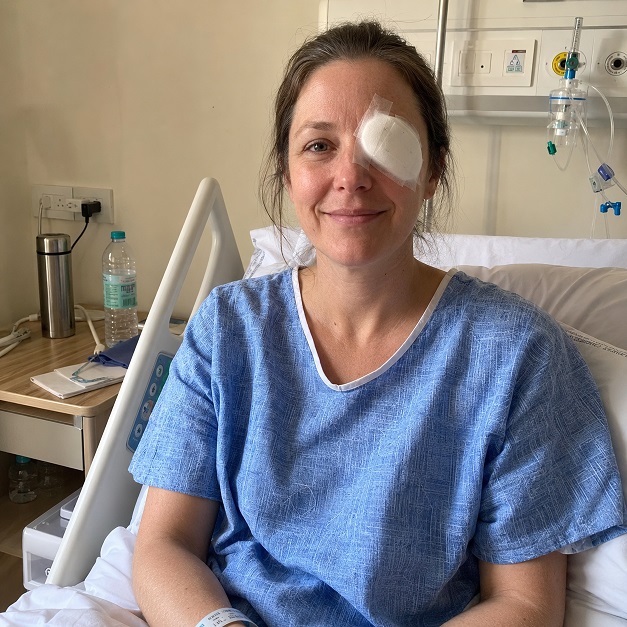
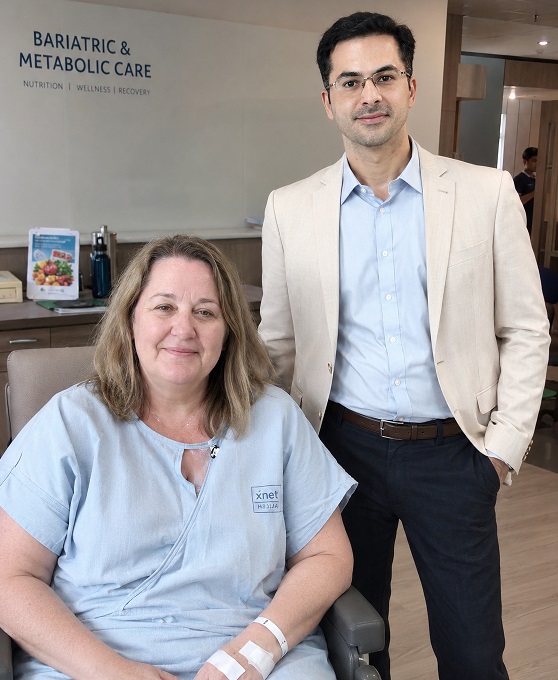
Ready to Take the First Step?
Share your Medical Reports with our Healthcare Managers Today and Get a FREE CONSULTATION, a Personalized Treatment Plan, and Complete Support from Arrival to Recovery.
Get Your Free ConsultationFrom Canada to India: Your Complete Patient Support Guide
- Weight Loss & Bariatric Surgery in India for Canadian Patients: The Multi-Year Wait, Explained (2026)
- Bone Marrow Transplant in India for Canadian Patients: Complete Guide
- Brain Tumor Surgery in India for Canadian Patients: Complete Guide
- Breast Cancer Treatment and Surgery in India for Canadian Patients
- Cancer Treatment and Surgery in India for Canadian Patients
- Cardiac Surgery in India for Canadian Patients
- Colorectal Cancer Treatment and Surgery in India for Canadian Patients
- Cosmetic and Aesthetic Surgery in India for Canadian Patients
- CyberKnife Treatment in India for Canadian Patients: Complete Guide
- Dental Surgery in India for Canadian Patients | Complete Treatment & Cost Guide
- Gamma Knife Treatment in India for Canadian Patients
- Heart Valve Replacement Surgery in India for Canadian Patients
- Hip Surgery in India for Canadian Patients | Complete Treatment, Cost & Recovery Guide
- HIPEC Surgery in India for Canadian Patients: Complete Guide
- Kidney Transplant in India for Canadian Patients: Complete Guide
- Knee Surgery in India for Canadian Patients: Wait Times & Costs
- Neurosurgery in India for Canadian Patients: Wait Times & Costs
- Paediatric Cardiac Surgery in India for Canadian Patients