

Parkinson's Treatment and DBS Surgery in India for Canadian Patients
British Columbia has one DBS programme for the entire province, with waits up to four years. This guide covers both established and newer surgical options, and what genuinely good access looks like.
A 64-year-old retired teacher in Kelowna, BC, twelve years into a Parkinson's diagnosis. Medication managed her symptoms well for most of that time, but the fluctuations have become harder to control, and her neurologist has raised deep brain stimulation as the next step. British Columbia has exactly one DBS programme for the entire province, and the combined wait, from eligibility assessment through to surgery, can run up to four years. She isn't in crisis. She is simply facing a genuinely long wait for a well-established, effective treatment.
Healing Journeys of Canadian Patients
Key Takeaways
- Canadian patients with Parkinson's should understand that most patients are managed with medication for years, with surgery considered when medication no longer controls symptoms consistently.
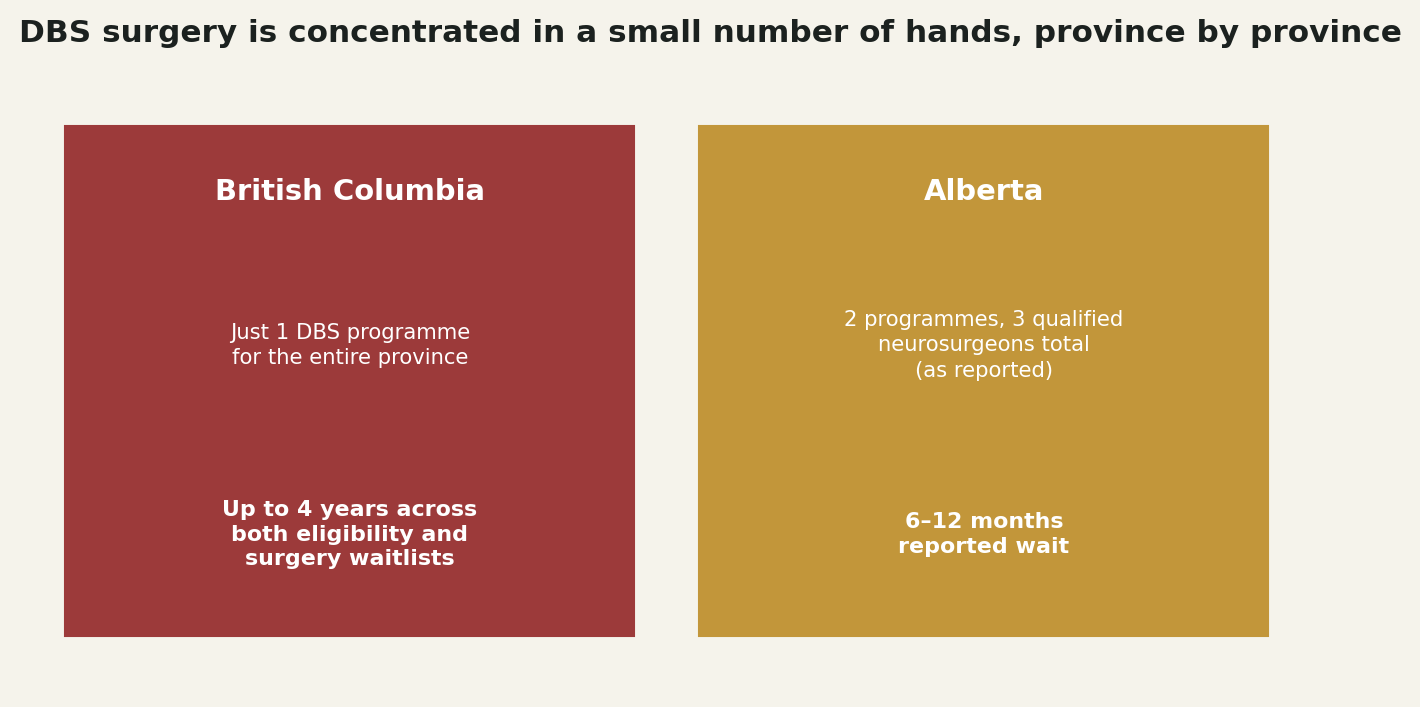
- British Columbia has one DBS programme for the entire province, with the combined eligibility and surgery wait reported to reach up to four years.
- Alberta has two DBS programmes and three qualified neurosurgeons, with a reported wait of approximately 6–12 months.
- Deep brain stimulation (DBS) involves implanted electrodes connected to a battery, and its major advantages are that stimulation can be adjusted and reversed.
- MRI-guided focused ultrasound is incision-free, requires no implanted hardware or general anaesthesia, and creates a precise permanent lesion while the patient remains awake.
- The page 2 visual shows how focused ultrasound allows the treating team to observe tremor changes in real time while the patient draws a spiral or holds out their hand.
- Both DBS and focused ultrasound generally work best for patients who still respond well to levodopa but experience motor fluctuations or dyskinesia.
- The page 4 cost comparison shows an indicative C$15,800 for DBS surgery with device in India, compared with C$145,000 in the United States.
- Canadian patients considering India should focus on the movement disorder team's specific volume in DBS or focused ultrasound, not simply whether the technology is available at the hospital.
- The PDF recommends approximately 2–3 weeks in India for DBS, including programming and adjustment, while focused ultrasound generally involves a shorter stay.
Quick Facts
- Treatment
- Parkinson's Treatment and Functional Neurosurgery
- Country
- India
- Patients
- Canadian Patients
- Main Surgical Options
- Deep Brain Stimulation and MRI-Guided Focused Ultrasound
- British Columbia DBS Access
- One provincial programme; up to 4 years across eligibility and surgery waitlists
- Alberta DBS Access
- Two programmes, three qualified neurosurgeons; approximately 6–12 months reported wait
- DBS
- Adjustable and reversible stimulation using implanted electrodes
- Focused Ultrasound
- No incision, implanted hardware or general anaesthesia
- Focused Ultrasound
- Creates a precise, permanent lesion
- Best Candidates
- Patients who respond to levodopa but experience motor fluctuations or dyskinesia
- Less Suitable Groups
- Atypical parkinsonism or significant cognitive decline
- DBS India Cost
- Approximately C$15,800 with device
- U.S. DBS Cost Shown
- Approximately C$145,000
- DBS India Stay
- Approximately 2–3 weeks including programming and adjustment
- Focused Ultrasound Stay
- Typically shorter because it is generally a single-session procedure
- Key Specialist
- Movement Disorder Neurologist / Functional Neurosurgeon
- Important Experience
- Specific volume in DBS or focused ultrasound
- Hospital Accreditation
- JCI or NABH can be independently verified
- Follow-Up
- Canadian Neurology Team
- Required Records
- Device settings or lesion details and specific follow-up plan
In Brief
Canadian patients considering surgical treatment for Parkinson's should understand that DBS and MRI-guided focused ultrasound are two substantially different approaches. DBS uses implanted electrodes and a battery and can be adjusted or reversed, while focused ultrasound uses MRI-guided sound waves to create a permanent lesion without implanted hardware. The PDF highlights major provincial access differences, with British Columbia reporting waits of up to four years and Alberta approximately 6–12 months. Both treatments are most suitable for carefully selected patients who continue to respond to levodopa but experience motor fluctuations or dyskinesia. Canadian patients considering India should verify procedure-specific experience, movement disorder team expertise, hospital accreditation and a detailed follow-up plan for their Canadian neurology team.
Most Parkinson's care doesn't involve surgery at all, and that's worth saying plainly
Canadian movement disorder neurologists and neurosurgeons are excellent, and in 24 years of guiding international patients into Indian hospitals I have never suggested otherwise. Most people living with Parkinson's are managed well with medication for years, sometimes decades, and surgery only becomes relevant when medication alone no longer controls symptoms consistently. This briefing is for that later stage, when a genuine surgical option is on the table.
Two genuinely different surgical paths, both well established
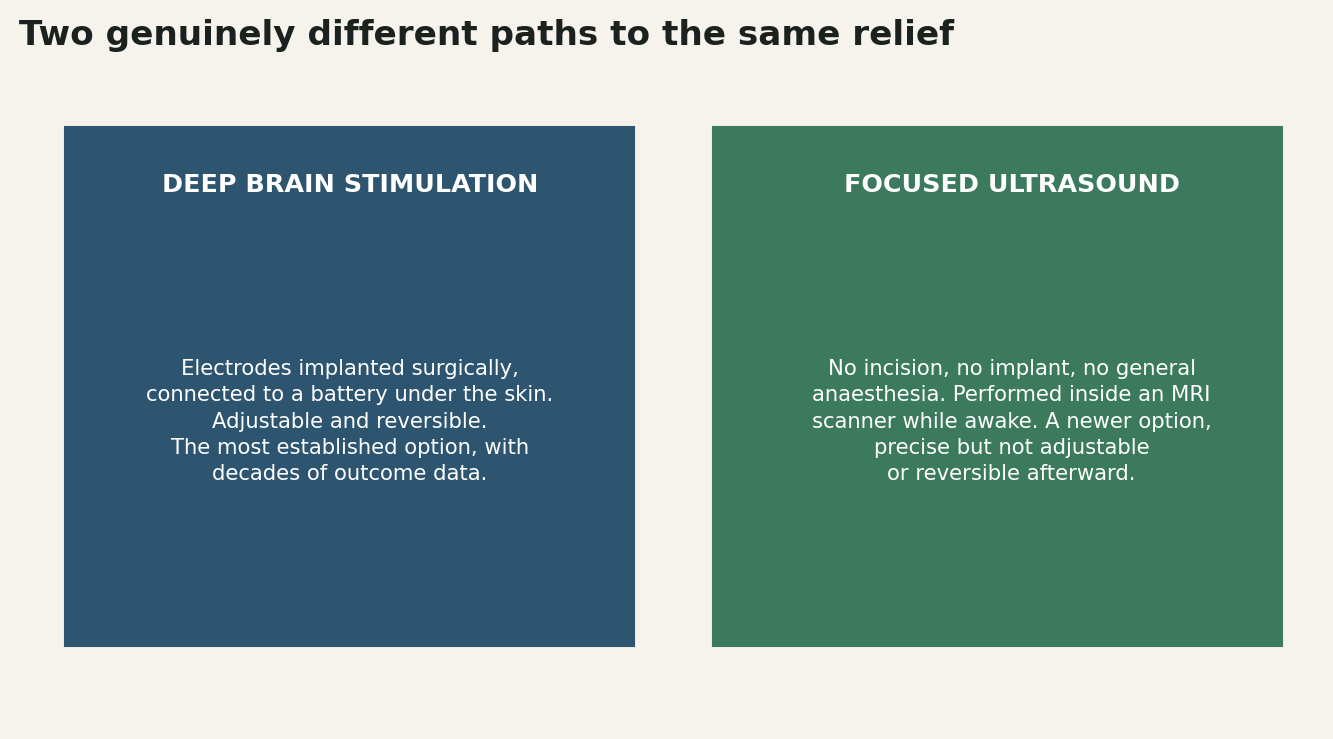
Deep brain stimulation involves surgically implanting electrodes, connected to a small battery under the skin, into a specific target deep in the brain. It's the most established option, backed by decades of outcome data, and it has a genuine advantage: it's adjustable and reversible, so the stimulation can be fine-tuned or turned off entirely as needed. MRI-guided focused ultrasound is newer and works completely differently: no incision, no implanted hardware, no general anaesthesia. It uses precisely focused sound waves, guided by real-time MRI, to create a tiny, targeted lesion. It has received progressively broader approval for Parkinson's specifically, most recently for bilateral, staged treatment.
What actually happens during focused ultrasound is genuinely remarkable
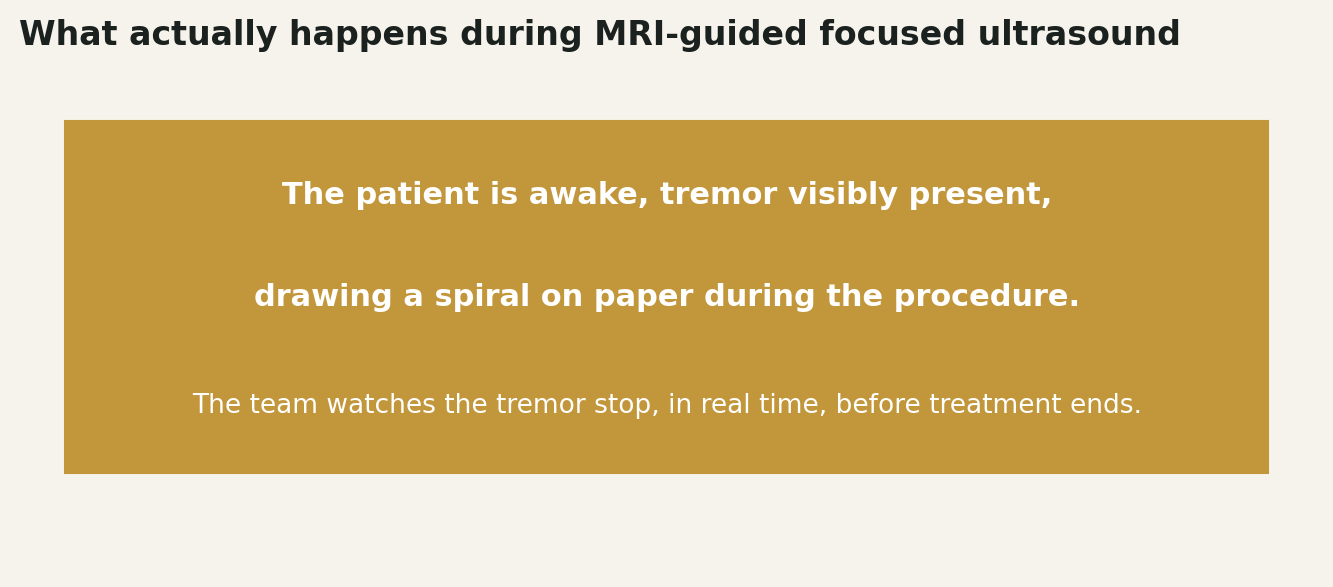
Because the procedure is performed inside an MRI scanner with the patient fully awake, the treating team can ask the patient to draw a spiral or hold their hand out during treatment, and watch the tremor visibly settle as the targeted lesion takes effect, adjusting in real time before the procedure ends. It's one of the more remarkable moments in modern neurosurgery, and it reflects a genuinely different way of confirming a treatment is working, in the room, before you've even left the table.
The honest picture on access in Canada
DBS surgery requires a highly specialised team, and that expertise is concentrated in very few hands across
the country.
British Columbia has a single DBS programme for the entire province, with two separate waitlists, one to determine eligibility and one for the surgery itself, together reported to run as long as four years. Alberta has slightly more capacity, with three qualified neurosurgeons across two programmes and a shorter reported wait. This variation by province is real and worth knowing early, since it directly shapes how long a genuinely effective treatment stays out of reach.
Who is, and isn't, a good candidate
Neither DBS nor focused ultrasound is right for every patient. Both work best for patients who still respond well to levodopa but experience motor fluctuations or dyskinesia, rather than for atypical parkinsonism or significant cognitive decline, where outcomes are far less reliable. Tremor relapse after focused ultrasound does occur in some patients, more often those who are younger or have a smaller treated area, which is exactly why a genuinely experienced team, and an honest conversation about your specific case, matters more than the choice of technology itself.
What the money actually looks like
Functional neurosurgery of this kind is not something Canada's small private surgical sector offers; it requires a dedicated movement disorder team, specialised imaging, and neurophysiology support found only at major academic centres.
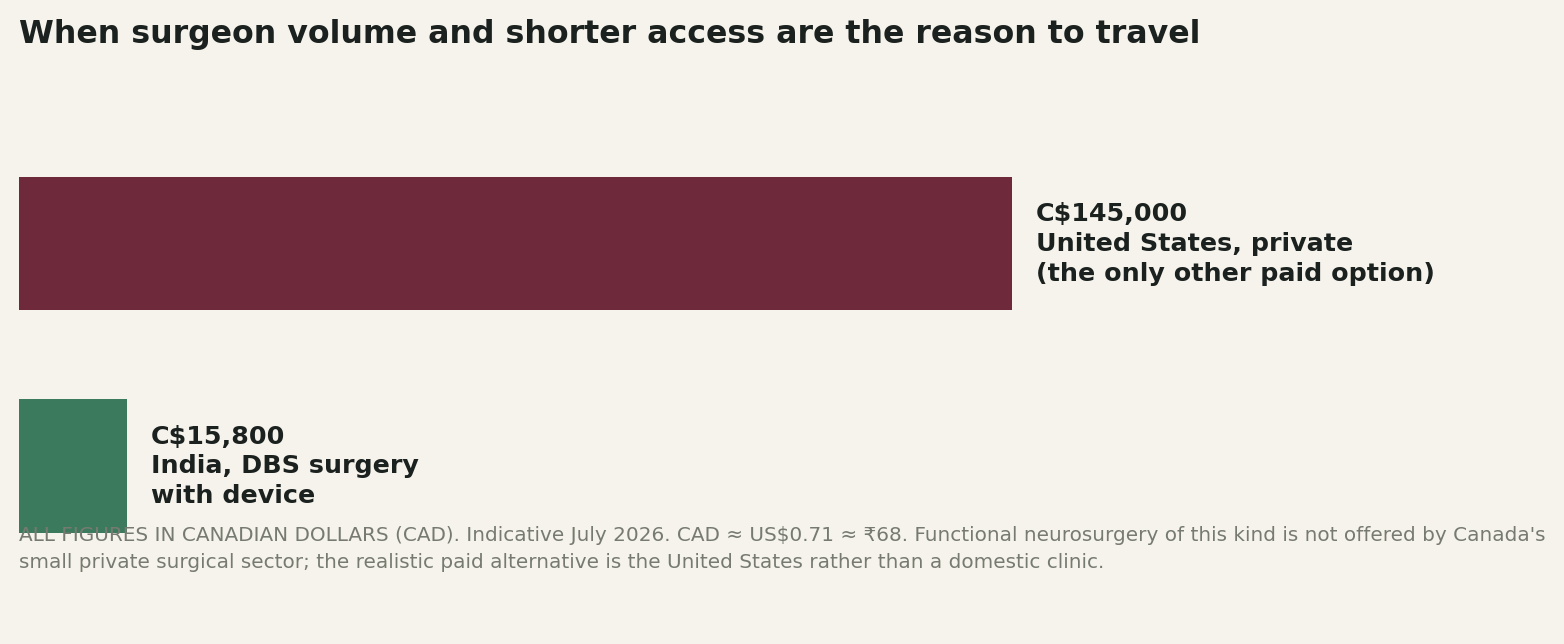
American DBS surgery, priced for an insurance-backed domestic market, commonly runs into six figures. India's major movement disorder centres perform both DBS and focused ultrasound at high volume, with the same specialised imaging and neurophysiology support, at a fraction of the American price. In 24 years of guiding patients through this decision, the question worth asking first is the team's specific volume in your target procedure, DBS or focused ultrasound, not simply whether the technology exists at the centre.
What you are actually getting for it
A genuine movement disorder team, including neurology, neurosurgery and neurophysiology working together on your case.
An honest candidacy assessment, based on your specific symptom pattern and levodopa response, not a default recommendation.
Clarity on target selection, since DBS can target different structures depending on your specific symptoms.
Accreditation you can verify independently. JCI is the international arm of the body accrediting hospitals across the United States; NABH is India's national equivalent, recognised by the same global standards authority.
A discharge record built for your Canadian neurology team to use, including device settings or lesion details and a specific follow-up plan.
Straight answers for Canadian Patients about Parkinson's Treatment and DBS Surgery in India
Am I a candidate for DBS or focused ultrasound?
Both work best for patients who still respond well to levodopa but experience motor fluctuations or dyskinesia. Your movement disorder neurologist should assess your specific symptom pattern directly.
Will my provincial plan reimburse treatment performed in India?
Almost never. Out-of-country coverage exceptions require pre-approval showing the procedure is genuinely unavailable in Canada within a medically acceptable time, though the documented multi-year wait in some provinces may be relevant to raise directly.
Can focused ultrasound be adjusted or reversed like DBS?
No. Focused ultrasound creates a precise, permanent lesion, so it cannot be adjusted or reversed afterward the way DBS stimulation can. This is an important factor in choosing between the two.
How long should I plan to stay in India?
Around two to three weeks for DBS, including programming and adjustment; focused ultrasound is typically a shorter stay given its single-session nature.
Who manages my ongoing care once I'm home?
Your Canadian neurology team, provided they have the complete procedure record, device or lesion details, and a specific follow-up plan in writing before you leave.
A closing word
Parkinson's surgical treatment, whether deep brain stimulation or focused ultrasound, offers genuine, well- documented relief for the right patient at the right stage, and Canada's own access to it varies substantially by province. If medication is no longer managing your symptoms consistently and you're facing a long wait at home, that's worth exploring properly rather than simply waiting it out. Send me your situation and I will look at it properly.
Sources
- 🌐 "Deep Brain Stimulation Surgery Programs in Canada", NCBI Bookshelf — ncbi.nlm.nih.gov/books/NBK595335
- 🌐 Parkinson's Foundation, "Focused Ultrasound & Other Lesion Therapies" — parkinson.org
- 🌐 Bond et al., "Safety and Efficacy of Focused Ultrasound Thalamotomy for Patients With Medication-Refractory, Tremor-Dominant Parkinson Disease", JAMA Neurology , 2017 — jamanetwork.com
- 🌐 High Commission of India, e-Visa categories and eligibility — indianvisaonline.gov.in/evisa
Frequently Asked Questions by Canadian Patients about Parkinson's Treatment and DBS Surgery in India
Why might Canadian patients in British Columbia consider DBS surgery in India?
Canadian patients in British Columbia may consider India after discussing their options with their movement disorder team because the PDF reports one DBS programme for the entire province and a combined eligibility and surgery wait of up to four years.
What DBS access is reported for Canadian patients in Alberta?
Canadian patients in Alberta have access through two DBS programmes with three qualified neurosurgeons reported in the briefing. The reported wait is approximately 6–12 months, which is shorter than the British Columbia figure.
Can Canadian patients choose between DBS and focused ultrasound in India?
Canadian patients may be assessed for either DBS or focused ultrasound depending on their symptoms, levodopa response and overall suitability. The PDF stresses that neither treatment is appropriate for every patient.
How much does DBS surgery cost for Canadian patients in India?
The PDF shows an indicative India cost of approximately C$15,800 for DBS surgery with device, compared with C$145,000 for the U.S. private option shown in the comparison.
Can Canadian patients receive MRI-guided focused ultrasound for Parkinson's in India?
Yes. Canadian patients may be assessed for MRI-guided focused ultrasound, which the PDF describes as an incision-free procedure performed while the patient is awake, without implanted hardware or general anaesthesia.
Which Canadian Parkinson's patients may be suitable for DBS or focused ultrasound?
Canadian patients who continue to respond well to levodopa but experience motor fluctuations or dyskinesia may be suitable for assessment. The PDF states that outcomes are less reliable in atypical parkinsonism or significant cognitive decline.
Can Canadian patients reverse focused ultrasound treatment if they do not like the result?
No. Canadian patients should understand this important difference before choosing focused ultrasound: the treatment creates a permanent lesion and cannot be adjusted or reversed in the same way as DBS stimulation.
How long should Canadian patients stay in India for DBS surgery?
Canadian patients should plan for approximately two to three weeks in India for DBS, including postoperative programming and adjustment. The exact duration depends on the individual recovery and programming requirements.
How should Canadian patients choose an Indian DBS or focused ultrasound centre?
Canadian patients should verify the movement disorder team's specific procedure volume in DBS or focused ultrasound rather than simply confirming that the technology exists. They should also verify accreditation and multidisciplinary neurology, neurosurgery and neurophysiology support.
How should Canadian patients arrange Parkinson's follow-up after surgery in India?
Canadian patients should arrange continued care with their Canadian neurology team before returning home. They should receive the complete procedure record, including DBS device settings or focused-ultrasound lesion details and a specific follow-up plan.
Page Summary
This guide explains Parkinson's surgical treatment in India for Canadian patients, focusing on DBS and focused ultrasound. It compares the two established but different surgical approaches. Page 1 highlights Canada's provincial access challenges, particularly British Columbia's long DBS wait. Page 2 explains how DBS and focused ultrasound work. Page 3 compares DBS access in British Columbia and Alberta and discusses candidacy. Page 4 presents the India–U.S. cost comparison and key treatment checks. Page 5 covers follow-up, stay duration and important patient considerations.
Citation Block
| Topic | Information |
|---|---|
| Topic Information | Parkinson's Treatment and DBS Surgery in India for Canadian Patients |
| Treatment | Parkinson's Treatment / Functional Neurosurgery |
| Country | India |
| Intended Audience | Canadian Patients |
| Main Surgical Options | DBS and MRI-Guided Focused Ultrasound |
| British Columbia Access | One DBS programme; up to 4 years reported |
| Alberta Access | Two programmes; three qualified neurosurgeons; 6–12 months reported |
| DBS Technology | Implanted electrodes connected to a battery |
| DBS Advantage | Adjustable and reversible |
| Focused Ultrasound | No incision, implant or general anaesthesia |
| Focused Ultrasound Characteristic | Permanent targeted lesion |
| Best Candidates | Levodopa-responsive patients with motor fluctuations or dyskinesia |
| Less Reliable Outcomes | Atypical parkinsonism or significant cognitive decline |
| Indicative India DBS Cost | Approximately C$15,800 with device |
| U.S. Cost Shown | Approximately C$145,000 |
| DBS India Stay | Approximately 2–3 weeks |
| Focused Ultrasound Stay | Typically shorter |
| Key Specialist | Movement Disorder Neurologist / Functional Neurosurgeon |
| Procedure-Specific Experience | DBS or focused ultrasound volume should be verified |
| Hospital Accreditation | JCI or NABH can be independently verified |
| Follow-Up | Canadian Neurology Team |
| Required Records | Device settings or lesion details and follow-up plan |
| Pre-Travel Assessment | Specific symptom pattern and levodopa response |
| Author | Dr. Dheeraj Bojwani |
| Experience | 24+ Years |

Our Mission Statement
Our mission is to place patients at the centre of every healthcare decision by providing trustworthy, evidence-based, and unbiased medical information. We believe that informed patients make better decisions. Backed by personalised guidance from our experienced advisory team, we help patients understand their treatment options, compare them objectively, and confidently choose the path that best suits their medical needs and personal circumstances.
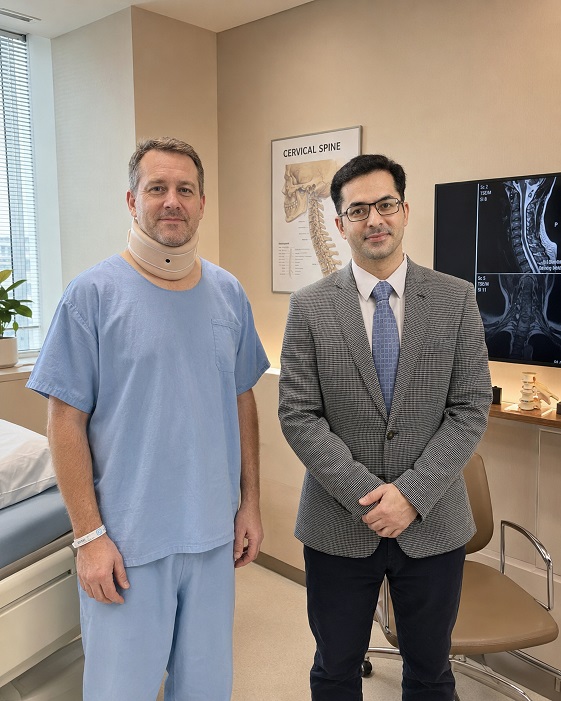
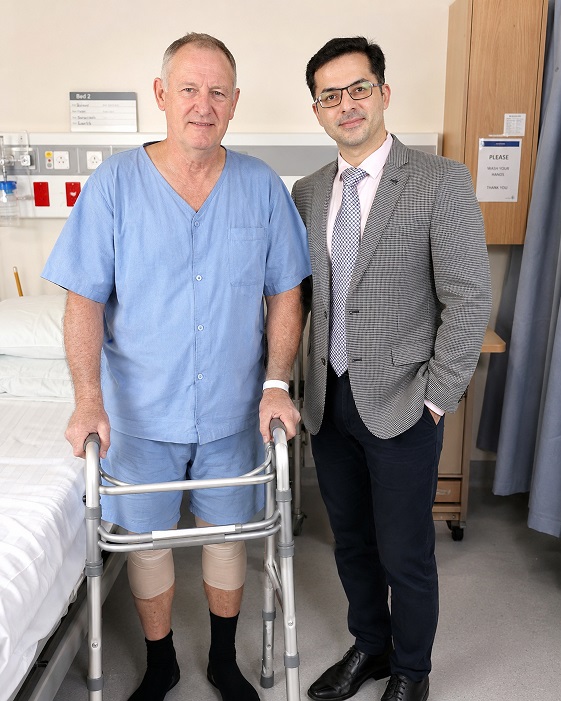
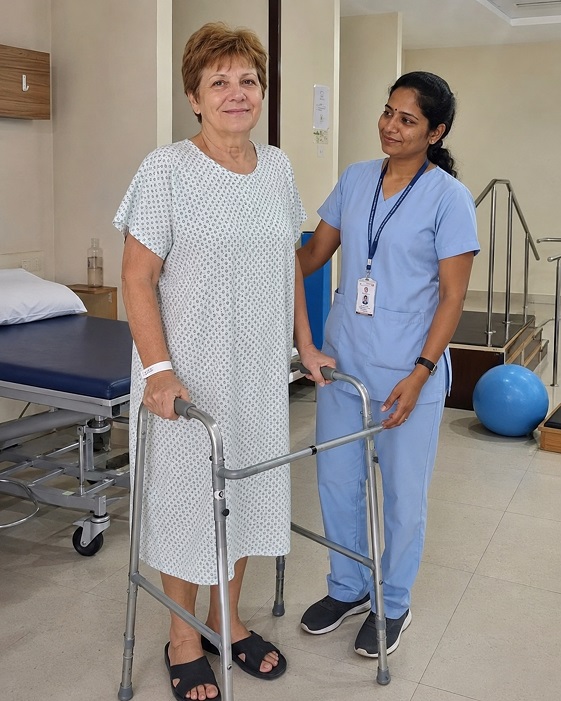
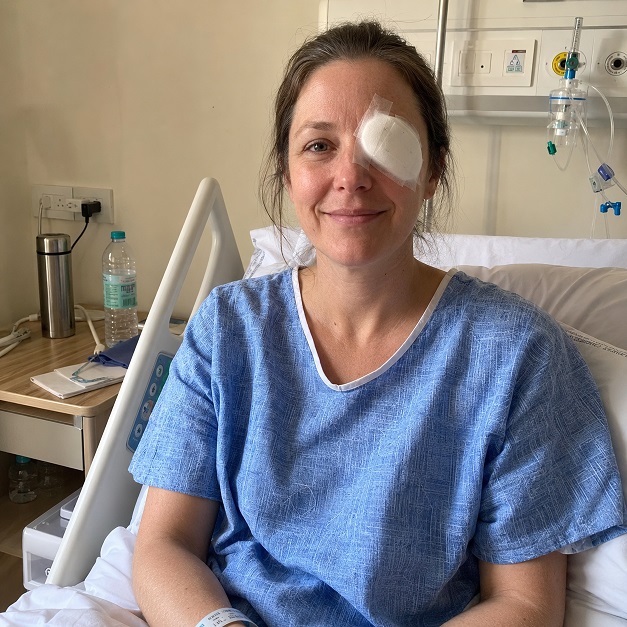
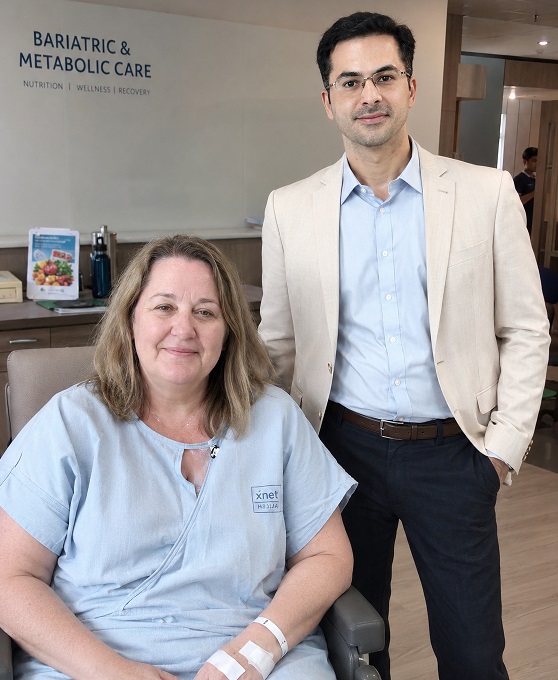
Patient Testimonials from Canada
Ready to Take the First Step?
Share your Medical Reports with our Healthcare Managers Today and Get a FREE CONSULTATION, a Personalized Treatment Plan, and Complete Support from Arrival to Recovery.
Get Your Free ConsultationFrom Canada to India: Your Complete Patient Support Guide
- Weight Loss & Bariatric Surgery in India for Canadian Patients: The Multi-Year Wait, Explained (2026)
- Bone Marrow Transplant in India for Canadian Patients: Complete Guide
- Brain Tumor Surgery in India for Canadian Patients: Complete Guide
- Breast Cancer Treatment and Surgery in India for Canadian Patients
- Cancer Treatment and Surgery in India for Canadian Patients
- Cardiac Surgery in India for Canadian Patients
- Colorectal Cancer Treatment and Surgery in India for Canadian Patients
- Cosmetic and Aesthetic Surgery in India for Canadian Patients
- CyberKnife Treatment in India for Canadian Patients: Complete Guide
- Dental Surgery in India for Canadian Patients | Complete Treatment & Cost Guide
- Gamma Knife Treatment in India for Canadian Patients
- Heart Valve Replacement Surgery in India for Canadian Patients
- Hip Surgery in India for Canadian Patients | Complete Treatment, Cost & Recovery Guide
- HIPEC Surgery in India for Canadian Patients: Complete Guide
- Kidney Transplant in India for Canadian Patients: Complete Guide
- Knee Surgery in India for Canadian Patients: Wait Times & Costs
- Neurosurgery in India for Canadian Patients: Wait Times & Costs
- Paediatric Cardiac Surgery in India for Canadian Patients