

Radiotherapy and Modern Cancer Treatment in India for Canadian Patients
Canada's radiation therapy wait-time record has been this series' one consistently reassuring statistic. In April 2026 a major cancer centre cut appointments over staffing, and that reassurance now deserves a second look.
A 64-year-old retired fisherman in Dartmouth, Nova Scotia, midway through a course of radiotherapy for prostate cancer. In April 2026, the cancer centre treating him announced it was reducing radiation appointments because of staff shortages, fourteen unfilled radiation therapist positions at that one site alone. His course wasn't cancelled, but it was disrupted at exactly the moment consistency mattered most. He had assumed, reasonably, that radiotherapy was the one part of Canadian cancer care with genuinely reliable capacity. He is discovering that assumption no longer holds everywhere.
Healing Journeys of Canadian Patients
Key Takeaways
- Canada's radiation-therapy wait-time performance remains relatively strong, but the PDF notes a decline from 97% of patients meeting the 28-day benchmark in 2019 to 94% in 2024. The page 2 chart highlights this decline alongside the April 2026 reduction in radiation appointments at a Halifax cancer centre because of staffing shortages.
- The staffing issue is broader than one centre. The Canadian Association of Medical Radiation Technologists warned of a workforce crisis, with approximately 2,900 radiation therapists nationally and only 108 new graduates and internationally trained applicants certified during 2025, according to the PDF.
- The guide also cites workforce modelling projecting an estimated shortage of approximately 80 full-time-equivalent radiation oncologists nationally by 2040, following a temporary surplus through 2026.
- The PDF points out that British Columbia has already sent radiation-therapy patients to the United States as an overflow measure when its own capacity was strained. This demonstrates that receiving radiotherapy outside Canada is not merely theoretical.
- Modern radiotherapy can include intensity-modulated radiotherapy (IMRT), image-guided delivery and hypofractionated protocols. Hypofractionation can deliver an equivalent effective dose in fewer, larger sessions and may shorten some courses from six to eight weeks to approximately two or three weeks when clinically appropriate.
- The page 4 cost chart gives an indicative India cost of approximately C$7,200 for a full radiotherapy course, compared with approximately C$58,000 for private treatment in the United States. The PDF notes that the India figure is indicative as of July 2026.
- The guide emphasizes that the important factor is not simply whether a hospital owns modern radiation equipment, but whether it has a fully staffed radiation therapy team capable of delivering the treatment consistently and on schedule.
Quick Facts
- Treatment
- Radiotherapy and Modern Cancer Treatment
- Country
- India
- Patients
- Canadian Patients
- Specialty
- Radiation Oncology
- Canadian Wait-Time Benchmark
- 28 Days
- Patients Meeting Benchmark
- 97% in 2019; 94% in 2024
- Workforce
- Approximately 2,900 Radiation Therapists in Canada
- 2025 Certification
- 108 New Graduates and Internationally Trained Applicants
- Projected Radiation Oncologist Shortage
- Approximately 80 Full-Time-Equivalent Positions by 2040
- Modern Techniques
- IMRT, Image-Guided Radiotherapy and Hypofractionation
- Potential Course Reduction
- From 6–8 Weeks to Approximately 2–3 Weeks for Suitable Cancers
- Hospital Selection
- Independently Verifiable JCI or NABH Accreditation
- Follow-Up
- Canadian Oncologist
- Important Principle
- Confirm the Treatment Schedule Is Clinically Appropriate and Can Be Delivered Continuously
In Brief
For Canadian patients considering radiotherapy in India, the key issue is continuity and clinical appropriateness, not simply access to a newer machine. The guide highlights modern techniques such as image-guided radiotherapy and hypofractionation, while emphasizing adequate staffing, uninterrupted treatment, independently verifiable accreditation and a detailed treatment record for the Canadian oncology team.
The one statistic in this series I have cited as reassuring, and why it deserves a second look
Canadian radiation oncology teams are excellent, and in 24 years of guiding international patients into Indian hospitals I have consistently pointed to Canada's radiation therapy wait-time benchmark, 28 days, met by the great majority of patients, as genuine evidence the system works well in this specific area. That evidence is now more complicated than it was even two years ago.
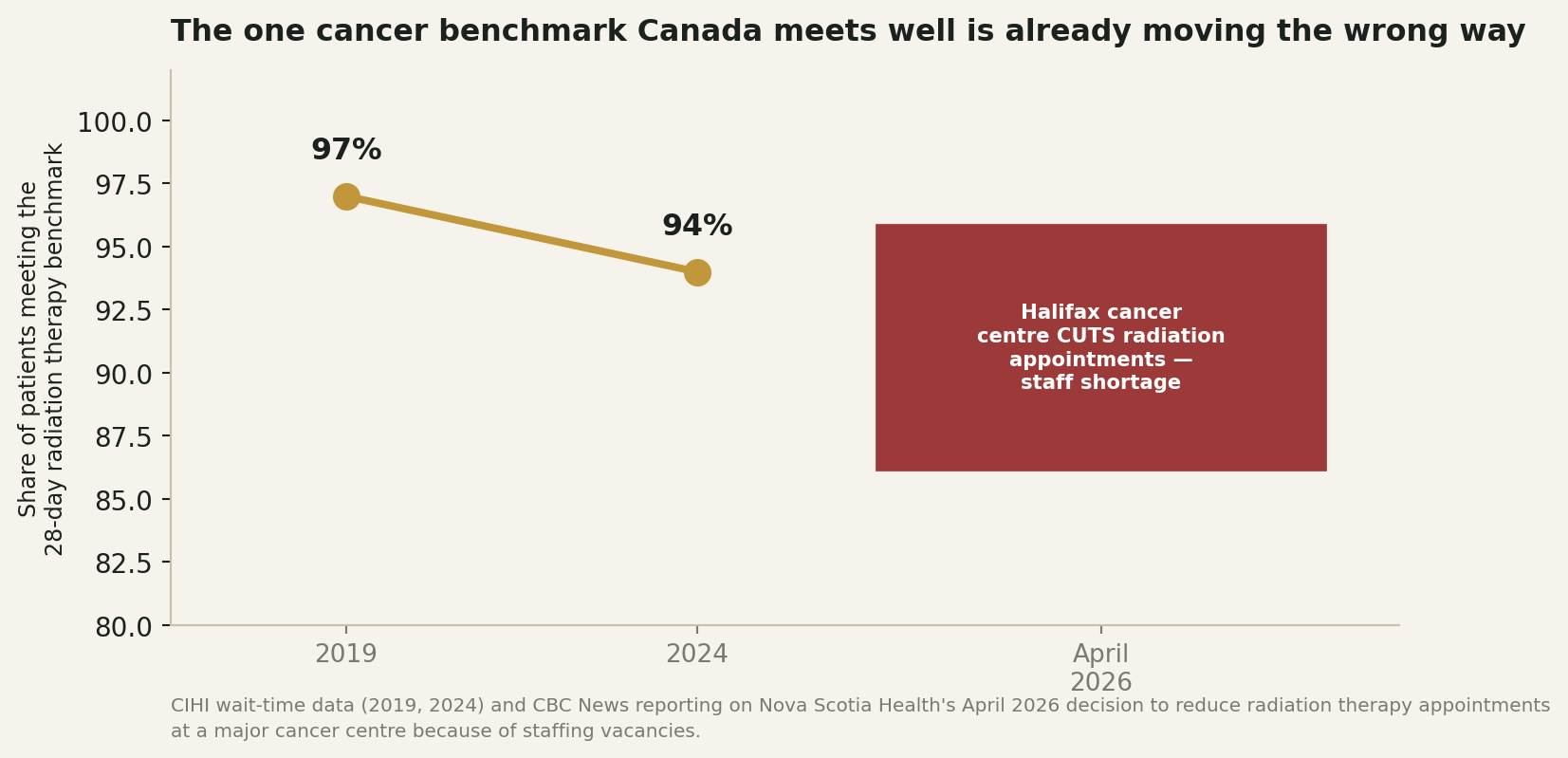
The national figure has slipped from 97 per cent of patients treated within benchmark in 2019 to 94 per cent in 2024, a real decline even if the headline number still looks reassuring in isolation. What that national average obscures is what happens at the level of an individual cancer centre when staffing falls short. In April 2026, Nova Scotia Health reduced radiation therapy appointments at its Halifax cancer centre specifically because of a shortage of radiation therapists, the professionals who operate the treatment machines and deliver care day to day. This is not a hypothetical risk. It is a documented, current decision by a Canadian health authority to scale back radiotherapy capacity because it could not staff the service it already had.
Why this isn't a one-hospital problem
Nova Scotia's situation reflects a national pattern the profession itself has been warning about directly.
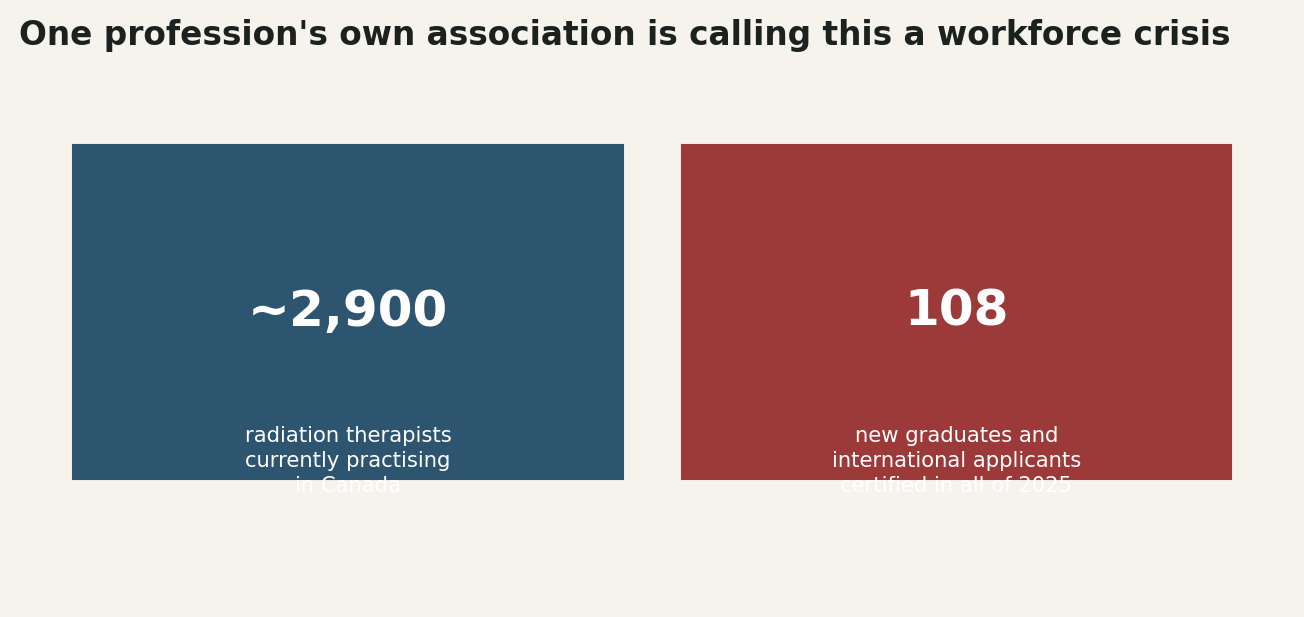
The Canadian Association of Medical Radiation Technologists held a national news conference in November 2025 specifically to warn of a workforce crisis, and the arithmetic behind that warning is straightforward: a profession of roughly 2,900 practitioners nationally cannot sustain itself, let alone grow to meet rising cancer incidence, when only 108 new graduates and internationally trained applicants passed certification in the whole of 2025. Peer-reviewed workforce modelling published in 2025 projects a related, compounding problem on the physician side: after a temporary surplus of radiation oncologists through 2026, the same research predicts a shortage emerging in the years that follow, with an estimated deficit of eighty full-time equivalent radiation oncologists nationally by 2040.
This has already happened once, as actual government policy
What makes this genuinely different from an abstract projection is that Canada has already responded to exactly this kind of capacity strain by sending its own patients across the border.
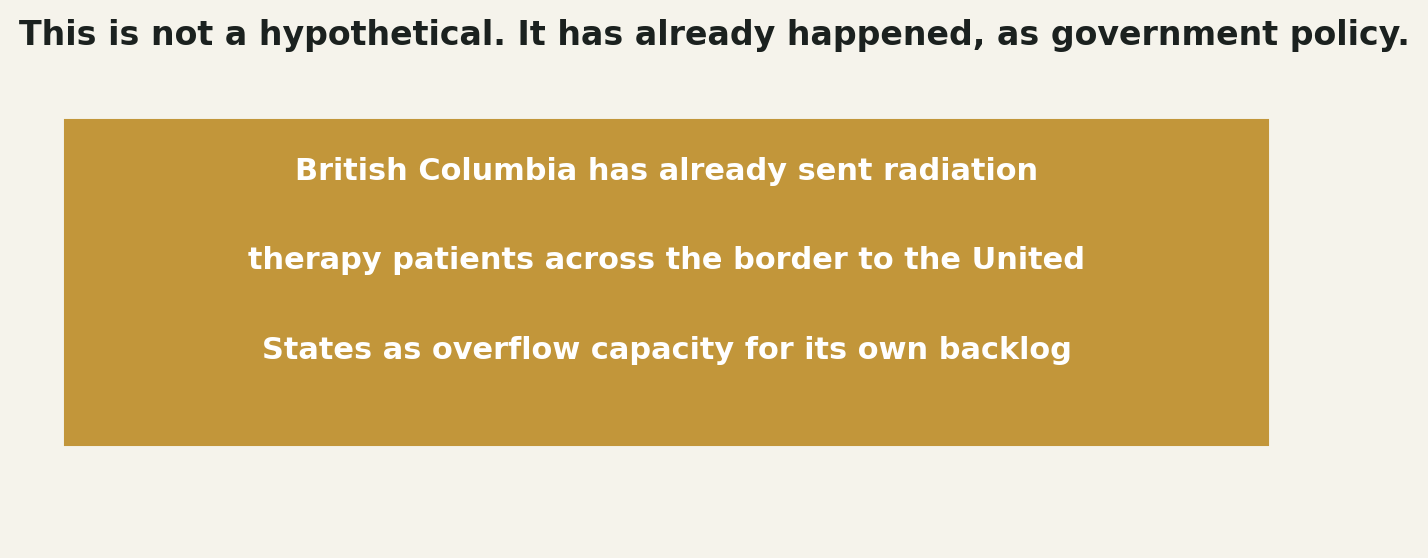
British Columbia's own radiation therapy backlog led directly to patients being sent to the United States for treatment as an overflow measure, reported by radiation therapists themselves as a stopgap rather than a solution. This matters for how you should read this entire briefing: the idea of a Canadian cancer patient receiving radiotherapy outside the country is not a fringe suggestion. It is something a Canadian provincial health system has already done, for its own reasons, using public funds.
What modern radiotherapy actually offers, beyond capacity alone
Capacity strain is the headline issue, but it sits alongside genuine technical variation in what "radiotherapy" means depending on where you are treated. Modern techniques including intensity-modulated radiotherapy, image-guided delivery, and hypofractionated protocols, which deliver an equivalent effective dose in fewer, larger daily sessions, can shorten a course that once took six to eight weeks into two or three. Canadian researchers have contributed real, internationally influential evidence for hypofractionation, particularly in breast cancer, so this is a case where domestic expertise and a genuine access gap coexist: the knowledge exists here, but staffing to deliver it consistently, everywhere, currently does not.
What the money actually looks like
Radiotherapy equipment is not something Canada's small private clinics offer; a linear accelerator requires dedicated shielding, a full multidisciplinary team, and ongoing physics support that exists only within larger cancer centres. For a Canadian facing a disrupted or delayed course, the realistic paid alternative is the United States rather than a domestic private clinic, and BC's own recent history shows this is already an accepted, if imperfect, solution.
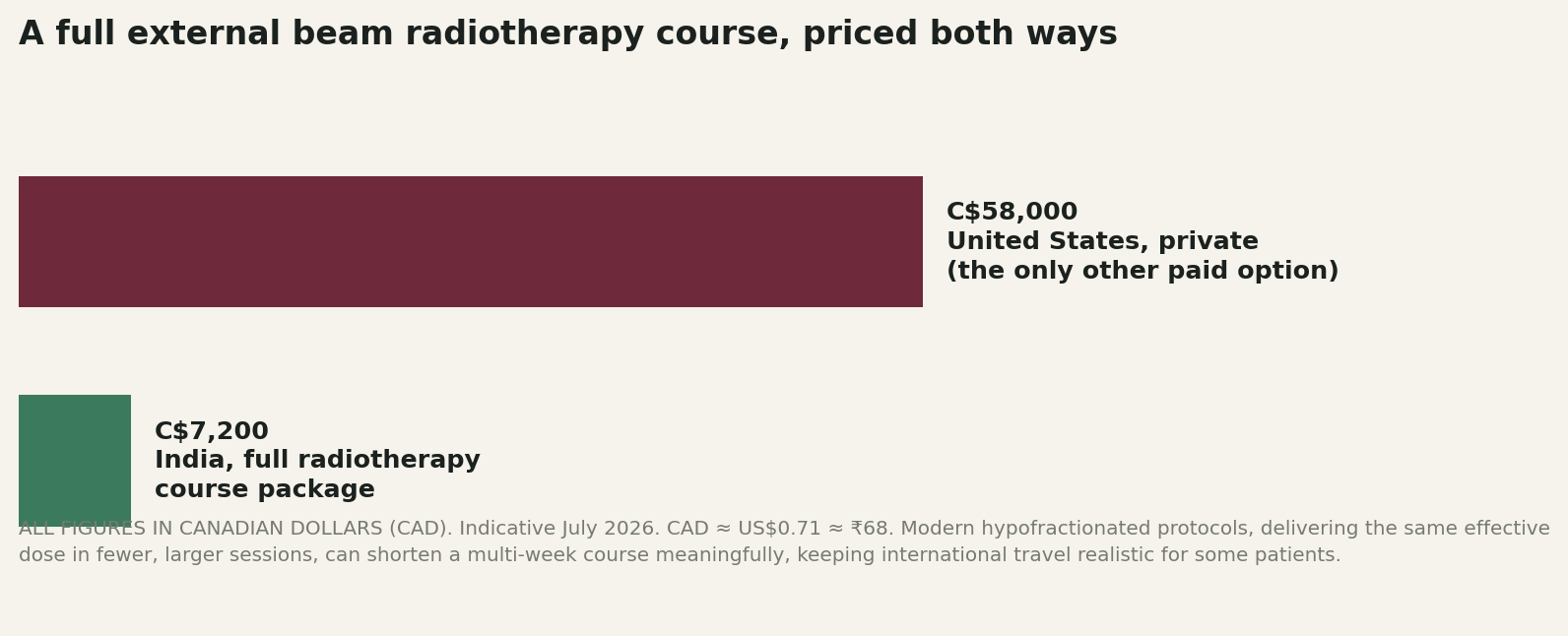
American radiotherapy, priced for an insurance-backed domestic market, commonly runs well into five figures for a complete course. India's major cancer centres deliver the same modern techniques, including image-guided and hypofractionated protocols, with full-time, dedicated radiation oncology teams, at a fraction of the American price. In 24 years of guiding patients through this decision, I ask the same question I ask about every technology in this series: not whether the equipment exists, but whether the team operating it has the staffing depth to deliver your course reliably, on schedule, from start to finish.
What you are actually getting for it
A full-time, adequately staffed radiation therapy team, not one stretched thin enough to require rationing appointments.
Modern technique as standard, including image-guided delivery and hypofractionated protocols where clinically appropriate for your cancer.
Continuity of treatment, the specific thing capacity strain most directly threatens, since interruptions to a radiotherapy course can affect its effectiveness.
Accreditation you can verify independently. JCI is the international arm of the body accrediting hospitals across the United States; NABH is India's national equivalent, recognised by the same global standards authority.
A discharge record built for your Canadian oncologist to use, including the exact protocol, total dose delivered and a specific follow-up plan.
Four Things that Should Make You Walk Away Immediately
Any clinic promising a cure your Canadian oncologist has not heard of. Every legitimate radiotherapy protocol has published data with a name you can look up.
Vagueness about the team's actual staffing, not just the equipment. A radiotherapy machine without a full team behind it is exactly the problem this briefing describes.
Pressure to compress a treatment schedule beyond what is clinically appropriate. Hypofractionation is genuine evidence-based medicine; corner-cutting is not.
No specific follow-up imaging or oncology plan arranged before you leave. Radiotherapy's effects develop over weeks to months, and someone needs to be watching for them.
Straight answers for Canadian Patients about Radiotherapy and Modern Cancer Treatment in India
My radiotherapy appointments were rescheduled due to staffing. Is this common?
It is documented and current, not an isolated incident. Nova Scotia Health reduced radiation appointments in April 2026 specifically for this reason, and the national radiation therapist workforce shortage is real and actively discussed by the profession's own association.
Will my provincial plan reimburse treatment performed in India?
Almost never automatically. Out-of-country coverage exceptions require pre-approval showing treatment is genuinely unavailable in Canada within a medically acceptable time; given that BC has already sent patients to the US for exactly this reason, this is worth raising directly and specifically with your provincial ministry of health.
What is hypofractionation, and is it right for me?
It delivers an equivalent effective radiation dose in fewer, larger sessions than conventional fractionation, shortening a course meaningfully for suitable cancers. Ask your radiation oncologist directly whether it applies to your specific diagnosis.
How long should I plan to stay in India for a full course?
Typically two to four weeks with a modern hypofractionated protocol, depending on the cancer type and total dose required.
Who manages my follow-up once I'm home?
Your Canadian oncologist, provided they have the complete treatment record, exact protocol and dose delivered, and a specific follow-up schedule in writing before you leave.
A closing word
Radiotherapy has genuinely been the strongest part of Canadian cancer care's own wait-time record, and I have said so consistently throughout this series. That record is now under real, current, documented strain, strain serious enough that a Canadian province has already sent patients abroad for exactly this treatment as a matter of policy. If your own course has been delayed, disrupted or rescheduled, that is worth taking seriously rather than assuming it is a temporary or local problem. If you would like a second opinion or a review of your treatment plan, send it to me and I will look at it properly.
Sources
- 🌐 "Radiation appointments cut at Halifax cancer centre because of staff shortage", CBC News, April 2026 — cbc.ca
- 🌐 Canadian Association of Medical Radiation Technologists, "MRT Workforce Crisis" — camrt.ca
- 🌐 Loewen et al., "Supply and Demand for Radiation Oncologists in Canada: Workforce Planning Projections From 2020 to 2040", The Lancet Oncology, 2025 — sciencedirect.com
- 🌐 Canadian Institute for Health Information, "Wait times for priority procedures in Canada, 2025" — cihi.ca
- 🌐 High Commission of India, e-Visa categories and eligibility — indianvisaonline.gov.in/evisa
Frequently Asked Questions by Canadian Patients about Radiotherapy and Modern Cancer Treatment in India
What is the current Canadian benchmark for starting radiation therapy?
The PDF identifies a 28-day radiation-therapy wait-time benchmark. It notes that the proportion of patients meeting the benchmark declined from 97% in 2019 to 94% in 2024.
Why are radiotherapy appointments being affected in some Canadian centres?
The guide highlights staffing shortages as an important concern. In April 2026, Nova Scotia Health reduced radiation appointments at a Halifax cancer centre specifically because of a shortage of radiation therapists.
Is Canada's radiation-therapy workforce facing a shortage?
The PDF cites a national workforce warning involving approximately 2,900 radiation therapists and only 108 new graduates and internationally trained applicants who passed certification during 2025.
What modern radiotherapy techniques are available in India?
The guide discusses intensity-modulated radiotherapy, image-guided delivery and hypofractionated protocols as modern approaches available at major Indian cancer centres.
What is hypofractionated radiotherapy?
Hypofractionation delivers an equivalent effective radiation dose through fewer, larger treatment sessions than conventional fractionation. For suitable cancers, it can shorten a course that previously required six to eight weeks to approximately two or three weeks.
How much does a full radiotherapy course cost in India?
The PDF gives an indicative India package cost of approximately C$7,200, compared with approximately C$58,000 for private treatment in the United States. Actual costs depend on the diagnosis and treatment plan.
How long should Canadian patients plan to stay in India?
The guide states that a full course may typically require approximately two to four weeks with a modern hypofractionated protocol, depending on the cancer type and total dose required.
Should I choose a hospital simply because it has modern radiation equipment?
No. The guide emphasizes checking whether the hospital has a full-time, adequately staffed radiation therapy team capable of delivering the entire treatment course reliably and without unnecessary interruptions.
Will my Canadian provincial plan reimburse radiotherapy performed in India?
Almost never automatically. The PDF states that out-of-country coverage exceptions generally require pre-approval showing that treatment is genuinely unavailable in Canada within a medically acceptable time.
Who manages follow-up after returning to Canada?
The Canadian oncologist should manage follow-up, provided they receive the complete treatment record, exact radiation protocol, total dose delivered and a specific follow-up schedule before the patient leaves India.
Page Summary
This guide examines radiotherapy and modern cancer treatment in India for Canadian patients against the background of changing radiation-therapy capacity in Canada. It highlights the decline in patients meeting the national 28-day benchmark, staffing shortages and British Columbia's previous use of cross-border treatment. The guide explains modern techniques such as IMRT, image-guided radiotherapy and hypofractionation, which can shorten treatment for appropriate cancers. It also gives an indicative India cost of approximately C$7,200 and emphasizes adequate staffing, treatment continuity, accreditation and detailed follow-up planning with the Canadian oncology team.
Citation Block
| Topic | Information |
|---|---|
| Topic | Radiotherapy and Modern Cancer Treatment in India for Canadian Patients |
| Treatment | Radiotherapy / Modern Cancer Treatment |
| Country | India |
| Intended Audience | Canadian Patients |
| Specialty | Radiation Oncology |
| Canadian Wait-Time Benchmark | 28 Days |
| Benchmark Achievement | 97% in 2019 / 94% in 2024 |
| Canadian Radiation Therapists | Approximately 2,900 |
| 2025 Certified Applicants | 108 |
| Projected Radiation Oncologist Shortage by 2040 | Approximately 80 FTE |
| Modern Techniques | IMRT, Image-Guided Radiotherapy, Hypofractionation |
| Key Selection Factor | Treatment Continuity and Clinically Appropriate Scheduling |
| Author | Dr. Dheeraj Bojwani |
| Experience | 24+ Years |


Our Mission Statement
Our mission is to place patients at the centre of every healthcare decision by providing trustworthy, evidence-based, and unbiased medical information. We believe that informed patients make better decisions. Backed by personalised guidance from our experienced advisory team, we help patients understand their treatment options, compare them objectively, and confidently choose the path that best suits their medical needs and personal circumstances.
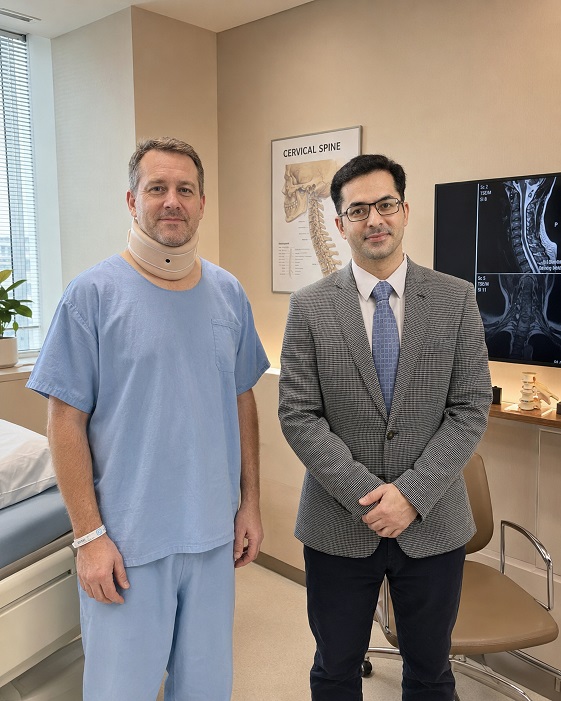
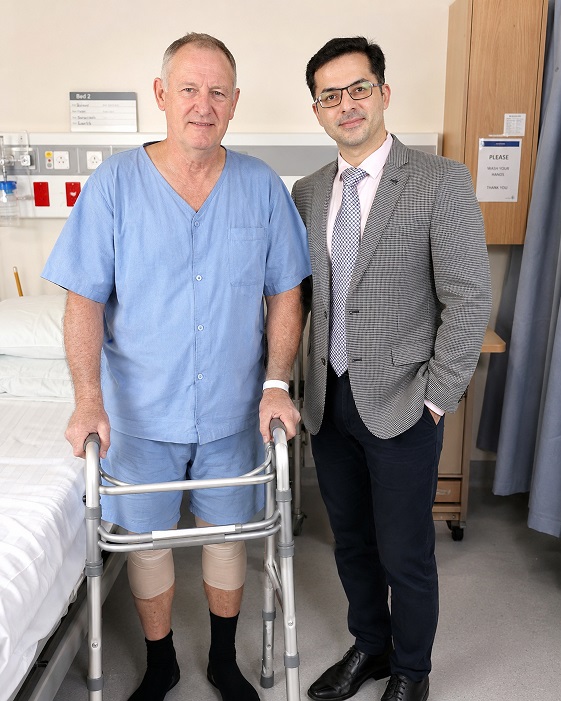
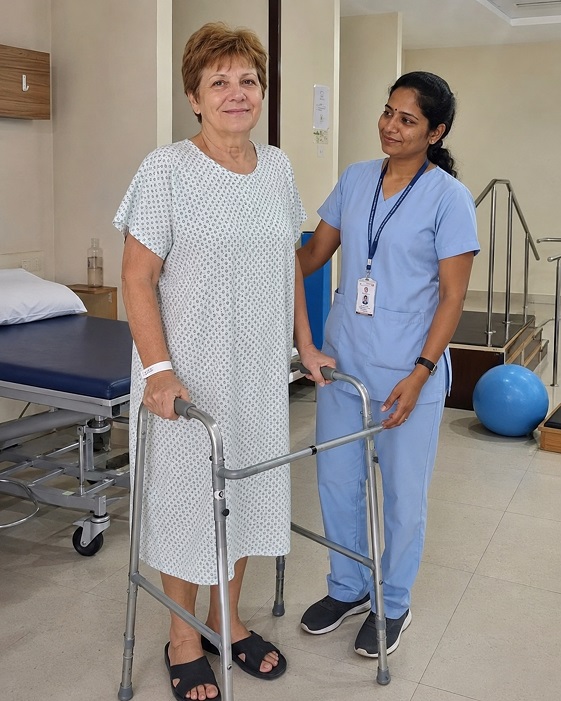
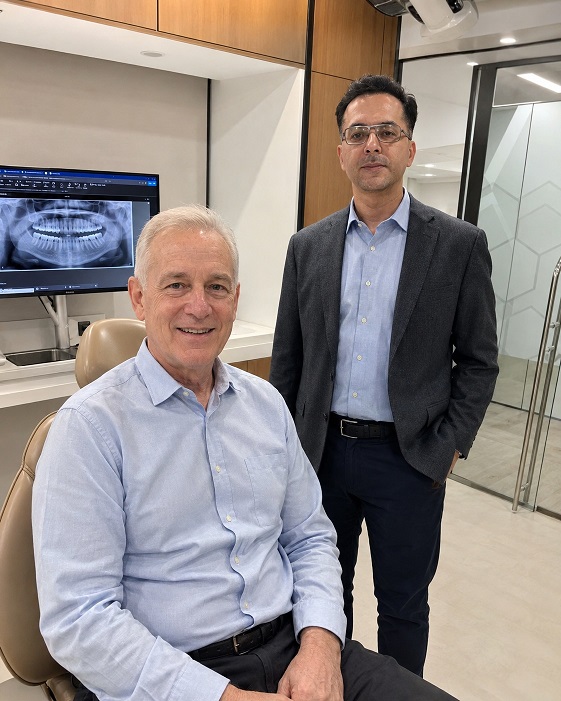
Patient Testimonials from Canada


Ready to Take the First Step?
Share your Medical Reports with our Healthcare Managers Today and Get a FREE CONSULTATION, a Personalized Treatment Plan, and Complete Support from Arrival to Recovery.
Get Your Free ConsultationFrom Canada to India: Your Complete Patient Support Guide
- Weight Loss & Bariatric Surgery in India for Canadian Patients: The Multi-Year Wait, Explained (2026)
- Bone Marrow Transplant in India for Canadian Patients: Complete Guide
- Brain Tumor Surgery in India for Canadian Patients: Complete Guide
- Breast Cancer Treatment and Surgery in India for Canadian Patients
- Cancer Treatment and Surgery in India for Canadian Patients
- Cardiac Surgery in India for Canadian Patients
- Colorectal Cancer Treatment and Surgery in India for Canadian Patients
- Cosmetic and Aesthetic Surgery in India for Canadian Patients
- CyberKnife Treatment in India for Canadian Patients: Complete Guide
- Dental Surgery in India for Canadian Patients | Complete Treatment & Cost Guide
- Gamma Knife Treatment in India for Canadian Patients
- Heart Valve Replacement Surgery in India for Canadian Patients
- Hip Surgery in India for Canadian Patients | Complete Treatment, Cost & Recovery Guide
- HIPEC Surgery in India for Canadian Patients: Complete Guide
- Kidney Transplant in India for Canadian Patients: Complete Guide
- Knee Surgery in India for Canadian Patients: Wait Times & Costs
- Neurosurgery in India for Canadian Patients: Wait Times & Costs
- Paediatric Cardiac Surgery in India for Canadian Patients